• About
  • Contact
  • Ethics Code
logo
  • Sign in
  • Donate
  • Shop TFS
  • Try TFS for free
  • Subscribe
  • Browse All
    • By Topic
      • Arts & Literature
      • Entertainment
      • Geography
      • History
      • Science & Nature
      • Sports & Leisure
    • By Type
      • Essays
      • In-Depth Features
      • Interviews
      • Investigative Reports
      • Opening | Events
      • Restaurant Reviews
      • Travel Guides
    • By Mood
      • Celebratory
      • Challenging
      • Delicious
      • Energizing
      • Inspiring
    • Award-Winning Journalism
      • browseall
  • History
  • Entertainment
  • Science & Nature
  • Sports & Leisure
  • Arts & Literature
  • Geography

Covering food and drink across the American South as though it mattered as much as crime and politics (because it does.)

logo
  • Sign In
  • Sign Out
  • Subscribe

Menu

  • Sign In
  • Sign Out
  • Ethics Code
  • About
  • Contact
  • Subscribe
  • Try TFS for free
  • My TFS settings

Browse by Section

  • By Topic
    • History
    • Entertainment
    • Science & Nature
    • Sports & Leisure
    • Arts & Literature
    • Geography
  • By Type
    • Opening | Events
    • In-Depth Features
    • Investigative Reports
    • Restaurant Reviews
    • Essays
    • Interviews
    • Travel Guides
    • Latest Publication
  • By Emotion
    • Delicious
    • Challenging
    • Celebratory
    • Inspiring
  • By Edition
    • Baton Rouge
    • Nashville
    • South
    • Stern
    • West Virginia
Menu
  • Openings and Events
  • In-Depth Features
  • Investigative Reports
logo

Menu

  • Sign In
  • Sign Out
  • Ethics Code
  • About
  • Contact
  • Subscribe
  • Try TFS for free
  • My TFS settings

Browse by Section

  • By Topic
    • History
    • Entertainment
    • Science & Nature
    • Sports & Leisure
    • Arts & Literature
    • Geography
  • By Type
    • Opening | Events
    • In-Depth Features
    • Investigative Reports
    • Restaurant Reviews
    • Essays
    • Interviews
    • Travel Guides
    • Latest Publication
  • By Emotion
    • Delicious
    • Challenging
    • Celebratory
    • Inspiring
  • By Edition
    • Baton Rouge
    • Nashville
    • South
    • Stern
    • West Virginia
Menu

Hanna Raskin

Our dining guide to SEC cities, Part I

October 6, 2026 by Hanna Raskin Leave a Comment

It’s College Towns week at The Food Section! We’re digging into the places within our coverage area that SEC teams call home (apologies to the expansion programs in Oklahoma, Texas, and Missouri.) Calling on years of eating across the region, we’ve put together dining guides to those public university towns. You’ll find the first installment below, with two more recommendation collections to follow on Wednesday and Thursday.

University of Tennessee | Knoxville

Gus’s Good Times Deli

Filed Under: Entertainment

Back to school

October 2, 2026 by Hanna Raskin Leave a Comment

College towns get a bad culinary rap.

It doesn’t matter that a significant share of their permanent residents are savvy, urbane world travelers, many of whom are literally schooled in esoteric cuisines and the cultures which produced them. So long as there’s a campus within city limits, the food scene is traditionally dominated by pizza and beer.

I know this firsthand as a native of Ann Arbor, Michigan. When I was growing up, the most significant local restaurants included Drake’s Sandwich Shop, Steve’s Lunch, The Bagel Factory, Fleetwood Diner, Le Dog, Pizza Bob’s, The Brown Jug, and Krazy Jim’s Blimpy Burger. Even if you never patronized those places—which I’m namechecking because I bet there are lots of University of Michigan alums on our email list who did—you can imagine what kinds of meals they served.

Tacos in Fayetteville, Arkansas
Slice from Italian Pizzeria III in Chapel Hill, North Carolina

Over the past several decades, though, the situation has improved there, and in other college towns. An institution of higher learning may not augur great dining, but it’s no longer at odds with it either. That’s good news for visiting scholars, football fans, concert goers, and the many other non-students who might have something in mind for supper other than sauced chicken fingers.

The even better news is that TFS has put together a series of dining guides devoted to SEC cities within our coverage area. Those lists form the core of our college town blitz, scheduled for next week: The guides will be bookended by a feature story reported in Gainesville by Laurie Woolever, and a restaurant review I filed from Auburn.

Meat, cheese, and tinned fish plate at Bombolo in Chapel Hill, North Carolina

Today, we’re kicking off our college towns concentration with an essay by Jay Busbee, a senior writer for Yahoo Sports and publisher of Flashlight & A Biscuit, a newsletter featuring Busbee’s reflections on food, music, and whatever else he encounters. As author of Iron in the Blood: How the Alabama Vs. Auburn Rivalry Shaped the Soul of the South, Busbee has a unique understanding of the interplay between state universities and culture. And, as this appreciation demonstrates, he also grasps why—even amid mounting societal seriousness about restaurants—it’s crucial we don’t lose all the rough-and-tumble spots.

Take it away, Jay!

Shrimp po’boy in Baton Rouge, Louisiana

The joy of the perfect college bar

BY JAY BUSBEE

Earlier this week, I was in Williamsburg, Virginia visiting family, and I did what I always do when I’m back in my old college town: I visited my favorite college bar, and then I got all sentimental and literary and such about visiting my old college bar.

Paul’s Deli has occupied the same space on Scotland Street in Williamsburg, just across the street from the campus of the College of William & Mary, for as long as I can remember. You walk up the stairs and in the door, and the scene is the same as it’s been forever—a long, narrow space, lacquered booths lining both sides, a grill and a bar—I still call it the “new” bar, even though it’s been there for decades—running down the center. The neon glow of the STEAKS SEAFOOD FRESH PASTA sign in the window bathes the front half of the joint in warm pink-and-green light.

Even if you’ve never been to Paul’s Deli—and it’s not a deli, that’s just a name, I have no idea why—you know what it’s like inside. The timeless decor of dark paneling and recessed lighting. Framed photographs of W&M athletes past decorate the walls. (I commissioned a few of those photos when I was sports editor of the student newspaper. The fact that they’re now old and yellowed, like Civil War daguerreotypes, is disturbing as hell.) Signed jerseys hang around the place. Look closely at the photographs, and every once in a while you’ll see a familiar face. (Wait, is that Tom Brady? Standing right here by this same booth where his picture now hangs?)

A cheeseburger in Athens, Georgia

This place is one of my touchstones, where I come to push pause, reconnect with my past and gear up for the future. Back when I was a student, I would order the same thing every time—a Hot Gringo (roast beef, Swiss cheese, bacon, served hot, and you bet your ass the table made the same joke every time I ordered), and a plate of mozzarella sticks (hell no, I’m not sharing, get your own). My metabolism back then allowed me to burn off seven cheese sticks and a sandwich the size of a cinder block before I even got back to the dorm. These days, I skip the mozz sticks, and I need a big ol’ to-go box for the rest of the sandwich.

There is—or was, but that’s another story—a whole protocol to ordering your food; you waited at the high serving counter till the cook deigned to pay attention to you, you gave him your order, and then you waited until they bellowed your order over the din of the Black Crowes or Cheap Trick. “HOT HOLLY HOT HOLLY PICK UP YOUR HOT HOLLY NOW” came the call, and if you didn’t, the sandwich might sit there for two hours, or it might vanish back down behind the counter, never to be seen again. Who knows?

I remember sitting in one of those booths talking about the art of creation, and the creation of art, with a friend who has since gone on to great success in his chosen profession. “Sometimes, when the words aren’t coming, you just gotta sit there and keep pushing that ‘A’ key until they do,” he said, and then kept saying “A-A-A-A-A…” and jabbing at the table with his fingertip. It’s a simple and pure truth about the hard work that goes into creation, and one I’ve thought of at least once a week since then.

Barbecue plate in West Columbia, South Carolina

The memories run together at this point, but here’s what I recall when I think of Paul’s, and when I’m back within its walls: Falling in love and getting over heartbreak, sometimes both in the same night, and not necessarily in that order. Pitchers the size of 55-gallon drums and glasses the size of paint buckets. White porcelain plates laden with artery-clogging joys like fries covered in waist-deep melted cheese. The sound of “American Pie” played as the lights come on at 2 a.m., the sign to drain your glass and refill it from whatever pitcher is close by. Bringing my kids there, watching with pride as they tottered around the same tables and chairs I once did, and realizing with horror that they were headed for the bathroom…where terrors always await.

We’re not the same people we were in college. For the most part, that’s a very good thing. Time dulls the recollections, but even now I remember being absolutely terrified at the world beyond W&M’s low brick walls, knowing how little I knew and not knowing what I didn’t know. Most of the reason we get drunk and make bad decisions in college is because we can, but part of it is because we’re trying to stave off the creeping dread of knowing that there will soon come a time when starting your evening at 10:45 and eating greasy fried everything well after midnight doesn’t sound quite so… well, normal.

A boulevardier in Lexington, Kentucky
A glazed yeast doughnut in Lexington, Kentucky

But one thing I do miss about college is what the college bar, whether it’s in Athens or Tuscaloosa or Madison or Williamsburg, gives you: a chance to shut out the outside world for a few hours, to place your obligations on hold and live within the moment, to gather with people in the exact same point in life as you and make your grand plans and dream your big dreams. You have to leave the bar at some point; “American Pie” eventually comes for us all. But in those brief hours, lit by dim orange globes and the neon in the window, you’re among your people. You’re safe.

So that’s why I head back to Paul’s every chance I get, not to act like a college student again but to remember the feeling when I was. I’m most definitely the Old Guy in the Club now when I go back. Monday night, as a band was working its way through a surprisingly smooth mashup of “Seven Nation Army” and “Sweet Dreams,” a couple groups of students sat a few tables away from me, engaged in the same kind of deep/shallow conversations I did all those years ago. I loved seeing it.

I hope you have a place you can go to like this, a place to reconnect with who you were and appreciate who you’ve become. Yeah, you’re probably much older now, but look at it this way … at least you know your ID is going to work.

Subscribe to Flashlight & A Biscuit.

Filed Under: Entertainment

Whipped feta spreads across the South

September 25, 2026 by Hanna Raskin, TFS Content Studio Leave a Comment

This story is sponsored content, meaning TFS sponsor Butcher & Bee paid for its production, facilitated interviews, and reviewed the text prior to publication. It did not provide editorial direction or propose revisions. To learn more about partnering with The Food Section to share your brand’s story, click here.

Christa Dickert of North Augusta, South Carolina is a devoted mother of a toddler with special needs, a Mary Kay senior sales director who proudly dons a pink cowgirl hat for company events, and—most significantly for the trajectory of Southern food—an unrepentant fan of whipped feta.

“I’m eating it right now!” Dickert squealed from across the room when I asked a barista at Emil’s whether the menu item was popular at the one-year-old restaurant, located down the block from a tattoo parlor and shuttered wig shop on Augusta’s Broad Street. “I order it every time. I knew I liked feta, but I never had something like that. I can snack on it while I work: It’s light enough, and the flavor is insane.”

According to Shawn Moseley, who owns Emil’s with his wife, Emilie, Dickert isn’t the only regular magnetized by the cream cheese-enhanced dip. “I can tell you it’s the return visit,” he said. Even though he initially thought muhammara would have been Emil’s hero product, he’s given up fighting feta.

“It’s easy to share; it’s something that not French fries,” he theorized.

As for the Moseleys, they first encountered whipped feta on a weekend getaway, back when Emil’s was just a growing pile of build-out bills. Even then, Moseley said, they could picture the pleasure it would generate for future customers.

“We had it a place in Charleston called Butcher & Bee, before the whipped feta heyday,” he said.

If you haven’t consulted an appetizer menu in the American South lately, the whipped feta heyday is now—and Butcher & Bee is largely responsible for it.

Christa Dickert enjoying whipped feta at Emil’s in Augusta, Georgia/ Photo by Hanna Raskin

Over the past 12 months alone, the spread’s appearance on U.S. restaurant menus has surged by 26 percent, according to research firm Datassential. Taking a longer view, whipped feta’s availability nationwide has increased by a staggering 350 percent since 2016, Butcher & Bee’s first full year of business in Nashville. But the dip’s ascent is firmly rooted in the South, where more than one out of every 100 restaurants serve it.

Granted, we’re not talking French fry-levels of menu penetration here, but that regional rate is at least 60 percent higher than what any other section of the country puts up. Like all iconic Southern dishes, whipped feta has an origin story that’s a mishmash of partial memories and concurrent inspirations. As pioneering Israeli American chef and restaurateur Einat Admony, who developed a whipped feta for Balaboosta in New York City after tasting Butcher & Bee’s version, said, “It’s a tricky one to take authority on. I’m telling you: After this article comes out, a lot of people will say they did that [first]. It’s always like that.”

Regardless of who gets credit for the dip, its importance isn’t up for debate. Whipped feta—whether served alongside the Savannah River or up the street from the Hudson—is an edible legacy of that heady 2010s moment in Southern restaurant culture when chefs repositioned the region as a culinary darling by yoking together local bounties and global influences.

Remember Sean Brock tossing shishito peppers in watermelon ponzu? Or Andrea Reusing serving pork shoulder over black mushroom sticky rice? No? Whipped feta is everywhere to remind you.

There’s plenty about modern eating habits that would confound the average ancient Athenian. Woe to whomever has to explain air-fried banana splits to Alexandros. But even a guy in a linen tunic would likely grasp combining “cream cheese and feta and herbs,” as Butcher & Bee owner Michael Shemtov spells out his restaurant’s whipped feta recipe. Cream cheese, the smoothing agent, is a 19th-century innovation, but Greeks were hip to the appealing richness of dairy.

In fact, the contemporary appetizer’s likely antecedent, tirosalata—commonly sold in Greek-owned restaurants as “feta dip”—is made by blending feta cheese with yogurt, olive oil, and garlic. The earliest American press mentions of “whipped feta” seem to refer to this preparation: In 1993, an Indianapolis Star writer praised her “astute and efficient server” at Café Nora, a Mediterranean bistro, for recommending “the whipped feta cheese ($3.50). Its creamy texture and substantive garlic could become addictive.”

(Predictably, the price of whipped feta has shot up along with everything else. Café Nora closed in 2009, but Butcher & Bee charges $15 for its rendition. The cost hasn’t dissuaded patrons from buying it, sometimes at both the start and end of a meal. In April, servers in the 130-seat dining room rung up 1,271 whipped feta orders.)

It’s perhaps not entirely coincidental that the first documented instance of tirosalata showing up in a fancy U.S. restaurant occurred in the industrial Midwest. Greeks migrated there in colossal numbers at the turn of the twentieth century, including Shawn Wright’s grandparents. One of the heirlooms that his grandmother brought to Detroit was a failsafe method for making what the whole family knew as “the feta dip.”

A lunch platter at Greek Islands in Chicago’s Greektown on October 24, 2025/ Photo by Hanna Raskin

“At the holidays, when I was young, we’d have roasted lamb, and all that good stuff,” said Wright, now 40 and executive chef for a luxury kitchen appliance dealer. “But we would always have this bowl of feta stuff and fresh pita and whatnot, and everyone would gravitate toward that.”

They weren’t moving toward the adjacent baba ganoush, Wright clarifies: “We all love baba ganoush, but the feta would be the one that got wiped out.”

As a kid, Wright’s dip vocabulary wasn’t confined to what came from the old country. Dean’s French Onion Dip is so beloved in Michigan that Instagram user @the_michigander recently racked up thousands of likes by posting tips for finding Dean’s at a party. But Wright suspected there was something special about the unsung spread he had at home.

At least, that’s what he hoped early in his career, when he was asked to come up with a new appetizer for a tapas bar in Maine. Food processors then tended to choke on semi-solids like cream cheese, so he blended together “about 80 percent feta; 20 percent cream cheese, garlic, and maybe a splash of mayo.”

“They didn’t know what it was,” Wright said of the Mainers who encountered a Greek dish in a Spanish restaurant. “They just knew it was feta, and it was spreadable, and they could eat it on a piece of pita. I think it gave Boursin vibes.”

From then on, feta dip was as essential to Wright’s private arsenal as his knife roll. He took it wherever he landed a job, including Nashville.

Wright had eaten several times at the Butcher & Bee in Charleston, which opened in 2011 as a sandwich shop. So, when he learned a sit-down successor was planned for Nashville, he applied for the head chef position—and held it for a minute.

“Shawn, I met somebody,” Shemtov told Wright in a call after eating at Superba Snack Bar in Los Angeles, where Bryan Lee Weaver served as executive chef. “I think he’s awesome. Any chance you’d be willing to move here for the number two role?”

“You know what?” Shemtov remembers Wright saying. “I have no ego. I’m happy if it makes sense.”

Butcher & Bee opened on December 15, 2015, with Weaver as chef and Wright as chef de cuisine. Eater Nashville heralded the opening by hailing the “vegetable-focused snacks and small plates,” which possibly prompted the first set of guests to fixate on the menu’s meze section. Weaver and Wright agreed they needed to expand the selection beyond hummus, pickles, olives, and kale slaw, ideally right away.

“You know what?” Wright said. “I got something.”

Because the restaurant’s emphasis was on creative and dynamic cooking, Wright knew the all-white dip he made his signature in Maine wouldn’t cut it. He added fresh basil and cracked black pepper.

“Chef, look at this,” Wright said, setting the dish in front of Weaver. While he was confident, he knew from his childhood experience with Dean’s that dip preferences are ingrained before most eaters have all their adult teeth. He figured he ought to appeal to Weaver’s Texan pride when explaining whipped feta.

Whipped feta served at Butcher & Bee’s Charleston location on July 7, 2016/ Photo by Hanna Raskin

“Man, this is Greek queso! This is our Greek queso!”

As Wright recalls, Weaver was as wowed as everyone else who’d sampled his almost-ancestral dip. “He was like, ‘Oh my God, this is really good.’ It’s cool that my queso is different than [his] queso, but we both had love for queso.”

Weaver, who was anxious to showcase a fermented honey he’d developed, confirmed that the spread struck him as the perfect canvas for his condiment. “A lot of times, dishes need three or four drafts for them to work out,” he said. “This was an instant home run.”

Later, Shemtov signed off on the dish, even though he’s one of the few known bipeds immune to whipped feta’s allure. “I’m very, very grateful for how many people have told me they’d put it on a shoe and eat the shoe, but it’s just not my jam,” he said. Still, looking to make up for Wright’s swift demotion, he wanted to enshrine his contributions on the menu.

“The next day, it was on my prep sheet,” said Scott Littman, who’s still a chef at Butcher & Bee. “I hadn’t tried it, but I remember feta, cream cheese, garlic, basil, and picked thyme.”

Littman filled a five-gallon tub. Whipped feta hasn’t been made in such a small quantity since.

On April 2, 2016, Butcher & Bee put together an Instagram post on whipped feta’s behalf, with Weaver palming a plate of dip in the way that a basketball player might thrust a basketball toward the camera. Mostly, though, the dip sold itself.

Around Nashville, longtime local food writer Chris Chamberlain said, culinary cognoscenti immediately understood that whipped feta was the must-order at Butcher & Bee. Then, the rest of the city caught on.

“We noticed it was outselling hummus by a significant amount,” Weaver said. “Every table was getting the feta, to the point that we couldn’t really keep up with it. We were doing small batches in the Robot Coupe, and we’d run out in the middle of service. It sold two or three times as much as anything else.”

Butcher & Bee’s whipped feta/ Provided photo by Andrew Cebulka

At Butcher & Bee, whipped feta revenue became a unit of measurement. “We talk about ‘this is 50 percent, or 30 percent, of whipped feta sales’,” said Shemtov, who reports the restaurant now sells $250,000 worth of whipped feta annually.

“Sometimes I’ll ask tables, ‘Let me guess: Should I just put in the whipped feta order right now?’” server Eric Lee said of his opening spiel. “Ninety-nine percent of the time, they say yes.”

Even though whipped feta was designed for sharing, server Jabari Patterson said some guests refuse to let anyone else get close to their cheese dip. “I’ve had groups of people, and each orders whipped feta,” he said. “I’ve had dairy-free people be like, ‘I’m just going to have this.’ They have Pepcid in their pocket.”

Considering the magnitude of the frenzy, it obviously wasn’t just Davidson County residents chatting up the dip. Between conventions, bachelorette parties, and country music tourism, the county yearly draws 16.9 million visitors, many of whom rave about whipped feta when they get home.

On a June visit to Butcher & Bee, when I asked a woman seated next to me at the kitchen bar why she’d ordered whipped feta, she cited a “random person in Olympia.”

Butcher & Bee’s dirty martini, featuring feta-stuffed olives/ Provided photo by Kayla Mickelsen

“Just a person who had been here and told me to come and get the whipped feta,” Ry King, a Washington educator who’d made her first trip to Nashville for a conference, said of her informant. “We have one Syrian restaurant, so this is a treat. It’s got the spices and all the good stuff. I love it.”

Since reporters dream about approaching strangers and hearing something that amounts to “I am the ideal source for your story,” I excitedly told members of Butcher & Bee’s team about the exchange. They were unimpressed.

“I’ve had people fly in specifically from L.A. for whipped feta,” Lee told me.

In other words, the success of Butcher & Bee’s whipped feta has led directly to the continued success of Butcher & Bee’s whipped feta. “I jokingly say that one day, in front of my house, they’ll have a sign saying, ‘The House That Whipped Feta Built’,” said Shemtov, who long ago surrendered any fantasies of tweaking the dish.

But does Butcher & Bee whipped feta’s success account for why the dip’s now served at Taziki’s Mediterranean Grill, a Birmingham-based fast casual chain with 100 locations, and Gypsy Kitchen, a standalone Moroccan restaurant in Atlanta’s Buckhead neighborhood? It’s very much a contributing factor to the trend’s provenance, but when it comes to whipped feta, sharing’s the rule (usually).

Tracking the rise of whipped feta is complicated because there isn’t a single event that would have alerted restaurateurs to the dish, such as a Bon Appetit cover or Top Chef cameo. Ina Garten published a recipe for Tomato Crostini with Whipped Feta in a 2012 issue of O: the Oprah Magazine, but her preparation—which involves a hefty dose of lemon juice—predated the spike in menu appearances by a decade. Six months later, the Washington Post’s Joe Yonan noted “dollops of whipped feta and dustings of tart sumac” on vegetables at Philadelphia’s Zahav, describing what sounds more like an extra than a lead actor.

Locally, though, there was a meaningful development on the whipped feta front at roughly the same time. In 2012, Deb Paquette opened etch in downtown Nashville.

“What they do is they just perfectly roast a big old cauliflower, and they take all the little nubbins that fall off when you cut up a cauliflower and whip them into the feta,” Chamberlain, the food writer, said. “It’s [part of] a trio of sauces underneath the cauliflower. That’s the first place where I remember whipped feta. I loved it. I mean, it’s something we never thought of doing.”

Whipped feta at Sadie’s in Nashville/ Photo by Hanna Raskin

Chamberlain calls Paquette’s cauliflower and Butcher & Bee’s whipped feta “the two iconic appetizers in Nashville.” Interestingly, in a town that’s been accused of churning out formulaic hits, Chamberlain notes that both dishes are “so easy to copy,” albeit not at the level of their originators.

“You pretty much can’t open a modern Mediterranean restaurant in Nashville without having whipped feta,” he said.

One of those Nashville restaurants is Aba, an outlet of Chicago’s Lettuce Entertain You restaurant group. Aba opened in 2025 with a homepage featuring a video of honey emerging from a squeeze bottle to dress whipped feta. “Whipped feta has been a signature spread since day one… offering texture, and a rich, umami experience,” chef partner CJ Jacobson said in a statement provided by the restaurant’s publicist. “Given it was created in Chicago, it also appealed to the Midwest’s love of all things cheese.”

Most restaurants in Nashville and elsewhere didn’t respond to requests to discuss their whipped feta’s derivation. But a spokeswoman for Aplos Simple Mediterranean in Jackson, Mississippi attributed the dip’s menu presence to a decorated New Orleans chef. “It was one of our owner’s favorite dishes when he worked for Alon Shaya,” she said.

Whipped feta at House Cocktails in Macon, Georgia/ Photo by Hanna Raskin

Regionally, Shaya no doubt had a hand in whipped feta’s ubiquity, whether because so many professional cooks have passed through his kitchens, or because so many more home cooks have consulted the Whole Roasted Cauliflower with Whipped Feta recipe in his eponymous 2018 cookbook.

“Dips are always a good idea, no matter where in the world you are,” Shaya said. “Everybody loves a good dip. And I think this just has the aura of healthy Mediterranean: Fresh and bright and tangy.”

By the time Shaya recorded his whipped feta recipe, its non-feta ingredients had been winnowed down to goat cheese, cream cheese, olive oil, and cream. But in 2011, when he concocted the dip to accompany roasted cauliflower at Domenica, an Italian restaurant, mascarpone went into the mix too.

“It really all culminates in the transformation of me moving from Italian food to more of my cultural influences,” said Shaya, who was born in a suburb of Tel Aviv. “I didn’t learn the recipe from anybody or see it anywhere.”

That’s changed completely.

“I’ve seen it on menus throughout the South,” he said. “I see it pop up, and I’m always like, ‘Man, this is so cool.’ It’s very, very cool that it continues to blossom and spread out.”

By this point, you’ve read the word “feta” 62 times. Yet when asked to speculate why people are so smitten with whipped feta, chefs who’ve made thousands of pounds of it almost never cite cheese. Feta is familiar and easy to pronounce, but what it lends to the finest interpretations of the dish is a cold and salty contrast to something complex, seasonal, and sweet.

At Safta’s Table, Shaya’s newest restaurant, it’s oven-roasted cherry tomatoes and pomegranate molasses. At Emil’s in Augusta, it’s honey.

Butcher & Bee in Nashville/ Photo by Hanna Raskin

“Honey does a lot of heavy lifting,” co-owner Moseley admitted.

It feels a little on the nose for a restaurant with “Bee” in its name to have built its reputation on honey, but Chris deJesus, whose five-year tenure as executive chef ended in June, is certain that’s what whipped feta enthusiasts crave—and why they perpetually fail to replicate the favorite at home, even when armed with the recipe cards that Butcher & Bee briefly distributed.

“The key factor is the way we ferment the honey,” deJesus said. “If you find whipped feta at Tzatiki’s, they’re not doing that. It starts with fermenting peppers for a week and whisking them in there with the biggest whisk. It’s a spectacle.”

Brice Baker, who’s been a server at Butcher & Bee for three years, recently waited on a couple from Raleigh obsessed with the whipped feta at a restaurant near their house. “They tasted ours, and were like, ‘This is so much better’,” Baker said. “It’s the fermented honey. People just love it.”

Weaver, who dreamed up the technique of fermenting honey in mash from his habanero hot sauce, can’t understand why they don’t want to hear more about it. “I always thought that was a really good talking point, but nobody seems to care that much about the honey,” he said. “They just love the whip of it. But I really think the honey is the secret star.”

Even before the honey’s fermented, it’s carefully selected.

“I change the varietals,” said de Jesus, who’s partial to summertime whipped feta, produced at the peak of basil season. “Dark wildflower in the fall; Tennessee mountain in spring. You can tell it’s not stuff from a bear jar.”

Instead, it tastes like the South.

Filed Under: Sponsored

Youngstown at heart

September 23, 2026 by Hanna Raskin Leave a Comment

Listen to this story

One board member of the Italian American Club of Jacksonville is half Polish. Another is half Irish.

Regulars at the social club’s monthly spaghetti sale are of equally heterogenous heritage. Paul Neuendorf, who years ago earned early entry privileges by reliably showing up well in advance of the takeout supper’s 5 p.m. start, is half German.

Filed Under: Entertainment

The right call

September 18, 2026 by Hanna Raskin Leave a Comment

Listen to this story

The Food Section’s pitch line rang for the first time at 12:59 p.m. Eastern on Tuesday, one minute before pitching hours were scheduled to start.

I picked up but was so excited about somebody calling that I failed to bark “Raskin” into the phone, which has always struck me as the proper newsroom greeting. Instead, I defaulted to my standard “Hi, this is Hanna”—except the person on the other end couldn’t hear me. “Hello?” she said repeatedly as the connection crackled. “Hello?”

Our first pitch call felt more like the first call, period. When I made up this way to sidestep the AI slop that’s contaminating the freelance pitching process, I hadn’t intended to give up all technological tools. I immediately started to worry that the number we’d set up for prospective TFS contributors was irreparably broken.

Fortunately, another call beeped through. As it turned out, our line was just fine, as the half dozen people who dialed it discovered.

One of those people was Rachel Greenfield, who called from the Hudson Valley to pitch a story about the subject of her forthcoming book, Rose Knox: How One Woman Mixed Kitchen and Boardroom to Remold an American Business. That’s the kind of pitch which is easy to dismiss when it arrives via online form, because Knox was born in Ohio, grew up in New York, and operated a factory in New Jersey. As TFS submission guidelines say, “In terms of topics, the only real limitation is geographical. Just about every story has a food angle, but for The Food Section’s purposes, that story must unfold” within our coverage area.

Still, TFS is an enthusiastic fan of gelatin and accomplished early 20th-century businesswomen (especially those who offered paid vacation and paid sick leave to their employees.) So, instead of just saying no—which is exactly what I said when the book’s publicist, unbeknownst to Greenfield, emailed earlier this week to pitch the biography—I asked Greenfield what she’d left on the cutting room floor. Did Knox ever receive a fan letter from a woman in Georgia whose garden parties were transformed by Knox Gelatine? Was it possible that Knox spoke at a grocers’ convention in Kentucky?

“You actually were really helpful in helping me come up with the right approach,” Greenfield said when I rang her back to ask how the call went from her perspective. (Granted, this is the perspective of someone who amounts to a job applicant, so it’s possible she brushed off my request to be brutally honest.)

“You’re not a scary person,” she continued (see previous caveat). “We had a nice conversation.”

A red gelatin mold/ Photo by nilufar nattaq via Unsplash

In fact, when I reached Greenfield the second time, she was busily looking for TFS story material. “You sent me back to my archives, which I’m enjoying,” she said.

Except for one caller, who seemed disinclined to adjust his pitch about greater Atlanta’s Venezuelan restaurants, that’s how all of Tuesday’s calls went. Whether the proposed topic was sorghum or Black-owned barbecue pits, every call involved brainstorming angles and approaches—in real time. (The one question I asked each writer was some variation of, “Where do I find you?” By far, my favorite answer was, “Walking to the library.”)

As long-time reporters know, that’s the way news used to get made. Nowadays, storytelling is highly transactional: Journalists come up with pitches and find publishers to buy them. But back when full-fledged media organizations were the norm, it was standard for writers to sidle up to editors’ desks just to chat about crop prices or window dressing trends or whatever else was on their minds. Some of the best stories got their start with the phrase, “I don’t know if there’s a story here, but…”

Even more than a gruff phone greeting, that’s a newsroom tradition worth reviving.

Our pitch line opens again next Tuesday. Call us at (478)339-8833 from 1 p.m.-4 p.m. Eastern.

Filed Under: Arts & Literature

Clear view of Southern martinis

September 17, 2026 by Hanna Raskin Leave a Comment

Listen to this story

There won’t be a house martini at Neal Bodenheimer’s new bar, Mildred’s, the first venue that the CureCo. managing partner has “worked on soup-to-nuts” since 2011.

“That’s the whole point,” Bodenheimer said of the message he wants to convey with his soon-to-open martini bar and restaurant, housed in The Warbler Hotel on St. Charles Avenue in New Orleans. “Martinis mean a lot of different things to a lot of different people. I hope we show people the quilt of martinis and how diverse it is.”

Filed Under: Arts & Literature

Ring of truth

September 11, 2026 by Hanna Raskin Leave a Comment

Listen to Raskin read this column

It’s impossible to avoid AI these days—and boy is that true if you’re fielding freelance pitches.

AI started creeping into The Food Section’s story idea submissions in late 2024. Back then, AI was very rudimentary: In response to the standard question on our pitch form that asks whether there’s anything else we should know about the writer or the pitch, one hopeful contributor wrote, “While I don’t have personal experiences or a physical presence, I can offer a unique perspective on the world.”

No thanks. But as soon as I read that pasted-in prompt response, I added a new question to our pitch form. Since December 12, 2024, we’ve asked prospective freelancers, “Did you use any AI tools to help develop this story idea or put the pitch into words? (That’s not necessarily disqualifying, but transparency is a TFS rule.)”

While you can’t make an online reservation at New Glasgow Lobster Suppers, co-owner Elaine MacRae—whose parents opened the restaurant in 1958—will take your call if you’d like to book a table.

That question’s been answered affirmatively 40 times, accounting for roughly 15 percent of the pitches we’ve seen over the past almost-two years.

Still, it was clear that plenty of writers weren’t disclosing their AI use. In May 2025, one proposed to “chronicle how Vivian Howard has repurposed [a] segregated 1950s Greyhound bus station at Sanderling Resort,” conflating Theodosia in Duck, North Carolina with The Grey in Savannah, Georgia (and denying Mashama Bailey, a Black chef, credit for her achievements. Multiple studies have shown that AI demonstrates racial bias.)

When I emailed the writer to ask about the fabrication, he confirmed that he’d used AI for editing and characterized the made-up story as “an oversight.”

But around that time, AI got slicker. It began manufacturing story ideas that sounded plausible and mapping out tensions that seemed intriguing. It came up with false narratives that closely matched our mission of challenging the status quo and showcasing diverse perspectives, such as the “halal BBQ movement” sweeping Charlotte, supposedly evidenced by seven new smoked lamb restaurants helmed by immigrant Muslim pitmasters from Syria and Somalia. (Regardless of how much I might like to go to those places, our TFS:CLT bureau confirms there’s no such septet.)

B & C Steak & BBQ in Dillon, South Carolina offers both a giant gumball machine and pay phone

Some of these pitches came from real people, while many more came from sources as fake as the culinary developments they wanted to chronicle. Either way, AI was no longer creeping into our pitch form: We were dealing with an outright stampede.

The barrage posed two major problems. First, if there’s any chance that a story involving the misuse of power is legitimate, it’s incumbent upon us to check it out. So, I was spending an irretrievable amount of time with each of these garbage pitches, trying to determine whether there really was a water crisis in one county or an unsafe chicken processing plant in another.

Frequently, when I followed links for the clips that came along with these pitches, as I did last Friday when backgrounding a West Virginia tomato farmer profile (“a human story about land, labor, and the small dignities of growing something in a place that has been hollowed out”), I’d land on the page of a respected media outlet with the message, “This column did not meet our standards and has been removed.” 

Second, as I became more suspicious of every pitch, I found myself gravitating toward writers with long resumes or mutual friends. That’s totally at odds with The Food Section’s commitment to cultivating young food journalists and publishing new voices.

For thinking, nothing beats the beaches of Nova Scotia, such as this one behind our Airbnb in Canning

In any case, the situation seemed hopeless. Then, I went on vacation.

The Food Section always pauses publication in August because some reporting projects require our undivided attention. But the hiatus is also tremendously helpful because I get a week off. In the past, I’ve mentioned how I run faster, play disc golf better, and finish crossword puzzles more quickly when I’m rested and far from my desk. What’s most valuable about the emotional and physical distance, though, is it provides new perspective on problems that seem unsolvable at close range.

AI pitches? Writers should just call me instead.

Starting today, we’re shutting down the TFS pitch form. It will remain online so writers can see what we might want to know about a potential story, but from now on, the only way to pitch us is to call 478-339-8833 on Tuesdays from 1 p.m.-4 p.m. Eastern. And take heed, writers: This is a live hotline, not a voicemail service. Using AI to produce a script will get you nowhere. We’re going to talk. After all, ringing up a stranger and improvising as the conversation unfolds is a core reporting skill.

Nova Scotia’s tides are intense, but the boats don’t go with it
Shelburne, Nova Scotia’s former dory shop is now a boatbuilding museum

Much to the disappointment of the many journalists who’ve interviewed me about TFS’ pitch-by-phone plan since I mentioned it on LinkedIn, including folks from Nieman Lab, Freelancing With Tim, Straight Arrow News, and JournalismUK, this policy change doesn’t have a great origin story. The idea came to me fully formed while I was running on a trail in New Brunswick, listening to an audiobook about Acadian expulsion. I wish I could say the epiphany occurred when I saw a Nova Scotia doryman pick up a ringing pay phone, or after I chatted with the woman who takes reservations calls at New Glasgow Lobster Suppers on Prince Edward Island, but I’ll leave those confabulations to AI.

I have no clue how well this will work, or for how long. It’s entirely possible we’re just a few months away from writers ginning up bots to call me on their behalf. I’m also aware that I might be setting myself up for three hours of spam calls every week: A salesperson for an AI company has already emailed to say she’s looking forward to dialing in to discuss what her product could do for TFS.

What I know for sure is there’s far more excitement about this switch than I ever would have imagined, perhaps because the edict was a reminder that we’re not yet at AI’s mercy, after all. For a few days in late August, it seemed like everyone in media was talking about it. 

Real people talking to each other about real things! Maybe we’re on to something here.

Subscribe

While that’s probably enough information for readers who have no intention of ever pitching The Food Section, here’s the extra nitty-gritty for prospective contributors:

Q: What if I can’t call during designated hours?

A: No problem! We understand that writers have full-time jobs and family obligations that might not line up precisely with our pitching window. Email me at raskin@thefoodsection.com to arrange another time.

Q: I’m a writer, not a phone caller. Are you going to judge me for sounding uncomfortable on the phone?

A: I get it. I’m better in print too. But it doesn’t matter if you speak slowly or softly, or get your sentences mangled: What I’m trying to gauge is your genuine enthusiasm for the material, familiarity with the people or place central to it, and grasp of what makes it a story, as opposed to a topic. In other words, I’m looking to make sure you’re human—which by definition means you might feel scared or anxious about this exercise.

A motel room phone in Waycross, Georgia

Q: Will you rule on my pitch right away?

A: Probably not. We’re after great writing, so if the pitch appeals, we’ll still want to check out your written work before proceeding with an assignment.

Q: Is there a way to prepare for a pitch call?

A: Same way you’d prepare to write a pitch! Make sure you’ve reviewed our pitching guidelines and spent time on our website.

Q: Can I use AI to help me prepare?

A: Up to you. But please keep in mind that all contributors to The Food Section are required to sign an agreement stipulating submitted work “is solely authored and created by Writer, and that no generative artificial intelligence (“AI”) tools, models, or software were used in the creation, generation, or revision of any part of the deliverables.” If AI is a crucial component of your process, TFS might not be the right home for your work.

A yellow phone at The Red Flat in Sofia, Bulgaria, an experiential museum devoted to the bygone Communist era

Q: How am I supposed to afford an international call?

A: This question has been posed repeatedly in the wake of pitch-by-phone coverage, and it’s honestly one I didn’t consider. That’s because The Food Section publishes journalism from and about the American South: We promise our readers on-the-ground reporting that they won’t find anywhere else. 

One of the chief reasons we hire freelancers is so they can share undertold stories from their own communities. That doesn’t mean international journalists couldn’t spend enough time in our region to report on it adequately, but if they’re not here for as long as it takes to make a phone call—free at most public libraries for folks who can’t afford mobiles—they probably aren’t the writers we’re seeking.

With AI, though, journalists who are based thousands of miles away can fake intimacy with a Southern city or town, leaving it to us to figure out how, when, and where the pitch originated. We’ve seen a ton of these submissions lately.

Q: What was that number again?

A: (478)339-8833. Talk soon.

Filed Under: Arts & Literature

Having our cake, and a subscriber drive too

September 7, 2026 by Hanna Raskin Leave a Comment

Hello again! TFS returns this week, starting today with a Labor Day celebration of its last five years of work and a way to support those who ply the food journalism trade.

Listen to Raskin read this column

The Food Section doesn’t have enough money to find out (more on that in a minute!), but I’m sure there are business consultants prompting their clients to consider: If your venture was a former U.S. President, who would it be? Which season? What tree?

Mel Smith personally delivered her brown butter cake with vanilla frosting

Beats me, but thanks to the massive talents of Greenville, South Carolina’s Mel Smith, I now know exactly what shape TFS would take if it was a dessert. Smith created the gobsmackingly gorgeous cake pictured above for our publication’s fifth birthday last month. Although she’s no longer accepting commissions through Freida Bakeshop, her revered buttercream cake operation, she made an exception when a fan nominated her to make The Food Section’s birthday cake.

Mountain Goat in Greenville, South Carolina hosted The Food Section’s fifth birthday party

“I love what you’re doing,” she explained in an introductory Instagram message. “And I love a birthday cake because it’s an opportunity to fully celebrate and embody the spirit of that one person (Editor’s note: or daily newsletter) on their special day.”

For The Food Section, Smith made a brown butter cake with vanilla frosting, spreading homemade peach butter between the layers of the bottom tier. She left fruit out of the top tier for celebrants who prefer their crumb unadorned.

So far, so TFS-ish. We’re pro-peach but also accommodating. We’re skilled at taking what seems incredibly heavy—injustice in our case, butter in hers—and turning it into something light enough to savor.

We forgot to put a sixth candle on the cake for good luck, but you can still help make the next year go our way
A peek at Smith’s homemade peach butter

But where the overlaps really get going are in her decorating choices. “I love the whimsy of juxtaposing vintage buttercream with disco balls,” she told me. Combining the best of the old with the dynamism of the new? We’re an online publication that sends pencils to paying subscribers!

Subscribe

Even better are the bejeweled flowers on top, and not just because Smith has always wanted to use them on a cake: We love giving folks a chance to create what might not interest other outlets, as the 99 writers to whom we’ve issued paid assignments can attest. But Smith says what inspired her was, “I saw someone do something like it using AI, and I was like, ‘What if I do it for real?’”

That’s TFS talk, baby. Our independent and rigorous food journalism is produced entirely by and about real people. We’ll have more on that score this Friday, but we’re so proud of our five-year track record of telling significant stories without taking shortcuts. A lot has changed around here since we pressed ‘send’ on our very first newsletter, but our ethical and editorial standards have never wavered.

Also unchanged: Our hopes of acquiring 1000 paying subscribers, a goal we’ve been chasing fruitlessly since 2021. To be clear, that isn’t a good kind of fruitless, like the top tier of Smith’s cake. Without more money to support this endeavor, it’s hard to see how we maintain the depth and cadence of our work, which has been repeatedly recognized as some of the best food journalism in the country. 

Subscribe

Same as when we started, I’m responsible for writing or editing every word in The Food Section, as well as securing and preparing every photo, making every sales call, designing every social media post, addressing every technological glitch, and helping every reader with billing questions, among just the most common daily tasks. On top of that, though, we’re also now competing with a new crop of online food journalism outlets backed by Silicon Valley money and fronted by New York City media insiders.

Lib Ramos of Good Printed Things, which published The Food Section’s Interstate 40 exit eating guide, sliced the cake for celebrants

That’s a tough battle to mount alone from a Macon, Georgia basement, in part because I’ve mostly quit paying myself, so I’ve got freelance work to handle too.

Fine. We all do what it takes to pay the bills. Except that every hour I spend avoiding bank overdraft charges is an hour not spent reporting the next major investigative project, or working with the region’s next great food journalist to craft a compelling story you won’t find anywhere else.

Subscribe

Obviously, the solution is for TFS to pare back on output: Fewer longform features. Fewer newsletters. Fewer freelancers. Fewer experiments designed to make readers’ meals more meaningful. But we haven’t gotten this far by doing the obvious. Instead, I’m hoping to make this publication sustainable by providing more instead of less.

Here’s how it works: Our subscriber drive starts now. Each reader who purchases a new annual subscription ($99) or upgrades to the Champion level ($199) will be listed—by name or anonymously, subscriber’s choice—on the below sheet. We’re aiming for 50 subscribers by the next big TFS birthday: November 10, when I turn 50. Fifty won’t get us all the way to our longstanding goal, but it will surely help.

Our supporters’ sheet will appear at the bottom of every newsletter between now and the end of the drive, unless you’re an unpaid reader. In that case, the sheet will cover most of the newsletter’s text, Monday through Thursday. But each new name added to the ledger will drop it down a peg. Once every line is occupied, The Food Section will remain free for all to read until the end of the year. If this works, we’ll repeat it each quarter.

Think of it like a peep show: An old idea made new, like bedazzled buttercream. (And if that’s to your taste, just wait until you see Friday’s newsletter.)

Thanks to all of you for your support, starting with Donald Timbes of Knoxville, who just became a Food Journalism Champion. Who’s next?

Subscribe

Filed Under: Entertainment

Anson Mills has new owners

September 3, 2026 by Hanna Raskin 5 Comments

The Columbia, South Carolina grain company which revived the South’s 19th-century flavors and helped define its 21st-century restaurant cooking has been sold for the first time in its 28-year history.

Julia Paino and Jason W. Ingle, separately the founders of various investment firms, are the new owners of Anson Mills, the outfit which first commanded national attention by successfully growing Carolina Gold rice. It now supplies grits, farro, and buckwheat, among dozens of other heirloom grains, to the region’s most acclaimed restaurants, bakehouses, and distilleries.

Filed Under: Science & Nature

Earning our keep (and summer break too)

July 31, 2026 by Hanna Raskin Leave a Comment

It’s the last day of July, which means we’re well past halfway toward our goal of keeping The Food Section around for another year. As those who read our 2025 annual report may recall, we warned “if our revenue situation doesn’t improve soon, we’re going to have to make some drastic changes to our operation.” In fact, I spent the first few weeks of January exploring a program that amounts to hospice for media outlets nearing the end of their natural lives.

Peaches and pork ribs are a summertime classic

But when it comes to journalism, we don’t have any ethical objections to heroic measures, so we instead tried every conceivable scheme to revive this publication. In the past seven months, we’ve opened the TFS Mercantile; launched the TFS app; enacted our Soapbox Sponsorship program; issued our first print product; commissioned our first professional photography (and offered prints for sale); debuted our first podcast, and—most significantly—inaugurated our first city-based newsletter, TFS:CLT.

Subscribe

When we reach December (fingers crossed!), we’ll break down the details of what worked and what didn’t in our 2026 annual report. Overall, though, we’ve made it through the riskiest moments of our financial crisis. Since January, we’ve diversified our revenue to include five distinct streams, doubled our subscriber lifetime value, and grown our monthly recurring revenue by more than 10 percent.

There’s usually at least one package of Lowes Foods sausage in the freezer

That’s the good news. But as anyone who’s dealt with insurance bills after a hospital stay can confirm, recovery doesn’t come cheap. To get The Food Section back on its feet, I quit taking a salary, relying on freelance work to pay for gas and groceries (and my husband’s generosity to cover household bills.) We also scaled back our reliance on freelance contributors, with me filing as frequently as possible.

Even so, we spent $23,277.70 on contract labor through the end of June. Although we’ve found other income sources, subscription sales still account for close to two-thirds of our revenue, so we’re enormously grateful to the 5% of TFS readers who’ve made those editorial purchases possible by paying for this publication. The Food Section couldn’t cover a wide swath of the country, much less showcase a diverse range of perspectives, without their financial support.

Subscribe

If you haven’t yet bought a TFS subscription, the following list features 10 reasons why you should. 

Should you know any magazine writers, you may have heard them rail against the nutgraf, a paragraph near the top of a story that summarizes its theme and identifies why readers should care. For a variety of reasons, The Food Section is staunchly pro-nutgraf. As such, the best way to show non-paying readers what they’ve missed so far in 2026 is a nutgraf gallery, demonstrating the scope and sweep of our independent food journalism.

Steak and potatoes, a classic meal

After all, balance sheets aside, this publication is only succeeding if it’s making good on its editorial mission. Because I believe we’ve done that in 2026, and because we’ve done everything else outlined above too, it’s time for a break.

Starting tomorrow, The Food Section will take its annual August publication hiatus. This is our opportunity to work on longer-term reporting projects, investigate leads that aren’t guaranteed to pan out, and tend to the operation’s long-term financial health without the distraction of daily deadlines.

Fajitas made possible by the clearance meat cooler at The Fresh Market
Although photographic evidence is scant, the Raskins sometimes eat vegetables

In keeping with our longstanding tradition, subscribers won’t be charged for this month off. All payments are paused while we’re away, so if you bought an annual subscription last month, you won’t see a renewal notice until July 2027. And if you buy a monthly subscription right now (good idea, right?), you’ll get your next bill in early October.

Subscribe

Some of my peers have suggested we ought to keep charging when we’re not publishing, pointing out that readers who buy subscriptions just to be nice won’t mind. I prefer to think TFS subscriptions are purchased not out of pity, but out of appreciation for original, ethical food journalism that helps explain our region and where it’s headed. Have a look at what we’ve published lately and tell me if I’m wrong: Even during August pauses, I’m always available at raskin@thefoodsection.com.

See you after Labor Day.

January 5, 2026

Shiver me tenders!

…That swing, then, poses a question even bigger than Long John Silver’s success: If the best-known name in commodity whitefish has turned to chicken, how much longer can pollock retain its tiny sliver of the American plate? Can affordable fried fish, whether in the form of microwaveable sticks or greasy fast-food sandwiches, survive in the growing shadow of chicken tenders?

Shiver me tenders!

February 4, 2026

You don’t have to be Persian to love ash reshteh

…Atlantans of all cultural backgrounds have incorporated Persian food into their dining routines. Locals debate online which of the area’s many Persian restaurants—the tally includes dozens from Johns Creek to Dunwoody, Atlanta to Alpharetta—has the best chinjeh and kofta tabrizi. “I don’t think any other city has as many Persian restaurants per square mile as Atlanta,” says Fares Kargar, chef-owner of Delbar and Bibi Eatery. 

You don’t have to be Persian to love ash reshteh

February 9, 2026

Continental plan

…Across Alabama, chambers of commerce seeking income to supplement their membership dues, which in most places haven’t kept pace with population growth, are wooing area residents with European food and wine experiences. The Albertville Chamber of Commerce, for instance, is now inviting area residents to eat baguettes in Paris, sample seafood in Madrid, dine in Vienna, and take a cooking class in Edinburgh.

Continental plan

February 11, 2026

Georgia adult store releases Southern food lubes

…Tiffany Rogers, vice president of Georgia sexual wellness chain Starship, spotted a rack of products at Tractor Supply Company labelled “simply Southern,” and decided to create a line of Georgia-inspired flavored lubes. That spark of inspiration was the start of a seven-month journey to creating a product that’s outperformed all sales projections. Now a bedroom fixture for some loyal fans, the On My Mind line may soon grow by additional flavors, including hot wings, pecan, and lemon pepper wet, which oddly wasn’t part of the original collection.

Georgia adult store releases Southern food lubes

March 2, 2026

Claim your steak

…With beef atop the revised food pyramid issued last month by the federal government, it seems like the years ahead could be rosy for the region’s rural steakhouses. But their owners are contending with surging beef prices that are hard to square with customer expectations. Between September 2025 and December 2025, beef and veal prices shot up by 14.7 percent, compared to 3.1 percent for food generally, according to the Consumer Price Index.

Claim your steak

April 15, 2026

Flexing the definition of cast iron cookery

…He doesn’t expect everyone to master ditch cooking. Whether they’re cooking on a stovetop or over a firepit, he just wants people to realize that cast iron cooking is an accessible route to deliciousness in 2026. If it’s tied to the past, it’s because the cookware is sturdy enough to last. This is the difference between nostalgia and historical continuity.

Flexing the definition of cast iron cookery

April 23, 2026

Message received

…As a longtime supporter of Charlotte’s dining scene, I was taken aback by what felt like an attempt to discredit me privately after I spoke publicly about harm inflicted on women, especially given [Sam Hart’s] reputation for supporting inclusivity. As a journalist, I also disagree with his account of our earlier interaction—and I have the receipts to prove it.​

Message received

May 18, 2026

Atlanta’s global grocers feed South’s restaurant diversity

…While the metro area’s international groceries have been hailed for bolstering the local food scene, enriching restaurant menus, and sparking the imaginations of home cooks, what’s less appreciated is their contribution to culinary diversity across the American South. From Thai restaurants in the mountains to Sichuanese restaurants in the Lowcountry, the commonality among small businesses specializing in global cuisines formerly confined to the region’s biggest cities is reliance on greater Atlanta’s standout supermarkets.

Atlanta’s global grocers feed South’s restaurant diversity

May 28, 2026

Spirit is peachy, but drinkers aren’t keen

…Yet despite the South’s abundance of peaches, tracking down a bottle of real peach brandy today is close to impossible. The spirit’s star faded over the course of the 19th century and was totally extinguished by Prohibition. Peach brandy’s once-good name was usurped by that harsh, sugary stuff more apt to inspire day-after regrets than contemplative sipping. Even the craft distillery boom of the last 20 years hasn’t been able to revive the formerly mighty category.

Spirit is peachy, but drinkers aren’t keen

June 15, 2026

Blueberry hill

…Big Blueberry wants to beat the peach by being the peach. As I learned in Alma, the blueberry industry—which last scored a popularity spike by funding research showing that blueberries lower cardiac risk and stave off cognitive decline—is set on its product becoming a staple of snacking, along with apples and carrots. And if joining the ABCs of American fruit means surrendering a few of blueberries’ defining characteristics, that might be OK.

Blueberry hill

Filed Under: Arts & Literature

Is Vino Feo the region’s best wine bar?

July 30, 2026 by Hanna Raskin 2 Comments

Listen to this story

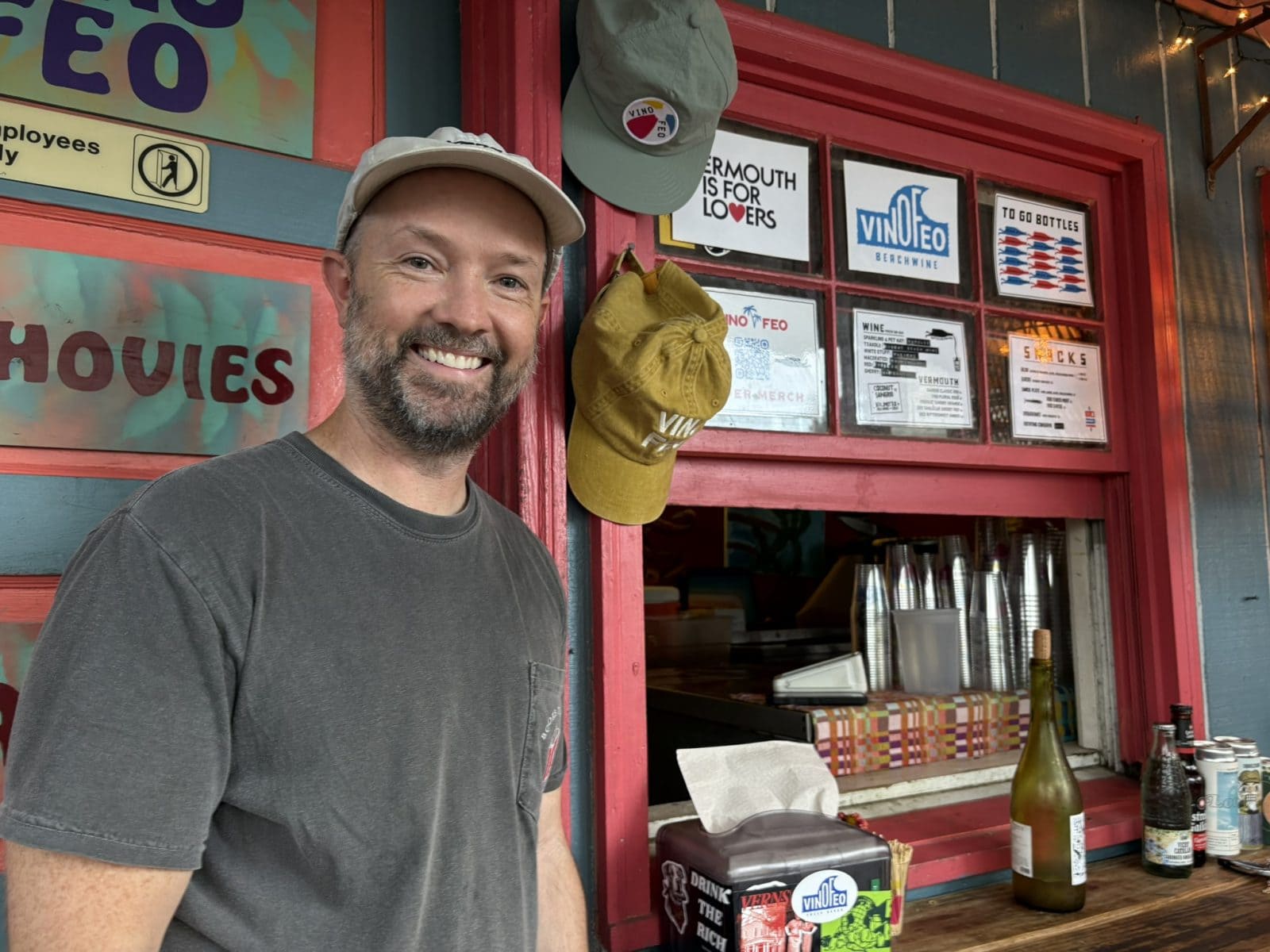
When a raging storm snuck up on Folly Beach on a recent Sunday afternoon, beachgoers weren’t thinking about listán blanco from the Canary Islands, let alone contemporary vermouth culture in Basque Country. But they thronged the service window at Vino Feo anyhow, ordering plastic cups of coconut sangria to sip on the abbreviated front porch until the rain let up.

“It’s giving piña colada vibes,” one man in a bathing suit told his wife, evidently pleased by both the cocktail and the couple’s decision this summer to relocate from Atlanta to Charleston County.

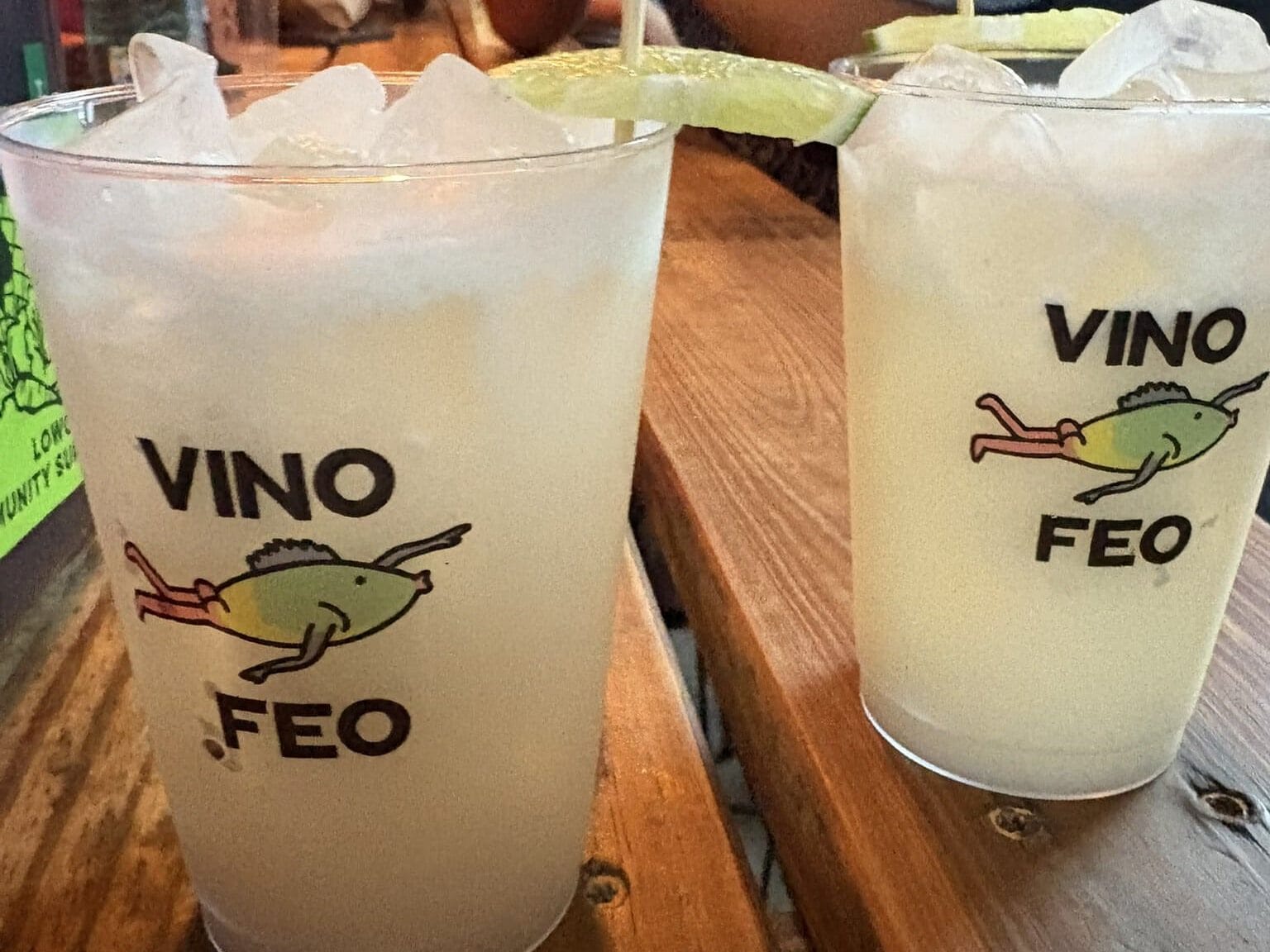
Vino Feo’s signature drink

That was the intention that Vino Feo founder Brandon Underwood poured into what’s become the year-old operation’s signature drink; when he came up with its basic recipe, the longtime local beverage manager aimed for “beachy and refreshing and lively and fun.” Also in the mix: up to a dozen different coastal Spanish wines made from obscure grapes with names that could just as well belong to World Cup stars.

Vino Feo founder Brandon Underwood

Originally devised as a solution to the ongoing problem of opened bottles bound to go bad during the wine window’s weekly four-night shutdown, Vino Feo’s acclaimed sangria represents everything that’s special about the minimalist venture. By casually pouring together the dregs of exceptional wines and serving them with a lime, Underwood has reasserted wine’s place in daily life and its capacity to enhance it.

“People are opening tabs and running to the beach and then jumping in the water and coming back and drinking a bottle, and then running back to the beach,” Underwood said. “It’s just a fascinating way to be enjoying wine.”

Best known around town for his stints at Edmund’s Oast, Renzo, and Estadio, Underwood had the financial wherewithal after paying off student loans to flee downtown Charleston’s hyperkinetic dining scene for the proudly divey Chico Feo, an open-air taco institution where customers care more about surf forecasts than the sand in their hair. When he joined the team, Chico Feo offered three kinds of wine: red, white, and rosé.

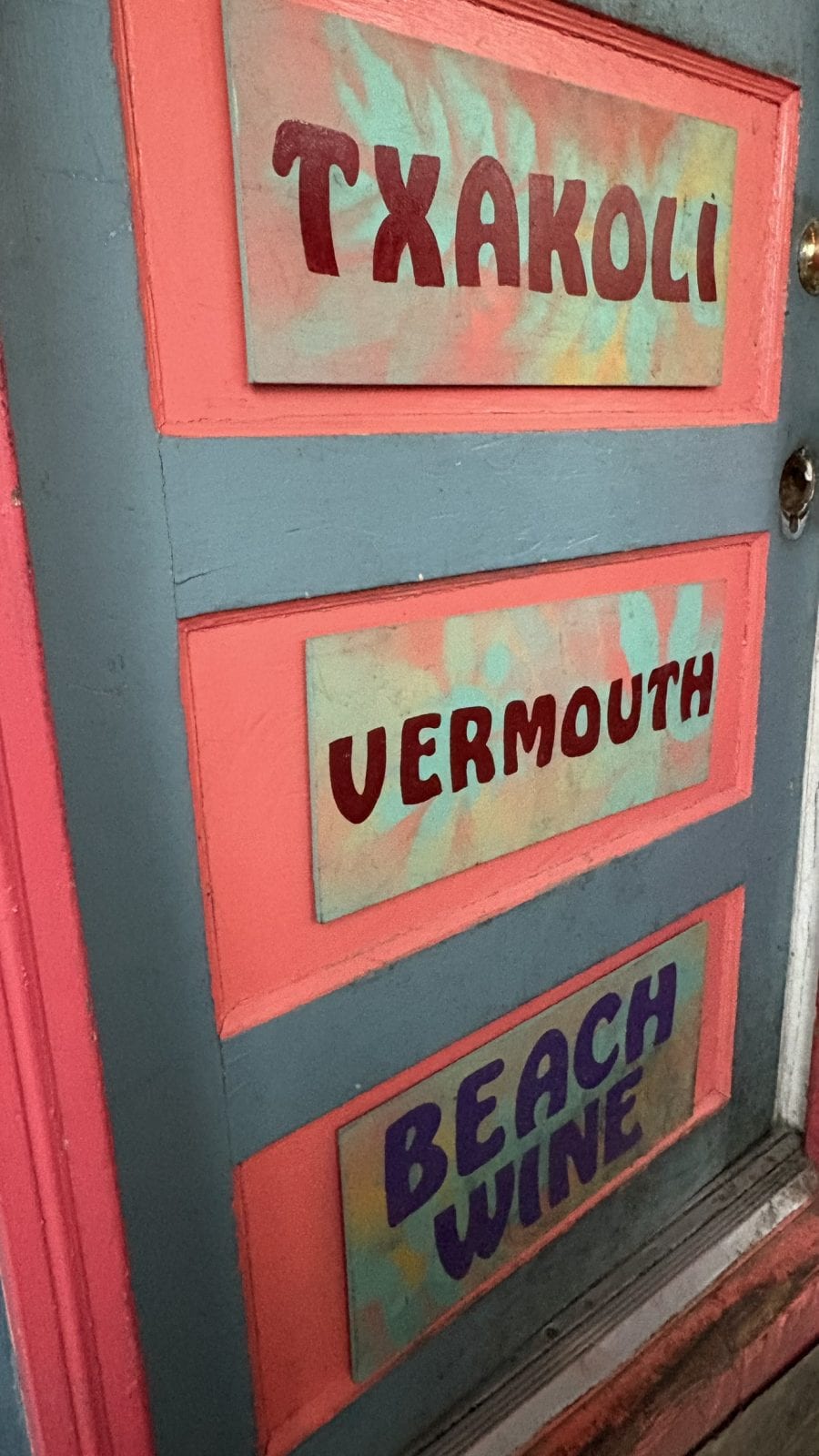
Underwood reasoned he could take some pressure off the main bar and deepen his longstanding relationship with Spanish wine culture by pouring txakoli on the restaurant’s beachside porch. Owner Hank Weed was at first reluctant to consign the space to another big dream, having been burned by dumpling makers and izakaya chefs. But Underwood promised that his project wouldn’t tax Weed’s time or patience.

By the time he got the green light, though, Underwood had more in mind than effervescent white wine. He envisioned Vino Feo as a celebration of wines made from grapes cultivated in air as salty as what sits over Folly. As a lifelong foe of pretension—he sidelines in sketching portraits of his friends’ rear ends—he wasn’t about to assemble an intimidating wine list. Instead, he posted a menu with vague, beach-appropriate categories, such as “sparkling” and “white stuff,” and each week rounded up superlative bottles to match.

“It’s maybe 20 to 30 different bottles,” Underwood said of the ever-changing selection. “I just fill up a big white Igloo cooler and then dump ice over it. Most of my job is making sure everything is cold.”

Beverage options at Vino Feo

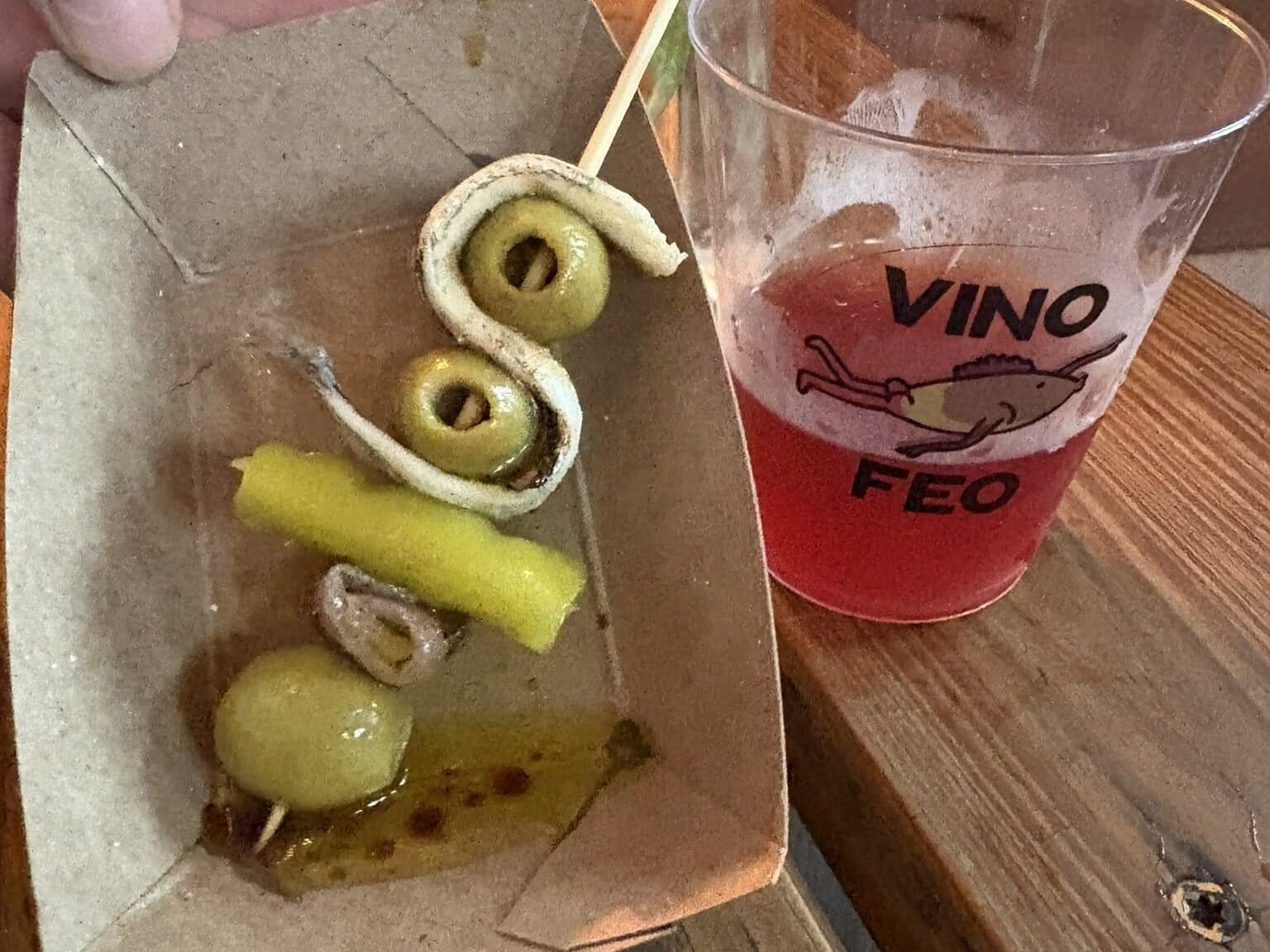
Served by the glass, wine is priced at $8-$14, a range made possible by the literal lack of overhead at a business without inventory, employees, or a watertight roof. Underwood will gladly part with a bottle, though. “I’m not attached to anything,” he said. “Everything ought to find a home.” He also offers five kinds of vermouth—“people are drinking an insane amount of vermouth on Folly”—and salty snacks, mostly anchovies.

For his work, or his insistence that he’s not doing any, Underwood has earned a devoted following among new-wave Spanish winemakers who’ve glumly grown accustomed to Americans’ reflexive rigidity around wine. He’s even hosted a few of them at Vino Feo.

Vermouth and gildas

“We had a winemaker from the Basque Country hanging out, pouring txakoli right next to the bar,” he said. “When they got out there, I was like, ‘This is not going to be like a normal tasting.’ We’re at Chico Feo; we’re at the beach, and it’s going to be super interesting and chaotic in the best way possible. They had a blast. I know they felt at home.”
Amid the barrier island’s open-minded residents and low-maintenance visitors, Underwood certainly feels that way. After 14 years in downtown Charleston, he last month moved to Folly Beach.

Filed Under: Entertainment

Blowing a fusion

July 29, 2026 by Hanna Raskin 1 Comment

One of the perks of purchasing a subscription to The Food Section is our informal concierge service. Paying readers can email me for personalized restaurant advice, and I’ll do the best I can to point them in the right direction. 

Subscribe

Lately, though, more folks have been asking the same question: Where should I eat in Ponte Vedra Beach? I was stumped, so I recently checked out a new restaurant there for Jacksonville Today, a longstanding TFS partner. As my review reveals, I’m still hunting for a good answer.

As is immediately apparent from its dramatic black curtains, barrel-backed chairs upholstered in green velvet, and parametric LED chandelier, Black Pearl in Ponte Vedra Beach is meant to feel very much of the moment. In other words, the three-month-old dining room shouldn’t make you think of JFK.

But on a recent visit, it wasn’t just the servers incongruously attired in starched white shirts and black bow ties that brought the long-ago president to mind. Rather, it was his famous quip about Washington’s blend of Northern charm and Southern efficiency that recurred to me as I sized up chef Abel Leonardo Chiok Diaz’s take on itameshi, the suddenly fashionable fusion of Italian and Japanese cookery.

An ongoing exploration of comfort food boundaries that dates to the 1950s, when Japanese chefs started tinkering with the spaghetti favored by occupying U.S. troops, itameshi emerged as a stateside restaurant genre roughly half a dozen years ago. Since then, it’s surfaced in North Carolina, appeared in Atlanta, and gained a secure foothold in Florida, with practitioners including Kinjo in Tampa, and OISE Ristorante in Fort Myers.

Typically, the hallmarks of itameshi are sophisticated cooking techniques, esteem for seasonality, and an emphasis on umami-rich ingredients that the two cuisines share, such as garlic and mushrooms (and a few that they don’t, a list led by parmesan and miso.) Resulting dishes look more like local clams gently steamed in sake than pizza topped with teriyaki chicken.

The dining room

Black Pearl, though, appears to take a different approach. I wasn’t aware of the restaurant’s itameshi inclinations before I ordered—the menu doesn’t mention it, and my server’s spiel extended to “Depends what you like,” when I asked for guidance—but it’s hard to square what it’s serving with the contemporary trend. Instead, Black Pearl has borrowed a few less vaunted aspects of Italian and Japanese traditions to produce what in my case amounted to a disappointing meal.

Namely, the restaurant has plenty of swagger, and cuteness to spare, but falls short on timeless elements of hospitality, delicious food, and attentive service among them.

To be sure, should you have 100 bucks to drop on a two-course dinner—or, more aptly in light of the setting, a corporate credit card and lenient expense policy—the swanky surrounds at Black Pearl are appealing, as is the energy of a dining crowd eager to show its support for kitchen ambition. If friends proposed meeting there, and promised to pick up the check, I doubt I’d object too strenuously. But if they were chasing an itameshi induction, or after a memorable upscale experience, I’d at least suggest waiting for gas prices to drop.

In addition to its main dining room, Black Pearl operates an eight-seat omakase chef’s counter, which is presumably an entirely different experience. But if you eat with the relative plebes in the room that occupies 4200 square feet of Black Pearl’s strip mall storefront, the evening begins with a drink, boozy or otherwise. Rather than the dressed-up juices that many restaurants pass off as mocktails, Black Pearl pours non-alcoholic gin and non-alcoholic rum (and charges accordingly: at $17, teetotaling is a $1 savings.)

A bird’s-eye view of the cocktail (and massive ice cube)

Otherwise, the cocktail menu might be the clearest expression of itameshi. A bee’s knees is ornamented with green tea liqueur; a blood-and-sand gets its citrus tang from orange-flavored sake. Still, what works in theory doesn’t always bear out in practice. My old fashioned, for instance, tasted more of its component Cognac than Japanese whiskey.

Mostly, though, it was dominated by miso syrup, which made the drink remarkably viscous. That sensation might have been alleviated by melting ice, but the giant rock in my glass stayed stubbornly intact. While something smaller would have been more appropriate for the cocktail, the bar apparently needed a platform for the hotel turndown-type chocolate inexplicably perched atop the massive cube. Cute, I guess.

Bread of unknown origin

Black Pearl read the room correctly when it appended truffle butter to its $8 bread service. I’m not sure if that butter’s the lone culprit, but the chemical scent of truffle oil hovers over the dining space as though it was applied with an air freshener. As for the bread, it’s billed as “warmed,” which is accurate; the restaurant didn’t respond when I emailed to ask about its sourcing, but it tasted freshly defrosted.

Most of the appetizers are similarly predictable, ranging from tuna carpaccio to chicken karaage, essentially chicken nuggets heaped with thinly grated parmesan. I’d been wowed by Diaz’s cooking at Taste Kitchen in Ann Arbor, Michigan, so was looking forward to king salmon tartare with sweet potato and trout roe, which sounded like a smart Carolinian riff on the French fixture.

Visually, the tartare was stunning. A crescent of coral-hued fish garnished with dark filaments of seaweed and nickel-sized floral blossoms, it looked like a maritime celebration. But its taste was anything but lofty: The fluted plate was swamped with so much lime-infused shoyu sauce that the fish registered as nothing more than ponzu-saturated mush. As for the advertised sweet potato, it was shuffled out of the flavor deck entirely.

Not the best short rib we’ve had…
…but the pear was good!

Unfortunately, I didn’t have much more luck with a hulking short rib that was sadly reminiscent of the entrée portions sous vided in huge quantities for conference galas. By contrast, a poached pear served for dessert was lovely: Wine-dyed a brooding maroon, the pear stood erect on its plate, evidently proud of its baking spices.

To me, those flavors telegraph Yuletide—and confirm that Black Pearl is perhaps not as current as it might seem.

Fun fact: After this review was first published, two readers wrote to share their thoughts about it. “That person that did the review at Black Pearl was brutal,” one said. “I really didn’t like her opinions and the way she worded everything was a little disgusting.”

By contrast, the other reader said, “Where did you find such a great reviewer? I appreciate that she didn’t hold back on punches. These places that charge a monthly mortgage payment for dinner need to be held accountable. She was so knowledgeable and, at the same time, witty. I am going to subscribe just on this review alone.”

Which is to say: Our work isn’t to everyone’s liking. But if like Reader #2, you approve of informed criticism and honest coverage of restaurants–especially the well-capitalized ones which can buy media attention–I hope you’ll follow his lead.

Subscribe

Filed Under: Entertainment

Lucky fruit fans turn up Blackjacks

July 20, 2026 by Hanna Raskin 2 Comments

Listen to this story

The second-best part of Watermelon Field Day, an annual free program hosted by Clemson University’s Edisto Research and Education Center in Blackville, South Carolina, a rural community about halfway between Aiken and Interstate 95, is the varietal tasting. The best part is when researchers signal that attendees—who’ve patiently endured scholarly presentations about Fusarium wilt and sales pitches for pesticide-spraying drones—can start hauling off harvested melons from the experimental fields.

“Get the Blackjack!” one of the more than 100 growers, plant scientists, and watermelon appreciators at the July 9 event yelped as soon as the go sign was given.

Filed Under: Science & Nature

Stirring things up

July 17, 2026 by Hanna Raskin Leave a Comment

Now that The Food Section is five, this newsletter has been around long enough to reflect on its past, including the developmental milestones that every independent publication has to cross off its growth chart as it progresses toward sustainability.

For instance, August 19, 2022 was the first day on which TFS tried to generate revenue by any means other than subscription sales. As “firsts” go, that’s possibly not as charming as a child’s first laugh or first game of peekaboo but soliciting sponsors really is the media equivalent of a toddler building a tower from three cubes. As I wrote then:

Today, I’m excited to announce the launch of The Food Section’s Burgoo Paddlers program, giving sponsors an opportunity to support contributions from food writers representing a range of experiences and perspectives. Once a month, The Food Section will publish a reported piece from someone who isn’t me, an endeavor made possible entirely by the Paddlers’ generosity. 

In other words, The Food Section is now open for pitches.

Women wore bloomers and flats in this game, played sometime between 1910 and 1930/ Photo by National Photo Company via Library of Congress

The Burgoo Paddlers program was a financial flop. My husband would blame the obscure name—around our house, “burgoo paddler” is now synonymous with misguided schemes—but I prefer to think I just hadn’t yet figured out how to ask for money. (While we’ve retired that sponsorship program, you can still underwrite freelance stories by making a tax-deductible donation to TFS here. See how much I’ve learned?)

From an editorial standpoint, though, the arrangement exceeded my highest expectations. Since I issued that first-ever call for pitches, The Food Section has published the work of 91 food writers. That figure makes tax season more complicated, but it also makes this newsletter more informative, more insightful, and much more interesting.

As I’d hoped, we’ve assembled an incredibly diverse set of contributors. What they have in common—so far as I know—is none of them are responsible for the war with Iran, or any of the other distressing global circumstances causing consumer prices to surge. That’s why on July 5, 2024, The Food Section announced its first cost-of-living adjustment for freelancers. As I wrote then:

It’s been a point of pride for The Food Section that its freelancers are compensated fairly. But when it comes to pay, you can only brag about a sum for so long before the boast loses its oomph…The Food Section can do better.

The New York Female Giants were accused of promoting women’s suffrage/ Photo by Bain News Service via Library of Congress

Since then, bringing our longform pay in line with inflation has become an annual tradition. Every Independence Day, we bump up our rate by whatever percentage was determined by the Social Security Administration. This year, that percentage is 2.8%, which means TFS now pays $1,114.98 for an in-depth feature story.

Want a crack at that paycheck? Pitch us! You’ll find detailed guidelines and our pitch form here, but briefly, we’re currently seeking three kinds of submissions (as well as a replacement Nashville correspondent, should you call the Music City home):

  • In-depth features, which run about 1200 words, anchor The Food Section, and advance its mission. In addition to the compelling characters and central conflict that we seek in every story, these longform stories are distinguished by extensive research, comprehensive sourcing, and on-the-ground reporting.
  • Short features, which run 500-750 words, are the midweek quick hits that focus on one new development or recent episode in Southern food culture. Some favorite shorts from 2026 include coverage of Southern food-flavored lubes issued by a Georgia adult store brand, an exploration of whether a West Virginia distillery’s claims about mine-aged whiskey are valid, and the profile of a former Atlanta weatherman who became his daughter’s go-to hair braider after taking on household challah-making duties. We pay $200 for a short feature.
This athlete was photographed in 1913/ Photo via Library of Congress
  • Book reviews are a recent addition to The Food Section. If you’d like to be considered for an assignment, please bypass the pitch form and complete this application. We pay $150 for a book review, along with supplying the book.
Pitch TFS

Finally, don’t hesitate to spread the word about this opportunity. As I wrote back in 2022, “The Food Section was envisioned as a media organization, invigorat[ing] rigorous and independent food journalism across the South in part by supporting its practitioners throughout the region.”

That hasn’t changed.

Have a great weekend.

Filed Under: Entertainment

Air fryers still hot in Charlotte

July 15, 2026 by Hanna Raskin Leave a Comment

What’s most interesting about Daily Digest interviews—at least to this food writer—is how infrequently people eat. Back when this was a weekly column, I could go months without hearing about breakfast. Today’s set of Digesters is no exception, with only the self-identified dieter reporting three square meals.

Taz Brown lives in Waxhaw, North Carolina.

Taz Brown/ Provided
Close-up of an air fryer/ Photo by Kelsey Todd via Unsplash

No breakfast. I just hop right out of bed, and get right to work, so no breakfast. I think the only thing I ate yesterday was chicken nuggets, French fries, and some mozzarella sticks. That was dinner.

Filed Under: Entertainment

Let us eat TFS birthday cake!

July 10, 2026 by Hanna Raskin 2 Comments

In terms of what a fifth birthday celebration requires, we’ve already covered silly games and party favors. But that means the most important element of The Food Section’s survival celebration is still on the table. Or, more accurately, it hasn’t made its table appearance yet.

Readers, our big birthday calls for cake.

Longtime supporters of this newsletter know that we’ve always entrusted cupcake-making to the talented crew at Daddy’s Girls Bakery in North Charleston. Their TFS logo-sporting strawberry cupcakes are a beloved staple of our yearly Spirited Brunch subscribers’ reception. Daddy’s Girls doesn’t work exclusively in personal-sized pastry, either: A few years ago, the bakery made a beautiful disc golf-themed cake for my husband’s birthday.

This cake was an ace/ Photo by Hanna Raskin

But if I’ve learned anything about the American South over the past five years of covering this region, it’s that we don’t lack for cake makers. There are countless boutique shops, storied bakeries, and entrepreneurial independent pastry chefs producing gorgeous cakes guaranteed to elevate any occasion.

So, which one of them will make The Food Section’s birthday cake? That’s up to you!

Publix makes a good cake, but we have higher ambitions for our big five-no/ Photo by Hanna Raskin
In a pinch, we can always settle for a slice from Brown’s Quality Seafood in Waynesboro, Georgia/ Photo by Hanna Raskin

Our birthday cake budget is $200—and we’re counting on you to tell us where to spend it. If there’s a local bakery that’s been making your customized cakes for a decade, a pastry chef who’s the talk of your favorite farmers market, or an inspired cake creator you follow faithfully on Instagram, please consider sending along the cake pro’s contact information (and a sentence or two about why you think your nominee’s ideal for the TFS assignment.) You can email me at raskin@thefoodsection.com, DM me on Instagram at @readtfs, or comment on the online version of this post.

Eligibility for this gig is wide open. All we ask is that the baker—which could very well be you!—works out of a commercial kitchen in The Food Section’s coverage area and is available to make a TFS cake before our birthday year’s up.

In coming weeks, we’ll share the suggested makers with you and ask for help choosing one. Consider it the icing on a birthday cake we’ve earned together.

Filed Under: Entertainment

Seeing Charleston anew

July 8, 2026 by Hanna Raskin Leave a Comment

Listen to this story

One of the reasons I moved away from Charleston last year is I felt like I was being held hostage in my North Charleston ranch house by high prices and vicious traffic. As a small business owner, I had neither the time nor money to experience the place that tourists (or at least those tourists who read Southern Living) have named the South’s best city for 10 years running.

But now that I live in Macon, Georgia, I get to see Charleston as visitors see it. When I go back, I stay downtown and eat at new restaurants—which haven’t gotten any cheaper, but the meals are easier to justify in the absence of a home kitchen.

Usually, I spend a day or two at most in Charleston when in town for Spirited Brunch purposes. But I recently had a chance to spend close to a week there in connection with a new Lowcountry Foodways program at the College of Charleston; I was invited to help stimulate faculty members’ thinking about the cross-departmental curriculum.

Baked oysters at Cane Pazzo, a restaurant which has aged out of the “new” category, but belongs on any local list of must-visits

As you might imagine, the scholars had some sophisticated questions. Or so it seemed to me, since I’m accustomed to answering just one question about Charleston food: What’s new?

Fortunately, that’s a question I’m now qualified to answer, with the caveat that it’s a mistake to skip out on places with long local histories when collecting culinary passport stamps. Easily my best breakfast of this trip was at Fast and French, which opened on Broad Street in 1984. Looking down the block toward the social media-controlled hordes at Sorelle’s Mercato, a swanky café where pizza’s priced at $40, I could only figure those folks don’t care for warm hospitality, honest food, and the kind of artistic streak that once wound all around Charleston.

Here, a few standouts from my catchup tour (interestingly, none of them are located on the peninsula):

CudaCo. Deckhouse

According to a server at Deckhouse, not every type of fish has the right skin for crackling
Deckhouse serves tinned fish too, but raw seafood’s the star at the CudaCo offshoot

I’ve been a fan of chef Shaun Brian since his days as executive chef at Parcel 32, an upper King Street restaurant that was cursed with a succession of scandals before its 2018 opening. I was impressed both by his ability to cook through the noise, and his deft handling of seafood.

Almost from the moment that he and Chris John opened CudaCo. Seafood House, a fish market on James Island, I started talking up its lunch counter as one of the city’s most underappreciated dining destinations. (While I don’t have a logbook to consult here, my guess is I might have waited a few months for Covid vaccines to become widely available before dealing out restaurant recommendations.)

The marshy surrounds at Deckhouse contribute mightily to its charm

CudaCo.’s no longer a secret, particularly in the wake of its Deckhouse debut in June. The outdoor raw bar doesn’t serve anything hearty enough to qualify as a meal: The menu’s devoted to crudo and ceviche, although it includes a fetching twirl of fish skins for eaters who can only stand so much slippery. As always, the fish is magnificently fresh and treated with just the right amount of citrus.

769 Folly Road, instagram.com/cudacodeckhouse

Bar Weems

For years, it took some work to find Bar Weems, Weems Pennington and Sharon Brown’s roving noodle project. But since it last December settled into a permanent home on Reynolds Avenue in North Charleston, the ramen house has been hard to miss: The exterior brick wall painted with a green, noodle-slurping monster certainly caught my attention when I drove away from the latest location of Maya del Sol upon discovering Raul Sanchez’s dinners require reservations (His Sunday brunch—one of my favorite morning meals in Charleston—is still a seat-yourself-at-the-counter situation.)

Shoyu broth at Bar Weems, aswim with noodles and pork shoulder slices

To enter Bar Weems, you walk through a door that doubles as the monster’s mouth, a detail that’s consistent with the quirkiness within. There are ramen devotees who tediously overanalyze every component of the Japanese soup, and then there are the ramen fans who gravitate toward late nights, loud music, and the rambunctious qualities of pork. Based on Bar Weems’ playful cocktails, casual dining room, and embrace of cheese seasoning powder, I’m betting that Pennington and Brown belong to the latter camp. While I only sampled a small sliver of the menu, the excellence of their broth suggests it deserves further exploration.

1921 Reynolds Ave., North Charleston, barweems.com

Second State Navy Yard

Second State Coffee at Navy Yard celebrated its grand opening on June 20

Maybe I’m biased toward coffeeshops these days because Macon only has three by my count, two of which are outwardly Christian. (To be clear, there’s nothing wrong with Christianity, but I prefer a separation of church and cold brew.) Still, I was totally smitten by the newest location of Second State, a local chain that got its start on Beaufain Street in 2012.

Housed amid a collection of century-old storehouses, Second State is bound to get very busy as the retail and residential development of North Charleston’s Navy Yard continues. In the meantime, though, the coffee’s terrific, and the setting—just west of the Cooper River—is almost serene. 

2156 Noisette Blvd., North Charleston, secondstatecoffee.com

Sullivan’s Fish Camp

The crab tostada at Sullivan’s Fish Camp is what every Taco Bell would serve in a just world

Like the wedding dictum, Sullivan’s Fish Camp is kind of old, somewhat new, and makes good use of the borrowed and blue—so long as that final category encompasses the nearby sea. To briefly recap its resume, the restaurant opened in 1988 as Sullivan’s Seafood Restaurant and was purchased in 2021 by the hospitality firm responsible for the creation of Basic Kitchen in downtown Charleston and redesign of the Post House Inn in Mount Pleasant. Last year, ownership of the reimagined seafood shack shifted to a group including longtime FIG chef Jason Stanhope, who now runs the kitchen.

Under Stanhope, Sullivan’s the quintessential example of a restaurant that’s a million times better than it needs to be. I got the sense from other patrons at the bar that they’d be completely satisfied with lobster rolls and boozy frozen drinks, both of which are available. But savvy diners will find evidence of FIG’s famously high standards on every plate: The care expended just on the selection and slicing of the springtime vegetables that garnished my fish was astounding.

2019 Middle St Unit A, Sullivan’s Island, sullivansfishcamp.com

Filed Under: Entertainment

Whole lot more than a bargain store

July 1, 2026 by Hanna Raskin Leave a Comment

Listen to this story

Knoxville grocer Cas Walker never shied away from a promotional opportunity. After he purchased his first store in 1924, he tossed chickens off the roof, dropped coupons from airplanes, interred live-burial professional Digger O’Dell in the parking lot, and—most memorably—sponsored a live radio show on WIVK.

Dolly Parton got her start on “The Cas Walker Farm and Home Hour” as a 10-year-old singing mountain standards. The station’s since relocated its studio and dial frequency, but still proudly claims to have launched Parton’s career as a music mogul.

Filed Under: Entertainment

Hand it to Georgia’s leading eggroll truck

June 29, 2026 by Hanna Raskin 1 Comment

Listen to this story

In the annals of American restaurant history, this decade’s likely to go down as the era of cost trimming. Anxious restaurateurs have replaced people with self-service kiosks, swapped out pine nuts for walnuts in pesto, shrunk the amount of beef in their burgers, and nixed every nicety, including bread baskets and soda refills. As operational costs mount, customers feel lucky to get a seat and a drinks list.

World Famous offers neither. Yet the fleet of eight eggroll trucks, in near-constant circulation across Florida and Georgia, is the source of one of the most accomplished and satisfying dining experiences to emerge in this region since the onset of the pandemic.

Filed Under: Entertainment

Liver-and-onion sandwich generation

June 26, 2026 by Hanna Raskin Leave a Comment

Listen to this story

As is likely true of most workplaces these days, it’s exceedingly rare for The Food Section’s contributors to meet up in person. If it wasn’t for our three-person Charlotte bureau, I doubt we’d ever have more than two TFS team members in the same room at the same time.

Subscribe to TFS:CLT

Just like bigger companies, this tiny publication tries to make up for physical distance with virtual gatherings. For example, we marked the end of last year by Zooming with a gifted Ukrainian fruit carver who’s immigrated to Atlanta. (I spent our session desecrating a perfectly good orange. If you’re ever looking to get into fruit artistry, I’ve got a toolset for the taking.)

Recently, though, I had the chance to meet TFS restaurant reviewer Michael Stern for lunch. The occasion was liver-and-onion day at Unique Catering, the same luncheonette which wowed attendees at Legs & Cans, our fried chicken frenzy in Aiken last spring.

Fittingly, the midday catchup came together through digital channels: He’d raved about liver in a review he filed electronically; I mentioned my love of liver in the intro I recorded to accompany his reading of the column, and after listening to the podcast, he got in touch to tell me about liver-and-onion Thursdays.

Want access to the complete archive of Stern reviews?

Subscribe to TFS

Steff Hooper’s liver was terrific, as promised. But what was most memorable about the visit was how the customer in front of us took her serving. She wanted the liver-and-onions between two slices of white bread.

Michael Stern takes his liver with yams and squash
Hanna Raskin favors greens and black-eyed peas

Stern and I were stunned. In all our liver-eating days, we couldn’t recall ever encountering a liver-and-onion sandwich. But Hooper assured us that it was a standard request, although she reckoned even more patrons take their liver home to mix up with grits in a kind of DIY livermush salute.

Unique Catering’s Steff Hooper with her fried chicken at a TFS event in 2025
The exterior menu board at Unique Catering

Fascinated, I started poking around the archives to see where and when liver-and-onion sandwich affinity originated. There were plenty of liver sandwich citations in 20th century newspapers, particularly in years when economic hardship or wartime rations put fancier meat out of reach, but the home cooking columnists and advertisers almost always meant liverwurst spread on a bun.

A true liver-and-onion sandwich was considered so wacky that the makers of a comical multiple-choice quiz in 1981 asked whether The Wizard of Oz’s Tin Man was after a heart, a tin woman, or a liver-and-onion sandwich. (Imagine if he’d found all three!) More than a decade later, when food writers at the Arizona Daily Star turned up a specimen at a restaurant in the foothills of Tucson, they described it as a “trademark item,” entirely unknown elsewhere.

Philip Bardin displays a John Windham painting at his family home in Elloree, South Carolina in 2021

They were nearly right—except they’d failed to check the menu at The Old Post Office, the adored Edisto Island, South Carolina restaurant helmed by Philip Bardin.

Bardin passed away in 2022, but the restaurant’s legacy is preserved in a 2004 cookbook, Cooking in the Lowcountry from The Old Post Office Restaurant, authored by Jane and Michael Stern. Three years later, they included Bardin’s recipe for liver-and-onion sandwiches in their book Roadfood Sandwiches.

“By golly, yes!” Stern wrote when I asked about it. “I completely forgot about that.”

Still, neither of us will ever forget Bardin, an exceptionally talented chef and much-loved mensch. The Food Section today is honored to share his recipe for liver-and-onion sandwiches, just in time for tomato season. No offense to Unique Catering, but as a Mobile Press-Register reporter wrote in his 2007 review of Roadfood Sandwiches, “it’s cheaper than driving to South Carolina.”

Subscribe to TFS

Liver ‘N’ Onion Sandwich with Firecracker Sauce

Ingredients:

  • 1 cup buttermilk
  • 1 tablespoon salt
  • 2-4 ounces of beef liver, sliced
  • 1 cup flour
  • 1 tablespoon Italian seasoning
  • 1 teaspoon black pepper
  • Salt and pepper to taste
  • 1 tablespoon butter
  • 1 tablespoon olive oil
  • 1 yellow onion, sliced in medium thick rings
  • 4 slices pumpernickel bread, toasted 
  • 1/2 cup Firecracker Sauce, heated (see recipe)
  • 4 thick slices of Provolone cheese

Directions:

  1. Combine the buttermilk and salt and soak the beef liver in the liquid for a full hour.
  2. Combine the flour, Italian seasoning, and black pepper. Dredge the liver through this mixture and pan-fry it until cooked through, about 3 minutes per side. Remove the liver and add salt and pepper to taste.
  3. Heat oil and butter in a heavy skillet. Add onion rings, and as they cook, place each piece of cooked liver onto a slice of toasted pumpernickel bread. Top the liver with the cooked-soft onions and a nice, thick topping of Firecracker Sauce. Top each half sandwich with 2 slices of Provolone and melt it quickly under a hot broiler. Top with the other slice of toast and cut in half.

Firecracker Sauce:

Firecracker Sauce is best if made one day ahead of use.

Ingredients:

  • 2 Roma tomatoes, sliced thin
  • 1/2 onion, sliced thin
  • 1 jalapeno, sliced thin
  • 1 tablespoon olive oil
  • 1 tablespoon Frank’s Original Hot sauce
  • 1/2 cup of tomato puree or fresh salsa

Directions:

Heat olive oil in a saucepan. Sauté the tomatoes, onion, and jalapeno until they are tender. You may want to add a touch of sugar. Add the hot sauce and puree; simmer on low for about five minutes. Let cool and refrigerate.

Filed Under: History

The right stuffed shrimp

June 19, 2026 by Hanna Raskin Leave a Comment

Happy Juneteenth from The Food Section! While there’s no single way to mark the holiday, you might consider adding Black-owned restaurants to your eating itinerary this weekend.

Listen to this story

Do you know what it means to compete with New Orleans?

Shreveport sure does. The gambling-reliant metropolis in the northwest corner of the state, about 10 times closer to Texas and Arkansas than Bourbon Street, has been mocked, derided, and dismissed as a culinary backwater by Louisianians living elsewhere. But the city’s champions have long contended that it takes just one stuffed shrimp to reeducate even the haughtiest Gulf Coast gourmand.

Stuffed shrimp served with rice/ Photo provided by Visit Shreveport-Bossier

This spring, State Rep. Joy Walters and State Sen. Sam Jenkins tested that theory. Before asking fellow legislators to support a bill designating their hometown as Louisiana’s Stuffed Shrimp Capital, an honorific intended to boost hospitality spending, the Shreveporters invited them to a stuffed shrimp supper at the lieutenant governor’s apartment in Baton Rouge.

Click here to subscribe to The Food Section

“Absolutely, there was commentary about the fact that we are nowhere near the Gulf, and how they don’t believe we can cook,” Walters said in a phone interview. “I wasn’t going to change their minds just talking about it. I had to let them taste it.”

Stuffed shrimp festival in 2023/ Photo by Robert and Talbot Trudeau via Flickr

Following the meal prepared by chefs from Orlandeaux’s Crosslake Café and Eddie’s Seafood & Soulfood, not a single legislator voted against the stuffed shrimp bill. It was signed into law by Gov. Jeff Landry on May 29.

“It’s definitely significant to this area, and it’s a wonderful thing,” said Damien Chapman, chef-owner of Orlandeaux’s and great-great-great-grand-nephew of one of the restaurateurs who originated stuffed shrimp. In addition to carving out Shreveport’s foothold in the state’s culinary tourism economy, the Stuffed Shrimp Capital title was concocted to honor the legacy of Freeman & Harris Café, the pioneering Black-owned restaurant which created and popularized the dish.

Freeman and Harris Cafe, circa 1990/ Photo by LSU Shreveport Archives via Flickr

Opened in 1921 as a barbecue joint by Van Freeman and Jack Harris, Freeman & Harris was jointly owned by Pete Harris, Wilmer Wallette, Arthur Chapman, and Alice Freeman Harris by the 1960s, when it was common for local businessmen and visiting civil rights leaders to plot strategy over platters of stuffed shrimp. “That is what Pete Harris gave us that was so wonderful—a warm meal and a place to talk,” Shreveport Times columnist Larry English eulogized when Harris died in 1992.

Freeman & Harris closed two years later, but stuffed shrimp remained on the menu of restaurants founded by relatives of one-time owners and former employees, including Eddie Hughes. Hughes, who died in 1995, was widely credited with helping to devise stuffed shrimp as a teenage line cook at Freeman & Harris in the 1950s.

“It was one of those things where I don’t think they even realized at the time that it was great,” said Chapman, who estimates he sells thousands of stuffed shrimps each week. For the at-home crowd, other companies with familial ties to Freeman & Harris sell frozen stuffed shrimp.

“You can air fry them,” Sam Jenkins, the state senator, told The Food Section. “Every month or so, I pick up a package.”

Preparing the stuffed shrimp/ Photo provided by Visit Shreveport-Bossier
Stuffed shrimp ready for customers/ Photo provided by Visit Shreveport-Bossier

Jenkins and Walters—whose stuffed shrimp consumption has fallen off since her father told her to quit ordering them from his food truck—agree that few home cooks try to make stuffed shrimp from scratch. That’s because “stuffed shrimp” doesn’t mean the same thing in Shreveport as it does down south, where chef John Besh once published a recipe that entailed butterflying shrimp and tucking a nubbin of crabmeat dressing between its halves.

Shreveport-style stuffed shrimp also calls for crabmeat, garlic, and the holy trinity of celery, onion, and bell pepper, as well as what Chapman describes as “the blend of spices near and dear to this area.” But what distinguishes the dish is the split shrimp is secured within the Creole dressing, or applied tightly to a cylinder of it, then battered and deep-fried. Consequently, a traditional stuffed shrimp looks more corn dog than crustacean.

Stuffed shrimp served with fries/ Photo provided by Visit Shreveport-Bossier

It’s also served with a tartar sauce that both Walters and Chapman cited as crucial but struggled to describe. A local radio host may have come closest to the mark in a blog post which opened with a confession that “I didn’t even realize this was a Shreveport ‘thing.’” Further admitting that the familiar sauce’s components were a mystery, the writer likened the condiment to “a cross between the house dressing at a Mexican restaurant and Cane’s sauce,” which implies mayonnaise, garlic powder, paprika, and sugar.

According to Chapman, diners drive hundreds of miles for Shreveport’s stuffed shrimp and try to figure out how to haul more servings home.

“People always ask, ‘Why don’t you franchise into California or Texas or Chicago?’” he continued. “We’re designed to bring them here.” 

Going forward, “them” may even include eaters from New Orleans.

Filed Under: History

Chug, chug, chug

June 18, 2026 by Hanna Raskin Leave a Comment

Listen to this story

Jack Nales, a North Carolina Department of Agriculture marketing specialist, can’t recall how many years he’s worn a cow costume to the state’s Legislative Milk Chugging Contest. But the 2025 dairy promotion event may prove hard to forget.

“Last year, they lost because they upchucked milk,” Nales said of the four-man team fielded by the N.C. House of Representatives, a perennial longshot in the annual competition. “It wasn’t projectile or anything, but even a dribble will disqualify you.”

Filed Under: Entertainment

Blueberry hill

June 15, 2026 by Hanna Raskin Leave a Comment

Listen to this story

Less than half a century after a few Georgia farmers desperate to make up for lost tobacco income took a flier on blueberries, the crop is surging across the state. Georgia’s lately surpassed perennial fruit powerhouse California, and sprinted past Michigan, which led the nation in blueberry production for generations. The Southern shift is juicy PR fodder for North America’s biggest berry grower, which in a recent press release teased, “The peach state is feeling blue!”

(In terms of quality and quantity, South Carolina is the region’s reigning peach state, but “the state next to the peach state” admittedly doesn’t have the same ring to it.)

Filed Under: Science & Nature

Finding your way

June 12, 2026 by Hanna Raskin Leave a Comment

The most common refrain at Wednesday’s I-40 Exit Strategy map launch party—attended exclusively by longtime Interstate 40 users—was, “I’ve never heard of these places.”

It’s no surprise that most drivers aren’t aware of the independent restaurants featured in The Food Section’s newest exit-by-exit eating guide. After all, it’s exceedingly expensive to purchase space on a Department of Transportation services sign, so travelers generally only see logos for billion-dollar corporations. It’s little wonder they assume the roadside meal situation is hopeless.

In other words: You can spend your time on I-40 in North Carolina ruing the homogenization of our nation’s dining landscape. Or you can spend 10 bucks for the cheerful certainty that every highway trip is a chance for new culinary discoveries.

Rosebud Cocktail Lounge bartender Ben Burns pours the evening’s signature drink at our map launch party

If you haven’t already purchased a printed map, you can get a copy directly from Good Printed Things. But retailers are also beginning to stock the guide: If you live in Asheville, you can buy your map at Downtown Books & News, the fabulous used bookstore on Lexington Avenue that’s been furnishing the city’s creative class with out-there ideas and hard-to-find information since 1988.

On the other end of the state, Home Plate Provisions in Wilmington now carries the map too. The new shop’s devoted to “iconic products from across the U.S.,” so we figure the guide will fit in nicely.

And if you don’t live in either city, please consider asking your favorite independent bookseller (or another small goods store!) to offer it. Getting the map into wider circulation is a great way to support the highlighted small businesses, as well as this newsletter. We’d love to see the I-40 Exit Strategy guide on shelves, counters, and rotating racks throughout the Carolinas. Prospective purveyors can find more info here.

Finally, one last request for map owners, including the many food enthusiasts who joined us at Rosebud Cocktail Lounge on Wednesday evening for boozy Brazilian limeade and St. Roch pimento cheese: We’d love to hear about where this map takes you. The Food Section’s on Instagram at @readtfs; we can’t wait to see your summer road trip pix.

Happy travels!

Buy an I-40 exit eating guide now

Filed Under: Exit Strategy

Benson to Rocky Point

June 11, 2026 by Hanna Raskin Leave a Comment

We’ve reached the end of the road–and the start of the beach. Even the food starts to taste summery on this end of the state.

EXIT 325: Urban Turban Express

100 S Wall St, Benson

919-701-1095

T-SUN 11AM-9PM

Neither urban nor particularly express, Urban Turban Express is the thoughtful extension of Urban Turban Indian Grill and Bar, a beloved Punjabi restaurant in Durham. Located in a corner convenience store, the counter serves up a spectrum of complex flavors, including spicy ones upon request. A comforting chana masala, woven from chiles and ginger, is emblematic of the operation—which appears to have overshadowed Valero’s roller grill, seen dark and vacant on a recent weekday afternoon.

EXIT 341: Tortería y Rosticería Edy

200 Raleigh St, Newton Grove

919-236-4049

M-TH 10AM-9:30PM, F-SAT 9:30AM-10:30PM

“Wing and a thigh,” has been a customary order at takeout counters across the South for generations, but Tortería y Rosticería Edy suggests what other kinds of deliciousness the poultry phrase could yield. At this small woman-run shop, a standing rotisserie produces crackly-skinned chickens served by the part with corn tortillas, hand-patted to order. Homemade salsa verde, boasting enough zip to warrant a heat warning when issued, is a beautifully bright foil for the slow-cooked bird (and not too shabby atop accompanying black beans.)

EXIT 364: Gorditas Express

125 W College St, Warsaw

910-226-8080

M-F 10AM-8PM, SAT-SUN 9AM-8PM

Since opening in 2022, Gorditas Express has treated its regular customers to whatever they crave, including shrimp boils, Sonoran hot dogs, and weekend menudo. For first timers, though, the titular gordita is the requisite order. As with the finest pizzas, it’s the dough that matters most when considering the excellence of these delicate masa pockets, griddled to flatter the corn’s sweetness. Whether filled with cheese, pork rinds, ground beef, or nopales, it’s likely to take the prize for your trip’s best handheld snack.

EXIT 385: Sensation Farmhouse Restaurant

5631 S NC-41, Wallace

910-285-1471

M-W 11AM-8PM, TH-SAT 7AM-8PM, SUN 7AM-6PM

Sensation Farmhouse owner Johnny Copeland downplays what it takes for a buffet like his to succeed, implying a gospel soundtrack and good cooks are a sure route to enormous popularity. What he doesn’t usually mention is the warm service and steam table items that have become uncommon in restaurant settings, including chicken-and-pastry, chitlins, and pig feet. Everything skews salty, befitting a stretch of I-40 that bends toward the beach, but house seasoning reaches its apotheosis in a tray of fried chicken. 

EXIT 408: Paul’s Place Famous Hot Dogs

11725 US-117, Rocky Point

910-675-2345

SUN-TH 6AM-8PM, F-SAT 6 AM-9PM

Paul’s Place has been around so long that the restaurant’s marked up the retired signage which gives character to its spartan dining area, lest anybody believe they can buy a hot dog with change. In fact, nothing about Paul’s is compatible with change: In 1943, 15 years after opening, David Paul devised a tomato relish to distract customers from chili sauce, made exorbitantly expensive by wartime meat rations. That sweet condiment, cut with the crunch of cucumbers, still defines Paul’s today.

Filed Under: Exit Strategy Tagged With: gptmap

Waynesville to Swannanoa

June 11, 2026 by Hanna Raskin Leave a Comment

If you’re traveling west to east on Interstate 40 in North Carolina–which is the common summertime direction–this is where your journey begins.

Exit 20: Ben’s Backdraft Barbecue

3028 Jonathan Creek Rd, Waynesville

828-400-6334

T-SAT 11AM-8PM or sellout

Interstate 40 rolls on to Tennessee, but Ben’s Backdraft Barbecue is so far west that its output tastes like Texas. The 2025 successor to a food truck launched by former firefighter Ben Hooper, Ben’s Backdraft deliberately burns apple and oak wood in the smoker which once anchored Asheville’s Buxton Hall Barbecue. The resultant meat lineup includes pork, chicken, and brisket distinguished by exceptional texture and peppery bark: it’s a forcefully smoky reminder that the cut hails from the same creature as expense-check steaks.

EXIT 27: Sherrill’s Pioneer Restaurant

8363 Carolina Blvd., Clyde

828-627-9880

T-SAT 7AM-3PM

Locally known as The Pioneer—or The Pine Ear, as it’s rendered on a wooden sign that dates to when mountaineers wisely cashed in on tourists’ fascination with backwoods culture—Sherrill’s is a 70-year-old roadside diner where servers pour coffee with a stay-all-day attitude. Should you take them up on the offer, you’ll likely start at sausage-darkened sawmill gravy over biscuits, and wind up at homemade fruit cobbler. But the essential stopover is a bowlful of Appalachian soup beans, simmered in potlikker and paired with cornbread.  

EXIT 37: The Hot Dog King

2299 Smokey Park Hwy, Candler

828-670-1199

M-F 11AM-6PM

Roughly 20 years ago, The Hot Dog King figured into the fall of Buncombe County sheriff Bobby Medford, sentenced for extorting bribes from business owners who operated video poker machines. What’s strangest about the story is that the restaurant probably didn’t need illegal schemes to lure patrons. Since 1979, slaw dog fans have flocked to the Asheville area chain’s locations for dogs bedded down with sweet cabbage and robust Greek chili on a buttery bun, a sterling take on the Mountain South classic.

EXIT 51: Hillman Beer

25 Sweeten Creek Rd, Asheville

828-505-1312

SUN-T 11AM-9PM, W-SAT 11AM-10PM

Other than vast quantities of beer, which most highway drivers aren’t seeking, breweries offer just about everything a road tripper needs, including family-friendly menus, outdoor seating, and socializing space for dogs. But Hillman goes one better by serving top-notch food that screams—sorry, thoughtfully intones—Asheville and its ethos. Picture pimento cheese with naan, blackberry hot wings ringed by kale, and a tempeh rice bowl studded with black beans. Or just order them with a local nonalcoholic craft ginger beer.

EXIT 59: Blunt Pretzels

120 Alexander Pl, Swannanoa

828-619-0734

T-SAT 10AM-7PM

Emblematic of the passion-driven artisanship that flourishes on Asheville’s fringes, Blunt Pretzels in 2020 relocated to Swannanoa from Marshall, two communities later devastated by Hurricane Helene. Yet there’s no sign of hardship at Eddy Schoeffmann’s sunny bakery; furnished with multiple ping-pong tables, it’s the source of standout Bavarian-style organic knots and sandwich-ready buns. For snackers, the pretzels—recognizable by their snowy white interior and caramelized shell—are sold with beer cheese or locally-made Lusty Monk mustard.

Filed Under: Exit Strategy Tagged With: gptmap

Marion to Connelly Springs

June 11, 2026 by Hanna Raskin Leave a Comment

Welcome to livermush country! If pig parts aren’t your preference, protein choices abound along this stretch of I-40, including chicken, fish, and local beef.

EXIT 81: Pho 828

2845 Sugar Hill Rd #7, Marion

828-559-0341

M-SAT 11AM-9PM, SUN 11AM-8PM

When Pho 828 took over the strip mall space previously occupied by Sakura Japanese Ramen, it kept its predecessor’s signature item on the menu, a decision that evidences confidence rather than mission creep. There’s no broth or noodle that this restaurant can’t handle, although the aroma of grilled pork and sound of a cleaver rightly steers eaters back to Vietnamese dishes, including a sonorous pho with admirably fresh garnishes.

EXIT 90: Mama’s Country Kitchen

2489 Harmony Grove Rd, Nebo

828-527-6490

T-SUN 7AM-3 PM

Mama’s Country Kitchen is hardly the only diner in McDowell County serving livermush. But what makes its rendition of the regional delicacy so valuable is short-order cooks here are egg virtuosos, meaning every plate and sandwich does justice to the loaf of cornmeal and pig parts (although a smear of mayonnaise doesn’t hurt when the combo’s bookended by white bread.) While staffers take equal care with the iron-rich flaps of livermush, even some lifelong western North Carolinians abstain: Mama’s also serves an estimable cheeseburger.

EXIT 103: Tokyo Diner Japanese Restaurant

1223 Burkemont Ave, Morganton

828-438-8358

M-F 11AM-9PM, SUN 11AM-8:30PM

While it’s little appreciated outside of the state, one of North Carolina’s favorite cuisines is counter-service hibachi, in part because eye-poppingly affordable portions of soy-saturated chicken, buttery shrimp, and griddled mushrooms reliably strain the seams of their Styrofoam boxes. Mostly, though, genre fans are fiends for white sauce, or sugared mayonnaise tinted by paprika. Tokyo Diner serves a flawless interpretation of the condiment, as well as fresh rice and bright vegetables, which may account for its perpetual drive-thru line.

EXIT 112: Highlands Butchery Restaurant

205 Rodoret St N, Valdese

828-438-8358

T-SAT 11AM-9PM, SUN 10AM-2PM

As the old joke goes when food’s slow to reach the table, “What did they do? Kill the cow?” At Highlands, that’s close to accurate. Co-owner Daniel Wall raises all the meat at his 75-acre farm in Icard, and it’s prepared for retail in a glass-fronted production room. But the butcher shop doubles as a restaurant specializing in smash burgers, grilled to order and presented on potato rolls. The grass-fed beef is stunningly rich; pickles are a must with every patty.

EXIT 118: Tex’s Fish Camp

3452 Texs Fish Camp Rd, Connelly Springs

828-397-5450

T-TH 4PM-8PM, F-SAT 4 PM-9PM

Tom Burns opened Tex’s Fish Camp in 1972, as any of his many family members working at the community institution could tell you. What’s unknown is the year in which Tex’s started out-Calabashing Calabash, serving exquisite shrimp, sheathed in a see-through batter of flour and ground crackers. Tex’s menu is visually monochromatic—save for the can’t-miss homemade desserts, including persimmon pudding when the fruit’s in season–but its vinegary slaw, brittle-walled hush puppies, and deviled eggs are astonishingly multidimensional.

Filed Under: Exit Strategy Tagged With: gptmap

Statesville to Greensboro

June 11, 2026 by Hanna Raskin Leave a Comment

Across North Carolina, it holds true that the lower the elevation, the higher the heat index–at least on your plate. This set of exits gets off to a spicy start with dipped chicken, one of Southern cooking’s finest hybrids.

EXIT 148: Phifer’s Hot Wings & BBQ

1023 Shelton Ave, Statesville

704-873-7505

T-SAT 11:30AM-7:30PM

If eaters outside of the Statesville area are familiar with dipped chicken—that magical amalgam of church suppers and backyard cookouts which involves frying half a chicken and submerging it in peppery barbecue sauce—they probably know Keaton’s. Locals, though, will tell you the dish isn’t the same since B.W. Keaton passed away. If they’re feeling generous, they’ll then steer you to the glorious version at Phifer’s, where every side is an excuse to soak up more hot vinegared sauce.

EXIT 168: Miller’s Restaurant

710 Wilkesboro St, Mocksville

336-751-2621

M-SAT 6AM-9PM, SUN 7PM-9PM

On a recent visit to Miller’s, a man in a Vietnam veteran ballcap sighed as he escorted his mother through the front door. “It’s the only place she wants to come,” he said of the storied family restaurant which opened as a truck stop in 1952. “She’d come here every day.” Some do. Homestyle cooking is a draw, but plenty of regulars swear by the superlative pimento burger, featuring a rail-thin patty spread with mayonnaise-heavy pimento cheese.

EXIT 188: Taste Jamaica

3030 Healy Dr, Winston-Salem

336-283-9791

T-SAT 11AM-9PM, SUN 11AM-8PM

Taste Jamaica’s food truck roots are showing at its new permanent location: if you’re ordering takeout, for instance, Jamaican-born owner Sonia Beckford stays behind an order window and sends out a robot server with a to-go box. What’s in the box also reveals lessons learned on the road, such as how many butter beans belong in a glossy, allspicy oxtail stew, and the right ratio of pepper to cabbage in the cuisine’s essential steamed side dish.

EXIT 203: Clark’s Barbecue

1331 NC-66, Kernersville

336-283-9791

M 10:30AM-8 PM, T-SAT 6:30AM-8PM

Long before the barbecue map got mixed up by Texans selling barbecue in Georgia, and South Carolinians smoking meat in Alabama, the Gentry family of Davidson County had the gumption to bring Lexington-style barbecue to Kernersville, about 35 miles away. Three decades later, the gamble’s paying off for travelers in the form of tender wood-smoked pork, portioned out with a good amount of crispy bark. Plus, if your tastes tilt toward crunch, Clark’s sells its skins by the box.

EXIT 217: Bánh Mì Saigon Sandwiches

3808 W. Gate City Blvd., Greensboro

336-856-7667

T-F 9AM-6 PM, SAT-SUN 8:30AM-6PM

Have you ever gone shopping for a white shirt? The simplest items are sometimes the hardest to find, a trope proved true by most sandwich searches. Fortunately, the family-owned Bánh Mì Saigon challenges conventional wisdom with its terrific bánh mì. In addition to the usual fillings, choices include curried chicken, fried fish, and pate drizzled with Sriracha in what’s billed as a nod to New Orleans. All display the three C’s of bánh mì brilliance: Crusty bread, crunchy vegetables, and contrast aplenty.

Filed Under: Exit Strategy Tagged With: gptmap

Burlington to Willow Spring

June 11, 2026 by Hanna Raskin Leave a Comment

Not so very long ago, the first stop in this set of exits was even closer to the Interstate, but the revered restaurant has since shut down its satellite locations. It still gets a mention, though, because this map features representative hot dog joints and barbecue pits in western North Carolina, eastern North Carolina, and the Piedmont, where it’s hard to get more representative than Zack’s.

EXIT 143: Zack’s Hot Dogs

201 W David St, Burlington

336-270-6700

M-SAT 11AM-8PM

A notice posted at Zack’s announces there’s “no social media posting without permission” at this nearly century-old restaurant. In other words, these chili dogs aren’t content: They’re the lifeblood of a community. A favorite of laborers and political leaders alike, Zack’s—named for its founder, Greek immigrant Zack Touloupas—is best known for its cheese dogs, composed of an oblong block of cold, orange cheese (“no wienie!” the menu warns), sauced with chili that’s spicier than what prevails at either end of the state.

EXIT 263: New Hope Market

6117 NC Hwy 86 S, Chapel Hill

919-240-7851

M-SAT 8AM-9PM

If rather than taking the interstate to New Hope, you were teleported there from a faraway place, it would take about 30 seconds to figure out you’d landed in Chapel Hill. This wonderfully wholesome all-day destination’s menu of sandwiches, salads, and baked goods, largely forged from local ingredients, runs long; still, almost everything on it is morally and nutritionally defensible. For those headed somewhere that requires a host gift, the market’s selection of North Carolina products is unbeatable.

EXIT 278: Boxyard RTP

900 Park Offices Dr, Durham

919-433-2001

T-SAT 11AM-8PM (Individual vendor hours may vary)

For drivers who don’t have time to duck into one of the Triangle’s downtown dining districts, Research Park Triangle’s sprawling open-air food hall supplies an ideal summary of the area’s culinary scene, with tacos, Korean barbecue, salads, and ice cream all represented. That said, the obvious choice in the most collegiate section of the state is pizza, and Fullsteam makes a mean one: Its square slices are elevated by the same respect for grain that informs the groundbreaking brewery’s celebrated place-based beers.

EXIT 297: State Farmers’ Market Restaurant

1240 Farmers Market Dr, Raleigh

919-755-1550

M-SAT 6AM-3PM, SUN 8AM-3PM

In appearance, the Raleigh State Farmers Market’s expansive restaurant is a doppelganger for oldfangled museum dining halls. That impression won’t survive a meal, though, since its country cooking is stellar, particularly when vegetables are involved. On most days, there are a dozen lunch specials, and twice as many listed sides, but the conflicts posed by country ham steak versus fried flounder, and collards versus pickled beets are counterbalanced by the guarantee of top-notch hush puppies, a biscuit, and banana pudding.

EXIT 319: Stephenson’s Bar-B-Q

11964 NC Hwy 50 N, Willow Spring

919-894-4530

M-SAT 10AM-8PM

A don’t-miss barbecue institution regardless of which road you’re traveling, Stephenson’s has been smoking hogs magnificently since 1958. Barbecue’s always on the menu, along with hush puppies made carnivalesque by unstinting sugar, acclaimed fried chicken, and masterful hand-cut fries, but you have to show up during collards season if you’re after greens. Like the liver and gizzards on offer, they thrum with the promise of future strength. To put it another way: They’re wonderful.

Filed Under: Exit Strategy Tagged With: gptmap

Benson to Rocky Point

June 5, 2026 by Hanna Raskin Leave a Comment

We’ve reached the end of the road–and the start of the beach. Even the food starts to taste summery on this end of the state. To purchase a print edition of this map, visit goodprintedthings.com.

EXIT 325: Urban Turban Express

100 S Wall St, Benson

919-701-1095

T-SUN 11AM-9PM

Neither urban nor particularly express, Urban Turban Express is the thoughtful extension of Urban Turban Indian Grill and Bar, a beloved Punjabi restaurant in Durham. Located in a corner convenience store, the counter serves up a spectrum of complex flavors, including spicy ones upon request. A comforting chana masala, woven from chiles and ginger, is emblematic of the operation—which appears to have overshadowed Valero’s roller grill, seen dark and vacant on a recent weekday afternoon.

EXIT 341: Tortería y Rosticería Edy

200 Raleigh St, Newton Grove

919-236-4049

M-TH 10AM-9:30PM, F-SAT 9:30AM-10:30PM

“Wing and a thigh,” has been a customary order at takeout counters across the South for generations, but Tortería y Rosticería Edy suggests what other kinds of deliciousness the poultry phrase could yield. At this small woman-run shop, a standing rotisserie produces crackly-skinned chickens served by the part with corn tortillas, hand-patted to order. Homemade salsa verde, boasting enough zip to warrant a heat warning when issued, is a beautifully bright foil for the slow-cooked bird (and not too shabby atop accompanying black beans.)

Filed Under: Exit Strategy Tagged With: 40map

Showing up for small businesses

June 5, 2026 by Hanna Raskin Leave a Comment

Almost exactly one year ago, a small group of literary leaders staged the fancy-sounding Deep South Convening on the Future Success of American Writers at the University of Alabama at Birmingham. Officially, the program was designed to determine what writers in the region “need to thrive in the decades to come.”

Where scholars saw a chance to conduct research, this business owner saw a networking opportunity. After the event, I dutifully emailed each of my fellow attendees to propose we stay in touch. Most of the 100-plus people ignored me, but Lib Ramos of Good Printed Things wrote back to suggest we think about “work[ing] together on something.”

That note led to coffee at The Commons in Greenville, South Carolina—which led to the Interstate 40 map we rolled out this week.

Does that mean we’re thriving? I like to think so! But when it comes to Good Printed Things, that’s about the only question I can answer, so I asked Lib to share more about her company with TFS readers.

This interview has been edited and condensed for clarity.

HANNA RASKIN: What is Good Printed Things?

LIB RAMOS: Good Printed Things is a small, design-forward press. We publish in the realms of food, poetry, and nature. We’ve been around since 2018.

RASKIN: How did you get into this?

RAMOS: I had a degree in graphic design, and I’ve always been a book lover. My first real job as a teenager was at a library. I loved that job, primarily because I didn’t have to talk to people. Then, in 2018, I worked with a friend on a small recipe zine, and it was so much fun. It became the catalyst for all I’ve done since with Good Printed Things.

Paying subscribers can click this link to read about our final set of I-40 exit restaurants/ Photos by Hanna Raskin

RASKIN: Right. So, talk to me about the map subcategory specifically.

RAMOS: In addition to books, I’m a big proponent of supporting local businesses and local artists. One of the other hats I wear is I am the creative director for Indie Craft Parade, an annual festival of handmade art here in Greenville. We’ve done that since 2010.

The Paper Routes maps were sort of an outgrowth of all those things. I had the idea in 2019, and we started to get the ball rolling, but our first maps were in the food arena. When the pandemic hit, we paused everything.

We picked the project back up in 2021. It was more obvious than ever that these small food businesses needed help; people needed to be reminded of them. So, we created maps themed around coffee and international food and used art to draw attention to those small businesses.

RASKIN: Can you give me an example of someone using one of your maps and connecting to a small business?

RAMOS: Yeah, I love hearing how people use these maps. My assumption is that you’re going to stick them in your glove compartment, like an old-school map. But some people use them in different ways. Our local stationery shop told me that someone came in and got a full set of maps as an anniversary present for the anniversary that’s paper. It was like a year of date nights because they were going to take their time and go to every spot on the map.

RASKIN: That’s super romantic.

RAMOS: It is. It’s wonderful. I love the idea of people marking them up and checking things off.

RASKIN: You’re alluding to something important here, which is that people using your previous maps could get everywhere in a short period of time, right? We’re covering a lot more geography with the new map.

RAMOS: Absolutely. And I think it’s really fun to spread the love a little bit. The maps that I started with were very Greenville-centric, but let’s say it’s a map of coffee shops. You’re not going to go to multiple coffee shops in one day, probably. You’ve got to kind of pace yourself.

This I- 40 map really leans into that. You are likely not going to drive down the highway and hit every single exit, but when you need to stop for food, you’ll know what’s closest. We go to the beach every single year and we have this same dilemma every time: We need food. We really don’t want fast food. How are we going to find it? And I think this meets a real need and I’m really excited about it.

RASKIN: Same. What’s your personal relationship with paper maps? I’m curious how you’ve used them over the years.

RAMOS: One of my first memories of maps was when we would plan a family vacation, my parents would send off for a map for each state. So, there’s something nostalgic about maps for me.

Yes, you can find all these spots online, but there’s something about putting them on paper that makes it giftable; to say, “Hey, we’re going to go do all this together.” That’s a really wonderful way to give someone an experience with you.

RASKIN: As the producer and publisher of these maps, what else do you want people to keep in mind when they’re handed one or pick one up?

RAMOS: Oh, let’s see. That’s a great question. I think there’s so much value in small businesses and local restaurants and it’s easy to forget about that until you’re faced with the idea of them not being there.

I hope this is a reminder of the incredible spots that make each of our little cities and exits along the road unique and interesting. I don’t think any of us really want to have only chain restaurants. So, the only way to keep that from happening is to keep showing up for these small businesses.

Filed Under: Entertainment

Burlington to Willow Spring

June 4, 2026 by Hanna Raskin 2 Comments

Not so very long ago, the first stop in this set of exits was even closer to the Interstate, but the revered restaurant has since shut down its satellite locations. It still gets a mention, though, because this map features representative hot dog joints and barbecue pits in western North Carolina, eastern North Carolina, and the Piedmont, where it’s hard to get more representative than Zack’s. To purchase a print edition of this map, visit goodprintedthings.com.

EXIT 143: Zack’s Hot Dogs

201 W David St, Burlington

336-270-6700

M-SAT 11AM-8PM

A notice posted at Zack’s announces there’s “no social media posting without permission” at this nearly century-old restaurant. In other words, these chili dogs aren’t content: They’re the lifeblood of a community. A favorite of laborers and political leaders alike, Zack’s—named for its founder, Greek immigrant Zack Touloupas—is best known for its cheese dogs, composed of an oblong block of cold, orange cheese (“no wienie!” the menu warns), sauced with chili that’s spicier than what prevails at either end of the state.

EXIT 263: New Hope Market

6117 NC Hwy 86 S, Chapel Hill

919-240-7851

M-SAT 8AM-9PM

If rather than taking the interstate to New Hope, you were teleported there from a faraway place, it would take about 30 seconds to figure out you’d landed in Chapel Hill. This wonderfully wholesome all-day destination’s menu of sandwiches, salads, and baked goods, largely forged from local ingredients, runs long; still, almost everything on it is morally and nutritionally defensible. For those headed somewhere that requires a host gift, the market’s selection of North Carolina products is unbeatable.

Filed Under: Exit Strategy Tagged With: 40map

Drawing on road trip memories

June 4, 2026 by Hanna Raskin Leave a Comment

While I can’t draw a stick figure, The Food Section this year has had the good fortune to collaborate with a series of exceptional visual artists, including photographer Scott Areman, who documented Atlanta’s dry-fried eggplant tradition alongside reporter Candy Hom; photojournalist Kate Medley, who agreed to check in with convenience store operators in the shadow of a South Carolin Buc-ee’s, and designer Annie Grotophorst, who created our first Spirited Brunch poster.

Our lucky streak continued with I-40 Exit Strategy, our eating guide to interstate 40 exits in North Carolina. Good Printed Things’ owner Lib Ramos (you’ll meet her in the newsletter tomorrow—and in person at next week’s launch party, if you’re able to join us in Raleigh) commissioned Durham’s Kristen Solecki to illustrate the map; you might know Solecki’s work from Southern Cultures, Local Palate, or the cover of Gravy. I spoke to her briefly about the I-40 project and how she approached it.

This interview has been edited and condensed for clarity.

HANNA RASKIN: Honestly, all I really know about you is what I read on the map. How did you end up doing this kind of work?

KRISTEN SOLECKI: I’ve been a full-time illustrator for well over a decade. I typically work with book publishers and magazines. I’ve also gotten to work on some really cool brand collaborations with Warby Parker and IHG Hotels. It’s all different ways to tell stories, which is really nice.

RASKIN: Totally. So, obviously, you’ve been successful. What’s your reputation in the industry? “Call Kristen because she…”

SOLECKI: Because I think outside of the box and do all my stuff by hand, as much as possible. That tactile quality, especially now, brings a really great lens to things. And I have a really big sketchbook practice, so all of my concepts are usually taken from ideas that I’ve been keeping for decades.

Paying subscribers can learn where to find these dishes by browsing today’s set of I-40 exit guide listings/ Photos by Hanna Raskin

RASKIN: Tell me about your initial response to this project.

SOLECKI: I mean, it was so cool. I love road trips. I love food. This is kind of just in my wheelhouse.

RASKIN: I understand you’re in the Triangle, I think. Do you spend time on 40? Do you have a relationship with it?

SOLECKI: Oh, yeah. I live in Durham, so we’re like smack dab in the middle, and I go to Wilmington all the time and I go to Charlotte all the time, and then the mountains for work and family visits. So, it was really cool to see certain places that we know get a shoutout on the map.

RASKIN: OK, you’ve already mentioned you have a sketchbook, but what else were you thinking about in terms of bringing this idea to life?

SOLECKI: I love the nostalgia of a road trip: all the iconic signage and fun suitcases. It’s just a big part of the summer; that’s something I really wanted to capture, having the throwback motel signs and kind-of vintage car. I think it’s something we’re all trying to capture as much as we can.

RASKIN: How did you choose the colors?

SOLECKI: Lib of sent a mood board of some things she was interested in and then I brought some other colors, like the yellows and red, for a little more vibrancy. We want something that is going to read well when you’re seeing the map in real life or seeing a small feature on the phone.

RASKIN: I know you said you’re a frequent I-40 traveler. If you were going to add a stop to this map, what would you add?

SOLECKI: Benchwarmers Bagelsin Raleigh. It’s about 1.5 miles off I-40; it’s a great place to stop if you’re headed to the beach. My favorites are the #5 (smoked fish spread) and #6 (fried bologna, egg, and cheese.) We’re planning on bringing a cooler next time so we can take the maître d’hôtel spread and fish spread with us.

A bagel from Benchwarmers/ Photo by Hanna Raskin

RASKIN: That’s one of my very favorites too, right down to the smoked fish. So, now that we’re getting hungry, last question: Is there anything you want folks to keep in mind when they look at the map?

SOLECKI: I just hope it inspires them to check out something near or far from them; to get curious; and to support local businesses. That’s really important.

Filed Under: Entertainment

Statesville to Greensboro

June 3, 2026 by Hanna Raskin Leave a Comment

Across North Carolina, it holds true that the lower the elevation, the higher the heat index–at least on your plate. This set of exits gets off to a spicy start with dipped chicken, one of Southern cooking’s finest hybrids. To purchase a print edition of this map, visit goodprintedthings.com.

EXIT 148: Phifer’s Hot Wings & BBQ

1023 Shelton Ave, Statesville

704-873-7505

T-SAT 11:30AM-7:30PM

If eaters outside of the Statesville area are familiar with dipped chicken—that magical amalgam of church suppers and backyard cookouts which involves frying half a chicken and submerging it in peppery barbecue sauce—they probably know Keaton’s. Locals, though, will tell you the dish isn’t the same since B.W. Keaton passed away. If they’re feeling generous, they’ll then steer you to the glorious version at Phifer’s, where every side is an excuse to soak up more hot vinegared sauce.

EXIT 168: Miller’s Restaurant

710 Wilkesboro St, Mocksville

336-751-2621

M-SAT 6AM-9PM, SUN 7PM-9PM

On a recent visit to Miller’s, a man in a Vietnam veteran ballcap sighed as he escorted his mother through the front door. “It’s the only place she wants to come,” he said of the storied family restaurant which opened as a truck stop in 1952. “She’d come here every day.” Some do. Homestyle cooking is a draw, but plenty of regulars swear by the superlative pimento burger, featuring a rail-thin patty spread with mayonnaise-heavy pimento cheese.

Filed Under: Exit Strategy Tagged With: 40map

Let’s launch our I-40 exit map in style!

June 3, 2026 by Hanna Raskin Leave a Comment

Inside Rosebud Cocktail Lounge in downtown Raleigh/ Provided photo by Mark Terry
St. Roch pimento cheese/ Provided photo by Anna Routh

By my count, there are at least half a dozen global cuisines represented in I-40 Exit Strategy, our new eating guide to North Carolina’s primary highway. Even restaurants ostensibly working within the same culinary idiom exemplify a huge range of cooking traditions and service styles. I defy any map user to mistake a mountain hot dog for one from the coast.

But what’s completely and utterly absent from the listings is any acknowledgement of the state’s vibrant spirits scene (even though North Carolina is home to The Food Section’s top-shelf cocktail columnist, Susannah Skiver Barton. Sorry, Susannah!)

It’s probably for the best that we’re not suggesting drivers down a quick old fashioned before getting back on the highway. Maybe we’ll one day come up with an end-of-the-road guide that details where to get those drinks. In the meantime, though, we’re acknowledging the state’s great bars by holding our map launch party next Wednesday at Rosebud Cocktail Lounge in Raleigh.

On its Instagram page, Rosebud describes itself as “serving from the basement of an old Piggly Wiggly,” which is both charming and true. But North Carolinians will better know the space as the former Fox Liquor Bar, which closed in 2024.

Rosebud, which takes its cinematic name from Citizen Kane, opened earlier this year with a menu of Japanese-influenced cocktails. Its founders—the team behind Peregrine and Capulet—told Raleigh Magazine that the bar’s mid-century modern décor and vinyl collection were chosen to lure people back downtown.

A few of the dishes detailed in today’s exit set; paying subscribers can read the listings by clicking here/ Photos by Hanna Raskin

Of course, we’d like to lure people there too. Admission to the party is free, as is the pimento cheese, provided by St. Roch Fine Oysters + Bar (located close enough to Rosebud that it’s an ideal afterparty destination.) We’ll have maps for sale at the event, or you can pre-order copies now for pickup.

Come see us! Not sure how to get to Rosebud from your house, but I’m planning to take I-40.

Filed Under: Entertainment

Marion to Connelly Springs

June 2, 2026 by Hanna Raskin Leave a Comment

Welcome to livermush country! If pig parts aren’t your preference, protein choices abound along this stretch of I-40, including chicken, fish, and local beef. To purchase a print edition of this map, visit goodprintedthings.com.

EXIT 81: Pho 828

2845 Sugar Hill Rd #7, Marion

828-559-0341

M-SAT 11AM-9PM, SUN 11AM-8PM

When Pho 828 took over the strip mall space previously occupied by Sakura Japanese Ramen, it kept its predecessor’s signature item on the menu, a decision that evidences confidence rather than mission creep. There’s no broth or noodle that this restaurant can’t handle, although the aroma of grilled pork and sound of a cleaver rightly steers eaters back to Vietnamese dishes, including a sonorous pho with admirably fresh garnishes.

EXIT 90: Mama’s Country Kitchen

2489 Harmony Grove Rd, Nebo

828-527-6490

T-SUN 7AM-3 PM

Mama’s Country Kitchen is hardly the only diner in McDowell County serving livermush. But what makes its rendition of the regional delicacy so valuable is short-order cooks here are egg virtuosos, meaning every plate and sandwich does justice to the loaf of cornmeal and pig parts (although a smear of mayonnaise doesn’t hurt when the combo’s bookended by white bread.) While staffers take equal care with the iron-rich flaps of livermush, even some lifelong western North Carolinians abstain: Mama’s also serves an estimable cheeseburger.

Filed Under: Exit Strategy Tagged With: 40map

Interstate 40 trip tick tock

June 2, 2026 by Hanna Raskin 1 Comment

Recently, some of the most successful solo journalists among us—Platformer’s Casey Newton chief among them—have been forced to acknowledge that artificial intelligence can do their jobs better than they can.

As Newton wrote in a post explaining Platformer’s planned editorial shift, the value of link aggregation “has decreased significantly over the past year and will decline further as more people begin using personal agents to write news digests for them…I expect some smaller set of people to rely on AI for news analysis as well.”

Good thing The Food Section isn’t in the rehashing business.

In short, you’re a long way from getting a decent I-40 exit eating guide out of AI. By contrast, we’re confident that our new North Carolina map, produced in partnership with Good Printed Things, will profoundly enhance your next highway drive.

Honestly, it’s not just AI which is useless when it comes to assembling a list of great restaurants within three minutes of an exit. Even the internet at large isn’t super helpful. That’s because our self-imposed criteria are highly specific. For a restaurant to qualify as fully compatible with road tripping, it has to exhibit the following characteristics:

  • Ample parking. The Food Section is a longtime champion of multimodal transportation, but this is a map for interstate users. Even if a restaurant is half a mile from an exit, traffic and other urban vexations can add 20 minutes to a supposedly quick stop, which is why we mostly skirted the state’s biggest cities, where restaurant writeups are plentiful and parking is scarce.
  • Fast service. By definition, you’re somewhere other than your destination when you pull off the interstate to eat. While you’re welcome to linger over your meal as long as you’d like, there’s nothing more frustrating than waiting 45 minutes for a salad when you’re itching to get to the beach.
  • Long hours. Even if a restaurant has a galaxy of Michelin stars, those accolades don’t matter if the dining room’s dark at 11 a.m. Our map assumes that travelers focused on the state’s most decorated culinary hotspots will have researched those restaurants separately and made reservations accordingly.
  • Extensive menu. Granted, many of the mapped restaurants aren’t equipped to accommodate every dietary restriction. But considering how many different food preferences are likely to share one car, it’s crucial that exit restaurants don’t serve swine offal exclusively. (If that’s your thing, don’t worry about going without: This is North Carolina, after all.)

On top of the above conditions, we also paid close attention to how well restaurants reflected their locales and aimed to mix up cuisines so drivers not in the mood for, say, fried chicken, could roll on. I’m sure there’s a version of this map that could contain nothing but tacos, but we were eager to showcase North Carolina’s tremendous diversity.

So, how did the map come together? First, we had to decide how many exits to include. Unlike Interstate 95, the subject of our last mapping project, Interstate 40 has tightly spaced exits, so it didn’t seem necessary (or financially feasible) to feature them all. Plus, this time around, our recommendations had to fit on a printed map. In collaboration with Good Printed Things, we landed on 25 exits—which means the next listed restaurant is never more than 20 miles or so away.

Second, we conducted preliminary research by scrutinizing exits via Google Maps and reading up on every restaurant that potentially met our standards.

Third, and finally, we hit the road. We spent about one week on Interstate 40, visiting all of the restaurants which made the map (and many which didn’t.)

As for how AI might approach the same assignment, once our map had gone to the printer, I asked ChatGPT where it would suggest “eating off the highway when traveling on I-40 in North Carolina.” It confidently steered me toward Curate for wine and tapas, as well as a chain truck stop diner that “specializes in hearty Midwestern-style dishes,” and the estimable Grady’s BBQ—located in Dudley, 25 miles northeast of I-40.

Personally, I like our map better. But let me know what you think! Paying subscribers can read today’s set of listings here.

Filed Under: Entertainment

Waynesville to Swannanoa

June 1, 2026 by Hanna Raskin Leave a Comment

If you’re traveling west to east on Interstate 40 in North Carolina–which is the common summertime direction–this is where your journey begins. To purchase a print edition of this map, visit goodprintedthings.com.

Exit 20: Ben’s Backdraft Barbecue

3028 Jonathan Creek Rd, Waynesville

828-400-6334

T-SAT 11AM-8PM or sellout

Interstate 40 rolls on to Tennessee, but Ben’s Backdraft Barbecue is so far west that its output tastes like Texas. The 2025 successor to a food truck launched by former firefighter Ben Hooper, Ben’s Backdraft deliberately burns apple and oak wood in the smoker which once anchored Asheville’s Buxton Hall Barbecue. The resultant meat lineup includes pork, chicken, and brisket distinguished by exceptional texture and peppery bark: it’s a forcefully smoky reminder that the cut hails from the same creature as expense-check steaks.

EXIT 27: Sherrill’s Pioneer Restaurant

8363 Carolina Blvd., Clyde

828-627-9880

T-SAT 7AM-3PM

Locally known as The Pioneer—or The Pine Ear, as it’s rendered on a wooden sign that dates to when mountaineers wisely cashed in on tourists’ fascination with backwoods culture—Sherrill’s is a 70-year-old roadside diner where servers pour coffee with a stay-all-day attitude. Should you take them up on the offer, you’ll likely start at sausage-darkened sawmill gravy over biscuits, and wind up at homemade fruit cobbler. But the essential stopover is a bowlful of Appalachian soup beans, simmered in potlikker and paired with cornbread.  

Filed Under: Exit Strategy Tagged With: 40map

Eaters, start your engines

June 1, 2026 by Hanna Raskin Leave a Comment

Aside from high gas prices, nothing puts a crimp in summer road trips like a pile of lukewarm fries and greasy wads of chemically enhanced chicken.

Fortunately, The Food Section has a fix for that.

We’re enormously excited to debut our eating guide to Interstate 40 exits in North Carolina. A follow-up to our popular Interstate 95 exit-by-exit independent restaurant guide, I-40 Exit Strategy was produced in partnership with Greenville, South Carolina’s Good Printed Things. That means that unlike its digital predecessor, our latest project is a physical map which you can stash in your glove compartment before setting off for the beach or mountains this summer.

Readers who’ve been with The Food Section for a few years may recall we picked up a James Beard award for our I-95 exit coverage, but that’s not what we like best about ferreting out memorable culinary experiences hard by the highway. Instead, we consider this type of food journalism important because it demonstrates that hyperlocal traditions and idiosyncratic entrepreneurs still flourish in a world ruled by algorithms, even if every interstate exit looks superficially the same.

When we say we strive to make our subscribers’ meals more meaningful, we’re not kidding.

As such, our I-40 exit listings are free for paying subscribers to read online. We’ll roll them out at a pace of five entries each day this week, but they’ll forever remain a part of the archive that’s a perk of paid subscriptions.

That sounds to me like reason to celebrate—specifically, at Rosebud Cocktail Lounge in downtown Raleigh next Wednesday, June 10. Later this week, we’ll tell you more about launch party plans, along with sharing the map’s backstory and introducing you to the publisher and illustrator who were essential to its creation.

In the meantime, paid subscribers can check out the first set of I-40 Exit Strategy listings here. As for non-paying readers, you’ve got two choices: You can subscribe to The Food Section for instant access to the map, or you can purchase the printed version.

Either way, I suspect it’s going to be a fantastic summer (aside from high gas prices.)

Filed Under: Entertainment

Kicking it with kebabs

May 22, 2026 by Hanna Raskin Leave a Comment

In the annals of sports fandom, there was once a time when the surest way to surround oneself with fellow diehards was to buy a ticket. Securing a seat in your favorite team’s ballpark or arena was basically synonymous with bumping painted bare chests with strangers.

Nowadays, though, tickets to high-echelon events are too costly for that kind of tomfoolery. Going to a game often means sitting between a disinterested exec entertaining a client and a guy watching the action unfold on his phone. There’s no guarantee they’re even rooting for the home team, as the Sixers discovered this month.

“I’m not going to have him sit here,” one Philadelphian told the New York Post as he hustled his young son out of Xfinity Mobile Arena, where a security guard estimated 90 percent of the seats were occupied by Knicks fans.

Subscribe to TFS

So, where do the biggest boosters go? Fortunately for those who care as much about gametime menus as what’s happening on the field: bars and restaurants. That rule is bound to apply during the upcoming FIFA World Cup, with matches scheduled in 16 cities across three countries, and most tickets selling for more than most American families spend on two months of groceries.

If you happen to live in one of the South’s biggest cities, there’s probably a homer venue near you. For example, here’s where to cheer on half a dozen of the tournament’s biggest underdogs—The Food Section’s official favorite kind of team—in greater Atlanta.

NEW ZEALAND

Heaps, 2752 E. Ponce de Leon, Decatur

Soccer is standard viewing at Heaps, regardless of whether there’s a World Cup going on
Eight years ago, Jake Harvey launched Heaps as a meat pie pop-up

While the Kiwis’ chances of advancing are slim, Heaps owner Jake Harvey still reckons that the World Cup could be a win for meat pies, the puff pastry-encased specialty of his one-year-old restaurant. Harvey, a New Zealander, eight years ago started selling the iconic dish at pop-ups and is sufficiently confident in his meat pie prowess that he’s offering World Cup-themed fillings this summer (as well as screening big games on an outdoor wall.) If England and Mexico meet in the tournament, for instance, one pie might hold steak and Stilton, while the other could incorporate chorizo and cotija.

Asked which country’s cuisine would be hardest to meat pie, Harvey paused for a moment before settling on Turkey.

“What I’m looking for is gravy,” he said. “You can get creative, but Turkey is a gravy-less country.”

IRAQ

Nafas, 5953 Buford Highway NE, Suite 108, Doraville

An Iraqi kebab at Nafas in Doraville

“Iraqi family,” food influencer Saly Albayati announced in a reel posted to Instagram in April, “first we made it to the World Cup and now we made it to Atlanta.”

Having just opened in March, Nafas hasn’t yet devised a World Cup plan; a dining-room piano is the primary source of entertainment at the elegant second-floor restaurant, flanked by smoked glass windows. For patrons, though, decision-making is simpler: Nafas prides itself on maqluba, the sculpted upside-down rice dish that’s beloved across the Middle East, and broad lamb-beef kebabs, which—in keeping with national tradition—taste more of smoke than seasoning.   

Subscribe to TFS

UZBEKISTAN

Laghman Express, 3070 Windward Plaza X1, Alpharetta

Hand-pulled noodles at Laghman Express in Alpharetta

A branch of the Brooklyn institution which made back-to-back appearances on Pete Wells’ 100 Best Restaurants list for the New York Times, Laghman Express is one of the few restaurants on this list that isn’t furnished with a television. Fortuitously, though, the vigorous hand-pulled noodles which anchor its menu are ideal takeout material.

(Also, it’s worth noting that Laghman Express is owned by a Kyrgyzstani immigrant, although company founder Oibek Dzhuraev told Brooklyn Magazine, “In Kyrgyzstan, we are the neighbor of Kazakhstan, the neighbor of Uzbekistan, the neighbor of Tajikistan, the neighbor of Xinjiang, China. We all share our culture and our food.” He didn’t say anything about soccer allegiances.)

BOSNIA AND HERZEGOVINA

Bosnian Market, 488 Gwinnett Dr., Lawrenceville

When soccer’s not on TV, the Euro Gourmet Grill crowd settles for basketball

Only (by Balkan standards) 40 percent of adults in Bosnia and Herzegovina smoke, but when I visited Bosnia Market on a recent Thursday afternoon, I was the lone diner without a cigarette. In other words, presumably nostalgic expats have helped this charismatic corner restaurant out-Bosnia and Herzegovina even their home country. A server assured me that the same mood will prevail during the nation’s World Cup matches: “It will be crazy,” she said.

Whatever you order at Bosnia Market—which also goes by the name of Euro Gourmet Café—it ought to involve lepinje from Lawrenceville’s Grand Prix Bakery. The exceptional bread is lofty and soft, with crannies primed to absorb sausage drippings. It’s also sold at the attached grocery.

Subscribe to TFS

JORDAN

Petra Café, 10684 Alpharetta Hwy #500, Roswell

Petra Café in Roswell anticipates more than 100 fans of Jordan’s soccer team will watch the World Cup match at the restaurant

Hamza Amayrah of Petra Café—which several months ago took over the space previously occupied by Java Café (the name still used by online maps, Amayrah warns prospective customers)—doubts his native country will notch a World Cup win. But he’s equally certain that won’t stop fans from gathering at Petra to watch.

“We had events for the Asian Cup, and it was really busy,” he said.

Many of those fans will confine their orders to hookah, but Petra serves a full food menu, including hummus ennobled by remarkably good olive oil. According to Amayrah, Jordanians take olive oil very seriously—and very frequently. “In my family, we are 11, and we used 30 gallons a year,” he said.

HAITI

Zeke’s Kitchen & Bar, 4454 S. Cobb Dr., Ste, 101, Smyrna

Shrimp ceviche with fried plantains at Zeke’s Kitchen in Smyrna
The dining room at Zeke’s Kitchen

Since opening in 2021, the irresistibly upbeat Zeke’s Kitchen & Bar—which last October added a Westside location to its portfolio—has made its name on chef-owner Ezechiel Jean-Louis’ liberal interpretations of his mother’s Haitian cooking. Rather than fried pork piled with pikliz, Zeke’s serves epis-marinated pulled pork tacos with herbal aioli.

But Jean-Louis recently told 285 South that his menu will take a traditional turn for the World Cup. Anticipating that Haitian Americans will travel to Atlanta to see their team play at Mercedes-Benz Stadium, he aims to serve the dishes they crave. 

“[I want to] pack this place out with everybody,” he said of a planned June 24 watch party. “Not just Haitians—everybody out. And I want everybody to…feel safe and see people like them and eat food that they’re familiar with.”

Filed Under: Sports & Leisure

Feeling judgy?

May 15, 2026 by Hanna Raskin Leave a Comment

TFS Mercantile, our curated online selection of artisan food items from across the American South, operates according to a very simple principle: Readers upgrade their pantries, and The Food Section gets a small cut of each sale. In other words, the digital marketplace represents a chance to support independent food journalism and independent food producers at once.

Of course, it only works if readers buy our showcased jam, salt, mustard, and cornbread mix. The wares aren’t free—unless you’re planning to be in Charlotte on Thursday, May 28.

Find local jam and much more in our store
A perfect gift for the spicy condiment lover in your life

We’re eager to broaden our TFS Mercantile inventory so prospective buyers don’t have to wonder if they’ll find popcorn or flour on our virtual shelves: They can visit the store with the same confidence they’d carry to Ingles or Piggly Wiggly.

So, we got in touch with the North Carolina Department of Agriculture, the force behind the state’s Got to Be NC program, and the South Carolina Department of Agriculture, which administers Certified SC Grown. Both agencies kindly agreed to alert members to our call for new products. The response was roaring.

Celebrate Charlotte’s local beer with TFS while helping us stock our store
Man’s best friend says, “Support local!”

Over the past few weeks, we’ve collected samples of sauces, dry rubs, noodles, syrups, meat sticks, coffee, tea, and at least one dog treat, all submitted by makers based in the Carolinas. But in keeping with our overriding mission to make TFS readers’ meals more meaningful, we’re committed to only stocking our store with the highest caliber goods.

That means it’s time to sample and score these entries, and we could use your help.

Come chill with us at NoDa Brewing Co.

On Thursday, May 28, we’re setting up a testing facility (read: a table or two) at NoDa Brewing Co., located close to where the Carolinas meet. Like all small businesses featured in TFS Mercantile, NoDa is both renowned for the quality of its products and philosophically aligned with The Food Section. The pioneering brewery’s corporate values, or “focus pillars,” entail promoting well-being, fostering inclusive spaces, protecting the environment, and strengthening community ties.

Plus, co-owner Suzie Ford is a huge fan of local food.

Enjoy some local bites

So, let’s see if we can’t find the best of it. This 5:30 p.m.-7 p.m. evaluation event is completely free, so long as you’re a paying subscriber. 

Subscribe now

But we’d love to know who’s planning to join us. We need to make sure we bring enough tasting toothpicks, after all.

Register here

As always, thank you for your support. Hope to see you (or your Charlotte area friends) soon.

Filed Under: Entertainment

When life doesn’t give you lemons

May 14, 2026 by Hanna Raskin 2 Comments

Listen to this story

One of the most common side work tasks for restaurant servers across the South may be imperiled by the same economic uncertainty and climate upheaval that’s reshaping the national culinary landscape.

In short: Have you seen the price of lemons lately? Restaurant owners are acutely aware that lemons are retailing for $2 a pound, according to the U.S. Bureau of Labor Statistics, or roughly double what the citrus commanded 20 years ago. Recent price spikes have been driven by a drought in Europe, heavy storms in Mexico, diseased trees in South America, and tariffs imposed by the U.S.

Filed Under: Science & Nature

Excessive use of cream cheese spreads to the South

May 13, 2026 by Hanna Raskin 6 Comments

When this story first appeared in Jacksonville Today, the WJCT newsletter which monthly features reporting from The Food Section, a reader complained that too many column inches were allotted to an out-of-state chain. (OK, he probably didn’t use the newsroom phrase “column inches.”) Obviously, we’re more interested in independent restaurants, but it’s foolhardy to pretend they don’t exist alongside monied operations which have outsized influence over how and what people eat. That’s why we often look at the intersection of chains and local businesses, including in the bustling bagel sphere. 

If you’re the rare consumer who craves more cream cheese, I talked about this story on First Coast Connect. Listen in here.

Filed Under: Geography

The Food Section’s app has arrived!

May 8, 2026 by Hanna Raskin Leave a Comment

Install the app: Android
Install the app: iOS

The Food Section has never balked at meeting readers where they’re at. The problem is big tech has all too often stood in the way of us getting there.

When TFS finally had spending money, the first thing we did was create a standalone website, since we didn’t want our journalism confined to a social media site—or our future determined by the company in charge of it. But relying on email as a primary delivery mechanism hardly amounts to liberation from tech giants’ dubious practices. According to one recent analysis (albeit one conducted by an outfit with a vested interest in alarming prospective customers), 40 percent of emails reaching Gmail inboxes are deprioritized by AI filters.

Soon, unbiased experts say, AI could eliminate the inbox as we know it.

So, we’ve come up with another way for you to engage with The Food Section, and make sure you never miss a story. Thanks to the support of our generous donors, TFS today is launching an app. Now, you can find our latest reportage on your phone’s home screen, right alongside shortcuts to social media, podcasts, or whatever other platforms you value most.

Contributor Farhan Mustafa shared this photo of him opening TFS on his phone back before an app made it easy. Imagine his excitement now.

Convenience is a major factor in the app’s favor, but here’s what else is cool about the new tool:

  • Stories are presented as photo cards, so you can swipe through pictures to see what you want to read this week, rather than trying to excavate a series of newsletters from your inbox.
  • Want to be first to know what TFS publishes? If you turn on notifications, you can get a story alert each morning.
  • Finally, this is a little wonky, but the app is furnished with a metered paywall. What that means is if you install the app, you can read a limited number of subscriber-only stories before deciding whether this publication’s for you.
The last page of Raskin’s home screen (You are not required to keep TFS alongside a bridge instruction app.)
  • Stories are presented as photo cards, so you can swipe through pictures to see what you want to read this week, rather than trying to excavate a series of newsletters from your inbox.
  • Want to be first to know what TFS publishes? If you turn on notifications, you can get a story alert each morning.
  • Finally, this is a little wonky, but the app is furnished with a metered paywall. What that means is if you install the app, you can read a limited number of subscriber-only stories before deciding whether this publication’s for you.

To be clear, we aren’t abandoning email newsletters. We’ll still ship out TFS every weekday morning at 8 a.m. Eastern for folks who prefer getting their food news that way. Which is to say: it’s fine to proceed as though the app never happened. But we want every reader’s experience to be as pleasurable as our finances allow (Speaking of money, it’s not too late to make a tax-deductible donation to the fund which facilitated this project!)

In other words: Please enjoy!

Install the app: Android
Install the app: iOS

Filed Under: Entertainment

Spirited Brunch was an overwhelming success

May 4, 2026 by Hanna Raskin 2 Comments

Shandtel Heyward says people are always curious about St. Paul Missionary Baptist Church. They drive or walk past the white clapboard building on Rutledge Street and can’t guess at its history, or how her congregation’s kept it standing for more than a century.

As of Sunday, hundreds of Charleston residents and visitors no longer have to wonder.

St. Paul was one of nearly two dozen houses of worship which this weekend welcomed tourgoers for the ninth annual Spirited Brunch, a free and self-guided snack tour of downtown Charleston’s prayerful spaces. The format for The Food Section’s signature event never changes and, incredibly, neither does the weather: This was the ninth Spirited Brunch in a row to unfold under immaculately sunny skies, following a day on which two inches of rain fell.

What was different this year was turnout.

Ashley Hay Mitchell (third adult from left) rallied a group for this year’s Spirited Brunch

Spirited Brunch congregations logged record-breaking guest tallies in 2026, with several seeing more than 200 visitors in just an hour or two. For the first time ever, with volunteers and snack supplies exhausted, several houses of worship packed up early.

We know this was deeply disappointing to attendees—especially since we encourage tourgoers to visit sites in whatever order they choose—and apologize for any inconvenience caused by the premature service suspensions. We’re already thinking about ways to avert this problem in 2027, when we celebrate our tenth anniversary with what we hope is our best Spirited Brunch yet.

To that end, we’d love to hear more about your Spirited Brunch experience. If you joined us for Spirited Brunch, please consider completing this short evaluation form; the survey should take about 2-3 minutes to complete. It’s completely anonymous, but survey takers can opt to provide their email address to enter a drawing for a Spirited Brunch commemorative poster, designed by Annie Grotophorst.

TAKE THE SURVEY

And if you weren’t able to join us this year, you’re in luck: We’ve created a short audio postcard from yesterday’s event. As always, The Food Section’s journalism is created by humans, not AI, so it’s missing the literal bells-and-whistles and other enhancements that online tools can manufacture on demand, but I guarantee it’s not short on meaning.

Have a listen—if only to hear Heyward’s warm welcome to St. Paul visitors.

LISTEN IN ON SPIRITED BRUNCH

See you next year!

Filed Under: Spirited Brunch

Spirited Brunch? Bingo.

May 1, 2026 by Hanna Raskin Leave a Comment

Spirited Brunch is merely days away! And if the guarantee of free food, community togetherness, and learning new things hasn’t already persuaded you to put the event on your calendar, here’s one last pot sweetener: You can win big!

As you may recall from a previous newsletter, we have a new printed map for Spirited Brunch, our self-guided snack tour of downtown Charleston prayerful spaces that takes place this Sunday, 12:30-3:30 p.m. For the first time, participating houses of worship are listed in neat rows: The brochure kind of looks like a bingo card.

So, we figured, why not make it a bingo card? We’ve supplied all 22 congregations with stickers to distribute to visitors. All you have to do is collect four stickers in a row—whether horizontal, vertical, or diagonal—to enter your stamped map in a prize drawing. 

I know. No-fee seafood salad, okra soup, pimento cheese sandwiches, and Huguenot torte already sounds like a reward. But why stop there? Here’s a peek at the prize packages available to randomly selected Spirited Brunchers:

  • Want to keep snacking? Several houses of worship along the Spirited Brunch route have published collections of favorite congregational recipes. We’ve gathered up three of the most storied cookbooks—Circular Congregational Church’s “The Edible Gospel II: A Tasty Testament,” Holy Trinity Greek Orthodox Church’s “Popular Greek Recipes,” and Kahal Kadosh Beth Elohim’s “Historically Cooking,” available exclusively in the KKBE gift shop—for one lucky home cook. (Retail value: $75)
  • Want to keep learning? Here’s your chance to eat your way to TFS paid subscriber status! We’re giving away an annual subscription at the Food Journalism Champion level, which includes a logoed t-shirt from The Food Section in your choice of size and color. (Retail value: $199)
The Preservation Society of Charleston’s Fall Tours includes access to the city’s finest private properties/ Provided
The Preservation Society of Charleston’s Fall Tours feature a different neighborhood each weekend/ Provided
  • Want to keep touring? Finally, if Spirited Brunch puts you in the mood to tour historic properties in even higher style, the Preservation Society of Charleston has contributed a pair of Fall Tours VIP passes. Now in its 50th year, the Fall Tours (October 1-31, 2026) include walking tours, home tours, garden tours, and neighborhood tours—but only VIPs can go to four Saturday tours in a row. (Retail value: $800)
Spirited Brunch often falls just after (and sometimes during) Passover/ Photo by Ruta Smith
Tiropitakia, triangles of cheese in phyllo dough, were among the snacks served at Holy Trinity Greek Orthodox Church in 2025/ Photo by Hanna Raskin

In addition to the packages above, Preservation Society of Charleston has also generously chipped in an annual family membership (Retail value: $50), which brings with it a 10 percent discount at the society’s shop and on select Fall Tours tickets, as well as invitations to special events. To round out the prizes, TFS is also furnishing half a dozen annual subscriptions at the Food Journalism Consumer level (Retail value: $99).

As always, you can’t win if you don’t play—which includes submitting your completed card for the drawing. You can either snap a picture of it with your phone and submit the file here, or you can drop off the card at Spirited Brunch headquarters during event hours. Spirited Brunch headquarters are located at the College of Charleston Alumni Center, 86 Wentworth St., and Pink Cactus, 100A Spring St.

KKBE in 2025 stationed students in its courtyard to answer tourgoers’ questions about Reform Judaism, but if you don’t have a kid to ask about kugel, the synagogue’s cookbook is handy/ Photo by Ruta Smith

Printed maps are available now at the Preservation Society of Charleston shop, 147 King St., Pink Cactus, and all participating congregations. Good luck!

It’s not too late to register for Sunday’s paid subscriber reception! If you’re not already a paying subscriber, please rectify that oversight today to support independent food journalism—whether in the form of a newsletter or citywide snack tour.

Subscribe here

Filed Under: Spirited Brunch

Getting punchy

April 30, 2026 by Hanna Raskin Leave a Comment

Spirited Brunch is a celebration of openness; an exaltation of sharing—except when it comes to the beverages served.

“Lemonade punch,” on the event menu at St. Matthew’s Lutheran Church, is a mystery even to the church members who prepare it.

What we know for sure about St. Matthew’s secret punch is it goes well with German cookies

“It is St. Matthew’s secret punch,” Janelle Othersen told me when I dared to ask for additional details on the drink. “Why, I don’t know. All I can say is it’s a very simple recipe.”

(Interestingly, this isn’t the first time that Othersen’s made the news for doling out drinks. In 2010, The Post and Courier’s Glenn Smith chronicled the local benefactor’s involvement with Charleston’s Ladies Benevolent Society, which has hosted charitable tea parties for two centuries. From “an elegant mansion overlooking Charleston Harbor,” he reported on “an ornate table brimming with pimento cheese sandwiches, roasted pecans, fresh fruit, and moist brownies. As chatter and laughter reverberated off the cathedral ceilings, each hostess smiled and carefully poured amber-colored tea from matching silver services.”)

As for the punch served in disposable cups, Othersen said, “People seem to enjoy it.”

While St. Matthew’s isn’t about to divulge the ingredients of its punch, several Lutheran churches across the country have posted recipes for lemonade punches, most of them involving Sprite, pineapple juice, and decorative slices of lemon. None of them call for alcohol, in contrast to the Thai Basil Lemonade cocktail featured in Circular Congregational Church’s new cookbook.

Members of Circular, a Spirited Brunch stalwart from the start, decided to update the church’s previous cookbook based in part on feedback from tourgoers.

Attitudes toward alcohol vary dramatically across religious dominations; some faith practices spotlighted by Spirited Brunch forbid its consumption, while others don’t consider a party complete without it. St. Mark’s Episcopal Church typically pairs wine with its pilau and collards.

“We had our original on display and had so many people asking if they could buy it, but we had sold out in 2017 and weren’t able to get more,” Kayann Januchowski said of The Edible Gospel II: A Tasty Testament’s genesis.

For Spirited Brunch, Circular is making Thai Basil Lemonade without the gin, but readers who can’t join Sunday’s fun may want to recreate the original at home. As Januchowski says, with a nod to the drink mystique that prevails at St. Matthew’s, “What happens in the kitchen, stays in the kitchen.”

Sparkling wine is a staple of our paid subscribers’ reception

THAI BASIL LEMONADE SPRITZ

Recipe by Bailey Byrum

Ingredients

Basil simple syrup

  • 1 cup of water
  • 1 cup of sugar
  • 20-30 pieces of basil

Cocktail

  • ¾ ounce Thai basil simple syrup
  • 1 ½ ounce vodka or gin
  • ¾ ounce freshly squeezed lemon juice
  • ½ ounce soda water

Directions

  1. Combine the water, sugar, and basil in a pot. Bring mixture to a boil, then allow it to simmer for 5-10 minutes until your syrup starts to appear green. 
  2. Allow mixture to cool, then strain the syrup with a cheesecloth into a container.
  3. Combine the simple syrup, spirit, and lemon juice in a shaker with ice. Shake vigorously for 10 seconds. Strain into a Collins glass and fill with ice. Top with soda water to taste; garnish with lemon slice and basil leaves.

Filed Under: Spirited Brunch

Questioning authority

April 29, 2026 by Hanna Raskin Leave a Comment

It’s probably indecorous to put wagers on religious events, so there’s no cash attached to this prediction. But I’m betting that our Spirited Brunch author-in-residence this year asks at least twice as many questions as he fields.

Adrian Miller and I recently tried to figure out how long we’ve known each other. My ballpark guess is 20 years. What I know for sure is we recently had to reassure an audience at the Levine Museum of the New South that our on-stage teasing reflected a very long friendship, rooted in a shared curiosity about U.S. history, culinary culture, and the ways both play out in our everyday lives.

If you’re familiar with Adrian’s books, including Soul Food: The Surprising Story of an American Cuisine, One Plate at a Time and Black Smoke: African Americans and the United States of Barbecue, you’ve probably picked up on his inquisitiveness. It also pervades his social media feeds, where he’s forever conducting polls (sometimes on The Food Section’s behalf) to determine when followers first encountered turkey ribs, or how much sugar they put in their tea.

Still, it’s most fun to see the approach at work in person, as I had the chance to do at the Levine. Our pre-panel conversation turned to pimento cheese, and why it’s utterly absent from Black homes and restaurants, even though mayonnaise and Cheddar are common in both. We didn’t immediately hit on a satisfactory answer, so Adrian started quizzing strangers on whether they grew up with the spread. By the time the program started, he hadn’t cracked the conundrum, but he’d made several new friends.

Now you too can witness Adrian’s on-the-ground scholarship. As our author-in-residence, he’ll be mixing and mingling at our reception for paying TFS subscribers. He’ll also be following the Spirited Brunch route, visiting with as many of the 22 participating congregations as he can manage.

Some beautiful graphic design by Annie Grotophorst

He’d probably have done as much even if he wasn’t traveling with a title. In addition to being a food historian, Adrian has long been active in faith communities. He’s now executive director of the Colorado Council of Churches, making him the first African American, and first layperson, to hold that position.

Fireside chat and book signing with Adrian Miller
Host Adrian Miller presents the history and talks with guests

Adrian’s resume also includes a three-year stint as special assistant to President Bill Clinton through the White House Initiative for One America, the first freestanding office in the White House to address issues of racial, religious, and ethnic reconciliation. A lawyer by training, he later served as senior policy analyst for Colorado Governor Bill Ritter Jr.

Come to the subscribers’ reception on Sunday, and you can ask him all about it. He might have some questions for you too.

Subscribe to attend the reception

Filed Under: Spirited Brunch

Depth perception

April 27, 2026 by Hanna Raskin Leave a Comment

It’s Spirited Brunch week! Forgive us for making it the focus of our non-Stern newsletters this week. Actually, scratch that: Let’s leave absolutions to the participating houses of worship. Instead, please make plans to join us, or encourage someone who lives closer to Charleston to do so. It’s worth a trip!

A few weeks ago, we told you about using technology to make our Spirited Brunch printed map more orderly and easier-to-follow (plus, we gamified it, as you’ll find out on Friday.)

That’s one approach to map design. But lined-up text and a rational venue numbering scheme don’t begin to convey what it’s like to experience our free and self-guided snack tour of downtown Charleston prayerful spaces, including the sense of wonder it cultivates and feelings of fulfillment it sparks. That’s a task best left to artists.

We’re very fortunate at The Food Section that longtime supporter Annie Grotophorst, one of our original Daily Digest subjects, offered to create a commemorative image for this year’s event. We’re sure you’ll agree that she did what computers can’t.

Ready to start your own stroll amid deviled eggs, pecan cookies, rice, and collard greens? Below, you’ll find the Spirited Brunch 2026 menu, listing what congregations are planning to serve and why—which might be all you need to get going this Sunday. Remember, Spirited Brunch is an open house-style program, meaning you can visit whichever sites you choose in whatever order you like. 

If you’re new to Spirited Brunch, though, the following resources should help you plan your day:

  • Spirited Brunch 101, featuring answers to frequently asked questions (Got another question? Email me!)
  • Congregational histories of participating houses of worship, including architectural highlights
  • An online Spirited Brunch map, optimized for mobile phones

Finally, if you’d like to buy a copy of Grotophorst’s artwork, we’ll have 11×17 posters for sale at both Spirited Brunch lower peninsula headquarters, 86 Wentworth St. and Spirited Brunch upper peninsula headquarters, 100A Spring St. Our headquarters—staffed by College of Charleston religious studies faculty members who can deftly handle any theological question that strikes you during Spirited Brunch—are also furnished with hand fans, bottled water, and printed maps.

Or, if you can’t join us, you can purchase a poster online; any poster revenue will be split evenly between Grotophorst and TFS, which will put its share toward the continued production of Spirited Brunch.

Buy a poster

On to the menu!

Calvary Episcopal Church

Calvary is serving seafood salad, chicken salad, and corn salad prepared by the Episcopal Church Women group under the leadership of Andrea Lawrence, as well as coco bread in celebration of its collaboration with Graeme Mortimer Evelyn, a multimedia artist of Jamaican heritage who’s working on a new altarpiece for the church. “Food at Calvary is not just one item,” church member Grace Wingfield says. “It represents everyone coming together and sharing.” 

Cathedral of St. John the Baptist

The Cathedral of St. John the Baptist counts among its members Catholics from a broad range of cultural heritages. In recognition of their diverse backgrounds, and in tribute to Charleston’s French history, St. John is serving mini quiches with ingredients drawn from the Irish and Polish culinary canons.

Central Mosque of Charleston

Central Mosque of Charleston will serve hummus, Arabic salad, spinach pie, cheese pie, and stuffed grape leaves. On the sweets side, they’re also offering dates and basbousa, a syrup-soaked semolina cake popular with members originally from the Middle East. 

Church of the Holy Communion

Church of the Holy Communion is serving the foods and drinks that would typically appear at its social events, including pimento cheese sandwiches, benne wafers, and lemonade.

Circular Congregational Church

Circular Congregational Church is serving favorites from its 2026 cookbook, the first cookbook issued by the church since 2017. Recipes were selected for their outstanding flavor, nutritional value, and environmental sensitivity. Tourgoers will get to taste basil lemonade, deviled eggs, spinach balls, “Must-have Pimento Cheese,” and Moravian Lovefeast buns, a lightly spiced roll that the church decades ago made an Ash Wednesday tradition. 

“All food will be simple and fresh, in accord with our church commitment to care and simplicity,” an organizer pledges.

First Church of Christ, Scientist

Charleston’s First Church of Christ, Scientist is honoring its New England roots, and giving visitors a taste of its annual Thanksgiving morning service by serving pumpkin pie, apple pie, and cider. As an organizer puts it, “Although food is not a part of Christian Science services, we have a special service on Thanksgiving morning: Everyone always leaves filled up full with spiritual gratitude.”

The French Protestant Huguenot Church

The French Huguenot Church is made up of parishioners from various backgrounds and denominations, an approach symbolized by the Huguenot torte it plans to slice for visitors. Huguenot torte, an apple-nut crisp, doesn’t have anything to do with the original Huguenots. But a Charlestonian who brought the Missourian recipe home from a 1930s trip to Texas served the dessert at Huguenot Tavern on Queen Street.

Grace Church Cathedral

As a preview of its annual tearoom, which annually raises $80,000 for charity, Grace Church Cathedral is serving pimento cheese sandwiches, brownies, and iced tea. This year’s tearoom is scheduled for Memorial Day week.

Holy Trinity Greek Orthodox Church

Holy Trinity is serving bougatsa, a Greek custard pie made with phyllo, as well as baklava, spanakopita, and Greek rice pudding.

Kahal Kadosh Beth Elohim

KKBE is serving a selection of Ashkenazi baked goods, including rugelach, black-and-white cookies, and babka.

The Louis G. Gregory Baha’i Museum

The Louis G. Gregory Baha’i Museum will serve a diverse selection of fruit as a nod to a quote from the faith’s founder, Baha’u’llah: “Ye are the fruits of one tree, and the leaves of one branch…So powerful is the light of unity that it can illuminate the whole earth.” Additionally, the spread includes black-and-white cookies, symbolizing and underscoring the faith’s commitment to unity.

Mother Emanuel AME Church

According to the Mother Emanuel AME historian, the church is serving okra soup because the West African plant “came to this country with our ancestors who helped establish our denomination.”

St. Johannes Lutheran Church

St. Johannes will serve German apple cake and tea, in keeping with the menu for St. Johannes’ twice-yearly dessert tearooms.

St. John’s Lutheran Church

St. John’s is serving German cookies in tribute to its founders’ ancestry.

St. Mark’s Episcopal Church

In honor of its founders, and its members who are descended from them, St. Mark’s is serving pilau and collard greens.

St. Mary of the Anunciation

St. Mary is serving what an organizer describes as “the beloved Southern staples we share together every Sunday after Mass,” including biscuits, cookies, and tea sandwiches. 

St. Matthew’s Lutheran Church

St. Matthews Lutheran Church plans to serve German pastries and punch.

St. Paul Missionary Baptist Church

St. Paul recently celebrated its 130th anniversary with the motto, “We’re still standing.” The predominantly African American congregation is serving shrimp and grits for the Spirited Brunch because the dish is inseparable from the Lowcountry, same as St. Paul’s.

St. Stephen’s Episcopal Church

St. Stephen’s plans to serve cheese straws, a favorite item from its longstanding reception teas which follow Sunday services. “Cheese cookies represent St. Stephen’s because we strive to be that kind of presence in our community—warm, welcoming, and rooted in something deeper than ourselves,” Rev. Julia Madden says.

The Unitarian Church in Charleston

Because the Unitarian faith has no religiously significant foods, The Unitarian Church in Charleston is serving President John Adams’ favorite apple pan dowdy; Adams practiced Unitarianism. 

The following congregations will table at the Alumni Center, 86 Wentworth St.

The Church of Jesus Christ of Latter-day Saints

The Church of Jesus Christ of Latter-Day Saints will serve peach cobbler baked in a Dutch oven to honor “the Mormon pioneers who travelled across the Plains and settled the Western U.S.,” according to an organizer.

Hindu Temple of Charleston

The Hindu Temple of Charleston plans to serve rice biryani as an example of a prasad, or vegetarian dish offered to a deity during worship.

Sikh Gurdwara Nanak Dabar

Volunteers from the Sikh community will serve meatless pulao, potato cutlets and a sweet pudding which has been blessed. 

Filed Under: Spirited Brunch

Loss in the Spirited Brunch family

April 24, 2026 by Hanna Raskin Leave a Comment

Spirited Brunch returns on May 3

Spirited Brunch, The Food Section’s signature event, has always been devoted to the dishes served by faith groups. But over its nine-year history, the program has been blissfully removed from the reasons that food became part of religious traditions in the first place. Namely, it comforts when congregants are in pain, stabilizes when a community is shaken, and reminds those who partake of another place or time.

This year is different, as readers who live in the Charleston area know. The co-host of our yearly Spirited Brunch subscribers’ reception, Annelise Simmons, tragically died on March 26 after being struck by a truck while taking her morning walk through downtown Charleston. Simmons, 78, was in a Broad Street crosswalk when she was killed. 

Simmons and her husband, Jack, operated 15 Church Street Bed & Breakfast, a vocation which her children said perfectly suited her inclination to look after others. A longtime kindergarten teacher and recent survivor of pancreatic cancer, Simmons returned to the treatment center as a volunteer to accompany chemotherapy patients who would otherwise be alone.

In her last moments, her daughter Suzannah Latané Simmons told mourners at Simmons’ April 12 memorial service, “she was thinking not of herself, but all of us.”

Finding the way
Spirited Brunch depends on pedestrian safety

After warmly recalling his mother’s chronic altitude sickness and faulty sense of direction, Chilton Simmons picked up the same theme. “I don’t believe she’s [in heaven] yet,” he said. “She likely would have gotten lost along the way…It’s actually comforting to think my mom is down here with us. She’ll get to heaven—after stopping to talk and making sure everyone she loves is OK.”

Earlier, his brother Warren Simmons had confirmed the prediction: “Heaven’s in for a rude awakening, and a strong angel.”

Strength and stubbornness were the characteristics cited most frequently at Simmons’ service, held at the French Huguenot Church. Jack Simmons remembered his wife—an avid bridge player who prioritized physical fitness—as “headstrong” and “relentless.”

Cheers!
Cupcake close-up
Folks gathered to share food

Suzannah Simmons credited the women in her family with practicing and handing down perseverance. Her grandmother, Madeleine Ware, was a member of the French Resistance who faked passports for Jews facing death under Nazi occupation.

“Stubbornness has its virtues,” Simmons said. “It means you stand up for what you believe, even when it’s uncomfortable, and trust me: it’s uncomfortable for me to speak today. But part of why I’m standing up here is not only to share my mom’s beauty, but for us to take this tragedy and ensure others do not suffer the same fate. Someone was hit on Calhoun Street today.”

Simmons continued, “Be an advocate for pedestrian safety in downtown Charleston. Don’t stop when the dust settles.”

In honor of Simmons, The Food Section has asked Charleston Moves, one of her designated memorial charities, to join Spirited Brunch this year. Representatives of the multimodal organization will table at College of Charleston’s Alumni Center, alongside several congregations located off the peninsula.

Donate to Charleston Moves

After all, while Spirited Brunch is themed around food and its meaning, the self-guided snack tour of prayerful spaces also offers the rare opportunity to explore a city’s history, architecture, and cultural landscape by foot. That’s only possible because downtown Charleston predates cars by centuries, so its oldest houses of worship are clustered together.

Still, that doesn’t mean peninsular streets are safe. On average, a person is hit by a car every other day in Charleston County, one of the deadliest places for pedestrians in the country.

Pouring bubbles for all to share

While many of those crashes occur beyond downtown, a 2018 study by the South Carolina Department of Transportation showed that lower Meeting Street, lower King Street, Calhoun Street, and St. Philip Street are the second, third, fourth, and sixth most dangerous roads in the state for people walking and biking. Even if you’re not familiar with those streets, you’ll see they’re prominent on the Spirited Brunch map: There are participating congregations on all four of them.

Spirited Brunchers—along with everyone else who walks, bikes, or otherwise powers themselves through downtown Charleston streets—shouldn’t have to worry about potentially fatal vehicular collisions when they set out. I hope you’ll join the Simmons family in supporting pedestrian safety. 

Donate to Charleston Moves

Finally, if you’d like to toast Simmons and a brighter multimodal future, Jack Simmons has asked that this year’s party proceed as planned. All paying subscribers are invited to join us on Sunday, May 3 at 11:30 a.m. Hope to see you there.

RSVP for the subscribers’ reception

Filed Under: Spirited Brunch

Building up bodies and minds

April 20, 2026 by Hanna Raskin Leave a Comment

Spirited Brunch is right around the corner! The Food Section’s signature annual event—a self-guided snack tour of downtown Charleston houses of worship—is scheduled for Sunday, May 3, 12:30-3:30 p.m.

Each year, the program is preceded by a reception for paying subscribers, featuring a guest scholar who’s uniquely positioned to shed light on the congregational visits ahead. In 2025, we were joined by Kevin Sack, author of  “Mother Emanuel: Two Centuries of Race, Resistance, and Forgiveness in One Charleston Church.” (Mother Emanuel is one of 20 houses of worship along the Spirited Brunch route.)

For 2026, we lined up an appearance by Derek Hicks, associate professor of religion and culture at Wake Forest University, and co-chair of the Religion and Food Group at the American Academy of Religion. His next book, “Feeding Flesh and Spirit: Religion, Food, and the Saga of Race in Black America,” is now under review at UNC Press.

Unfortunately, Dr. Hicks won’t be able to join us after all because of a family health crisis, but he kindly agreed to chat with TFS in advance of the 11:30 a.m. event; we hope to see you there!

RSVP for the subscribers’ reception

HANNA RASKIN: So, to start, tell me about what you’ve studied and how you got into the field.

DEREK HICKS: I’m trained as a religionist; a cultural studies scholar of religious experience in the United States. I’m particularly interested in the African American religious experience. My first book and a lot of my early work considered why African Americans would’ve converted to Christianity in such large numbers, given the way it was utilized to maintain docility amongst the enslaved.

HR: Were you able to solve that conundrum?

DH: Well, my first book, Reclaiming Spirit in the Black Faith Tradition, tries to construct a way to understand the function of religion for Black folks. But out of that grew this interest in Black culinary culture, and its convergence with Black religious culture in the way I’m framing Black religious culture: around meaning-making, language, and how we articulate our values.

Okra soup service at Mother Emanuel AME Church during Spirited Brunch 2025/ Photo by Hanna Raskin

When I started thinking of it that way, I started thinking about my grandmother’s porch. I started thinking about gumbo, and the way she prepared it, and what the dish conveyed about community. 

You know, I was baptized at El Bethel Missionary Baptist Church in South Central Los Angeles when I was seven years old and eventually ordained in the Baptist tradition and all these things. And yet my recollection of the outward manifestation of church growing up was my grandmother’s porch.

Whether it was slopping pinto beans up with hot water cornbread or slurping gumbo, what was happening on that porch was her mode of advocacy and pushback against society on behalf of people who had yet to expunge degradation from their lives. As my grandmother was feeding the flesh, she was feeding the spirit, through story, prayer, and—in the case of Friday night fish fries—music.

HR: How did those activities interact or intersect, if at all, with organized religion? I understand there’s a profound spiritual aspect to what you’re describing, but does it relate to the church as an institution?

DH: I’m literally arguing that the church has a fuller manifestation in the public sphere on Black porches, at the dining room table, and in the backyard.

I’m talking about the Black Panther party, which was leery of working with Black Baptist pastors, who they thought could be Uncle Tom-like, even though many of those initial Black Panther party leaders came out of the church. But then they coalesce around free breakfast programs.

And so there became a practical convergence of organized religion churches, or even mosques, with this kind of cultural expression of food culture, with an intent on bolstering the Black body.

Peanut stew service at Calvary Episcopal Church during Spirited Brunch 2025/ Photo by Hanna Raskin

HR: Let’s linger on the churches and mosques for a moment, since those physical structures form the core of Spirited Brunch. I’m sure we’ll have tourgoers who’ve never been inside a Black church. What do those people need to know about the cultural milieu they’re walking into?

DH: They should know that food is at the center, which sounds really basic. But when I used to enter El Bethel Missionary Baptist Church on Sunday mornings, when you entered the vestibule, before you got into the sanctuary, even as early as 10:30 in the morning, you smelled smothered chicken; a green of the day; maybe cabbage. Something being baked; something being stewed—and then you would come together on the other side of the church worship experience to build up your bodies together.

These were folks showing pride in themselves, even as—external to that space—pride could be hard to come by, given their social and political experiences. And so, food becomes a way to not just feed folks, but to keep them in the space long enough to extend the theology from the pulpit.

HR: It seems like not every kind of church feeds their parishioners a full meal. Is that correct?

DH: I don’t want to fully expand this argument to contemporary churches today. Don’t get me wrong: There are places where I’m asked to preach where I can smell the food when I get there. But there are also churches that we might consider dying mainlines where the convergence of food and faith is holding on by thin threads because it’s the older folks who are doing it. 

HR: So, maybe it’s back a generation, but I’d imagine preparing a meal for everyone who shows up required an enormous investment of time and money.

DH: Oh, yeah, it’s an investment. And, of course, gender dynamics play a role. Who has the power? Who has the say? Who has the sway? It’s the unfortunate paradox of the Black church that it can, in one sense, be progressive, and yet be as sexist as any other institution. Yet Black women, through their own agency, push back against that paternalistic and patriarchal element to articulate their fuller humanity, which is of course not limited to the church kitchen or the usher board.

But Black women can galvanize around their values to organize spaces that feed flesh and spirit; to create an apparatus to literally feed the bodies that will help the church to grow.

Pound cake served at Mother Emanuel AME Church for Spirited Brunch in 2025/ Photo by Ruta Smith

HR: In those churches, has the standard menu remained mostly the same? Or has Black church cooking changed over the past few generations?

DH: I would say that church cooking changes over time in a similar way that church communion changes over time, and that is to say: convenience often plays a role. At El Bethel, in the preparation space for communion, you are literally breaking up the crackers and pouring the juice into the small cups. That takes time.

But what is also happening in that space is a spiritual fellowship. That allows the preparers to think theologically together about what it means to break up these crackers and pour each individual cup as a manifestation or representation of the body and blood of Jesus Christ.

Well, how does that change when you move to the convenience of the pre-ordered cup that has a cracker at the top and juice at the bottom?

Pilau and collards table at St. Mark’s Episcopal Church for Spirited Brunch in 2025/ Photo by Hanna Raskin

If a pastor of the church is saying, “We are going into this more convenient communion model,” and enough people on the deacon board, which tend to be men, [approve], that’s how convenience begins to take over in churches—and it relates to food as well.

Because all of a sudden, so-and-so’s cornbread don’t taste like so-and-so’s. Them greens don’t hit like the greens were hitting. And what happens then? Now you’ve lost it.

Within the Black faith tradition of storytelling, which is exceedingly important, in the same way that you can tell stories of faith, you tell stories of food. We might not see these two separate conversations in the same vein. But they are, at their core, both articulating something exceedingly important: A cultural tradition that emanates from a community that finds pride in its cultural production.

HR: Is there anything I failed to ask? Anything else we should be talking about before Spirited Brunch Sunday?

DH: I will say that the Black faith tradition and Black culinary tradition can sometimes be demonized externally as too emotional or unhealthy. Yet if we think about plantations; about people who were forced to labor sunup to sundown, some of them are exerting enough energy to burn 3000 calories a day.

It was Black food and Black faith that were fortifying these particular bodies. And they couldn’t be fortifying those bodies if they weren’t nutritious. Black folks were ingenious in their jazz-like expression to dance around and through subjugation and extreme maltreatment. 

They were supplementing B vitamins, which means they had to be growing their own gardens. Utilizing okra; utilizing yams, and other legumes; utilizing various field peas and beans, making soups in the summer, which sounds to us like something you would not do because it’s hot. And yet soup would be one of the major ways to offset the loss of fluid in that hard work.

To expand our understanding of the ingenious nature of Black food culture and Black religious culture is [to see] it as a central mode of fortification.

Filed Under: Spirited Brunch

Cents and revenue sensibility

April 17, 2026 by Hanna Raskin Leave a Comment

There are very few support mechanisms for independent publications such as The Food Section. Aside from a few highly competitive grant programs and several active peer networking platforms, about all that’s available to a newsletter like ours is free consulting services.

In fact, “available” might not be a strong enough word in this context. Well-heeled journalism organizations aren’t keen to distribute money directly to media outlets but underwriting the cost of sessions with a short-term advisor, coach, or mentor is very much within their comfort zones.

Sometimes, these industry vets are terrific. More frequently though, they represent the worst of the consulting racket, meaning they have a ready-made solution regardless of the situation. For example, one consultant suggested charging 99 cents for a TFS subscription, saying the scheme had worked well for some of the biggest papers in the country.

I don’t run one of the biggest papers in the country, so can’t weigh in on whether slashing prices to near-nothing is a good idea for them (although I’m not crazy about money-making strategies that exploit common foibles, like forgetting to cancel subscriptions when the introductory price expires.)

But there’s not a chance of that gambit working for The Food Section, because $99 isn’t a made-up number. It’s what we need to pay our bills.

For example, Sheeka Sanahori, our Atlanta bureau chief, recently received the following response to a public records request:

In other words, we need to sell three annual subscriptions at the current rate just to fully vet a story tip. Without any outside sources of funding, we can’t produce food journalism armed only with our readers’ spare change.

Still, in the consultant’s defense, it’s true that plenty of people who can’t afford TFS would like to join the subscribers’ roster. Fortunately, we’ve devised a better solution to that problem—thanks to the incredibly generous support of an anonymous benefactor who believes this newsletter deserves to be read more widely.

Our unnamed advocate has made a four-figure gift to help subsidize paid subscriptions to The Food Section. With this donation, we’re able to offer 100 annual subscriptions for $20 apiece on a first-come, first-serve basis.

Subscribe to TFS for $20

In other words, under the terms of this arrangement, TFS doesn’t take a financial hit—and neither does your pocketbook.

As close observers of the food journalism scene know, a few new media organizations have cropped up since the start of the year, asking for money and pledging independent coverage of the culinary sphere. It’s unclear what will become of them, but I’d genuinely love to see them all succeed. After all, our industry’s recent drift toward collaboration and cooperation is understandable, but when newspapers flourished, they were intensely competitive. There’s nothing better for democracy than rival news outlets racing to uncover wrongdoing—and nothing more fun for reporters.

Dollars bills tacked to the wall at Donanelle’s Bar & Grill in Hattiesburg, Mississippi/ Photo by Hanna Raskin

So, in the spirit of competition, here’s why I believe your food media dollars are best spent with TFS today.

Five years ago, before we’d published our first edition, we promised that what you wouldn’t find in The Food Section was “breathless new restaurant coverage orchestrated by swanky PR firms; mindless parroting of popular opinions or reflexive veneration of popular people; unsubstantiated rumors, unearned praise, unfair treatment, or unquestioning acceptance of authority.”

Instead, we guaranteed intelligent food journalism that helps make sense of the South’s extraordinary and complex culinary scene. Since then, we’ve made good on our promise more than 800 times, bringing you stories that fit the bill every weekday morning at 8 a.m. Eastern.

Tommy’s Self Services in Lydia, South Carolina, one of the independent convenience stores in the shadow of Buc-ee’s/ Photo by Hanna Raskin

Since the start of March alone, we’ve published 40 scrupulously edited stories from 16 different writers, including deep dives into:

  • The likely fate of one of the rural South’s most cherished restaurant traditions in the face of surging beef prices
  • How immigration raids in New Orleans upended the lives of Latino restaurant workers 
A platter at Jimmy’s Steak and Seafood in Jackson, Georgia, one of the South’s standout country steakhouses/ Photo by Hanna Raskin
  • AI’s encroachment on Facebook food groups which were previously the main forums for dining conversations across the region
  • Tensions between retirees to the Carolinas who think of surplus deer as a charming part of the landscape, and food bank workers seeking protein for their growing list of clients
  • Inadequate coverage of Black food culture by The Atlanta Journal-Constitution under the paper’s new leadership

All those stories were sent exclusively to the paying subscribers who made our journalism possible. For just $20, we hope you’ll join them.

Subscribe to TFS for $20

Thank you for your support.

Filed Under: Arts & Literature

All over the map

April 16, 2026 by Hanna Raskin Leave a Comment

Daily Digest is a recurring column in which residents of the American South share their eating days.

SUE HARDY lives in Macon, Georgia

 Breakfast? Let me see: I had a fried egg and whole wheat toast, with a lot of fruit. Strawberries, blueberries, oranges; a lot of fruit. I wash it, cut it up, and eat it with a raw carrot. You know, a small one. Just eating fresh. Fresh is good.

Then, I drink a lot of water, and for dinner, lo mein. I didn’t really want to eat lo mein, but I did. I threw in chick and green onion and one egg. Then I put some other spinach and a bunch of other greens on it.

Filed Under: Entertainment

Opening argument

April 13, 2026 by Hanna Raskin Leave a Comment

Listen to this story

For all the talk about lonely Americans, they sure haven’t quit with the canapes. Today’s social media feeds are cavalcades of teensy-weensy stuffed potatoes, caviar-capped deviled eggs, cheese-smeared blini, and sculpted charcuterie.

Imagine, though, presenting your guests with pristine oysters on the half shell, each one burnished with a tasteful amount of sauteed spinach and dotted with nubs of thick-cut bacon.

Filed Under: Science & Nature

Spirited Brunch is moving on up

April 3, 2026 by Hanna Raskin Leave a Comment

This past weekend, I took the long way around to a slice of Camille Cogswell’s strawberry-and-ginger icebox cake, one of the finest things I’ve eaten this year.

Cogswell’s pastry shop, Walnut Family Bakery, is located in Marshall, North Carolina, a mountain town roughly 300 miles from my front door. But I had a freelance assignment in Charlotte, followed by the chance to tour cider pioneer Diane Flynt’s apple orchard in southwest Virginia and a week’s worth of reporting to complete in North Carolina before I could cross paths with Cogswell on Saturday at the Florence Wine & Food Festival in South Carolina.

Camille’s Cogswell’s icebox cake, served at Florence Wine & Food in Florence, South Carolina on March 28/ Photo by Hanna Raskin

Florence Wine & Food is the only food festival I attend. Organized by Matt and Ted Lee, the annual event is distinguished by exceptional cooking and an almost-total lack of cross-programming, so participants aren’t felled by FOMO. The here-and-now mindset extends to conversation: You never get the sense at Florence Wine & Food that your chitchat partner is scanning the room for someone more interesting or important.

That same friendliness prevails behind the scenes. Cogswell baked for The Last Bite Bash at the Pee Dee State Farmers Market because it was headlined by her old pal Elliott Moss, a former Asheville chef who’s now pitmaster at Elliott’s BBQ Lounge in Florence, his hometown.

And boy, did she bake. Cogswell’s outstanding springtime cake was built on a base of ginger cornmeal shortbread, layered with strawberry mousse, capped with strawberries fermented in the umeboshi method, and garnished with pickled magnolia blossoms. Even better for eaters like me, who prefer their sweets with savory notes and levitating pop, the dessert incorporated vinegar and Blenheim Ginger Ale too.

Pies prepared by First Church of Christ, Scientist for Spirited Brunch in 2025/ Photo by Hanna Raskin
Koulourakia, an Easter favorite, prepared by Holy Trinity Greek Orthodox Church for Spirited Brunch in 2025/ Photo by Hanna Raskin

Which is to say: Record-setting gas prices aside, I’m fine with having driven 1,952 miles to taste it.

Obviously, high prices are far from the only cost of driving. It’s environmentally indefensible, worrisomely isolating, and at odds with the physical activity required for good health. For all those reasons, I didn’t own a car for more than 20 years.

Sometimes, though, driving is the only realistic option.

Grace Wingfield greets Spirited Brunchers at Calvary Episcopal Church in 2025/ Photo by Hanna Raskin

From the start, we’ve promoted Spirited Brunch as a walking program. Many of the houses of worship on the lower Charleston peninsula are clustered together, so eventgoers are typically only a 10-minute stroll from another stop on the free and self-guided snack tour of the city’s prayerful spaces.

But walking downtown Charleston streets isn’t a gimme for plenty of people interested in the community’s culinary culture, faith practices, and architectural history—especially when a tourgoer could cover several miles during the event’s three-hour span. Perhaps a prospective participant is dealing with a bum ankle or was advised by a cardiologist to avoid raising his heart rate. Maybe she only has an hour to spare and doesn’t want to squander it on a fruitless search for parking.

Two Spirited Brunch tourgoers sampling salads at the Central Mosque of Charleston in 2025/ Photo by Ruta Smith

Whatever the rationale, it’s in keeping with our commitment to accessibility and inclusivity for Spirited Brunch to welcome drivers as wholeheartedly as pedestrians. That’s why we’re this year debuting our first-ever upper peninsula headquarters, where tourgoers can park and pick up a map directing them to other venues with ample parking. 

These congregations, including Calvary Episcopal Church and Holy Trinity Greek Orthodox Church, tell an important part of the Charleston story that isn’t apparent from the landmark buildings closer to Broad Street. Namely, displacement was woven into this city’s fabric long before people threw around terms like “gentrification.”

A pair of tacos from Pink Cactus, set to serve as Spirited Brunch’s upper peninsula headquarters on May 3, 2026/ Photo by Ruta Smith

Additionally, if your heart’s set on bougatsa, tabbouli, or shrimp-and-grits, only congregations north of the Crosstown are serving them.

We hope you’ll join us on Sunday, May 3, from 12:30-3:30 p.m. As always, you can start anywhere you like along the route, but if you swing by our uptown headquarters at Pink Cactus, 100A Spring St., the restaurant’s pouring hibiscus agua fresca for Spirited Brunchers; talk about a taste of spring!

See you soon.

Filed Under: Spirited Brunch

Showing our work

March 27, 2026 by Hanna Raskin Leave a Comment

Earlier this week, we shared the story of a middle Georgia pizzeria which used so much AI that one local diner felt compelled to complain. While that episode ended happily, the stakes for small businesses navigating the current technological landscape are high. Which AI interventions are genuinely cost effective? Which ones violate customer trust? What’s safe? What’s legal?

And, most importantly, where do the ethical boundaries lie?

Data centers like this one overseas are sprouting up across the South to the detriment of the region’s land, water, and people, a fact that figures into AI decision-making at TFS/ Photo by Geoffrey Moffett on Unsplash 

Here at The Food Section, we use AI sparingly and flag those instances prominently. If you’ve been listening to the audio versions of our stories, for example, you hear good ol’ AI “Bill” introduce every reading by saying, “The Food Section always discloses when it uses AI for any reason.” That’s no hallucination on Bill’s part: We would never publish any audio or infographics without signaling AI’s involvement.

Really, though, there’s little call for the disclaimer because Bill’s an outlier. We otherwise don’t use generative AI. Every word you read from The Food Section—whether in the newsletter, on our website, or through social media channels—is written and edited by real people like me, headlines and cutlines included. Similarly, we never use AI to create images: The world doesn’t need more junk.

A few of the humans who make The Food Section

But for a tiny newsroom like ours, AI’s capacity to uncover existing information and recognize possible patterns in data and documents is hugely helpful. Because those operations take place behind the scenes, they’re difficult to label, which is why I want to tell you about them here.

TFS is still very low-tech in many ways. How many founders still use a paper calendar? 

First, on the reportorial front, TFS earlier this year built a news scraper to turn up potential story leads. Every day, our little agent (who sadly doesn’t have a cute name like Bill) scours Subreddits in a dozen Southern cities and towns, evaluating each post on the following criteria: 

Does this concern a restaurant, bar, food business, or food worker in a substantive way? If yes, does it contain any of the following: described wage theft, unsafe conditions, discrimination, retaliation, sexual harassment, or other harm to workers or vulnerable people in a food business; described conflict between owners and workers, between a business and a community, between a food institution and the people it claims to serve; or expressed community reaction to a food business opening, closing, or changing? Answer yes or no with a one-sentence reason.

Then, the answers populate a Google Sheet for me to review. Again, no AI agent gets editorial authority around here.

Obviously, this tool in no way guarantees we catch every story taking shape across the region. Not even close. But it does in minutes what would take me hours to accomplish if I just went browsing.

Second, when it comes to business administration, AI’s terrific at making up for yawning gaps in my expertise. I don’t have a clue how potential advertisers size up a media kit, for example, so I’m not above asking Claude to review what I’ve put together and identify missing elements from a buyer’s perspective. AI’s also good at evaluating my sad stabs at graphic design and suggesting possible revisions.

Most recently, I asked both Claude and ChatGPT to take a look at last year’s printed map for Spirited Brunch, our annual self-guided snack tour of downtown Charleston’s prayerful spaces, and assess “whether this brochure serves its intended purpose: making sure people can plot their routes with confidence.”

The map for this year’s Spirited Brunch
Numbered for tourgoers’ convenience!

Both returned the same insightful answer: Kinda, but not completely. The problem was I’d listed the congregations alphabetically, even though their names have no relation to their locations. 

And thus ended AI’s contribution to Spirited Brunch map development, save for a final quality check. Armed with the advice to order participating houses of worship by geography, I created a new design from scratch. Check it out!

The map isn’t all that’s new for Spirited Brunch this year. In the coming weeks, we’ll tell you lots more about what’s in store for our signature event. In the meantime, though, mark your calendars to join us: As always, Spirited Brunch is completely free, and there’s no pre-registration required. Hope to see you on:

SUNDAY, MAY 3, 12:30 p.m.-3:30 p.m.

Have a great weekend.

Filed Under: Entertainment

When moons hit your eye like too much AI

March 25, 2026 by Hanna Raskin 1 Comment

Listen to this story

As the nephew of a one-time Shakey’s franchisee, Joe Kiefer has spent his whole life thinking about pizza. Before he opened Mercer Village Pizza in Macon, Georgia in 2024, he’d already worked out how he would surpass every other local pie by mixing fresh herbs into his tomato sauce, buying loaves of mozzarella rather than shredded shlock, and setting up an alleyway smoker so his pulled pork pizza would honor the region’s barbecue reputation.

Then, when it came time to alert diners to the care he was taking in the kitchen, he asked ChatGPT to create a promotional Facebook post.

Filed Under: Arts & Literature

Fish or cut bait

March 20, 2026 by Hanna Raskin Leave a Comment

As folks who’ve followed The Food Section for a few months no doubt recall, one of the unique ways that readers can support this independent publication’s culinary storytelling is by chipping in some of their own.

Namely, members of our prestigious Soapbox Sponsorship Circle get the run of a Friday newsletter to publish their hottest food takes, or most meaningful food memories. It costs just $500 to buy placement rights for a 500-word essay, which receives a permanent home at thefoodsection.com, alongside the James Beard award-winning food journalism made possible by paying subscribers.

Join the Circle

When we debuted this program in December, it never occurred to me that TFS readers might be shy about sharing their opinions. Thus far, though, we haven’t had any takers for this rare chance to reach thousands of Southern food enthusiasts, even though the package also includes:

  • One round of professional editing
  • A miniature TFS soapbox to commemorate your contribution
  • Five free monthly subscriptions to give to friends
Hi Mom!

It’s not entirely accurate to say this opportunity has gone entirely unclaimed. Since I launched this program by gifting a Soapbox Sponsorship to my father in celebration of his 78th birthday, he decided to do the same for my mother’s 78th birthday this week—even though she might have preferred a University of Michigan milk chocolate bar. Happy birthday, Mamala!

N.B.: I only have two parents, both of whom were only children, so there are no aunts, uncles, or cousins to keep TFS going through familial support. Please consider contributing your wisdom and sponsorship dollars to this publication today!

Join the Circle

Bigger fish to fry

Looking beyond a food allergy

BY EMILY MILLER

I was only two years old when I learned that food could kill me.

My mother was preparing fish in our small galley kitchen in Brooklyn. Intrigued, I touched the fish, anticipating the delicious dinner ahead. I then inadvertently wrapped my fish-juiced fingers around my arm, which promptly turned flaming red and swelled enormously.

After various home remedies were deployed unsuccessfully, a doctor’s visit confirmed that I had a very serious fish allergy. The doctor described to my parents what would happen if I went into anaphylactic shock or suffered an asthmatic attack and explained I couldn’t ever eat fish or shellfish. This wasn’t too big a problem for a toddler but as I grew, I became aware of my limitations.

Enjoying a delicious drink
A little allergy won’t stop her

Despite never eating “brain food,” including such Jewish staples as lox and smoked sablefish, I’ve become a wised-up interrogator of restaurant servers to ensure no hidden fish has seeped into my meal. I can always tell when a cook has used the same kitchen tools for fish, meat, and vegetables: my lips swell at the first bite of tainted fried mushrooms.

Living in Brooklyn, I did find many other food delights. A Charlotte russe with swirls of homemade whipped cream was a special treat on a weekend walk with my parents. The neighborhood deli featured a perfect afterschool snack of warmed piece kishka wrapped in wax paper. A steaming hot dog with mounds of sauerkraut was the perfect lunch. Chinatown was always beckoning with new dishes and flavors and anything chocolate was an unabashed pleasure.

My allergy has not tempered my love of food. In fact, being vigilant about what I can’t eat has helped me savor what I can.

Step up to the Soapbox!

Filed Under: Entertainment

Going back to the trough

March 18, 2026 by Hanna Raskin Leave a Comment

One of the first regular features I developed for the Dallas Observer when I was the food critic there would never fly today. Called “What’s in the Pail?”, it entailed me biking to construction sites—of which there was no shortage in Dallas—and asking laborers to show me the contents of their lunchboxes. 

Obviously, in our current political situation, it’s morally untenable to flash credentials at random workers and request an accounting of their personal items. But even if the government wasn’t terrorizing Americans, the schtick wouldn’t work. That’s because so many people now buy their lunches. While the number of lunches purchased nationwide slid 3 percent between 2023 and 2024, an indicator of growing financial anxiety, U.S. restaurants on average still sell 53 million midday meals each day.

Filed Under: Entertainment

Taking another look at South Carolina barbecue

March 16, 2026 by Hanna Raskin 3 Comments

There are countless books about barbecue; there’s even one on our Battle of the Books required reading list. But what distinguishes The South Carolina BBQ Project Signs, Symbols, and Stories from the Pit—out this month from Good Printed Things—is it’s concerned exclusively with the sights at smoked meat sites. We rang up author Nathan Spainhour, a Greenville, South Carolina graphic designer, to chat about what he’d seen in his statewide travels.

This interview has been edited and condensed for clarity.

Book cover/ Provided by Good Printed Things

HANNA RASKIN: It’s interesting to think about barbecue without considering the food or its flavor, although I suppose people have always taken stock of visual cues. There was the old, ‘Look for pickup trucks in the parking lot.’ I’m curious if there are any sort of trustworthy visual indicators that one, this place serves barbecue and two, it might be good.

Satterfields BBQ in Macon, Georgia/ Photo by Hanna Raskin

NATHAN SPAINHOUR: It’s funny you brought that up since that was my initial question: Why is it that if you held up two restaurants and one was super slick and one was ramshackle, most people would say, ‘Well, the ramshackle place is going to have better barbecue’?

Filed Under: History

Historical highlights

March 13, 2026 by Hanna Raskin Leave a Comment

A snack-sized introduction to the congregations along the Spirited Brunch route

Calvary Episcopal Church

Organized in 1847 as the city’s first Episcopal congregation for enslaved and free Black worshippers, Calvary was housed in a stuccoed brick church acclaimed as “a bit of old Rome,” for nearly a century; it was forced to move when the Charleston Housing Authority wanted the land beneath the building for a housing project for white people. Throughout its history, Calvary has stressed education, once running the only preschool and kindergarten on the peninsula for African-American children.

In 2006, Calvary was the site of the ordination of three Black priests, an occurrence without precedent in the South Carolina diocese.

Cathedral of St. John the Baptist

The Cathedral of St. John the Baptist, founded in 1821, is the only Catholic Cathedral in the state of South Carolina. The current Cathedral was consecrated in 1907. The steeple and bells were added in 2010 and an interior renovation was completed in July 2020.

Central Mosque of Charleston

Central Mosque of Charleston is the largest mosque in the tri-county area and is home to a multinational community of Muslims.

Church of the Holy Communion

A proud stronghold of Anglo-Catholicism within the Episcopal Church, Church of the Holy Communion was founded in 1848; its building dates to 1855, but didn’t gain its most recognizably Anglo element–a hammer-beam ceiling meant to evoke the ceiling of Cambridge’s Trinity Hall–until 1871. That same year, the church rector adopted eucharistic vestments and installed a choir that a local reporter described as right out of Rome.

“Some visitors find our worship-style to be ‘interesting,'” a senior warden of the church which in 1916 established the city’s first Boy Scout troop wrote recently. “We continue to happily cling to our historical liturgical life along with incense, bells and all the ‘fixins’.” 

Circular Congregational Church

Charles Towne’s English Congregationalists, Scottish Presbyterians, and French Huguenots, better known as dissenters, in the early 1680s co-founded the congregation that would later be known as Circular.

First Church of Christ, Scientist

Charleston’s First Church of Christ, Scientist, began informally with an 1896 meeting of a small group of Charlestonians. In 1899, the congregation received its charter from The Mother Church in Boston; it’s now housed in its second building, completed in 1955.

The French Protestant Huguenot Church

The only active Huguenot church in the Western Hemisphere, The French Huguenot Church traces its roots to the 1680s, when the Revocation of the Edict of Nantes took away French Protestants’ freedom to practice their religion without fear of state persecution. Refugees and their descendants held services in French into the 1800s.

Grace Church Cathedral

Founded in 1846, Grace Church Cathedral in 2015 was designated as the cathedral of The Episcopal Church in South Carolina diocese. As a preview of its annual tearoom, which annually raises $80,000 for charity, Grace is serving pimento cheese sandwiches, brownies, and iced tea. This year’s tearoom is scheduled for May 25-May 30.

Holy Trinity Greek Orthodox Church

South Carolina’s first Greek Orthodox church opened in 1911 on Fishburne and St. Philip streets; while that building was torn down to make room for Interstate 26, the replacement structure which opened in 1953 is on the National Register of Historic Places.

Holy Trinity annually hosts the city’s oldest festival. “Our culture is part and parcel of our faith and heritage,” an organizer says.

Kahal Kadosh Beth Elohim

First founded in 1749, KKBE by 1794 had a home that was described by a contemporary visitor as “spacious and elegant.” But that building was destroyed by a citywide fire in 1838, with the current Greek-Roman structure taking its place in 1840, making it the oldest U.S. synagogue in continuous use. KKBE has earned two prestigious Carolopolis Awards from the Preservation Society of Charleston for its restoration.

The building opened with an organ, a hallmark of Reform Judaism in its early years. KKBE was a founding member of the movement, which emphasizes social justice, inclusivity, and openness to change.

The Louis G. Gregory Baha’i Museum

The Baha’i Spiritual Assembly–the local branch of an almost 200-year-old faith that stresses the oneness of mankind and the oneness of world religions–in 2003 opened the nation’s first Baha’i museum in the Charleston single house that was the boyhood home of Louis G. Gregory. Gregory, a prominent Baha’i teacher, was influential in bringing fellow Black South Carolinians to the faith. A member of the community describes Gregory as “a tireless champion of race amity throughout the U.S.”

Mother Emanuel AME Church

The oldest AME church in the South, Mother Emanuel is home to the oldest Black congregation south of Baltimore. Founded in 1816 by 1000 secessionists from the Methodist Church, the church led by Reverend Morris Brown was terrorized by white South Carolinians following revelations of a planned uprising by enslaved Africans.

In 1865, following decades of covert worship, the congregation purchased the site of its current building, the 1892 successor to a church severely damaged by the 1886 earthquake. A “major restoration project” is now underway. 

Mother Emanuel was placed on the National Park Service’s African American Civil Rights Network in 2021, six years after a self-proclaimed white supremacist opened fire on a Wednesday night Bible study group, killing nine of the 12 people gathered.

St. Johannes Lutheran Church


When St. Matthews moved to King Street in 1878, a group of members decided to return to the church’s original location, built in 1841, and conduct services in German; St. Johannes stuck to German until 1910.

St. John’s Lutheran Church


Charleston’s oldest Lutheran congregation was commonly known as the “Dutch Church” when it was organized in 1752. During the Revolutionary War, its pastor was expelled from the city by British officials after he refused to pray for the King of England. One of the oldest congregations of the Evangelical Lutheran Church in America, St. John’s is considered the “Mother Church of Lutheranism” in South Carolina.


St. Mark’s Episcopal Church


Organized on Easter Day 1865 by free black Episcopalians who had nowhere to worship, St. Mark’s now has a diverse membership. But in honor of its founders, and its members who are descended from them, St. Mark’s is serving pilau and collard greens.

St. Mary of the Anunciation

There are now more than 400 Catholic congregations, parishes, and missions across the Carolinas and Georgia, but St. Mary was the first. An Irish priest was dispatched to the city in 1788, and the congregation had its own brick church by 1801.

While that building was destroyed by the same raging fire that swallowed Kahal Kadosh Beth Elohim’s first synagogue, St. Mary’s current Classical Revival structure was built the following year; the painting above the altar was salvaged from the original church.

St. Matthew’s Lutheran Church

St. Matthews Lutheran Church is no longer known as St. Matthew’s German Evangelical Lutheran Church, but the church remains true to the heritage of the Charlestonians who founded the congregation in 1840.

St. Paul Missionary Baptist Church

St. Paul, a predominantly African American congregation, recently celebrated its 130th anniversary with the motto, “We’re still standing.”

St. Stephen’s Episcopal Church

Distinguished as the first Episcopal church in the U.S. to neither sell nor rent its pews, St. Stephens— founded in 1822 as a racially integrated congregation–moved into its current building after the Great Fire of 1838. This year, it was honored with a Carolopolis Award for its new parish hall.

The Unitarian Church in Charleston

The second oldest church on the peninsula, The Unitarian Church in Charleston is a member of the Unitarian Universalist Association of Congregations. 

Filed Under: Rules, Spirited Brunch

Snack stories

March 13, 2026 by Hanna Raskin Leave a Comment

Discover what each house of worship is serving for Spirited Brunch and why

Calvary Episcopal Church

Calvary is serving seafood salad, chicken salad, and corn salad prepared by the Episcopal Church Women group under the leadership of Andrea Lawrence, as well as coco bread in celebration of its collaboration with Graeme Mortimer Evelyn, a multimedia artist of Jamaican heritage who’s working on a new altarpiece for the church. “Food at Calvary is not just one item,” church member Grace Wingfield says. “It represents everyone coming together and sharing.” 

Cathedral of St. John the Baptist

The Cathedral of St. John the Baptist counts among its members Catholics from a broad range of cultural heritages. In recognition of their diverse backgrounds, and in tribute to Charleston’s French history, St. John is serving mini quiches with ingredients drawn from the Irish and Polish culinary canons.

Central Mosque of Charleston

Central Mosque of Charleston will serve hummus, Arabic salad, spinach pie, cheese pie, and stuffed grape leaves. On the sweets side, they’re also offering dates and basbousa, a syrup-soaked semolina cake popular with members originally from the Middle East. 

Church of the Holy Communion

Church of the Holy Communion is serving the foods and drinks that would typically appear at its social events, including pimento cheese sandwiches, benne wafers, and lemonade.

Circular Congregational Church

Circular Congregational Church is serving favorites from its 2026 cookbook, the first cookbook issued by the church since 2017. Recipes were selected for their outstanding flavor, nutritional value, and environmental sensitivity. Tourgoers will get to taste basil lemonade, deviled eggs, spinach balls, “Must-have Pimento Cheese,” and Moravian Lovefeast buns, a lightly spiced roll that the church decades ago made an Ash Wednesday tradition. 

“All food will be simple and fresh, in accord with our church commitment to care and simplicity,” an organizer pledges.

First Church of Christ, Scientist

Charleston’s First Church of Christ, Scientist is honoring its New England roots, and giving visitors a taste of its annual Thanksgiving morning service by serving pumpkin pie, apple pie, and cider. As an organizer puts it, “Although food is not a part of Christian Science services, we have a special service on Thanksgiving morning : Everyone always leaves filled up full with spiritual gratitude.”

The French Protestant Huguenot Church

The French Huguenot Church is made up of parishioners from various backgrounds and denominations, an approach symbolized by the Huguenot torte it plans to slice for visitors. Huguenot torte, an apple-nut crisp, doesn’t have anything to do with the original Huguenots. But a Charlestonian who brought the Missourian recipe home from a 1930s trip to Texas served the dessert at Huguenot Tavern on Queen Street.

Grace Church Cathedral

As a preview of its annual tearoom, which annually raises $80,000 for charity, Grace Church Cathedral is serving pimento cheese sandwiches, brownies, and iced tea. This year’s tearoom is scheduled for Memorial Day week.

Holy Trinity Greek Orthodox Church

Holy Trinity is serving bougatsa, a Greek custard pie made with phyllo, as well as baklava, spanakopita, and Greek rice pudding.

Kahal Kadosh Beth Elohim

KKBE is serving a selection of Ashkenazi baked goods, including rugelach, black-and-white cookies, and babka

The Louis G. Gregory Baha’i Museum

The Louis G. Gregory Baha’i Museum will serve a diverse selection of fruit as a nod to a quote from the faith’s founder, Baha’u’llah: “Ye are the fruits of one tree, and the leaves of one branch…So powerful is the light of unity that it can illuminate the whole earth.” Additionally, the spread includes black-and-white cookies, symbolizing and underscoring the faith’s commitment to unity.

Mother Emanuel AME Church

According to the Mother Emanuel AME historian, the church is serving okra soup because the West African plant “came to this country with our ancestors who helped establish our denomination.”

St. Johannes Lutheran Church


St. Johannes will serve German apple cake and tea, in keeping with the menu for St. Johannes’ twice-yearly dessert tearooms.

St. John’s Lutheran Church


St. John’s is serving German cookies in tribute to its founders’ ancestry.

St. Mark’s Episcopal Church


In honor of its founders, and its members who are descended from them, St. Mark’s is serving pilau and collard greens.

St. Mary of the Anunciation


St. Mary
is serving what an organizer describes as “the beloved Southern staples we share together every Sunday after Mass,” including biscuits, cookies, and tea sandwiches. 

St. Matthew’s Lutheran Church

St. Matthews Lutheran Church plans to serve German pastries and punch.

St. Paul Missionary Baptist Church

St. Paul recently celebrated its 130th anniversary with the motto, “We’re still standing.” The predominantly African American congregation is serving shrimp and grits for the Spirited Brunch because the dish is inseperable from the Lowcountry, same as St. Paul’s.

St. Stephen’s Episcopal Church

St. Stephen’s plans to serve cheese straws, a favorite item from its longstanding reception teas which follow Sunday services. “Cheese cookies represent St. Stephen’s because we strive to be that kind of presence in our community—warm, welcoming, and rooted in something deeper than ourselves,” Rev. Julia Madden says.

The Unitarian Church in Charleston

Because the Unitarian faith has no religiously significant foods, The Unitarian Church in Charleston is serving President John Adams’ favorite apple pan dowdy; Adams practiced Unitarianism. 

The following congregations will table at the Alumni Center, 86 Wentworth St.

The Church of Jesus Christ of Latter-day Saints

The Church of Jesus Christ of Latter-Day Saints will serve peach cobbler baked in a Dutch oven to honor “the Mormon pioneers who travelled across the Plains and settled the Western U.S.,” according to an organizer.

Hindu Temple of Charleston

The Hindu Temple of Charleston plans to serve rice biryani as an example of a prasad, or vegetarian dish offered to a deity during worship.

Sikh Gurdwara Nanak Dabar

Volunteers from the Sikh community will serve meatless pulao, potato cutlets and a sweet pudding which has been blessed. 

Filed Under: Spirited Brunch

Remedial sandwich reading

March 13, 2026 by Hanna Raskin 2 Comments

If you live anywhere in The Food Section’s coverage area, you may have recently thought to yourself, “Gosh, there sure are a whole lot of new cheesesteak shops around these parts.” In other words, while the following story–first published earlier this year by WJCT’s Jacksonville Today newsletter–was reported from Florida, much of it is likely applicable to your local cheesesteak scene too. 

Listen to this story

Whether you prefer to think of this country as a melting pot or a salad bowl, the consequences for food writers are the same. As new arrivals introduce their native cuisines to the local mix, restaurant critics are obliged to learn about the dishes that define them.

For example, in the wake of Jacksonville gaining its first Indian restaurant in 1985 (Shalimar, located in a compact strip mall on Arlington Road), non-Indian staff writers at The Florida Times-Union scampered to familiarize themselves with chai, samosas, and tandoori chicken. “Diners are served complimentary dishes of vivid red-orange relish called chutney that comes with a wafer-thin lentil bread called papadam,” one reviewer explained in his 1991 assessment of Bombay Tandoor.

Nowadays, it’s assumed that food writers working in big Southern cities have a tight grasp on Indian cookery, along with cuisines spanning from Mexico to Malaysia. Until recently, though, they didn’t have professional reason to know the first thing about cheesesteaks.

Big Al’s Cheesesteaks uses the requisite Amoroso rolls and Cooper cheese

The massive influx of Northeasterners is by far the biggest demographic and gastronomic shift in this region since I started writing about restaurants in Asheville, North Carolina roughly 20 years ago. According to U.S. Census data, 1.17 million Americans have relocated to the Southern Coastal Plains—an ecoregion which stretches from Myrtle Beach, South Carolina to West Palm Beach—since 2020.

Although they didn’t all come carrying cheesesteaks, they didn’t leave their taste for them behind. Cheesesteak counters are opening across the Southeast at a fast clip, and restaurants already in the cheesesteak business are welcoming the new crop of customers with open arms (or the Philly equivalent.)

In Jacksonville, online chatter about which area cheesesteak outshines the rest has snowballed since Big Al’s Cheesesteaks opened in Arlington last September. Of course, I felt compelled to issue a verdict too. But I’m at the “relish called chutney” stage of my cheesesteak education, so I asked a pair of experts for a crash course in the subject before I set out to sample the sandwiches cited most frequently in local “best cheesesteak” convos.

Go Birds!

What I discovered right away was I needed to pay extra attention to the non-titular component.

“The big thing is always the bread,” instructed Bradford Pearson, who as editor of Philadelphia magazine last year oversaw the production of a 13-page cheesesteak spread that scored a National Magazine Award nomination. “It needs to be able to hold up to the weight and wetness of the meat and cheese: A little chew. Most places fail at this.”

Pearson’s dismissal of the majority of cheesesteak merchants qualifies as diplomatic, since he skirted the current fight in cheesesteak circles. “The imbroglio in the cheesesteak world is the outgrowth of the new style pioneered by Angelo’s, which is the crusty seeded roll versus the classic, squishy, fade-into-the-background roll,” explained Adam Erace, a Philadelphia contributor who wrote about the bread debate and latter-day embrace of Cooper Sharp cheese. (On December 30, Big Al’s posted an Instagram reel devoted to the ivory-hued block.)

Make sure to keep these things straight

Armed with the advice of my brothers in food writing, I was ready to start evaluating. But there was one last lesson awaiting me at the city’s wiz-wit parlors. Namely, Jacksonville’s cheesesteaks aren’t informed chiefly by what’s happened historically in Philadelphia, nor what’s happening there now (which, according to the magazine, could involve berbere, guacamole, or seitan, depending on which shop you patronize.)

Instead, it appears it’s the surging cost of beef that’s front of mind for First Coast purveyors. Along my tour, I encountered stingy portions of meat, as well as meat that tasted as though it was purchased for an attractive price. But I also found one exceptional sandwich that didn’t seem to be on speaking terms with moderation.

I couldn’t possibly get to every Jacksonville area outlet with a cheesesteak on its menu, so I limited my focus to five highly lauded places in a swath from downtown to Jacksonville Beach (for a rough guide to the boundaries of my search, just picture a cheesesteak.) Unfortunately, New York Food Shack was closed when I stopped by—an employee of Home Depot in Normandy, where the truck is permanently parked, told me its owner keeps an erratic schedule—so I had to scratch it from the list.

Eddis & Sons

The cheesesteak from Eddis & Sons

Of the sandwich shops I visited, none flaunted their Northern pride more flagrantly than Eddis & Sons, the popular extension of a former food truck. I’m not sure where comment cards were posted in Eddis’ mobile era, but the current restaurant’s walls are plastered in scrawled salutes to the Eagles and customers’ hometowns. As such, I suspect patrons privately worry they’ll put their Philly bona fides in doubt if they don’t loudly proclaim Eddis & Sons’ superiority. With no cred to defend, I can say the fresh Amoroso roll is standout, but the bread-to-meat ratio tilts too far in its favor.

6426 Bowden Road, 904-333-1400, eddisandsons.com

Surfwiches

Not bad, but not the best

So far as I can tell, there’s just one thing wrong with the cheesesteak at Surfwiches, a scrappy Jacksonville Beach beer bar: If I hadn’t ordered the sandwich myself, I’d be hard pressed to identify it as a cheesesteak. Between the beef’s seasoning and textural demeanor, you could have fooled me into thinking it was sold as a horizontal hamburger, with what’s presumably Cooper’s Sharp applied in patches. Again, not a bad lunch. But if what I sampled was representative of what’s won various local “Best Cheesesteak” certificates, it has a slight aroma of category fraud.

1537 Penman Road, Jacksonville Beach, 904-241-6996, surfwiches.com

Big Al’s Cheesesteaks

A truly massive sandwich

Since opening in September 2025, Big Al’s has become such a social media sensation that an influencer recently posted a video referring to the restaurant as a “local icon.” Its primary claim to cheesesteak fame—besides the requisite Amorose rolls and Cooper cheese—is the signature sandwich’s size, illustrated on TikTok and Instagram by eaters holding wrapped subs alongside their arms. I’m not quite five feet tall, so even my iPhone nearly extends from my wrist to my elbow, but the burly guys online seem impressed by a cheesesteak brushing their biceps. On the minus side, that adds up to 18 inches of oily meat to finish.

1350 University Blvd. North, 904-367-2132, bigalscheesesteaks.com

D&LP Subs

D&LP nails it

If all cheesesteaks tasted like what’s served at D&LP Subs, I’d eat my way to expertise pretty darn fast. In short—which this gloriously abundant sandwich is not—the folks at D&LP have nailed every canonical cheesesteak component. At Chris Lewis and Dan D’Ambrosio’s lively counter-service pizzeria, the soft roll has just enough toasty crunch to contrast with the lithe chopped meat tucked within it. As for that meat, it tastes wholly and deeply of beef, a feat achieved by exploiting the sweetness of onions and power of salt. In other words, D&LP unlocked the true meaning of cheesesteaks for me by providing something to fight for.

1409 3rdSt. South, Jacksonville Beach, 904-247-4700, dlpsubs.com

Filed Under: Arts & Literature

Paging Southern food bookworms

March 6, 2026 by Hanna Raskin Leave a Comment

If you’re reading this newsletter, it’s a decent bet that you’re very good at reading. You probably even enjoy it.

But other than superior intelligence, professional success, and improved mental health, what have you ever really gotten out of reading? Have you received the accolades that go to athletes, or the glory heaped on viral video stars?

Now you can.

The Food Section has teamed up with Bear’s Books, Macon, Georgia’s leading independent book shop, to host an adult Battle of the Books themed around Southern food and drink. TFS picked the books; Bear’s is selling them, and it’s up to talented folks like you to read them very, very closely.

Members of Bear’s Books’ quarterly cookbook club were among the first to hear about Stir the Pot/ Photo by Hanna Raskin
Blackberry cobbler—made according to Cheryl Day’s recipe from American Soul, one of the books on our required reading list—was Raskin’s potluck contribution/ Photo by Hanna Raskin

Book Battling appears to have emerged as a scholastic strategy in the late 1970s Midwest, which explains why I was a member of the Bubbles team at Ann Arbor, Michigan’s Eberwhite Elementary School in 1985. But if you’ve never stepped onto the book battlefield—or coached a child or grandchild headed into literary combat—The Grand Rapids Press in 1979 outlined the format:

Each contestant was given a list of 39 books about which questions would be asked. Would you know Willy Wonka’s secret way of mixing his chocolate? Or what was Uncle Analdas’ excuse for not being able to read? Team members had 20 seconds to discuss the question after it had been read twice…the contest featured plenty of nail-biting and heated discussions.

The Grand Rapids Press
The Decatur (Illinois) Daily News

That’s exactly what we have in mind for our Stir the Pot competition in June, except that our required reading list only runs six titles long. Also, we’re hoping our participants don’t cry as much as the fifth graders.

Another minor difference is grade-school book battles are solely for the kids’ benefit. “If you didn’t learn how to read, you couldn’t sign your bills,” one enlisted student informed a reporter for The Decatur (Illinois) Daily News in 1979. By contrast, Stir the Pot is a fundraiser for The Food Section: Each $10 entry fee directly supports our independent food journalism from and about the American South. Readers are welcome to sign up as foursomes or register individually for a random team assignment.

Register now!

Of course, if you don’t live in or near Macon, it’s probably not convenient for you to attend the multiple rounds of Quiz Bowl-style competition we’ve scheduled at bars and breweries around town. But you can still participate in the book-bound fun.

First, you can purchase the books from Bear’s Books and read along with local patrons. Choosing titles wasn’t easy—we’ll have plenty of extra credit selections at the store—but we intentionally picked one history, one essay collection, one memoir, one cookbook, one novel, and one true crime paperback, so it’s likely your favorite genre is represented. (If you love them all equally, you can buy the whole bundle for $150, a whopping $27 savings.)

All prices include tax and shipping. Book descriptions lifted from publishers’ sites.

AND A BOTTLE OF RUM by Wayne Curtis ($26)

“A history of rum and the Americas alike, revealing that the homely spirit once distilled from the industrial waste of the booming sugar trade has managed to infiltrate every stratum of New World society. This is history at its most intoxicating.” 

BARBECUE by John Shelton Reed ($26)

“In a lively and amusing style, Reed traces the history of southern barbecue from its roots in the sixteenth-century Caribbean.”

THE ELEPHANT IN THE ROOM: ONE FAT MAN’S QUEST TO GET SMALLER IN A GROWING AMERICA by Tommy Tomlinson ($25)

“A ‘warm, funny, and honest…genuinely unputdownable’ memoir (Curtis Sittenfeld) chronicling what it’s like to live in today’s world as a fat man. Tomlinson, approaching fifty and weighing 460 pounds, decided to confront the risks and realities of living in a body at war with itself.”

AMERICAN SOUL: THE BLACK HISTORY OF FOOD IN THE UNITED STATES by Anela Malik ($48)

“Equal parts historical exploration and cookbook, this narrative reveals the rich and indelible contributions of the Black diaspora in shaping the footprint of American cuisine.”

BITTER IN THE MOUTH by Monica Truong ($29)

“Monique Truong’s acclaimed novel questions our assumptions about what it means to be a family and to be a friend, to be foreign and to be familiar, to be connected to and disconnected from our bodies, our histories, ourselves.”

WHISPER TO THE BLACK CANDLE: VOODOO, MURDER, AND THE CASE OF ANNETTE LYLES by Jaclyn Weldon White ($23)

“In the 1950s, Macon, Georgia…Anjette Lyle’s restaurant was a popular gathering place. While the food was average, the atmosphere was delightful. Then, one day, Anjette Lyles was charged with the murders of two husbands, her mother-in-law, and her nine-year-old daughter.”

Second, prior to the first Battle, you can join us via Zoom for a cram session with several of the featured books’ authors. Imagine getting to ask Roald Dahl to further describe Willy Wonka’s chocolate waterfall before getting grilled on it! Stay tuned to TFS for more information on that don’t-miss event.

Finally, only the winning team will go home with an enormous commemorative pencil. But if you believe in good writing, intelligent play, and two woman-owned small businesses joining forces to promote books, you can proudly sport a TFS pencil on your ballcap, hoodie, or apron, which fortuitously reads, “Stirring the pot to serve the South.”

Literacy or Death!

Filed Under: Arts & Literature

Keeping customers in the picture

March 4, 2026 by Hanna Raskin Leave a Comment

If Monday’s overview of country steakhouses didn’t persuade you to point your car toward one of them, today’s collection of portraits might do the trick. In today’s TFS, a customer photo gallery from Old Gin Steakhouse and the story behind it.

Morgan Thomas didn’t set out to become Jackson County, Alabama’s house photographer when he started taking portraits of every customer at Ole Gin Steakhouse in Section, Alabama. But Thomas, a retired Tennessee Valley Authority engineer, wanted to support his wife’s dream of owning and operating a steakhouse. So, he came up with a unique promotional strategy when the restaurant opened three years ago.

“It’s not like I was really smart or figured it would be a great idea,” he said after service on a recent Saturday night. “It was something to post to say, ‘People are coming. Maybe you want to come.’”

Filed Under: Entertainment

Photo gallery: Images of customers from an Alabama country steakhouse

March 4, 2026 by Hanna Raskin Leave a Comment

Filed Under: Entertainment

Spirited Brunch 101

March 3, 2026 by Hanna Raskin 1 Comment

As a proud member of the anti-winter coalition, I’m always overjoyed when spring returns—especially because in Charleston, the season means tea rooms, soft shell crabs, and Spirited Brunch.
Spirited Brunch is The Food Section’s signature event. Like many of the congregations which annually participate, its existence predates its current home: My friend Elijah Siegler, a College of Charleston religious studies professor, and I launched the culinary tour in 2017, back when I worked at The Post and Courier. It felt like it was too important to leave behind when I left the paper.
The great news is the event continues to grow. In 2023, we organized our first Spirited Brunch outside of Charleston, an endeavor we hope to eventually repeat across the region. And in 2024, the original Spirited Brunch gained a new partner: For the first time, the Preservation Society of Charleston made Spirited Brunch part of its Preservation Month programming.

We very much hope you’ll join us for the Spirited Brunch on Sunday, May 3, 12:30-3:30 p.m.

But what is Spirited Brunch, anyhow? Here’s the rundown for recent subscribers, and other folks who aren’t familiar with the format.

Q: No, really: What is the Spirited Brunch?

A: The settled-upon shorthand is “a self-guided snack tour of downtown Charleston’s prayerful spaces.” Essentially, it’s an open house-type event, with every congregation on the Charleston peninsula invited to welcome visitors during the three-hour time frame. Notably, the event presents a rare chance for non-members to peek inside historically and architecturally significant sanctuaries. But what makes Spirited Brunch special is each house of worship is asked to serve a snack representative of its local community or faith tradition.

Q: What’s a religious snack? Like, communion wafers?

A: Glad you asked! These snacks vary tremendously. Sometimes, the food figures into religious practices: For example, the Central Mosque of Charleston for many years shared dates, a fruit associated with breaking the fast during Ramadan. Other times, the food reflects a much newer tradition, such as the cream cheese-and-green olive sandwiches handed out by Bethel United Methodist Church, where a women’s group in the 1920s developed a taste for the combination.

Another popular snack selection strategy involves honoring the congregation’s ethnic background, which is why shortbread was always on the table at First Scots Presbyterian.

Q: OK, I get it. What’s the point?

A: Can I go on a quick tangent here? Your question reminds me of a passage in the Passover Haggadah in which a child asks, “What does this mean?” Passover is one of the many springtime holidays that we consider when scheduling the Spirited Brunch, along with the afore-mentioned Ramadan, Easter, and Greek Orthodox Easter, as well as secular celebrations, such as Mother’s Day and graduation.

It’s often difficult to find the perfect date, which is one of the reasons our lineup changes from year to year. For instance, The Holy Trinity Greek Orthodox Church wasn’t on the 2024 tour because the Brunch conflicted with their Palm Sunday plans. I missed the baklava, but kind of like that the roster fluctuates: It means there’s no “one-and-done” when it comes to Spirited Brunching. (Holy Trinity will be joining us in 2026.)

Scouts visiting Holy Trinity Greek Orthodox Church in 2025/ Photo by Hanna Raskin

Q: But that’s not what I asked about.

A: Fair. The purpose of the Spirited Brunch is the same as The Food Section’s purpose: To enhance understanding, and prompt conversations that might not occur otherwise. Religion is a touchy topic in our fantastically heterogenous country, and I fully understand why people aren’t always comfortable wandering into a sacred space or quizzing each other about beliefs. But every edition of Spirited Brunch proves that it’s not so very hard to ask, “Why isn’t there any meat in this biryani?” or “Who made the okra rollups?” and learn something revealing in return.

By the way, if you’re worried about proselytizing, you can set aside those concerns. Thousands of people have followed the Spirited Brunch route to congregations whose faith and politics they don’t share, and nobody has ever reported any kind of conversion attempt. While there’s great diversity within and among the houses of worship, all of them can be counted on for the kind of hospitality that made Charleston famous.

Q: I guess Charleston is a good place for this event.

A: Absolutely, and not just because the standards for food and hospitality are high. Since Charleston is such an old city—it celebrated its 350th anniversary during the first year of the pandemic—its streets are both walkable and lined with houses of worship that loom large in the history of American religion. This year’s participants include the oldest AME church in the South, the longest-running Reform Jewish congregation in the country, and the only Huguenot church in the Western Hemisphere.

Of course, the flip side to that history is most of downtown’s desirable real estate was taken when newer immigrants came to town. Few congregations these days can afford to buy or rent on the peninsula, which is why we invite houses of worship without downtown locations to table in a College of Charleston hall on Spirited Brunch day. Otherwise, the event wouldn’t reflect several of the world’s most populous religions, including Hinduism, Sikhism, and The Church of Jesus Christ of Latter-Day Saints.

Q: Fine, I’m in. How do I sign up?

A: No need! The tour is free, and no registration is required. You can visit as many or as few venues as you choose, in whatever order you like. There are always attendees who show up because there is one church they’ve long wanted to see, and attendees who try to visit every house of worship on the list. It’s totally up to you.

Q: Do I need a map?

A: Most of the houses of worship are clustered together, so it’s tough to get lost while Spirited Brunching. But if you want to consult a map for route-planning, we offer an online version. Printed maps will be available at Spirited Brunch headquarters, 86 Wentworth St., on Spirited Brunch day, as well as at the Preservation Society of Charleston, 147 King St., and Pink Cactus, 100A Spring St., in the weeks leading up to the event.

Q: What else do I need to know?

If you’re a subscriber to The Food Section, we’d love to see you at the subscribers’ toast before the main event. And regardless of your subscription status, I’m always available to answer your questions: raskin@thefoodsection.com

See you soon!

Filed Under: Spirited Brunch

Claim your steak

March 2, 2026 by Hanna Raskin Leave a Comment

Listen to this story

Like most tourist destinations, coastal Alabama has its share of themed chain restaurants, including Sunliner Diner, outfitted with a jukebox and Formica countertops, and Lambert’s Café, where they throw dinner rolls.

Officially, Big Mike’s Steakhouse doesn’t belong on that list. Founded in Thomasville, Alabama in 2013, the idea behind Big Mike’s was to bring woodfired beef to “people who were tired of having to drive hours to the big city to enjoy a great steak.” But the restaurant was so adored by Alabamians—including members of the Alabama Cattlemen’s Association, which named Big Mike’s home to the best steak in the state—that its owners started opening locations in places with full-fledged public transit systems and high-rise apartment buildings, such as Baldwin County.

Filed Under: History

Photo gallery: Dry-fried eggplant is a Southern standard

February 23, 2026 by Hanna Raskin Leave a Comment

Each of these images is available as an archival 8×10 print suitable for framing; just take note of the number for ordering. Each print is priced at $88.88.

Proceeds from photo sales support our independent food journalism.

Purchase any of these photos here!
1. Dry-fried eggplant from Man Chun Hong
2. Dumplings from Gu's Kitchen
3. A dish from Man Chun Hong
4. Dry-fried eggplant from Gu's Kitchen
5. Fried eggplant and jjajangmyeon from Man Chun Hong
6. Mapo tofu from Man Chun Hong
7. A spread from Gu's Kitchen
8. A chef at Man Chun Hong
9. A spread from Man Chun Hong
10. A wok at Gu's Kitchen in Chamblee, Georgia
11. Qiongyao Zhang of Gu’s Kitchen
12. Jason Chang of Man Chun Hong
13. Qiongyao Zhang of Gu’s Kitchen
14. Yiquan Gu of Gu’s Kitchen in action
15. Yiquan Gu of Gu’s Kitchen
16. Jason Chang, chef-owner of Man Chun Hong in Atlanta
17. Yiquan Gu and Qiongyao Zhang, the husband-and-wife team behind Gu’s Kitchen
18. Gu's Kitchen co-owner Yiquan Gu
19. Mise en place at Gu's Kitchen
20. Dry-fried eggplant from Man Chun Hong
Purchase any of these photos here!

Filed Under: History

Charlotte gets its own edition of The Food Section

February 16, 2026 by Hanna Raskin 4 Comments

Listen to this story read by “Bella”: https://jumpshare.com/share/2wdVeD4bg6cFka4fRQoK

Toward the end of last year, when I was perpetually moping about this publication’s future, someone asked me whether I should have stuck with covering Charleston food-and-drink instead of mounting a nine-state strategy.

In my gloomiest moments, I’ve wondered the same. While I still very much believe what I said when I launched The Food Section in 2021—namely, that eaters across the region deserve the kind of rigorous and independent food journalism that I practiced when on The Post and Courier’s payroll—it just seems like this gig would be easier if I was focused on 135 square miles.

From a business perspective, though, a Charleston-only newsletter is a nonstarter—as we learned conclusively last year when we experimented with a free afterhours hot sheet devoted to the city. As I explained to the person who asked about it, there are three prerequisites for a local food newsletter’s success: The target market needs to have a compelling restaurant scene, a decimated media landscape, and a sizable population of readers with disposable incomes.

“It would only work in Charlotte,” I said.

We’re about to find out if I’m right.

One version of the signature dish at Charlotte’s Lupie’s Cafe’s: the chili mac with spicy Texas chili, beans, cheese, onions, jalapeños, and sour cream over spaghetti with a hunk of cornbread big enough to use as a helicopter landing pad. (You can get it over mac-and-cheese, too.)/ Photos by Greg Lacour

I’m beyond excited today to announce the impending debut of TFS:CLT, the first city-based spinoff of our flagship brand. Although we’ve previously appointed bureau chiefs to keep an eye on their respective cities, this is a different arrangement entirely: TFS:CLT will function as a standalone weekly newsletter, covering Charlotte with the same intellectual seriousness, journalistic ethics, and gastronomical gusto that has characterized The Food Section from the start.

Take it away, team!

Digging into Charlotte’s food scene—and yes, it has one

BY KATHLEEN PURVIS

Founder Lupie Duran retired six years ago and handed the operation of Lupie’s to her daughter, Larkin (above), who was 2 when it opened in 1987.

Charlotte is a fast-growing metropolis with a media lineup to match. Our city’s table is littered with the output of podcasters, Instagrammers, TikTokers, quick-hit news reporters, influencers, and a couple of reviewers.

When Charlotte magazine closed in November, the three of us who focused on its food and restaurant coverage wondered the same thing: Is there room for more? Is there anything else that needs to be said?

The three of us—Greg, Taylor, and me—are journalists. And in the words that have always shaped good journalism, there’s a lot of who, what, where, and when around here. What’s missing is our favorite: Why?

Why is a restaurant worth your time and your dime? Why is that chef getting so much attention?  Why should you trust restaurant reviews when you don’t know the rules behind them? Why is influencing such a hot game?

On a cold Friday afternoon, Wayne Yow of Charlotte (seated, in jacket) came by for a leisurely lunch and dollar PBRs with a buddy.

What’s missing, we realized, is journalism. That’s why we reached out to Hanna Raskin, founder of The Food Section. Raskin is a hard-hitting reporter with the respect of food readers all over the region. She’s also a reviewer who’s covered restaurants from Asheville to Seattle to Dallas to Charleston.

She speaks our language. When we asked for advice on starting a Charlotte dining newsletter, she invited us to bring it beneath The Food Section’s banner. Raskin knew that at TFS:CLT, we’d tell stories that shed light on what’s shaping the food world right here.

For instance, when Charlotte magazine closed, Taylor and I were working on a story about legacy restaurants, the beloved places that have survived the twin food-business massacres of the pandemic and rocketing real-estate values.

A very Charlottean stamp of approval

So many disappeared between 2020 and 2025: Price’s Chicken Coop. Gus’ Sir Beef. Mr. K’s. Zack’s Burgers. Bill Spoon’s Barbecue. The list is growing so fast that one restaurant, Bar-B-King, closed just days after we interviewed the owner—and were promised it wasn’t closing anytime soon.

Some of these places are showing their age: Worn carpet, stained ceiling tiles, wobbly chairs. The owners are aging, too, with younger generations less eager to step up to the deep fryers. But places like the Open Kitchen and the House of Pizza are important. They’re a part of a Charlotte that’s as much a factory town as a banking town.

While we plan to focus on the shiny and new, we’ll also bring you the places that have served us for a long time. We’ll start with Lupie’s, and a story about a Charlotte that has been about community.

LUPIE’S CAFÉ: Still Standing and Still Serving

There’s a lot to see at 39-year-old Lupie’s Café, one of Charlotte’s most eccentric restaurants. There are two Elvis prints, one of the King crying. The walls are covered with black-and-white photos of local sights, jokes, and obscure memorabilia. A mural that faces Monroe Road includes UFOs and psychedelics. Even the HVAC condenser outside is covered with bumper stickers.

In its early years, Lupie’s claimed to be the headquarters of “The Fancy Club,” “The Stanleyville Yacht Club” (for the old neighborhood at Seventh Street and Pecan Avenue), and “The Continuous Cocktail Club.” Pabst Blue Ribbon is still the $1 “Gee Whiz Beer” on the menu (named because customers always say, “Gee whiz—at that price, I’ll have another.”)

Now that’s a deal you don’t see everyday

But the biggest story at Lupie’s is the thing you don’t see, the journey of Lupie Duran herself. Born in California to a single mother who had served in the Women’s Army Corps in World War II and raised on Kenilworth Avenue in Dilworth, Duran had to step up as a child to look after her three little brothers after their mother was diagnosed with multiple sclerosis. Then a Charlotte matron saint stepped in to make sure Lupie and her brothers had a future.

Larkin Duran runs Lupie’s and stirs the spicy Texas chili.

The late Ann Elliot was a busy mother in Myers Park when she met Duran’s mother, who went by the nickname Tony. Elliot volunteered to give Tony rides to her medical appointments. As her health declined, Elliot worried about what would happen to Tony’s kids. No family members could take them in.

In 1965, when Lupie was 13, Tony died. But Elliot had promised she would make sure her kids went to Thompson’s Orphanage at Third and Fourth streets. “My mom wanted us to be together,” Lupie says. “Ann told her If we went there, she would take care of us for the rest of our lives.”

Elliot kept her word: She became Lupie’s godmother and taught Lupie’s brothers to love books so much that each still carries one at all times.

An old photo inside the cafe.

At Thompson’s, each child had a task, so Lily Mae White, who ran the kitchen, gave Lupie a choice: Dishwasher or cook’s helper. Lupie chose cooking—she already knew how to open cans to feed her brothers. Soon, her future in food was set. Lupie went on to work in restaurants like Proposition XLV, where she perfected the peach kuchen, a kind of German pastry, that’s still on the menu; and Mac Mac’s, a chili house on Seventh Street where she learned to make the chilis that still dominate her menu.

In 1985, Lupie became a single mother herself, to daughter Larkin. When Larkin was two, Lupie opened her restaurant, originally called the Hard Times Café. Elliot became her champion and persuaded women from tony Myers Park to come with her for Lupie’s chicken and dumplings and chili dogs. In the evenings, locals would come by for happy-hour beers. 

The café sits on a curve of Monroe Road in east Charlotte, just off Briar Creek. More than one vehicle has failed to navigate the curve and landed at Lupie’s.

Lupie’s is a little worse for wear —its location on a curve along Monroe Road has led to more than a few run-ins with cars. The building dates to 1938 but originally was a Black-owned store built by Arthur Grier, the namesake of the neighborhood Grier Heights.

One smart move has helped the business survive: Duran owns her corner location and the building. Many small restaurants own their buildings but not the land they sit on, making them targets when the land is sold for redevelopment.

Lupie is 73 now. With electric-blue hair and a black “Free Bird” T-shirt, she’s a mother hen to Charlotte misfits, from customers to employees. Her years at Thompson’s, she admits, gave her an eye for “people who need a chance, or a second chance.”

A loaded bowl of chili ready to go to a table

She retired six years ago and handed the café to Larkin Duran, now 40. With her own hair dyed bright pink, she does the cooking, but her mom still makes the desserts, including that peach kuchen, served under a cloud of whipped cream and cinnamon. They’ve cut the hours to lunch only, from 11 a.m.-4 p.m., to ease the burden on Larkin. But their regulars are still regulars.

Lupie’s made it through the pandemic—barely—thanks to loyal customers who would slip a $500 bill into the tip jar so they could pay their workers, many of whom worked without pay to keep the place open. Duran still credits Elliot for her success, and for teaching her to be resilient and work hard. “That’s one thing she taught me: Use what you got.”

After nearly four decades, eons in Charlotte time, Lupie and Lupie’s both endure by adhering to the same humble recipe.

Filed Under: Geography

Now hear this

February 13, 2026 by Hanna Raskin Leave a Comment

When it comes to email newsletters, reasons for cancellation are so predictable that our publishing platform automatically assigns exit survey responses to standard categories: Affordability (the subscriber is trying to save money), Temporary Use (the subscriber only wanted to read one specific story), and Misunderstanding (the subscriber was looking for nutritional advice or Rhode Island restaurant tips.)

But it’s a good thing the following reason arrived via email since even I didn’t know how to classify it:

“I spend a lot of time reading your emails, and while it’s a compliment to you, I think it’s not the best use of my time.”

The Smiths of Carroll County, Georgia read and crocheted while the radio played in 1941/ Photo by Jack Delano via the Library of Congress

In other words, this TFS subscriber found just one flaw in the newsletter: It was so compelling that it had become a drag on her daily life. I don’t know if she wrote amid a stack of unwashed dishes, or if she’d just fielded a call from a boss wondering what happened to the deck she was supposed to submit, but we fully support folks extricating themselves from unhealthy relationships.

For our part, though, what can we do to keep regular users from swearing off TFS forever? The obvious answer is to lower our standards significantly and switch to running listicles that wouldn’t take more than a few seconds to scan.

Still, readers accustomed to letting back issues of this newsletter accumulate might not even notice the change. While there’s much to admire about The New Yorker, TFS has no ambitions to imitate the magazine’s penchant for piling up and overwhelming its staunchest fans. Our goal is to enhance readers’ lives, not detract from them.

So, we’ve devised a solution that feels more on brand than publishing schlock.

Starting Monday, every TFS newsletter will have one of those handy “click to listen” buttons at the top. While I can’t promise future stories won’t drive readers down rabbit holes that are hours deep, I’m certain that listening is more compatible than reading with such essential tasks as walking, cooking, and showering.

Radio playing in the lobby of Elkins, West Virginia’s Del Monte Hotel in 1939/ Photo by John Vachon via the Library of Congress

Initially, I hesitated to implement this option because I feared the use of AI would lead TFS readers to think generative AI has its fraudulent fingerprints all over this publication. I’m indebted to my friend James Cave, who publishes a newsletter about upstate New York, for pointing out that an AI policy statement at the start of each recording would clear up any confusion.

Was he right? Check it out! I subjected one of Michael Stern’s recent reviews to the text-to-speech treatment; just click the button below to hear AI voice “Bill” share Stern’s opinions of two hot dog institutions. Keep in mind we’ll be auditioning a range of AI voices next week for the TFS assignment, “Bill” included: Stay tuned for a reader poll to pick the winner.

Listen up!

Let me know what you think! Voice memos only.

(Not really: I’m always available at raskin@thefoodsection.com)

Have a great weekend.

Filed Under: Entertainment

Continental plan

February 9, 2026 by Hanna Raskin Leave a Comment

Shellie Phelps Whitfield was making pasta. That alone wouldn’t be noteworthy: Whitfield, a self-described “foodie,” is up for following any path said to lead to deliciousness. But this time around, she was in the tile-floored kitchen of a Tuscan castle, rolling out dough for tagliatelle that would later be served with a glass of estate-grown Chianti.

Friends who saw Whitfield’s pictures on Facebook couldn’t smell the nutty scent of white flour wafting through the room or feel the slender wooden mattarello beneath her hands. But from what they could see, they knew they wanted to be at Castello del Trebbio too.

Filed Under: Geography

Cornbread-and-butter of indie journalism

February 6, 2026 by Hanna Raskin Leave a Comment

Looking for a new way to support The Food Section? Read on to learn how you can keep quality food journalism alive in the South by baking a pan of cornbread!

One of the few upbeat journalism stories of the past several years came out of Marfa, Texas, that weird sliver of Miami’s Design District just north of the Mexican border.

In 2019, the new owners of The Big Bend Sentinel opened a coffee shop in a former dance hall, with the dual goals of generating revenue and giving area residents a place to tell their own stories. “Their dollar is going to support something larger,” one of the owners told the New York Times.

Local news leaders across the country hailed the café as the ultimate example of reader engagement, saluting the paper for providing its community with a vibrant third space. 

While that’s very cool, it’s not what I liked best about the operation. What struck me as brilliant was underwriting journalism with something buyers weren’t about to eliminate from their spending budgets.

One baking project you can try out with your TFS-supporting purchase


The reality is there’s not a single paid media source that people can’t get by without. As much as I’d like to think that nobody’s life is complete unless it includes The Food Section, I fully understand why readers let their subscriptions lapse when they lose jobs or receive a costly medical diagnosis.

Still, even in those times of crisis, readers who were well enough off to purchase a subscription in the first place usually keep buying essentials—such as coffee.

When I first heard about The Sentinel, I started thinking about what boring items I could sell to keep our food journalism going. I seriously contemplated toothpaste. You don’t want to know how much time I plowed into trying to devise a profitable dish soap strategy.

But because my friends and family get depressed whenever I bring up dish soap, I realized I’d have to find another approach. (To be fair, when I bounced the dish soap gambit off an owner of The Sentinel, he wasn’t crazy about it either.) And I think I may have hit upon a solution, although it’s up to you to decide if I’m right.

Today, The Food Section is proud to unveil TFS Mercantile, a curated collection of pantry necessities produced by other small businesses across the American South. Regardless of whether you’re in the market for sea salt or grits, you can be assured that its maker shares our esteem for the region’s rich physical landscape and vibrant culinary history—and that a portion of your payment will support The Food Section’s journalism.

At least, that’s the plan. Right now, there’s just one product on our shelves: Jimmy Red Skillet Cornbread Mix from High Wire Distilling Co. in Charleston. A longtime favorite at the distillery’s tasting room bar, the cornbread has just been made available to the non-visiting public in the form of a 16-ounce bag.

“The flavor nuances we find in our Jimmy Red Bourbon translate just as beautifully in this cornbread,” says High Wire owner Ann Marshall, who recommends pairing the finished product with sorghum butter and country ham.

What’s unique about this cornbread mix, developed by Marshall’s husband and distillery co-owner, Scott Blackwell, is it features Jimmy Red corn. A one-time moonshiner’s favorite nicknamed for its popularity on James Island, Jimmy Red has been slowly revived from one last set of cobs by Marshall, Blackwell, Anson Mills founder Glenn Roberts, and other champions of Southern flavors.

As Marshall points out, before Southerners were turning corn into bourbon, they made bread. In this region, cornbread is foundational. We hope it is for us.

Click here to buy a bag!

Retail price of $13.99 does not include shipping

Want to get your product on the TFS Mercantile shelves? Email me at raskin@thefoodsection.com

Filed Under: Entertainment

Comfort zone

January 26, 2026 by Hanna Raskin Leave a Comment

Institutions which grapple with the hardest parts of history inevitably have to address the most prosaic of problems. Namely, visitors get hungry.

There are a few main ways in which dark heritage sites deal with food service. One option is to keep offerings modest and position them on the property’s periphery. That’s the arrangement at Auschwitz-Birkenau Memorial and Museum, where there’s a vending machine and snack bar near the parking lot, and Drayton Hall, the South Carolina plantation at which hundreds of people were enslaved. (In the early days of Holocaust tourism, visitors flocked to a “noisy, cheerful cafeteria in the building that once housed Nazi guards, a few hundred feet from the nearest crematory,” according to one contemporary report.)

Filed Under: History

“Racism was in the water”

January 19, 2026 by Hanna Raskin Leave a Comment

Local seafood is often touted as sustainable and delicious, but it’s also crucial to the creation of generational wealth in Black communities, according to several leading figures in North Carolina’s seafood industry.

“Commercial fishing is one of the best meritocracies we have in this country,” Capt. John Mallette of Southern Breeze Seafood Market in Jacksonville recently told an audience gathered for a panel on “African American Contributions to NC Seafood.”

Chef Jamie Davis (The Hackney, Washington) and commercial fishermen Herman and Quinetta “Mermaid Q” Manley (Crackn’ Crab Seafood, Hertford) joined Mallette on the panel, which was organized by NC Catch in conjunction with Local Catch Network’s annual summit in Gulf Shores, Alabama. All four panelists—who also participated in an oral history and photography project unveiled last year by NC Catch—spoke candidly about the challenges and opportunities associated with harvesting, selling, and preparing fish, detailing the racism they’ve encountered in the state’s seafood sector.

Herman and Quinetta “Mermaid Q” Manley of Crackn’ Crab Seafood in Hertford, North Carolina
Capt. John Mallette of Southern Breeze Seafood Market in Jacksonville and chef Jamie Davis of The Hackney in Washington, North Carolina

When Quinetta Manley suggested to her husband that they start crabbing, she thought they could motor away from the discrimination they’d faced their whole lives. She soon learned otherwise.

“I realized racism was in the water. I thought it was just on land,” Manley said, recalling how competitors cut their pots. She dismissed the vandalism as customary hazing—until the couple’s boat was sunk. According to Manley, their rivals didn’t stop at destroying their property: They tried to wreck their business relationships, threatening to withhold bait and ice from crabbers who sold to the Manleys.

“We don’t have a safety net in our industry,” Manley said, adding that she’s still coping with emotional aftershocks from the experience.

North Carolina seafood served at Saltbox Seafood Joint in Durham on May 1, 2023

Within hospitality, Davis said, racism is sometimes subtler but always damaging. He described distributors trying to pawn off their cheapest fish on him, even though customers come to his upscale restaurant for seared tuna bathed in red wine jus and served alongside confit potatoes.

“They want to sell you the spots; the croakers,” Davis said. “They think you’re not good enough.”

On top of that, Davis said sellers are keen for Black chefs to protest when they’re offered low-grade product. In his experience, sellers will later use that standard negotiation tactic as justification for not dealing with them at all.

Speaking as a seller, Mallette said he’d encountered similar biases as far away as Japan.

“The first time I went to Tsukiji Market, and they met me face to face, their jaws were dropping,” he remembered. “They wanted to take pictures with me.”

Striped mullet at Seaview Crab Company in Wilmington on August 9, 2024

Panelists were careful not to denigrate any species of North Carolina fish, with Mallette declaring he “love(s) a hot fried spot and cheese, just like everybody else.” But they emphasized that economic opportunities entail looking beyond battered whiting filets to high-dollar items, including shellfish. Mallette pointed out that collecting crabs and oysters can yield better, cleaner money than land-based hustles, which workers with felony convictions on their records frequently pursue because they’re ineligible for many traditional jobs.

“A shellfish commercial license is $25, and if you’re a convicted felon, that doesn’t matter,” he said. “You get your legal bushels; you just made $600 easy money in five hours. Now what they do with the money, I don’t know, but it’s the fact you got them to do it. If you got the willingness to work, you’re living the good life.”

Shrimp at Seaview Crab Company in Wilmington on August 9, 2024

To get younger people interested in joining the local seafood industry—whether as a shellfish harvester, a boat pressure washer, or something else entirely—Herman Manley said, “You got to show them the money. I drive a real nice truck. Show them the money and the freedom in what we do.”

For Mallette, that freedom can feel like safety, even though commercial fishing is one of the most dangerous occupations in the U.S. “I’ve been shot and I’ve been stabbed,” Mallette said. “I was kidnapped by pirates in South America.” Uncontested waters are hazardous too, with commercial fishermen suffering work-related fatalities at 40 times the rate of other workers, according to the Centers for Disease Control.

Still, Mallette said, “I’m a Black man in the South: About three million things can take me out on land. I’m safer out there in that ocean.”

Filed Under: History

This is awesome!

January 16, 2026 by Hanna Raskin Leave a Comment

Because The Food Section is a teeny-tiny operation, almost everyone who’s considered a member of Team TFS gets a byline. (Want one? We’re not above selling op-ed space, since we don’t plan on staying this small forever. Click here for details on our exciting Soapbox Sponsorship Circle program!) You’ve gotten to know Mark Blankenship through his stories chronicling Nashvillians who’ve built communities around food, and Sheeka Sanahori through her coverage of Atlanta culinarians thriving outside the spotlight, for example.

But this newsletter also benefits from the invaluable contributions of two usually unnamed journalists: Kris Kornbluth, who lays out every story, and Alison Lyn Miller, who edits my work.

Beyond that, though, Miller is an author. Her first book, Rough House: A Father, A Son, and the Pursuit of Pro Wrestling Glory, debuts on Tuesday—and it’s likely she’s coming to a town near you to promote it.

If you happen to live in Macon, you can catch the two of us in conversation at Longleaf Distillery, 664 Second Street, on Thursday, January 22 at 6 p.m. (Paying subscriber? First drink’s on me.) That’s just the second stop on the book tour, though. Her itinerary looks like a TFS subscribers’ address roster, with events in Winston Salem, Spartanburg, Dallas, and Oxford, Mississippi, among other cities: Check out the complete schedule here.

Honestly, even if your nearest bookstore doesn’t appear on the list, you might want to schlep to see her. My copy of Rough House just arrived in the mail, but it’s been lauded by such noted nonfiction writers as Ted Conover, Wright Thompson, and Tommy Tomlinson, a confirmed wrestling fan who says, “You might not know the wrestlers in Miller’s book, but when you finish Rough House, you’ll know their hearts.”

Of course, this newsletter is more concerned with stomachs than hearts, so I asked Miller to reveal a few details about the concession stands she encountered in her years of attending matches in shabby, sometimes shady places. In my experience as an independent wrestling spectator—which is admittedly confined to western North Carolina—fans get hungry before every villain’s exorcised, so venue owners tend to plug in a popcorn machine or Crockpot.

During her reporting, Miller met an owner who daylighted as a hog farmer and occasionally lugged a smoker to shows. Yet most arenas stick to a more standard menu, as described in this excerpt that Miller shared with TFS.

December 25, 2022 

Thirty minutes before bell time, some 80 people have taken their seats around the ring inside Landmark Arena in Cornelia, Georgia, a building with peeling paint and a grass parking lot known to those who frequent it as The Church of Southern Wrestling.

Three industrial-grade kerosene heaters blast hot air from the flanks and stage lights burn above the ring. A line snakes to the snack bar where a wall-mounted letter-board menu lists prices: hot dog $2, hamburger $3. Landmark’s holy nickname isn’t an overstatement: people greet each other as they find their seats like they’re settling into the pews of their small-town house of prayer.

Orange duct tape wraps the posts that rise from each corner of the ring, supporting a huge “X” that towers above it. An oversize golden ticket hangs from the ceiling, a few feet from an array of dried blood splatter. It’s a visceral reminder of two intertwined tenets of pro wrestling: opportunity and injury. The first, out of reach for most. The other, all but guaranteed.                    

In the main event, The 12 Slays of Christmas, “Angel of Death” Azrael rips into 12 gift boxes, each containing a weapon to use on his opponent Hold My Beer Hanson. Sometime around 7:30 p.m. Hunter James appears from behind the curtain. In gold-sequined tailcoat and gleaming white boots, he stands out in this landscape like Marilyn Monroe on the subway grate, right down to the platinum hair. The buoyant and muscled 20-year-old, not yet scarred from a lifetime of punches, soars higher and lands crisper than the rest.

Adapted from Rough House: A Father, A Son, and the Pursuit of Pro Wrestling Glory. Copyright © 2026 by Alison Lyn Miller. Used with permission of the publisher, W. W. Norton & Company, Inc. All rights reserved.

Hunter James is planning to join us at Longleaf next week; he’ll also appear with Miller and Tom Junod in Atlanta on January 29. I hope you’ll join us too.

Filed Under: Arts & Literature

Pull the pin money

January 12, 2026 by Hanna Raskin Leave a Comment

Southern women had cooked and canned for centuries before the advent of the Progressive Era, but—in most cases—it took the Cooperative Extension Service’s home demonstration program to prod them into turning their domestic skills into income sources. That development is the subject of a 2025 book by Kathryn L. Beasley, who dove into the archives to discover how farmwomen in Alabama and Florida cultivated financial independence in the years leading up the Great Depression. 

The Food Section recently spoke with Beasley about The Proof is in the Dough: Rural Southern Women, Extension, and Making Money, published by University of Georgia Press.

Filed Under: History

Shiver me tenders!

January 5, 2026 by Hanna Raskin 1 Comment

People remember the parrot and the pegleg. But what fans of Long John Silver tend to forget is that the iconic pirate was proudest of his bank account. Having saved 2900 British pounds by moderating his rum consumption, the seaworn cook fancied himself a paragon of fiscal responsibility.

In other words, Silver might not mind that his namesake restaurant recently jettisoned fish from its logo in favor of chicken. Presumably in response to the nation’s insatiable appetite for boneless poultry, the Louisville, Kentucky fast food chain on October 3 rebranded as a “chicken + seafood” purveyor, hinting that customers beyond its flagship location might soon see Nashville-style hot chicken baskets and chicken strips bundled in tortillas with fried batter detritus.

Filed Under: History

Preserving the future

December 12, 2025 by Hanna Raskin Leave a Comment

As you may recall from Monday’s newsletter, The Food Section is on the brink of ending this year in the red. To offset our $5,000 shortfall, we set a weeklong goal of acquiring 50 new paying subscribers.

Our drive yielded just one paid subscription.

Subscribe

That’s entirely understandable, considering how much other spending is required around the holidays. Plus, it took us 11 months to dig this hole, so it was probably foolhardy to think we could plug it in a matter of days. 

Still, we’re keen to enter our fifth anniversary year in good financial standing. With our publication’s future at stake, it’s not enough to just cross our fingers and hope the situation improves: We must act now to avert a crisis later.

Consequently, we’re planning to scale back production during January. We’ll continue to put out a newsletter every weekday, but only the Monday edition—dedicated to in-depth feature reporting from across the American South—will showcase new material. Otherwise, we’ll do what home cooks around here have always done during the coldest month of the year: We’ll reach for what we put up in sunnier times, reprinting stories which were stored away for inevitable moments of scarcity.

Fortunately, these stories haven’t lost any of their luster while sitting on the shelf. In fact, savoring them a second time feels like a fitting way to kick off our wooden anniversary.

We’ve sorted the selections into three categories, each of which represents one component of a memorable meal. It’s up to you whether you’ll receive stories devoted to Compelling Characters, Distinctive Dishes, or Lively Conversation starters. Just click the button below to register your preference; even nonpaying readers are eligible to sign up.

Pick your route

(If you don’t choose one of the three weekday options, you’ll only receive the newsletter on Mondays in January.)

For most readers, the republished stories will register as new. A very tiny percentage of our audience has been with TFS from the start, with the majority of paying subscribers having joined us within the last 2-3 years. Still, we recognize austerity measures are never popular; please know your patience and understanding are deeply appreciated.

Our annual holiday break begins tomorrow. Then, we’ll return to your inbox on Monday, January 5, with TFS resuming its regular publication pace on February 2. If all goes as planned, this slowdown will be a one-time endeavor, and a distant memory once the year gets underway in earnest.

But before this year is out, I want to wish you the happiest of holidays, whichever and however you choose to celebrate. Here’s to a rewarding and restorative season: We’ll see you in 2026!

Filed Under: Rules

TFS releases its 2025 annual report

December 8, 2025 by Hanna Raskin Leave a Comment

It’s a hard and fast rule at The Food Section that we don’t retread stories which have been told elsewhere. So, I’m not going to dwell on troubles in the media industry: You already know that journalists have fared worse than coal miners in terms of job loss since the turn of the century.

Yet only The Food Section is going to cover this newsletter’s specific financial woes, some of which stem from the sector’s struggles. (Basically, it’s hard to sell our services to other media outlets when they’re all cash-strapped too.) In fact, we have an entire annual report devoted to that very topic.

Since it’s a long read, I won’t waste any more of your time here. But one quick spoiler before you start scrolling through it: If our revenue situation doesn’t improve soon, we’re going to have to make some drastic changes to our operation.

annualreport25 (1)Download

Honestly, I think we can turn this ship around before it sails into belt-tightening bay, where boats are known to run aground. 

All we need is 50 more subscribers.

Subscribe

Once you review the report, you’ll know this is an audacious ask. But I have faith in our readers—and their willingness to underwrite the kind of food journalism they want to see. I firmly believe there are members of our audience who still prefer deeply reported investigations to press releases, and expert insight to AI hallucinations.

Go ahead. Prove me right.

Subscribe

My email address is all over the report, but if you’d rather chat about it, paying subscribers are invited to a stakeholders’ meeting on Wednesday, December 10 at 6 p.m. Eastern. Just click here to RSVP; we’ll share the Zoom link on Wednesday morning.

Thank you for your support.

Filed Under: Arts & Literature

The soapbox is yours

December 5, 2025 by Hanna Raskin Leave a Comment

Even if The Food Section is inordinately fond of experimentation, one element of this publication has remained the same from the start: We write the stories, and you read them.

But as someone who’s fortunate enough to be on the receiving end of subscribers’ emails, I know you have stories to tell too. In fact, many of our readers have accumulated a lifetime of dining wisdom that other eaters are unlikely to uncover in books or via AI assistants. These folks know which dive bar in Nashville keeps a secret stash of fine cigars, and how to find the best pimento cheese ingredients in any grocery store.

In other words, they’re primed to make good on The Food Section’s promise of enriching subscribers’ culinary experiences. And because we’re keen on sticking around to keep up that important work, we’re going to sell them the chance to do so.

The Food Section today is proud to announce the launch of its Soapbox Sponsorship Circle. Patrons who join this elite group of supporters will be invited to author a 500-word essay—on a food or beverage topic of their choosing—for publication in this newsletter. In other words, you (or your gift recipient) are guaranteed a byline in a James Beard Foundation award-winning newsletter that’s been recognized by the American Society of Magazine Editors as the best in the country. Plus, your reflections, learnings, or opinions will reach more than 12,000 readers. Not too shabby!

Let your voice be heard

Here’s what else the package includes:

  • One round of professional editing
  • A miniature TFS soapbox to commemorate your contribution
  • Five free monthly subscriptions to share with friends
  • A permanent home in The Food Section’s archives for your story

Because the holidays are fast approaching, we’re offering Soapbox Sponsorships for the low introductory price of $500. But we’ve budgeted for that price to go up next year, so now’s the time to buy.

Join the Soapbox Circle

A few more caveats: Orders must be placed by Friday, December 12 if you want to receive a presentation set in advance of Christmas Eve. Additionally, The Food Section reserves the right to reject submissions that are racist, sexist, transphobic, or otherwise offensive, a category which includes essays generated wholly by ChatGPT. 

If you have other questions, please don’t hesitate to contact me at raskin@thefoodsection.com. But I’d bet one of the questions on your mind is “What would I write?”

Great question! To answer it, I gifted a Soapbox Sponsorship to my father, who turns 78 today (although you wouldn’t believe it if you saw him: His only recent medical mishap involved ziplining in the tropics.) Happy birthday, Dad!

From the mundane to the magnificent

My lifetime of food memories

BY JERRY MILLER PH. D

Jerry Miller at Greek Islands in Chicago on October 24, 2025

Food has always been an important part of my emotional life. I’m a psychologist, not a professional writer, so I may not be the best at putting my personal food stories on paper—but I know I’m not alone in having countless food memories that are meaningful to me. What might be unique in my case, though, is I have a simple way of conjuring those happy long-ago times and connecting the past with the present.

I grew up in Chicago, where I shared my childhood bedroom with my Sephardic grandfather. Sometimes he and I would join my mother around the bare dining room table to make borekas, which you might call a spinach pie. Borekas is the word for phyllo pies in Ladino, my grandfather’s first language. My mother would stir together the filling, and we’d help spoon it on to the pastry. Then, we’d fold them up, put the triangles in the oven, and wait expectantly for them to come out hot. Even if my mother was planning to serve them when my extended family came for dinner, my grandfather and I liked to eat them freshly baked with a hard-boiled egg.

We didn’t always eat at home, though. My grandfather was a regular at Chicago’s Greek restaurants: Even though he was born in Turkey, he felt a Mediterranean kinship with the Greeks. Everybody at the restaurants knew him: The owners, the cooks, the busboys, and the other frequent customers. When Morris Benjoya came through the door, a shout of “Morry!” always followed. Then, just before we left, whoever was behind the counter would command me to ‘open wide,’ and stick a fat kalamata olive in my mouth.

My dad, Jerry Miller, with subscriber Jack Simmons at the 2024 Spirited Brunch reception hosted by Simmons at 15 Church Bed & Breakfast in downtown Charleston
Behind the wheel in Myrtle Beach in 2022

When I got a little older, I would venture out alone to restaurants close to our duplex on California Avenue. In the years right after my Bar Mitzvah, I loved going with my friends or by myself for a warm corned beef sandwich at a corner deli, where the meat was piled high and covered with bright yellow mustard. I always ordered mine with thick french fries and a real Chicago chocolate phosphate.

That deli’s gone now, just like Guey Sam’s, the restaurant near my father’s hardware in Chinatown where my favorite dish was the shrimp in dark garlic sauce. My parents and grandfather are gone too. But the warm memories of the meals we shared, and the dining excursions which shaped me, are as accessible as the Kroger on the edge of my Ann Arbor neighborhood. All I need to bring them back is an egg, an olive, or a chocolate phosphate. Sometimes, the way to preserve specialness forever is to connect it to the commonplace.

Join the Soapbox Circle

Filed Under: Entertainment

Opening the shrimpgates

December 1, 2025 by Hanna Raskin 2 Comments

A seafood fraud scandal moved across the coastal South this spring like a bad weather system.

Vigilant observers in fishing towns knew a gale was coming. SeaD Consulting, the Houston-based shrimp testing firm which coordinated the restaurant assessment blitz that stretched from Corpus Christi, Texas to Wilmington, North Carolina, is a public relations juggernaut. A week or two before revealing the results of rapid genetic tests designed to distinguish wild-caught domestic shrimp from farmed imports, the company would tease its findings to area media outlets, cautioning that it had uncovered disturbing rates of fraud elsewhere.

Filed Under: Science & Nature Tagged With: starter

Food waste dogs restaurants

November 28, 2025 by Hanna Raskin 2 Comments

What a day for leftover(s) discourse! Today’s story about doggy bags first appeared in the Summer 2025 issue of Gravy, the Southern Foodways Alliance’s quarterly journal. As Gravy’s columnist, I each year explore a theme in four different ways, but always within the context of hospitality. This time around, I’m pawing the boundary between private and public; my first column was about prayer in restaurants, followed by a column exploring the relationship between restaurants in residential buildings and their upstairs neighbors.

To purchase a print copy of the Summer 2025 issue, or another edition, visit Hub City Press.

An enormous amount of what restaurants purchase is ephemeral. Only a real lunkhead of a general manager would order tomatoes, mayonnaise, and sandwich bread with the hopes of having the ingredients on hand next year.

But considering the cost of to-go containers, the family behind SaBaiDee Cafe in Murfreesboro, Tennessee, was galled by how quickly they went out the door. While the women understood why dine-in customers wouldn’t want to surrender their uneaten Lao sausage and fresh tapioca noodles, they also knew they’d have to raise prices if every patron left the restaurant with a dollar’s worth of the lidded, dishwasher-safe trays the owners considered best suited for their handiwork.

So, on October 21, 2024, SaBaiDee announced a 6 percent surcharge on meals that ended with boxing up leftovers.

“Customers are more than welcome to bring your own to-go containers!” the SaBaiDee crew enthused in an Instagram post. “We’re happy to help reduce waste and keep costs down while serving you the meals you love.”

Tellingly, the message didn’t generate an outpouring of support from followers often inclined to respond to SaBaiDee’s posts with raised-hands and fire emojis.

Doris Miller modeled a leftover box in The Dayton Daily News on January 17, 1964

“We had mixed reviews,” general manager Kaylin Chanthara admitted. Explaining the policy to each table was a pain, and very few patrons had gotten the social media message that they could sidestep the fee by showing up with, say, a Rubbermaid TakeAlong. (“I definitely saw those,” Chanthara said when asked which containers were favored by compliant customers.) Within one month, SaBaiDee rescinded its doggy-bag tax.

For Chanthara’s aunt, SaBaiDee’s resident purchaser, the short-lived surcharge was purely a financial calculation. But as the restaurant’s Instagram reference to food waste suggests, the disposition of what remains on a plate is one of the most vexing conundrums facing hospitality today, with each possible solution introducing a host of new problems.

How might a restaurant try to chip away at the 170 million metric tons of food waste the EPA attributes to the United States annually, a source of carbon dioxide emissions roughly equivalent to forty-two coal-fired power plants? Should it serve up Styrofoam, a petroleum-based material? Or is it better to distribute reusable containers, which customers might wash at home with lots of water (not good) or return to the restaurant by car (even worse)?

Remains of a catfish plate at Thompson’s Cove Restaurant in Toomsboro, Georgia/ Photo by Hanna Raskin

What all those strategies have in common is the assumption that customers want to keep their scraps. But that’s not the case in much of the world—and wasn’t true in the United States until 1980. (It’s the rare cultural phenomenon that can be pegged to a calendar year, but a Pittsburgh Post-Gazette columnist was barking up the right tree when she declared on December 24, 1980, that the year should be remembered as “the year of the doggy bag.”)

Although the transformation tracks back to double-digit inflation, it also represents a shift in how Americans thought about restaurants and what their money bought there. Prior to 1980, diners understood their orders as part of an experience to which they were granted time-limited access: They’d no sooner claim ownership of pizza slices still in the pan than they’d try to bring home their seats from the theater.

Then, suddenly, they decided they couldn’t afford to merely rent their meals. Gnawed T-bones, excavated baked potatoes, and torn dinner rolls were swept into takeaway boxes.

Amid a veritable flock of foil pheasants packed with duck breast remnants, high-end restaurant professionals may have felt the power differential tilt toward the newly possessive customer as their role subtly shifted from host to steward. After all, when’s the last time you asked a friend throwing a dinner party to pack up everything he cleared from the table so you could enjoy it the next day?

The 10-pound cheeseburger at Mallie’s Sports Grill & Bar in Southgate, Michigan; the restaurant which claimed the nation’s largest commercially available burger closed on Thanksgiving 2024/ Photo by Hanna Raskin

“This doesn’t go on in our restaurant,” Paul Kovi, co-owner of Four Seasons in New York City, was quoted as saying in a syndicated 1980 feature headlined “Doggy Bags are ‘In.’” The scandalized restaurateur continued, “I find the idea offensive. I don’t want to talk about it!”

An online legend holds that doggy bags got their name and start from a World War II–era campaign to make up for the scarcity of canned dog food with bones salvaged from restaurant plates. Yet if there was a wartime effort aimed at the small fraction of pet-owning Americans who ate out nightly, I couldn’t turn up any trace of it in digital federal archives.

Even Pennsylvania Rep. Chester H. Gross—who in 1943 earned the nickname ‘Lick-the-Platter-Clean’ for an anti–food waste tirade sparked by a tour of Washington restaurants—never suggested that defeated diners should ask for a bag. “Lick the platter clean is the patriotic thing to do, and 90 percent of people will cooperate,” the famously skinny pol said. “The rest will be ashamed.”

One of the earliest references to the custom appeared in The Carlisle (Kentucky) Mercury, which in 1957 published a short item about Akron, Ohio, restaurants which “now provide their customers with a ‘Doggy Bag’ on request. A ‘Doggy Bag’ is a greaseproof paper sack into which the odds and ends of a steak or what have you may be taken home…Do they all own dogs or is it lunch for the next day?”

For the next two decades, customers asking for doggy bags despite not owning dogs was one of the most reliable punchlines in hospitality. Even though all involved agreed their contents were fit for human consumption, societal norms held that eating from a doggy bag was tantamount to spooning tuna from a cat-food can. In a 1980 column reflecting on how doggy bags had become commonplace, Jim Fox of The St. Louis Post-Dispatch described children outing the family dog as imaginary when their parents requested boxed leftovers at a restaurant.

Cartoon printed in The Charlotte Observer on March 12, 1963

Some early doggy-bag enthusiasts weren’t thinking of Fido—fictional or otherwise—when they took restaurant food home. A 1963 Biddie and Bert cartoon captured the typical scenario, with an aproned Biddie leaning over the stove. “I certainly enjoyed eating out last night, dear—even if it did strain the budget,” she calls to her husband, who is lounging in an easy chair.

“Yes, sir,” Bert confirms. “That was a beautiful piece of roast beef. Speaking of food—what are we having tonight, baby doll?”

“Doggy bag.”

In 1975, The New Emily Post’s Etiquette helped pave the way for doggy bag acceptance by branding them as sensible. Post had previously ruled the practice was “degrading,” but with concerns about world hunger mounting, her etiquette guide reconsidered its stance.

To mark the revolution in American manners, The Asheville Times polled local restaurateurs, one of whom estimated only 2 percent of local diners asked for their leftovers. But women—who in many households remained wholly responsible for meal preparation, even though close to half of them had jobs outside the home by that time—were chief among them. A manager at the Village Square Restaurant confided, “On one occasion, I had a woman ask for a doggy bag to take home the rest of her chef salad.”

Somehow, the nation’s hang-ups about restaurant leftovers vanished when food prices spiked.

A January 28, 1981 investigative report from The News and Advance in Lynchburg, Virginia

As The News and Advance in Lynchburg, Virginia, explained in a major doggy bag feature on January 28, 1981, “In 1970, an eight-ounce steak cost approximately $3.20. Today, an eight-ounce steak is $8.95.” A local restaurant manager told the paper, “At the price of beef, we feel that the customer should be able to take it with him.”

In fact, restaurateurs felt so strongly on that score that they started coaching their servers to offer leftovers to customers, often in logoed bags that made the former taboo seem fashionable. like hell it’s yours gigi: these steak bones are from tosi’s restaurant, read one bag printed in 1980.

According to Jack Nassar of To Go Packaging in Houston, the cutesy container fad lasted only as long as it took doggy bags to reach the mainstream. By the mid-1980s, when one-quarter of American households owned a microwave, those fancy boxes were mostly forgotten. “We tell customers, you can buy a label with your name and stick it on there yourself,” Nassar said.

Elsewhere, though, economic considerations don’t always come first. Across Europe and Asia, taking home restaurant leftovers is so suspect that nonprofits such as Japan’s Doggy Bag Committee have devised an app, contests, and slogans such as “You can enjoy your meal twice!” to encourage the environmentally sensitive habit of bringing restaurant leftovers home. In France, a group has rebranded doggy bags as “gourmet bags,” which are supposed to indicate the holder is too discerning to trash deliciousness.

Still, a 2018 New Zealand study found only 5 percent of diners would dare take home uneaten food.

Five percent! That number struck me as nutso, considering the lengths I went to as a restaurant critic to pretend I wanted my unfinished dishes boxed up, even though I already had my next four or five meals planned out. The fake take was crucial to protect my servers’ feelings and to avert a table visit from a manager wanting to know if the food didn’t meet my expectations. (To be clear, I reviewed restaurants anonymously; I’ve been in the same uncomfortable situation many times when traveling.)

Examples of early doggy bags in The Cleveland Press on March 2, 1978

Consequently, I started my conversation with Erica van Herpen, an associate professor of marketing and consumer behavior at Wageningen University in the Netherlands, by relaying my shock that doggy bags aren’t culturally acceptable around the world.

“I was equally surprised to learn there are places where it is culturally acceptable, so that shows how deeply ingrained this is,” said van Herpen, who in 2021 was the lead investigator on a study exploring how to get doggy bags into Dutch hands in order to reduce food waste.

Van Herpen’s research suggests shame is what stops most diners from requesting a doggy bag.

“You feel embarrassed,” she explained. “People might think you’re cheap. People might think that you need it. You worry about what the restaurant would think [since] some owners might be concerned: Are people good at heating it up, or will they mess it up and blame the restaurant? And it’s an extra effort, so you feel like it’s a hassle.”

That’s a whole lot of objections to overcome. But van Herpen’s team found that if diners are given a choice between two kinds of bags—a tactic she picked up when parenting young children—they’re more likely to tote their residual food home.

So, problem solved? Time to start feeling better about restaurant food waste?

“I’m not entirely sure anymore,” the one-time doggy-bag champion sighed. “Plastic is getting into everything, and into people’s bodies, so I’m not sure greenhouse gas is the only thing to worry about.”

At this point in my reporting, I hadn’t yet encountered Chester “Lick-the-Platter-Clean” Gross, but the congressman would have been proud of me. I tried to wrap up our chat by suggesting the only fix was for diners to eat what they’re served.

Well, not exactly, van Herpen corrected me. She very politely reminded me of the American obesity epidemic, to which doggy bags might be a contributing factor. So much for that solution.

Reckoning with economics and the health of the Earth (and those who live on it), I ended up drawing the same conclusion that Chanthara and her family reached in Murfreesboro. Namely, the ongoing game of matching restaurant customers to predetermined portion sizes is nearly unwinnable.

No wonder SaBaiDee’s fans held their emoji applause.

Filed Under: History

Putting the pie back in surprise

November 24, 2025 by Hanna Raskin 2 Comments

When Carlton Hughes was a teenager in 1940s Bertie County, North Carolina, he and his younger brothers would drive wooden stakes into an open field on their father’s tobacco farm. Then, they’d string up fishing lines and bait the dangling hooks with earthworms before setting out for the day. When they came home, there was a mess of greedy blackbirds, stuck waiting to be plucked and baked into a pie.

Unlike the two dozen blackbirds of nursery rhyme fame, the Bertie County catch was never served live. “My family was extremely poor, and that was about the end of it,” Adam Hughes, a 42-year-old pitmaster in nearby Edenton, says when recounting his grandfather’s favorite subsistence meal story. Still, there was a frisson of excitement beneath the pastry crust. After all, the boys had fished for supper without ever getting wet.

Americans this week will consume more than 50 million pies, with pumpkin—the nation’s overall favorite Thanksgiving pie type, although research data shows the South still favors pecan—accounting for about one-quarter of them. When it comes to pie, eaters tend to shun the unexpected: According to the American Pie Council, when Americans muse on pie, 47 percent of them think of the word “comforting.”

Fresh (and out-of-focus) butter beans/ Photo by Molly Sheridan via Flickr

Yet pie was long associated with surprise. In Tudor England, cooks were so adept at concealing various fish, poultry, and meat under square pastry sheets, called “coffyns,” that one kitchen cliché of the time went, “if it’s good, ‘tis better in a coffyn.” More recently, 1950s home economists and food columnists suggested closing out Thanksgiving with Semi-Sweet Surprise Pie, made with rice and dried fruit, Cranberry Surprise Pie, textured with walnuts, and fake pies, filled with dime-store toys and candy.

Perhaps it’s fitting that pie twists survive in northeastern North Carolina, home to the state’s first colonial capital. In terms of ingredients, there is nothing outlandish about butter bean pie, a dish unknown beyond Bertie, Gates, and Hertford counties. But as with the game bird pie, its lack of frills is counterbalanced by stories so compelling that tens of thousands TikTokers this month liked a video of Adam Hughes spooning butter bean pie into a quart container.

The biggest surprise about butter bean pie for someone who’s never encountered it is that it’s not very pie-like. By far, the best-known bean pie in this country is the navy bean-based dessert developed and sold by Nation of Islam members. Similar in appearance to a sweet potato pie, that pie is enriched by sugar, butter, and milk.

Considering the racial makeup of customers and employees at Tarheel Bar-B-Q in Eure, where I first came across butter bean pie this summer, I was confident the side listed on the specials board had nothing to do with Elijah Muhammad. My guess was something akin to a vegan Cornish pasty, which I wish I’d imagined back when I belonged to an Oberlin College dining co-op. 

Not even close. Instead, what was served alongside my barbecue was a maximally delicious stew of summertime green lima beans, cooked until creamy; salty shredded ham, and plugs of pastry. A kind of country cousin to chicken and dumplings, prepared without any baking powder or bonus vegetables, it immediately shot to the utmost echelon of my favorite dish list.

A sampling of butter bean pie at Old Colony Smokehouse/ Provided

Admittedly, I’m a sucker for peas, pork, and pepper, but when I posted a photo of butter bean pie to Instagram—where one commenter after another marveled at never having heard of such a thing—the masses were equally besotted. The most common comment was a variation of “I need this.”

Of course, the North Carolinians who originated the dish really did. “It was essentially a big pot meal to feed a whole lot of people for not a lot of money,” explains Adam Hughes, who makes butter bean pie at Old Colony Smokehouse, the restaurant he opened in 2019 to revive fading culinary traditions, including barbecue smoked over hardwood coals and collards picked by hand.

Hughes can’t recall what inspired him to add butter bean pie to the menu. “I think I was in the mood to eat it one time,” he says. “It’s just embedded in my brain from childhood, and it kind of took off.”

While Old Colony’s butter bean pie was already a seasonal sensation locally, it wasn’t the talk of Michigan to Maine until Hughes uploaded a promotional video to TikTok on October 29. “We make it here at the restaurant exactly like my grandma used to make it, which is exactly like her grandma used to make it,” he told the camera, detailing the steps of boiling a country ham, putting beans in the pot, and then adding strips of pastry dough.

Holding the plastic tub of finished stew to his nose and inhaling, he added, “I just can’t help but think of those nights going to my grandma’s house after getting out of the deer stand.”

Adam Hughes exhorted TikTok viewers to try the pie at his restaurant/ Provided

Comment writers far from Bertie County were similarly nostalgic, although they posted that their grandmothers used different beans or substituted egg noodles, depending on what they gleaned from their cultural heritages and backyard gardens.

Even in butter bean pie’s tri-county area, there are differences among households.

“We call it butter bean pie because my grandmother did, but we also call it chicken pastry in our area, and some people call it chicken pot pie,” Hughes says, clarifying those people don’t mean what Swanson sells in the freezer aisle. “If you go to the mountains, they call it chicken slick, or slippery noodles.”

That kind of variation doesn’t play well with TikTokers who look toward the platform for cooking instruction. Hughes received numerous emails from would-be butter bean pie lovers demanding an exact recipe.

“They want to measure out water and measure out black pepper, but that’s not how the old-timers did it,” Hughes says. “It’s so simple, you can’t mess it up.”

Selection of flours sold in North Carolina in the 1910s/ State Archives of North Carolina

Or, if you do, maybe that’s the unanticipated fun of pie.

Hughes laments that his generation is the last to recall butter bean pie, but it’s a complaint that dates back more than half a century. “Have you folks ever tried butter bean pie?” Mildred Hill wrote in the July 24, 1958 edition of her “Strictly Feminine Slants” column for Hertford County’s newspaper.

Hill continued, “I’ve heard several people around here recently say they had never heard of it. Well, you’ve missed a treat…My older sister, Agnes, is simply crazy about butter bean pie.”

In fact, Agnes was such a fiend for the dish as a teenager that she raced home for a bowl after spending the day with pals, instead of picking butter beans as her mother requested. As Hill recounted, she found a serving set aside in the pie safe. “She took a big spoonful, and underneath the top layer was only chips from the woodpile.”

Surprise!

Filed Under: History

Should we start with an app?

November 21, 2025 by Hanna Raskin Leave a Comment

Every subscription cancellation is a sad occasion here at TFS HQ. In fact, I probably ought to concoct some kind of grief ritual to mark each lost reader, such as moving a single lima bean from one jar to another.

But the saddest cancellations are the ones accompanied by a message like the one which arrived last month: “Hi! I’ve enjoyed TFS for several years now, but my schedule doesn’t give me as much free time to read and enjoy it anymore.”

That kind of feedback is depressing because there isn’t anything I can do to remedy the situation, short of calling the reader’s boss. Improving the publication won’t make a difference to someone who’s too busy to look at it.

At least, that’s what I always thought. But then it occurred to me that it’s possible the problem isn’t readers’ schedules, but ours.

We put out a newsletter every weekday at 8 a.m. and could probably publish many more if we had the financial resources. There are still countless Southern food stories in need of telling, and many talented journalists eager to tell them. But for a subscriber just trying to keep up with her inbox, a daily newsletter can start to feel like work. When The Food Section’s morning dispatch is sandwiched between emails about a tech outage at the office and reminders of missed Slack messages, what was once enjoyable becomes another task to complete.

Imagine, though, if TFS was instead an app on your phone’s home screen. You could call up stories when you were in the mood to enjoy them and easily browse what’s on offer this week.

To be sure, you can already do something like that on our website. But when’s the last time you typed uber.com into your browser? We’ll all in the app habit now—as a longtime TFS supporter reminded me when proposing the above setup.

While this generous subscriber prefers to remain anonymous, she has offered to foot $2,000 of the app’s $6,295 annual cost, provided other readers contribute the balance. In other words, for each $1 you put toward the TFS app, she’ll chip in 50 cents. That’s a gift we’d hate to refuse.

Donate

You may recall from our ABC project that we rarely spend more than 40 bucks on anything other than freelance writing. Consequently, a four-figure price tag is daunting. But the fee is in fact reasonable, in part because the provider works exclusively with independent media outlets like ours, so has a template that works for journalism. If you want to get a glimpse of the potential future, check out the apps for Cardinal News, Planet Detroit, or Honolulu Civil Beat.

Also, that big number’s not so daunting if we tackle it together. I hope you’ll consider making a tax-deductible donation to the effort today. As our donor says, it’s time.

Donate

Filed Under: Rules

Sandwich technique

November 14, 2025 by Hanna Raskin Leave a Comment

In his column last week, our restaurant reviewer, Michael Stern, included the parenthetical “(The Food Section does not recommend having breakfast while driving.)” I decided to let the line stand, because it’s true that this publication will always side with eating amid other people rather than behind a wheel. But I felt a little hypocritical about the whole business because the recently completed ABC store ranking project wouldn’t have been possible without in-car lunches.

Almost without exception, when you’re at a top-selling Alcoholic Beverage Control store in North Carolina, the next nearest top-selling store is roughly 40 minutes away. It takes about 20 minutes to document a store properly, and most stores are open from 9 a.m.-9 p.m. In other words, the best-case scenario for an evaluation day is crossing a dozen stores off the list. 

Add in a lunch break, though, and you’re sunk.

When it comes to eating while driving, I am famously not fastidious. I seem to always choose the pan dulce that sheds the most sugar, and the bagel with the most sesame seeds. Recently, I saw khao soi on the menu at a Thai takeout and somehow thought it was perfectly reasonable to maneuver chopsticks, a spoon, and a steering wheel at once.

As a secret shopper, though, it’s unwise to show up at an ABC store with curry broth on your shirt, and egg noodles in your hair. So, as much as it pained me to pass by the sit-down restaurants where Michael no doubt would have stopped, my ABC project diet was to-go sandwiches.

North Carolina isn’t necessarily known as a sandwich state. Unlike muffulettas and po’boys in New Orleans, or camel riders in Jacksonville, its barbecue sandwiches aren’t legendary because of their bread. 

While North Carolina is responsible for a couple of beloved novelties—namely, collards on cornbread, prepared by The Lumbee, and McDowell County’s livermush or Surry County’s ground steak—its best-known sandwiches (chain restaurant creations excepted) are standout renditions of pan-Southern favorites, such as pimento cheese, or cheffy assemblies, like the savvy stacks produced by The Half in Wilmington.

Still, I decided to wager that I’d be able to find a sandwich worth eating without straying from the path between two ABC stores. And, usually, I did. To the highlight reel!

Deviled egg sandwich, Red Bridges Barbecue Lodge, Shelby

Look, I get that it’s not Red Bridges Egg Salad Lodge. But since I was trying to save money as well as time, and since deviled egg on white sounds as old-timey as the vibe at this 76-year-old institution (where I’ve had the barbecue many times, promise), I couldn’t resist. The mustardy sandwich is rich with egg yolks and mayonnaise, making it the ideal companion to Red Bridges’ fabulous red slaw, which is what one might call varietally correct—meaning the kitchen doesn’t stint on vinegar.

Bologna sandwich, Yoder’s Country Market, Blanch

It was at Yoder’s that I adopted my sandwich-only stance. I’d chosen the Caswell County store thinking I could provision there but shifted course when I saw how many locals were thronging the deli. Opened by Sam Yoder in the 1990s, when the area was home to a robust Amish community, Yoder’s is now Amish in name only (and has also been relocated since its current owners bought it.) But its bologna, sourced from Ohio, remains excellent.

Torta de Milanesa, Garnachas Rivera, Carrboro

Many thanks to Bill Smith, one of the South’s menschiest chefs, for texting back right away when I asked if he had a torta pick in the vicinity of Chapel Hill. He steered me toward a truck favored by Mexican workers, admitting “I’m a quesadilla guy myself.” Could this sandwich convert him? Maybe! The strips of pounded veal, outfitted with lettuce, tomatoes, and pickled jalapenos, were perky with cumin and chili.

Grilled cheese sandwich, Ashe County Cheese, West Jefferson

It’s long been possible to buy local cheese in West Jefferson, where Kraft almost a century ago set up a hoop cheddar operation, and even see it made. But getting it grilled on bread is relatively new: Ashe County Cheese just three years ago opened its mobile luncheonette, serving fried cheese curds, mac-and-cheese, and pork belly quesadillas. For the true mild flavor of the mountains, though, it’s hard to beat an oozy, dairy-greasy sandwich.

Tell us about your favorite North Carolina sandwich in the comments section!

Filed Under: ABC: 1,2,3, Entertainment

Drop in the bucket

November 7, 2025 by Hanna Raskin Leave a Comment

In a near synchrony that captures what it means to cover Southern food right now, federal funding for the nation’s largest anti-hunger program lapsed this week, two days before Michelin announced which restaurants would appear in its American South guide.

To put it even more bluntly, the French company on November 3 bestowed two stars on Emeril’s, where the premium wine pairing for one person is priced at $800. According to an analysis by the Center on Budget and Policy Priorities, the food stamp cuts mean more than 5 million households will receive $12 to buy their meals for a month.

That sort of disparity is almost incomprehensible: Allowing people to starve in a country this wealthy is ruthlessly cruel.

Obviously, there is no editorial quandary that’s even on the same spectrum as figuring out how to feed your child. But the situation poses a journalistic dilemma for a publication like ours. While The Food Section’s correspondents have reported consistently on grassroots efforts to combat hunger insecurity, we have neither the size nor scope to duplicate—let alone improve upon—the good work of media organizations such as National Public Radio. So, with that in mind, is it defensible to proceed as though the region isn’t in crisis?

Deaundrea “Dee” Stephens-Johnson working for her nonprofit, Soup Or Something/ Photo by Sheeka Sanahori

Since I’m neither a philosopher nor a cleric, I can’t say with any certainty. But my guide in this realm is the Maggid of Kosnitz, everyone’s favorite eighteenth-century Polish rabbi (besides Yaakov Yitzchak of Lublin, of course.) As the famous story goes, a rich man proudly told the Maggid that he subsisted on salted bread and water.

“Fool!” the rabbi responded, commanding him to eat meat and drink good wine. “If a man subsists on dry bread and salt, he might think that poor people could live on stones.”

In other words, appreciating food is part of what motivates us to make sure the joys associated with it aren’t restricted to the well-to-do. We trust that you’ll continue to monitor what’s happening with SNAP, and we’ll keep writing about whiskey and wood-fired oysters and—when the November air turns brisk—warming bowls of noodle soup.

Below, you’ll find a few standouts from a daylong Buford Highway slurp built around an itinerary provided by food journalist Candy Hom, whose Instagram handle is @soupbelly_atl. And should you want to spread the soup around, remember each $1 you contribute to the Atlanta Community Food Bank buys three meals.

Bún Riêu

Lee’s Bakery, 4005 Buford Hwy NE Suite C, Atlanta

I’ve long threatened to write a story that involves going to restaurants with signature items and ordering the wrong thing, such as chicken nuggets at The Varsity. The bún riêu at this 20-year-old institution doesn’t exactly qualify, but Lee’s first received national press for its banh mi. (When the roundup appeared in the New York Times in 2011, OC Weekly’s Gustavo Arellano called it “laughable and typical of the empty swagger that Times reporters exhibit at their worst,” noting the total absence of southern California.)

Gustavo does pugnaciousness better than I do, so I’ll only add that the correspondent should have ordered soup too. The tangy tomato broth, crowded with bobbing cubes of tofu and crab meatballs, registers as both soft and savory.

Roast duck wonton noodle soup

Best BBQ, 5000 Buford Highway NE, Chamblee

Another local favorite—albeit one listed in the Michelin guide, as of this week—Best BBQ is a dim sum destination renowned for Cantonese-style roast meats. Patrons who don’t want to fuss with spoons can have roast duck over rice, congee, or noodles, but trawling a bowl of broth for taut wontons and bits of rich duck meat is a wonderfully satisfying treasure hunt on an autumnal afternoon.

There’s nothing inventive about this soup, which is bound to taste familiar regardless of your cultural background. It’s soothing, resonant, and restorative in the way of the finest soups in the world’s soup canon.

Potato noodle soup

Crazy Skewers, 6035 Peachtree Rd A118, Doraville

As its name suggests, this tiny restaurant prizes the offbeat and unexpected. (It’s also the only place I’ve patronized that has a standard BOGO deal on beer.) Also inherent in the name is an emphasis on dry rubbed and charcoal grilled meats of all kinds.

Still, the potato noodle soup is a don’t-skip. Earlier this week, food researcher Mike Kostyo posted about the “backward wings” served at Chicago’s Trends & Tasting event, meaning the chicken is mild, but the accompanying ranch is powerfully hot. The compelling thick-noodled bowl at Crazy Skewers delivers a similar sensation, with numbing heat concealed in various crannies. Even soup can get crazy sometimes.

Filed Under: Entertainment

North Carolina’s 5 top-shelf ABC stores

October 31, 2025 by Hanna Raskin Leave a Comment

Finally! Today, we reveal which of the top-selling ABC stores in contiguous North Carolina’s 97 wet counties outscored the rest. Along with this list, we’re also releasing our scoresheets, so you can check the point details for any store we visited.

As this project comes to a close, we want to thank everyone who contributed to it: Please raise a glass to Amy Cavanaugh, Susannah Skiver Barton, Erica Duecy, Kodaah Hansen, Kris Kornbluth, Nichole Livengood, Jeremy Markovich, Tony Mecia, Brad Thomas Parsons, Kathleen Purvis, Diana Siderovich, and Daniel Walton.

Filed Under: ABC: 1,2,3, Entertainment

Light at the end of the tunnel

October 30, 2025 by Hanna Raskin Leave a Comment

28. Martin County

301 West Blvd., Williamston | Annual revenue: $2.6 million | 36 points

We set out to rate ABC stores, not the people who staff them, but among our favorite clerks was a natural storyteller encountered in this well-organized store. Now 13 years sober, he told us that dealing with drinkers makes it easier to stay that way.

28. Northampton County

6755 NC Hwy 46, Garysburg | Annual revenue: $0.8 million | 36 points

Behind the stunning exterior of the Garysburg store, the first fully self-serve store in the county and one of the newest ABC stores in the state, is a notable selection of spirits and a motivated sales crew attired in pink V-neck shirts. According to the board’s Facebook page, those tees will soon be available for sale. (The enticing restrooms are still staff-only, though.)

Filed Under: ABC: 1,2,3, Entertainment

Mid stores mottle North Carolina

October 29, 2025 by Hanna Raskin Leave a Comment

Halfway there! Let’s get straight to the rankings. Did you miss an earlier installment of this list? You’ll find them on our dedicated ABC project page.

50. Clay County

48 Creekside Circle, Hayesville | Annual revenue: $2.7 million | 26 points

The Hayesville ABC Store sits about six minutes north of the Georgia state line, which accounts for its clerk’s interest in the Braves game that was playing when we visited, and his suggestion that we shop for liquor over there.

Filed Under: ABC: 1,2,3, Entertainment

Barely making the grade

October 28, 2025 by Hanna Raskin 1 Comment

Midway down today’s list is the ABC store in Elizabeth City, located just south of the Virginia state border on the Albemarle Sound. When a bartender at Elizabeth City’s standout cocktail bar, Juniper (where the lineup of nearly a dozen espresso martinis includes one topped with sweet potato foam), heard The Food Section was making site visits to 97 ABC stores, she nodded vigorously in approval.

“Let’s see AI do that shit!” she hollered.

Filed Under: ABC: 1,2,3, Entertainment

Follow the herd

October 28, 2025 by Hanna Raskin Leave a Comment

While plenty of ABC clerks confessed that they’d never heard of amaro, many of them confused it with other products. “You want the one with the elephant?” I was asked repeatedly. While I initially thought there was perhaps an Italian liqueur decorated with an elephant in recognition of the Carthaginian Wars, I soon learned that when I said amaro, they heard Amarula. We’re grateful to Diana Sidorevich, who lived in South Africa for five years, for explaining why that drink’s worth seeking out too.

Amarula in the wild at the ABC store in Asheboro (coincidentally home to the North Carolina Zoo)/ Photo by Hanna Raskin

Amarula is the defining liqueur of South Africa. Open a South African’s fridge, and you’re more than likely to find a tapered, brown glass bottle with an elephant on its label. 

Filed Under: ABC: 1,2,3, Entertainment

The worst of the worst

October 27, 2025 by Hanna Raskin 4 Comments

And we’re off! Welcome to the first installment of ABC: 1,2,3, a comprehensive ranking of the top-selling Alcoholic Beverage Control store in each of contiguous North Carolina’s 97 wet counties. We’re tremendously excited to share this project, which we hope you’ll agree is an entertaining demonstration of The Food Section’s commitment to on-the-ground reporting, reader service, and holding power to account.

Want to support TFS? Buy swag!

A few notes on the construction of the list:

  • The list starts at 96 because the top-selling store in Union County was on the cusp of closing for a major renovation when we visited, so it didn’t seem fair to rank it.
  • Because so many stores clustered at the bottom of our 100-point scale, there are lots of ties on the list; in those cases, counties are listed in alphabetical order. 
  • If you want to revisit the criteria—or score the store nearest you!—you’ll find a blank scoresheet here.
  • At the end of the week, we’ll share our official ABC: 1,2, 3 score sheets so you can review county-by-county point details.
  • How low are these scores? Keep in mind that a store could pick up 10 points if an employee said hello and bottles weren’t visibly dusty. 

Cheers!

Filed Under: ABC: 1,2,3, Entertainment

The best-read book in Scotland County

October 27, 2025 by Hanna Raskin 2 Comments

The single best item I encountered while evaluating upward of 80 ABC stores wasn’t a bottle of liquor (although I did tote home a DeGroff Aperitivo and DeGroff Amaro, clearance priced in Gaston County at $46.22 for the pair.)

In the Scotland County ABC store, located in the small town of Laurinburg—best known in the 20th century for shipping out cantaloupes and bringing in tourists with the corpse of Cancetto “Spaghetti” Farmica, a carnival worker on view at a local funeral home for 60 years—there’s a slanted table near the front door. Atop the table is a beaten two-ring black binder, about the size of a roomy back pocket. It holds at least 100 alphabetized index cards, each featuring a handwritten recipe for a cocktail.

“How old is this?” I asked a millennial-looking employee behind the counter.

“Older than me,” he guessed.

According to the employee, locals sometimes leaf through the former staffer’s homemade recipe book for inspiration, or when they can’t recall how to make a drink. But there’s of course no guarantee that they’ll find the ingredients they need: Galliano—essential to the Freddy Fudpucker, a tequila-based Harvey Wallbanger variation—isn’t currently available in ABC stores.

Freddy Fudpucker doesn’t date to the golden age of cocktails, but it’s a drink associated with an era before this one. Its inclusion in the book made me wonder whether someone deeply familiar with cocktail history could date its origin more precisely.

So, I forwarded my book snapshots to Dave Wondrich, the preeminent drinks historian who last month published The Comic Book History of the Cocktail: Five Centuries of Mixing Drinks and Carrying On.

“Interesting about the Cosmo, seeing as the first actual recipe I’ve ever found for it, in July 1987, is for a ‘Sands Cosmopolitan,’ with white rum,” Wondrich said of the Cosmo card, on which “rum” is struck out and “vodka” written in. “The vodka version was recorded a month later and that’s the last I see of the rum one, but that does sort of help date this list.”

The cards were giving off ‘80s vibes in other ways too.

“Some of the drinks are found in Stan Jones’ monumental 1977 Jones’ Bar Guide, although the ¾-ounce of dry vermouth got left out of the Boomerang (people had no respect for vermouth in the 1980s) and the almost-certainly unavailable Creme Yvette in the Angels Delight is replaced by sloe gin,” Wondrich wrote.

He concluded, “I’d say 1977-1987 for the collection, plus maybe a couple of years for North Carolina. I wouldn’t put the collection much past 1990, based on what you sent.”

For someone who just published a book that opens with prehistoric wassail, 1990 isn’t very long ago at all. But it means drinkers in Scotland County have been consulting it for 35 years, which isn’t too shabby for an ABC artifact.

Filed Under: ABC: 1,2,3, Entertainment

We filed 171 public records requests

October 24, 2025 by Hanna Raskin Leave a Comment

We’re on the cusp of publishing ABC: 1,2,3, our comprehensive guide to North Carolina’s best (and worst) liquor stores. Our rating of stores across the control state debuts on Monday, but the list is reserved for paying subscribers and liquor store package buyers. Don’t miss it!

PURCHASE THE LIQUOR STORE PACKAGE
PURCHASE THE PACKAGE FOR A FRIEND

The hardest part of rating the top-selling Alcoholic Beverage Control store in each of contiguous North Carolina’s 97 wet counties wasn’t covering thousands of miles of highway to reach them or even deciding how to score a “Made in North Carolina” section that consists exclusively of Old Smoky Tennessee Moonshine jars.

By far, the most challenging component of this project was identifying the top-selling stores.

There are few types of information more central to open records law than financial reports, so I didn’t anticipate any trouble on this front when we decided to limit our survey to one store per county. But flaws in the ABC system—including decentralized leadership, a culture of secrecy, and inadequate legal training for board members and store managers—meant it took more than one month to extract revenue information from North Carolina’s 171 local ABC boards.

(That includes the ABC Board of Rutherfordton, which was initially befuddled by how to respond to my public records request. An interim general manager called after receiving it to say she wasn’t sure how to calculate revenue because a former store manager had stolen $374,807.10 to play the slots at Two Kings Casino.)

To be sure, people seeking public records from the federal government have it worse, sometimes waiting years for documents, data, and emails. But Pate McMichael, director of the North Carolina Open Government Coalition at Elon University, warns that if public officials aren’t constantly reminded of their obligation to comply with open records laws, the North Carolina statute guaranteeing access to materials made or received by state agencies could become equally worthless.

“What will save our public records access is using the law,” Pate said. “Being curious waters the public records law and keeps it an important part of our democracy.”

While anyone can file a public records request, it’s long been a favorite tool of journalists. Yet the number of journalists nationwide has plummeted by 75 percent since 2000. Nowadays, ABC boards—which are collectively responsible for more than $1.8 billion in sales revenue—field so few public records requests that several board members told me they weren’t familiar with the provision or didn’t believe it applied to them.

“Public officials should embrace these laws because it gives them protection,” Pate continued. “You communicate everything is being conducted in a way that should be public.”

From my interactions with board members, I got the sense that many of them took a different view.

“It’s a little hard to believe that they don’t have a database,” Pate said when I explained I had to file 171 individual public records requests at the start of this project. 

Indeed, the state ABC Commission collects sales reports from boards. But those reports are consolidated, so it’s impossible to discern from them which store in a board’s jurisdiction is responsible for the highest percentage of overall revenue. “The local ABC boards would be the best point of contact to find this information,” an ABC spokesperson instructed me via email on June 23.

Additionally, many counties have multiple boards—Brunswick County alone has nine boards operating 11 stores—so the information submitted to the state doesn’t match up with a map in the way I required.

Accordingly, I sent the following email to each board on June 24:

Nearly half of the boards responded as required by law, which meant dozens of requests were still outstanding. I sent a reminder on July 10:

Starting the following week, I took a tougher tone:

And learned later that the ABC Commission chair underscored my request:

Still, dozens of boards failed to comply (as the wording here suggests, lots of store managers called me with specific excuses.)

By the end of the month, we were down to 13 holdouts.

The Mocksville-Cooleemee ABC board was the very last board to disclose its top-selling store, supplying the asked-for information on August 1.

So, what kept these boards from providing such basic information? Lots of things.

I’m having personal issues.

I’m having personnel issues.

It went to spam.

We only have one store.

I don’t believe individuals should be allowed to request information.

Why do you need it?

“In the state of North Carolina, you don’t have to identify yourself and you don’t have to explain why you want the information,” Pate confirmed. “It really puts the onus on the public body to disclose.”

While lots of ABC boards apparently don’t feel the weight of that onus, it’s important to acknowledge that a number of boards fulfilled the request without complaint. First among them was Dare County, which responded within eight minutes.

Although Dare County’s store finished in the middle of the pack, the Dare County ABC board deserves special recognition for respecting the sunshine laws that keep our democracy functional. Good on you, Dare. As for the rest of the rankings, we’ll start sharing them on Monday. If you’re not a paying subscriber, make sure you don’t miss out!

PURCHASE THE LIQUOR STORE PACKAGE
PURCHASE THE PACKAGE FOR A FRIEND

Filed Under: ABC: 1,2,3, Entertainment

Score one for North Carolina

October 23, 2025 by Hanna Raskin Leave a Comment

If you missed yesterday’s newsletter, you can read here why The Food Section endeavored to rank the top-selling Alcoholic Beverage Control store in contiguous North Carolina’s 97 wet counties. Today, we’re covering how we went about scoring the stores. The worst-to-best list drops next week!

Want the rankings in your inbox? Non-paying readers can purchase the five-day package for just $5!
PURCHASE THE LIQUOR STORE PACKAGE
PURCHASE THE PACKAGE FOR A FRIEND

Stores operated by North Carolina’s 171 ABC boards aren’t entirely exempt from oversight: The state’s ABC Commission periodically conducts performance audits that are supposed to address legal compliance, store appearance, and operating efficiency. It’s important that someone keeps an eye on whether store employees are making bank deposits in a timely manner! (Speaking of timely manners, there are ABC boards which haven’t undergone an audit for more than 12 years.)

But for the purposes of this survey, The Food Section kept its focus on the guest experience.

Because ABC stores are public, “guest” in this context means every North Carolinian adult: Unlike in states where privately-owned liquor shops might try to woo a certain clientele, everyone shops together in the Tar Heel state—which is either the most utopian aspect of the system, or the clearest illustration of Prohibitionists getting their way, since the specter of alcohol abuse and its consequences stalks ABC stores. When lining up to buy a costly Japanese whiskey, it’s not uncommon to have to wait for another customer to count out coins for a fifth of Popov vodka.

In any case, it’s safe to assume that every spirit buyer appreciates a clean, well-lit, and well-organized store, staffed by friendly and helpful employees. As such, our team of evaluators scored stores in four categories: Store Design, Consumer Education, Inventory, and Customer Satisfaction, with 100 total points available.

Our evaluators—Susannah Skiver Barton, Kodaah Hansen, Nichole Livengood, Kathleen Purvis, and Daniel Walton, in addition to myself—visited stores over a three-month period beginning in August. That means the inventory scores are based on what was in stock at a store on the day our evaluator secret-shopped it. In other words, it was just the store’s good luck if TFS showed up soon after a case of Pisco did.

For the most part, scores were issued on an all-or-nothing basis: Either the store has Purple BuzzBallz in its cooler or it doesn’t (usually, it doesn’t.) The primary exceptions were the questions about amaro and additive-free tequila.

With apologies to ABC employees, the latter inquiry was chosen because it’s tricky. Additive-free tequila is a hugely popular category but parsing it correctly entails some knowledge of Mexican law, labeling standards, and agave processing. (Basically, additive-free tequilas aren’t enhanced by glycerin, oak extract, or other shortcuts to appealing color, flavor, or mouthfeel, but it’s long been hard to determine which brands qualify because of a lack of transparency in the tequila industry.)

Here’s how we scored the answers:

So, which store came out on top? Paying subscribers and buyers of the $5 liquor store package find out next week!

PURCHASE THE LIQUOR STORE PACKAGE
PURCHASE THE PACKAGE FOR A FRIEND

Filed Under: ABC: 1,2,3, Entertainment

The ABCs of drinks journalism

October 22, 2025 by Hanna Raskin Leave a Comment

Patiently reading through reams of legislative minutes is one way to hold government to account. Another is asking a North Carolina ABC store clerk where to find the amaro.

For those who aren’t familiar with the intricacies of North Carolina liquor laws, what’s essential to know is that North Carolina is a control state, meaning the government has a monopoly on distilled spirits. The control model, which emerged in the aftermath of Prohibition’s repeal, is common nationwide: Seventeen states are classified as control states, including five states in The Food Section’s coverage area (Mississippi, Alabama, North Carolina, Virginia, and West Virginia.)

In several of those states, though, drinkers might never notice the government’s intervention. In Mississippi, for example, all 700 retail liquor stores, while licensed by the state, are privately run.

Where did we finally find amari? Paying subscribers and liquor package buyers will find out next week!

That is very much not the case in North Carolina.

Under North Carolina’s wildly paternalistic system, distilled spirits are sold exclusively though stores owned and operated by one of the state’s 171 Alcoholic Beverage Control (ABC) boards. Bottle pricing and distribution is determined by the North Carolina ABC Commission, a bureaucratic system that’s historically produced prolonged inventory shortages and prices much steeper than what business owners across the state border charge (not to mention accusations of cronyism, favoritism, and questionable accounting practices.)

Both the sought-after Buffalo Trace and Willett Pot Still Reserve spotted on a retail shelf, a highly unusual occurrence in the control state of North Carolina.

What that means in practice is a North Carolina bourbon enthusiast can either place a special order for Willett Pot Still Reserve, or wait for the coveted $59.95 bottle to possibly show up on local shelves—or she can drive to Myrtle Beach, South Carolina and pick one up for $46.99 at Total Wine & More.

North Carolina consumers and restaurant owners have railed against control for close to a century. So, why is the setup still in place? Earlier this month, ABC Commission chairman Hank Bauer told North Carolina’s House Select Committee on Government Efficiency that the agency is projecting $1.8 billion in revenue for the 2024-2025 fiscal year, with $170 million in profits allocated for distribution to local governments.

For public officials, it’s too much money to give up. For The Food Section, it’s a statistic that prompts closer scrutiny.

If there’s one overarching problem with the ABC system in North Carolina, it’s the absence of any incentive to serve the liquor-buying public. As in most flawed socialist regimes, ABC board members are beholden to party bosses rather than fellow citizens. Without market forces at play, there’s no motivation for them to prioritize competitive prices, attractive inventories, and customer service—which is where this newsletter comes in.

At The Food Section, we believe in championing good work where we find it and taking venues to task when they don’t do right by people who give them their hard-earned money. It’s all in the name of making readers’ meals more meaningful, which can sometimes involve learning about tequila production or acquiring a limited-release bottle of whiskey distilled three counties away.

Unfortunately, those are astonishingly difficult tasks to accomplish in most of North Carolina. But in some places, it’s harder than others: Because ABC stores are administered at the local level, the guest experience varies tremendously across the state. That’s why The Food Section set out to objectively rate the top-selling ABC store in 97 North Carolina counties. (North Carolina famously has 100 counties, but two are dry, and one’s so wet its top-selling shop can only be reached by an hourlong ferry. Sorry, Hyde.)

That’s right: We secret-shopped 97 stores to help make up for the longstanding lack of accountability when it comes to liquor in the South’s second-most populous state. This unprecedented project was massive by every measure, unfolding over months and requiring the services of half a dozen evaluators. But if it means just one North Carolinian has a richer drinking life—whether because his local store makes changes, or because this list suggests where he ought to shop instead—it’s worth it to us here at TFS. 

But how much is it worth to you?

If you live in North Carolina, I’m sure you’ll agree it’s worth $5 to find out where your ABC store stands. After all, you’re probably already in the habit of complaining about where you shop—but just imagine strengthening your tirades with data showing it’s outperformed by 89 stores statewide. Or picture the pride that could come from knowing you patronize the best ABC store in all of North Carolina.

Either way, it costs just $5 to receive the worst-to-best rankings, which we’ll roll out at a rate of roughly 20 a day, starting on Monday, October 27. (The package is also included with all paid subscriptions, so paying subscribers don’t have to fuss with additional fees.) 

This is a one-time purchase which won’t renew automatically. We’re talking about just $1 a day for one standard work week: In exchange, you’ll each morning receive ABC intel and insights that you won’t find anywhere else.

PURCHASE THE LIQUOR STORE PACKAGE
PURCHASE THE PACKAGE FOR A FRIEND

If you don’t live in North Carolina, I’d wager you’re wondering why you’d ever want to pay for rankings of ABC stores in another state. As someone who lives in Georgia, I get it. I wouldn’t pay $5 to learn whether to take my Campari cravings to Carteret County (No spoilers!)

But think of the next week of newsletters as a complicated cocktail, rather than a single spirit. We’re augmenting the list with columns from leading drinks writers and long-time North Carolina observers that I promise you’ll enjoy regardless of where you buy your bottles.

That kind of valuable commentary is also knitted into the list itself: For instance, at The Food Section’s request, preeminent cocktail historian Dave Wondrich weighed in on the probable provenance of a handwritten drinks recipe book kept on the counter of an ABC store in Scotland County. But you’ll need to purchase a subscription or buy the $5 package to discover what he determined.

PURCHASE THE LIQUOR STORE PACKAGE
PURCHASE THE PACKAGE FOR A FRIEND

No matter where you live, I hope you’ll support this ambitious project because it’s the kind of culinary journalism we need more of. At The Food Section, we believe in ferreting out facts to serve everyday eaters and drinkers at the mercy of monied interests and governmental authorities. Still, that mission isn’t cheap. It cost $2742.65 to cover the gas, lodging, and freelance fees associated with our on-the-ground reporting, not counting a speeding ticket issued in Turkey, North Carolina by a cop who oddly didn’t have a radar gun. (You can check out the itemized expense report here.)

Tomorrow, I’ll reveal the scoresheet we used to rank stores and explain how we developed it. As you’ll see, one of our standard questions for store employees was “Where is the amaro?” Very few employees fielded the question successfully, but I once encountered a clerk in rural western North Carolina who told me that he’d started researching amaro after a customer asked for it; he was remarkably eager to chat about herbal liqueur.

I was very impressed—until I learned I’d inadvertently gone to a store that another TFS evaluator had already visited, checklist in hand. In other words, North Carolina is already benefitting from our independent and rigorous drinks journalism: You can keep it going for just $5.

PURCHASE THE LIQUOR STORE PACKAGE
PURCHASE THE PACKAGE FOR A FRIEND

Filed Under: ABC: 1,2,3, Entertainment

Scenes from Italian restaurants

October 20, 2025 by Hanna Raskin Leave a Comment

Like more than three dozen other expat entrepreneurs who’ve opened restaurants in South Carolina over the last four years, Richard and Phyllis Riccio wanted to make sure there wasn’t any confusion about their culinary persuasion. They stuck the all-important adjective “Italian” smack in the middle of their Summerville deli’s name, same as the owners of Brother’s Italian Cuisine in Anderson, Richie’s Italian Bistro in Rock Hill, and Crave Italian Oven in North Myrtle Beach.

To say the state’s contending with a swarm of red-sauce dealers is to badly understate the case. With South Carolina absorbing tens of thousands of New Yorkers since the onset of the pandemic, surpassing Texas in 2024 as the nation’s top destination for one-way U-Haul rentals, it’s only noteworthy when a new restaurant doesn’t tout its borough bona fides. In Charleston, for example, the buzziest recent openings have included Allora, Pelato, Volpe, Abbracci, Legami, and Sorelle.

Filed Under: Geography

High proof is in the pudding

October 17, 2025 by Hanna Raskin 1 Comment

“Mac-and-cheese got away from us,” sighed Rhonda Hitch, who oversees cooking contests for the Georgia National Fair, which just wrapped up its annual run in Perry. On its second-to-last day, Hitch was accepting entries for the banana pudding contest, and checking in custards packaged in everything from scalloped casserole dishes to striped-stem wine glasses.

At the Georgia National Fair, contestants are given substantial leeway to interpret culinary themes. Banana pudding makers, for instance, were instructed only to “bring [your] best banana pudding—any flavor or style—that includes real bananas.” With roughly 20 percent of each dish’s score devoted to originality, entrants are incentivized to get reckless in the kitchen.

In the case of mac-and-cheese, though, competing cooks’ audacity backfired.

“Some of the judges were like, ‘I wasn’t sure what I was eating’,” Hitch said.

Ill-advised detours aside, prize money-seeking home cooks—some of whom during the fair participate in upward of two dozen cookoffs—are taking traditional recipes in promising and spirited directions. The only problem is there aren’t too many people around to witness it: Fair food enthusiasm has shifted entirely to fried novelties on the midway, with media attention focused almost exclusively on freaky combinations of pork belly, sugar, and crushed convenience store snacks.

“WALB doesn’t even come in here,” Wendy Rowe harrumphed, waving toward the front doors of the Miller Murphy Howard Building, where quilters, wood turners, soap carvers, and camellia growers exhibit their best work.

Rowe was waiting to submit a banana bread pudding that she’d “literally spent the whole year” developing. Judges of the 2024 contest told Rowe that her chocolate peanut butter banana pudding didn’t have sufficient banana flavor, feedback that the native Michigander chalked up to her banana pudding arriviste status. This time around, she decided to slay them with Southernness by fusing the featured dessert with bread pudding.

After testing the recipe on coworkers at the hotel where she mans the front desk—as well as her husband, who grew up in Georgia—Rowe felt confident. She’d already placed 16 times at this year’s fair.

Wendy Rowe of Ocilla, Georgia won a ribbon for custard pie

“These ladies are getting tired,” Hitch said of the diehards who each day battle traffic on Interstate 75 to deliver their entries. Among them is Katie Thornton, who was tempted to sit out the pudding contest.

Katie Thornton
Thornton’s banana split banana pudding with cherries on top

“But they were made, and they were in the fridge, and was like, ‘I do not need two huge banana puddings in my house’,” Thornton said of her pair of puddings, a trifle-style banana split banana pudding layered with pineapple, peanuts, and chocolate sauce, and what she titled Easy Kahlua Banana Pudding, a mashup of cream cheese, bananas, milk, strong coffee, ladyfingers, and liqueur.

“I made that one up last night because I had extra stuff,” Thornton said, admitting she’d never tasted it.

By the close of the hourlong submission period, there were nine entries on the table. But only two of the three invited judges had arrived, so Hitch kindly invited me to join the crew. In a pre-judging meeting, Hitch reminded us not to talk amongst ourselves while scoring, and not to respond if contestants asked what we thought of their entries. “They’re going to get mad and maybe not show up tomorrow,” she warned.

While we kept quiet while sampling, I traded opinions with my fellow judges once we’d handed in our score sheets. As anticipated, plenty of the desserts—which were so varied that a spectator would struggle to guess their common denominator—had no discernable banana flavor. Still, there were several standouts in the field, which Hitch deemed overall more impressive than what the State Banana Pudding Festival of Georgia produced back in April.

Pumpkin banana pudding
Kahlua banana pudding
Rowe’s bread pudding

Lisa Deal, who started entering cooking contests when she was 10, reserved her highest appreciation for replicable desserts with bold notes: She raved about a salted caramel banana pudding crowned with whipped cream. Chris Mayo, a caterer, was taken with a more traditional pudding bundled in puff pastry, since she could imagine distributing the handheld sweet at weddings.

Probably because of my restaurant background, I was partial to the rum-enhanced bananas foster riff in wine glasses, which seemed like an easy sell, and a delicious demonstration of the decadence essential to banana pudding. It finished second; a deconstructed banana pudding took third. (Hitch later told me their makers are engaged to be married, a decision presumably made before the contest.)

As for first place, it went to Thornton’s thrown-together Kahlua creation. It doesn’t get easier than that.

Filed Under: Sports & Leisure

On the up-and-up

October 10, 2025 by Hanna Raskin Leave a Comment

The following story first appeared in the Spring 2025 issue of Gravy, the Southern Foodways Alliance’s quarterly journal. As Gravy’s columnist, I each year explore a theme in four different ways, but always within the context of hospitality. This time around, I’m pawing the boundary between private and public dining; my first column was about prayer in restaurants.

To purchase a print copy of the Spring 2025 issue, or another edition, visit Hub City Press.

Marc and Liz Hudacsko don’t just own a restaurant on the ground floor of downtown Charleston’s Meeting Street Lofts, a sprawling residential complex that opened in 2018. The couple also lives in the 264-unit building, which its developers promote as “modern,” “trendy,” and “upscale.”

As such, when they opened The Archer in 2024, the Hudacskos were especially invested in creating what Marc describes as “an easy place to pop down to” several times a week. They envisioned a spot much like their first restaurant, Berkeley’s, located a few blocks west, where pups snooze patiently on the patio while their best friends scarf French dip sandwiches. Even though The Archer’s menu and décor would be a few degrees swankier, the Hudacskos loved the idea of it anchoring their vertical neighborhood, both literally and figuratively.

Entryway to The Archer/ Photo by Martin Allison

After all, the Hudacskos wanted to belong to a community electrified by personal interactions. They’d moved down from New Jersey in 2015 in part because the food-and-beverage scene seemed so friendly. Marc, a born maître d’, is the type to strike up conversations in the elevator, as he did recently at Meeting Street Lofts. Noting that his fellow passengers were dressed for a big night out, he asked where the twosome was headed.

“The Archer!” the woman said brightly.

Marc was crestfallen.

“Guys, you could have gone in jeans.”

Across the rapidly urbanizing South, mixed-use developments like Meeting Street Lofts are opening at a swift clip. Dedicating street-level space to restaurants is a practice that appeals to city planners, who like to see people out and about, and developers, who appreciate the reliable source of rental income. Plus, in cities with outsized culinary reputations, such as Charleston, Nashville, and Atlanta, an on-site restaurant may impress prospective tenants more than a rooftop pool or Peleton fleet in the gym.

Yet if the situation in Charleston, where I visited four upmarket mixed-use developments, is any indication, apartment dwellers mostly aren’t forming deep bonds with the restaurant downstairs. What might have seemed like the ultimate amenity a decade or so ago has largely lost its luster in an era when people can order food delivered from just about anywhere and mix drinks from the home bars they built up during the pandemic. “I thought we’d see residents come down in pajamas and have a Manhattan and a burger,” Marc said. Instead, they appear to be saving The Archer for a special occasion.

“If I had an apartment, I’d be here all the time,” a middle-aged white man with a square in his pocket and dirty Ketel martini in his hand told his friends, all of whom were similarly outfitted for a private dinner at Costa. Before their meal began, they clustered around a corner of the bar near the front of the unapologetically posh Italian restaurant, where personal magnums are so common that the restaurant’s menu clarifies their owners will be charged the corkage fee twice.

Costa, located beneath The Jasper, just north of The Battery, is a prime example of total disconnect between the residential and restaurant portions of a pricy new development. While older professionals might fantasize about dropping by its bar after work, The Jasper’s demo skews considerably younger, according to the bartender who stirred all those martinis. Most tenants telecommute, so don’t think of the two-year-old Costa as a layover between home and office. 

Nor are they especially smitten by its ambiance. On weekends, the bartender told me, they’ll “come down for an espresso martini or two, and then go somewhere more vibrant.”

Beautiful South by Kwei Fei is located on the ground floor of The Guild/ Photo by Hanna Raskin

By contrast, Beautiful South, at the base of The Guild, was developed at least partly with the building’s residents in mind. “This is us on our best behavior,” Tina Heath-Schuttenberg said of the 2023 sequel to Kwei Fei, which she and her husband, David Schuttenberg, opened in 2019. Whereas Kwei Fei leads with the Sichuan peppers and loud music that dovetail with the Schuttenbergs’ punk sensibilities, Beautiful South serves dishes inspired by Southern China and the Chinese-American canon tin a stylish dining room that edges toward serene.

Heath-Schuttenberg said a few residents have grasped the advantages of living above a takeout specialist. One upstairs customer has ordered the General’s Tso’s so many times that he once asked whether there was a different cook on the sauce station. Turned out the new guy had missed a step.

“You appreciate having someone who knows your food so intimately,” she said.

More frequently, though, residents disregard physical distance when choosing meals. “These people will Uber Eats a cup of coffee,” said Heath-Schuttenberg, who admits her vision of Beautiful South’s bar becoming The Guild’s default gathering place takes shape only when the building’s fire alarm system is triggered by mistake.

Residents [of the Guild], many of whom have primary residences in New York City, instead tend to treat the restaurant as a kind of bodega. Specifically, Heath-Schuttenberg said, when tenants find themselves short a decent bottle of wine, Beautiful South is the most convenient place to buy it.

When I started reporting this story, I assumed building residents would be flocking to their in-house restaurants. That’s because it’s been widely reported that apartment kitchens are getting smaller. Since 2014, the average size of U.S. studio apartments has decreased by about 10 percent to 445 square feet. Many of those cuts are being made in the kitchen. “The kitchen is probably your greatest variable,” a real estate development exec last year told the Wall Street Journal.

While the shrinkage of residential kitchens is well documented, researchers are just starting to puzzle out the phenomenon’s consequences. Authors of a study published by Cities & Health in 2024 called for more scholarship on the topic, suggesting “poor apartment kitchen designs… are a public health concern, given the health benefits of home cooking.” Their informants complained about faulty ventilation that trapped the smell of fish, cramped cupboards that limited how many ingredients they could keep at home, sinks too slight for pot-washing, and ovens too dinky for roasts.

I wanted to see these detrimental mini kitchens for myself, so I tried to set up sales visits to a few high-end high-rises in downtown Charleston. These days, though, most properties actively discourage apartment shoppers from showing up in person. With salespeople undoubtedly keen to quit wasting time on lookie-loos, their websites flaunt prerecorded virtual tours as the best way to peek inside building units. 

Almost immediately, I realized these apartments didn’t have a kitchen deficit. In a Morrison Yard video, when the host reached the “custom gourmet kitchen,” she vowed to viewers, “Pretty soon, you’ll find yourself recreating your favorite meals from some of Charleston’s best restaurants!”

The Select Charleston is located on the ground floor of The Greystar/ Photo by Hanna Raskin

It appeared the kitchen wasn’t the problem. The problem was the dining room.

Dining rooms were essentially nonexistent in the new buildings I cybertoured. For example, at The Jasper, the complex that’s home to Costa, only two of 17 one-bedroom floor plans included a dedicated dining area. 

From a Southern perspective, the disappearance of the dining room from luxury homes—The Jasper’s studios start at $2,100 a month, a touch more than the peninsula-wide average of $1,900 —is just as confounding as editing out the kitchen. As M. Nolan Gray pointed out in a 2024 Atlantic story subtitled “Dining space is dying,” walling off the dining room from the kitchen is an architectural vestige of “creating a separate sphere for ‘the help’.” But having a place for guests to sit down and hosts to entertain, even if it’s as humble as a porch bench, is a Southern tradition that transcends race, gender, and class. It’s the very meaning of hospitality.

Short rib at The Archer/ Photo by Chris Johnson

The Hudacskos understand hospitality, and that run-in with the neighbors in the elevator left an impression. They’re now revising The Archer’s menu to make it fancier; among the additions is roasted octopus with sweet potatoes, bathed in ‘nduja vinaigrette sparked with tangerine juice, and ornamented with sea beans.

Sounds like a dish worth getting dressed up for.

Filed Under: Entertainment

You crushed it.

October 3, 2025 by Hanna Raskin Leave a Comment

Let’s roll that energy into October! Help keep TFS around by subscribing today.

Subscribe

Recently, I met with a consultant who wanted to make sure I was the right person at my company to take the meeting. 

While there’s plenty that I’m still puzzling out about the media business, I’m certain I was supposed to be on that Zoom call. After all, I’m the only person at my company (albeit one who’s lucky to have a crew of tremendously talented freelance writers and a contract editor to make our daily newsletter shine.)

At The Food Section, I’m the publisher, executive editor, chief financial officer, human resources administrator, digital operations director, product designer, community engagement specialist, brand strategist, multimedia producer, social media manager, sales representative, event coordinator, data analyst, fact checker, lead investigative reporter, and staff photographer.

Ideally, we’d outsource a bunch of those responsibilities, in part because I don’t have any professional experience in about three-quarters of the above-named jobs. Unfortunately, that’s not financially feasible, a situation which not only inhibits this publication’s future growth but imperils its survival.

Right now, The Food Section is kept afloat by 693 paying readers. We have no outside source of revenue. No sponsors. No grants. No advertisers.

Our publication is completely reliant on subscribers who understand that producing and circulating rigorous food journalism—made by writers living in your communities, rather than AI—isn’t cheap. They know we have to foot the costs of an email service provider, membership software, web hosting, site maintenance, payment processing, and office supplies, in addition to compensating our contributors fairly and covering their reporting expenses.

That’s why we keep asking for money. And it’s why I’m thrilled that so many of you answered affirmatively in September.

Last month, we put out three different calls for financial support:

Buy The Food Section’s first-ever gift box!

  • They’re all gone: Literally. Our Middle Georgia Tasting Notes boxes sold out, but if you bought one when you had a chance, it’s now in the U.S. Postal Service’s care and traveling toward you.

Visit our merch shop!

  • We’re constantly tinkering with our lineup of logoed swag, and just introduced an apron with the slogan “Stirring the pot to serve the South.” It’s gratifying to see it selling fast; it might be just the accessory you need for the holidays.
Buy it!

Join the Back Indie Media Drive!

  • Under the auspices of Project C, we undertook an abbreviated subscription drive, alongside other creators such as Rey Katz of Amplify Respect: They picked up six new paying subscribers during the drive. As for TFS, I aimed to acquire five new subscribers—and am only disappointed that we met the goal so quickly that I never got to redeploy the illustration I created to chart progress.

So, what do we have to show for September’s efforts? In financial terms, a profit of $977.94, which is just a shade less than what we pay for a Monday feature story, such as Rong Xiaoqing’s recent profile of Chinese restaurant ownership across two generations, or Mark Blankenship’s look at the growing problem of food waste associated with bachelorette parties.

More importantly, though, it was evidence of how many readers stand with us, and confirmation that we can’t be complacent when it comes to the fate of independent media. In other words, you’ll keep hearing from us–in every sense.

Thank you for making this scrappy publication possible. Have a great weekend.

Hanna

Filed Under: Arts & Literature

Cindy’s Bits & Pieces Cheese Wafers

September 30, 2025 by Hanna Raskin Leave a Comment

Making lemonade from a few unwanted lemons is one thing, but what can you do with 150 gallons of blueberries?

Cindy Epps of Cindy’s Bits & Pieces was determined to work her surplus of backyard fruit into a shortbread recipe, but it took years to figure out a shelf-stable solution. She released Blueberry Blessings, made with crushed freeze-dried berries, in 2023.

“They’re never going to outsell cheese, but there are people who love them,” she told me.

Consequently, she endeavors every summer to harvest all 80 bushes on her Dry Branch property, sometimes with her grandchildren’s help. Last year, she wasn’t sure she’d get the job done; she confessed as much to a customer, who “politely point[ed]” to a sign in Epps’ sales booth quoting Matthew 19:26: “All things are possible with God.”

“In that moment, it was as if I had been gently busted by God,” Epps wrote on her blog.

And so, Blueberry Blessings remained on offer, along with eight other varieties of sweet and savory cookies. When Epps, then a full-time dental hygienist, founded her company in 2014, she only sold peanut brittle, but cheese wafers soon thereafter became her signature product.

Still, “I try to have one new one a year to keep the ball rolling on,” she said. Epps is thinking about releasing peach shortbread next year.

“I’m sure the peach one won’t sell,” she said. “It’s like the blue cheese: I’ll take 300 spicy cheese to a show, and maybe 30 blue cheese.”

Those 30 blue cheese walnut cracker buyers, though? They’re thrilled.

Filed Under: Unboxing

Golden Bee Apiaries’ honey

September 30, 2025 by Hanna Raskin Leave a Comment

When I lived in North Charleston, I set up a squirrel feeder outside my office window, in part to bring life to the stark suburban street. Mostly, though, I felt a kinship with the squirrels: I appreciated their energy and curiosity.

But then Anita Curry of Golden Bee Apiaries in Hawkinsville, Georgia told me about her honeybees—and it’s looking like I might have a new muse in the animal kingdom.

“It could be anything,” Curry said of the wildflowers that her bees visit to make the honey she packages in little bear-shaped containers. “It could be dandelion; it could be buckwheat; it could be zinnias. The list is long.”

Long, but not endless. According to Curry, not every undomesticated bloom “produces a nectar or pollen they enjoy. Some don’t produce a tasteful food for the bee.”

In other words, we’re all just out here trying to uncover what’s delicious. That includes the yield from Curry’s hives, which she doesn’t modify much before selling from her teeny-tiny honey hut (furnished with a lockbox for afterhours honey transactions.)

“I just pride myself in putting only wholesome stuff in it,” Curry said. “You can’t call it organic, because you just can’t, but it’s natural.”

Curry didn’t intend to launch a honey business when she started fooling around with bees. With plans to retire from the Georgia Department of Corrections after 27 years, she figured she needed a hobby. Now, she has 53 hives and a standing Saturday date at the Dodge County Farmers Market in Eastman.

Filed Under: Unboxing

Ellis Bros. Pecans Whole Fig Preserves

September 30, 2025 by Hanna Raskin Leave a Comment

As someone who looks forward to Las Vegas trips and Myrtle Beach visits, I was probably primed to love Ellis Bros. Pecans. Located about one hour from Macon, on the northern edge of South Georgia, the Dooly County retail store is an extravaganza of sensory stimuli and contented capitalism.

Like pecans? You can crack them! Like candy? You can sample it!

Tourists have been spending hours and dollars at the 4,000-square-foot snack outlet since 1978, when Elliott Ellis built out his family’s decades-old pecan stand. On the strength of an Interstate 75 billboard that promised “We’re nuts to sell this low,” Ellis Bros. became a must-stop for Florida-bound vacationers.

I didn’t want to subject unsuspecting buyers to red food coloring, but sugared peanuts are one of my favorites.
The corner of the Ellis Bros. Pecans store devoted to pecan pieces and pies.

Today, Ellis Bros. sells 650 products, including white chocolate almond clusters, garlic pecans, habanero chunk pickles, and moonshine jelly. But several of its bestselling products harken back to the company’s farmstead roots, including fig preserves.

Like pawpaws and muscadines, figs are a late-summer fruit that haven’t been straightened out and smoothed over by industrial interests. So, even though they symbolize the eons that preceded our technological age, they’re representative of a highly specific moment toward the end of August.

Carson McCullers conjures that sliver of time in “The Great Eaters of Georgia,” when she describes visiting an aunt in the lower part of the state. She had:

…an immense backyard with a great scuppernong arbor as well as fig and pecan trees. I would sit with my five cousins at the breakfast table, and with our thumbs we would gouge out a hole in our biscuits and carefully pour the tupelo honey in the hole. The scuppernong arbor was shady and cool under the glare, and we would pick up the squelchy grapes with our bare toes.

In other words, to capture the fleeting flavor of figs, you need to be a great writer or have the kitchen know-how of Ellis Bros. Pecans. Start gouging your biscuits.

Filed Under: Unboxing

Miniature traffic cone

September 30, 2025 by Hanna Raskin Leave a Comment

The house that my husband and I purchased in Macon came fully furnished, and then some: The previous owner left cans of White Claw in the refrigerator, and soup in the pantry. Clearing away everything that was left behind took days upon days of multiple trips to the county landfill.

That’s where the cone comes in. On each landfill visit, an employee would direct us to the correct Dumpster by identifying the number of cones in front of it. From a navigational standpoint, though, I was more interested in the nearby signs pointing to Cox Café. What kind of restaurant advertises at the dump?

My favorite restaurant, it turns out. The latest iteration of a meat-and-two with close to a century of local history, Cox Café is the source of exemplary biscuits and hoecakes enhanced by every fried chicken order.

“The grease we use from frying chicken or pork chops” is responsible for the hoecakes’ gloriously rich flavor, according to owner David Cox.

Originally known as the Bull Frog Café, the restaurant in 1947 opened in an industrial corner of the city crisscrossed by railroad tracks. Cox, a regular customer, purchased the place in 1996.

Each day, the contents of the steam table change. On Thursdays, the lineup’s themed around Thanksgiving, with turkey-and-dressing, green beans, and sweet potato souffle on offer. Fridays are for fish, which can be paired with vegetables including limas, squash, and turnip greens.

To finish the plate, customers are given a choice between a hoecake and a dinner roll. Cox said nine out of 10 insist upon the thin disc of cornmeal.

Filed Under: Unboxing

Pig Trail mascot

September 30, 2025 by Hanna Raskin Leave a Comment

A little pink pig can signify so many things.

Maybe you’ll carry it in your pocket to Macon to remind you to sample barbecue traditions both old (Old Clinton Bar-B-Que, assuming you’ve already pilgrimaged to Fresh Air Bar-B-Que) and new (Satterfields BBQ). It could just as well stand for Grant’s Lounge, the legendary live music venue which serves an unparalleled pork chop sandwich, featuring a fried bone-in chop that dwarves the fat-soaking slices of white bread to either side.

Barbecue and Brunswick stew at Old Clinton, with a spare sandwich alongside.

In this case, though, it’s a nod to the outdoors and ways in which Maconites wend their way through it.

Deer are a constant on my block, much to the consternation of residents who garden.

If you ever move to Macon—and I hope you do!—you’ll be interrogated by locals and out-of-towners alike regarding your rationale. Nobody ever guesses scenic beauty. To be fair, that wasn’t on my list of reasons to relocate. But now that I live here, I’m taken with the dawdling rivers and rolling hills, and awfully impressed by the region’s growing trail network. As a runner, I’ve become an aficionado of the Pig Trail, a twisty 7.4-mile loop in woods alongside the Georgia Industrial Children’s Home.

But the trail to keep an eye on is the Ocmulgee Heritage Trail, which will eventually connect the city’s urban center to Ocmulgee Mounds, a prehistoric site on the brink of becoming the nation’s next national park. Your Muscogee word of the day is “sokhv” (pig).

Filed Under: Unboxing

Nu-Way soda jerk hat

September 30, 2025 by Hanna Raskin Leave a Comment

I know what you’re thinking. Go a long way for that?

While I can vouch for the supremely good taste of a Nu-Way dog, topped with chili and slaw, I’m hardly the ideal interpreter of the iconic chain, which predates my arrival in Macon by 109 years. But since I failed to secure an interview with legendary Macon journalist Ed Grisamore, author of There is More Than One Way to Spell Wiener: The Story of Nu-Way, here’s what you need to know before donning your new hat:

  • Like most legendary hot dog stands across the South, Nu-Way was founded by a Greek immigrant. Jim Malliotis decided to get into the wiener business after noticing Macon’s streets weren’t swarming with the hot dog carts he’d seen all over New York City.
  • According to Nu-Way lore, a neon sign maker hired by the stand in 1937 transposed a pair of vowels in “wiener,” and the company’s spelled it that way since.
  • In addition to chili dogs, Nu-Way is known for flaky ice, introduced to the company by a Coca-Cola rep in 1964.
  • Nu-Way’s original slogan, devised in the 1970s, was “I’d Walk a Mile for a Nu-Way.” R.J. Reynolds sued, and the restaurant relented.
  • Nu-Way owner Spyros Dermatas told an oral historian that “what makes the Nu-Way Weiner ‘Southern’ is creamy coleslaw. You can get chili sauce in New York City or Texas.” Owner John Cacavias devised the cabbage slaw in the 1980s.
  • Even at Nu-Way, things change. Dermatas said, “When I was a kid, probably 90 percent of the dogs were ordered all the way. Today it’s not even half. A lot of people don’t want the onions.”
  • But the essentials remain the same. He continued, “What makes the Nu-Way weiner special is that it’s grilled beef-and-pork [in] a hot dog bun steamed with natural gas. Sometimes when we’re really busy, the bun might not be steamed enough, but it’s supposed to be steamed so that it’s almost a little wet feeling. And don’t forget about our homemade chili sauce.”

Wear your hat with pride!

Filed Under: Unboxing

Chocolate pecans

September 30, 2025 by Hanna Raskin Leave a Comment

True confession: This is not the nut I wanted to send you.

Even before I moved to Georgia, I was a peanut acolyte. I eat peanut butter at least once a day and think of ice cream as an excuse to consume more legumes. Naturally, I wanted to find a way to work boiled peanuts into our Middle Georgia box, since the soggy autumnal snack is essential around these parts.

But there’s no easy way to ship green or prepared runner peanuts without courting spoilage, so I settled for pecans (coated in chocolate to sweeten the deal.)

Hardy Farms sells close to 1 million pounds of boiled peanuts–roughly 15 percent of its total output–through its Middle Georgia network of two dozen semi-permanent stands. Business is brisk on University of Georgia game days.

Pecans are native to North America and were critical to some indigenous diets. But they didn’t grow in Georgia until around the turn of the twentieth century, when real estate speculators in the southeast corner of the state planted them to spruce up tracts of otherwise uninteresting land. The trees flourished, and Georgia claimed the nation’s pecan production crown in the 1950s.

It hasn’t relinquished it since, although Hurricane Helene wiped out 70 percent of Georgia’s pecan trees aged 50 years or older.

As for what becomes of all those pecans, pralines and pies are traditional throughout the South. Yet as the pecan market has grown to include Chinese eaters more interested in the nut’s health benefits than brown sugar, it’s just as common for a pecan to end up soaked in brine–kind of like a peanut.

Filed Under: Unboxing

Liquid ant bait (DO NOT EAT!)

September 30, 2025 by Hanna Raskin Leave a Comment

Humans aren’t the only animals fond of Georgia’s food.

While I was accustomed in South Carolina to encountering the occasional cockroach (which goes by the swanky-sounding alias “palmetto bug”), I was entirely unprepared for the population of ants in Georgia. According to one exterminator, one spilled drop of fruit juice is sufficient to summon a single-file march of hundreds of hot and thirsty odorous house ants.

As a Georgia pest control company put it in a blog post titled “Why me?”, there is “nothing more aggravating than coming home to a pantry infested with ants.”

Base map for illustration created by Excel Pest Services

Yet it’s a common occurrence in a humid state that ranks among the most ant-ridden, at least if another ant-fighting firm’s highly unscientific data can be trusted. A New Jersey-based pest service last year reported that people in Georgia search online for ant relief at about three times the rate of their neighbors to the east.

Of course, those desperate homeowners are bound to learn they’re supposed to be vigilant when snacking. But since there’s nothing fun about fastidious eating, most Middle Georgia dwellers swear by liquid ant baits; specifically, those produced by Terro, a brand that’s been in the ant annihilation business since 1915.

A single bait ought to see you through your gift box savoring session. But it might not protect you from the Asian needle ant, the newest addition to Georgia’s growing gallery of ant enemies. Beware, University of Georgia entomologist Dan Suiter warns: It travels alone. And it’s probably hungry.

Filed Under: Unboxing

Mrs. Griffin’s Original Barbecue Sauce

September 30, 2025 by Hanna Raskin Leave a Comment

A Mercer University art professor recently told me that “if you can make it in Macon, you can make it anywhere.” His theory is that the cultural scene here is quietly competitive, so by the time its contributors reach a national stage, they’ve already fought the aesthetic battles required to produce something worthy of wide appreciation.

He cited The Allman Brothers Band and Otis Redding. But he could have pointed to Mangham Edward Griffin, the founder of Mrs. Griffin’s Barbecue Sauce.

Born in Taylor County in 1899, Griffin as a boy helped his father cater barbecues for Masons. Years later, his origin story was adjusted to emphasize family meals on July Fourth, but whether the guests were relatives or fraternity members, the Griffins had to negotiate a regional divide.

Sometime after M. E. Griffin bequeathed his business to his two daughters in the 1960s, the sauce company adopted a founding date of 1935, as seen in this 1990 display ad. But when Griffin declared bankruptcy in 1937, he was identified exclusively as a mechanic, and the only barbecue restaurants listed in the 1935 Macon city directory were Crawford’s Barbecue Lunch, Sawdust Trail, and Joy Barbecue. (Griffin was listed as a mechanic at Adams-Buchanan Motor Co.)

Some of their patrons were partial to the mustard-based barbecue sauce that’s popular east of Georgia. Others preferred the ketchup-based barbecue sauce that prevails west of the state.

So, when Griffin opened Griffin’s Barbecue Bar on a Macon thoroughfare in 1949, he put both condiments in the mix, along with a pinch of dried corn syrup and a healthy dose of vinegar. He bottled the sauce and put his wife’s name on it, because—as he told The Macon News in 1983—if the label “says ‘Mrs.’, you’ll go ahead and read it.”

Etta Busbee, immortalized under her married name, died in 1959. But the sweetish sauce is still bottled in Macon—and figures prominently in locals’ childhood memories, much as the Masonic Lodge loomed large for M.E. Griffin.

Filed Under: Unboxing

Jim Shaw’s Seafood Grill koozie

September 30, 2025 by Hanna Raskin Leave a Comment

I get it: You’re not supposed to relocate from the coast and find a seafood restaurant you like better than half the places where you last lived. But there’s something special about an inland fish house.

Maybe it’s the contrast between the plainness of plates bedecked with plastic ramekins of tartar sauce and the intricate arrangements that their featured components demand. To serve shrimp, redfish, and grouper—grilled, broiled, blackened, or fried to customer specifications—the Jim Shaw’s operating team supplements the restaurant’s daily delivery schedule with twice-weekly sourcing trips.

Maybe it’s the excellence that emerges when cooks can’t count on distracting scenery. At Jim Shaw’s, the hush puppies sit at the magical juncture of sweet and crisp; the key lime pie’s made from scratch, and the catfish seasoning has a depth of flavor that the bottom dweller would surely appreciate.

Or maybe it’s just that the servers are friendly, and the dining room’s dominated by regulars. That’s the case at Jim Shaw’s, which longtime fans say didn’t miss a beat after a local restaurant group bought it in 2021. Previously, it was run by Skipper Zimmerman, who opened the restaurant in 1987; that’s his portrait on the koozie.

As for what belongs in your Jim Shaw’s koozie, general manager Chris Barroso declined to say which beer’s most popular with patrons. But he always suggests people try their sweet tea, which—true to form—is outwardly simple, unduly laborious, and delicious.

Filed Under: Unboxing

Macon bacon decal

September 30, 2025 by Hanna Raskin Leave a Comment

Big news from the Bacon! The collegiate wood-bat team on Sept. 24 announced it’s welcoming former Toronto Blue Jays pitcher Jesse Litsch as its new head coach.

Honestly though, nobody in the stands at Luther Williams Field is overly concerned with the squad’s performance. Locals turn out to pose with mascot Kevin Bacon (“There’s nowhere else you can go and meet a 7-foot-tall strip of bacon,” club marketing director Ben Remelius told the Atlanta Journal-Constitution), nosh on bacon-wrapped bacon, and commend themselves for rejecting team names such as Soul, Heat, and Hits when it was put to public vote in 2017.

This team’s in the red.
Ken Raskin with Kevin Bacon

In addition to bacon-on-bacon, concession stands in the Macon ballpark serve a waffle sandwich of fried chicken topped with bacon and slathered with bacon jam. But bacon enthusiasts aren’t restricted to the bacon-forward portion of the menu: Fans can “baconize” anything for $1, which means crumbled bacon bits on peanuts and Crackerjack, as well as hot dogs and cotton candy.

Still, it’s hard to imagine an order more supportive of the home team than a $5 cup of bacon, baconized for a buck. Go Bacon!

Filed Under: Unboxing

Let’s hear from you!

September 26, 2025 by Hanna Raskin Leave a Comment

Earlier this month, I had the opportunity to attend the Online News Association’s annual conference in New Orleans, courtesy of Project C.

Project C is a new hub for journalists who want to do their own thing. Participating publishers pay for workshops and access to a private messaging board where they can swap tips about going it alone. (Sample recent post: “I dunno if you guys ever feel this way, but sometimes it’s a bummer that what drives subscriptions doesn’t always align with effort or value.” Heard!)

In any case, I’m always up for embedding in New Orleans and connecting with other journalists, so I was honored to be selected for the inaugural program. And it occurred to me that I had the chance to do both at once by booking a table at Galatoire’s for the Project C cohort.

While none of the cohort members had ever dined at Galatoire’s, I’m 99 percent sure that if you’re reading this newsletter, you have at least a vague notion of the Friday lunch phenomenon. For more than a century, New Orleanians lined up for midday revelry so boisterous that it feels like a paganistic ritual to ward off evil with shouting, horn blowing, and potions (brandy milk punch chief among them.) After lockdown, Galatoire’s started accepting reservations, but everything else about the experience—from the ruddy turtle soup to the black-jacketed waiters—is unchanged.

Accordingly, I made a 1:30 p.m. reservation for our group, but about half of them arrived 30 minutes early. I was mortified to discover they’d been whisked off to a hushed back room that looked like the neglected clubhouse of a cut-rate golf course. I promised to get the situation straightened out, but the cohort members explained they’d requested the charmless table. They couldn’t stand the noise in the dining room, they said.

Power lunch

Many of the Online News Association (ONA) sessions focused on what we in the biz call “audience engagement,” meaning readers are moved by media to respond. All digital tricks aside, outrage remains a top driver of engagement—as I was reminded when I posted to Instagram about my fellow journalists’ rejection of what’s possibly the South’s quintessential culinary event.

“Criminal!”

“Holy God! No! I honestly can’t believe this.”

“Oh no! Trade them in for a new group!”

Readers, I did. Rather than accept the new surroundings as a sop to bonding, I arranged for the rest of us to sit in the front corner of the main dining room. We had a blast.

Party people

I want to say I can understand why someone would seek out a space that’s familiar, predictable, and safe. Honestly, I’m not there yet. That’s in part because I thrive on the vibrant and raucous, but also in part because we so rarely have that option, especially as the world changes around us.

The current digital landscape is nothing if not noisy. In exchange for my ONA pass, I briefly manned the Project C desk in the event exhibition hall, giving me the chance to talk to dozens of talented journalists ready to strike out as solopreneurs. If it feels like hundreds of journalists want your subscription money now, just wait another year.

From a creator’s perspective (“C” is for creator!), the upwelling of voices to drown out hedge funds and tech billionaires is thrilling. Yet it can also be daunting for folks who just want to be heard.

Independent journalism is thriving

But I suspect there’s relief ahead for readers and writers alike. The solution is not to shun the noise, but to find communities within it. Basically, we’re on the cusp of publications banding together both for their operational benefit—if an afternoon Sazerac sounds glamorous, please know it’s counterbalanced by dreams of micro newsrooms sharing a sales consultant—and the sake of supporters’ pocketbooks.

In fact, one of Project C’s newest initiatives is centered on just that. The Back Indie Media Drive is an unprecedented collective effort to fight the corporate control of information. Rather than pretend there aren’t other indies out there, Back Indie Media Drive participants—The Food Section included—are asking readers to purchase a subscription from another worthy publication, in addition to this one.

Subscribe

You can check out the whole list here. But I want to add two more titles to the set for your consideration: I’m eternally grateful to Caitlin Dewey of Links I Would GChat You If We Were Friends and James Cave of The Jiffy for joining me at Galatoire’s. Here’s to more coming together amid chaos in the years ahead.

Prefer your wishes more concrete? I’m looking for The Food Section to sell five subscriptions between now and the end of the drive on September 30. What can you do to help?

Filed Under: Rules

Sucking up space in Southern towns

September 22, 2025 by Hanna Raskin Leave a Comment

Walter Reynolds/ Provided

As a mayoral candidate and sometime local tour guide, Walter Reynolds is always armed with a fast fact about Milledgeville, Georgia, best known as the former home of Oliver Hardy, Flannery O’Connor, and the thousands of people institutionalized at Central State Hospital. That facility, he’s quick to note, boasts a 120,000-square-foot kitchen ready for the right manufacturing tenant to move in.

In other words, when Reynolds talks about Milledgeville, he stresses big ambitions and small-town charms. Vape shops don’t fit neatly into that narrative.

Filed Under: Entertainment

Box step

September 19, 2025 by Hanna Raskin Leave a Comment

We’re capping our Middle Georgia Gift Box release at just 40 boxes! Don’t dither: Buy your box today.

Sold out! Make sure to add your email address to our list if you want to find out when we next offer a TFS box.

Click here to join the list

This is Cindy Epps of Cindy’s Bits and Pieces, the foremost cheese wafer operation in Dry Branch, and likely the whole of Georgia. In this picture, she’s standing on my Macon doorstep, delivering containers of sharp cheddar straws, threaded with red pepper flakes and nutted with pecan crumbs.

Epps is such a kind soul that I suspect she’d bring her wafers to your door too, if circumstances allowed it. But this newsletter is read from coast to coast, and Epps is awfully busy: For the last 11 years, Epps has hand shaped every wafer she sells at produce markets and in hotel gift shops.

(This summer, Epps acquired an Italian cookie cutter; she’s christened it Flossie, in honor of a great-great aunt who was Macon’s first nurse anesthetist, as well as an enthusiastic home baker who believed there was no pastry problem that lemon glaze couldn’t fix.)

Fortunately, The Food Section is here to serve as your middleman.

As promised, we’re this week rolling out our first-ever themed gift box, the product of intensive backroad scouring and off-grid sampling. In addition to Epps’ cheese wafers, each virtual tasting tour of Middle Georgia includes a dozen items that represent the best of the region’s culinary scene, ranging from chocolate pecans to barbecue sauce. More importantly, each curated component is accompanied by its backstory, chronicled by TFS.

Around the newsroom, we’ve referred to these packages as gift boxes from the start, since we envisioned readers buying them for the upcoming holidays. But now that the boxes are fully assembled, it’s hard to imagine folks not wanting to keep the treasure chests for themselves.

And, speaking of treasure, while each box is mostly the same as the rest, we’re randomly slipping in some surcees for a few lucky buyers. Among the extras that you might find in your box is a TFS apron, the newest addition to our online merch shop. (Don’t want to risk missing out? Buy one here!)

Another bonus is a Macon Bacon pink ticket, which entitles its holder to four all-you-can-eat game passes. It’s important to note that at the Macon Bacon ballpark—the former home field of Pete Rose, Vince Coleman, and Chipper Jones—you can add bacon crumbles to whatever you order.

A quartet of bacon-dressed hot dogs at a Macon Bacon game/ Photos by Hanna Raskin

But for the pork garnishing to start, you need to snag a TFS Middle Georgia box, priced at $40 (plus shipping) for paying subscribers, or $55 (plus shipping) for the general reading public. Because that’s a small price to pay to go to bat for independent food journalism, I suspect these boxes won’t last long.

Order up!

Still on the fence? Feast your eyes on just two examples of how deliciousness is defined in Middle Georgia.

Fried catfish at Jim Shaw’s Seafood Grill
Meat-and-two at Cox Cafe

TFS boxes are only available in the continental U.S. Please allow 2-3 weeks for shipping.

Filed Under: Entertainment

TFS is on TV!

September 15, 2025 by Hanna Raskin Leave a Comment

Since The Food Section is perpetually 200 paid subscribers away from a financial breakthrough, my favorite line has long been: “This newsletter could succeed if only more people knew about it.”

On September 16, we’ll find out if I’m right.

For the first time in our publication’s history, it’s scored a mention on a streaming platform, courtesy of our friends at TrueSouth. The travel show hosted by John T. Edge is a city-by-city exploration of “Southern tastemakers, food, culture, and history,” and tonight’s episode—available on the SEC Network at 8 p.m. Eastern, and streaming on Hulu sometime after that—centers on Charleston.

Initially, I was just a fixer for the show, meaning I did for the TrueSouth team what I do for The Food Section’s subscribers. Namely, I pointed them toward culinary experiences worth seeking out, from a backyard seafood operation to the regional vanguard of Mexican brunch. (I also lobbied Kooben Café on to Garden & Gun’s recent list of “30 New Restaurants to Try Now,” so that might no longer qualify as a find.)

Pancakes at Kooben Cafe/ Photos by Hanna Raskin

At some point, though, I went from dish whisperer to talking head. Typically, I don’t appear on camera: It’s a habit I picked up back when I started reviewing restaurants 20 years ago, and one I upheld because I believe circulating my image is tantamount to courting special treatment from the industry I cover. While I could be entirely off base, my standard critic pic (in which I’m obscured by a seafood tower) almost always provokes a discussion about food journalism ethics. That sure beats a free slice of cake.

In any case, I don’t take anonymity to ridiculous extremes. I speak to groups all the time without first putting on a big hat and sunglasses, since I’m forever game to advance thoughtful conversations about what we eat in the South and why. If you haven’t seen TrueSouth, that’s a pretty good description of the program.

Fried pork chop, red rice, limas, and okra soup at Bertha’s Kitchen

To be clear, this is not the TFS hour: I hope you’ll watch to learn more about the talent and care behind such operations as Bertha’s Kitchen, High Wire Distilling Co., Vern’s, Little Jack’s, and babas, in addition to Kooben.

But I hope you’ll tell your friends to watch as an introduction to this newsletter. Now, I haven’t seen this episode: I can’t know if the words The Food Section will appear on screen, for example. Still, it’s worth a shot—and a discount code. Feel free to paste the blurb below into a text or email, and enjoy the show.

Are you planning to watch TrueSouth on Hulu tonight? This episode is all about Charleston, and features The Food Section, a daily newsletter I really like. They’re celebrating the show’s debut by offering a three-month subscription for $15; check it out! https://thefoodsection.memberful.com/checkout?coupon=truesouth&plan=103893

Filed Under: Entertainment

Mixing it up in Macon

September 12, 2025 by Hanna Raskin Leave a Comment

Along with all the unpacking I kvetched about in last week’s newsletter, I stayed busy during my first few weeks in Macon, Georgia by trying to eat at all the places, since I knew I’d be on the hook for dining intel around here.

If only I could have waited to start exploring! In keeping with its status as a food scene just finding its footing—or, as readers are more apt to put it, “are you sure you want to move there?”—Macon this month is hosting its first-ever Restaurant Week, starting today.

Since the Restaurant Week format was devised 33 years ago to lure Democratic National Convention-goers to upscale New York City restaurants, the promotion has experienced a full acceptance cycle in bigger markets, with diners’ initial disbelief at the deals giving way to hostility toward small portions and big crowds. Now, the best examples of the form focus on unique aspects of the showcased community.

For Macon, that’s the starting point.

“We’re not trying to rip off and duplicate what we see in other places,” NewTown Macon vice president Emily Hopkins said of the event, which runs from September 12 through September 20; NewTown, an economic development agency, and Macon Magazine are jointly sponsoring Macon Restaurant Week. “We had to figure out what made sense for Macon.”

Lunch at Satterfield’s

According to Hopkins, many would-be visitors have outdated impressions of Macon’s downtown, which has been the subject of ongoing revitalization projects since the 1990s. “It’s really been in the last 10 years that we’ve seen small business development,” Hopkins said, pointing out the local concentration of independent restaurants far outpaces Athens, Savannah, and other Georgia cities that regularly turn up on culinary ‘best of’ lists. “We’re still growing as a downtown experience, but I think we have an incredible one: It is a place that still feels very real. You can participate in it.”

To me, that’s the most Macon-ish element of the new restaurant week program. A dozen restaurants are offering “$10 steals,” which means eaters can buy into the fun for about the same price as a McDonald’s meal. What’s better representative of this city’s commitment to accessibility than a $10 quarter-chicken lunch, including chips and a drink, at the estimable Satterfield’s BBQ?

Also, when I used the word “fun” in the last paragraph, I wasn’t resorting to PR-speak. This city still loves a good time, in a way that’s faded from Southern cities where real estate prices and national attention take precedence. (Did I mention I moved here from Charleston?) As such, Macon Restaurant Week features a set of $47.80 date night challenges, which braid together friendly competition and dessert. So, there’s duckpin bowling with bourbon praline bread pudding at one venue, and an eight-scoop sundae at Shuster’s, my new favorite ice cream parlor.

Ken Raskin modeling a retired stave at Longleaf Distilling Co.

On my list of overall favorites, though, Longleaf Distilling Co. might head up the list. For its quality cocktails and kind service, Longleaf is one of the first places I mention to anyone coming to town. Its Restaurant Week offerings are themed around gnocchi, starting with homemade vodka-sauced pasta and a vodka taster for 10 bucks.

Fortuitously, when I considered what to include on this starter list of Macon must-dos, I’d planned to focus on carbs and cocktails, because neither is easy to stuff into a gift box. Next week, I’ll share details of The Food Section’s first-ever gift box, a vicarious tasting tour of the area (with subscribers who added their names to the early notification list finding out first, of course.) That collection will double as our best guide to getting the most out of this region, with tips you won’t find anywhere else. In the meantime, though, a few pointers that I couldn’t pack up:

The Rose Room

I first learned of The Rose Room through a social media post by Macon Rising, which monthly convenes members in sympathetic spaces to “write the reps and rage against the system.” Remember those folks asking whether I was certain about Macon? It’s worth knowing there are many such places here, but few serve drinks as elegant and seasonally attuned as The Rose Room. Opened last spring by Jonathan Sandlin and Heather Owens, The Rose Room has a knack for tequila and mezcal; might as well let your rage be fueled by something infused with pickled beet brine.

Baker Sachi

Food-themed conversations in Macon often turn to Perry, a well-scrubbed community about 30 minutes south of the city. Perry’s home to Ghost Runner Pizza, possibly the region’s most ambitious sourdough operation, and a popular Saturday morning market (although my go-to is Macon’s Poplar Street Farmer’s Market, where Bakery to Go sells fantastic breads made with minimal ingredients.) The standout vendor there is Baker Sachi, which makes Japanese rolls, buns, and shokupan as delicate and tender as any I’ve tasted in the U.S.

The Mandarin

I’m not about to suggest anyone drive to Macon for Chinese food, but the pagoda fronted building on a stretch of Riverside Drive best known for a beloved location of S&S Cafeteria (closed last year by a sprawling fire) is catnip for the chop suey set. Owned by a Korean family—and furnished with a Korean menu for those who know to request it—the exceptionally welcoming Mandarin excels at fried chicken wings in a town that’s wing-serious. In fact, one is appended to every lunch plate. But I suspect it would be more fun to sit at the bar up front with a plateful and a glass of whiskey.

C.A.S.E. Grits

Of all the many differences between Middle Georgia and the Lowcountry, one which is striking to someone who eats for a living is the foundational grain. I still keep Anson Mills Carolina Gold rice in my freezer, but I’ve made room for stoneground grits from the Center of Agricultural Study and Excellence, a training program for high schoolers in Irwin County. I’m not sure if education has a flavor, but I like mine with hot sauce.

The Man Upstairs

It’s a testament to the growth of Macon’s dining scene that it’s begun to produce sad restaurant closures: The loss of the summer was Kinjo Kitchen + Cocktails, which in August scrapped plans to reconfigure its menu and instead shut down. Kinjo maintained a semi-secret second-floor bar, Black Cat, which also went dark forever.

That means The Man Upstairs is the last unbilled cocktail den still standing. Full disclosure: I haven’t been there yet. But I’m enamored of the Downtown Grill beneath it, mostly because it leans hard into its steak-and-cigar imagery. If you come to Macon, let’s check it out.

Filed Under: Entertainment

Pawpaws for refreshment

September 4, 2025 by Hanna Raskin 1 Comment

As one of the nation’s foremost pawpaw enthusiasts and a former novelty soda columnist, Jed Portman is clearly the most qualified pawpaw soft drink critic in the country. Fortunately, when The Food Section asked if he’d be willing to assess Ale-8-One’s new pawpaw-flavored soda for the newsletter, he was game.

According to a spokeswoman for the iconic 99-year-old Kentucky brand, the soda pop created in collaboration with Kentucky State University is a one-time release. “Once it’s gone, it’s gone,” she warned. Launched on August 1, Pawpaw Ale-8 is already sold out online. So, should you race to your nearest retailer for a bottle? Read on for Jed’s opinion.

Filed Under: Geography

Seeds of a food safety solution

September 3, 2025 by Hanna Raskin 2 Comments

It’s hard to get a clear picture of a watermelon bus.

This is literally true. Almost every feature story about former school buses repurposed as fruit haulers for harvests from Florida to Delaware starts with a reporter failing to capture an image of the storybook vehicle rattling down a two-lane highway. Just another summertime blur, albeit one that’s critical to the domestic watermelon supply chain.

Filed Under: Science & Nature

TFS’ annual August hiatus starts now

August 1, 2025 by Hanna Raskin Leave a Comment

Because The Food Section is a microscopically small news organization, we rarely aim to be first. We strive for best.

Such is the case with our annual summer vacation, scheduled to start just as schoolchildren across the South are buying backpacks and lunchboxes. Our publication hiatus starts this Monday, August 1, with regular programming scheduled to pick up again on Tuesday, September 2.

As always, we’ll pause all payments during this break. That means if you purchased a monthly subscription yesterday, for example, you won’t see a renewal notice until September 30. Since we ask readers to pay for the food journalism we produce, it’s hardly fair to charge them when our output is zilch.

But that doesn’t mean we plan to spend the month sunning. We use this time off to do the kind of reporting which isn’t compatible with publishing a daily newsletter. The hiatus gives us a chance to chase down leads and explore new ideas in the name of better serving our readers. That’s what we mean when we say we prioritize quality over quickness.

In other words, we’ll be working from now until Labor Day, should you have any questions about your subscription, story tips, or just want to chat. You can always email me at raskin@thefoodsection.com.

In the meantime, I don’t want to leave you without anything to read. For readers who haven’t yet purchased subscriptions, we’ve removed the paywall from several of this year’s top-performing posts—so far. There’s plenty more to come in 2025. But to see what’s next, you’ll need a subscription.

Subscribe

See you in September!

p.s. Eagle-eyed readers will notice that most of these stories were published in the first quarter. That’s because hundreds of University of Mississippi writing students were required to purchase TFS subscriptions (at a steep discount) in February, drastically altering overall email open rates.

“Welcome to Halalabama,” by Juwayriah Wright, January 27, 2025

As metro Birmingham’s Muslim population has grown, so has demand for halal meat, prepared in accordance with the state’s palate.

“Beating uniformity with a corn stick,” by Farhan Mustafa, March 24, 2025

Barbecue is firmly in the national spotlight, but Eastern North Carolina corn sticks haven’t received countrywide acclaim. Mustafa rode the Corn Stick Circuit to gauge the health of the iconic side dish.

“Don’t look down on this purported dive,” by Michael Stern, January 14, 2025

Eaters who snub The Variety are missing out on one of South Carolina’s great steaks.

“Welcome to your dream house,” by Michael Stern, February 11, 2025

George Darko is turning out dinner rolls good enough to convert the staunchest cornbread fan.

“Homecoming dinner,” by Mark Blankenship, January 8, 2025

Ancestral foods don’t always come from overseas: Many of Nashville’s newest residents miss what they ate in other states, so they’re banding together to bring culinary memories to life.

“Magic City wings get more mileage,” by Sheeka Sanahori, April 30, 2025

What if you have a thing for wings but aren’t comfortable in the vicinity of scantily clad women? Atlanta’s best known strip club is doing brisk business through food delivery apps.

“Ending a dry spell,” by Susannah Skiver Barton, January 9, 2025

Following local votes last November, restaurateurs in nine Tennessee municipalities and a half-dozen counties are free to sell liquor-by-the-drink—or not, as a surprising number of owners have chosen.

“New Orleans courts death and decay,” by David W. Brown, January 16, 2025

Hospitality professionals accuse the city and state of risking the future of New Orleans’ most valuable industry—and lives of those who work within it—by neglecting infrastructure and public safety.

Filed Under: Arts & Literature

The long and winding road

July 28, 2025 by Hanna Raskin 2 Comments

In 1960s Durkeeville, the northwest Jacksonville neighborhood home to the city’s Black elite, Jenkins Quality Barbecue was the place to go for smoked pork sandwiches after school. But Holley’s Bar-B-Q #2, just a quick pedal away on a banana-seat bike, did a steady business with teenagers too. The kids didn’t bother with the barbecue, though. They came for the curly fries.

“I mean, it was nothing to go back two or three times a week,” Lloyd Washington, a retired Florida Times-Union news production supervisor, recalls. “I was in love with Holley’s fries because you’d stand there and watch them peel them out.”

Filed Under: History

TFS readers are far from average

July 25, 2025 by Hanna Raskin Leave a Comment

As the hundreds of TFS readers who completed our recent poll know, the purpose of the exercise—other than awarding a jar of ramp chile crisp to one lucky survey-taker!—was to produce useful information for prospective advertisers. That’s why the questions were short on quirk by this publication’s standards: I guess I’ll never know what you like to spread on your English muffin.

But I didn’t need to ask any questions to determine that TFS readers are endlessly curious. I know that our subscribers always like to know more, which is why I wasn’t surprised when several of them wrote to ask what the survey revealed.

Since I’m wagering you might be wondering too, here’s a quick overview of what the answers showed:

Maybe we should run more surfing stories. 

While TFS’ readership isn’t concentrated in the South, it’s clustered along the East Coast.

There’s a reason 10 percent of TFS subscribers are on the large-print plan.

No offense! I wear reading glasses too. But at 48, I’m younger than at least 60 percent of our readers.

Should I raise prices again?

We’re keeping the newsletter at an accessible price point, but for our average reader, the monthly cost of TFS represents no more than .006 percent of household income.

Would you notice if I did?

Hardly a shock that TFS doesn’t have much of a following in the financial sector: Only 13 people who filled out the survey reported working with money.

Neither money nor miles will come between TFS readers and good meals.

Almost half of you have driven more than 100 miles just to eat.

“Charming, but niche.”

When an advisor suggested I clear my survey with ChatGPT, it wasn’t fond of a question asking respondents to name the ideal food-or-beverage retirement gift. “Charming, but niche,” the program said. I asked anyhow, and boy, do you like bourbon!

Filed Under: Geography

Buyer and cellar

July 24, 2025 by Hanna Raskin 3 Comments

When I last Wednesday moved to Macon, Georgia, I didn’t have any worries or concerns, save one: Where was I going to buy wine?

(Side note: As someone who covered Noxubee County, Mississippi in the late 1990s, I love that I have to clarify for some readers of The Food Section which Macon I mean.)

Filed Under: Entertainment

‘R’ you ready to eat oysters all year long?

July 21, 2025 by Hanna Raskin Leave a Comment

This story was produced in partnership with The Assembly.

For Patricia Langley, a bartender and server at Sea Level, a seafood restaurant in Charlotte, the questions start in June: Isn’t it the wrong time to order those raw oysters?

Filed Under: Science & Nature

Our food truck event was nearly washed out

July 18, 2025 by Hanna Raskin Leave a Comment

“This is the best ice cream ever,” North Charleston artist Nicole Greenberg said as she finished off a scoop she’d purchased from Coconut Glen’s, one of the vendors who participated in Street Food Stories, a food truck rally hosted on behalf of The Food Section. “I love finding out about places in my community.”

Greenberg was at last Saturday’s event because The Food Section had commissioned her to customize saltshakers for attendees. The whole idea behind Street Food Stories was to demonstrate how this publication can enhance eating experiences, so sending folks home with gear to make seasoning more fun seemed like the ideal freebie arrangement. Greenberg painted shrimp, berries, and—by 11-year-old Eleanor Hertzler’s request—a can of beans.

Unfortunately, most of Greenberg’s shakers went unpainted. A thunderstorm started creeping toward Charleston about 30 minutes before the party was scheduled to start, prompting local meteorologists to deem it “time to find some cover”—which apparently isn’t weather-speak for an open field alongside a convenience store. Attendance was a tiny fraction of our most conservative projection.

Still, the gathering was successful in almost every way. People discovered new food favorites, as Greenberg attested, and learned from volunteer sommelier Sarah O’Kelley about wines they loved. They shared pizzas topped with local peaches and gaped at the cheese pulled from Korean corndogs. Our generous host, Jadoon’s Park Circle Market, got enough extra traffic from the pageant to see it through a rainy night.

In other words, The Food Section proved its value, as planned. We fostered connections! We sparked ideas! We championed upstanding small businesses! Yet the audience for this exhibition was so small that instead of collecting hundreds of email addresses, we gleaned 14.

As for subscriptions, we didn’t sell one.

Fortunately, the beauty of the digital marketplace is you can show your support no matter what the weather. We can’t stage Street Food Stories again. But we can keep an associated promo going.

In the name of building up our email list, we’re today offering a free one-month subscription to anyone who isn’t yet on The Food Section’s rolls. And if you supply the new email address, you’ll also receive a one-month subscription (or a free one-month extension if you’re already on a paid plan. Thank you for your support!) Note: This deal is good only on Friday, July 18.

Ready to refer?

Yes! Let’s turn this rainout around!

Filed Under: Entertainment

Macon, Georgia, here we come!

July 9, 2025 by Hanna Raskin 4 Comments

The Food Section is always on the move. Moving along; moving up; maybe, on a good day, even moving the needle for food journalism.

This time, though, we’re moving in the most literal way. The Food Section is relocating its headquarters to Macon, Georgia.

Because I spend much of each month on the road, and because our correspondents are based across the region, our change of address should make approximately zero difference to readers. But I wanted to share this news with you for two reasons. First, I can’t square our commitment to transparency with covertly crossing state lines. Second, while the move won’t have any editorial consequences, it has business implications.

As you well know, I am forever asking for your subscription dollars, since publications can’t function unless they bring in money. But another route to financial health involves reducing expenses. (The best businesses do both, which is why the subscription solicitations aren’t about to stop. See?)

Subscribe

One of my top expenses is living on the outskirts of Charleston, South Carolina. Statistics on this score vary tremendously, but most sources agree the cost of living here is about 10 percent more than the national average. Trustworthy data shows median rent has surged 30 percent over the last five years.

While I’m lucky that my husband and I own our home in North Charleston, I’m reminded of the local economic situation whenever I go out to dinner or order a drink.

Honestly, though, I don’t do either of those things too much these days. Affordability aside, greater Charleston’s population has shot up 21 percent over the last decade, with 42 people moving here every day. Yet the city’s infrastructure is essentially the same as it was in 2014, so life here feels like a ceaseless cycle of waiting in traffic to be amid strangers.

Charleston is getting bigger….
…and busier.

“What even is this place now?” howled an acquaintance who upon learning I was moving, confessed he was doing the same. Or, as a rideshare driver who grew up in North Charleston and heartily approved of my plan, put it, “This place is ruined.”

All of which is to say, I don’t want to imply I’m martyring myself by cutting costs. This is a great example of personal well-being and financial considerations lining up perfectly.

So, why Macon? Initially, I harbored fantasies of conducting a competition for TFS HQ, which seemed like a good gambit for Amazon: Imagine cities renaming bus stops and adjusting their topiary to woo our newsletter! But when I thought about places I might like to see in the running, I always thought of Macon, which—from a corporate perspective—is at the geographical center of our coverage region and ridiculously cheap. The average Macon home sells for $170,732, compared to $367,969 nationally.

More importantly, I like the feel of Macon. It has the right mix of can-do spirit and cultural savvy: I hope my new neighbors won’t take offense when I say it reminds me of Asheville when I moved there in 2001.

Still, I have a ton of Macon learning to do, which is where you might come in. I bet lots of TFS readers are deeply familiar with the city: Please don’t hesitate to send your insider tips to raskin@thefoodsection.com.

Everything bagel bun at Macon Bagels

Additionally, I’m looking forward to using my first months in the area to assemble The Food Section’s first gift box, consisting exclusively of culinary items that no algorithm will ever find for you. Sign up to be the first alerted when our Middle Georgia Tasting Notes collection is available for purchase!

Keep me posted!

Finally, I should note that some readers of this newsletter are going to be most surprised to find out I haven’t left Charleston already. On the few occasions that I do end up at a local bar or restaurant, I’m invariably asked where I’m living nowadays. My theory is I was always a persona, not a person, to eaters who knew me as The Post and Courier’s restaurant reviewer, which makes a post-tenure existence kind of hard to fathom.

Moreover, as a persona, Hanna Raskin remained as unpopular as ever in some circles. That’s the plight of a critic, and it’s a small price to pay for the privilege of championing overlooked restaurants and the people responsible for them. But now that I’m no longer doing that work here, it seems silly to put up with the diffuse hostility.

That said, I’m not going far. This is the first time I’ve ever moved within the same time zone: I’ll be back in Charleston plenty for Spirited Brunch planning. Still, if you want to be sure you see me before May 3, 2026, join us on Saturday for Street Food Stories at Jadoon’s!

Filed Under: Geography

Culinary fireworks in Camden, South Carolina

July 4, 2025 by Hanna Raskin Leave a Comment

There’s more to July Fourth than redcoats and revolutionaries, but since Camden, South Carolina is home to a spirited interpretation of both, I declare it a fine day to share The Food Section’s updated dining guide to the city. Best wishes for a happy holiday weekend!

“There’s enough to do in Camden to fill a whole weekend,” local resident Janet Ellerman tells me.

Ellerman long had a vested interest in saying so, since she and her husband were formerly innkeepers in a stately neighborhood northeast of downtown. But she’s also right.

Camden, South Carolina has long been known as an antiquing hub, birthplace of the Boykin spaniel, and site of the nation’s only steeplechase museum. Now, though, it’s also home to an admirably contemporary Revolutionary War Visitors Center.

The interactive exhibit hall, which opened in late 2021, doesn’t shy away from framing Camden’s namesake battle as a total fiasco, terming it “a story about the danger of believing your own publicity.”

A close-up at the Revolutionary War Visitors Center

For museumgoers accustomed to lengthy labels about muskets, it’s refreshing to encounter on-wall texts condemning enslavement and global colonization. And no offense to my alma mater, but I majored in American history, and didn’t fully grasp that the Revolutionary War was a civil war until I visited the new complex.

Camden’s sightseeing options are especially important for train travelers because the current Amtrak schedule isn’t compatible with dropping by for an afternoon.

That wasn’t always the case. In the early 1900s, when wealthy northerners flocked to Camden in the winter, the depot was so busy that the city in 1937 invested the equivalent of half a million modern-day dollars in constructing a replica of the Williamsburg, Virginia station to accommodate them.

Also presumably for crowd control purposes, city leaders located the station about two miles from the center of town. But once you make your way to Camden, here’s where you’ll want to eat and drink:

Blackmon’s Little Midget Family Drive-In

Granted, the name of this burger joint could use some clarification. When Ira and Evelyn Blackmon in 1958 bought a hot dog stand known as Little Midget, they transformed it into a family-friendly restaurant with a broader menu—which is to say there isn’t a circus troupe with a passé name whipping up the pimento cheese here.

But Camden eaters don’t require any spectacle with their Blackmon’s pimento cheese or hot dog chili, both of which are locally famous. Still, in a city where lives are organized around various festivals, parades, horse races, and Revolutionary War reenactments, it makes sense that savvy Blackmon’s fans mind the calendar when timing their visits: Friday is Bologna Day, and catfish stew is served in the fall. (1012 Market St., 803-432-3011)

Chaufa Line

After closing her Peruvian-Mexican restaurant in nearby Columbia, María Segura opened Chaufa Line in an outbuilding at the Economy Inn in Lugoff, just across the Camden city line. The quasi-residential setting is appropriate, since everything about the little restaurant is homey, from the handwritten specials sheet to the bright woven linens on the tables.

Those specials include an array of warming seafood soups, but the draw is the Peruvian-Cantonese cooking for which Chaufa Line is named. The house fried rice is tender and soy-salty, flecked with bits of red pepper and scallions for chromatic crunch. (694D Highway 1, South Lugoff, 803-834-2909, facebook.com/chaufalinelugoff)

Mac’s Cakes

The Kershaw County Farmer’s Market is a can’t-miss regardless of what you’re seeking, with watermelons and friendly gossip both in abundant supply. But if you’re after pastries on a Saturday morning, the market is one of just four places where Chels McMillan weekly sells her pound cakes.

McMillan, who launched her business in 2021, sells nine varieties of pound cake, all of them vegan. I can vouch for the sweet potato, which is impressively light and subtly sugared. (macscakessc.com)

Ashley’s

Again, Camden is an event-driven city. And if the event is the kind to which food trucks are invited, Ashley Robinson is bound to be there with her stuffed egg rolls.

When I reached the front of the line for Ashley’s and scanned the menu propped up against the truck, I was still dubious that bacon cheeseburgers and Philly cheese steaks needed to be contained in egg roll wrappers. But the collard version—ordered with spicy ranch, per Robinson’s recommendation—was more like a soulful black-eyed pea stew with pork and greens, given form by its golden shell. (803-669-1628)

Masa Mexican Street Food

It’s a tribute to Masa’s polished look and professional service that my first impulse was to look up the chain responsible for it. But Masa is an independent operation, save for a sister restaurant downtown, opened two years ago in a Camden strip mall. “In case you’re wondering where we are located, we’re next to Hobby Lobby and behind Chick-fil-A,” its Instagram account explained in an early post.

That location is at odds with the fresh tortillas and carefully composed cocktails, mostly featuring tequila, mezcal, or rum. Drinks such as the Old Oaxacan, perked up by chipotle tinctures, are stirred by an attentive bartender, but the margaritas, mezcalitas, and palomas are on tap. (2209 W. Dekalb St., 803-572-5530, masamexicanstreetfood.com)

Filed Under: History

You win somm with this newsletter

July 3, 2025 by Hanna Raskin Leave a Comment

If a picture is worth a thousand words, an event’s worth at least 10 times more.

As I’ve kvetched previously, it’s agonizingly difficult to explain The Food Section to someone who hasn’t encountered it. When people hear the phrase “food journalism,” they automatically assume either recipes or coverage of restaurant openings.

But when we orchestrate an event, we get a chance to demonstrate what our pledge to make meals more meaningful looks like in practice. And we’re taking that opportunity to the utmost on Saturday, July 12, when TFS advisory board member Owais Jadoon is hosting a food truck rally for our publication.

Perhaps you’ve been to a food truck rally, a popular format that upends the original purpose of mobile restaurants. The first food trucks catered to hungry workers who didn’t have a nearby place to buy lunch, maybe because they were herding cows on the open range or wiring homes in a new planned community. By contrast, at a rally, trucks cluster close together, so event goers have endless options.

Typically, that’s the main selling point for a rally. We didn’t want to stop there, though.

Whether in print or person, we strive to introduce eaters to ideas and information they’re unlikely to come across anywhere else. Accordingly, at this admission-free rally, you’ll be able to:

✓ Listen in on chats with truck owners about their kitchen backgrounds and culinary philosophies.

✓ Join a guided tasting of featured dishes from the trucks. (Spoiler: I’m the guide.) 

✓ Consult a certified sommelier on the right wine to pair with your food purchases.

The exterior of Jadoon’s Park Circle Market/ Photo by Hanna Raskin

If you haven’t been to Jadoon’s Park Circle Market lately, you might not guess at the scope of its wine inventory. At Jadoon’s these days, the selection includes everything from a pet nat rose made in southwest France to a Tsolikouri wine that originated in Georgia. But which is a better accompaniment to a Korean-style corndog?

Honestly, I don’t know. But Sarah O’Kelley does.

Longtime residents of Charleston will remember first meeting Sarah at The Glass Onion, which she left to pursue her wine career. Over the past decade, she’s achieved the Certified Sommelier certification through the Court of Master Sommeliers and level three through the Wine & Spirits Education Trust, traveled to Europe’s wine capitals, and harvested grapes in Oregon.

Notably, she coordinated the wine programs at Edmund’s Oast Restaurant and Edmund’s Oast Exchange. Now she’s an independent wine writer and instructor, with a class at Philosophers & Fools coming up on July 16.

Sarah O’Kelley/ Provided

First, though, she’ll be dispensing wine advice at Street Food Stories. And here’s the best part: If you purchase or upgrade to an annual subscription between July 3 and the close of the event, TFS will buy your bottle. Will you sip on an In Sheep’s Clothing cab? A Domaine Gueguen Petit Chablis?

Subscribe

Whichever wine you choose, I guarantee it will enhance your dining experience. TFS wouldn’t settle for anything less.

See you soon!

Filed Under: Entertainment

TFS salutes its freelancers

June 27, 2025 by Hanna Raskin Leave a Comment

My last day at my last job was Independence Day, 2021.

The significance of the timing wasn’t lost on me. I haven’t had a boss since I packed up my cubicle in The Post and Courier newsroom.

But in a capitalist country like ours, freedom isn’t just a matter of corporate hierarchy. It takes money to have any kind of real autonomy. I was lucky that Substack offered me a lot of it for one year. (The Food Section hasn’t had any external funding since that grant expired in 2022, so please buy a subscription if you’re not already helping to keep this publication afloat!)

None of that occurred to me when I bumped up TFS’ freelance pay rate on July 5, 2024. Having put it together, though, I can’t imagine a better way to honor the nation’s most significant holiday than giving a raise to creative workers. So, in what’s now officially an annual tradition, The Food Section’s cost-of-living adjustment will take effect next week.

Going forward, freelance writers will receive $1,084.61 for a feature story, which typically runs about 1200 words.

The Rich Child’s Fourth, published by Puck in 1911/ Illustration by L.M. Glackens via Library of Congress

Sadly, this is considered a decent rate in contemporary journalism. Not long ago, a freelancer apologized for a first draft by saying “Getting paid so much messed with my head!” Our industry needs to do better by its writers, who deserve the confidence and freedom that comes with a living wage.

In the meantime, The Food Section will abide by its pledge to compensate contributors fairly, a stance made possible by paying subscribers. In other words, if you share this publication’s belief that writers shouldn’t be shortchanged, I hope you’ll consider purchasing a paid subscription today.

And if you’re a writer with a story idea, please know TFS’ inbox is always open. You’ll find the submission guidelines here.

Happy Early Fourth!

Filed Under: Rules

Ramos Gin Fizz has more mystique than mystery

June 26, 2025 by Hanna Raskin Leave a Comment

The Ramos Gin Fizz has approximately three times as many ingredients as the other mixed drinks in LSU Press’ Iconic New Orleans Cocktails series (gin, lemon juice, lime juice, simple syrup, egg white, heavy cream, orange flower water, powdered sugar, and seltzer water, if you’re making a shopping list.) It’s also the only classic in the set that should be shaken for 15 minutes straight, according to highly dubious lore.

Fortunately, John Shelton Reed, author of The Ramos Gin Fizz, doesn’t abide by that nonsense, which left him with 15 spare minutes to talk to The Food Section about his new book.

Filed Under: History

Sticking with it

June 24, 2025 by Hanna Raskin Leave a Comment

The trouble with being the only vendor of a certain food item is the perpetual threat of copycats.

Take Korean corn dogs, for instance. Seol Ah’s owner Lynn Hobart is the only person in the Lowcountry making the zeppelin-shaped street treat, so curious eaters have been known to cross multiple county lines to try her version of the social media sensation. But the notion that so much demand could spur more supply doesn’t daunt Hobart.

Filed Under: Sponsored

Ridding the pantry

June 24, 2025 by Hanna Raskin Leave a Comment

At first, when Lilly Page’s husband brought her muffins and cookies to the car dealership where he worked, he didn’t mention the baked goods were made without milk, butter, and eggs. He guessed that his colleagues weren’t keen to give up animal products.

Ultimately, though, he wanted them to know why their rave reviews were so extraordinary. He decided to reveal that Page’s desserts were vegan.

Filed Under: Sponsored

Getting fresh with wood-fired pies

June 24, 2025 by Hanna Raskin Leave a Comment

In the realm of pizza, “I’m from New York,” are fighting words.

At least, that’s how patrons of JMB Provisions seem to mean them when they approach the mobile wood-fired oven operated by Jalen Reeves and Mark Bolchoz. But Reeves—who grew up in Frankfort, New York, a small town east of Utica—says he has no interest in trying to prove his slice savvy to arrogant customers.

Filed Under: Sponsored

Cracking good ice cream

June 24, 2025 by Hanna Raskin Leave a Comment

Lots of multinational companies have gotten off the ground with the help of well-heeled investors and deeply researched business plans. Coconut Glen’s, by contrast, started as a roadside coconut chopping stand in rural Maui.

After setting up his one-man operation in 2006, Glen Simkins developed recipes for coconut candy and dairy-free coconut ice cream. Although Simkins died earlier this year, his confections are still sold through three Coconut Glen’s locations in Japan, as well as from a food truck parked on Folly Beach.

Filed Under: Sponsored

Butter Half’s pastries are worlds apart

June 24, 2025 by Hanna Raskin Leave a Comment

Just about everything that Butter Half Bakery offers is audaciously sweet, from a tub of melty fudge brownies to a tray of sugared ube rolls, plump with ube jam. The company’s backstory, though, is bittersweet at best.

In 2024, “I was postpartum and missing home,” founder Riz del Rosario says of the Philippines, where she spent her first 10 years and later returned for college. “My parents aren’t able to be here because the laws changed, and I missed my mom and her cooking.”

Ube cornflake cookie/ Provided
Buko pandan cassava cornbread tres leches/ Photo by @itspiperjones

While it wasn’t the same as a true reunion, del Rosario realized she could conjure the spirit of her faraway family—and connect with a Filipino community in greater Charleston—by preparing the desserts that were so central to their time together.

Chief among them were the afore mentioned ube rolls, which have since emerged as a Butter Half bestseller. It was one of the first pastries that del Rosario attempted beyond the cookies and puddings that she knew every potential customer would instinctively grasp. With ube rolls, she had to make the dessert in such a way that its meaning was apparent even to eaters who didn’t have personal experience with purple yams or a lola to explain them.

The filling, ube halaya, “takes so much time and patience,” del Rosario says. “I used to make it with my grandparents: It was a whole day process. For two hours, we’d hand-grate coconut in a big wok. It was a labor of love.”

Photo by @sincerelychristinaleigh

Del Rosario pauses as her voice cracks, remembering how the family kitchen was also where her mother wrapped rice in banana leaves to pay her children’s tuition bills.

“I’m sorry to get emotional,” she says. “I’m super passionate about this.”

After sampling del Rosario’s baking, Butter Half patrons might feel the same.

Butter Half is one of five featured vendors at Street Food Stories, a July 12, 2025 event hosted by Jadoon’s Park Circle Market in North Charleston, South Carolina on behalf of The Food Section. For more about Butter Half Bakery, visit @butterhalfbakerychs on Instagram.

Filed Under: Sponsored

He’s making a list, and checking it many, many times

June 20, 2025 by Hanna Raskin Leave a Comment

No matter how forcefully writers might decry them, lists are inseparable from food writing. Readers want to know where to find the five best burgers, the 10 can’t-miss sandwiches, and the 50 greatest restaurants.

In fact, eaters are so understandably eager for inside information that it’s common for media outlets to cobble together helpful-seeming lists by consulting press releases, ad pages, and other publications.

Just last month, for example, Southern Living’s Best New Restaurants list included Two Fish, a Burmese restaurant in Clarkston, Georgia restaurant which Wendell Brock profiled for The Food Section in January. While it’s possible that the magazine’s contributors dutifully scoped out every immigrant-owned restaurant in greater Atlanta, it seems more likely they followed Brock’s lead when determining top honors. (Congrats, Two Fish!)

After all, the exhaustive reporting and enormous budget required to produce a list with total integrity are nearly prohibitive, which is why many organizations have shifted from compiling “bests” to “favorites.” (For an example of that style at its best, check out Esquire’s latest bar roundup.)

But not Texas Monthly, which recently put out its guide to the state’s 50 Best BBQ Joints. The list is such a model of the form that I rang up barbecue editor Daniel Vaughn—who got his start in barbecue journalism at the Dallas Observer while I was the food editor there—to chat about it.

Texas Monthly’s best BBQ list comes around every four years

This interview has been edited and condensed for clarity.

HANNA RASKIN: Congratulations on the list. Talk about a daunting project! Before we get into the details of how it’s done, maybe the obvious question is: Why do it? What’s the purpose of this list?

DANIEL VAUGHN: It started in 1997 as a way of highlighting this cuisine that wasn’t talked about a whole lot. But people at Texas Monthly were talking a lot about the places they loved, and which one was better. So, they decided to go out and do this statewide list.

It’s only been since I’ve come on that it’s been codified as an every-four-year thing. Now that I can act as a full-time scout for it, it makes sense to put it on a more rigid schedule. I think [that’s] led to it being a well-respected food ranking. It also doesn’t hurt that it is always our bestselling issue, and we get a huge amount of traffic based on it.

RASKIN: Now that you’ve changed how people see barbecue, is this list meant to prop up or advance the genre in some way? Or is it primarily reader service? 

VAUGHN: It’s reader service. The trap that I could easily fall into is ego service. I know a lot of these [restaurant owners], and I constantly check against thinking, ‘How is this person going to feel?’ or ‘How is it going to affect this person financially?’ You have to check it at every turn.

It has to come down to the barbecue, because I can handle angry messages from people who aren’t included or happy about their position on the list. But when I hang my head is when somebody has a really terrible meal—maybe planned their weekend around it or took a long trip to go eat it—based on our endorsement.

RASKIN: As you say, ranked lists are the ultimate in reader service. But it’s incredibly hard for publications to do them and do them well. Can you walk through the steps that this project entails?

VAUGHN: That first step is me just being out there scouting. And by scouting, that means a lot of terrible meals and a lot of great meals and a lot of good meals.

RASKIN: Can I pause you? Just because I know this comes up when I’ve worked for magazines or with the Beard Foundation: Are there criteria for what qualifies for scouting, or is any place a candidate for consideration so long as they’re smoking meat?

VAUGHN: Well, it has to serve on a predictable schedule at a single location. But as far as where I visit, I want to go to as many [places] as I possibly can. I eat at barbecue joints whenever I’m on the road. I’m going down to Austin twice in the next two weeks and it’s like, ‘OK, what can I hit on the way down?’

As far as timing goes, we have a big meeting at the end of August, after the team members have been selected. We limited it to 25 people this time, plus me. Once we had all those people gathered, we ordered some Franklin Barbecue, and we ordered some Rudy’s (a San Antonio-based chain with more than 50 locations), and we had everybody taste.

I had a PowerPoint presentation showing what we’re looking for in great barbecue, and a discussion about the barbecue that was in front of us. We parsed it through each individual characteristic: the tenderness; the juiciness; the flavor; the smokiness.

RASKIN: Are some of those things harder for people who don’t spend their lives eating barbecue the way you do? 

VAUGHN: Well, let me get to the end of this really long answer.

RASKIN: OK, sorry.

VAUGHN: After that, everybody gets a different micro region. It’s usually 12 to 15 different barbecue joints that they are responsible for visiting over the next four months.

They’re scoring on actual paper scoresheets that track individual scores for brisket, pork ribs, sausage, and some poultry item, and then wild cards are in there as well, especially if they don’t serve one of the other items. Also, commentary on sides and sauces and desserts and atmosphere and things that might be interesting to include in a writeup.

At the end of December, those scores are compiled in an Excel spreadsheet. Then I weed out the places that are contenders and revisit as many as I possibly can. And that was 108 [places to visit] from January 1st through March 2nd.

So, that is a very long way of saying that if you opened right at the end of December or in the beginning of January, you’re not going to be considered for the list.

A true labor of BBQ-obsessed love

RASKIN: Obviously, there are some places that are going to shine in one area and be faulty in another. Say they make sausage and it’s inedible, but it’s just fun to hang out there. And the pork ribs are good. What happens with those places?

VAUGHN: In years past, those would be our honorable mentions. But these days, if you’ve got two terrible things on the menu, you’re just not mentioned: Barbecue is too good these days.

RASKIN: I know something else that comes up in making lists for awards or publications is the overall mix. Do you aim for diversity of location, history, ownership, and so on?

VAUGHN: We do look at geographic diversity, but we used to have to look at a place and say, ‘Man, well, good thing you’re in El Paso.’ Nowadays, we’ve got a top 10 spot in San Juan in the Valley. We’ve got one in Port Lavaca, of all places. Port Neches: Never would have considered that a barbecue mecca before this go-around.

But we don’t really look at history. The whole point of doing these tastings is: How is the barbecue right now? That’s why there’s always so much turnover on the list, and so many surprises.

Rossler’s Blue Cord Barbecue was one of those spots where I didn’t think they were terrible. They were on our list of best new barbecue joints in 2023, but when I made that list, I was like, ‘Well, probably the last list they’re going to make.’ 

Their score came back, and it was one of [the taster’s] favorites in the whole area. So, I was like, ‘Alright, I’ll go back and check it out.’

I hit them on the worst day. They’re a food truck in the corner of a dental center’s parking lot, and it was cold and windy, and I was in a hurry: I got a tray of barbecue, and I ate through it as fast as I could before the wind took all of the warmth out of it, and it was so good. I was like, ‘You’re doing the best barbecue I’ve ever had from you. This was a good day to have done it.’

RASKIN: But I guess the corollary to that is it could slip again next year. I mean, you’re going to have this list for four years, and I saw one of the places has already closed. 

VAUGHN: Yeah, one of our honorable mentions announced that they were closing on Saturday. I didn’t even have the heart to ask them, ‘Were you holding out to see if you made top 50, or did we really dodge a bullet by not putting you in the top 50?’ 

RASKIN: Let’s talk about all the money that goes into this. In the story, you mentioned the high cost of brisket. And with multiple visits, I imagine we are talking about a huge amount of money…

VAUGHN: $26,000 in reimbursements to our tasters for food, just food. And I don’t know what the travel reimbursement is. I know my expense reports were just ridiculous for three months in a row.

RASKIN: Almost nobody can pull that off. Knowing that, what do you think other media outlets should be doing when it comes to lists?

VAUGHN: But we have all of Texas to cover, and so many other publications out there have just a city or a region to cover. Their expenses are a small fraction of ours.

Some folks on the editorial team were a little hesitant to share how much money we put into this. But anybody who puts this level of work into something needs to share with readers the resources that go into it. Because these days, with every list that comes out, you have to wonder if it’s just an AI aggregation that costs zero money.

People constantly ask us to do this every year, but because of the resources and time required, we’d literally be spending half of our time on the barbecue list, which is ridiculous. But the other thing is that separation of four years allows turnover and a fresh perspective on the barbecue landscape across the state.

To call out my colleague Robert Moss, I think that’s a hindrance in the list that Southern Living puts out. You can see it’s hard to separate that great meal you had there last year from the one that you’re having this year.

A spread from LeRoy and Lewis Barbecue in Austin, Texas

RASKIN: I saw someone online saying Texas Monthly found a place in Dallas that D Magazine didn’t know about, which suggests your scouting is top-notch. What is your process for finding places to scout?

VAUGHN: It truly comes down to my giant Google Map and being on Instagram a lot. People know they can reach me there and tell me that they’re open or follow me or comment on my post or whatever, and I’ll find their barbecue joint.

Then I have a giant Google map, and I swear to God, this is the most useful thing I have. I put ’em all on the map because Texas is so big. When I’m going to a particular region, I might not even remember why it’s on that map, but I’ll look at photos; look at their hours; figure out if I can work them in to my route and visit. I don’t think you can do your research in a couple of months leading up to the story.

You could do like me and make the research your life. That’s not always the thing. But I think what you probably recognized in my work long, long ago is that I really love this subject. I’m really into it. If you don’t have somebody who’s really into pizza, maybe a pizza list isn’t the greatest idea. If you’re a food editor, and your dining critic isn’t really into barbecue, maybe a barbecue list isn’t the greatest idea.

RASKIN: Research is huge. But it seems like part of the integrity of this process is you making yourself available to anyone who reaches out to you.

VAUGHN: And we put out a call before the first of September, saying we’re going to be out looking for the top 50. What are your recommendations? And those are recommendations that we consider necessary visits. This was recommended by a reader, and we must go now if we haven’t been.

RASKIN: What else do you think are the hallmarks of this process that might be possible to replicate on a much smaller scale for a much smaller publication?

VAUGHN: It doesn’t need to be a team of 25, but a team of two is a lot better than a team of one—both in the way that readers perceive it and in the process itself. So, try to make sure you get people with differing opinions and talk through things.

RASKIN: I’m sure some places that didn’t make the list probably felt like the process was unfair in some way. What are the procedural complaints you’re hearing?

VAUGHN: One of the complaints I’ve seen is how could we feel like this top 50 is definitive if we’ve only gone to 319 barbecue joints? Well, I went to hundreds [outside of the seven-month period] to not waste our time. I know places in that category would hate to hear me say that, but that’s just the fact of it.

The strange thing about what the top 10 has done to our list is I get more anger from people about not being in the top 10 if they’re in the top 50. People have been more universally gracious for being in the honorable mentions than for being in the 50, but not the 10.

RASKIN: What else should serious list makers out there know?

VAUGHN: Plan out your schedule, and schedule it so you don’t overload yourself at the very end and hate yourself and hate what you’re doing, because that’s going to affect your scores. That’s going to affect your perception too.

I wanted to leave some places I knew had really high potential to the end without making it a whole recency bias problem, but I wanted to have things to look forward to as well. So, there’s that back-and-forth.

Know what your capacity is. Can I eat at three pizza places for lunch, or can I eat at six? I don’t know. I get salt fatigue in my palate. I’ll recognize it and know that I’ve got to take a break. I’ve got to just sit and drink some water and maybe hang out for an hour before I try to go eat anywhere else.

RASKIN: Well, thank you for pressing on, and for spending this time with me. I hope we catch up soon.

VAUGHN: Alright, yeah, good talking.

Filed Under: Geography

Our spirits columnist mines her liquor stash

June 12, 2025 by Hanna Raskin Leave a Comment

Have you completed The Food Section’s reader survey? Tomorrow’s the deadline, so today’s the day to get cracking on it! We’ve had a tremendous response thus far but understand a few readers have encountered a discouraging login prompt: That glitch is now sorted out, so please consider giving us one more shot if you were turned away on your first try. The jar of ramp chili crisp remains in play!

Take the survey

Sometimes, the best stories are staring you in the face.

TFS correspondents are a busy bunch, so there’s no telling what will be in their Zoom backgrounds when we meet. The exception is spirits columnist Susannah Skiver Barton, who almost always dials in from her home office, flanked by a stupendous collection of liquor acquired over many years in drinks journalism.

While there aren’t any reliable statistics on the number of bottles in the average American liquor cabinet, Susannah’s inventory has it beat. So, when we were chatting about what topic she should tackle in her Zoom session for subscribers—part of our monthly series sponsored by Weigl Communications—it made sense for her to raid her tantalizing backdrop for obscure and underrated favorites.

Susannah came up with half a dozen spirits to seek out this summer, ranging from a gin that emulates an alpine hike to a big-brand bourbon that’s thinking small. With the help of online tool Descript, we’ve distilled (sorry, Susannah!) her presentation into a 12-minute overview. Give it a watch!

Of course, if you don’t attend the Zoom in real time, you miss the chance to ask questions. We’d love to have you join us live for our next session with Nashville bureau chief Mark Blankenship, covering what he calls “the surprising overlaps between pop music and food.” As always, we’ll send out access information that week, but you can add the June 24 event to your calendar now.

Apple
Office 365
Google
Outlook

See you soon!

Filed Under: Entertainment

Exhibiting an interest in Southern dishes

June 6, 2025 by Hanna Raskin 2 Comments

One of the common misconceptions about The Food Section’s readers is that they live in the South. In fact, people conflate this newsletter’s coverage area and audience location so frequently that a fundraising expert recently proposed a financial strategy built around u-pick farms in York County, South Carolina.

It’s true that the two states with the most TFS subscribers are North and South Carolina. But best as we can tell from billing information, the state in third place is New York.

That makes sense, and not just because New York is home to more people than the Carolinas combined. Northeasterners are relocating to the South in droves, with South Carolina alone absorbing 90,000 new residents annually. Once-quiet towns are seeing double-digit percentage growth from one year to the next, mostly in the form of wealthy retirees and remote workers. In 2023, South Carolina had the nation’s fastest-growing white population.

Some iconic Southern dishes

Presumably, those new residents might want to know where to score a pint of strawberries. Back in New York, though, folks are keeping tabs on the region because they’re contemplating moving here, or they’ve started vacationing here, or they’re sending kids to college here, or they suddenly have more corporate meetings here.

Yet what often remains a mystery to those dabblers and relocatees is Southern food and the cultures responsible for it. That’s why every subscriber to The Food Section is automatically enrolled in an email crash course on the topic, and why The Culinary Institute of the South at Technical College of the Lowcounty in March opened the Foodseum on its Bluffton, South Carolina campus.

Grand opening day/ Provided

“It’s for tourists, it’s for locals, and it’s for those coming from out of state who’ve made this their home and want to learn what Southern food is,” said Jacqueline Orak, dean of the school’s Culinary & Hospitality Division.

While the exhibit space only occupies 1000 square feet of the shiny new culinary school building, partially funded through an accommodations tax, its scope is impressive. Centered around a white poplar dining table crafted by the local woodworkers’ guild, interactive exhibits include an identification guide acquainting visitors with dishes such as fried okra, chicken bog, and cornbread; an overview of barbecue styles, and maps devoted to the South’s culinary influences and crops.

Food-related knick knacks

“It’s funny, because we have that quiz, and I didn’t get a perfect score,” Orak said. “I learned from Johnson & Wales University, not through my personal culture: My parents are from New Jersey.”

While school spokeswoman Leigh Copeland grew up in the South, she said she was also surprised by a few of the facts showcased in the Foodseum.

“I grew up eating boiled peanuts, and I had no idea where they came from,” she said.

In addition to wall text, the exhibit is furnished with various kitchen objects that visitors can handle, including biscuit cutters, oyster knives, and jarred peaches. Copeland credited project advisor Liz Williams of the Southern Food and Beverage Museum with advocating for artifacts.

Methods of barbecue

“We weren’t really thinking along those lines,” Copeland said. “She reminded us that people want to see and touch and feel.”

As of early May, about 200 people had visited the Foodseum since its grand opening, with the count ticking up on rainy days. (Admission is free.) Organizers anticipate more traffic from cooking class attendees and customers at the adjoining student café, where menu items are sometimes themed around museum displays.

Of the dozen distinct sections of the Foodseum, Orak said her favorite is a photo gallery featuring current students.

“They’re the culinarians of the future,” Orak said. “A lot of people have no idea they’re dining in restaurants where our students are working.”

In Orak’s eyes, it’s important for newcomers to grasp Southern food’s past. But alerting them to the contemporary culinary culture of where they live—or where they’ll soon live—is essential.

Filed Under: Geography

Big night in the Big Apple

June 5, 2025 by Hanna Raskin Leave a Comment

My biggest worry going into the National Magazine Awards on Tuesday night was my acceptance speech.

Since winners this year were announced in advance, there was no getting away with a wide-eyed “Wow! What a surprise!”

Instead, we were instructed via email to arrive with a prepared text that could be delivered in fewer than 60 seconds. And although the message didn’t say as much, the words also had to win over a roomful of the nation’s top writers and persuade American Society of Magazine Editors (ASME) judges that they’d doled out their Ellie wisely.

I ran versions of my remarks through an online time estimator until I got it down to 54 seconds. Here’s what I said:

It’s totally crazy to think that I run this publication out of a spare bedroom, and last week was selling banner ads door-to-door in Barnwell County, and yet The Food Section these days is considered a successful media organization.

But it’s also kind of great, because it means there might be a future for rigorous reporting and good storytelling. I am deeply indebted to ASME for recognizing that. But my greatest gratitude goes to the paying subscribers who believe in our mission of restoring meaningful food journalism to underserved communities across the American South.

The best way to thank them is to ask you to please subscribe—or maybe buy a banner ad!—so we can keep this publication going. Thank you!

You too! Subscribe now!

Even though I finished before the shove-off music started, I still wasn’t sure if I’d gotten my point across. There’s a limit to how many times you can say “pay up!” in one minute.

Turns out, there was no cause for concern. Winners who took the stage after me kindly echoed my message, with The New Yorker’s David Remnick endorsing this newsletter, and Food & Wine editor in chief Hunter Lewis flat-out telling the crowd to subscribe.

Food & Wine editor in chief Hunter Lewis accepted the magazine’s first Ellie (so called because the Alexander Calder-designed trophy is elephantine) for “The City That Rice Built,” a Charleston profile by George McCalman and Jeff Gordinier/ Photo by Sara Bonisteel

Much of the chatter leading up to this year’s awards ceremony centered on how the event had been scaled back to align with shrunken corporate budgets. But the talk of the night wasn’t the lack of Champagne, but the presence of political forces threatening independent media. Longtime industry leaders used their time at the mic to advocate sticking together in the stormy years to come.

It was humbling to see that kind of unity in support of The Food Section. I think executive director Sid Holt may have even forgiven me for trying to auction off my plus-one seat.

Here’s more from TFS’ ASME day in pictures:

Several of The Food Section‘s biggest boosters gathered for a pre-awards lunch of sesame balls, dumplings, and rice rolls at Dim Sum Go Go, a meal curated by cookbook author and Chinatown advocate Grace Young. According to Young, business is off by 30 percent or more in Manhattan’s Chinatown since congestion pricing went into effect.

Winner Jeff Gordinier, and my date, Sara Bonisteel, who I first met atop a Ferris wheel in 1988.

While I stressed about my speech, Sara booked an after-event dinner at Ci Siamo (which fortuitously served beans and crab, two of my all-time favorite foods.)

A big prize comes in a big box! When I took out the award on the train, other straphangers had ideas for keeping it shiny: “Don’t let it go green like the Statue of Liberty,” they advised. 
Show your TFS pride with TFS merch!

Filed Under: Entertainment

Survey says…TFS has another scheme

May 30, 2025 by Hanna Raskin Leave a Comment

Stop! Don’t spend your time reading this post! Instead, please devote your valuable minutes to taking this survey that could help save The Food Section (and maybe win you a prize.)

TAKE THE SURVEY

Still here? OK. So, as regular readers of The Food Section know, our top goal for 2025 is keeping this publication in business. That calls for reliable revenue sources beyond subscriptions: Just since January, we’ve experimented with in-person events, online events, banner ads, auctions, contests, new merch, and tax-deductible giving.

But the real money is in display ads and sponsorships, which is why we need to start courting the companies financially positioned to buy them.

Before we make those sales calls, though, we need a little more information. We want to be certain that any advertising enhances your TFS experience, rather than detracts from it. And we want to give potential advertisers a better sense of the audience they can reach through The Food Section.

TAKE THE SURVEY

What’s in it for you? First, if TFS can drum up advertising dollars, we won’t have to pester you for payment quite so frequently. Second, if you provide your email address, you’ll be automatically entered in a drawing for one of the first jars of Red Clay Hot Sauce’s new small-batch Southern Chili Crisp: Serrano + Ramp. Be the first on your block to garnish your grits with Appalachian onions!

Don’t miss your chance to get a jar!

Third, and most importantly, we hope you see the value in keeping TFS around. We have so many more stories to tell.

Thank you for your support.

TAKE THE SURVEY

Filed Under: Entertainment

Nothing nutty about this coffee drink

May 29, 2025 by Hanna Raskin Leave a Comment

Made with chocolate and pistachio syrup, the Dubai latte is always sweet. But it’s sweetest for independent coffee shop owners across the American South, who say the trendy iced drink has boosted their sales this spring.

“I’ve not had anybody who hasn’t loved it,” says Kaylea Holt, owner of Lincoln’s Brews, a mobile coffee trailer based in Florence, South Carolina. Holt estimates about half of the eventgoers who visited her truck at the massive Myrtle Beach Food Festival in April asked for the mocha-based drink crowned with pistachio foam.

Filed Under: Entertainment

Winner at the chicken dinner

May 23, 2025 by Hanna Raskin 1 Comment

Mike Powers, a software engineer, has eaten at more than 1000 restaurants reviewed by Michael Stern.

Powers first noticed Stern when the Roadfood creator had a column in Gourmet. Not much in the magazine appealed to Powers, who’d rather have a kummelweck roll than a croissant, but the places that Stern chronicled sounded like his kind of unpretentious joints.

“My mother-in-law got wind of that and gave me the fifth edition of Roadfood for Christmas,” he recalled. Paging through the book, he vowed, “I’m going to go to all of these places.”

That was 20 years ago. Since then, he’s devised an app to track his achievements and direct him to the next Stern-approved sandwich shop, rib pit, or hash house. (He’s still got a fair amount of eating to do in Montana and Maine.) But he’d never met Stern until last Saturday, when he joined him at The Food Section’s Legs & Cans, a fried chicken bonanza featuring Stern’s eight favorite Aiken area fried chickens.

Many of the close to 200 people who showed up for the no-cost poultry party weren’t entirely certain of the event’s purpose, a predicament compounded by the featured musician declining to let anyone else within three feet of her personal microphone.

They can be forgiven for not intuiting that when I screamed, “Please subscribe!”, it meant, “One of the first great champions of American vernacular food culture is exploring restaurants within easy driving distance of this event venue, and only people who pay for The Food Section are privy to his latest finds.”

Powers, though, understood that Legs & Cans was designed to showcase this newsletter’s insistence on quality, predilection for fun, and commitment to connecting readers with new and meaningful culinary experiences.

Legs & Cans attendees with Michael Stern; Powers is in the middle.

The Roadfood junkie only had to travel 415 miles from his home in Charlottesville for one he won’t soon forget.

There is no need to go to the same lengths as Powers! With a paid subscription to The Food Section, Stern will show up in your inbox every Tuesday.

Subscribe

In observance of Memorial Day, The Food Section won’t publish a newsletter on Monday, but we’ll be back on Tuesday with Stern’s review of Atomic City Eatery, located in the town created to replace the one dismantled for the construction of the Savannah River Site nuclear weapon manufactory in 1951.

This past Saturday marked my first visit to the excellent Savannah River Site Museum, where the collection includes a fallout shelter and this contemporary roadside protest sign posted by an area resident, perhaps a member of one of the 1,500 families given mere months to clear out.

Between the hand lettering and glass glare, it’s a little hard to make out the words, but they’re worth repeating here: “It is hard to understand why our town must be destroyed to make a bomb that will destroy someone else’s town that they love as much as we love ours.”

Filed Under: Entertainment

Charleston’s dining scene made an impression

May 19, 2025 by Hanna Raskin Leave a Comment

Of the 14 Charleston food-and-beverage superstars who loom over Queen Street in a mural painted by David Boatwright, four have left the industry. Three have moved away. Two have died.

But just over a decade ago, when Napa Valley’s Mira Winery commissioned Charleston’s most celebrated muralist to liven up an exterior wall of its new tasting room, the people depicted on brick were inseparable from the city’s surging culinary scene.

Filed Under: History

Will you go to the Ellies with me?

May 16, 2025 by Hanna Raskin Leave a Comment

Today’s newsletter is sponsored by TFS subscriber Haile McCollum on behalf of Thomasville, Georgia

Everyone knows the way to Carnegie Hall. But how do you get to the Ellies?

Turns out, there are two routes to the awards ceremony. You can win a National Magazine Award, as The Food Section did, with a whole lot of hard work and just as much luck. Or you can bid on a ticket.

As an Ellie recipient, The Food Section received two tickets to the Tuesday, June 3 reception in New York City. I plan to use one of them, as the event invitation very nearly instructed, asking winners to provide “names and email addresses of your guests, including presumably you.”

What I’m sure the American Society of Magazine Editors (ASME) didn’t presume was TFS auctioning off its plus-one.

As a reminder, The Food Section is the smallest media outlet on the winners list by some order of magnitude: Other honorees include The New Yorker, Esquire, The Atlantic, and New York Magazine. My guess is million-dollar companies don’t have to worry about footing the bill for a Big Apple trip, especially since many of them would only have to pop for subway fare. But we didn’t budget for this jaunt up north, so now I’m offering you the chance to be my Ellies date.

(Admittedly, this is not among TFS’ most forward-looking schemes: When you Google “date auction” these days, the search yields links to a Rotary Club chapter and a personal safety page.)

You may have heard that ASME scrapped its famously swanky gala this year. Apparently, even the well-heeled mags have spending limits, and they were tested by buying costly dinner tickets for dozens of contributors who went home empty-handed. The good news is the ceremony still features free drinks, appetizers, and media celebrities—although seated in rows instead of at tables set with Champagne.

Now, access to all that can be yours, along with the fun of seeing where your support has taken TFS. The auction winner will also be my special guest at a celebratory lunch with the publication’s biggest boosters at a dim sum parlor chosen by Grace Young, the force behind the Save Chinatowns movement.

Dim sum lunch coming right up

What’s the value of this package? Well, folks who don’t belong to ASME can purchase an awards presentation ticket for $350. And I’d imagine even the price of dumplings has gone up. So, if you add that to the promised pride and excitement…shall we call it a zillion dollars?

Of course, bidders are the ones who decide what the prize is worth. I’ve set the starting bid at $500, but it’s up to you where the auction goes. We’ll close the bidding on Monday, May 19 at 12 noon Eastern. Good luck!

Enter here

p.s. In case you’re concerned, my husband–whose name is Ken, not Ben–is on board with this auction. He has a scheduling conflict (and zero interest in sitting through an awards presentation, although he’d absolutely accompany me if I insisted upon it. If that’s not love, what is?)

Filed Under: Arts & Literature

Cheerwine is just the beginning

May 15, 2025 by Hanna Raskin 1 Comment

If you’re not joining us in Aiken, South Carolina this weekend for Michael Stern’s Legs & Cans event, maybe you’re headed to Salisbury, North Carolina for The Cheerwine Festival. An annual celebration of the bubbly cherry soda that L.D. Peeler concocted in 1917 to circumvent a wartime sugar shortage, the event features stilt walkers, trolley tours, and sampling stations.

But on the off chance you’re craving more than fair food, here’s The Food Section’s updated dining guide to Salisbury.

All Southern cities with a still-active train station have a railroading history, but Salisbury’s is prouder than most. Rather than bring millionaires or industrial tycoons to town, the train that locals awaited brought clowns, elephants, bass drummers, and trained seals. 

Known as “the town that loved the circus,” Salisbury, North Carolina was the home base for Sparks World Famous Shows. Throughout the 1910s, Sparks kept up a punishing schedule from April until November, each week stopping in six different cities along a route that ranged from Maine to south Georgia. But the annual tour always ended in Salisbury, because circus owner Charles Sparks liked its railroad network and trusted the workers there to fix up his 50 red-and-yellow train cars.

Some mosaic art in Salisbury

Salisbury is no longer the site of extravaganzas, save for the Cheerwine jamboree. But it’s a lovely town to stroll, with a terrific bookstore and an independent wine shop with a selection of fairly priced French reds. Plus, it’s home to a citywide outdoor sculpture show with an accompanying audio tour, accessible via app.

“It’s here for a year, and if you don’t like it, it goes away,” the Public Art Commission’s vice chair said when the exhibit first opened. (Fortunately, the same can’t be said of Salisbury’s favorite soda.)

College Barbecue

The exterior of College Barbecue

Travelers who reach Salisbury by car will doubtless be tempted to drive the additional 20 minutes to Lexington, the cradle of the barbecue style that bears its name. But train passengers and others inclined to stay put can get a serving of pork shoulder at College Barbecue, which opened just down the road from Catawba College in 1965.

It’s always a good sign when you can smell a barbecue joint before you can see it. College Barbecue cooks its meat over hickory wood, neatly stacked in a planked hut alongside the parking lot Unfortunately, the smoke doesn’t seem to have left a lasting impression on College’s chopped barbecue, but the bracing vinegar sauce is a fine match for Cheerwine. (117 Statesville Blvd., 704-633-9953)

Yummi Banh Mi

Selections from Yummi Banh Mi

It’s increasingly common for popular food truckers to open permanent locations, but Scott Tang deviated slightly from that path by settling down about 40 miles north of his customer base in Charlotte. Tang in 2018 opened Yummi Banh Mi next door to his parents’ longstanding restaurant, Tokyo Express.

Tang envisioned Yummi Banh Mi as “Chipotle-style with Vietnamese food,” and its menu still follows a mix-and-match format. But the combinations only work because the fundamentals are so strong, including a robust, lemongrass-rich pho that doubles as the au jus for a banh mi riff on the French dip (which, by virtue of its crusty roll, is more Gallic than its stateside inspiration.) The overstuffed sandwich, slathered with garlic mayonnaise, is a vivid still life of fresh herbs and vegetables. (121 N. Long St., 704-209-4591, yummibanhmi.com)

New Sarum Brewing Co.

A fresh gose from New Sarum Brewing Co.

Conveniently located next to the Downtown Salisbury Visitor Center, New Sarum a decade ago took its name from Salisbury’s sister city in England. Yet German influences are more evident at the brewery, from its biergarten-style patio to the smooth, balanced flavor of its beers.

At least, that was true of the gose that I tried. But New Sarum also has a habit of packing every imaginable ingredient into a keg. For Halloween, it brews a Ghostbusters Ecto Cooler tribute with Hi-C punch, pineapple juice, sea salt, and three kinds of citrus peels. (109 N. Lee St., 704-310-5048, newsarumbrewing.com)

Salisbury’s charming Dairy Queen

Sadly, Tita’s Cake House closed in March after a three-year run, so there’s no point in praising retired Chilean military officer Luis Gomez Valencia’s delicate thousand layer cake, lacquered with sticky manjar. But if you’re in the mood for dessert, Salisbury’s Dairy Queen is housed in a vintage building so charming that country star Luke Combs shot a music video there. 

Filed Under: Entertainment

It’s a fried chicken frenzy!

May 9, 2025 by Hanna Raskin 2 Comments

Today’s newsletter is sponsored by Shakerag Workshops

One of the great joys of this job is editing Michael Stern on fried chicken. Michael is a fiend for texture, and a legendary champion of folk foodways, so his chicken criticism is a prime example of a restaurant reviewer meeting his match.

Over the years, Michael has sussed out some of the finest specimens in the South, and he’s not stingy with his findings. The Food Section’s paying subscribers know they can count on his weekly column for fried chicken intel they won’t find anywhere else.

But all that Michael can offer on Tuesdays are words and pictures. If you want to taste his favorite poultry, you’ll just have to join us in Aiken, South Carolina on Saturday, May 17 from 4 p.m.-7 p.m. for what we’re billing as Legs & Cans, a free event featuring canned beer, canned wine, and fried chicken from nine area restaurants.

You’re invited!

For his fried chicken frenzy, Michael has chosen several restaurants that he’s previously reviewed for The Food Section; you’ll find more below about their signature birds. But we’re also showcasing a few restaurants that haven’t yet appeared in our virtual pages, which means the party’s a chance to get a jump on other South Carolina fried chicken fans.

Mostly, though, the event’s designed to alert people to what The Food Section offers, and the spirit in which it offers it. (Many thanks to party host Cork & Cap for lining up the live band!) If you know someone who lives in or close to Aiken, we hope you’ll share our invite with them; this link is equally good for emailing and texting: https://pp.events/bz6R8ALv

And, of course, Michael and I hope to see you there! If you have any questions—other than “How is it possible to gather so much glorious fried chicken in one place?”—please don’t hesitate to ask: raskin@thefoodsection.com.

UNIQUE CATERING

Unique Catering’s fried chicken

“For about $10, you get a meal that is wholly Southern. Wednesday’s extravagant turkey wings and Friday’s brittle-crusted salmon patties are soul food standards.

So is Unique Catering’s fried chicken, although it transcends gastronomic pigeonholes, making it all-American. It boasts coating so lavish that you sometimes must look twice to know which part of the chicken you’re eating. A thigh’s gnarled formation of crust is so emphatic that it becomes a wanton food unto itself, not just an envelope for the dark meat it surrounds.”—from “Patrons of soul food heaven can wait,” September 11, 2024

LITTLE HOWIE’S

Little Howie’s chicken tenders

Michael’s still making visits for his Little Howie’s review, so you’ll have to settle for what I wrote when I put together The Food Section’s guide to the state’s go-to restaurants, identifying the can’t-miss picks in 46 counties.

“Around Bamberg County, Little Howie’s fryer and the cooks who operate it are so respected that Thanksgiving hosts entrust the quick-service restaurant with their holiday turkeys. But should you reach the walk-up window without a thawed bird, a few bucks will buy you two pieces of crisp fried chicken, a dinner roll, and your choice of 25 sides, including spicy rice, limas, and pizza sticks. Don’t forget the sweet tea.”

DUKES

A plate of goodies from Dukes

“As in all Carolina barbecues, pork rules. But fried chicken oughtn’t be ignored. Its crisp, salty crust is as nutty-rich as if it was fried in ghee. One good thing about Dukes’ popularity is that so many eaters pile chicken on their plate that serving pans are continually refilled with fresh pieces, hot and crunchy.”—from “Dukes takes the ‘que out of quirky,” July 3, 2024

THE PROPER PLATE

A close-up of chicken from The Proper Plate

“Restaurants everywhere claim to serve Southern fried chicken; and there is no denying that the great ones really are in the South (and Kansas City). The Proper Plate lists its version not as Southern fried chicken but as ‘crispy fried chicken.’ That’s the truth. It is a joy to sink teeth into savory crust that extends off thighs and breasts. The meat inside is a supporting player.”—from “Earth to The Proper Plate,” May 15, 2024

Remember: That’s not even half of it. Add your name to the guest list now to get the event details in your inbox!

RSVP

Filed Under: Entertainment

Canned wine is going to the dogs’ owners

May 8, 2025 by Hanna Raskin Leave a Comment

This story was first published by Jacksonville Today, which has an ongoing partnership with The Food Section.

Toward the start of spring, there’s nothing visitors to Brewhound Dog Park + Bar in Neptune Beach would rather drink than water sprayed in a giant arc. On a recent Tuesday, soon after the fountain was turned on for the season, a hound named Otter was stationed on the splash pad, trying mightily to lap up every droplet upon release.

Filed Under: Entertainment

Highlights of Spirited Brunch 2025

May 7, 2025 by Hanna Raskin Leave a Comment

At some point during Sunday’s Spirited Brunch, there were more mini fruit pies than visitors at First Church of Christ, Scientist. One member of the congregation, which was sharing its Thanksgiving traditions with participants in the annual self-guided snack tour of downtown Charleston’s prayerful spaces, used the lull to stroll over to nearby Holy Trinity Greek Orthodox Church.

Holy Trinity was serving an array of homemade Greek pastries, including cheese-filled tiropitakia, and walnut-studded karidopita. But like other houses of worship along the route, the church also had clergy and laypeople available to answer tourgoers’ questions about its faith’s tenets. At Kahal Kadosh Beth Elohim, for instance, teen volunteers wore handwritten stickers prompting fans of noodle kugel and rugelach to “Ask me about the Torah” or “Ask me about Shabbat.”

When the First Church of Christ, Scientist congregant returned to man the pie station, she reported back on what she’d learned during her excursion. “We all worship the same God,” she concluded.

Right: Greek pastry/ Photo by Hanna Raskin

Okra soup at Mother Emanuel; black-and-white cookies at KKBE; cupcakes at The Food Section‘s reception/ Photos by Ruta Smith

Diversity is central to Spirited Brunch, as evidenced by the condiment table at St. Mark’s Episcopal Church: Tourgoers had their pick of various hot sauces and vinegars for dressing slow-cooked collards, since no single combination is likely to please everyone. This year, though, the hundreds of map-clasping tourgoers who bustled along Charleston’s streets seemed to be in search of commonalities.

Scouts Spirited Brunching at Holy Trinity/ Photo by Hanna Raskin

Among those attendees were fourth graders who belong to Cub Scout Pack 50. Typically, scouts can earn their Emblem of Faith—a badge which indicates the holder is “faithful in religious duties”—by getting acquainted with just one denomination. But pack leader Sarah Young brought the kids to Spirited Brunch so they could see how people with different beliefs share the same reverence for something bigger than themselves.

“We wanted to include three different faiths instead of just one,” Young explained. “We have one scout who is Jewish, and we couldn’t leave her out.”

Pies at First Church of Christ, Scientist; Spirited Brunch hand fans; gingerbread at St. Matthew’s Lutheran/ Photos by Hanna Raskin

So, the young Cubs on Sunday went to a church, a synagogue, and a mosque, sampling koulourakia, chocolate-covered macaroons, and tabbouli. Then, they went home, having had a memorable taste of what Scouting America terms “respect [for] the convictions of others in matters of custom and religion.”

Or, as a Spirited Brunch tourgoer might put it, there’s hope for unity yet.

Congregations located off the peninsula set up at Spirited Brunch HQ/ Photo by Hanna Raskin

If you couldn’t join us for Spirited Brunch this year, we hope to see you in 2026! We’ll announce the date shortly; watch our event calendar for updates.

And if you did participate in Spirited Brunch, we’d love to hear more about your experience. Please consider completing our two-minute feedback form:

Feedback form

Filed Under: History, Spirited Brunch

Building your Spirited Brunch route

May 2, 2025 by Hanna Raskin Leave a Comment

It’s fine if you participate in Spirited Brunch just because you want to sample the best collards on the Charleston peninsula (at St. Mark’s Episcopal Church, if you’re marking your map.) Totally OK if the event appeals to you because you’ve missed homemade baklava since moving to the Lowcountry.

But the idea behind the Spirited Brunch is much like the one behind this publication. Namely, food is a way into other fields of inquiry, such as history, theology, and art. Every year, there are people who Spirited Brunch just to marvel at the design of houses of worship along the route.

Since the event is now produced with the generous sponsorship of the Preservation Society of Charleston, we wanted to make sure this year that attendees interested in architecture find the tour as fulfilling as those focused on rugelach and pimento cheese. That’s why we’ve put together this brief guide to the buildings which house Spirited Brunch congregations. 

And even if you’re a member of the Huguenot torte or fried chicken set, I promise these cards are worth a browse. After all, who knew the structure now known as the Central Mosque of Charleston got its start as a Jewish-owned grocery store?

See you on Sunday, May 4, 12:30 p.m.-3:30 p.m.

Filed Under: Arts & Literature, Spirited Brunch

Your guide to Spirited Brunch 2025

April 28, 2025 by Hanna Raskin 5 Comments

We’re days away from the Spirited Brunch, The Food Section‘s signature event. Now in its seventh year, the self-guided snack tour of houses of worship is a rare opportunity to tour downtown Charleston’s sacred spaces and taste the foods associated with them.

Spirited Brunch | Sunday, May 4 | 12:30 p.m.-3:30 p.m.

For venue addresses and images, visit our online map, or pick up a printed map from the Preservation Society of Charleston, 147 King St. Printed maps will also be available during the event at participating congregations, and Spirited Brunch headquarters at Arnold Hall, 96 Wentworth St.

Spirited Brunch is free, and no RSVP is required. You can visit as many or as few venues as you like, in whatever order you choose. See you on Sunday!

Calvary Episcopal Church

Organized in 1847 as the city’s first Episcopal congregation for enslaved and free Black worshippers, Calvary was housed in a stuccoed brick church acclaimed as “a bit of old Rome,” for nearly a century; it was forced to move when the Charleston Housing Authority wanted the land beneath the building for a housing project for white people. Throughout its history, Calvary has stressed education, once running the only preschool and kindergarten on the peninsula for African-American children.

In 2006, Calvary was the site of the ordination of three Black priests, an occurrence without precedent in the South Carolina diocese. The church is serving Jamaican pumpkin soup and coco bread to celebrate its new collaboration with Graeme Mortimer Evelyn, a multimedia artist of Jamaican heritage.

Bonus: Evelyn will be on hand to meet and greet tourgoers.

Know before you go: Parking is available behind the church; the lot entrance is on Ashe Street.
s of the Cathedral.

Cathedral of St. John the Baptist

The Cathedral of St. John the Baptist, founded in 1821, is the only Catholic Cathedral in the state of South Carolina. The current Cathedral was consecrated in 1907. The steeple and bells were added in 2010 and an interior renovation was completed in July 2020.

While the Cathedral’s earliest congregations were composed primarily of Irish immigrants, Cathedral members represent a broad range of cultural heritages. In recognition of their diverse backgrounds, and in tribute to Charleston’s French history, St. John is serving mini quiches with ingredients drawn from the Irish and Polish culinary canons.

Know before you go:Refreshments will be served on the Parish lawn, so it’s best to enter the grounds through the gates on Broad Street. Because the Cathedral parking lot has limited capacity, tourgoers are encouraged to park in the Queen Street structure. 

Central Mosque of Charleston

Central Mosque of Charleston is the largest mosque in the tri-county area and is home to a multinational community of Muslims. The mosque will serve hummus, Arabic salad, spinach pie, cheese pie, and stuffed grape leaves.

On the sweets side, they’re also offering dates and basbousa, a syrup-soaked semolina cake popular with members originally from the Middle East. 

Know before you go: Modest dress is required to enter the sanctuary; pants are preferred.

Charleston Baha’i Community

The Baha’i Spiritual Assembly–the local branch of an almost 200-year-old faith that stresses the oneness of mankind and the oneness of world religions–in 2003 opened the nation’s first Baha’i museum in the Charleston single house that was the boyhood home of Louis G. Gregory. Gregory, a prominent Baha’i teacher, was influential in bringing fellow Black South Carolinians to the faith. A member of the community describes Gregory as “a tireless champion of race amity throughout the U.S.”

The community will serve a diverse selection of fruit as a nod to a quote from the faith’s founder, Baha’u’llah: “Ye are the fruits of one tree, and the leaves of one branch…So powerful is the light of unity that it can illuminate the whole earth.” Additionally, pastry is making its inaugural appearance in the community’s Spirited Brunch spread: Black-and-white cookies symbolize and underscore the faith’s commitment to unity.

Bonus: Community members will conduct tours of the museum, with an emphasis on the faith’s tenets.

Know before you go: Desportes Court is a narrow alley, so visitors are encouraged to use a nearby parking lot on St. Philip Street, or park on the street. While the museum’s bathroom is accessible, there are a few steps at the building’s entrance.

First Church of Christ, Scientist

Charleston’s First Church of Christ, Scientist, began informally with an 1896 meeting of a small group of Charlestonians. In 1899, the congregation received its charter from The Mother Church in Boston; it’s now housed in its second building, completed in 1955.

For Spirited Brunch, the church is honoring its New England roots, and giving visitors a taste of its annual Thanksgiving morning service by serving pumpkin pie, apple pie, and cider. As an organizer puts it, “Although food is not a part of Christian Science services, we have a special service on Thanksgiving morning : Everyone always leaves filled up full with spiritual gratitude.”

Bonus: First Church of Christ, Scientist, will conduct sanctuary tours during the event and distribute a handout with information about the church’s history.

Know before you go: A parking lot is located behind the church on Sutherland Court.

The French Protestant Huguenot Church

The only active Huguenot church in the Western Hemisphere, The French Huguenot Church traces its roots to the 1680s, when the Revocation of the Edict of Nantes took away French Protestants’ freedom to practice their religion without fear of state persecution. Refugees and their descendants held services in French into the 1800s.

Today, the Huguenot Church is made up of parishioners from various backgrounds and denominations, an approach symbolized by the Huguenot torte it plans to slice for visitors. Huguenot torte, an apple-nut crisp, doesn’t have anything to do with the original Huguenots. But a Charlestonian who brought the Missourian recipe home from a 1930s trip to Texas served the dessert at Huguenot Tavern on Queen Street.

Know before you go: The church is offering sanctuary tours, but the torte will be served at 44 Queen St., just around the corner.

Grace Church Cathedral

Founded in 1846, Grace Church Cathedral in 2015 was designated as the cathedral of The Episcopal Church in South Carolina diocese. As a preview of its annual tearoom, which annually raises $80,000 for charity, Grace is serving pimento cheese sandwiches, brownies, and iced tea. This year’s tearoom is scheduled for May 26-May 31.

Know before you go: There is very limited free parking behind Grace.

Holy Trinity Greek Orthodox Church

South Carolina’s first Greek Orthodox church opened in 1911 on Fishburne and St. Philip streets; the original church was torn down to make room for Interstate 26. Holy Trinity annually hosts the city’s oldest festival. “Our culture is part and parcel of our faith and heritage,” an organizer says.

Holy Trinity is serving bougatsa, a Greek custard pie made with phyllo, as well as baklava, spanakopita, and Greek yogurt with honey.

Bonus: Sanctuary tours will be offered during the event, and the church’s award-winning cookbook will be available for sale.

Kahal Kadosh Beth Elohim

First founded in 1749, KKBE is now the longest-running Reform Jewish congregation in the country: The congregation just wrapped up a 15-month celebration of its 275th anniversary. Because the 2024 Spirited Brunch fell during Passover, KKBE last year served unleavened baked goods, but the rugelach, black-and-white cookies, and babka are back this year.

Bonus: KKBE will conduct sanctuary tours and sell its cookbook during the event.

Know before you go: Strollers aren’t permitted on tours.

Mother Emanuel AME Church

The oldest AME church in the South, Mother Emanuel is home to the oldest Black congregation south of Baltimore. Founded in 1816 by 1000 secessionists from the Methodist Church, the church led by Reverend Morris Brown was terrorized by white South Carolinians following revelations of a planned uprising by enslaved Africans.

In 1865, following decades of covert worship, the congregation purchased the site of its current building, the 1892 successor to a church severely damaged by the 1886 earthquake.

Mother Emanuel was placed on the National Park Service’s African American Civil Rights Network in 2021, six years after a self-proclaimed white supremacist opened fire on a Wednesday night Bible study group, killing nine of the 12 people gathered.

According to the church historian, Mother Emanuel is serving okra because the plant “came to this country with our ancestors who helped establish our denomination.”

Know before you go: The church is offering sanctuary tours, but the snacks will be served in Building 106, adjacent to the main building.

St. Mark’s Episcopal Church


Organized on Easter Day 1865 by free black Episcopalians who had nowhere to worship, St. Mark’s now has a diverse membership. But in honor of its founders, and its members who are descended from them, St. Mark’s is serving pilau and collard greens.

Bonus: The church will offer sanctuary tours during the event.

St. Matthew’s Lutheran Church

St. Matthews Lutheran Church is no longer known as St. Matthew’s German Evangelical Lutheran Church, but the church remains true to the heritage of the Charlestonians who founded the congregation in 1840. It plans to serve German pastries and punch.

The Unitarian Church in Charleston

The second-oldest church on the peninsula, The Unitarian Church in Charleston is a member of the Unitarian Universalist Association of Congregations. Because the Unitarian faith has no religiously significant foods, the congregation is serving President John Adams’ favorite apple pan dowdy; Adams practiced Unitarianism. 

Bonus: During the event, the church will offer tours of its sanctuary and courtyard. 

Know before you go: There is no parking available at the church, so visitors are encouraged to use nearby lots.

The following congregations will table at arnold hall, 96 Wentworth St.

The Church of Jesus Christ of Latter-day Saints

The Church of Jesus Christ of Latter-Day Saints has a worldwide presence, with more than 16 million members. Those living here will serve peach cobbler baked in a Dutch oven to honor “the Mormon pioneers who travelled across the Plains and settled the Western U.S.,” according to an organizer. Members are planning to offer cooking demonstrations showcasing pioneer traditions.

Hindu Temple of Charleston

The Hindu Temple of Charleston moved into its West Ashley home in 2010; interested tourgoers can arrange to visit on another day. Hindu Temple members plan to serve rice biryani as an example of a prasad, or vegetarian dish offered to a deity during worship.

Sikh Gurdwara Nanak Dabar

After years of borrowing space from the Hindu Temple, the Charleston area Sikh community in 2021 opened its own gurdwara in Goose Creek. At all gurdwaras around the world, a shared vegetarian meal is served freely. To offer a taste of that langar, volunteers from the community will serve meatless pulao, potato cutlets and a sweet pudding which has been blessed. 

Victory Family Summerville

One of half a dozen South Carolina parishes of The Redeemed Christian Church of God, Victory Family belongs to a Pentecostal megachurch created in Lagos, Nigeria in 1952. In recognition of its ties to West Africa, where the RCCG is still headquartered, Victory will serve jollof rice. 

Filed Under: Spirited Brunch

Spirited Brunch is an open book

April 25, 2025 by Hanna Raskin Leave a Comment

After seven years of Spirited Brunching, some participants in the annual self-guided snack tour of downtown Charleston congregations have worked out which houses of worship to visit, and in what order to visit them. But since the lineup changes slightly every year, and because there are always locals and visitors who’ve never Spirited Brunched before, we like to give attendees a chance to trade intel just before they hit the streets.

The Food Section is deeply indebted to 15 Church Street B&B for once again hosting our Spirited Brunch reception for paying subscribers. As always, we’ll toast the event, and swap itinerary ideas. This year, though, we’ll also be joined by special guest Kevin Sack, a Pulitzer Prize-winning journalist and author of “Mother Emanuel: Two Centuries of Race, Resistance, and Forgiveness in One Charleston Church.”

Jonathan Eig, author of “King: A Life”, has described Mother Emanuel as “a book of enormous ambition, meticulously researched, gorgeously written, and deeply fulfilling.” While you’ll have to wait until the book comes out on June 3 to read it, you can tap into Kevin’s vast knowledge of the Spirited Brunch site at our May 4 get-together—so long as you’re a paid subscriber.

Right: Kevin Sack’s book/ Provided

Register for the reception

To warm up for the pre-party, we invited Kevin to talk about his new book, and what Spirited Brunch goers might want to keep in mind when they stop by Emanuel.

HANNA RASKIN: I’d guess many of our readers hadn’t heard of Mother Emanuel before the shootings, and it sounds like you may fit in that group as well. 

KEVIN SACK: That’s absolutely the case with me. I had never heard of the place until the night of June 17th, 2015. I’m embarrassed to say that now because I spent considerable time in Charleston as a journalist and as the Southern bureau chief of the New York Times. But it never crossed my radar until that night.

I was at home in Atlanta when the very first reports of the shootings came over; this was before they had identified the assailant in any way. I first thought, ‘Well, there could be a variety of explanations for something like this happening at a church. It could be a robbery; a feud between rivals; a domestic situation, who knows?’ But when they said, Emanuel African Methodist Episcopal Church…the fact that it was an AME church gave me the sense this was not going to end well.

Right: The exterior of Mother Emanuel

It was an hour or two later when they identified the assailant as a young white male who had made racist comments as he was shooting. That night, I started Googling the church, and while I was deeply affected by what had happened that night, I was also just fascinated by everything that had happened before that night. 

I got there a couple of days after the shootings and spent the first week or so working on a long profile of Clementa Pinckney that ran on the front page on the morning of his funeral. And then I covered the service, so I was at TD Arena when Obama sang “Amazing Grace.” His eulogy really helped solidify my thinking about this notion that you could tell this broader story of African American life in Charleston over a 200-plus-year period through this one institution.

RASKIN: Right, as the subtitle says, “Two Centuries,” which obviously predates emancipation. I’m sure this could be a graduate level course, but can you talk about religion as it was practiced by both free and enslaved Black people here? How much agency did they have in that regard?

SACK: Christianity posed this very thorny dilemma for the white enslavers of the South from the get-go. There was a real tension throughout the pre-Civil War era between those who felt conveying Christianity to the enslaved was part of God’s plan—and also an effective tool in keeping a sedate workforce—and those folks who understood that there was a lot of dangerous egalitarianism in Scripture.

In Charleston, there was huge church attendance by both free and enslaved Blacks in the late 1700s and early 1800s, but always under the close supervision of white monitors and white ministers. These were white-controlled churches, but because of the imbalance in the Lowcountry’s population, the Methodist churches in particular were dominated by Black worshippers.

Ultimately, in 1817, there’s this bold, subversive walkout by thousands of Black Methodists, led by a free person of color, a Black shoemaker named Morris Brown. They buy a piece of property on the Charleston neck and move into a wood frame church that quickly affiliates with the AME denomination, which had just been forming in Philadelphia.

That congregation lasted for four years, until the Denmark Vesey insurrection plot is uncovered; I would say about half of the people who were hung were affiliated with the church in some way. The church was then dismantled, board-by-board, under the orders of the authorities. And Morris Brown and other leaders of the church leave for the North, under threat of criminal prosecution, never to return.

The interior of Mother Emanuel

RASKIN: Since you brought up the wooden building, Spirited Brunch is very much focused on physical structures. We know where Mother Emanuel is housed today is not that building, nor the one that succeeded it. But can you tell me about when you first went into the current building and if there’s anything you think tourgoers should be alert to when they’re within it?

SACK: My first time in the building was the third Sunday after the tragedy. My wife and I sat up in the balcony, and I remember the incredible warmth of the people that day—even though it was so soon after someone who looked vaguely like me had walked into the building and shot nine people to death. 

We were invited down to the basement, to the fellowship hall, where the shootings took place, and there was a repast of food that had been prepared by the ladies of the church, and people just couldn’t have been lovelier.

It’s really a stunning building. It’s a huge building, and it looks very much like it did when it was completed in the 1890s. There are still gas lamps inside. They’re not used anymore; they’ve just never been taken down.

One of my favorite components is, if you look up into the gallery, there’s a sheet of fabric that drapes all the way around the balustrade. It was explained to me that this was added to protect the privacy of the sisters from the wayward eyes of the brothers sitting below; it keeps you from seeing below the knees.

There are a couple of murals on either side of the altar, one of the crucifixion and one of the ascension of Christ. It’s interesting because they were painted by a Black artist in the 1940s, but Christ in both murals is very much a white man. That’s caused tension over the years within the congregation as other Black churches—including many in Charleston—have reclaimed the imagery of Christ. Emanuel hasn’t, but I think there’s a real desire to do something about that the next time that the murals are repainted.

When people walk in these days, they will immediately notice that there are wooden support beams holding up part of the ceiling and that there’s paint and plaster peeling from the ceilings. They’re trying to raise money to pay off loans for the first phase of an important structural renovation project, and then begin the second phase.

RASKIN: I wanted to return to the tensions over the murals, because I think there is sometimes a feeling of ‘Oh, these places have been here forever and there’s so much continuity in churches.’ There is, but my understanding is that a lot of religious history on the peninsula involves splits and schisms. I know I’m asking questions too big for this format, but can you talk a little bit about division and growth in the Black church in Charleston?

SACK: The force I see most affecting the Black community is gentrification: It’s forced a lot of Black churches off the peninsula. A large number of them have not survived or at least have not survived downtown. One of the AME churches that had to leave downtown has been replaced by a cycling studio, which sort of fits.

Part of what has sent those churches packing is gentrification. Part of it has been their inability to adapt to cultural shifts. It’s been very hard to attract younger members to Emanuel because the place is, by nature, conservative and traditional and stuck in its ways, from the music to the style of preaching to the leadership and organization.

Right: Kevin Sack

So, they’ve had trouble keeping up their membership, but now they don’t have the option of leaving, because they’re now a national historic site. And that’s a struggle, particularly when you’ve got a building with real financial challenges. 

RASKIN: Since the Spirited Brunch is built around people entering houses of worship with which they’re unfamiliar, do you as a reporter and author of this book have any advice for tourgoers going into other people’s spiritual spaces?

Cheers!

SACK: Well, I don’t know how much it applies to Spirited Brunch, which I assume is a casual afternoon. 

RASKIN: Yes, very much so.

SACK: But certainly, when you visit a church during worship services, my advice is to know something about the culture of the place. Dress is very much a part of that.

Emanuel’s pretty traditional: There are a lot of great hats. Men wear suits, as do the women. Now, on any given Sunday, one-third of the people there may be visitors, and they’re often dressed like visitors, in T-shirts and shorts and sometimes flip-flops. You can be sure that it gets noted by the regulars.

I think the congregation understands it’s something they have to live with. But I do think it’s incumbent on the visitors to not impose.

RASKIN: What else would you like to talk about? What else should people know about your book?

SACK: One thing we didn’t talk about is my journey here was certainly animated by this early fascination with the history of the church, but it was also animated by this sort of spiritual quest to figure out what it meant when those family members got up two days after the shootings and expressed forgiveness for the remorseless murder of their loved ones.

What I decided was that if there was an answer to be found to that question, it was going to lie somewhere in the history of the congregation and of the denomination. The epilogue of the book addresses that and concludes that the forgiveness offered at that bond hearing really was for those who offered it.

That has everything to do with the history of Black oppression and Black suffering in this country and the mechanisms that have been used by the Black church to deal with them. It’s better seen as a survival mechanism than an earnest prayer for the soul of this sinner.

That’s what the book research helped me understand better, and I hope will help readers understand better, particularly at this time: The African-American experience in a place like Charleston has been one of such relentless oppression, discrimination, mistreatment, and injustice that the only way to get out of bed is to forgive, to rid yourself of these toxins that otherwise will drive you to psychosis. Forgiving is the one thing that can’t be taken away by your victimizer. 

RASKIN: I may be in this mindset because we’re in the midst of Passover, and just had a Seder on Saturday night, but when you talk about survival, that sounds like a theme that Spirited Brunch tourgoers could carry from one congregation to the next.

SACK: It’s interesting that you mention Passover. I did this piece for the Times after the Pittsburgh synagogue shootings; it was just so evocative of Emanuel that I suggested that I do a piece comparing the two. And while I was up there, Reverend Manning, the pastor at Emanuel, flew up to meet with the rabbi in Pittsburgh, which gave me this great hook.

I’d stand outside the synagogue as people would come by to offer their respects and stuff. And I’d interview Jews from the community, and we’d start talking about Emanuel. Their attitude was, ‘Yeah, that’s kind of nice, but don’t talk to me about forgiveness right now.’

I started reading about it and the Jewish approach is very different. Forgiveness is possible, but only under very narrow circumstances. If you sin against God, if you violate the Sabbath, you can pray to God for forgiveness. But when you sin against fellow man, forgiveness only comes by going to the victim, apologizing and offering retribution or compensation. By definition, when the victim is dead, that’s not possible. It’s just a totally different approach.

Register for the reception

Filed Under: History, Spirited Brunch

About face

April 21, 2025 by Hanna Raskin 2 Comments

Michael Toscano is of Mexican descent.

Of course, that’s not news to his mother, who raised the future chef on carne guisada and homemade tortillas in Houston. Or to his four aunts, whose San Antonio childhoods were warmed by menudo made according to methods their great-great-grandmother carried from Guadalajara. Or to his uncles, no strangers to cooking cow’s heads in the ground.

Yet Toscano frequently corrects colleagues and customers who assume he’s Italian. They put together the last name his father’s family brought to Mexico two centuries ago; his skin tone, roughly the shade of fish consommé, and his work history—top jobs at New York City’s Babbo and Eataly and ownership of Le Farfalle and da Toscano Porchetta Shop in Charleston—and come up with Italian ancestry.

“I became a student of Italy because I was fascinated with it,” said Toscano, who started his career at Pinehurst Resort in North Carolina. “I didn’t grow up eating Italian food.”

Blanca Estrada storefront

Now, after more than 20 years in restaurants, Toscano is serving Mexican food for the first time. In November 2024, after his Le Farfalle landlord asked if he wanted to take over an adjoining space vacated by The UPS Store, he opened a pop-up taco shop named after his mother. At Blanca Estrada, a former packaging station functions as a dining table for carne asada and cochinita pibil.

“This may not be its final resting place, but it’s an opportunity to let people know we can make delicious, beautiful, homemade tacos,” said Toscano, one of several well-known Southern chefs who’ve lately opened restaurants showcasing lesser-known aspects of their cultural identities.

In May 2024, Atlanta’s Kevin Gillespie—a chef so associated with rural Georgia that he got away with naming his first restaurant Gunshow—opened Nàdair, a salute to his Scottish heritage. Then, in October 2024, Emeril Lagasse, the New Orleans chef credited with “introducing Creole cooking to the world,” debuted 34 Restaurant & Bar. It’s his 22nd restaurant and the first dedicated to his mother’s Portuguese origins.

Right: Cheese and jamón at 34 Restaurant & Bar

Some eaters were taken aback by Lagasse rhapsodizing over salt cod and Gillespie wearing a kilt. That’s in part because of a tendency to confine people to one ethnic group or another—sometimes wrongly, as in Toscano’s case. But the new restaurants demonstrate that the complex story of immigration doesn’t end upon arrival. The notion of a melting pot may be passé, but America was built on the commingling of diverse influences, and the freedom to choose among them.

“We are a land of mostly immigrants, and all of our cultures are mashed together,” said Kelly Lear, a genealogist based in Atlanta. “We are a product of our ancestors, and some of them are going to resonate with us more than others.”

Before he thought of himself as Southern, Gillespie knew he was Scottish. All four of his grandparents were born in Scotland, and his maternal grandparents still owned land there when he was born. Even though his immediate family didn’t travel back and forth between the two countries, they made up for missed trips by honoring Scottish customs and celebrating Scottish holidays with more gusto than their relatives across the Atlantic.

As a kid, Gillespie was best known for the caber toss, the highland game that involves hurling a 17-foot-long log.

Still, among the most Scottish traits that Gillespie inherited was a reticence to publicly discuss his roots.

“There’s a self-deprecation from generations of being told you’re shit,” he said. “You’re proud of being Scottish, but quietly proud: When I told my grandmother that I was going to open a Scottish restaurant, she was like, ‘Why in the world would you do that?’”

Chowder from Nàdair

She wasn’t the only skeptic. Gillespie’s father and uncle had been supportive when he’d batted around the idea over the years, but largely because they thought he meant he wanted to open a rowdy pub: They weren’t necessarily keen on tasting menus studded with blood sausage and scallops.

Gillespie’s father didn’t live to see Nàdair, or “naturally” in Scottish Gaelic. Fifteen minutes after Gillespie signed the lease for the former Floataway Café he learned his 62-year-old father had taken a fatal fall in his workshop. In the fog of grief, Gillespie took a few months to formulate the Scottish statement he intended to make in the space.

“My business partner was not on board,” Gillespie said. “Frankly, he thought it was a bad decision. A lot of people thought it was insane. But I’ve heard people mock my culture my whole life: This is the most authentic version of me I’ve been able to put forward.”

That ability comes from the confidence and financial footing it takes decades to achieve in the hospitality industry. It’s not coincidental that Southern chefs are pursuing intensely personal projects approximately a quarter century after food television vaulted culinarians such as Lagasse and Gillespie to stardom. As a younger chef, Gillespie said, he would have felt compelled to conceal his vulnerabilities and scale back his vision for the sake of sales.

The interior of Nàdair

Toscano cited a similar dynamic, saying he might have made painful concessions at an earlier point in his career. “With Mexican food, I’ve stayed away for so long because those are my memories,” he said. “Sometimes in this business, you get frustrated, and I didn’t want that to happen with my sacred space, but I’m ready now.”

For Toscano, the decision to create Blanca Estrada was entirely apolitical. Asked whether there was any significance to the pop-up opening weeks after the election of Donald Trump, who promised mass deportations of Latin American immigrants, he said, “I feel for those people; I support those people, but I also see there are many sides of this story.”

By contrast, Gillespie was intensely aware of the current climate when he engaged with immigration at Nàdair. He didn’t want to shy away from the realities of discrimination, inequality, and fear, but putting his personal history at the forefront “was a struggle, because I have to embrace my whiteness, and I hope that’s not going to hurt anyone.”

He continued, “My business partner, who is Black, asked, ‘How am I supposed to connect with this?’ I don’t really connect with Talat Market (an award-winning Thai restaurant), but I’m a member of their community and they’re members of mine. We’re allowed to traverse boundaries.”

Lear, the genealogist, lives just a few blocks from Nàdair. She hasn’t yet traversed its tartan carpet or hoisted a fork from Gillespie’s family collection, but she has an idea of what’s going on there. Last August, her brothers opened Good Company Pizza in Swannanoa, North Carolina. 

“Our mother passed away 10 years ago, and the place is based on our mom and the pizza night she used to do for us,” said Lear, who helped her brothers hang family photographs at the restaurant. After it was flooded by Hurricane Helene, she started driving up every other weekend to help them rebuild. “There’s something about family connections that’s real and solid and tangible; there’s something really beautiful right now about honoring the people who we wouldn’t be here without.”

Even though Toscano didn’t fuss much with Blanca Estrada’s temporary home, save for a clean-up and fresh coat of paint, he made sure to put pictures of his mother and grandmother on the cabinet behind the front counter. “My mother and father are so proud,” he said. “This is a project for my family. They get to come to all our restaurants, but this one pulls the heartstrings because of all the memories they have.”

Right: The interior of Blanca Estrada

At Nàdair, Gillespie’s mother is the ultimate regular. Gillespie calls her the restaurant’s mayor because she’s quick to show guests around the dining room, explaining the significance of this tartan and recounting legends about that clan. Many of them are likewise children of Scottish immigrants.

“I never expected how many people would come in and say, ‘I have a place to go and embrace who I am’,” Gillespie said. “The men wear kilts and the women wear tartans, and they get to do that without going to the Highland Games.”

Nàdair marked Gillespie’s return to full-time cheffing following his renal cancer diagnosis in 2017.

“The reality is Nàdair is more than likely my last restaurant, and if it’s going to be my last one, I owe it to myself and my colleagues and my dining community to show you my real life. And if it goes out of business, I think I’ll be able to live with that because I won’t live with the regret of not knowing.”

He also doesn’t have to worry about what his grandparents would have thought of Nàdair. On her deathbed, Gillespie’s paternal grandmother told him she was proud she’d lived long enough to admit she was Scottish.

Filed Under: Arts & Literature

Twice as nice for the price

April 18, 2025 by Hanna Raskin Leave a Comment

It’s already been a tough year, and Americans of all political stripes know it. With concerns about the economy mounting, folks are revisiting their expenses, including newsletter subscriptions: Budget-tightening is by far the most common reason cited by TFS readers when they cancel.

The second-place prize goes to disappointment over coverage of distant places. Some subscribers understandably only want to read about their hometowns. I recently heard from one such reader who said she couldn’t justify paying for stories reported from outside her state.

Filed Under: Rules

Wings and a prayer

April 14, 2025 by Hanna Raskin Leave a Comment

The following story first appeared in the Winter 2025 issue of Gravy, the Southern Foodways Alliance’s quarterly journal. As Gravy’s columnist, I each year explore a theme in four different ways, but always within the context of hospitality. For example, I previously went looking for the South at restaurants in Las Vegas and Normal, Illinois in an attempt to establish the region’s boundaries.

This time around, I’m poking at the junctures of eating out and eating in. To purchase a print copy of the Winter 2025 issue, or another edition, visit Hub City Press.

Eating and drinking establishments are the quintessential third spaces, those places where strangers can socialize outside of home and work. Close to half of the venue types that the late sociologist Ray Oldenburg namechecked in the subtitle of his book The Great Good Place couldn’t operate without getting greenlighted by the health department.

Yet, as plenty of cultural commentators have noted, usually while wringing their hands, cafés and bars appear in danger of shedding their third-place status.

The reasons are unsurprising—business owners paying exorbitant rents aren’t inclined to let patrons linger; many diners during the pandemic developed a lasting dislike for interaction—but this shift amounts to a sea change for the hospitality industry. Now, absent mingling at a bar, chatting with a human server, or engaging with diners seated nearby, restaurant tables have morphed into fully private sanctums, at which customers can carry on the most intimate discussions without regard for anyone else in the room.

It’s fine for a boss to conduct a performance review over calamari. Totally OK for a spouse to broach the topic of divorce while eating fried Brussels sprouts.

But there’s another confidential conversation that takes place in dining rooms across the South.

Annual Presidential Prayer Breakfast/ Photo by Marion S. Trikosko via Library of Congress

At the beginning of my phone interview with Reverend Dr. Russell Meyer, before I could pose any questions to him, he told me a story about the journalist Bill Moyers and President Lyndon Johnson. “The President asked Bill to say table grace, and Moyers started to say a prayer, but the President couldn’t hear him, so he says, ‘Speak up, Bill.’ Moyers responded, ‘But I’m not talking to you, Mr. President.’”

Meyer, executive director of the Florida Council of Churches, characterized the exchange as “an inside joke between two very devout men.” But it also dramatizes the considerations that shape some Christians’ choice to pray openly before eating in restaurants.

(To be clear, there are many religions besides Christianity practiced in the South, but because observant adherents of major faiths such as Islam, Judaism, and Hinduism follow dietary restrictions, their theology often comes into play long before their plates reach the table. As such, this column is concerned with Christian prayer exclusively.)

Prayer, or grace, at Sunday school picnic in abandoned mining town of Jere, West Virginia/ Photo by Marion Post Wolcott via Library of Congress

There are Christians who say grace despite the public nature of restaurants: “I dread it,” Alan Noble wrote in a 2019 column for The Gospel Coalition. “I try to time the prayer so that the server won’t interrupt us. The idea of a server waiting while my family prays over a meal makes me feel self-conscious and guilty.”

Then, there are Christians who say grace because restaurants are public: “Everything we do is seen,” Melissa Holland, interim executive director of the Kentucky Council of Churches, told me. Praying aloud “may make someone else think about why we do it, and what it would be like to be part of it.”

Either way, as Americans’ attitudes toward restaurants change, the practice of praying within them seems likely to evolve, too.

Noble may have sensed that restaurant servers also wonder whether to approach a table when diners have their eyes closed and hands joined. At least, I remember carrying trays of shrimp and grits to booths at The Lobster Trap in Asheville and stopping short when I realized their occupants were having a spiritual moment.

I knew enough not to mix the seafood with the sacred, but I didn’t have a clue what the people were saying. As a Jew, I have one standardized blessing to recite at the start of a meal, although I don’t think I’ve ever said it outside of summer camp and organized Shabbat dinners. (There are different blessings to say over different kinds of food, but so long as some kind of grain is anticipated at the table, the ancient Hamotzi is the go-to.) But I was incredibly curious about the content of their prayers.

While restaurant grace sometimes provokes curiosity, in Noble’s experience, it’s more frequently met with scorn. “Seeing someone practicing religion in public feels a bit like watching the inebriated or mentally unstable in public,” he wrote, speculating that most Americans are more comfortable with public displays of affection than public displays of devotion. “What are they going to do next? Why aren’t they being rational? Why couldn’t they keep this to themselves?”

Perhaps because Noble correlates praying in restaurants with feeling awkward, he didn’t respond to my request for an interview. Fortunately, others who always pause to say grace were willing to shed some light on what’s said over restaurant tables.

Couple saying grace at their home in Leon or Jefferson County/ Photo by Dick Ohmes via State Archives of Florida, Florida Memory

“Years ago, I developed a process of always choosing a ‘grace word’ to offer before eating,” said North Carolina Council of Churches executive director Rev. Dr. Jennifer Copeland, who likes to work out the word with her dining companions. “Sort of like a toast before sipping a drink, but this is an intentional word of grace and thanks.”

For Meyer, the pre-meal prayer varies depending on who’s at his table. If he’s dining with colleagues, he might refer to the purpose of their meeting. If he’s dining with visiting family members, he might thank God for their safe trip. Always, though, he said, “I want to recall the hands that sacrificed and those who don’t have bread today, understanding that our gratitude comes when we recognize our position and our privilege.”

Not every Christian is as comfortable “praying from the heart,” as Holland, who was raised Catholic, terms the skill she had to cultivate once she started praying with people from different religious backgrounds. Some Christians buy books of table graces to repeat or riff on. Jesus, be our guest, let these gifts to us be blessed, is a “very popular one,” Meyer said.

So long as the prayer doesn’t turn prideful or stretch into a sermon, any words of grace are appropriate, even in the absence of a full meal, my sources agreed. “I give thanks for the drinks I have,” Holland said. “Hopefully, God is watching over me and protecting me from drinking too much, and those in the bar from drinking too much.”

The what and why of restaurant grace is less of a mystery than the who and when. Researchers know almost nothing about how many Christians regularly pray before meals in public, in part because American religion surveys usually only ask about “prayer, aside from prayer at meals.”

“There’s this assumption that it’s a different animal,” University of Texas at San Antonio sociologist Christopher Ellison said of grace. From a scholarly standpoint, “prayer at meals has been neglected. We looked pretty hard and couldn’t find anything.”

In this case, “we” is Ellison and Jong Hyun Jung, who in 2021 published a study of mealtime prayers and life satisfaction in Americans aged sixty-five or older. They found that “the frequency of prayers at mealtime is associated with an increase in life satisfaction over time,” especially among unmarried people.

“Saying grace may trigger perceptions of gratitude or take people’s attention away from their own personal problems,” Ellison said. But he cautioned, “We can’t tease those things out with the data.”

Presumably, Christians who engage in mealtime prayer at restaurants are more focused on its purpose than its outcome. But Meyer isn’t sure that the purpose is always godly: He worries about the performative aspect of some prayers he’s witnessed in restaurant settings.

“There is a form of American evangelicalism that is aggressive,” he said. “I’ve never been a server, but I always wonder, does the gratuity meet the gratitude? If you’re going to be saying sacred things in public, they better show in your public behavior: I hate being cut off by a car with a bumper sticker that proclaims Jesus is lord.”

Saying a prayer before eating is common at Zack’s in Burlington, North Carolina/ Photo by Hanna Raskin

(Since Meyer has never been a server, he’s never opened a check presenter to find a Biblical tract instead of money—a familiar routine for servers across the South—but I feel certain he wouldn’t approve of the scheme.)

Even if the hypocrisy isn’t blatant, Meyer cautions that Christians need to take heed of their surroundings when praying. As he sees it, restaurants remain an extension of the public square, and he believes it’s incumbent upon Christians to make sure everyone feels welcome there.

“Most people don’t intend to do harm in public, but we’re not learning [the] skill of practicing our rituals with humility in spaces where there are multiple cultures present,” he said, calling that a “prayer worth pursuing” in a pluralistic democracy. His vision of inclusivity entails a restaurant hanging a sign that reads, “We welcome your prayer. Just include us.”

Holland is also interested in the strength of American society. For her, Christians saying grace in restaurants is a sign of it.

“I grew up praying at home, but I think we’ve come further,” she said. “I was raised with this idea of you don’t talk politics or religion out in public.”

If Holland had her druthers, people would still leave political chatter at home. But before eating in a restaurant, as she reminds her young grandchildren when she brings them to her Monday lunch club, she believes they ought to pray.

Filed Under: History

We’re nominated for a Webby!

April 11, 2025 by Hanna Raskin Leave a Comment

I’ll get right to the point. The Food Section has been nominated for The Webby Awards, and we need your vote to take home the prestigious People’s Voice prize in the independent newsletter category.

VOTE FOR TFS

What’s a Webby? The program was established back in 1996 to recognize online excellence; The New York Times has referred to it as “the Internet’s highest honor.” Companies vying for votes this year include ABC, Amazon, MTV, the NHL, and Uber Eats.

Fortunately, we’re not up against any of those behemoths, but we have to chop down The Onion to win the popular vote. For context, the satirical site has more than 24 million followers across its social channels. Let’s just say we don’t have quite that many.

But here’s the cool part: As of this writing, we’re in third place. We’ve garnered 17 percent of the vote, and we’re trending upward—but we’re counting on you to take us all the way to the top!

Here’s the procedure for casting your ballot:

  1. Clicking this link will take you directly to our category.
  2. VOTE FOR TFS (please.) 
  3. Sign in or create an account
  4. You’ll then receive a verification email from Webby; make sure to open it, confirm your email address, and vouch for your vote.
  5. Optional: Spread the word via social media! Every vote counts.

Thank you so much for your support. I’m off to shake hands and kiss babies.

Have a great weekend!

Filed Under: Entertainment

Rating Michelin’s influence

April 7, 2025 by Hanna Raskin 7 Comments

When I worked at the newspaper in Charleston, readers frequently harumphed that the city’s dining scene couldn’t be all that great because it hadn’t earned any Michelin stars. I had to explain that stars were only doled out in places covered by a Michelin guide, and Charleston wasn’t among them.

That all changed on Friday.

Filed Under: History

On a different note

March 28, 2025 by Hanna Raskin Leave a Comment

It’s hard to come up with a reason to criticize Joni Mitchell, but here’s my one complaint: I can’t listen to her music without feeling like I ought to be working.

Earlier this year, a member of The Food Section’s advisory board suggested it would be fun to give readers a peek into how this publication gets made by sharing a list of songs that power its production. Problem is, there’s nothing interesting about my listening habits.

I start the day with the super light classical strains of WQXR, then a few hours later segue into one of the four volumes of the Joni Mitchell Archives series. I never bother looking at those year-end lists of “Your Year in Audio,” since I know it’s just thousands of hours of Joni. Once in a rare while, I’ll cue up another album, but they’re all in the same thematic ballpark: Sophisticated lyrics and sweet voices are my writerly jam. Other titles in my rotation include Willie Nelson’s Phases and Stages, Patty Griffin’s Living with Ghosts, Richard Buckner’s Bloomed, and now, Jason Isbell’s latest, Foxes in the Snow.

So, I consulted The Food Section’s team of correspondents to find out if they had playlists worth circulating. Turns out, nearly all of them write in total silence, which is a choice I respect when I don’t have a newsletter to fill out.

Right: African American soldiers listening to WPA concert at Camp Blanding/ Photo from State Archives of Florida, Florida Memory

Fortunately, Nashville bureau chief Mark Blankenship is the exception (he doesn’t live in Nashville for nothing!) But music is such a big part of Mark’s life that he doesn’t have a set of standard tracks; instead, he usually listens to whatever he’s next writing up in his pop music newsletter, The Lost Songs Project. Recently, he’s had Queen Latifah and Monie Love’s “Ladies First,” The Ramsey Lewis Trio’s “The ‘In’ Crowd,” and Melissa Etheridge’s “If I Wanted To” on repeat.

Nobody cited what’s possibly the most common music choice for journalists: Movie soundtracks. When you’re trying to conjure intense emotion, swelling strings really help. While I’ve never fixated on a soundtrack album, that’s the source of my ultimate go-to song: At one point, I had a playlist called “Work songs” that consisted solely of Mark Orton’s “Their Pie,” from the movie Nebraska, over and over and over.

Audience listening to the Caney Forkers of Cookeville, Tenn. performing at the 1976 Florida Folk Festival in White Springs/ Photo by Karl E. Holland, State Archives of Florida, Florida Memory

Beyond that, there are a few favorites that turn up when Joni needs a rest. Because I trust our advisory board would never steer me wrong, they’re found below in playlist form, with my weakness for covers intact (and if the tunes inspire you to write in a vaguely TFS way, remember that our pitch box is always open.)

Have a great weekend.

p.s. What this list is lacking—besides fast tempos, brilliance that demands total attention, and a beat you can dance to—is diversity. Please know this soundtrack is specific to the office: I’ve got plenty of other music for other occasions.

Our Spotify playlist

Filed Under: Entertainment

Drinking beer with style

March 27, 2025 by Hanna Raskin Leave a Comment

My friend and colleague David Infante roped me into judging a North American Guild of Beer Writers’ awards contest category, which is how I met award-winning booze writer Tom Acitelli. In advance of the summer beer-drinking season, Tom and I chatted about his new book, The Golden Age of Beer: A 52-Week Guide to the Perfect Beer for Every Week of the Year, and how to make sure you always get the beer you want.

Right: Photo by Saadia Sumrall

Filed Under: Entertainment

We’ve got a scoop for you

March 21, 2025 by Hanna Raskin Leave a Comment

If you’re concerned about international trade, inflation, and climate change, imagine the plight of the ice cream seller.

“I only use fruit that’s fresh,” lamented Guru Singh, who owns Sarabha’s Creamery in Nashville with his wife, Manpreet Gill.

Singh deploys tropical fruits, such as bananas, guavas, and mangoes, in his Indian-style ice cream. But he needs a steady supply of quality produce to feel comfortable launching a new flavor. Plus, his ice cream machine is very small, so the experimentation process is precise and time-consuming.

In other words, there are no guarantees that attendees at The Food Section’s upcoming ice cream social will get first crack at one of Singh’s seasonal concoctions. They may instead have to settle for saffron, chai spice, or Indian coffee, among other flavors that the couple’s perfected since opening in 2021.

What is guaranteed—same as at all events sponsored by The Food Section—is a good time, and the chance to meet other supporters of independent food journalism.

If you live anywhere near Nashville, we hope you’ll join us at Sarabha’s, 400 21st Ave. South, on Thursday, April 3 from 6 p.m.-7 p.m. for a springtime chai-and-kulfi bonanza. Your paid subscription is your admission ticket.

Subscribe

In fact, we’d love to see you even if you don’t call Nashville home. Maybe, like me, you’re planning to be in town for the M.F.K. Fisher Symposium for Women in Food & Storytelling or the American Press Institute Local News Summit on Local Identity, History, and Sustainability (although I’d wager I’m one of the few people going to both.) Or maybe you know folks headed to one of those events and want to do your part for independent journalism by forwarding this newsletter to them.

Again, no promises, but Singh told me the party might mark the debut of a flavor he’s been contemplating for some time: Banana pudding.

Want to make sure you get an event reminder in your inbox? Register here.

Filed Under: Uncategorized

On the wings of a dove

March 17, 2025 by Hanna Raskin 1 Comment

As the Bible tells it, Noah’s ark sat perched on a mountain peak for months after it stopped pouring. Even though Noah could see that the murderous flood had receded, rather than venture out on his own, he sent a dove, or homing pigeon, to scout the place they’d come from. The bird returned, having “found no resting place for the sole of his foot.”

The crisis wasn’t over.

But, one week later, Noah dispatched the dove again. This time, the nesting bird flew back with an olive branch in its beak. It was ready to rebuild.

Ever since Hurricane Helene gushed into western North Carolina on September 27, 2024 with what Noah would have called a cubit of water, area residents have sought assurance that they’re on a path toward normalcy. In the first month or so after the storm, there was a series of encouraging signs. Power was restored in some places. Health officials said it was safe to take a shower. On Halloween, damn near everybody dressed up.

Potential New Boyfriend’s lemon mousse

Still, those milestones didn’t bring the relief and confidence delivered by the twig-toting dove. Schools opened, concerts reappeared on the calendar, but the future still seemed shaky.

For many in western North Carolina—meaning those who weren’t closely connected to the 106 people killed or 1,000 homes destroyed—what recast the situation was new restaurants. In a community that’s long been defined by its shared spaces; in a region which cares intensely about food and the people who produce it, independent restaurant openings over the past three months have taken on tremendous significance.

One pair of restaurants—Potential New Boyfriend and Hail Mary, both on Haywood Road in West Asheville—has shown the way forward by asserting local values that Helene couldn’t wash away: accessibility, inclusivity, and just being weird.

“I’m a perpetual worrier,” says Kelly Gable, whose supposed anxieties didn’t stop her from moving to Sumatra to study orangutans’ parasitic infections in 2017 or buying a West Asheville restaurant four months after Helene.

Opened in 1946, Tastee Diner was a storied working-class joint that prided itself on serving nothing fancier than biscuits-and-gravy and meatloaf sandwiches. When chef Steven Goff took it over in 2022, he kept its name but hung a portrait of Escoffier to convey his divergent ambitions. Underscoring what he had in mind, he hired Gable, who previously ran the bar at Nashville’s stylish star-magnet Josephine, as general manager.

The backlash came before Goff could sling Tastee’s first snap pea and mint–tinged Pisco sour. By 2024, he and his wife had crafted an exit plan. Helene shut them down before they got to it.

“It ended up being a perfect opportunity,” said Gable, who purchased the restaurant from Goff with her aunt’s backing. Eager to play up Tastee’s nostalgia factor for fellow millennials, she hung neon wall art and piled stainless-steel trays high with poutine soaked in yam gravy. 

As for the name, Gable said, “I went back and forth for quite some time, but people were very sensitive about Tastee, so I was like, ‘I’m making this my own place. This whole city is rebuilding: It’s the best time to try something new.’”

In honor of the despair from which the restaurant arose, and its queer aesthetic, she named it Hail Mary. A long shot, buttressed by the promise of victory.

As the restaurant’s January 29 opening approached and tinkering slowed on the menu of Snicky Snacks, Sandos, and Zerts, Gable was nervous about sharing Hail Mary. She knew Asheville had seen plenty of changes since Helene, and she wasn’t sure its traumatized residents were ready for more.

“Locals can be kind of brutal, so I was ready for the worst,” she said. “I got the best. It has been overwhelmingly good: I’m kind of stunned. People are saying the change is inspiring and exciting. My gut was right: This is what people needed and wanted.”

Potential New Boyfriend wasn’t conceived in response to Helene, but the vermouth-and-vinyl bar has proven to be the perfect rebuttal to it.

Its owner, Disco, was a longtime Pilates instructor whose pandemic hobby of ice-cream-making evolved into a farmer’s market stall that proved to be financially fraught. Reasoning he had to quit or expand, he started looking for a storefront in March 2023.

But Disco knew he didn’t want to spend his days behind an ice cream cooler. Instead, he envisioned a space like his living room, where people could relax and listen to music while eating bespoke sundaes.

He assumed he’d create such a place in the River Arts District. But his real estate search yielded nothing in the trendy neighborhood, which was later torn to pieces by the storm. So, the only Helene-related injury to his planned business was a permitting delay. By Thanksgiving 2024, he was ready to open—but unsure if he should.

“Everyone in Asheville had some level of survivors’ guilt, and mine was, ‘How do I celebrate and push forward with excitement and happiness when so many businesses are closing; when people are grieving?’” he said.

He put that question to a mentor, whose many years in local hospitality gave him standing to dismiss Disco’s concerns. Disco remembers her saying, “We need joy now. We can’t keep endlessly mourning and sink into destruction: We need spaces to be with the community again in a joyful manner.”

Potential New Boyfriend has radiated joy since its opening day on December 7. Even without a Helene grading curve, it rates as one of the best wine bars to open in the South in the past several years, in part because the nonchalantly swank lounge upends every Chard-and-cheese cliché.

Non-alcoholic wines are listed alongside their full-octane counterparts on a matrix that runs from light to full on one axis, and funky to classic on another. There are olives and almonds on the menu, but the real fun comes from pairing sparkling pear wine with pistachio cake, possibly while absorbing an obscure album from beginning to end.

“Already on weekends, we have to turn people away,” said Disco, whose worries about tourists edging out community members led to the launch of a membership program that gives neighbors the exclusive right to make reservations.

That element can’t be left to chance because Asheville’s economy and mindset remains fragile. Two energetic restaurants are an inspiration, not a solution.

In the Biblical story, Noah sends the dove out a third time. And he stays gone, because he’s ready to get on with it. The dove’s reappearance was heartening, but its disappearance is what confirmed the world was back on track. In other words, Asheville restaurant openings won’t always be newsworthy. That’s the promise of Hail Mary and Potential New Boyfriend.

Filed Under: Entertainment

Speaking of online events

March 14, 2025 by Hanna Raskin Leave a Comment

Last Friday, we sent you a save-the-date for our seventh annual Spirited Brunch, a self-guided snack tour of downtown Charleston houses of worship.

Next Friday, we’ll share information about an upcoming subscribers’ event in Nashville.

With so much on The Food Section’s calendar, it’s good we have this Friday newsletter set aside for announcements. But I’d reckon plenty of readers are growing weary of hearing about TFS happenings far from home. Over the last 10 months or so, we’ve hosted events in five different states, yet I wouldn’t be surprised if we haven’t put on a program within 100 miles of your front door.

Fortunately, we’re not limited to in-person events. Thanks to the generous sponsorship of Weigl Communications, TFS is reviving the short-term Zoom series it staged last summer. Beginning March 25, on the last Tuesday of each month, we’ll offer an online session hosted by one of The Food Section’s 10 talented correspondents.

After all, these journalists are experts in their subject areas—and they can’t possibly convey everything they know about wine or Atlanta or Southern spirits in a mere one column per month. These freewheeling chats will give you a chance to get answers to your burning questions about, say, the beer lobby or Asheville bagels.

Each writer has chosen a topic to kick off the conversation, but we’re hoping attendees will participate actively in these sessions. While Team TFS is tremendously diverse, every one of its members is sharp, enthusiastic, and always up for a good back-and-forth: I’m excited for you to get to know them better.

Because these meetups are informal, there’s no registration required. Plus, they’re totally free—so long as you’re a paying subscriber.

The schedule for the first few sessions follows; one day before each event, paid subscribers will receive a reminder with a Zoom link. We look forward to seeing you in the virtual room!

Want to join us? Purchase a subscription now!

Filed Under: Arts & Literature

Spirited Brunch returns on May 4

March 7, 2025 by Hanna Raskin 6 Comments

Click here for the Spirited Brunch map

For those who aren’t familiar with Spirited Brunch, here’s what you need to know:

WHAT is Spirited Brunch?

Spirited Brunch is a self-guided snack tour of downtown Charleston’s prayerful spaces. Every house of worship on the peninsula is asked to open its doors for the event, and welcome visitors with food or drink representative of its faith tradition or local history. Congregations without downtown locations are invited to join the Spirited Brunch by tabling at the event’s hub on the College of Charleston campus.

WHEN is Spirited Brunch?

The open house-style program runs from 12:30 p.m.-3:30 p.m., or until the food runs out. But the Spirited Brunch is free, and no RSVP or other registration is required, meaning tourgoers can choose when to start and stop their sampling. Your Spirited Brunch might consist of sprinting from one congregation to the next for three hours straight, or it could entail spending 10 minutes at a single house of worship. Both Spirited Brunch experiences are equally valid, and any Spirited Brunch experience is valuable!

WHO is behind Spirited Brunch?

I joined forces with my friend Elijah Siegler, a religious studies professor, to put on the first Spirited Brunch in 2017. Officially, that means it’s organized by The Food Section, the College of Charleston, and the Charleston Interreligious Council, but it’s made possible by the countless congregational volunteers who prepare and serve the featured snacks, and answer tourgoers’ questions about their religious practices and the buildings which house them.

And, speaking of buildings, Spirited Brunch is generously supported by the Preservation Society of Charleston. One of its team members will be stationed at Spirited Brunch headquarters to chat religious architecture and its contribution to Charleston’s distinct character.

WHERE is Spirited Brunch?

The Food Section yearly publishes a tour map online and prints a brochure-type map that Spirited Brunch participants can pick up at participating congregations or the event hub at Arnold Hall (along with a Spirited Brunch hand fan and commemorative Spirited Brunch wristband.) Printed maps will be available at houses of worship and the Preservation Society’s downtown Charleston shop roughly one week before the event.

WHY Spirited Brunch?

Spirited Brunch is organized according to the same principle that guides The Food Section. Namely, what and how we choose to eat reveals our history, culture, and beliefs in a unique and accessible (read: enjoyable) way. This publication and this event both aim to enhance understanding and appreciation of the place in which we live, and those with whom we share it.

Hope to see you there!

Filed Under: History, Spirited Brunch

“I need a job.”

March 5, 2025 by Hanna Raskin Leave a Comment

Most of the questions surrounding the federal job cuts orchestrated by billionaire Elon Musk have rightly centered on the cruelty and short-sightedness of President Donald Trump’s administration. But for food-and-beverage professionals, there’s another question hovering over the firings that feels almost too callous to say aloud: Could this help the hospitality industry?

Granted, if the country goes into an economic tailspin—or worse—no legal business is positioned to prosper. But for a sector that’s perpetually coping with staff shortages, it’s hard not to be tantalized by the prospect of more than 200,000 people looking for work.

Filed Under: History

Hard choices at the king cake counter

February 26, 2025 by Hanna Raskin Leave a Comment

If you were hiring at New Orleans’ King Cake Hub, an annual pop-up clearinghouse of cakes from more than a dozen bakeries across the city, you might not think to scan resumes for zipline experience. But it’s a good thing that Jen Johnson, one of the Hub’s king cake matchmakers, previously worked as an aerial guide in western North Carolina, leading terrified tourists through treetops looming 80 feet above the forest floor.

Because, closer to sea level, among the scariest so-called fun activities is shopping for king cake.

Filed Under: History

Join TFS for a Nightcap launch party

February 21, 2025 by Hanna Raskin Leave a Comment

In just a few short weeks, The Food Section’s Nightcap newsletter has established itself as a must-read for folks involved in Charleston’s food-and-beverage scene. Nightcap editor Stephanie Burt has broken stories at breakneck speed, alerting diners to the return of Kinfolk chef Joe Nierstedt, Lowland’s absorption of The Quinte, and Brittney Simmons’ new setup long before other news outlets had any inkling of what was afoot.

But Nightcap readers don’t just see the news first. They can get a taste of it, too.

To celebrate Nightcap’s launch, TFS is throwing a party at Pink Cactus, the downtown Charleston restaurant which sponsors the Monday night newsletter. Of course, chef-owner Brooke Warden will serve queso, guacamole, salsa, and margaritas. But she’s also planning to give attendees a sneak peek of a dessert that she’s spent the past several weeks developing.

Thus far, only those on the Pink Cactus payroll have tried Warden’s pears poached in prickly pear syrup. Next crack at them belongs to TFS subscribers, who’ll have a chance to share their thoughts on the dish before it appears on a menu. You heard it here first! 

By the way, the idea to loop TFS subscribers into the usually top-secret R&D process for restaurants came from the newsletter’s advisory board. (Thanks, team!) We hope to stage similar events in other Southern cities soon, since privileged information and insight is about the best perk we can offer paying subscribers. But if you live in Charleston or somewhere close to it, we hope to see you at Pink Cactus, 100 Spring St., on Monday, February 24, 6 p.m.-8 p.m.

The party’s free for paid subscribers, and there’s no need to RSVP. We’ll have your name at the door.

See you soon!

Filed Under: Entertainment

Happy Valentine’s from TFS!

February 14, 2025 by Hanna Raskin Leave a Comment

Happy Valentine’s Day! As a serious journalism outlet, we’re probably supposed to shun this holiday—but as a scrappy startup, we can’t resist the chance to suggest a few ways to show your love for The Food Section.

I know we’ve asked for lots of money lately. We’ve alerted you to our new philanthropic fund, warned you about the upcoming increase in subscription prices, and reminded you to buy TFS bucket hats. With so many talented writers contributing to TFS, and our putting tech in place so their work reaches readers, we’ve got bills to pay.

Buy a subscription to The Food Section

But there are plenty of non-monetary ways to support TFS. Of course, I don’t want to stop you from reaching for your checkbook! Yet just as a heartfelt poem can mean more than fancy jewelry, it’s hard to overestimate the value of the no-cost kindnesses outlined below—the first of which you’ve already shown us. Thank you!

Read The Food Section: Maybe not all of it, and maybe not every day. We want all TFS readers to have the experience that’s right for them, which is why we encourage subscribers to customize their newsletter lineup. But as a tiny organization, we’re reliant on word of mouth, i.e. conversations that begin, “I just saw a story in The Food Section about…”

Post about The Food Section: Digital discussions are every bit as important as the in-person kind. If a story strikes you, we’d love for you to share it with your contacts on whichever social media platform you prefer. TFS has a dedicated Instagram account, and founder Hanna Raskin is active on Bluesky, Threads, and LinkedIn, but it’s equally fine to post without tagging. (A link to thefoodsection.com is nice, though.)

Share your thoughts with TFS readers: I’m determined to do a better job of including “Comment” buttons on feature stories, since I know that’s a function some folks miss from the Substack days. But please keep in mind that you can comment on any post, so long as you access it on the website. Alternately, you can head to the TFS Facebook group to muse about what you just read.

Share your thoughts with TFS makers: TFS is scheduling a series of listening sessions to gather reader feedback. If you’re able to set aside 20 minutes to talk TFS on a Zoom call, let us know!

While the above activities are available to everyone, other asks only make sense if you fit a description. Read on to see whether any of the criteria apply to you!

Do you have a favorite podcast? Heck, it could be yours—in which case you know that podcast hosts are often on the hunt for guests. If you’ve got a lead on a podcast that might want to line up an interview with a TFS writer, consider getting in touch with its production team to say as much. Or, just let us know which show you have in mind, and we’ll follow up. Same goes for newsletters, blogs, and legacy media.

Do you belong to a group which invites speakers to its meetings? Americans may not be the joiners they once were, but clubs still abound; perhaps you belong to a writers’ circle, wine club, service organization, or another affinity group with a speakers’ schedule. TFS founder Hanna Raskin can speak about food journalism, Southern food, and newsletters, among other topics—and you might be surprised how frequently she’s in your area.

Do you own a retail store? TFS can hook you up with print editions to display.

Do you own a restaurant? And, if so, have you ever considered listing TFS subscriptions on your menu? 

Do you have paying customers in another capacity? Maybe you prepare taxes or teach guitar lessons. As TFS builds up its cache of paid subscriber perks, we’d love to add your service to the mix. Can you spare a 10 percent off coupon, for instance?

Best wishes for a sweet weekend!

Filed Under: Entertainment

Remembering Asheville chef Brian Canipelli

February 13, 2025 by Hanna Raskin 5 Comments

Brian Canipelli, the exceptionally talented Asheville chef behind Cucina 24 and Contrada, died on February 6. He was 46, just a couple of years younger than me.

Obituary readers are always on the lookout for their ages, of course. But this synchronicity has real-world relevance because Canipelli opened Cucina 24 on Wall Street just a year or so after I got my first food writing gig at Mountain Xpress, a few doors down the block. In other words, our careers coincided almost precisely. In fact, I was the first person to write about his restaurant.

We didn’t have much of a dining-out budget at Xpress, an independent alt-weekly, so I couldn’t have the multiple meals that a true review requires. Instead, I worked out a format in which I’d visit a restaurant once, and if the place seemed worthy of readers’ attention, I’d arrange to meet with the chef for a guided menu tasting. It wasn’t a perfect system, but it had a critical component, and all the chefs loved having a chance to explain what they were trying to do with each dish.

All the chefs, that is, except Canipelli.

Canipelli always wanted his food to speak for itself, even at the very start, when he wasn’t sure he’d yet puzzled out the best way to make something. We were both just getting the hang of our work when I published a quasi-review of Cucina 24 on July 9, 2008.

In other words, it’s not a piece I’d want enshrined in my permanent portfolio. But I’m sharing a lightly condensed version of it here, with Xpress’ permission, for two reasons.

First, I’m spending a few days at the University of Mississippi next week with writing and rhetoric students, who’ve been reading along, so it’s an opportune moment to acknowledge how writers develop over time. Second, and most importantly, it feels fitting to commemorate Canipelli—one of the humblest chefs I’ve ever met—by focusing on the restaurant he created.

When chefs die, they take their artistry with them. Unlike poems and paintings, which retain their power forever, all that’s left in the wake of a dish are diners’ memories of it. Fortunately, in the case of Canipelli, those memories are manifold—although some of them are slightly inaccurate.

After I learned of Canipelli’s passing, I credited him on social media with introducing me to cacio e pepe. But according to what I wrote 17 years ago, I already knew about the dish. That makes sense: I’d been to Italy, and it’s not like pecorino and pepper were rarities in the U.S. What Canipelli actually did was reset my expectations of the dish so thoroughly that his preparation expunged every previous encounter with it. That’s a feat which doesn’t require any additional explanation.

A gathering in celebration of Canipelli is planned for next Sunday, February 23, from 2 p.m.-5 p.m. at New Belgium Brewery in Asheville. Remarks start at 3 p.m.

Food Review: Cucina 24

Posted on July 9, 2008 by Hanna Rachel Raskin

Flavor: Fresh, seasonal pan-Italian
Ambiance: Cosmopolitan
Price: Lunch, $8-$11; dinner, $12-$21

All my visits to Cucina 24 have started with the same long wait at the hostess stand. I’ve never encountered a line—although, heaven knows, with such superlative food on offer, even the indignity of being handed a blinking pager device would be endurable there. Instead, it’s usually just me and another customer, wondering whether anyone knows we’re there.

We’ve strategized: Should someone approach the bartender? We’ve whined a little, having grown accustomed to the perky, ready-to-please restaurant greeters that are the trademark of a tourist town. And, ultimately, we’ve sighed and waited our turn to be whisked down the long, honey-lit corridor to a table.

Lately, I’ve come to appreciate the wait. Like the ramp leading to the comfortably hip sunken dining room, the pause serves to create some welcome distance between Cucina 24 and the world beyond its doors. Cucina 24 does what only the best restaurants do: It makes everything else feel very far away. “I can’t believe we’re in Asheville,” I’ve heard more than one dazzled guest muse aloud.

The kicker is that the restaurant doesn’t rely on gimmicky décor or an overwrought menu to induce eating-out ecstasy: Cucina 24 has justly placed its faith in its dishes. Chef and owner Brian Canipelli is a sucker for stripped-down simplicity, as exemplified by the centerpiece found atop each table: Lanky house-made breadsticks gathered in a juice glass.

“I didn’t want to be a special-occasion restaurant by any stretch of the imagination,” Canipelli told me when we met for a meal. “I wanted to do honest interpretations of classic Italian food.”

Canipelli, a veteran of Rezaz and Table, spent the better part of a year planning Cucina 24’s debut. He recruited his brother and a former culinary-school classmate to staff the open kitchen, creating a clubhouse air he says is conducive to great cooking. “We know each other’s strengths and weaknesses,” he says.

So well, it seems, that not a single one of those weaknesses is apparent to diners. Canipelli is serving phenomenal food and knows it: He declined to expound on his cooking philosophies when we met and offered the same shrug in response to every compliment and challenge. Because, really, are there any words that could convey Canipelli’s skill and purpose as articulately as a dish of fava beans with mint, olive oil and pecorino?

Cucina 24’s urbane menu is organized in traditional Italian fashion, so diners can enjoy a standard progression of antipasti, pasta, entrée and cheese courses. But Canipelli says many guests linger in the antipasti section, ordering up a veritable picnic of small plates, most of them composed of deceptively humble-sounding ingredients.

The antipasti menu I sampled included a rich chicken-liver crostini, zippy marinated mushrooms, olives, peppers and six cured meats. And then there was the mound of delectable, watercolor-green, pureed favas, packed with a startling amount of springtime flavor.

Cucina 24 is quite kind to vegetarians and vegans—a friend of mine reports that when he called about options for his vegan guest, the restaurant took the cue to prepare an all-vegan feast for the pair. Three of the four wood-fired pizzas available at suppertime, including a stunning wild mushroom-and-taleggio pie, are veggie-approved. I also adored a rustic salad of warm asparagus, crowned with a jiggly sunny-side up egg.

Canipelli delights in juxtaposing textures and temperatures; it’s not unusual to find hot and cold elements elbowing for space on the same plate. Although not all his experiments are successful—I was slightly put off by a chickpea salad featuring tuna subjected to three minutes of wood smoking, creating what tasted like very hot raw fish—the underlying playfulness is remarkably engaging.

While meat surfaces throughout the menu, none of Canipelli’s creations could easily be re-plated on tripartite cafeteria trays designed for equal portions of protein, starch and vegetable. His dishes are fully realized compositions, perhaps none more so than the exceedingly popular roasted lamb shoulder, which Canipelli soaks in milk for six hours.

Or try a dish like the awesomely good black-pepper tagliatelle, an updated cacio e pepe, with the black peppercorns brilliantly worked into the pasta dough, embedding a depth absent from most preparations of the sheep’s-cheese-flaked dish. Although the wavy noodles, looking like a skein of unraveled yarn, are visually bland, the flavor is sensational, with the pungent earthiness of the cheese providing the perfect counterbalance to the sharp sophistication of the peppercorns.

I was so completely taken with the tagliatelle when Canipelli served it to me that when I returned to Cucina 24, I insisted that my dining companion—who has no obvious affection for black pepper or sheep’s-milk cheese—order it. This time, the noodles were gummy, making it the only disappointing dish I found.

That suggests to me most of the food offered to the public is every bit as good as what I was given in my role as a reviewer. And that is very, very good, indeed.

Filed Under: Arts & Literature

Fabulous challenge for historic preservation

February 10, 2025 by Hanna Raskin Leave a Comment

Several downtown Charleston restaurants sport Carolopolis medallions, the top local prize for historic preservation. Over the last decade, the Preservation Society of Charleston has honored projects resuscitating the State Bank of South Carolina’s one-time headquarters, a Reconstruction-era warehouse, a dilapidated hardware store, and a Jewish-owned grocery. Today, those buildings are home to a French brasserie, an Irish pub, a Greek diner, and an all-day café serving burgers and breakfast burritos.

As Preservation Society spokesman Sam Spence put it, “Restaurants are a way you can preserve, because all you need is a big space.”

Filed Under: History

TFS appoints first advisory board

January 31, 2025 by Hanna Raskin 2 Comments

I’ve never been much of an athlete. My greatest junior varsity softball achievement was being named team scorekeeper.

But I have sufficient stamina to jog relatively long distances, so over the past 10 years, I’ve entered various marathons and half-marathons. I’ve never trained seriously for them, though, so I usually finish with a mediocre time and monthslong injury.

While I wasn’t bothered by my slow pokiness, the bodily harm seemed like a problem, so I last year enlisted a coach. I explained that I didn’t have any goals beyond lifetime fitness, which my coach took to mean I wanted to become a competitive 10K runner. Fortunately, “competitive” in my age division isn’t too far off my previous pace, so now I have a few trophies to show for 2024—and nothing hurts.

In short, sometimes you need an expert to push you to the next level. Or, in the case of The Food Section, five of them.

Earlier this year, The Food Section assembled a board of exceptionally successful people to advise the publication in areas which I can’t with a straight face claim as strengths. Namely, I sought out smart folks with experience and expertise in sales, marketing, entrepreneurship, finances, technology, and growth. I wanted a group of people with nothing in common besides their willingness to think big and talk bluntly.

We had our first meeting last week, and I’m tremendously excited about their insight and ideas, many of which you’ll see in action over the coming months. But first, I wanted you to meet the advisory board members, and know our conversations are ongoing.

As such, I hope you’ll keep letting me know what you like and don’t like about The Food Section. While we’ll no doubt schedule more formal listening sessions soon, please remember that my inbox is always open, and I respond to every message right away.

The Food Section’s Advisory Board

JOHANNA DERLEGA

Johanna spent over 20 years growing and leading Beltway media companies—including as SVP at National Journal and publisher at The Hill—through advertising, events, content, and new product development. In 2018, she started a media consultancy focused on revenue strategy but couldn’t pass up the opportunity in 2020 to join The 19th, a nonprofit news startup, as its founding chief revenue officer.

In January 2024, Johanna launched Beech Strategies, a company focused on revenue strategy consulting, building healthy internal teams for sustainable growth, and leadership coaching. Johanna lives in Washington, D.C. with her two teenagers, two dogs, and chef husband.

DAN GARRISON

Dan Garrison founded Texas’ first legal bourbon distillery—Garrison Brothers Distillery—in 2004.

In 2006, Dan set up shop on his small ranch in the Texas Hill Country and began tinkering with equipment, barrels, grain, and yeast. Since then, Garrison Brothers has grown from a single antique pot still named The Copper Cowgirl to a 68-acre ranch and distillery that welcomes over 50,000 visitors a year. It’s home to six massive barrel barns, a restaurant and bar, visitor’s center, and much more. As of 2025, Garrison Brothers bourbon is sold in 50 states and a handful of foreign countries.

 In 2023, Garrison Brothers Distillery, was named Distillery of the Year and Dan and Nancy Garrison were presented with the prestigious Bubble Cap award by the American Distilling Institute. Dan is also the co-founder of Good Bourbon for a Good Cause, a 501c3 non-profit. To date, his efforts have raised over $1.5 million dollars for worthy causes.

TOM HADFIELD

Tom Hadfield is the CEO of Mio, an enterprise software company backed by Y Combinator and Khosla Ventures. Tom is a British entrepreneur whose first company, Soccernet.com, was sold to ESPN when he was 17 years old. Tom graduated from Harvard University, and he is a board member at Heifer International, a charity working to end hunger and poverty around the world.

OWAIS JADOON

Owais Jadoon is owner of Jadoon’s Market, a family-run neighborhood staple in North Charleston, South Carolina. Since 2010, he has transformed the shop from a small generic convenience store into a thriving, hyper-local market. With a craft convenience approach, the store redefines retail by prioritizing quality, supporting small businesses, and fostering community connections.

Inspired by his father’s neighborhood market in 1970s Karachi, Owais continues the family legacy of creating vibrant community spaces. A business graduate of the College of Charleston, Owais’s vision seamlessly blends cultural heritage, hospitality, and modern retail practices.

CHRISTIAN MONTERROSA

Christian Monterrosa is an accomplished photojournalist and reporter who has freelanced for top news outlets including The Associated Press, the New York Times, and Bloomberg.  Committed to supporting fellow journalists, he served as the Western Region Chair for the National Press Photographers Association, advocating for the rights and resources of visual journalists.

Christian was previously the Community Manager at LION Publishers. In this role, he fostered community and organized local events to enhance networking opportunities. Christian now serves as portfolio manager for The Pivot Fund—a philanthropic organization that centers and invests in BIPOC-led, community news organizations—aiming to establish a transparent and trusting partnership with grantees.

Filed Under: Rules

Chinese tea instructor has new pet project

January 30, 2025 by Hanna Raskin Leave a Comment

Richard Kligler launched “For All the Tea in Charleston” with the most elevated intentions. The former insurance executive, who in 2017 moved to Isle of Palms, South Carolina after a dozen years in Hong Kong, hoped his guided tea tastings would inculcate participants with appreciation for Chinese tea and its cultivation.

Damned if they didn’t just coo over his clay dragon.

Tea pets are a longstanding component of Chinese tea culture, and certainly the cutest. For the last 600 years or so, loose leaf tea enthusiasts have poured the first cup from their pots over a ceramic figurine, known in China as chachong. “People are under the misconception that it’s to remove any impurities, but it’s actually to wake up the tea leaves so your second brew is more enjoyed by your guests or yourself,” Kligler explained.

Unlike some beverage accoutrements, such as a tea infuser or coffee scoop, tea pets are designed to last a lifetime. Over years of service, the pets darken from repeated drenching, developing an individual character that some drinkers liken to a soul. Consequently, Chinese tea drinkers think of their tea pets as irreplaceable companions.

“I was helping my tea [importer] with an event in New York, and the first thing she said to me was, ‘Are you bringing your tea pet?’,” Kligler recalled. “I said, ‘I sure am.’”

Kligler’s tea pet is a fist-sized fish-dragon, a mystical creature that his daughter named “Loong Cha” when Kligler purchased it in Shenzen, China. After 15 years with Kligler, Loong Cha has acquired a handsome patina, but Kligler maintains “it still has some time before it fully develops a ‘soul.’”

In addition to performing an important function, tea pets are considered both lucky and decorative, so many of them are styled after Chinese zodiac animals, such as rabbits and tigers. But crickets, toads, elephants, and Buddhas also turn up in tea pet collections; as residents of the western world have adopted the tea pet tradition, Kligler has seen an increasing number of dogs and cats for sale.

When Kligler first called a friend in China who he was sure “could source a cargo ship” of tea pets, she initially didn’t understand what he wanted, since Kligler didn’t then know how to describe them in Chinese. He sent her a photo of ol’ Loong Cha, and there are now four kinds of tea pets for sale on his website.

While Kligler hadn’t set out to peddle tea pets, he likes that they reflect the ritualism, reverence, and harmony essential to Chinese tea culture—which was the lesson he meant to impart all along.

Filed Under: Sports & Leisure

TFS chosen for selective Report for America program

January 24, 2025 by Hanna Raskin 2 Comments

The Food Section from the start has had a deal with its readers. Namely, you pay for what you get.

In other words, subscription revenue directly funds the journalism that lands in your inbox each weekday. Subscribers aren’t anteing up because they want a way to express their fandom, or because subscribing earns them some kind of cultural cachet. They understand there are costs associated with producing the reportage they value, and their subscription dollars help cover them.

For instance, this newsletter is arriving via an email service provider, technology purchased with subscription revenue. A production manager, whose contract wage is underwritten by subscription revenue, will later post these words to a website kept online by subscription revenue.

So, subscriptions support The Food Section as you know it. But there’s a new way to support The Food Section as we think it could be.

Report for America

Late last year, The Food Section was one of 37 newsrooms selected to participate in Report for America’s 2025 pilot accelerator, an offshoot of its successful program designed to “bring immediate and long-term solutions to the challenges facing local news.” Since its launch in 2017, Report for America has helped 400 newsrooms raise a collective $30 million.

Many of those newsrooms are legacy operations. The current cohort includes The Atlanta Journal-Constitution, The Dallas Morning News, and the Associated Press. As a component of their partnership with Report for America, those outlets serve as host newsrooms for next-generation journalists. (To learn more about how Report for America works, check out 60 Minutes’ 2022 feature on the program.)

Report for America created its accelerator track because it recognized not every newsroom is financially ready to take on a full-time employee. As a press release puts it, accelerator newsrooms “will receive coaching, training, and fiscal sponsorship to help diversify revenue streams,” allowing them to “not just survive but thrive and grow,” so they’re placement-appropriate by 2026. Exciting stuff!

Fiscal sponsorship

Let’s return to ‘fiscal sponsorship’ for a moment. That’s hugely important for The Food Section, because—like the successful news organizations named above—it’s a for-profit outfit. But Report for America’s fiscal sponsorship means it can now accept philanthropic gifts.

Unlike subscription revenue, which keeps the lights on, major gifts are more like a beacon, illuminating a path forward. Tax-deductible donations fund The Food Section’s vision, rather than sustain its output.

According to my calculations, based on the number of people on The Food Section’s email list who don’t pay for the publication and how many solicitations I’ve issued over the past four years, I’ve failed at least 2,043,600 times to get readers to cough up $5. Consequently, it’s hard to guess at how many people are raring to write us a four-figure check. But the only way to find out is to ask.

Donate to The Food Section!

If you believe in The Food Section’s mission of reinvigorating original food journalism across the American South, our first-ever fundraising page is here, set up so you can give any amount you choose. Alternatively, if you’d like to speak with someone at Report for America about making a major gift, you can schedule an appointment with its Deputy Director of Local News Sustainability, Maddie Mott, by clicking here.

Subscribing to The Food Section remains the best way to support our day-to-day work. But as our fundraising page explains:

Over the coming years, we look forward to further strengthening TFS’ storytelling by opening more bureaus, cultivating fresh voices, experimenting with additional formats, and providing our contributors with the resources they need for ambitious projects, including extensive editorial support.

Help TFS tell more stories!

Will any of that happen? It’s up to you! To get us started, I’ve set a $10,000 goal: Let’s see if we can’t chip away at it.

Donate to TFS

Have a great weekend.

Filed Under: Rules

More than meets the eye

January 20, 2025 by Hanna Raskin 4 Comments

Because we live in a visual culture, and because I wasn’t sure what else to do, one of the first things I did upon learning of Southern food legend Nathalie Dupree’s death on January 13 was look for pictures of my friend.

I wasn’t the only one looking. Other media outlets got in touch to ask if I had any images to share. But as best as I could tell, even after hours of grappling with Amazon Photos and Google Drive, there is almost no photographic evidence of my having known Nathalie. Despite having seen her pose at least a zillion times with adoring fans, reliably commanding them to say “Sex!” to the camera, all I could come up with was the above hasty phone pic of our lunch at a Russian restaurant in Chicago.

Honestly, I think that would have suited Nathalie fine.

Even though her signature glass of Diet Coke hadn’t yet arrived—or perhaps it’s positioned outside of the frame—Nathalie here looks the way I imagine she’d like to be remembered. She’d been inducted the night before into the James Beard Foundation’s Who’s Who of Food and Beverage in America, which I suspect meant something even if Beard medals were strewn about her iconic Queen Street home like Mardi Gras beads. Her hair is perfect; her pearls are on; her table is dressed in white linen.

Nathalie cared about appearances, as I was reminded the last time I saw her in person before the pandemic: We shared a table at the South Carolina Democratic Party’ Spouses Luncheon, held in advance of the state’s first-in-the-South primary. She sized me up and decreed I looked sallow. That should have been insulting, but was instead kind of marvelous, in the truest sense of the word—the store had been out of my usual foundation, issued in 0.25 gradients along a 10-point hue scale, so I’d gone up or down a single notch. Nathalie noticed.

As has been reported in the excellent obituaries published by the New York Times and Washington Post, Nathalie was intimately familiar with life’s imperfections. She knew messy. But she also treasured the opportunities to make things seem just right.

I’ll forever remember when Nathalie’s beloved Les Dames d’Escoffier’s Charleston chapter helped prepare food for the June 25, 2015 funeral of Sharonda Coleman-Singleton, one of nine people massacred at Emanuel AME Church by a racist gunman. A chapter member who had taken enormous care with a cake she’d baked somehow failed to transport it with the same attentiveness, and Nathalie was initially distraught because nobody in the Royal Missionary Baptist kitchen could tell its top from its bottom. Then, with the aplomb that made her famous, she spooned it into a bowl and rechristened it a trifle.

Still, to stress Nathalie’s investment in the make-believe that’s a requisite companion to reality doesn’t do justice to her political awareness and involvement. I found one more picture of Nathalie in my collection, and while I know she wouldn’t like it nearly as much as the one I ended up posting to Instagram, it’s the one which persuaded me to write this column—even though so many people who were closer to Nathalie have already shared their tributes.

Here, Nathalie and her husband, Jack Bass, are watching presidential election returns on November 8, 2016. It’s deeply sad that Nathalie never saw a woman ascend to our nation’s highest office, but it feels essential on this Inauguration Day to celebrate how hard she fought for a society in which such a thing could happen.

Nathalie was political to her core because she cared foremost about power. After she died, a friend texted to say the news inspired her to choose recipes from Nathalie’s first book to cook in her honor. “You do the same!” she suggested. While it’s a lovely gesture, it never would have occurred to me to offer a culinary homage to Nathalie, since I’m not sure I ever really associated her with food in the first place.

At one point, Nathalie kindly offered me a free slot in her five-day cooking class at Southern Season’s Mount Pleasant location. I couldn’t take off work for the week but biked over there between interviews for biscuit tips and saucing suggestions. I’m certain her advice was sterling, but what stuck with me was her constant emphasis on how much control women could flex by running a kitchen. Even though everyone in the room was aproned, those meetings were straight-up consciousness-raising sessions.

I tried to explain this worldview to the Washington Post reporter who interviewed me for her obituary and ended up messaging him this quote from the Southern Foodways Alliance oral history she recorded in 2004:

“Food is the most powerful control issue there is—period. It’s the first thing you do when you’re born; it’s the last thing you get to make a choice about before you die. Unless somebody insists on putting you on foods like Jeb Bush…”

See how quickly she made that pivot? Food was in some ways just a medium for Nathalie’s bigger project of recalibrating power dynamics to uplift women and other marginalized groups.

As someone who founded a food journalism outlet to spark conversations about gender, race, gun violence, and labor rights, that perspective clearly resonated with me. Otherwise, though, I’ve had trouble over the past few days articulating precisely what to thank Nathalie for, beyond all the kitchen implements I borrowed, nights I spent in her spare bedroom, and smart people I met around her dining room table.

Nathalie’s desk was one of many items sold at her estate sale in January 2021

I wish I could come up with a pithy summation. For instance, many years ago, I had the chance to take a field trip from the Mayborn Literary Nonfiction Conference to Archer City to visit with Larry McMurtry, among my favorite novelists. McMurty wasn’t feeling well, and neither was our bus, so we had hours to explore his personal collection. What I gleaned from McMurty’s shelves is it’s OK to read the kind of paperback books you used to find on spinning racks at pharmacies; your writing won’t suffer if you stray from the highbrow route.

That’s a quick and easy lesson, and one that Nathalie might have endorsed. After all, she drank industrial soda and ate packaged ice cream in pursuit of pleasure. More importantly, though, it hints at what I learned from Nathalie, who for me was a model critic.

She was intensely curious, of course. Moreover, she was a staunch believer in having and expressing opinions: In Charleston, where nobody is supposed to say anything contentious, she always stood up for me when I was a highly unpopular restaurant reviewer. She herself was outspoken and sassy and keen to challenge the status quo. Along the way, admittedly, she said many hurtful words to and about other people. (I swear I’m over her faulting my cosmetics selection.)

But a critic’s most important job is championing what they like, especially when the rest of the world doesn’t approve—or worse, hasn’t taken the time to care. Nathalie was an unparalleled supporter who never ceased to encourage women, some of whom had more talent than confidence. When I reached the adjective “warm,” in her local obituary, I paused: that hardly seemed her defining characteristic. Yet the generosity, respect, and humor she showed her chosen chickens was extraordinary. And she wasn’t shy about extolling the achievements of her flock.

I really liked Nathalie. I’m going to miss her.

Filed Under: Arts & Literature

There’s never been a better time to buy a TFS subscription!

January 17, 2025 by Hanna Raskin 4 Comments

What’s wrong with the above picture?

How about this one?

Pencils down. The problem is The Food Section’s revenue hasn’t grown along with its subscriber base—an issue attributable to the newsletter’s dirt-cheap price.

When The Food Section launched in September 2021, an annual subscription was priced at $99, or $113.86 in today’s dollars. Then, in April 2023, the price was lowered to $49, because TFS had scaled back its publication frequency from three newsletters a week to two in conjunction with its Assembly partnership. Since subscription dollars are directly linked to our journalistic work—and since nobody around here believes in charging more for less—it didn’t seem right to keep collecting $99 checks.

So far, so good. But when restaurant reviewer Michael Stern joined the fold, we tossed his newsletter into the $49 package. Same for our new Nightcap newsletter, featuring Stephanie Burt’s hot sheet on Charleston F&B. In other words, subscribers are now receiving twice as many newsletters as they did two years ago, at roughly half the original price.

You can guess where this is going: To sustain our independent food journalism, we’ve got a price hike coming up. Beginning March 1, an annual subscription to The Food Section will cost $99. Monthly subscriptions will cost $9. But that’s a better deal than you might think—and not just because TFS may be the lone American enterprise still pricing like it’s 2021.

Starting this Monday, every subscription to The Food Section will include all six weekly newsletters, including newsletters from our city bureaus in Nashville, Atlanta, Asheville, and Charleston, West Virginia, and our team of beverage columnists. Your week could look like this:

Or maybe that’s more newsletters than you need! Here’s an instructional video showing how to adjust your account settings so you only receive the newsletters you want. Or, if video’s not your thing, just email me with instructions: Consider me your TFS concierge. 

Additionally, paid TFS subscribers can look forward to new perks this year, including a phenomenal offer from Nightcap sponsor Pink Cactus. Customers at the downtown Charleston restaurant can get 50 percent off food and drink on Mondays just by mentioning their paid subscriber status. We’re talking two hefty taco plates and accompanying margaritas for 33 bucks, which means it would take only a couple of meals to recoup your TFS investment.

A Pink Cactus plate

We hope to soon announce more perks for subscribers in other places. In the meantime, keep in mind that renewals and new purchases will remain $5/$49 for another six weeks.

If you’ve been putting off purchasing an annual subscription, now’s the time to lock in one year of The Food Section at that incredibly low price.

I know budgets are tight, and very much wish I could keep the newsletter at a more accessible price point—but I’m also committed to continuing to compensate our contributors fairly, and delivering the food news and analyses you can’t find anywhere else. I’m tremendously grateful for your support and understanding; if you have any questions about this price adjustment, or anything else, please don’t hesitate to email.

Now, go subscribe at a price you’ll never see again!

Subscribe to The Food Section

Filed Under: Rules

Putting a lid on it

January 13, 2025 by Hanna Raskin Leave a Comment

Conditions were stacked against Tupperware like so many lidded Servalier bowls. The iconic food storage company, bought out of bankruptcy in October 2024 by a pair of hedge funds, entered the current century unprepared for consumers to turn on plastic, parties, and in-person purchasing.

In fact, Tupperware was so pleased with itself in the 1990s—when sales parties were taking place at the astounding global rate of one every 2.5 seconds, and 90 percent of American households had at least one piece of Tupperware in the pantry—that it didn’t bother renewing Earl Tupper’s patents or getting a jump on competing brands. “If they had diversified at that point into all things domestic, I think they’d still be alive today,” Laurie Kahn, director and producer of the documentary “Tupperware!”, said in the wake of the company’s collapse.

Filed Under: History

Want to hear a secret?

January 10, 2025 by Hanna Raskin 2 Comments

It’s no exaggeration to say The Food Section exists to rejuvenate food news deserts across the American South.

In fact, that was the elevator pitch for the Substack Local grant which made this publication possible. Given 250 words to explain why I wanted to launch a newsletter, I concluded: In the South, where food is exceptionally important and culture is contested, the scarcity of true food journalism is shameful. My goal in starting this publication is to correct for this blind spot across communities.

(Granted, I also told the Substack team in my application that “I am confident that the quality of this product will facilitate growth,” which goes to show how little I knew back then about subscription models.)

But what I didn’t foresee on April 16, 2021 is that the region’s food news landscape would become even more desolate. While I worried about legacy media writing off food and drink as a lighthearted diversion, and online influencers helping to empower well-funded restaurants and their PR machines, it didn’t occur to me that digital listicles were in trouble.

Then, on December 5, 2024, Vox Media “implement(ed) role eliminations and organizational changes” at Eater, according to a memo from its CEO. In short, parent company Vox pink-slipped many of the editors overseeing the well-known brand’s 23 city sites, which include Eater Carolinas, Eater Nashville, and Eater New Orleans.

Somewhat deviously, Eater didn’t do away with those websites. Instead, it’s now populating supposedly local homepages with recycled material and press releases rewritten by regional editors. “It’s going to be a shell of its former self without a local editor running it,” former Detroit Free Press food critic Mark Kurlyandchik told Axios Detroit. “Who else is going to write about the women making masa out of their house from heirloom corn?”

Honestly, I don’t know who will pick up the slack in southeastern Michigan. But around here, it’s The Food Section’s mission to make sure the food journalism sector doesn’t shrink.

We’re tremendously excited to announce today that longtime Charleston food journalist Stephanie Burt is joining The Food Section as author of its new Nightcap newsletter, debuting on Monday, January 13.

As Lowcountry residents know, Stephanie’s institutional knowledge is unmatched. TFS readers will benefit enormously from her deep understanding of the city and informed appreciation of Southern cuisine.

So, what is the Nightcap newsletter? Unlike other TFS newsletters, which are typically devoted to a single narrative, it features a collection of short items about the Lowcountry’s food-and-beverage scene. It’s lively, buzzy, and very much of the moment: Nightcap aims to be your go-to source for what’s really going on when restaurants close, partnerships dissolve, and fancy events go awry. Nightcap is where readers will find out first which food truck is upgrading to a permanent location, and what an acclaimed out-of-town chef has in mind for her new Charleston bistro.

Years ago, Eater was known for that kind of must-read reportage. Yet as the site grew, it standardized its coverage across the country, with predictably weird results. City editors were sometimes tasked with coming up with lists of happy hours (still illegal in North Carolina), or places to patronize on a snowy day (South Carolina didn’t get a flake last winter.) While I made up those examples, they’re not far off the mark. The point is: Fun, highly localized food news disappeared.

Now, it’s back—in your inbox on Mondays at 8:43 p.m. Eastern.

In some ways, Nightcap represents a departure for TFS, which hasn’t before ventured into what could be dismissed as gossip. In other ways, though, the evening newsletter’s in keeping not just with TFS’ mission, but its defining spirit.

  • First, TFS has never shied away from using what’s worked for publications in the past. (Order a print edition here!) It’s odd to use the phrase “glorious history” alongside the term “tidbits,” but the very first newspaper published in the American colonies didn’t stint on scuttlebutt. While TFS would never sink to publishing baseless rumors about the king of France, it’s also not above acknowledging that there’s community interest in verified information about who’s coming, who’s going, and why.
  • Second, holding power to account means keeping tabs on powerful people and the places they patronize. In 2024, I read several histories of various publications (see previous bullet point), and one detail that stuck with me from Paper of Wreckage, an oral history of the New York Post, is it was a Page Six writer who recorded Bob Hope telling a grossly homophobic joke at a $1000-a-plate dinner held amid the AIDS crisis. While Hope was already seen as out-of-touch, that column is credited with hastening the end of his career. Way to go, fourth estate!
  • Third, and most importantly, TFS doesn’t buy into the idea that good journalism has to be boring. There are hundreds of local news startups preaching that the future of democracy hinges on their success, and I’m not about to take issue with that argument. But journalism is more than solemn coverage of meetings and dry analyses of documents. Even at very serious times, it can be dishy and impish and fun.

Thanks to the generous sponsorship of Pink Cactus, Nightcap will be free to read. But folks have to sign up to receive it! If you’re not already on The Food Section’s email list, you can add your address here.

Filed Under: Rules

Gut check redux

December 20, 2024 by Hanna Raskin Leave a Comment

Recently, I added a new question to the standard TFS pitch form: “Did you use any AI tools to help develop this story idea, or put the pitch into words?” Considering how much LinkedIn-leaning gobbledygook has come my way in the past few months, I probably should have started asking sooner.

Journalistically speaking, the word salads tossed by popular generative tools are among the least interesting things that AI has to offer. Chatbots aren’t on the cusp of replacing reporters. But for a small newsroom like ours, AI tools are enormously helpful with laborious tasks such as transcription, video editing, and initial scans of massive documents that are mostly numbers.

Also: AI builds apps.

In 2023, when I issued a set of questions intended to spark reflections on culinary aspects of the year gone by, the best I could do was create a janky graphic and attach it to the post as PDF. This time around, I turned instead to Windsurf Cascade, a new AI coding editor I discovered through Jeremy Caplan’s indispensable Wonder Tools newsletter. How cool is this?

Start playing

For those who don’t recall last year’s version, the Gut Check game is made to be played on holiday car trips or around the family dinner table: My family tried it out on Thanksgiving, and it went over even better than the pumpkin pie. Because while every journalist is apparently professionally obligated to muse about AI in a year-end post, it’s way more fun to think about standout meals, changing tastes, and significant culinary encounters.

Best wishes for a rewarding and restorative holiday season. See you in 2025!

Filed Under: Entertainment

Fayetteville’s invisible spaghetti web

December 16, 2024 by Hanna Raskin Leave a Comment

To say that restaurants in Fayetteville, North Carolina serve spaghetti is an insult to spaghetti.

The presumption that spaghetti noodles are so ho-hum that they’re only ever seen in the company of tomato-based meat sauce is rebutted by menus across town. At pizzerias, diners, and sandwich shops, patrons are offered their pick of spaghetti seven different ways. Are you in the mood for spaghetti with pepperoni slices? Perhaps you’d prefer spaghetti with mushrooms, armored by a thick layer of broiled and bronzed cheese.

Filed Under: History

TFS issues its 2024 Annual Report

December 13, 2024 by Hanna Raskin Leave a Comment

The Food Section’s first annual report, issued around this time in 2023, closed with a question. “What’s next?” asked the header of the last box on the last page.

A single sentence followed: “In 2024, The Food Section will roll out its first city-based newsletters in Baton Rouge, Nashville, and Charleston, West Virginia.”

If that line had arrived via text message, the appropriate response would have been, “Hahahahaha.”

The Food Section did launch a trio of city-based newsletters, as promised. But it also left Substack; built a standalone website; grew its roster of regular contributors from zero to nine; put on close to a dozen events in five different states; shifted to a five-day-a-week publication schedule and posted 142 reported stories covering everything from mushroom tourism to KFC’s enduring popularity in Pakistan. Anybody else ready for a holiday break?

It’s been a busy year, but that’s not the best way to measure The Food Section’s performance in 2025. That’s why our newly issued annual report is chockful of numbers related to earning, spending, and reach. (Don’t worry if you’re not the mathematical type: Words make up about 93 percent of the document.)

And, speaking of words, here’s one of warning before you dive in: It’s not an entirely happy read. Sure, the International Association of Culinary Professionals named us the nation’s best food newsletter for the second year running, but we also lost money and paying subscribers in 2024.

I stand by the decision to leave Substack, for all the reasons I outlined when TFS migrated off the platform. Still, the solo journey to 1000 paid subscribers is an arduous one. I’m not especially concerned by the dramatic drop-off in free signups—in the realm of Substack, conversion is an illusion, with most readers either paying right away or never paying at all—but a fully independent operation faces countless challenges when it comes to building brand awareness.

At this point, I’ve come to accept that this publication is never going to go viral on social media, nor merit a mainstream media mention. But if TFS remains a secret much longer, the outlook isn’t good: Assuming our financial situation doesn’t improve, we’ll be forced to close up shop in early 2026.

Fortunately, I believe our situation will improve. In 2024, we focused on making The Food Section a great publication in terms of journalistic quality, editorial integrity, audience service, and design. In 2025, we have to sell it.

I look forward to telling you all about how it goes in next year’s annual report. But let’s get the gloomy one out of the way first:

TFS annual report24 (1)Download

Filed Under: Rules

Our best stories of 2024

December 9, 2024 by Hanna Raskin 1 Comment

We’re in the thick of journalism contest season, which means judges armed with secret passcodes are gallivanting around The Food Section’s website, hoping to bump up against quality work.

At least, they’re supposed to have passcodes. But contest organizers sometimes forget to distribute that essential information, in which case judges can’t get very far. When that happens, they’re apt to contact me directly, as one judge did last week. “I am reaching out because your article is behind a paywall,” she wrote.

This was not news to me. Yet there was something about the way she worded her message that made me feel like she’d noticed my zipper was down.

Paywalls have never been popular, but it seems like criticism of charging for stories is on the upswing. That’s mostly because concerns about disinformation are mounting in the wake of Donald Trump’s reelection: Back in April, The Atlantic published a column on the topic titled “Democracy Dies Behind Paywalls: The Case for Making Journalism Free.” According to author Richard Stengel…actually, I have no idea what constitutes Stengel’s argument, because the story is behind a paywall.

But I can tell you why I have a strict paywall in place at thefoodsection.com. There are two reasons:

  • Journalism isn’t free to produce, so it shouldn’t be free to consume. I fully understand that subscription sales are just one way to cover the costs of reporting, editing, and distributing news, but I fear that if readers aren’t reminded of media organizations’ ongoing financial investments, they’ll forever feel entitled to anything with a byline on it. That mindset is harmful to my fellow writers, and I’d rather not help cultivate it.
  • Among the afore-mentioned other ways to cover the high price of journalism is the support of generous benefactors, who give lots of money so other readers don’t have to give anything at all. To be sure, I’m not opposed to generous benefaction. But I’m not crazy about the hierarchy that the setup creates. Equality and fairness are at the heart of The Food Section’s mission, so I like the idea that every reader pays the same amount for access, whether she’s a restaurant busser or a restaurant tycoon.

Which is to say: The Food Section’s paywall is more principled than your average cash grab. But that doesn’t mean it’s the right strategy for this publication or its readers.

Fortunately, one of The Food Section’s official corporate values is experimentation. (The others are independence, integrity, transparency, intellectual engagement, and excellence.) As it says in the TFS Handbook, “We’re game to try just about anything that doesn’t cause harm, and don’t shrink from the untried or the unusual.”

So, let’s give this no-paywall thing a go.

To celebrate another year of The Food Section—which you can read about in detail when our annual report drops this Friday—I’ve lowered the paywall around two dozen standout stories we published in 2024. The following stories are now free to read; all you have to do is enjoy them.

And I have to figure out if this works. “Works” in this context means people respond positively, whether via email, online comments, or social media posts. More importantly, it means they pay for what they read—whether by purchasing a subscription, making a donation, or buying TFS merch—even though there’s no requirement for them to do so.

Who knows? The wall could fall in 2025! (Possibly along with American civilization, but consider that one more reason to back independent journalism in a meaningful way today. Did you know TFS sells bucket hats?)

Quirky regionalisms

Frozen tomato is sacred in Nashville

What cheese dogs mean in N.C. Triad

West Virginians sweet on hot dog pastry

Truth to power

First woman to preside over ACF ousted

La. restaurateur alleges racial targeting by city

Food safety gap poses threat to immigrants

Southerners by choice

Why Indian Americans feel at home in NOLA

Tenn. chefs celebrate immigration stories

Next-generation N.C. quinceañera menus

Aging in place

Reviews of Charlotte senior homes’ dining

Dementia-friendly restaurants in Va.

Gardening proven to improve health

Southern restaurants (Iconic)

Oral history of South Carolina’s Fatz Cafe

An obituary for owner of Scott’s Bar-B-Q

Developers take over Dillard House

Southern restaurants (Chain)

Southern chefs crazy for Domino’s thin-crust

A vigil for West Virginia’s last Hooters

The reinvention of Golden Corral

Our changing climate

Crawfish supply takes hit from heat, drought

How Asheville F&B responded to Helene

NOLA restaurateurs struggle with flooding

Economic realities

Fans of N.C. cracker cry shrinkflation

What the South loses when wine’s expensive

The problem with pay-what-you-can cafes

Filed Under: Rules

High Point rabbi furnishes pop-up kosher cafe

November 25, 2024 by Hanna Raskin Leave a Comment

Now that Justin Lipschik is a seven-year veteran of the High Point Market in High Point, North Carolina, he knows precisely how to prepare for the largest home furnishings trade show in the world. But when the Teaneck, New Jersey furniture salesman was new to the ballyhoo, he did his best to foresee every contingency. He studied his company’s product line, reviewed attendee rosters, and filled out his suitcase with foil pouches of tuna fish.

“That’s energy,” explained Lipschik, an observant Orthodox Jew who feared he would otherwise wilt in a Piedmont city roughly 208 miles from the nearest full-service kosher restaurant. 

As it turned out, Lipschik could have shortened his packing list. Since 2012, the nearby Chabad Jewish Center of Greensboro has run a kosher canteen in a vacant showroom on the upper level of the International Home Furnishings Center, an anchor of the biannual expo. Bagels, whitefish, and cream cheese are set out on folding tables by 7 a.m., followed by a midday deli lunch, and dinner of baked chicken or roasted fish, accompanied by grilled vegetables and rice.

Center executive director Yosef Plotkin, who calls himself “the most-known rabbi in furniture,” describes the ad hoc dining space—furnished with castoff sofas and chairs left behind by exhibitors disinclined to lug the samples home—as “a kosher oasis in a Southern town.”

Or, as Lipschik puts it, “Without him, we starve.”


In some ways, the challenges posed by High Point are unique. High Point is the rare city with a population so small that it could hold a community meeting at the Cotton Bowl, but convention capacity to rival Las Vegas.

For most of the year, those 11 million square feet linger unused. As John Joe Schlichtman, author of “Showroom City: Real Estate and Resistance in the Furniture Capital of the World,” writes of High Pointers, “They live with the barrenness of Disneyworld after hours, without the cast, lighting, and music.” Then, 80,000 marketgoers accustomed to the amenities of New York City and Atlanta show up for a five-day stretch, wondering how they’ll ever maintain their at-home routines.

But there’s nothing unusual about the search for kosher food in the South, a region home to fewer than 6% of the nation’s 7.6 million Jews.

Furniture sellers and buyers in the kosher canteen


While restaurants have increasingly modified their menus to accommodate various diets, there is no such thing as being kosher for one customer. The rules of kashrut (and arguments over them) make up a startlingly sizable portion of the Talmud, but the basics of the dietary code include no pork, no shellfish, and no mixing of milk and meat, a dictum interpreted broadly. For example, if a restaurant used a plate to serve a cheeseburger, a strict adherent of Jewish dietary laws can’t eat off it once it’s rinsed.

Consequently, centuries after the first Jews immigrated to the American colonies, Orthodox Jews who head South in search of professional advancement—whether at a rural college campus or the biggest furniture expo in the galaxy—are still often compelled to eat together and apart from non-Jews. Scholars say that’s just how the ancient sages intended it.


When coffee came to Europe in the 1600s, it made some rabbis very jittery. According to Robert Liberles’ “Jews Welcome Coffee: Tradition and Innovation in Early Modern Germany,” they took one look at the intermingling in cafes, and suggested coffee belonged on the verboten list. They worried the beverage could undo Jewish bonds, thereby threatening Jewish survival, which sits at the heart of kosher practice.

Hasia Diner cited Liberles’ research in her 2016 article, “Road Food: Jewish Peddlers During the Great Jewish Migration and Their New World Customers,” which examined the “food crisis” that sellers who kept kosher faced in the nineteenth-century South.

Inherited chairs in the space don’t match 


For those entrepreneurs, eating within a Jewish community was an impossibility. They’d frequently go weeks without seeing another Jewish person, or anyone familiar with the strictures of their religion. By contrast, according to Diner, whereas traveling Jews in the old country had to contend with anti-Semitic legal restrictions and taxes, they could count on tavernkeepers to have cooking vessels reserved for kosher food and marked accordingly.


It didn’t work that way in the state of Georgia, where a peddler named Yampolsky refused breakfast in a home where he’d spent the night. His host, taking offense, insisted on knowing why Yampolsky didn’t believe in Jesus Christ. Although it’s unknown how the peddler responded, it’s a safe bet that he would have rather been talking about the quality of poplin or price of spectacles. 


Sometimes, though, conversations incited by culinary confusion were productive, gesturing toward cross-cultural understanding—or something that more closely resembled understanding than whatever went through the mind of a woman who in 1863 served ham and eggs to a Jewish peddler. Not wanting to lose a sale, the man accepted the dish, then threw his food in the hearth while his hostess was out of the room, sparking a dramatic grease fire.

To avoid such scenarios, peddlers carried the antebellum version of tuna snack packs: They stockpiled dried meat, bread, and preserved fruit. Many also consented to eat hard-boiled eggs, reasoning that only their shells touched non-kosher surfaces. 

The remains of a smoked fish platter served in the morning


Other peddlers, swayed by hunger and changing attitudes toward customs within the faith, went further. Diner recounts the story of a peddler who ate his share of fried bacon, potlikker, and side meat at a boardinghouse. “Mr. Schwarz, I thought Moses commanded the Jews not to eat hog,” the cook said. To which Schwarz responded, “Ah, Madam, if Moses had traveled through Perry County, Alabama, he would never have issued such an order.”

Possibly apocryphal, sure. But it’s consistent with leading Jewish food historian Marcie Cohen Ferris’ finding that Southern Jews have been redefining what it means to “eat Jewish” from the start. In “Matzoh Ball Gumbo: Culinary Tales of the Jewish South,” she quotes a Memphis joke about an Orthodox Jew with three sets of dishes: One for milk, one for meat, and one for barbecue.


Those adaptations are revealing, if not side-splittingly funny. But they presume prolonged exposure to the region, along with complex internal negotiations involving desperation, deliciousness, and identity. In other words, what made sense for an itinerant dry goods guy in the 1800s isn’t wholly applicable to someone who’s in North Carolina for five days to sell barstools and pool tables.

Until Plotkin and his wife intervened, Jewish exhibitors at the High Point Market usually subsisted on apples, bananas, and Oreos. “You could get a can of tuna and mayonnaise, if you had time,” recalled Usher Parnes of Lakewood, New Jersey.

Also, coffee, which was classified as kosher over the German rabbis’ objections. But Parnes contends you can only sell so much on caffeine.

Rabbi Plotkin arranging one of the dining tables


“You feel fatigued; you suffer,” he said. With proper sustenance, “I can make money. I can function.”

Aware of the visiting exhibitors’ needs, the Plotkins in 2008 began preparing kosher meals in their Greensboro kitchen. They bagged each meal individually and delivered it to the requestor’s hotel. Before long, though, their delivery route included close to a dozen different hotels, so they decided to consolidate their operation. 

“Originally, it was around food, but it became a hub,” Plotkin said. Outside of designated mealtimes, Orthodox Jews drop by the converted showroom to network, or nap on one of the hand-me-down couches. It’s easier for them to pray there than on the bustling sales floor, where they might have to carve out space between a shelving importer and dealer of Ganesha statues. They can stash their luggage in a storage closet, and their drinks in the cooler.

By the final day of the market in October, Parnes had only one complaint about the short-term café.

“If not for the rabbi,” he said, “I would have lost weight.”

Filed Under: History

Turkey is off the table

November 22, 2024 by Hanna Raskin 2 Comments

With Thanksgiving less than one week away, it seemed like the perfect time to talk turkey—or lack thereof—with food historian Deb Freeman, host of the new VPM docuseries, Finding Edna Lewis. Our conversation, edited for clarity and condensed, follows.

Hanna Raskin: To start with some gratitude, thanks for playing along with the Thanksgiving theme. With this being a harvest holiday, it seemed like a good time to talk about seasonal eating and Edna Lewis’ commitment to it. So, rather than just assuming our readers know all about her and her philosophy, can you elaborate on it?

Deb Freeman: Absolutely. Edna Lewis was a pioneer of that farm-to-table, seasonal approach to eating that you see everywhere now. Her cookbook, The Taste of Country Cooking, shone a light on how folks in—not just the South, but particularly in Virginia—really ate. These are dishes that are dependent upon what is available, what’s the freshest, what’s at its peak. That cookbook was a gateway into a way of eating, and made Americans think differently about Southern food.

Raskin: And, as you said, it isn’t just Southern food—although now that Ms. Lewis has become so well known, at least in our circles, everyone wants a piece of he, so she’s a Southern cook, an American cook, a Black woman cook. Of course, she was all those things, but very much a Virginia cook. Do you want to talk about the regionalism of her work?

Freeman: Virginia gets the short end of the stick. When it comes to Southern states, you always think about South Carolina and North Carolina, or any number of states, but Virginia…really, we need to do a better job of marketing what was created and perfected here: American fried chicken, and Brunswick stew, and macaroni-and-cheese, and, in my opinion, most importantly, American barbecue.

They all have their origins here in Virginia. And it’s always been very important for me to illuminate that. So, it really was a joy to learn about Edna Lewis’ life and say, ‘Oh my gosh, she has laid out this roadmap of what Virginia food is, a snapshot of Virginia food at a moment in time.’ We can all learn from that.

Leah Branch, chef at The Roosevelt in Richmond, speaking with Deb Freeman for her docuseries/ Provided

Raskin: Let’s return to Thanksgiving for a moment. Edna Lewis told Molly O’Neill that, in her personal history, Thanksgiving didn’t mean turkey.

Freeman: Yeah, in her mind, the holiday was manufactured by Butterball, and all these other outside forces; it didn’t seem real. I mean, her family was shipping turkeys off to the north [for Thanksgiving sale.] But she’s not letting the media dictate what’s on the table.

From her perspective, propaganda didn’t affect the people in Freetown. It was all about ‘How are we going to use what’s right in front of us and prepare it beautifully?’ And what’s really beautiful now are the quail and the peasant.

Raskin: I don’t know if you’ve seen the reports, but they say this Thanksgiving could see the fewest turkey dinners in almost half a century. Nobody can afford it. A typical Thanksgiving meal costs 42% more than it did in 2019, which is significant. So, if folks are coping with that, rather than buy a Butterball turkey, how can they model their holiday menus after what Edna Lewis might have made?

Freeman: I think a Cornish hen would be lovely. Then, you’re still giving that turkey vibe. Any of those smaller kinds of birds, even a roast chicken. (Editor’s note: Go easy on the squab.) She has recipes for all of these things.

And I don’t think people should feel bad about not wanting to spend the money on a turkey. That wasn’t really a thing until the 1940s, which leads back to what Ms. Lewis was saying: This is kind of an outside thing that’s been pushed on us. Having a turkey, that’s not the point. The original point of Thanksgiving when it became a national holiday was to unite the country, which is really interesting given the times that we’re in.

It’s not about the food, it’s about joining with your family. That’s more important than the meal itself.

Deb Freeman speaking with chef Amethyst Ganaway for her docuseries/ Provided

Raskin: Knowing that, I won’t ask you for a menu, but can you say anything about your holiday plans and whether your work on the series has shaped them in any way?

Freeman: It has. I’m actually rethinking whether or not we’re going to do a turkey. I have not done her roast chicken recipe, so I’m going to be doing that for the first time. The work that I’ve done on the documentary has made me rethink how I can cook more beautifully, more elegantly, and more sensibly.

Raskin: That’s such a good example to end on because, as you said, every high-end restaurant owes something to Edna Lewis. But it sounds like there is still more to learn.

Freeman: Absolutely. Every step on this journey making this film, I’ve learned something completely new.

Raskin: Anything you might want to share with us?

Freeman: For me, what’s most memorable is how she held on to Freetown no matter where she was. If she was in Charleston, or she was in New York, wherever she was, everything returned to the Freetown ethos. Even as her recipes evolved and she incorporated other things into her menus, you could still see the Virginia focus. It’s really lovely that no matter where she was, she brought Virginia with her.

The first seven-minute episode of Finding Edna Lewis debuted in July on the VPM Culture YouTube page, with a new episode set to post each month through February 2025.  

Filed Under: Arts & Literature

Smoked fishing expedition

November 18, 2024 by Hanna Raskin Leave a Comment

On a highway north of Morehead City, North Carolina this summer, I was passed by a white pickup truck with a decal reading “Smoked Mullet.”

Right away, I knew it was best that the phrase wasn’t preceded by the bumper sticker cliché “I brake for.” That poor guy would never stop.

Filed Under: Science & Nature

Buy a birthday gift for TFS

November 15, 2024 by Hanna Raskin Leave a Comment

Last weekend, I went to Miami with a low-ambition plan for my birthday: I wanted to eat stone crab claws and drink Cuban coffee, both of which I did. (The jai alai exhibit at the underrated HistoryMiami Museum was a nice bonus.)

But I aimed higher when I wrote my birthday wish list, of which my husband is the sole recipient. After swinging through Savannah last fall for a pre-release screening of The Color Purple, I had my heart set on a full weekend at the SCAD Savannah Film Festival.

Unfortunately, that event clashed both with my schedule and what my husband had in mind. “I’m going to give you something you really need,” he told me, which sounded suspiciously like an intervention.

In fact, that guess wasn’t far off. He rightly realized that while it might be nice for me to see A Real Pain before most Americans, I was hard up for help designing this newsletter. So, he bought a layout assistant’s services for The Food Section. I suspect her two hours of work each week will save me five times that amount of time spent resizing photos, aligning text, and adjusting columns.

What a gift! Obviously, The Food Section has more pressing present requirements than I do—and now it has its own wish list for sharing them.

View the whole list!

From the start, The Food Section has charged for its journalism. That’s because quality coverage can’t be produced for free. This wish list breaks out just a few of our monthly expenses. For example, TFS spends roughly $142 on editing each month. Transcribing interviews costs another $29.40. You’ll find everything from printer cartridges ($17.89) to freelance stories ($1058.16) on the itemized list.

As I’ve written previously, I understand the many reasons why readers are reluctant to purchase a subscription to The Food Section or fork over the cash for a lifetime pass. Money’s scarce, and the many worthy organizations asking for it are not. But 2024 has been a major growth year for TFS, and its bills are mounting.

I firmly believe that showcasing more voices is consistent with this publication’s mission and paves the way for future financial success. In the meantime, though, TFS has to stay solvent. Which is to say: Even a small contribution helps advance the cause of independent, rigorous food journalism from and about the American South.

Can I interest you in covering one month of website hosting? It’s just $7.63. Remember, as one great Miamian (possibly greater at point guarding than pontificating) said, “I don’t think I would be here today without individuals who helped me along the way.”

Filed Under: Entertainment

Cancer survivors’ health blooms when they garden

November 11, 2024 by Hanna Raskin 3 Comments

Anybody who’s spent a few nights in an Airbnb is accustomed to being told by a shower curtain or welcome mat to “live, laugh, love.” But that message means so much to Paula Eakins that she doesn’t trust just one household item to convey it: Her living room is accented with so many “live, laugh, love” picture frames, ribbons, pennants, and medallions that I quit counting them after scanning just one interior wall of the North Huntsville ranch house she shares with her husband and Health Evangelism Ministries co-director, Curtis.

“You can see my theme,” she said, laughing.

Also, loving and living.

That last part wasn’t a sure thing when she found a lump in her left breast in 2006. After receiving a breast cancer diagnosis, Eakins underwent surgery but declined the chemotherapy and radiation that her doctor recommended. “We did a lot of research, and it did not look good to us,” said Eakins, who in the 1990s moved down from Philadelphia to join Oakwood University as a professor of nutrition. “Then, lots of prayer, and with the prayer warriors, I’m still here.”

Dill pickles that Eakins made from her homegrown cucumbers/ Provided

Cancer survivors are at greater risk for developing second cancers, heart disease, and diabetes. Yet Eakins has done so well since her mastectomy that she’s become unofficial spokeswoman for a University of Alabama at Birmingham study showing improved health outcomes for one-time cancer patients who take up gardening. According to research published by JAMA Network Open in June, Eakins and her fellow 380 study participants ate more vegetables, developed better gut microflora, and had less trouble standing up than cancer survivors who weren’t given a raised bed to tend.

Even if it’s not part of Eakins’ favorite motto, she credits planting, pruning, and picking with changing her outlook and enhancing her life.

“This is one of those interventions that sticks with people,” principal investigator Wendy Demark-Wahnefried said. “Of all the interventions I’ve done over 30 years, I love this intervention most.”

Eakins, 77, remembers her oncologist was surprised when she didn’t take his medical advice, which only proves he didn’t know the future YouTuber in his office. An inveterate go-getter who’s quick to sign up for a charity walk or costume contest at her First Seventh-day Adventist Church, Eakins has a knack for taking the wheel.

As soon as Eakins found a mass in her breast, she went to a nearby clinic, where a doctor ordered a mammogram. But it was late on a Friday afternoon, and most mammogram providers had shut down for the weekend. Fortunately, before the doctor returned to her exam room to report it wasn’t possible to schedule a mammogram, Eakins had bonded with the nurse.

“I have a mammogram appointment on Monday,” the nurse said. “Give her mine.”

Immediately after her mammogram, Eakins was sent to a surgeon. She saw lots of doctors over the coming years, with checkups scheduled every six months until she was declared cancer-free. In 2017, one year after being promoted to survivor status, she started volunteering at Clearview Cancer Institute. During one of her shifts, she noticed a flier seeking Harvest for Health study participants.

Eakins with her guide to backyard garden pests

Despite never having grown anything more significant than a houseplant, she registered right away.

“They said they would bring all the things necessary for you to do a garden: the hoses, the soil, the plants that were supposed to be cancer fighters,” Eakins said. “Then, when I got in the program, they said, ‘Well, Paula, we’re going to have a 4×8 garden.’ I said, ‘OK.’”

“And it’s going to be raised off the ground,” one of the master gardeners assigned to mentor Eakins continued.

“OK, that all sounds good,” Eakins said. “But I’ve got an issue with bugs.”

“You’ve got an issue with bugs?” the flabbergasted master gardener said. “We’re going to have a little problem.”

Of course, the problem didn’t last long. Eakins studied up on all the insects she could possibly encounter in her backyard plot of tomatoes, peppers, cucumbers, cabbage, basil, and beets. She put together a notebook with her critter information organized in clear sheet protectors, and prayed for detente “with these bug things,” the most feared of which was a five-spotted hawkmoth, better known as the tomato hornworm.

“I went out there one day, and lo and behold, there is that big old huge hornworm,” Eakins recalled. “I said, ‘This ain’t happening.’ So, I grabbed it with my gloves, said ‘bye, Felicia,’ put it on the ground and stomped it. You’ve got to get an attitude or they will eat your garden up.”

By that point, Eakins was deeply attached to her garden, and the 45 minutes a day she spent communing with it. She wowed at the way nature worked, with the scent of one plant protecting another.

Eakins checking on her tomato plants

“The whole thing of putting your hands in the dirt; the whole thing of growing stuff from seed, and then seeing it blossom into a stem, into a leaf, and then all of a sudden the fruit coming from it,” Eakins said. “That’s amazing.”

Eakins has since installed a second raised bed and turned down an invitation to become a master gardener herself. She travels too frequently to commit to the program, but six other participants in the study—which was limited to Alabama cancer survivors aged 50-95—have earned their credentials.

“I do a lot of diet and exercise interventions, and web-based interventions, and those work,” said Demark-Wahnefried, who developed the program after getting to know master gardeners through the Black Churches United for Better Health project at the University of North Carolina. “But in the long term, if I had to bet on anything, it would be this gardening intervention.”

According to Demark-Wahnefried, anything that ups a person’s daily vegetable consumption by one-third of a serving should be considered successful. Yet researchers found a range of benefits they hadn’t anticipated. Participants could walk more steps in two minutes after they became home gardeners, and they reported feeling better. Perceived health, Demark-Wahnefried notes, “is very big for overall survival.”

Researchers were also taken aback by participants’ enthusiasm. When they visited with one breast cancer survivor years after the start of the program, they were impressed that she was growing an in-ground garden. Later, they tried to get back in touch to see if she could help recruit more registrants.

“Oh, I’m sorry you couldn’t find me,” she said when they finally reached her. “I’ve moved to a farm.”

Filed Under: Science & Nature

Election night recount

November 8, 2024 by Hanna Raskin 2 Comments

Stop me if this sounds familiar: Life was proceeding on Tuesday night as it usually does, and then I was plunged into unremitting darkness.

In my case, though, the scenario was literal. I usually rent spare bedrooms when I’m on the road, since I never want to squander subscribers’ dollars, but booked a hotel room on Election Night so I could watch the returns. (For those who haven’t tangled with Airbnb, its hosts’ entertainment standard is Roku.) Before polls closed in Kentucky, I was seated quasi-comfortably in front of a big-screen TV, awaiting delivery of goat biryani and sarson ka saag from Bazil Indian Cuisine​​​​​​​.

I was still at my makeshift dining table at 9:58 p.m., when the DoubleTree Raleigh Midtown lost power.

Before the power outage
After the power outage

It’s hard to convey the uncanny stillness of a shutdown hotel room. Without the hum of an HVAC system, and with primo blackout curtains blocking any light from parking lot poles, the space offers what seems like an unhealthy amount of sensory deprivation.

Fortunately, I was eventually able to locate my phone, and resume viewing online, at least until the void became preferable to the news. The whole episode (which, if you’re wondering, lasted about five hours) was a terrific reminder that reporters are always doing the work, even when it’s not immediately visible.

Of course, I already knew that journalists are essential to elections, and the health of the democratic system behind them. The whole reason I went to the Triangle was the Campaign for Better Election Night Pizza, a TFS initiative to make sure hardworking reporters eat as well as the powerful people they cover. 

Following a popular vote that selected Pizzeria Toro as the best local pizza parlor open on Tuesdays, I was in town to deliver pies to various newsrooms.

That’s one way to support independent media. But the tried-and-true way to support publications producing rigorous journalism—this one included—is to purchase a paid subscription. I hope you’ll consider it.

Right: Bonitta Best of The Triangle Tribune on Election Night.

But, back to pizza. We ended up with more TFS pizza boxes than we needed for the Campaign, so we’ve partnered with Oakwood Pizza Box in Raleigh, my personal pick for best pizzeria in the Triangle. (It’s closed on Tuesdays.)

This Wednesday, November 13, Anthony Guerra’s restaurant will send out pizzas in TFS boxes—and we’ll donate to Rural Organizing and Resilence’s Hurricane Helene fund for every pizza sold.

Look, I know I’m making a bunch of big asks here. Protect journalism! Rescue western North Carolina! I have a feeling none of this is making a tough week feel any less whelming.

An anchovy pizza from Oakwood, though? Heck, that might help. You can even place your order in advance.

Thank you, friends.

Filed Under: Entertainment

See what I mean?

October 18, 2024 by Hanna Raskin Leave a Comment

There was just one problem with the post-Helene dispatch from Asheville that we published on October 7. The first sentence ended without punctuation.

Did you notice? Clearly, I didn’t. It’s an oversight I’m chalking up to my aging vision. I should know better than to press ‘send’ on a newsletter without first putting on my reading glasses.

But once I did, I wasn’t sure how to handle the mistake. We have a corrections policy for matters of fact, in part because swiftly and openly acknowledging errors is one of the few weapons that legitimate journalists bring to the ongoing battle against misinformation. In 2018, Pew Research Center found 68 percent of Americans believe news organizations try to cover up their mistakes.

If you belong to that group, this graphic’s for you:

On a regular basis, though, issuing all-reader alerts to forgotten periods and misplaced commas seems incredibly weird. Fortunately, I think I’ve got a better resolution to this situation. While I promise to wear my readers for all future editing sessions, the obvious fix is bigger print.

Our 14-point typeface was carefully selected by the whip-smart professional designers at Wonderly, so that’s the size it will stay—unless you request otherwise. Going forward, we’ll offer a large-print edition of the Monday newsletter. All you have to do to receive it is update your account settings. (It would probably be crass to suggest you also upgrade your subscription while you’re at it.)

In retrospect, I should have done this sooner. Since The Food Section migrated off Substack, a few subscribers have mentioned having trouble with the newsletter’s font. What I should have heard was a legitimate accessibility concern. Instead, I figured they were using an outdated browser or too-small mobile phone.

In other words, I made a mistake. I MADE A MISTAKE.

Many thanks to one of those subscribers, Paul Brustowicz, who generously vetted my various stabs at a more readable edition. You can see a preview of the large-print format here. No reading glasses required.

Filed Under: Rules

Checking in with Asheville area friends

October 11, 2024 by Hanna Raskin Leave a Comment

Helene was historic. On that, everyone agrees. But there’s been less consensus on which bygone era best matches up with the wretched living conditions that western North Carolinians have been forced to endure since the storm.

Is it medieval? That’s what North Carolina journalist Jeremy Markovich concluded after seeing an image of Black Mountain residents gathering in the town square. They’d come to get their news from a series of public officials who climbed up on a picnic table to cry out updates.

Is it the western frontier all over again? It might seem that way to the mules. They’ve been tasked with carrying food and medicine to mountaineers trapped by downed trees and washed-out roads.

From the vantage point of my desk in the opposite corner of the Carolinas, it looked like we’d been flung back to the 1930s. None of The Food Section’s correspondents had reliable wi-fi service, so the normal process of filing copy, receiving edits, and submitting revisions was impossible. Instead, for Jim Barton, who authored Monday’s story about how Asheville’s food-and-beverage community is coping with the crisis, it made more sense to give me access to a Google Doc he was constantly updating.

In other words, his dispatch reached me as though it was being spit out by a Teletype machine.

A pastry board at Vivian in 2021. The restaurant, located in the hard-hit River Arts District, this weekend posted to GoFundMe, “We are stuck in a state of unknown while we wait to see how and when we can reopen.”/ Photo by Hanna Raskin

Plenty of those passages didn’t appear in the final draft, including observations on long lines for gas, and digressions about the days when Jim and I rode the same West Asheville bus. As he wrote, we “formed a friendship over our shared public transit advocacy. And when I say friend, I don’t mean that I know her husband’s name or her birthday—Asheville is a network of ‘friends’ who are warmer than acquaintances, even if they aren’t quite friends.”

Jim’s exactly right that Asheville in the 2000s was a place where shared values mattered more than personal details, and acceptance was the rule. It was special then, and special right up until the storm hit: The unanswered question is what becomes of that energy now. Some longtime Asheville loyalists are so certain that the city’s spirit has been blotted out that they’ve vowed they won’t go back.

At this distance, it’s hard to predict what will happen at the cultural level. But the physical destruction is staggering.

Like many Buncombe County residents, I had lots of jobs when I lived there. Several of them involved the region’s rivers. I led mountain bike trips out of a shop in Swannanoa, which doubled as home for my first few weeks in town. Sometimes, I’d sit by the nearby Swannanoa River with a paperback book and can of tuna fish from the outfitter’s supply closet. Later, I’d guide float trips down the French Broad.

Snacks at Cucina 24 in 2022. The restaurant announced on Instagram that it’s closed until further notice./ Photo by Hanna Raskin

Mostly, though, I worked food service. Over the years, I waited tables at the Inn on Biltmore Estate, Jack of the Wood, The Lobster Trap, and a family dining restaurant on Patton Avenue that opened and closed in the span of two months.

It never occurred to me that Asheville’s natural splendors and hospitality sector would ever collide, beyond kayakers grabbing beers at Westville Pub or a fly fisherman picking up a Don’t Be a Jerk burrito at Lucky Otter. Certainly, I couldn’t have envisioned such a violent crossing.

One of the truths about traumatic events is you never know what’s going to make you cry over them. I’m not much of a crier, so I would have put my money on nothing, but it was a GoFundMe page created by Asaka Japanese Cuisine that got me.

Formal name aside, Asaka is a hibachi takeout, located just down the hill from a gym where I taught fitness classes. Until I came across the fundraising page, I didn’t know its owner’s name. I couldn’t have told you much about its food, except the sliced carrots were sweet and the white sauce was sweeter. But seeing the restaurant reduced to a rampart for tree branches and telephone poles was surprisingly upsetting. I guess it was an Asheville friend.

A pretzel from MOTHER Bread + Wine in 2023. The company is giving away free meals while its cafe is closed./ Photo by Hanna Raskin

Speaking of Asheville friends, I’ve been checking in with the Western North Carolina residents who’ve appeared in The Food Section. I still haven’t heard back from everybody I messaged—again, cell and wi-fi service are spotty on the best days—but wanted to share some of their Helene experiences:

Danielle Keeter at Haywood’s Historic Farmers Market in 2023/ Photo by Hanna Raskin

Danielle Keeter was among the former No Evil Foods workers quoted in a story about the Asheville company’s trajectory. Now co-owner of Mighty Gnome Market Garden in Waynesville, Keeter reports that her farm was spared any serious or lasting damage.

Along with other local farmers who didn’t lose their crops, she’s working with Haywood Christian Ministries to redirect produce to food pantries. The warehouse at MANNA FoodBank, which serves 16 western North Carolina counties, was destroyed by the storm, leaving hunger relief agencies without enough food to distribute.

“It’s been one small source of hope seeing HCM work so hard to feed as many people as possible, and knowing we are able to contribute to that effort,” Keeter e-mailed.

North Carolina Gov. Roy Cooper and Canton Mayor Zeb Smathers survey the damage in Haywood County on October 4/ Provided by North Carolina Office of the Governor

Zeb Smathers was among the Fatz Café fans quoted in an oral history of the beloved upstate South Carolina restaurant chain. As mayor of Canton, he’s steering his hometown through disaster just three years after Tropical Storm Fred tore up its business district and high school football field. His leadership has taken the form of lobbying politicians for tangible support, and alerting people across the country to the seriousness of the situation.

“No matter your hometown, your cove, your community, you’ve been affected by this,” Smathers told Fox News’ Neil Cavuto, adding that he plans to keep advocating for everyone to “get the resources [and] respect you deserve.”

Brian Sonoskus at Star Diner in Marshall in 2023/ Photo by Hanna Raskin

Brian Sonoskus was the longtime chef at Tupelo Honey Café, a downtown Asheville restaurant that grew into a national empire, an expansion chronicled by The Food Section. Sonoskus eventually left the company, opening his own restaurant in Marshall in 2017.

Star Diner was wrecked by Helene, which sent floodwaters surging through Marshall’s streets, plucking up train cars and houses in its path.

“I’m worried about our staff and how they’re going to make their next rent & mortgage & car payments & buy groceries,” Kate Sonoskus wrote on the restaurant’s GoFundMe page. “I cannot call this a ‘rebuild’ fund: I just don’t know what’s next.”

Filed Under: Science & Nature

Drink it all in

October 4, 2024 by Hanna Raskin Leave a Comment

It’s the oldest story in the blogosphere, but I want to tell you about what I had for breakfast.

Specifically, I want to tell you about the coffee I drank this morning with my oatmeal. Colombia Monteblanco Coconut Lemonade is a co-fermented roast from Sloane, one of Romania’s first specialty coffee producers. I picked up the bag of beans on my summer vacation, a dream rail trip that started in Paris and ended in Istanbul.

(About that itinerary: We were supposed to begin our journey in London, but a series of flight cancellations meant we had to skip the Chunnel and catch our train at Gare du Nord, the historic starting point of the Orient Express. And before we hack our way out of the logistical weeds, I should mention that Byway, a U.K. agency, booked tickets for the itinerary we plotted, saving us the trouble of deciphering timetables in seven foreign languages. Highly recommended!)

But back to the beans, and their subtle caramel notes. I knew I was going to eat well across Europe, and was especially excited about the provisioning trips to local markets that would precede our sleeper car stays. Unlike the Orient Express, the trains we took had no dining cars, so stocking up on cured meats, bread, cheese, and morning pastries was essential.

What I hadn’t anticipated was how well I would drink—and while I swear this isn’t a cheap plug for The Food Section’s new beverage vertical, how can I let such an obvious promotional opportunity escape?

Paid subscribers read on Monday about my Hungarian wine explorations, and related attempts to better understand what transpired in Budapest, Georgia at the turn of the twentieth century. But that was just one fascinating genre I encountered between my first café crème on the edge of Les Puces and my last glass of raki at the Pera Palace Hotel.

Of course, it helped that our route traversed places with exceptional liquid traditions. I’m not sure I would have come home from Manitoba raving about what I drank. At least on this trip, though, I was struck by how easily ingredients and people travel nowadays, meaning I can have a fine Bulgarian meal thousands of miles from the Balkans. Yet beverages tend to stay closer to home, either because it doesn’t make financial sense to ship them internationally, or because their exportation is restricted by various liquor laws.

Additionally, while this isn’t true across the board, beverages are generally more ritualistic than whatever’s served for supper. When a Romanian prepares your coffee, there’s no doubt you’re in Bucharest.

In any case, these were the drinks that stood out on a journey that was overwhelming from an aesthetic standpoint and staggering from an intellectual one. It’s impossible to tour former empires without considering brutality on a massive scale, including genocide and ongoing persecution. Among Nazism, Communism, and the far-right nationalism now absorbing central Europe, there was plenty upon which to reflect as I sipped.

Even 5,373 miles away from home, you can’t get away from American politics. Trump’s message to Bucharest—posted alongside a campaign ad for George Simion, a nationalist under investigation for election fraud, with a reflected McDonald’s sign between them—is ‘Republicans for freedom!’ 

Lemonade, Hunyadi Tér Park

Since our longest train rides were overnights, we didn’t have much chance to watch the landscape change. But we could gauge our progress from west to east over two weeks by interpretations of lemonade, a drink that was all-important during a stretch of August when the temperature in Celsius invariably started with a three.

No question, Budapest made it best. Every café prepares the drink slightly differently, but it’s hard to beat freshly muddled lemons, oranges, limes and a splash of soda water. That’s especially true if you’ve just climbed out of a thermal bath.

Agape Nichi Rosé Blaufrankisch, Soro Lume

Rumania, Rumania, Rumania! I can’t hear the country’s name without the catchy Yiddish tune playing in my head, but I never knew what its words meant before I went there: “Ay, in Rumania life is so good; no one knows of care/ Everywhere they’re drinking wine…What a pleasure, what could be better!/ Oh, the only delight is Rumanian wine.”

Lyricist Aaron Lebedeff suggests drinking wine while eating mamalige, which is just what we did at the outstanding Soro Lume in Bucharest. No offense to tomato sandwiches, but I’m persuaded there’s nothing more summery than toasted cubes of cornmeal with a lively rose from the tiny wine region of Banat in the Carpathian mountains. Biodynamic producer Agape, which occupies 15 acres of it, is committed to fusing art with viticulture, so there’s part of a poem by anti-Marxist poet Nichita Stănescu on its rosé bottle: “Get out of the tent, friend, let’s sit face to face/ looking at each other, let’s be silent together.”

Pirinsko Pale Lager, Елешница

One of the most interesting things I learned in Bulgaria is the former Eastern Bloc country in the 1970s embarked on a project to standardize its national cuisine. In true Communist fashion, the initiative involved theft and fabrications, but state agency Balkantourist was fairly successful in its attempt to ensure that visitors would eat the same dishes wherever they went. (Relatedly, The Red Flat—a fully interactive recreation of a Communist apartment that’s like an escape room with no escape—is worth a visit if you’re ever in Sofia.)

The other most interesting thing I learned, courtesy of a cabdriver, is there’s a restaurant near the Rila Monastery where you can choose the fish you want caught and cooked for lunch. Interesting, but not true, at least according to the folks at the monastery. But several cafes in the area grill Rilska River trout, which happens to pair beautifully with a popular Bulgarian beer that’s bitter and crisp.

This monastery is real.
This one is a scale model at Mini Bulgaria, a Veliko Tarnovo park featuring tiny replicas of every important Bulgarian building.

Tea, Turkish State Railways

I went to Turkey with the idea that lots of people would look like my great-grandfather, who was born in Izmir. But that wasn’t even close to the case, since the once multicultural city of Istanbul has been reshaped over the past century by ethnic cleansing, expulsion, and mass emigration to Israel by Sephardic Jews like the ones in my family.

So, rather than seeing men who resembled Morris Benjoya, I had to settle for seeing things he saw. I’m certain that included making tea in a çaydanlık. While the conductor of our train from Sofia didn’t speak any English, another passenger explained he sold tea by the cup for a couple of Euros, made to order on the floor of his compartment. Even if the stacked kettle and hot plate weren’t part of my great-grandfather’s repertoire, I know he would have recognized the deep richness of the tea it produced.

Özerhisar Ayrani, Ayık Çorba

I had the great fortune to meet Alp Şehsuvar of Istanbul’s impressive MSA Culinary Arts Academy through Susan Barocas, a writer and cooking instructor in Washington D.C. Şehsuvar generously took me on a culinary tour of Kadıköy, where he was born and still lives. The neighborhood on Istanbul’s Asian shore is a fantastic place to eat: We sampled pickled green tomatoes, soaked-and-steamed Islak burgers, dried apricots, fresh yogurt, calf’s foot soup, and Turkish delight.

Yet I liked nothing better than stuffed lamb stomach at a restaurant with a reputation as a hangover destination. Before tomatoes and eggplants reached Turkey, stuffing fruits and meats with rice was one of its cooks’ favorite moves: When it’s offal that’s stuffed, rich lamb flavor penetrates the grains. It’s probably the wrong thing to say about stomach, but it’s a wonderfully heady experience.

And for balance, there’s ayran, or Turkish buttermilk. Tart, salty, and cool, it’s a drink that confirms you’ve left Europe behind.

Filed Under: Arts & Literature

Not that Budapest; not that Georgia

September 30, 2024 by Hanna Raskin Leave a Comment

From the plains of Uruguay to coastal New Jersey, arriviste wine makers have found endless ways to explain why their growing regions are on the cusp of becoming the next tract of non-French soil to wow the world.

Across the western portion of the former Austro-Hungarian empire, though, the case for impending popularity comes down to one factor: History.

Filed Under: Geography

TFS doubles down on local food journalism

September 27, 2024 by Hanna Raskin 1 Comment

When I decided to add localized newsletters to The Food Section, my idea was to give talented food journalists a version of what Substack offers its users.

Namely, I would handle all newsletter-related tasks, save for the writing, in exchange for a revenue cut. Because bureau chiefs wouldn’t have to fuss with the logistics of publishing, they could spend their time on reporting, engaging with readers, and promoting stories, thereby turning their city-based newsletters into successful businesses under The Food Section banner.

Of course, the correspondents I brought on board responded to the opportunity much as I did when I first started out with Substack. They wanted to practice journalism, not sell subscriptions. What motivated them was uncovering stories and collaborating with an editor. I should have seen this coming as someone who feels the same way, but those things meant more to them than money—which was unfortunately at the heart of the system I’d devised.

For example, I put in place an elaborate incentive system, including cash bonuses for reaching various subscriber counts. Each month, I sent out sales reports so bureau chiefs could see how they stacked up against the other correspondents, and how close they were getting to a payout.

Davina, Mark, and Rebecca joined The Food Section‘s team in February 2024

I say this with the highest admiration for Davina van Buren (West Virginia), Mark Blankenship (Nashville), and Rebecca Holland (Baton Rouge). They couldn’t have cared less.

The model I tried might work for The Food Section one day, but probably not until this publication can afford to prop up its city operations with advertising or sponsorships. Until TFS has its own sales team, we’re going to take a different approach to localized coverage.

What I learned from the bureau chiefs is they’d rather work together than compete. So, going forward, TFS will publish a single city-based newsletter produced by a rotating cast of bureau chiefs, much as members of our new drinks team are taking turns with their newsletter. Every Wednesday, All-Access subscribers will receive a newsletter devoted to one of four locales.

I’m making this overly complicated, so here’s a visual representation of what I mean:

OK, that covers what and when. But how about the who and where of the city-based newsletter?

I’m so excited that Mark and Davina will continue to provide their top-notch reporting, accounting for two weeks in the monthly rotation. (As some readers may recall, Rebecca went on maternity leave this summer, and she’s decided not to resume her bureau chief role.)

And I’m equally excited to announce they’ll be joined by correspondents in Asheville and Atlanta, two cities crying out for TFS coverage.

Please help me welcome Emma Castleberry and Sheeka Sanahori to The Food Section fold; I’ll let them introduce themselves below.

But, before I do, please remember this kind of growth is made possible by subscription revenue. If you’re able to purchase a subscription, it would mean a lot to me—and The Food Section’s nine correspondents, including members of our new drinks team, who have independent journalism to do.

Emma Castleberry | Asheville

With a background in journalism and keen eye for detail, Emma has carved out a niche in the food writing world. Her stories reflect her belief that food is not just sustenance but a vital connection to culture, history, and community, from investigating the dynamic and often exploitative nature of food festivals to profiling the unlikely story of a Thai-born chef who found a new home in WNC. She considers herself a connoisseur of classic cheeseburgers, and she’s a sucker for a well-made negroni.

Raised in Alabama on the rich food traditions of the Deep South, Emma is now firmly embedded in the culinary community of Asheville, where she’s lived for eight years. In her newsletter, she’ll cover everything from the latest pop-up dinner series to whether those dive bar pierogies you’ve been hearing about are worth a trip to the edge of town.

Asheville is well-established as a food city, and TFS: Asheville newsletter won’t cover the roster of popular James Beard award-winning restaurants and chefs—you can get that somewhere else. Instead, you can expect intimate deep dives into the culinary people and places you don’t know, but should, and profiles of restaurants tucked into strip malls and side streets beyond the perimeter of Asheville’s downtown district. TFS: Asheville will provide a new lens for locals and a perfect palate tease for visitors. She’s got big plans—come along!

Sheeka Sanahori | Atlanta

Sheeka grew up in metro Atlanta, graduated from UGA, and spent her first two years as a semi-adult working as a local reporter in Macon, Georgia. She spent the next decade-plus doing stints across the South (in Greensboro, North Carolina, Charlotte, and Franklin, Tennessee) before coming back home to Atl — err, Decatur. Sheeka loves writing about food, heritage travel, and history, and has written about these topics for The Food Section, National Geographic, The Washington Post, and more.

Sheeka writes and produces videos for a living, but somehow squeezes in time for a few extracurriculars in between work and shuffling her son to and from school. She likes to grow medicinal herbs in her home garden, while conveniently ignoring the overgrown patch that is her backyard. You can find her buying lamb sausage and coffee at the Dekalb Farmers Market. Fun fact: she once gathered three generations of her family to take family photos on the patio benches in front of the Farmers Market, as the Saturday morning crowd lined up for the store’s opening.

Sheeka would love to hear about all your Atlanta food hot takes. Find her online at @sheeka.sanahori on Instagram, and @sheekajs on X and TikTok.

Filed Under: Geography

Thirst no more

September 20, 2024 by Hanna Raskin 1 Comment

I’m still refining my elevator pitch for The Food Section, but I’ve got its basic description down pat: This publication covers food and drink across the American South.

Except that’s not entirely true.

TFS is a publication focused on food, and it limits its scope to the American South. But drink? That important topic doesn’t appear on our virtual pages as often as I’d like.

Over the years, we’ve run lots of beverage stories: Lisa O’Donnell’s feature on Merle’s, a self-proclaimed “super gay bar” in rural Wilkes County, North Carolina, is an all-time favorite, and I can’t walk past the French Market canisters at a supermarket without thinking of Suneil Kamath’s examination of Indian immigrants reconnecting with their coffee histories in New Orleans. Readers of The Food Section are familiar with efforts to make sake in Arkansas, and American rum in Virginia.

But if your personal ratio of food to drink mirrored TFS coverage, you’d be parched.

Dominika P for Pexels

Since the last thing I want is for subscribers to thirst for more independent journalism, The Food Section is adding a weekly drinks column, featuring the work of four talented beverage writers.

Starting next month, All-Access subscribers each Thursday will receive a drinks dispatch, with wine, beer, spirits, and soft drinks on rotation. I’m tremendously excited for you to meet the contributors handling these beats; you’ll find more about them below.

Before we get to the introductions, though, a quick programming note: When the Thursday drinks newsletter launches, Michael Stern’s newsletter will move to Tuesdays, while city newsletters will continue publishing on Wednesdays. (Don’t miss next Friday’s newsletter for more exciting news on that front!)

In other words, The Food Section is about to become a five-day-a-week publication. I may have to adjust that basic description, after all. In the meantime, please join me in welcoming TFS’ new drinks team, introduced here in their own words.

WINE: David W. Brown

David is a New Orleans-based author whose nonfiction appears regularly in The New Yorker, The New York Times, Wine Enthusiast, and Scientific American, among many other places.


When Hanna offered me the chance to write about wine for The Food Section, I hesitated. She’s set the standard for food journalism and has built a strong bond with her readers. She’s placing a lot of trust in me and the other contributors.

But I could not pass up the opportunity. The Food Section is known for its lively and meaningful work in the Southern culinary space. The wine world needs similar reporting.

Wine is taken both too seriously, and not seriously enough. Winemaking is an art, eliciting emotions through taste, the way classical music does through harmony. But it’s also just agriculture, like asparagus or kale, at the mercy of weather, temperature, winds, and water. Nobody feels intimidated when buying a tomato! Nor should they with wine.

I want to give readers the confidence to take chances when buying wine. I want to look at an industry being transformed by hard times and a changing climate. And I want us to have fun. They’re called spirits for a reason.

When you pull a cork, you commune with a faraway place as it was at some specific moment in the past. And you can take that experience anywhere you want. I’ve smuggled old Bordeaux onto Antarctica, and bribed locals in Afghanistan for a taste of their homemade stuff. I don’t recommend either locale, but let’s talk about the places in New Orleans, where I live, and across the South, where you can have the time of your life, with a liquid passport in your cup.

SOFT DRINKS: Andre James

Andre most recently served as Chattanooga Times Free Press’ food writer, following 20 years in the restaurant industry. The author of Dipped in Neon: The One and Only A-Z Guide to What to Eat to When You’re Hungry in Myrtle Beach, he lives in Wilmington.


I’m a food writer originally from Southport, North Carolina. Usually, I’d be expounding on the saucy, slightly piquant virtues of Haitian spaghetti (yes, Haitian spaghetti is really a thing), or assuring you that eating your gumbo with a scoop of potato salad plopped in the middle is not a cultural travesty, but a common practice in New Orleans.

For the sake of Hanna’s splendid, award-winning newsletter, however, I will be covering anything you drink, except booze. Which means: Get ready for engaging, entertaining, and informative prose about how Boba tea is to my daughter’s childhood what “freeze cups” were to mine, why 7-Eleven’s premium coffee offerings might have Starbucks on the ropes, and—since I’m a proud North Carolinian—Cheerwine, in some way, shape or form. 

BEER: Dave Infante

Dave is a James Beard Award-winning independent journalist and editor of Fingers, a newsletter about drinking in America. A contributing editor at VinePair, his work has appeared in The New York Times, Fast Company, Thrillist and PUNCH. He lives in Richmond.


Folks, I regret to report that the rumors are true: We’re getting the gang back together! As both a former newsroom colleague of “the inimitable Raskin” (as I like to call Hanna, mostly because I suspect it annoys her), a longtime pal, and a paying subscriber to The Food Section since Day One, it was probably only a matter of time before I wound back in her orbit. And with such a broad and fascinating mandate, too!

I’ve been covering the American brewing industry for the past decade and a half, and I’m delighted to bring that experience to bear for TFS readers trying to get a (tap) handle on the forces reshaping the Southeast’s mostly excellent beer scene. Plenty of publications write about beer, of course, but I believe Fingers is unique because I cover the multi-billion-dollar brewing industry with the expertise of an insider and the skepticism of an outsider. It’s no easy thing to pull off.

Luckily, I honed my balancing act in Charleston working alongside the best—Hanna herself. Expect a mix of reported news, no-nonsense drinking guides, industry analysis, and so much more. The American brewing industry is having a tough time, lately, and craft brewing has quite the hangover. But national statistics have never told the full story about the South, and they don’t when it comes to America’s favorite alcoholic beverage, either. 

SPIRITS: Susannah Skiver Barton

Susannah Skiver Barton is an award-winning journalist with a focus on all things alcoholic; she serves as whiskey editor at The New Wine Review. Barton lives in Fayetteville, North Carolina with her family and the state’s best whiskey collection.


As a fan and reader of The Food Section almost from day one, I’m delighted to join as the spirits and cocktail columnist.

I like to joke that I drink for a living, and it’s true that sometimes the whiskey tastings start at 9 a.m. But most of my work centers on the people, places, and processes of distillation and drink-slinging. I’m passionate about great hospitality—which we have in abundance here in the South—and I love nothing more than talking with fellow spirits lovers about what gets their mouth watering.

I’ve been covering the booze business for over a decade, and I look forward to dialing in on how it’s faring in the South. Expect stories about scrappy craft distilleries, hidden-gem cocktail spots, boundary-pushing bartenders, and more.

Filed Under: Entertainment

Such thing as a free lunch

September 16, 2024 by Hanna Raskin Leave a Comment

Flip a rattler. Punk and gut. Soup kitchen.

Most century-old slang terms have slipped out of the standard American vernacular, but “soup kitchen” is holding strong, even though it’s the rare meal center that ladles hot slop these days. More commonly, charitable food providers give clients their pick of vegetarian brunch items or offer them dishes they might make if they had full kitchens and time to spend in them, such as gumbo or tamales.

Yet the belief persists that hunger relief organizations are operating under outdated models which deride dignity and limit choice, and it’s a driving force in the pay-what-you-can restaurant movement.

Since the nonprofit dining model took shape about 20 years ago, it’s gained a sturdy foothold in the South. The region is home to about one-third of the 14 venues affiliated with One World Everybody Eats (OWEE), a national consortium of cafes without set prices, including restaurants planned for New Orleans and Pittsboro, North Carolina. Industry experts estimate there are dozens more independent venues nationwide relying on a combination of donations and customer payments to underwrite luncheonettes where patrons can choose to forgo all or part of their tab, although about the same number have come and gone since the concept got buzzy.

“What’s great about pay-what-you-can is it makes folks feel normal,” said Food Bank of Central & Eastern NC spokeswoman Jennifer M. Caslin, hailing OWEE member A Place at the Table, the downtown Raleigh café opened in 2017.

Chickens prepared for clients of Asheville’s Equal Plates Project, a hunger relief effort that uses a meal delivery model, as opposed to a sit-down restaurant format.

Pay-what-you-can advocates credit the format with giving an emotional boost to participants, whether they’re troubled by paychecks that don’t cover their grocery bills, or cultural divisions in their hometowns. In a phone interview, OWEE board president Julie Williams said the highlight of her previous day’s shift at Taste Community Restaurant in Fort Worth came during a hot and busy lunch hour, when “I’m mid-step, trying to seat someone, and this little boy runs up to me and gives me the biggest hug.”

Good feelings aside, though, it’s unclear whether pay-what-you-can restaurants are making any quantifiable headway on their twin goals of reducing hunger and enhancing community. Skepticism about the arrangement is almost as old as the idea itself—when the Southern Foodways Alliance’s podcast in 2019 profiled F.A.R.M Café in Boone, North Carolina, host John T. Edge commented, “I can’t help but recognize the theatricality of this effort. If this is indeed theater, is it also vanity?”—but those concerns have become more urgent as food insecurity mounts across the country.

One of the first studies of pay-what-you-can restaurants, published earlier this year in peer-reviewed journal Appetite, concluded, “Further study should investigate whether the gaps in service perceived are in fact present, as well as whether the approach addresses this need.”

OWEE traces its roots to Salt Lake City, where an acupuncturist in 2003 was struggling financially after converting her clinic into a café. She later told the Washington Post that her “spiritual senses” led her to yank the prices from plates of curry and lasagna, instead asking customers for donations.

Her initial success inspired dozens of do-gooders, including the founder of Panera Bread. Ron Shaich in 2010 launched Panera Cares, a network of five nonprofit cafes at the program’s peak. “Our whole idea was not simply to create another soup kitchen,” he told NPR’s Planet Money. “It was to have a real meal, and a real meal with dignity.” The experiment was mostly shelved within the decade, done in by moochers and patrons who misappropriated bathrooms for showering and shooting up.

Another big-name project to emerge in OWEE’s wake was JBJ Soul Kitchen, which in 2009 started serving pay-what-you-can meals in Red Bank, New Jersey. JBJ stands for Jon Bon Jovi.

When Jennie Knowlton, a New Jersey native and longtime Bon Jovi fan, finally ate at one of Soul Kitchen’s four locations, she was so taken by concept that she made a point of eating at F.A.R.M Café whenever she visited her daughter at Appalachian State University.

Quiltmaker Cafe’s parking lot seating area

“I was like, ‘I wish I could do something like this’,” Knowlton recalled. In 2021, she registered for an OWEE virtual summit. With OWEE members’ encouragement, she said, “I started to read old textbooks on nonprofits, and we put together a board.” Later that year, Quiltmaker Café incorporated and started booking vendor booths at events around her adopted hometown of Pittsboro, North Carolina.

The goal was to open a permanent location. But, as Knowlton found, “You can’t force a building owner to lease to a nonprofit no matter how hard you try. Real estate is very expensive: We’ve really struggled.”

In the interim, Quiltmaker Café every month or so hires a food truck to cater pay-what-you-can lunches in downtown Pittsboro. The café purchases 100 meals and invites community members to eat. “We just stand there and explain what we’re trying to do,” said Knowlton, who estimates Quiltmaker has recouped close to half of its costs from patron donations, with separate charitable giving by benefactors supposed to cover the remainder.

I went to one of Quiltmaker Café’s parking lot pop-ups this summer, and it was just as Knowlton described. After I ordered an Italian sausage from Big Fat Philly Sandwich Shop, the food truck worker didn’t ask for money. She directed me to a wooden donation box on a table alongside the truck, with a Venmo QR code helpfully propped up against it. I guessed at the cost of my lunch and dropped a $10 bill in the box. Then, since the six chairs around Quiltmaker’s folding table were taken, I took my Styrofoam box to a park across the street.

Proponents of pay-what-you-can would doubtless say my experience was compromised by eating alone, since the idea that people from different socioeconomic backgrounds can commune over similar sandwiches is central to the pay-what-you-can premise. In fact, when researchers interviewed café directors for the Appetite study, they found that “the commitment to community as a core tenet of the model at times superseded other objectives.” One interviewee reported her café closed during COVID “because part of (our) mission was a little lost with the to-go.”

A sausage sandwich served at Quiltmaker’s July pop-up

Lori Borchers, who serves on OWEE’s board, was among the study’s authors. While the Texas Christian University nursing professor didn’t respond to my interview requests, board director Julie Williams said Borchers is working to establish the tangible benefits of pay-what-you-can, since scientific evidence would strengthen members’ grant requests.

As I debated whether to open the bag of Frito-Lay potato chips that came with my sausage sandwich, I wondered whether it made sense to fund pay-what-you-can startups when food banks are grappling with shortages in the face of surging prices and unprecedented demand. I don’t mind spending 10 bucks on lunch or good works, but questioned the effectiveness of doing both at once.

“I wasn’t expecting food insecurity to worsen, but it did,” said University of North Carolina assistant professor Jessica Soldavini, who serves as research specialist for No Kid Hungry NC. According to data released in May by Feeding America, 1 in 7 adults and 1 in 5 children were food insecure in 2022.

While the statistics are dismaying, Soldavini said frustrations with bureaucracy, the threat of social stigma, and lack of awareness have kept many North Carolinians from claiming food benefits to which they’re entitled. She believes helping to spread the word about government programs—and advocating for better policies, such as universal school lunch—is one of the most useful ways to combat food insecurity.

Another option is for companies and consumers to support existing hunger relief organizations. For example, Newman’s Own, Inc. this summer promoted its new sourdough pizza with a Pay What You Want Pizza truck, promising all money collected in exchange for samples would be directed to the company’s nonprofit arm. (Across the country, eaters ponied up an average of $2.53 a slice.)

A cheese steak sandwich served at Quiltmaker’s July pop-up

Finally, while I couldn’t find anyone who would go on the record confirming as much, it stands to reason that well-heeled people keen to eat with people in need could sup at any feeding center in exchange for a generous donation.

Ultimately, it seems to me, pay-what-you-can cafes are the culinary equivalents of little free libraries. Perhaps it would seem otherwise if these places were already-established restaurants, rather than nonprofit contrivances. But considering that so-called soup kitchens already offer healthful and diverse meals, just as real libraries lend out books for free, it’s hard to argue the pay-what-you-can cafe solves any societal problems.

Instead, the model comes across as guilt-washing for liberals, much as weather-resistant bookcases serve primarily to telegraph their owners’ progressive leanings. Still, as lawn ornaments go, those are hardly more objectionable than your average pink flamingo.

Filed Under: Entertainment

TFS launches Campaign for Better Election Night Pizza

September 13, 2024 by Hanna Raskin 2 Comments

Perhaps because food coverage was long confined to the “women’s pages,” or maybe because meals are so often enjoyable, reporters who like to be thought of as grizzled are apt to reflexively distance themselves from food journalism.

“Sorry,” they say when they hear what I do. “I’m not a foodie.”

Sometimes they’ll allow a fondness for beer or bourbon, but they’ll swear they don’t care about what they eat. Food means nothing to them.

The three-word code to get past this façade is “Election Night pizza.”

Pizza in the newsroom on Election Night is one of the most cherished journalistic traditions. There’s nothing like a grease-soaked pizza box on a humming computer tower to demonstrate you’re a person of the people and toiling away for them. When the topic came up in my cohort of an online training offered by Newmark J-School, it sparked so much enthusiastic conversation that our instructor opened the next session by apologizing to students outside the U.S. who might have felt left out.

That was my cue. Since part of The Food Section’s mission is to make meals more meaningful, and another is to reinvigorate local journalism, it felt incumbent upon this publication to hook up hard-working reporters with quality pies.

The Campaign for Better Election Night Pizza was underway.

On November 5 (aka Election Day), The Food Section will deliver the best pizza in the Triangle of North Carolina to every interested newsroom within one hour’s driving distance of Raleigh.

But which pizza is the best? That’s where you come in.

Pizza is surging across the South these days, with Raleigh, Durham, and Chapel Hill home to a few of the region’s finest examples. To determine which of them is better than the rest, we’re staging a blind tasting at The Longleaf Hotel in downtown Raleigh on Wednesday, October 16 from 5 p.m.-7 p.m.

A $20 ticket gets you three slices, two drinks, and one vote, as well as the pride that comes from supporting factual reporting during election season. And should you want more pizza or more pride, additional slice tickets will be available for purchase on site.

Buy a ticket

Of course, it wouldn’t be an American election if big donors didn’t have an outsized say in the outcome. Readers who purchase tickets at the $150 level are entitled to unlimited pizza and drinks, as well as 10 votes. Alternatively, if you can’t join us, or want to boost a certain pizzeria’s chances of taking home the title, it costs just $5 to cast an absentee vote.

Personally, I love the idea of reporters eating as well as the powerful people they cover. But good luck getting a newsroom vet to admit the same. When I emailed North Carolina editors to explain this arrangement, one of them wrote back to say, “To be honest, there’s something *special* about the mediocrity of Election Night pizza. I don’t know that I want it to be better.”

May that skepticism always thrive. But in the meantime, here’s what we’re serving on October 16 (along with a few pizzas from places that aren’t eligible for competition because they’re closed on Tuesdays or Wednesdays, but still merit mention on an alphabetical list of outstanding Triangle pies.)

Benchwarmers Bagels and Coffee

500 E. Davie St., Raleigh, benchwarmersbagels.com

The square-cut pie at Benchwarmers, which set the Triangle standard for bagels when it opened in 2019, is closer in spirit to cheese bread than what’s found in most corrugated pizza boxes. But that’s a tribute to the food hall stall’s command of yeast and respect for flour, which coalesce in open-crumb tang.

Bowstring Pizza and Brewyard

1930 Wake Forest Road, Raleigh, bowstringbrewyard.com

In the photo above, Bowstring’s pizza looks like it’s come to party, which isn’t too far off the mark for this staunchly New York-style pie. With a sturdy crust and robust sauce, Bowstring pizza is a fine companion to most beers and just about any leisure activity. What else can you ask from a slice?

Di Fara Pizza Tavern

111 E. Chatham St., Cary, difarapizzatavern.com

Di Fara has every other Triangle pizzeria beat when it comes to Kings County cred, having been opened in 2021 by a nephew of Dom DeMarco, the force behind Brooklyn’s iconic Di Fara Pizza. But even if you’re not aware of the family tree, you can taste the restaurant’s roots in a crust that has more chew than heft.

Pizzeria Faulisi

215 E. Chatham St., Cary, pizzeriafaulisi.com

On both its website and in person, Faulisi leads with what it doesn’t offer: No table service at lunch. No reservations. No gluten-free crust. All of which is a way of saying Faulisi prides itself on a minimalist approach, exemplified by good flour and tomato-forward sauce, plus plenty of char. No complaints!

Frank’s Pizza & Italian Restaurant

2030 New Bern Ave., Raleigh, instagram.com/frankspizzaraleigh

Surely the most nostalgia-saturated pie on this list, the pizza at Frank’s has been made the same way for half a century. For those who recall the Carter administration, the inflated crust, sweetish sauce, and cheese without Euro pretentions add up to a comfort dish they may not have realized they missed.

Fullsteam Boxyard RTP

900 Park Offices Dr., Durham, fullsteam.ag/visit/boxyard

It should surprise precisely nobody that brewers make great pizza, since they’ve typically spent decades obsessing over ferment and grain. The results are on delicious display at Fullsteam’s Boxyard location, where the square pies owe their complexity to locally milled flour and a wild ale sourdough starter.

Italian Pizzera III

508 W. Franklin St., Chapel Hill, italianpizzeria3.com

I’ll admit that I don’t get IP3. At least, I don’t get why its moderately greasy, highly gloopy pizza would win over fans. But as someone who grew up in a college town, I very much get the appeal of a slice that will always taste to its partisans like tailgate parties and cram sessions in the dorm. You go, Heels.

Oakwood Pizza Box

610 N. Person St., Raleigh, oakwoodpizzabox.com

A Raleigh sensation with buzz that crosses state lines, Oakwood makes a terrific pie with two defining characteristics: A crust that doesn’t shy away from crispness, and tomato sauce that has more in common with tomatoes crushed right off the vine than what most pizzerias consider a canvas for cheese.

Pie Pushers

117A W. Main St., Durham, piepushers.com

Pie Pushers’ pizza doesn’t look like anything special, and that’s the most special thing about it. The platonic ideal of an American pie, this is the combination of bread, sauce, and cheese you have in mind when you order a slice at a bowling alley, roller rink, or carnival. But Pie Pushers delivers, and the staff is nicer.

Pizzeria Mercato

408 W. Weaver St., Carrboro, pizzeriamercato.com

The Southern pizza renaissance didn’t really get going until this decade, which makes the eight-year-old Mercato one of the genre’s granddaddies. Experience is evident in its control of the restaurant’s brick-lined oven, which produces crusts with the right amount of flop and beautifully blistered corniciones.

Pizzeria Toro

105 E. Chapel Hill St., Durham, pizzeriatoro.com

Another pizzeria with Neapolitan leanings, Toro is maybe the cheffiest of the bunch, with each pie reflecting dexterity with spices and herbs, and confidence that doesn’t wilt in radiant heat from the pizza oven. Much as somms speak of “pizza wine,” the sophistication on display here makes this a wine pizza.

Trophy Brewing & Pizza

827 W. Morgan St., Raleigh, trophybrewing.com

While the crust of Trophy’s pizza is almost comically bloated, the pies are a superb example of form following function, even in the realm of sauce-and-mozz. These are pizzas to cushion prolonged beer-drinking sessions—and I’d wager that the dogs welcomed at Trophy love their construction too. 

Filed Under: Entertainment

First woman to preside over ACF ousted

August 15, 2024 by Hanna Raskin 2 Comments

Kimberly Brock Brown, a past president of the American Culinary Federation, was kicked off the organization’s board of directors last month, accused by seven board members of “inactions and irresponsible performance of duties.” Among her transgressions, as outlined in an “admonishment” letter obtained by The Food Section, were her tendency to “vote mostly against and to the contrary of the rest of the board,” and her conduct in Zoom meetings held between September 2023 and May 2024, including when she once ate on camera and twice dealt with connectivity problems.

The document also singled out Brown’s clothing choices at an international culinary competition as having been made “with complete disregard while representing the ACF.” According to the document, “Brown was seen in a pink sweatshirt while walking in public areas,” and wore a sequined chef’s jacket to a function.

When she was elected in 2021, the Summerville, South Carolina pastry chef became the first woman and first African American to serve as president of the 95-year-old federation, which claims to be the largest professional chefs’ organization in North America and whose accreditation is eagerly sought by culinary schools across the country.

In an interview with The Food Section, Brown didn’t refute the allegations, but accused ACF’s all-male board of reinterpreting its bylaws to oust her. “No other president has been called out, lied on, and verbally abused as I have been,” she said. “The misogyny is real.”

Brown was initially given the opportunity to resign from the board voluntarily, citing “extenuating circumstances.” But when she refused, current ACF president Rene Marquis moved to approve the admonishment letter. Reached by The Food Section, he said, “I’ve been cleaning this mess up for a year. If you want to do a story on our board’s great work, fine, but if you think you’re going to do a story about Kimberly Brock Brown, you need to reach deep down inside and figure out why everyone agreed to remove her.” He continued, “No previous ACF president has acted like she acted. She can use the race card; she can use the female card. I was a soldier, and bullets don’t discriminate.”

The “Admonishment” document issued by ACF president Rene Marquis on July 13 spells out “tracking points” leading to the document’s issuance.

In social media posts and phone interviews with The Food Section, a dozen longtime members of the organization—which over the last decade has faced membership attrition and crushing debt—said they view Brown’s removal as confirmation that the white men in charge of ACF are more interested in maintaining power than addressing problems plaguing the food-and-beverage industry. The higher-ups’ perceived commitment to upholding the status quo has alienated some chefs who say they prize integrity, transparency, and progress over medals and plaques.

“Being a guy who is working in kitchens now and not 20 years ago, the current board does not exemplify what our kitchens look like, or the diversity I embrace,” said Tampa chef Jeffrey Schlissel, who last week published a book about maintaining mental health in restaurant kitchens.

Schlissel joined the ACF in 1994 and served two terms as president of its Palm Beach chapter, but cancelled his membership when Brown lost her re-election bid as ACF’s national president in May 2023. One-third of ACF’s 14,000 members have left the organization over recent years.

“We need a group that lobbies for us in the industry to get insurance, to get us out of the dark ages,” Schlissel continued, noting that ACF still touts the 1976 reclassification of chefs as professionals in U.S. Department of Labor’s Dictionary of Official Titles as its prime legislative achievement. “That’s like every Dolphins fan hanging on to 1972. Things change: This is an opportunity for ACF to step up to empower women and minorities—the people in our industry.”

Founded in 1929, the American Culinary Federation represented the unification of the Société Culinaire Philanthropique, the Vatel Club, and the Chefs de Cuisine Association of America. It emerged as the industry’s preeminent training and accreditation organization, with culinary schools in every state touting ACF affiliation.

Beyond certification programs and organized cooking competitions, ACF was for generations widely acknowledged as the nexus of networking for hospitality professionals. For Schlissel, a journeyman chef often looking for speaking gigs and job opportunities, that perk was invaluable.

Tina Powers, a volunteer firefighter and master gardener in Oregon who worked as a chef and culinary instructor for 47 years before retiring, credits ACF with connecting her with mentors that made her career possible.

“These great chefs were supportive of you,” she said. “They were tough, but they were tough with everybody: They did not discriminate. Now it’s become a really stinky good ol’ boys’ club.”

Kimberly Brock Brown at the ACF National Convention in Las Vegas during her presidency/ Provided

Patti Curfman, the first woman on the West Coast to complete a culinary apprenticeship through ACF, had a similar experience. “I started in 1977, when girls weren’t even allowed in the kitchen,” she said. “They helped me along because I was female, and I was willing to do the hours.”

But it wasn’t long before the organization’s male-centric focus began looking anachronistic. In 2001, Powers flipped through every issue of ACF’s print magazine published over the previous 10 years, and discovered all the women pictured were in dresses.

“They were all secretaries or in an ad,” she said. “I [told] the then-president of ACF, ‘We’ve got a problem. Where are all the lady chefs?’”

Eddie Leonard dismissed her complaint until he confirmed her assessment. He handwrote a letter of apology to Powers, then read her note calling attention to the lapse out loud at the ACF convention, declaring 2002 would be the Year of the Woman. Powers felt like Leonard’s declaration helped put ACF on a more equitable path.

In interviews, ACF members pinned blame on various presidents in the 2010s for cultivating a spirit of entitlement and elitism that they felt was contrary to the organization’s mission of training and inspiring young chefs. When Brown, a longtime ACF member who started her career in the pastry departments of The Grove Park Inn in Asheville and Charleston Place, announced her intention to run for the presidency in 2021, many of her peers were thrilled.

“There were a lot of people ready for change,” Brown said. Her platform stressed “bringing more people to the table.”

Once elected, Brown worked to broaden the group’s definition of diversity, equity, and inclusion to include LGBTQ chefs and chefs with disabilities. Her supporters credit her with trying to iron out the organization’s troubled finances.

Brown felt like her approach was resonating with representatives of major hospitality companies, some of which she said had kept their distance from ACF because of the group’s reputation for nurturing an old boys’ network. When she launched her reelection campaign in 2023, she intended to continue those conversations, envisioning new revenue sources for an organization that in recent years had halved its staff and sold off its St. Augustine headquarters in a bid to stay solvent.

Brown in one of her sequined coats/ Provided

Brown’s opponent in the election was Marquis, a Maine-born chef from Tampa Bay who performed one-armed pushups outside ACF events to remind members that he would be the first military chef to serve as president. Marquis’ campaign slogan was Chefs, I Got Your Six, an expression popular in the armed forces and law enforcement. Brown said she knew from the start that he’d win the support of Northeastern members and retirees, each of whom had as much say in the election as their working peers.

By contrast, student members are allocated one-fourth of one vote, which Brown knew could spell trouble for her youth-oriented message. The board rejected her proposal to upgrade them to full-voting members, and Brown’s re-2023 election campaign failed amid gossip that she referred to white people as “crackers.”

“I don’t talk race like that,” Brown said in a phone interview. “I don’t use that word.”

Marquis was inducted in July 2023, along with Jeff Bacon as secretary, and Kyle Richardson as treasurer. Brown assumed the role of immediate past president and chair of the ACF Foundation, per tradition.

At the first meeting with Marquis at the helm, the board agreed to fire ACF’s executive director, Heidi Cramb, who had held the role for 18 years. Cramb did not return a message seeking comment.

Other ideas that Marquis had for ACF included contracting with a company to oversee online registration at the national convention, reliably the year’s biggest budget item. Brown questioned the two-year contract, priced at $250,000 annually.

“They were so excited, and I was like, ‘I know we don’t make that kind of money [on registration fees]’,” she said. She received an email in June 2024 from Marquis alerting her to a vote on the proposal and prompting a positive response.

“Please see my message below asking for an electronic vote to approve MCI handling and taking care of our Conferences in the future…we will still have oversight and QA on all of this to include selection after we get out of the Handcuffs that the p[r]evious administration left us in,” he wrote in the message included in Brown’s dismissal document.

Brown paraphrased her response as “No, we haven’t done any kind of discussion. We didn’t get any other kind of a bid. We don’t make enough money.”

Marquis took note of her dissension. He had also been tracking what he considered Brown’s other policy infractions, focusing closely on her wardrobe. He took exception to the sequins and sparkles on the chef jacket she wore for speaking engagements and television appearances, deriding the ornamentation as inappropriate. The board in March 2024 issued a Vote of No Confidence based on her dress at the 2024 Culinary Olympics in Germany, following up in April with a censure vote based on her alleged “negative, combative, and defiant” demeanor.

“He didn’t like the sequined jacket, but it’s not for him to like,” Brown said.

Both Curfman and Powers were particularly galled by Marquis criticizing Brown’s outfits. According to Curfman, Marquis wore a t-shirt, shorts, and Crocs when he addressed the accreditation committee at the National Convention in Phoenix last month.

One day prior to the convention, Marquis had moved to approve the admonishment letter removing Brown from the board of directors. In a recording reviewed by The Food Section, Brown responded by asking if there would be any discussion of its contents.

“There is no discussion,” Marquis can be heard saying in the recording. “There is no discussion to be had. The admonishment letter is forthcoming after the opportunity of you not wanting to sign the resignation letter. The resignation letter, you said you did not want to sign. So, we’re going to proceed directly to the vote.”

All seven board members joined Marquis in voting for admonishment.

Marquis declined to comment further on Brown’s dismissal, saying, “We don’t want a story like this being done. We don’t want a press release on this. All the members know exactly what happened and why.”  Upon learning that what he’d already said was on the record, he concluded, “This conversation is being recorded, and you’ll hear from our attorneys. I don’t give you permission to use anything,” before hanging up.

Curfman characterized the whole situation as “really sad.” As she sees it, ACF stands to lose more than Brown and the members upset by how she was treated. The future of ACF, which for generations has provided rigor to an industry forever threatened by economic uncertainties, celebrations of excess, and personal greed, is at stake.

While Curfman admits she can’t guess what’s next for the organization, she might soon learn what Marquis and fellow board members have in mind. Marquis is hosting an online town hall meeting for ACF members tonight at 7 p.m. Eastern.


Filed Under: Arts & Literature

Chasing Sage is closing

August 15, 2024 by Hanna Raskin 2 Comments

One of the perks of holding events all over the East Coast is getting to check out different food scenes, and learning more about the people who populate them. But what remains the same regardless of party site is guests always want to know where to eat when they visit Charleston.

My answer is Chasing Sage, the Rutledge Street restaurant that won over fans by applying Northwestern studiousness to Southeastern ingredients, both wild and cultivated. But now I need to find something else to say.

Chasing Sage, which just celebrated its third anniversary of on-site dining, is closing.

“Sometimes choices are forced to be made and unfortunately that is what happened here,” owner Cindy Edward said, citing personal circumstances. “We deeply love our restaurant and all the memories we have had here.”

Beet salad at Chasing Sage on April 27, 2024/ Photos by Hanna Raskin

This is where I ought to admit that my memories of Chasing Sage are unique. As a reporter at The Post and Courier, I started profiling Chasing Sage in October 2020 as part of a project documenting four downtown Charleston restaurants’ different approaches to the pandemic. Chasing Sage, which was supposed to debut in late March 2020, was the lone restaurant to stick to takeout until vaccines were widely available. It opened its dining room for the first time on June 23, 2021.

But leading up to that day, I was in the dining room every Thursday afternoon, checking in with Cindy and her husband, Walter, along with their chef-partner and general manager. We were always masked and seated at social distance, but the room around us changed as the foursome experimented with various takeout schemes, and the detritus of assorted mood-lifting projects started to pile up. When I think back on covid’s trajectory, I think of that room growing darker and sadder.

Until, finally, it wasn’t either of those things. Chasing Sage at its peak was among Charleston’s most vivid restaurants, boosted by the brightness of its produce and exuberance of its employees, who were all-important to the restaurant’s owners.

“All we do is unlock a door in the morning,” Edward said, repeating a line she’s shared with countless loyal customers. “Our staff made the magic happen.”

Squash blossoms at Chasing Sage

While the Edwards still haven’t determined a final day of service, it’s certain they’ll be mobbed in coming weeks by diners who picked up on the innate neighborliness of the place, where locals still saw friends among the sea of tourists and canine passers-by found a water bowl by the front door.

About those tourists: I loved bringing out-of-towners to Chasing Sage. Not because, as Edward said, “there wasn’t a day we didn’t enjoy watching eyes getting wide as someone enjoyed an ingredient they previously did not.” But because my companions typically like most ingredients, and because there were dishes at Chasing Sage that deepened their appreciation for fruits, vegetables, and herbs they’d written off as familiar.

Edward didn’t disclose what’s planned for the space, a one-time corner store restored so beautifully that the project was honored with three Carolopolis Awards. But the next tenant is sure to benefit from the legacy of hospitality and excellence that Chasing Sage will leave behind.

Filed Under: History

“I am going to work to get you noticed”

July 29, 2024 by Hanna Raskin Leave a Comment

The following story first appeared in the Summer 2024 issue of Gravy. To purchase a print copy of the Summer 2023 issue, or another edition, visit Hub City Press.

Filed Under: Entertainment

How sweet it isn’t

July 22, 2024 by Hanna Raskin 2 Comments

Milo’s Tea Company execs Anthoney Kohistani and Chris Kidenda are regulars at IFT FIRST, the world’s biggest annual convention of scientists and entrepreneurs involved in food technology. So, they felt at home last week as they wandered the floor of Chicago’s McCormick Place, populated by more than 1,000 exhibitors showing off additives that bring up the rear of ingredient lists: Synthetic compounds and natural extracts purported to make colors brighter, textures smoother, and flavors deeper.

But in addition to shaking hands with current partners and old friends, the representatives of the Alabama-based refrigerated tea producer were also stalking the aisles with an eye toward the future.

Filed Under: Science & Nature

Who’s ready to have some fun?

July 12, 2024 by Hanna Raskin Leave a Comment

When readers subscribe to The Food Section, they’re prompted for a credit card number and billing address, and asked whether they want to receive Michael Stern’s weekly newsletter. But that’s as far as the gauntlet goes: I don’t insist on finding out, say, whether supporters consider themselves introverts or extroverts.

That’s because I already know. The Food Section faithful could out-flit the most social butterfly, and out-carouse the most party-oriented animal. At least, that’s my conclusion based on the tremendous response to my May 31 request for subscribers to consider hosting receptions on behalf of the publication. This isn’t a group that needs to be asked twice.

I am enormously excited today to share the schedule for our first set of house parties, and hope you’ll mark your calendars for any events near you. Furthermore, as you may recall, the intent of these in-person gatherings was to bypass the algorithmic system that rules social media and muffles new ideas: My hope is to promote The Food Section the old-fashioned way, which involves supporters inviting friends to a get-together so they can learn more about a worthy effort.

In other words, please forward this email promiscuously! Trust me: I know it’s hard to sell subscriptions. But in this case, all you have to do is offer free food, drink, and intelligent conversation to your favorite acquaintances. If they’re anything like the typical TFS reader, my guess is they’re game.

Still, it’s a huge leap from attending a party to hosting one. I am deeply indebted to those who signed up to share their time and space on behalf of The Food Section’s future. Not only am I awed by their generosity, but I’m so appreciative of how much creativity they brought to the event-planning process. Check out the schedule below to see what I mean.

Finally, it’s not too late to throw a TFS house party of your own! Since we last chatted about this topic, I’ve put together a manual for would-be hosts: Have a look-see and let me know if you’d like to sign on.

See you soon!

NEW YORK CITY

Thursday, July 25, 4 p.m.-6 p.m.

From Anisschitten to Pickles Dill

To commemorate the longstanding relationship between South Carolina and New York City, we’ll honor the Black women who cooked in Jewish homes in the 1930s-1960s. Our party menu comprises appetizers drawn from mid-20th century New York City synagogue cookbooks, including Mushrooms in Cream Sauce, seasoned with Tabasco and Lawry’s Seasoned Salt. As Regard Thy Table, published by the Larchmont Temple Sisterhood in 1950 put it, “these unusually diverse recipes rang(e) all the way from anisschitten to pickles dill.” This event is co-sponsored by The Jewish Food Society, The Museum of Food and Drink, and NYU’s Department of Nutrition and Food Studies.

Register here.

NEW YORK CITY

Sunday, July 28, 3 p.m.-5 p.m.

TFS X Ambrook Research

To pick up on the theme of the previous event blurb, I’ll be carrying a watermelon to the Ambrook offices. More specifically, I’ve arranged to have various experimental watermelons from the Edisto Research and Education Center pickled for this party celebrating all things agricultural.

Register here.

FAYETTEVILLE, NORTH CAROLINA

Saturday, August 3, 4 p.m.-6 p.m.

Take a Shine to TFS

Since our house party menu of Backyard Distillery corn whiskey and Daddy’s Girls Bakery chewies proved so popular at our first event in Ann Arbor, Michigan, we’re bringing the combo back for an encore performance at subscriber Susannah Skiver Barton’s place.

Register here.

RICHMOND

Sunday, August 11, 3 p.m.-5 p.m.

TFS x Fingers

Speaking of combos, we’re getting the band back together! Dave Infante, editor and publisher of Fingers, and I worked together at The Post and Courier in Charleston. (Additionally relevant here: Infante encouraged me to apply for the Substack grant that facilitated The Food Section’s 2021 launch.) Fingers is a newsletter about beer, so assuming that’ll be among the poured beverages.

Register here.

CHARLESTON

Saturday, September 28, 9 a.m.-11 a.m.

Rice-and-Eggstravaganza

Although it rarely appears on restaurant menus, there are few dishes more emblematic of the Lowcountry than eggs-and-rice. For this event, hosted by subscriber Peggy Malaspina, the catering crew from Genesis Le Bleu Waters in Ravenel will prepare the favorite of namesake Genesis Holmes, using freshly milled rice and local eggs. This event is co-sponsored by Anson Mills, Storey Farms, and Natural Blonde Bloody Mary Mix.

Register here.

Filed Under: Rules

Final rules for school meals take the cake

July 8, 2024 by Hanna Raskin Leave a Comment

I never imagined I’d have to file a public records request for a cupcake recipe.

But when the North Carolina Department of Public Instruction last month declined to reveal “the names of the submissions in the dessert category” of the School Nutrition Association of North Carolina’s annual culinary arts contest, as I termed my ask in a chatty email, I knew it was my journalistic duty to follow the pastry. Since my only intention was to connect with a few talented bakers working in school cafeterias, I was beguiled by the possibility that the information I sought could be damaging.

Filed Under: Arts & Literature

TFS is adjusting its freelance pay rate

July 5, 2024 by Hanna Raskin Leave a Comment

For argument’s sake, let’s say you don’t love Cool Hand Luke as much as I do. You’re probably still familiar with many of the movie’s much-quoted lines, including a few related to Luke’s second-act boast that he can eat 50 eggs.

“Why you got to go and say 50 eggs for?” asks fellow chain ganger Dragline, played by George Kennedy, who drawled his way to an Oscar. “Why not 35 or 39?”

“I thought it was a nice round number,” Paul Newman’s Luke responds.

Round numbers are the best. They’re easy to remember, and easy to compute. But Dragline was no fool: The right answer isn’t always round.

For nearly two years (see how that’s more ear-pleasing than 21 months?), I’ve offered $1000 for a freelance feature. While that figure puts a burden on The Food Section’s tiny editorial budget, I firmly believe this is a better publication when it reflects a range of voices.

Provided by Rodney Scott
Provided by Kinsey Gidick

Since the start of the year, those contributions have included Suneil Kamath’s exploration of what New Orleans coffee means to Indian immigrants, Kinsey Gidick’s coverage of restaurants’ efforts to accommodate diners diagnosed with dementia, Stephanie Niu’s reported essay on a Korean-owned sports bar in Chattanooga, and an obituary of barbecue legend Ella Jane Scott, authored by Amythest Ganaway.

In most of those cases, $1000 worked out to about $1 a word, which is considered a decent rate these days, since many big-name publications pay a quarter or a dime for the same. “Decent” here is relative, since $1 a word wasn’t unheard of in the 1960s, but it’s been a point of pride for The Food Section that its freelancers are compensated fairly.

But when it comes to pay, you can only brag about a sum for so long before the boast loses its oomph.

My guess is you don’t need an illustration of inflation, but on the off chance you haven’t shaken your head at a price lately, a two-piece chicken combo from Popeyes now costs $11.39. That’s the same meal I used to buy as a young reporter for roughly $3.

Reporters have to be careful with their money because they don’t make much of it, and because newspapers are notorious for abstaining from cost-of-living adjustments. The Food Section can do better.

Going forward, The Food Section will pay $1058.16 for a freelance feature, in accordance with the Bureau of Labor Statistics’ estimation of how much a September 2022 dollar is worth today. It’s not a huge increase, and it’s such a decidedly not-round number that it might qualify as polyhedric. But the bump is good for four Popeyes chicken combos.

Popeyes fried chicken/ Deb Lindsey for the Washington Post via Getty Images

Of course, this step-up is made possible by the generous support of paying subscribers. The Food Section is wholly reliant on readers and sponsors for its revenue, since it has no outside source of funding. Event tickets and merch are part of the earnings picture, but The Food Section has netted a total of $142.50 in t-shirt sales over three years. (I’ll spare you the Popeyes combo conversion.)

In other words, if you share this publication’s commitment to fair compensation, I hope you’ll consider purchasing a paid subscription today (NB: TFS has never raised its prices.) And if you’re a writer with a story idea, please know TFS’ inbox is always open. You’ll find the submission guidelines here.

Filed Under: Rules

Stories for sale, gently used

June 28, 2024 by Hanna Raskin Leave a Comment

Do you need a bargain-priced Kastaplast Kaxe or Discraft Hades for your next disc golf outing? You might be out of luck.

My version of spring cleaning this year involved selling off a surplus of retired discs. Even if you don’t play disc golf, you can probably relate to the conviction that what’s holding you back from earthshaking greatness is the wrong equipment. I’ve bought dozens of discs that I was sure would fly an additional 200 feet, effortlessly clearing every tree in their paths.

Instead, most of them ended up in a discard bin in my closet. So, on Memorial Day, I decided to sell them all at five bucks apiece.

I was pumped for this impromptu used disc extravaganza. In addition to setting up a sales table in our driveway, my husband and I put up a disc golf basket with the idea of rewarding free discs to shoppers who could sink seemingly impossible putts.

Sadly, we never got a chance to play that game. Our inventory of 61 discs was exhausted within 25 minutes. People even bought discs with warps and nicks. (Like I said, they didn’t quite meet my tree-clearing expectations.)

Another satisfied customer!

At that point, I probably should have just pocketed the cash and made plans for a crab dinner. In fact, I did both of those things. But I also started thinking about the $5 price point, and why pre-owned plastic is an easier sell than one month of The Food Section. By my math, if monthly subscriptions sold half as quickly as hand-me-down discs, I would have sold 41,356 subs this year alone.

The Food Section’s total monthly subscription base is 188 readers. (Which just goes to show that TFS readers are a sharp bunch, since an annual subscription is the better buy.)

Admittedly, there are a zillion variables not covered by that calculation. Mostly, though, I think people’s willingness to drop $5 on a disc—and resistance to spending one cent on journalism—comes down to the growing subscription fatigue problem. With a hand-me-down Innova Firebird or Dynamic Discs Warrant, there is no associated regimen or possibility of an ongoing relationship. We didn’t instruct buyers to throw their discs every Monday and Friday, or to return one month later for another transaction. Each sale was a standalone deal.

You can guess where this is going: The Food Section’s thrift store is open.

Obviously, a monthly or annual subscription is still the best way to experience The Food Section, since paying subscribers receive the award-winning publication’s coverage first, in addition to invites to subscriber-exclusive virtual and in-person events.

But if you’re willing to settle for used stories, you can purchase a secondhand plan. For $4, you’ll get a single email on the first day of the following month with links to eight previously published TFS stories which you can read at your leisure. Same as at your favorite thrift store, there’s no telling if the collection will include a story you’ve always dreamed of reading. If you’re openminded, though, you’re bound to find something to love.

Want to give it a whirl? Ante up now for the July edition—no commitment required.

Filed Under: Rules

Momentous mountain pass

June 24, 2024 by Hanna Raskin Leave a Comment

Kip Ramey looked sadly at his monkey dish of apple betty. Poking at its capstone curlicue of whipped cream, he muttered, “Guess they don’t give ice cream anymore.”

“They” is the Dillard House, a Rabun County, Georgia icon that long ago would have had its number retired if the restaurant played ball instead of frying chicken, baking cornbread, and simmering black-eyed peas. In its heyday, which coincided roughly with the Space Race, the paragon of mountain cooking drew 3,000 diners a day with its family-style meals of homegrown meats and vegetables.

As the one-time executive editor of The Atlanta Journal-Constitution wrote in a 1996 column, “In the old days, newspaper folks invented out-of-town assignments to take them within range of the Dillard House, where Miss Carrie presided over a revolving table laden with country ham, corn on the cob, new potatoes, lima beans, yellow squash, iced tea, peach cobbler, and whatever else happened to be growing in the fields or hanging in the smokehouse.”

Kip Ramey, left, with friends at Dillard House

Despite Jim Minter’s nostalgic tone, the restaurant’s format and unbelievable crowds persisted well into the current century. Like many Southern dining institutions, though, the Dillard House struggled to rebound from the pandemic, a challenge exacerbated by the 2014 death of longtime leader John Dillard. Word got around that the kitchen was cutting corners.

“Do people feel like the food has changed?” I asked one of the women in Ramey’s party, which included a few fellow self-taught artists and another native of Dillard, home to 337 people. Billy Redden is best known for appearing to pick the banjo in “Deliverance,” filmed around the county when Redden was a boy.

“Well,” she answered. “It actually has.”

Dillard House appears to have stopped stocking its gift shop in the wake of sales negotiations

On that Saturday evening in early May, only three tables in the broadly windowed dining room were taken. Ramey couldn’t remember ever sitting down for supper at the Dillard House without waiting in line. But the meal made clear why the restaurant’s popularity has lately slipped: Everything tasted canned, defrosted, or overly sweet, including tough pork ribs glopped with sauce, and collard greens burdened with sugar. There wasn’t any ham.

Yet fans of The Dillard House see a path back to glory. At the end of May, an Atlanta development company took over operations, three months after the business’ sale for an undisclosed price was announced. Legacy Ventures representatives did not return multiple messages from The Food Section, but the firm’s founder David Marvin told The Clayton Tribune that his company plans to plow $20 million into renovations of the restaurant and adjacent hotel.

Furthermore, the paper reported that “the plan is to keep ‘Dillard’ in the name but incorporate farming and fresh vegetables into the restaurant experience.”

Agriculture has always been central to Dillard House, which was a farm long before it started courting tourists. Part of that promotional scheme was a family history stuffed with more stereotypical hillbilly elements than a “Hee Haw” prop closet: Travel writers dutifully repeated the legend that the Dillard clan traded a jug of apple brandy, a muzzle-loaded long rifle, $3, and a coonskin cap to members of the Cherokee Nation for their patch of the Blue Ridge Mountains.

Carrie Edwards grew up in a log cabin on the other side of the North Carolina border, cooking for itinerant gold prospectors who bunked with her family. After Edwards married Arthur Dillard in 1910, she suggested they should take in boarders too. Their first client was a Methodist minister who was called by Carrie Dillard’s meals to extend his stay for several years.

The Dillards’ business boomed as the state and county invested in road improvements, with a standalone restaurant added to the property in 1953. “People said I was crazy to enlarge the place,” Carrie Dillard was quoted as saying. “Next summer on one Sunday we fed 4,197 people.”

Dillard House “is what kept Dillard alive,” Ramey said. By the 1970s, the hungry throngs were so immense that the Dillard family opened Dillard House Jr., a quick-service version of the iconic dining room on the hill.

But at its peak, the company’s most significant business venture was a 900-acre farm that straddled the state line. In 1971, when The Shreveport (Louisiana) Journal sent a reporter to check out the operation, six of those acres were sown in corn exclusively for the restaurant. The Dillards also raised Black Angus cattle and hogs, some of which would spend six months in the Dillards’ hamhouse before being served or sold.

Other Dillard House ingredients came from a garden just beyond the kitchen door. Carrie Dillard was renowned for charming guests into helping her pluck berries for shortcake, or shell beans to serve alongside hot yeast rolls and ardently vinegared relish.

Since the turn of the current century, nearby Clayton has almost fully eclipsed the tiny town of Dillard, which has been whittled down to a row of shuttered jumble stores and one quiet taqueria. Clayton, by contrast, looks like an extension of Atlanta’s toniest shopping districts, with plenty of restaurants flaunting their commitment to local sourcing. But at those places, a busy night entails dozens of customers, rather than thousands. It’s a thus-far unanswered question whether a Dillard House without an auxiliary full-fledged farm can return to its original ways in the face of rising food costs and a severe agricultural labor shortage.

In other words, climate change and immigration policy may determine whether the next iteration of Dillard House fries fresh or frozen okra.

Dillard House’s size may work in its favor. At least, that’s Matt Wallace’s read on the situation. Wallace, the chef-owner of Blacksheep in Beaufort, South Carolina, this spring put his restaurant on sabbatical, citing frustrations with the produce supply chain.

“I tend to squawk a lot when the food isn’t perfect, and I’m not exactly buying enough to pay someone’s salary, so dealing with me isn’t usually a point of high return,” he said of the many times he complained about a delivery of damaged vegetables. “Dillard House has the power to purchase entire harvests of tomatoes or beets or sweet potatoes.”

That’s increasingly possible in southern Appalachia because of the growth of food hubs, which aggregate, store, and distribute local food so growers don’t have to fuss with farmer’s markets, and restaurants don’t have to deal with countless producers. There are now four hubs in the vicinity of Dillard House, with more in the planning stages.

“My ability to grow is exponential,” Lisa McBride, founder of WNC Farm to Table in Sylva, said of demand for food hubs’ services.

Perhaps not quite exponential. According to McBride, North Carolina is second only to Texas in farm acreage lost to development. Still, she’s confident that Dillard House could secure the produce it needs to replicate the locally sourced feasts that until recently were daily occasions.

“I remember being very young the first time I went to Dillard House,” Wallace, the Blacksheep chef, said. “Tables were brimming with jams and jellies and pickles and apple butter, biscuits, fried chicken. My more recent visit a couple of Christmases ago at the request of my father was, unfortunately, kind of sad. The restaurant itself was just a shell and everything inside was just a shadow.”

Clearly, to those who care, the situation is in dire need of being sorted out soon. Headlines reflect what’s at stake: “Old Family Business Fighting for Survival,” one story warned. “Georgia Resort Feels Tension of Commerce, Old Ways Merging,” another explained.

The first story was published by UPI in 1978. The second appeared in the New York Times in 1983. Worrying about Dillard House’s fate has become as hallowed a tradition as its summertime blackberry cobbler, served with ice cream.

Filed Under: History

Shrinkflation comes for an also-ran Nab

May 27, 2024 by Hanna Raskin 2 Comments

At the Cary Heritage Museum, a compact municipal history exhibit on the third floor of a cultural center in downtown Cary, North Carolina, the going joke is that the package of peanut butter crackers on display has never changed.

Mounted between images of the atomic bomb and Elvis Presley on the town’s timeline, the six-pack of Austin sandwich crackers looks as fresh as the day it was affixed to the wall. The cheese crackers haven’t crumbled; the peanut butter filling hasn’t grown mold.

But out in the real world, longtime fans of the alternative Nab say their favorite snack is anything but the same. The official homepage for the product, which now belongs to food conglomerate Kellanova, is clogged with comments from buyers distressed about the scanty amount of peanut butter in their cracker sandwiches. In the 40 most recent comments posted, the phrase “no peanut butter” occurred 29 times.

As one dejected customer wrote in a one-star review accompanied by an image of two nude cheese crackers, “I bought these in the hopes of there being actual peanut butter in the peanut butter crackers I purchased.”

Close-up of the see-through portion of an Austin sandwich cracker/ Photo by Hanna Raskin

Kellanova responded to her complaint with a terse apology—“Marie, we’re sorry to learn that your crackers had no peanut butter”—and a case number, but company representatives didn’t acknowledge multiple requests for comment by The Food Section. And since Kellanova hasn’t publicly disclosed its peanut butter standard, it’s impossible to fully gauge the legitimacy of buyers’ gripes. But an independent investigation shows nearly half of Austin Cheese Crackers with Peanut Butter have what most North Carolinians would consider inadequate filling.

In other words, Cary’s first major manufacturer may have gotten mixed up with the contemporary scourge of shrinkflation, or charging the same price for what consumers may not realize is less—at least until they discover their bag of trail mix is mostly raisins, or their cracker sandwich is empty.

“Shrinkflation is kind of sneaky, and that’s why people are so upset,” said Connel Fullenkamp, a Duke University professor of the practice of economics.

America’s version of palace intrigue might well involve the cracker industry, which has been making deals and arranging mergers since the turn of the twentieth century. What’s critical to know in this context is the National Biscuit Company in 1924 released snack packets of square cheese cracker sandwiches filled with peanut butter. Nabisco soon thereafter rechristened its product, popular with wage workers and sportsmen, as NAB.

By then, the Charlotte-based Lance Packaging Company was already making peanut butter. But it didn’t bake crackers until 1938, when it introduced its ToastChee, which is what the world now knows as Nabs.

Cooper E. Taylor took credit for that marketing triumph. The son of a Kentucky farmer who originally hoped to enroll at West Point, Taylor joined Lance in 1924, when his father’s death forced him to find a paying job. He rose to the rank of vice president and was considered such an authority on cracker sales that he was named to the federal Office of Price Administration’s advisory committee on the biscuit and cracker industry in 1943.

Taylor and his wife were fixtures of Charlotte society, entertaining regularly at their estate on Providence Road. But those parties ended when the Raleigh Chamber of Commerce, looking toward a future without tobacco fortunes, lured Cooper to Wake County. In 1947, he launched the Taylor Food Company, a peanut product manufactory.

In the first six months, he lost $140,000.

“It was hard because I was going up against my own marketing strategy,” he told The News and Observer in 1983, referring to Lance’s domination.

He tried promotional schemes, such as giving out bags of peanuts on Capital Airlines. He tried recruiting hyperaggressive salesmen, and, according to a lawsuit filed in U.S. Middle District Court in 1957, he tried withholding salaries. Still, the company’s turning point may have come when he replaced the 60 women who hand wrapped Taylor cracker sandwiches in cellophane with four machines.

By 1967, Taylor Food Company was doing well enough to serve steaks at its twentieth anniversary party. The following year, Omaha’s Fairmont Food Company—which had previously purchased Austin Biscuit Company of Baltimore—bought the whole operation.

Even under new ownership and with a new name, Cary’s cracker sandwiches were considered superior to ToastChee by ardent devotees who swore their cheddar character was sharper. Still, the taste of cheese can’t make up for missing peanut butter on the palates of eaters who prefer those flavors together.

But are Austin Peanut Butter on Cheese Cracker Sandwiches in fact short on peanut butter these days? To find out, The Food Section went to Walmart, a leading outlet for the brand.

Of the 120 cracker sandwiches examined by The Food Section, only two had little apparent peanut butter. Another 53 cracker sandwiches had at least one perforation through which daylight was visible, suggesting a potentially insufficient smear.

A fly was not bothered by the two unfilled holes at right/ Photo by Hanna Raskin

In Kellanova’s defense, though, the value box of 20 cracker packs was priced at $6.84, which works out to a little more than a nickel a sandwich. To put that figure in perspective, when the then-Taylor Biscuit Company in 1967 was pushing parents to send cracker packs to their sons at college or in Vietnam, each sandwich was 3.6 cents.

If crackers had kept pace with inflation, Austin could charge 38 cents for a single orange-hued snack.

The price of peanut butter, 2000-2024, via the U.S. Bureau of Labor Statistics

“I don’t want to convey too much sympathy for producers, but they want to maintain prices people can afford,” Connel, the Duke economist, said. “That’s a potential shrinkflation situation.”

According to Connel, when ingredient prices climb, which accurately describes peanut butter’s trajectory, producers can rewrite their recipes with synthetic substitutions. When they do, “they have to be really careful because they know small changes can change the taste of product.”

The advertised amount of peanut butter in an Austin sandwich.
The typical disassembled Austin sandwich. According to North Carolina food writer Sheri Castle, “Nabs should be filled so generously that tiny dots of peanut butter poke up through the pinholes in the crackers.”/ Photos by Hanna Raskin

Alternatively, they can pass along the elevated cost to consumers, but those increases are hard to hide when a product is as cheap as sandwich crackers. A gourmet bakery patron might not kvetch about paying $43 instead of $41 for a peanut butter torte with chocolate ganache, but an Austin fan is unlikely to abide a 29 percent price hike on cracker sandwich value packs.

So, using a smaller quantity of certain ingredients seems like an optimal solution. The only problem is ratios are as critical to taste as ingredient quality. And in the case of Nabs, experts agree that ratio should tilt toward peanut butter.

“Proper Nabs are about the peanut butter, not the crackers,” ruled Sheri Castle, host of The Key Ingredient on PBS and lifelong Nabs connoisseur. “Nabs should smell and taste like peanut butter with a long finish. If one has to pry open a knockoff Nab to see what, if anything, is inside, it’s a dud: Nothing more than a couple of florescent orange saltines glued together by false advertising.”

Talk about seeing the light.

Filed Under: Science & Nature

Trust the process

May 17, 2024 by Hanna Raskin Leave a Comment

At Wild Turkey Farms in China Grove, Lee Menius knew something was wrong when he called his usual meat processor to schedule a time to bring in a batch of pigs for slaughter.

He’d worked with the same processor for 10 years, and he typically could get an appointment within a week. But it was March 2020, and the COVID pandemic was sweeping the state.

Filed Under: Science & Nature

Fatz Cafe wasn’t just a regular restaurant

May 13, 2024 by Hanna Raskin 8 Comments

Fatz Café closed the last of its 18 locations on August 23, 2023, days before its Texas-based ownership group declared bankruptcy.

Media outlets across the Carolinas, Georgia, Tennessee, and Virginia characterized the shutdown as a shock to customers and employees. But insiders who had been monitoring the chain since its sale to an investment firm in 2008, two decades after Jimmy Rogers opened the first Fatz Café in a converted Spartanburg peach shed, weren’t surprised. By the mid-2010s, the troubled company was sloughing off locations in a bid to compensate for plummeting sales.

It first filed for bankruptcy in 2018, citing crushing debt associated with ill-advised menu changes and costly renovation projects.

Yet those bad business decisions didn’t just drain bank accounts. Years of mismanagement obscured the proud legacy of one of the South’s most significant regional family dining chains, which was never formally eulogized for delivering the kind of hospitality that’s unheard-of in an era defined by the anonymity of delivery orders and social media messaging. Fatz Café was one of the last mass-market brands to recognize that restaurants are in the business of serving people, rather than food.

With this oral history, The Food Section endeavors to properly memorialize Fatz’s achievements.

FEATURED SPEAKERS

Sara BRAY was first hired as a bartender at Fatz Café’s Greenville location. She later became an operating partner and was promoted to vice president of training and development in 2005. Bray is now the National Restaurant Association’s vice president of workforce and business development.

Lee BROWN is from Holly Springs, South Carolina, the same Upstate community where Fatz Cafe founder Jimmy Rogers grew up. He worked at WYFF in Greenville for 44 years before retiring in 2020.

Steve BRUCE served as CEO of Fatz Café’s parent company, Café Enterprises, Inc. He’s now retired.

Bill BURTON was the owner of Café Enterprises, Inc. He was named South Carolina Restaurateur of the Year in 2003, when Fatz’s same-store sales were up 11.9% from 2002. Around the same time, sales were down at comparable chains such as Lone Star Steakhouse, Ryan’s Steakhouse, and O’Charley’s Restaurant & Bar.

Steve CORSON served as vice president for human relations for Café Enterprises, Inc. He’s now retired.

Bryan HOODE joined Fatz Café as an operating partner in 2004. He rejoined the company in 2020 as its vice president of operations. He is now Island Wing Company’s chief operating officer.

Zeb SMATHERS is mayor of Canton, North Carolina. He graduated from Pisgah High School in 2001.

Ernie WASHINGTON joined Fatz Café as an operating partner in 1996. He now works as a substitute schoolteacher.

A sketch of the original Fatz Cafe at New Cut Road and Interstate 26 in Spartanburg, South Carolina, opened in November 1988/ Provided

The Fatz Café story starts with Spartan Food Systems’ purchase of Quincy’s Family Steakhouse, an upstate South Carolina-based chain where Burton went to work following his 1977 graduation from Clemson University.

THE BEGINNING

BRUCE: I got into business with Spartan Food Systems back in the ‘80s, and that’s where I met Bill. I think it was ’85 or ’86. We worked together there in several different roles.

BURTON: Then, there was a private equity sale, and I was asked to leave in 1993. And we knew we wanted to be in business for ourselves. So, we bought half of Fatz Café when it was four restaurants.

BRUCE: It was a local favorite.

BROWN: It was really the quality of the food that kept people coming back. The fact that Jimmy was a good old boy from Holly Springs was just an added benefit. And he gave back to the community, so that endeared a lot of folks.

BURTON: Driving around, the one common theme in the Fatz parking lots is that there were a lot of cars. Having a background of operating with Spartan Food Systems, we kind of knew how to make those numbers work. Steve and I met on our back porch, and I said, ‘I think we got a bear by the tail here.’

BROWN: When they opened, my family was young, and if we were going out to eat, Fatz was a good location because the prices were decent, and they had a really good menu for that time. What you would find then was a lot of fast food, and a lot of steakhouse chains: the Western Sizzlers, the Quincy’s. All of those were popular, but Fatz had a good general menu.

BURTON: We bought the other half of the business in 1998. We had 11 restaurants at that point, and then we grew it. We weren’t going to necessarily be in Charlotte and Knoxville and Nashville and Atlanta, but we were going to be in Orangeburg, South Carolina and Greenville, Tennessee, smaller communities where a lot of times there weren’t all that many restaurants.

BROWN: They would show up in places where that kind of restaurant would probably be successful because, first, it had a good reputation for the food. But the second thing was a lot of those towns at that time didn’t have that much.

SMATHERS: In the early 2000s, when Asheville was still underdeveloped, a Fatz Café opened right there in West Asheville. Someone we knew was a manager, and they invited us to opening week. It was just amazing. It was really different than the Applebee’s and the Cracker Barrels: It had its own Southern flair.

The interior of a Fatz Cafe in the early 2000s/ Provided

HOOD: We always had a Southern touch or feel to us, both with our decor and our food, and hopefully our hospitality, but we kind of looked like Applebee’s or Texas Roadhouse and the rest of casual dining chain America. But when you went there, it was a completely different experience.

BURTON: Our operating philosophy came from an article in Harvard Business Review that we studied and worked on as a team and read till the guys were kind of getting tired of reading it.

It’s kind of a circular thing: Profit and growth are driven by guest loyalty. Guest loyalty is a direct result of satisfaction. Satisfaction is a function of value created by happy, loyal, and productive associates, and associate satisfaction results from high quality leadership, teamwork, and policies that enable us to deliver results.

BRAY: If you look at our operating philosophy and our Operating Principles, those were the things that we held ourselves accountable for.

HOOD: The 21 Operating Principles were the guidelines we lived by.

WASHINGTON: It was like The Ten Commandments.

OPERATING PRINCIPLE #7: WE WILL BUILD A TEAM WHO CARES ABOUT EACH OTHER AND HAS A DESIRE FOR OUR COMPANY TO GROW SUCCESSFULLY.

BRUCE: It was discussed very, very early in the process that no one minds the store like the owner. There were a couple of businesses out there that had something similar [to Fatz’s operating partners program]. You had Outback doing their deal, you had Chick-fil-A doing their deal.

BURTON: We tried to find out exactly what they were doing, and find their documents and all of that, but we never could. So, we said, ‘OK, we’ll figure it out.’

BRUCE: I don’t know how many renditions of the operating partner agreement that we went through. It was probably a half-dozen or more.

Undated photo of Sara Bray when she was an operating partner/ Provided

BURTON: It was $25,000 they put up, and then they would earn a percentage of the cashflow, and they would sign a five-year employment contract, and at the end, they would earn a payout based on the last two years of the employment contract. So, everyone was incented to grow their business.

HOOD: Bill made that partnership so financially strong that he got a lot of guys and gals that had been vice presidents of major corporations and stuff like that. They came in because they wanted to run their own business. They were not micromanaged. We were encouraged to say that we were the owners of our restaurants.

OPERATING PRINCIPLE #15: WE WILL TALK WITH AND GET TO KNOW OUR GUESTS, REALIZING THAT IN ORDER TO DO SO, WE MUST CONSISTENTLY BE IN OUR RESTAURANTS, WORKING WITH OUR TEAMS TO TAKE CARE OF OUR GUESTS.

BRAY: When you became an operating partner, you were knighted with a jacket. It was a big deal. I’ve still got mine.

Everybody in the community knew the operating partner at Fatz. Their name was right over the door. You knew when you went out, whether it was to the grocery store or church, you represented the company.

HOOD: We were expected to live in our communities. I was living in Irmo: I mean, we’re talking about a 15-minute ride to Lexington over the dam. And they’re like, ‘We’d really rather you lived in Lexington.’

On my schedule every week, it said ‘Streets’ on one of the days. I would go out to local businesses and shake hands and invite ’em in. Hey, when you coming in next to see me? And then I would greet ’em at the front door, shake their hand at the front door. Hey, so glad you came out to see me. Thank you so much. Let’s get you in here. Get ’em sat. Then be working around a little bit. But be at the door when they’re leaving to thank them, hug them.

Undated photo of operating partners Mundy Woodruff of Clinton and Lee Bright of Gaffney/ Provided

WASHINGTON: The only thing I knew was that you wanted to visit every table and be sure that every guest was extremely happy with what they got, and invite ’em back. And that’s basically all you had to do.

HOOD: Even though we modeled it after the Outback managing partner program, it was completely different, because Outback kept their operator in the back of the house, in the expo station. Outback believed that as long as the food was perfect, they’d keep coming back. Obviously, that model worked for them because Outback is tremendously successful.

We believed differently. Yes, the operating partner was involved in the kitchen, and was responsible (for) the food coming out fantastic and in a timely fashion. But the operating partner spent a majority of time in the dining room, touching tables, getting to know their guests.

OPERATING PRINCIPLE #19: WE WILL DISCUSS AND RANK RESULTS AND RECOGNIZE AND CELEBRATE THE WINNERS. WE WILL SUPPORT THOSE WHO NEED HELP, AND WE WILL REACT TO THOSE WHO UNDERPERFORM.

WASHINGTON: You earned stars for your jacket. You might get a gold star, you might get a silver star, but I probably got a lot of bronze.

HOOD: We had a report called The Weekly Cost Report, and that would come out every Monday. I can remember being in that restaurant before 5 A.M. every Monday to do my inventory with my kitchen manager. And I think I had a cell phone, but it didn’t have the whole internet on it and stuff like that, so I had to wait to get my email at work to find out where I ranked. I would never dream of leaving before the cost report came out.

BRAY: We were a competitive group. Everybody wanted to be at the top, and we’d give each other a hard time if our numbers weren’t where they were supposed to be, but also help each other with tactics and solutions to improve.

A slide from a PowerPoint presentation that Cafe Enterprises, Inc. shared with prospective buyers/ Provided

BURTON: We paid a lot of attention to profit and loss. We paid a lot of attention to sales. And we did a lot of contests. I mean, we took trips to Mexico, to Chicago, to Las Vegas.

WASHINGTON:I’d been with the company for a little while, and I wasn’t running very good food costs. I was running about 38% and the tall man, Mr. Bill Burton, looked at me and said they couldn’t live with 38% food costs. So, that right there opened my eyes greatly. I thought ‘I might better go to work.’

You’ve got to have better control. You’ve got to order the right amount of product. You’ve got to be sure that product is going to the guests and not out your back door; that we’re putting the right amount on the plate or right amount into a recipe.

OPERATING PRINCIPLE #3: WE WILL NOT LIE, CHEAT, STEAL OR UNDERACHIEVE.

SMATHERS: It wasn’t called Skinny’s. A friend of ours, he’s a Methodist minister, and I remember to this day, he would stand up after eating there and say, ‘I sure am feeling Fatz!’

HOOD: The poppy seed rolls were fried, yes. So again, not necessarily nutritious, or healthy, but they were freaking delicious, with homemade honey butter that everybody loved. It was craveable, addictive food that helped bring people back.

SMATHERS: I remember they were perfectly round, and they hit that consistency between a roll and a doughnut. You felt like you were eating a roll, but if you had any doubt that it was high in calories, you’d just dip it in honey butter. I remember the rolls were too big for the little black cups the butter came in, so you had to dig it out.

HOOD: The food quality was at a whole different level, not everything cooked in microwaves and just quick-to-order stuff. It wasn’t that at all. Of course, we had Calabash chicken tenders, which was our bread and butter. It’s still the best chicken tender I’ve had, ever, bar none.

BRAY: It was addictive. I mean, tender, plump, juicy, marinated chicken tenders, dipped in buttermilk and hand-fried, golden crisp. When I tell you I’m part Calabash chicken, I’m not making it up.

BROWN: Now it seems like everybody does a version of Calabash Chicken, but they were one of the first to really come out with what I considered Calabash as a partaker of that. It was a very tasty recipe. I don’t know how they did it or what they did, but they marinated it, and it had a good breading on it, and it became a staple.

BURTON: We sold well over a million pounds of Calabash chicken a year.

OPERATING PRINCIPLE #1: WE WILL TREAT EACH OTHER AND OUR GUESTS WITH COURTESY, DIGNITY, AND RESPECT.

HOOD: Our slogan was something about ‘Where regulars are treated special, and everyone’s a regular.’

SMATHERS: My grandmother Frances loved it. She would treat us for dinner on Friday nights.

He retired from Southeastern Container, having been a Coca Cola truck driver with them for over 30 years. He enjoyed fishing, hunting, and Busch Lite, as well as daily visits to Fatz Café in Asheville.

—from Joe B. Carrothers’ obituary, May 12, 2021

BURTON: I remember being in a meeting one time and someone sharing that a guest wanted a Coke. Well, we served Pepsi. A server went out on their own to the convenience store around the corner and bought the guest a Coke. We celebrated that so much because that was really the epitome of what we’re all about. We’re going to do whatever we can within our power to take care of the guests.

HOOD: We used to say our three favorite words are ‘We’ll be back.’

Like so many, I frequented Fatz, not just for the wonderful food, but in hopes Chief would be there to make my day a brighter one. When it was “Girls Night Out,” we usually headed to Fatz. Chief always greeted us with a hug and would whisper, “Dessert’s on me.” Lord only knows how many pieces of cheesecake, peanut butter pie, brownies, and peach cobbler he gave away with a smile.

—posted by Debbie Poole on the memorial page for Richard “Chief” Ward, who joined Fatz after retiring as an executive in the modular home industry

BRUCE: During the heyday, you were going to be waiting in line for a while. We sat 240 in every restaurant, and we had lines. But the deal was you had a relationship with your guests. You knew people and you talked to ’em while they were waiting. There’s one thing that everybody loves to hear when they go out to eat, and that’s their name.

WASHINGTON: I can’t tell you how many times I sent potato soup to regular customers that might be in the hospital.

I am one of the servers/bartenders at Fatz Café that had the honor of serving Richard and Wanda. Wanda always loved my hair and every time I approached their table or passed by, she would say in that sweet little voice, “I just love your hair.” I cup her little chin and say, “Well, I just love YOUR hair.” We would sit and talk about hair appointments, nail appointments, and family. I loved seeing photographs of their children and grandchildren. I can assure the family that the Fatz family is sincerely heartbroken over this loss, and we pray for each of you.

—posted by Stephanie Gooch on the memorial page for Wanda Pelfrey Zimmerman of Bent Tree, Georgia

BRAY: I had a couple in Greenville that brought in cakes every time it was somebody’s birthday on my team. They also came to our holiday party and bought us Christmas presents, bought us birthday presents all the way up until they died.

BRUCE: Stan and Shirley became regulars before we even had a restaurant in their hometown. They lived in Morganton, North Carolina, and I can’t remember where they discovered us, but Shirley had her own construction hat. And that was because every time we shared that we were doing a new restaurant, they would go to wherever it was before the restaurant was finished. And (we) would always give ’em a tour of what was going on. Eventually, we opened one in Morganton, and that was their restaurant.

OPERATING PRINCIPLE #16: WE WILL BUILD PRIDE IN OUR RESTAURANTS THROUGH FOCUS, DISCIPLINE, AND RESULTS.

BURTON: There were 48 restaurants when the business was sold in 2008.

HOOD: He sold right before the crash. Amazing timing, but not surprisingly with Bill. He outsmarted a group of bankers and sold the company literally 90 days or so before the crash.

The timing didn’t help, but a lot of private equity groups that buy these successful chains unfortunately have a different agenda. Obviously, the original ownership wanted to make money, and they did. But the bottom line wasn’t the end-all, be-all.

A map of Fatz Cafe locations at the time of the company’s sale/ Provided

BRUCE: I was invited to leave in 2011.

HOOD: It was the day that things turned for Fatz Cafe, and it just was never the same. Steve was Fatz. It was Southern; it was compassionate to people; it was hardworking; it was blue collar, but it was fun. Steve Bruce was all those things, and he role-modeled that behavior for all of us.

BURTON: I am trying to think of how to say this. We don’t want to throw anyone under the bus, but after Steve left, the company changed.

OPERATING PRINCIPLE #18: WE WILL FOCUS ON PROFIT GROWTH THROUGH SALES GROWTH AND COST CONTROL. WE WILL NOT SACRIFICE ONE FOR ANOTHER.

HOOD: It became much more about just cost control, labor control, food cost control. Once you put that squeeze on and you change to a culture of cost control, you’re done.

Alright, I’ll go ahead and rank it. Good parking places. Still though, the barbecue sauce was horrible, and the steak was so small, and the bathrooms had paper towel all on the floor… if you have a family, this might not be the place for you, because I just paid $50 for me, my wife, and my daughter.

—from the “Fatz Café in Shelby, North Carolina review” posted to YouTube by Tracy Hannon on February 5, 2021

HOOD: The new ownership didn’t put any money into the buildings, so they all [had] old, ripped booths, ceiling tiles hanging, and stained carpet. And they changed the Calabash chicken. They changed the Calabash chicken! You’ve got to be kidding me. So stupid. They had taken away the poppy seed rolls.

That Calabash chicken was not like it always be. That junk was off the chain, OK? This was extra crispy, a little bit harder than it normally be. I was like, ‘Can I have a refund? I asked for some Calabash chicken.’ This is Calabash chicken, but it’s not.

—from the “Tesha went to Fatz Café” video posted to YouTube by Jorasha Johnson on January 27, 2010

HOOD: One of the things that the new company steered away from, believe it or not, was the 21 Operating Principles that protected the culture that Bill and Steve had created. It was like our soul. And they just ripped it out and said, ‘No, this isn’t the way we do things. It’s not what we believe in.’ We had it posted in all the restaurants, and when I came back in 2020 as vice president, you couldn’t find any remnants of it.

I don’t know exactly what happened there, but it was a huge vacuum when I got back. The culture, the feeling, the people, it was gone. That was part of the challenge that brought me back: To try to be able to help restore such a phenomenal brand. It was the greatest brand, and the greatest company, I had ever worked for. But it was just gone. It was gone.

OPERATING PRINCIPLE #21: WE WILL WIN. WINNING IS FUN. LOSING SUCKS.

CORSON: If you surround yourself with good people and treat ’em right, it works out pretty good.

HOOD: It was a truly, truly brilliant Southern regional chain that brought so much joy, and so much happiness to hundreds of thousands of people in its heyday. The great brand that Bill Burton and Steve Bruce created should be recognized.

A closed Fatz Cafe in Clinton, South Carolina/ Photo by Hanna Raskin

BURTON: Werepresent about 3,500 people that we worked with. It was a huge team, and fortunately the principles and the philosophy went throughout the organization. Was it perfect every day? No, it wasn’t, but it was 3,500 people all rowing in the same direction.

BRAY: Those were really special times. If any one of the gentlemen from the leadership team knocked on my door today and said, ‘Follow me,’ I would.

Filed Under: History

Zoom. Boom.

May 11, 2024 by Hanna Raskin Leave a Comment

I’m still sifting through the reflections shared in The Food Section’s recent set of focus groups, but the first conclusion to emerge from those Zoom chats is the most meta of them all. Namely, The Food Section’s readers really like Zoom chats.

The Food Section’s motto isn’t exactly “Give the people what they want!” (For those who haven’t visited the publication’s website lately, it’s “Covering food and drink across the American South as though it mattered as much as crime and politics (because it does).”) But when the people want an enjoyable and enriching experience that costs almost nothing to produce, who am I to deny them?

Filed Under: Arts & Literature

Southern food museums sizzle and fizz

May 6, 2024 by Hanna Raskin 2 Comments

Museum curators are typically obsessive about tracking objects. Take it from someone whose graduate curriculum in museum studies included lessons in applying accession numbers to paint chips.

But history organizations across the country have apparently lost count of the most important item of all: History organizations.

Filed Under: History

Get thee to churches, mosque, shul, and more

May 3, 2024 by Hanna Raskin 4 Comments

Because Passover dietary restrictions kept KKBE members from sampling snacks at other houses of worship along the Spirited Brunch route in downtown Charleston last weekend, there were lots of volunteers at the synagogue to answer visitors’ questions—and Sunday’s event featured plenty of both.

One of the nearly 1000 people who participated in the annual self-guided food tour of prayerful spaces wanted to know more about a mezuzah case affixed to a doorpost. Upon learning that it contained parchment with a handwritten prayer, the Spirited Bruncher asked whether the scroll was sometimes swapped out.

Earlier in the day, I’d posed a similar question at the Central Mosque of Charleston. When touring the open space for congregational prayer, I realized I didn’t know whether Muslims recite the same prayer five times a day, or if the prayer said at dawn differs from the prayer offered in the late afternoon.

In both cases, the answer is the prayer remains the same. What changes is the worshipper’s relationship to it.

Similarly, Spirited Brunch never really changes. The congregational roster expands and contracts according to volunteer availability and construction projects, but the biggest format adjustment this year was handing out event wristbands instead of lapel stickers. Still, even within a predictable framework, there are unpredictable moments of clarity and connection.

For example, the prayer in the mezuzah case is the central affirmation of Judaism (Shema), meaning it’s crucial to understanding the faith. But the topic might never have come up absent dark chocolate matzah bark and kosher-for-Passover brownies. I’m not sure I would have thought to ask about the details of Muslim prayer (Salah), if I hadn’t stopped by the mosque for hummus and grape leaves.

One of the expressions I’ll forever rail against is “food brings people together,” since the South itself proves that’s demonstrably untrue. But there’s no doubt that it brings people. Whether the food is fresh fruit, sweet potato biscuits, or jollof rice, food draws people into physical and intellectual places they might not otherwise comfortably go. And if they leave those spaces with new insight or awareness, the Spirited Brunch has done its job—and maybe The Food Section has too.

See you back here on May 4, 2025.

Filed Under: History, Spirited Brunch

Lifespan of a cheese dog

April 26, 2024 by Hanna Raskin 2 Comments

On a recent Thursday afternoon, a couple who looked to be on the leisure side of retirement age went to Zack’s Hotdogs in downtown Burlington, North Carolina for lunch. When a server arrived to take their order, the woman of the pair had one question.

“So,” she said in a voice seasoned with skepticism. “You have new owners?”

In the scheme of Zack’s history, businessman John Burton qualifies as a newcomer. The beloved grill, long manned by cooks said to take no more than two minutes to fulfill an order for 87 combo dogs, was open for nearly a century before Burton bought it.

But that was two years ago.

Zack’s in downtown Burlington on March 7, 2024

While the pace of restaurant closures has slowed slightly since the height of the pandemic, longstanding institutions across the South are still calling its quits, citing staffing challenges, increased competition, rising prices, and owner fatigue. As Kathleen Purvis reported for the Charlotte Ledger last week, Charlotte has lost three of its oldest restaurants since 2021, including Price’s Chicken Coop.

Whenever a decades-old restaurant with a loyal following announces shutdown plans, devastated fans take to Facebook to curse and mourn and float the idea that someone else ought to take over operations. Yet what the Zack’s ownership switch suggests is that at times it’s better to let classic places die a dignified death.

“I will never go there again,” one Yelper posted after a recent disappointing experience, expressing a common local opinion that the dubious diner was too polite to reference directly. “Zack’s was the place to go for a hot dog, but not anymore.”

Zack Touloupas worked in cafes throughout the Carolinas after immigrating from Greece in 1912, purchasing Alamance Hot Wienie Lunch in 1928. By the time he started adding seats, workers from City Hall, across the street, were already referring to the place as Zack’s Hot Dogs.

Zack’s moved once and was handed down twice before its deed was transferred to Burton on May 31, 2022. Otherwise, though, little ever changed at the cash-only restaurant, including the community’s affection for it. When a Durham Morning Herald columnist stopped by in 1973, she found a line formed at the counter long before noon. Waiting customers included “a young woman wearing an Afro haircut, a businessman with a vinyl bank envelope in his pocket, (and) an electrician in a blue uniform.” Gov. Kerr Scott ate there before voting, and Gov. Bob Scott ate there after physicals.

Invariably, Zack’s fans praised its swiftness and reasonable prices, but what distinguished the place from a million other hot dog joints was its secret-recipe chili, a thin blend of ground beef and onions—“we eliminated some of the high-class spices, especially garlic” at the start, Touloupas’ son told the Greensboro Daily News in 1975—and cheese dogs.

Close-up of a cheese block

At Zack’s, and across Burlington, cheese dogs are meatless. Unless you ask for a wiener in your cheese dog, a cold block of orange cheese takes the place of the hot dog. For eaters unaccustomed to the preparation, or those who first encountered it under the new Zack’s regime, it registers as the half-formed idea of a grilled cheese sandwich. With the right sauce, though, it could pass for upside-down Cincinnati chili.

In any case, the operation was sufficiently impressive in its heyday that John Touloupas claimed a white-haired stranger once reached for his checkbook and tried to buy the business. “To this day, I think it was Colonel Sanders,” he said in 1995.

Almost three decades later, the Touloupas family cut a deal with Burton, who told reporters in the days after taking control that he wasn’t feeling up to a celebratory hot dog. But he swore he’d get to the restaurant soon and shared his vision for opening multiple Zack’s.

His first efforts didn’t go well.

On November 25, 2022, Burton opened a Zack’s outlet at the Holly Hill Mall. It was finished by February 2023. Then, on May 18, 2023, Burton opened a Zack’s in Mebane. It lasted until autumn.

Zack’s on Garden Road

By October 2023, Burton decided to franchise his two remaining Zack’s. A drive-thru on Garden Road, which debuted between the two ill-fated locations, now belongs to Phillip Snyder. Lane Passmore owns the flagship downtown store.

“Everything is going good,” Passmore said in a phone interview. “We implemented a new chicken sandwich, which is going well.”

While Zack’s was in the throes of location experimentation, another Alamance County landmark reemerged under new ownership. Jim’s Hot Dogs and Hamburgers in Graham closed in 2021, following a 60-year run. Exactly two years later, it celebrated its grand reopening under new owner Santos Solorzano, who owns the Salvadoran restaurant across the street.

Solorzano didn’t return messages, but newspaper accounts say Jim’s son, David Covington, helped Solorzano and his son keep “everything the same—right down to the chili.”

I never ate at Jim’s before the changeover, so I can’t comment on the continuity. But the chili I tasted was terrific and served at breakneck speed by a kind staffer who worried I’d “parch” if I didn’t order a drink. (Obviously, I asked for Cheerwine.) The liveliness of the room confirmed I wasn’t the only one happy to be eating at Jim’s.

In other words, it’s not an iron-clad rule that legends shouldn’t have second lives. But based on my experiences in cheese dog territory, I believe a successor has to approach a classic restaurant in the spirit in which it was founded. Of course, a restaurant rooted in humble food and hard work is going to thrive under immigrant ownership, even if red wieners with block cheese aren’t a Latin American specialty.

As for Zack’s, Passmore says it’s regaining traction. The chain is rolling out its new food truck for the first time tonight at Red Oak Brewery in Whitsett.

Filed Under: History

Your guide to Spirited Brunch 2024

April 22, 2024 by Hanna Raskin Leave a Comment

We’re mere days away from the Spirited Brunch, The Food Section‘s signature event. Now in its sixth year, the self-guided snack tour of houses of worship is a rare opportunity to tour downtown Charleston’s sacred spaces and taste the foods associated with them.

For venue addresses, visit our online StoryMap site, or pick up a printed map from the Preservation Society of Charleston, 147 King St. Printed maps will also be available during the event at participating congregations, and Spirited Brunch headquarters, 86 Wentworth St.

Spirited Brunch is free, and no RSVP is required. You can visit as many or as few venues as you like, in whatever order you choose. See you on Sunday!

Spirited Brunch | Sunday, April 28 | 12:30 p.m.-3:30 p.m.

Cathedral of St. John the Baptist

The Cathedral of St. John the Baptist, founded in 1821, is the only Catholic Cathedral in the state of South Carolina. The current Cathedral was consecrated in 1907. The steeple and bells were added in 2010 and an interior renovation was completed in July 2020.

While the Cathedral’s earliest congregations were composed primarily of Irish immigrants, Cathedral members have since fully embraced Southern culture, as reflected by the sweet potato biscuits with ham they’ve chosen to serve.

Know before you go: Refreshments will be served in the garden; visitors who would like to tour the sanctuary should gather on the front steps of the Cathedral.

Central Mosque of Charleston

Central Mosque of Charleston is the largest mosque in the tri-county area and is home to a multinational community of Muslims. The mosque will serve hummus, Arabic salad, spinach pie, cheese pie, and stuffed grape leaves.

On the sweets side, they’re also offering dates and basbousa, a syrup-soaked semolina cake popular with members originally from the Middle East. 

Know before you go: Modest dress is required to enter the sanctuary; pants are preferred.

Charleston Baha’i Community

The Baha’i Spiritual Assembly, the local branch of an almost 200-year-old faith that stresses the oneness of mankind and the oneness of world religions, in 2003 opened the nation’s first Baha’i museum in the Charleston single house that was the boyhood home of Louis G. Gregory. Gregory, a prominent Baha’i teacher, was influential in bringing fellow Black South Carolinians to the faith.

The community will serve a diverse selection of fruit as a nod to a quote from the faith’s founder, Baha’u’llah: “Ye are the fruits of one tree, and the leaves of one branch…So powerful is the light of unity that it can illuminate the whole earth.”

Know before you go: Desportes Court is a narrow alley, so visitors are encouraged to use a nearby parking lot on St. Philip Street.

Circular Congregational Church

Charles Towne’s English Congregationalists, Scottish Presbyterians, and French Huguenots, better known as dissenters, in the early 1680s co-founded the congregation that would later be known as Circular.

Affiliated with the United Church of Christ, Circular is serving favorites from the church’s cookbook, which was rigorously tested before its 2017 release: In addition to flavor, reviewers were asked to evaluate each recipe’s nutritional value and environmental sensitivity.

“All food will be simple and fresh, in accord with our church commitment to care and simplicity,” an organizer pledges.

Bonus: Members of the church encourage visitors to tour its “famous graveyard.”

First Church of Christ, Scientist

Charleston’s First Church of Christ, Scientist, began informally with an 1896 meeting of a small group of Charlestonians. In 1899, the congregation received its charter from The Mother Church in Boston; it’s now housed in its second building, completed in 1955.

For Spirited Brunch, the church is setting up an ice cream sundae bar because, as an organizer puts it, “Although food is not a part of Christian Science services, ice cream has long been a popular dessert with members of our faith.”

Bonus: First Church of Christ, Scientist, will conduct sanctuary tours during the event and distribute a handout with information about the church’s history.

Know before you go: A parking lot is located behind the church on Sutherland Court.

The French Protestant Huguenot Church

The only active Huguenot church in the Western Hemisphere, The French Huguenot Church traces its roots to the 1680s, when the Revocation of the Edict of Nantes took away French Protestants’ freedom to practice their religion without fear of state persecution. Refugees and their descendants held services in French into the 1800s.

Today, the Huguenot Church is made up of parishioners from various backgrounds and denominations, an approach symbolized by the Huguenot torte it plans to slice for visitors, and serve with macarons. Huguenot torte, an apple-nut crisp, doesn’t have anything to do with the original Huguenots. But a Charlestonian who brought the Missourian recipe home from a 1930s trip to Texas served the dessert at Huguenot Tavern on Queen Street.

Know before you go: The church is offering sanctuary tours, but the torte will be served at 44 Queen St., just around the corner.

Grace Church Cathedral

Founded in 1846, Grace Church Cathedral in 2015 was designated as the cathedral of The Episcopal Church in South Carolina diocese. As a preview of its annual tearoom, which annually raises $80,000 for charity, Grace is serving pimento cheese sandwiches, brownies, and iced tea. This year’s tearoom is scheduled for May 27-June 1.

Know before you go: There is very limited free parking behind Grace.

Kahal Kadosh Beth Elohim

First founded in 1749, KKBE is now the longest-running Reform Jewish congregation in the country. Typically, KKBE serves rugelach, black-and-white cookies, and babka, but those traditional Ashkenazi Jewish treats this year conflict with the calendar, since 2024 marks the first time that the Spirited Brunch is taking place during Passover.

Because leavened food is prohibited during the weeklong holiday, KKBE this year is serving macaroons and matzah toffee.

Bonus: KKBE will conduct sanctuary tours and sell its cookbook during the event.

Know before you go: Strollers aren’t permitted on tours.

Mother Emanuel AME Church

The oldest AME church in the South, Mother Emanuel is home to the oldest Black congregation south of Baltimore. Founded in 1816 by 1000 secessionists from the Methodist Church, the church led by Reverend Morris Brown was terrorized by white South Carolinians following revelations of a planned uprising by enslaved Africans.

In 1865, following decades of covert worship, the congregation purchased the site of its current building, the 1892 successor to a church severely damaged by the 1886 earthquake.

Mother Emanuel was placed on the National Park Service’s African American Civil Rights Network in 2021, six years after a self-proclaimed white supremacist opened fire on a Wednesday night Bible study group, killing nine of the 12 people gathered.

According to the church historian, Mother Emanuel is serving okra because the plant “came to this country with our ancestors who helped establish our denomination.”

Know before you go: The church is offering sanctuary tours, but the snacks will be served in Building 106, adjacent to the main building.

St. Johannes Lutheran Church

When St. Matthews moved to King Street in 1878, a group of members decided to return to the church’s original location, built in 1841, and conduct services in German; St. Johannes stuck to German until 1910. It will serve German apple cake and tea, in keeping with the menu for St. Johannes’ twice-yearly dessert tearooms.

Bonus: The church will offer sanctuary tours during the event. Tearoom cookbooks will also be available for sale. 

St. Mark’s Episcopal Church


Organized on Easter Day 1865 by free black Episcopalians who had nowhere to worship, St. Mark’s now has a diverse membership. But in honor of its founders, and its members who are descended from them, St. Mark’s is serving pilau and collard greens.

Bonus: The church will offer sanctuary tours during the event.

St. Matthew’s Lutheran Church

St. Matthews Lutheran Church is no longer known as St. Matthew’s German Evangelical Lutheran Church, but the church remains true to the heritage of the Charlestonians who founded the congregation in 1840. It plans to serve German pastries and punch.

St. Paul Missionary Baptist Church

St. Paul recently celebrated its 130th anniversary with the motto, “We’re still standing.” The predominantly African-American congregation is serving she-crab soup for the Spirited Brunch because the dish has deep roots in the Lowcountry, same as St. Paul’s.

The Unitarian Church in Charleston

The second-oldest church on the peninsula, The Unitarian Church in Charleston is a member of the Unitarian Universalist Association of Congregations. Because the Unitarian faith has no religiously significant foods, the congregation is serving Thomas Jefferson’s deviled eggs and Abigail Adams’ apple pan dowdy; both presidential families practiced Unitarianism. 

Bonus: During the event, the church will offer tours of its sanctuary and courtyard. 

Know before you go: There is no parking available at the church, so visitors are encouraged to use nearby lots.

The following congregations will table in the Alumni Center, 86 Wentworth St.

The Church of Jesus Christ of Latter-day Saints

The Church of Jesus Christ of Latter-Day Saints has a worldwide presence, with more than 16 million members. Those living here will serve what an organizer describes as “food in the tradition of the Mormon pioneers who travelled across the Plains and settled the Western U.S.,” which could mean anything from Johnny cakes–a professed favorite of founder Joseph Smith–to baked potatoes, which surfaced in at least one speech delivered by Brigham Young.

Hindu Temple of Charleston

The Hindu Temple of Charleston moved into its West Ashley home in 2010; interested tourgoers can arrange to visit on another day. Hindu Temple members plan to serve rice biryani as an example of a prasad, or vegetarian dish offered to a deity during worship.

Sikh Gurdwara Nanak Dabar

After years of borrowing space from the Hindu Temple, the Charleston area Sikh community in 2021 opened its own gurdwara in Goose Creek. At all gurdwaras around the world, a shared vegetarian meal is served freely. To offer a taste of that langar, volunteers from the community will serve meatless pulao, potato cutlets and a sweet pudding which has been blessed. 

Victory Family Summerville

One of half a dozen South Carolina parishes of The Redeemed Christian Church of God, Victory Family belongs to a Pentecostal megachurch created in Lagos, Nigeria in 1952. In recognition of its ties to West Africa, where the RCCG is still headquartered, Victory will serve jollof rice. 

Filed Under: History, Spirited Brunch

Turning cheesecakes into nacho cheese

April 8, 2024 by Hanna Raskin 2 Comments

Planet Money reporter Sarah Gonzalez’ recent report on school fundraisers wasn’t framed as a food story. Her investigation was focused on the economics of education, and endeavored to answer the question of why nonstop fundraising persists even though public school spending-per-student is at a 20-year high nationwide.

Specifically, she wanted to find out why $14,347 doesn’t necessarily cover the cost of nacho cheese, and why kids are selling peanut brittle to make up for the shortfall—which made me think she’d left plenty of food material on the cutting room floor.

Filed Under: Entertainment

Offsides fowl

April 5, 2024 by Hanna Raskin Leave a Comment

The following story first appeared in the Winter 2024 issue of Gravy. To purchase a print copy of the Winter 2023 issue, or another edition, visit Hub City Press.


Two men walked into a bar in midtown Manhattan, and this was most certainly not a joke.

Filed Under: Sports & Leisure

Flavor, flavor everywhere

April 1, 2024 by Hanna Raskin 1 Comment

Science has shown that your sense of smell is weakest around dawn, but there are certain morning aromas that rarely fail to register: The fruity, nutty notes of just-brewed coffee. The sugary scent of bread becoming toast. The breakfast perfume of sizzling bacon, with its strong strains of cinnamon, cloves, nutmeg, and dried cranberries.

At least, those are the smells sent up by mulled cranberry bacon, a 2023 holiday hit for some pork producers, along with cider bacon, gingerbread bacon, pumpkin spice candied bacon, and apple pie bacon.

Filed Under: Science & Nature

Meet your TFS garlic crab champion

March 15, 2024 by Hanna Raskin Leave a Comment

From the moment that March 9 crept into the 10-day forecast, it was defaced with a rain cloud.

As the date of The Food Section’s North Charleston Garlic Crab Championship approached, storms went from a threat to a sure thing, forcing the party to proactively relocate from the patio to the pool house at The Starlight Motor Inn. That was a disappointment, since sunlight is compatible with taking pictures and having fun, but it didn’t seem like a debacle.

Filed Under: Entertainment

Squab slip through the cracks

March 4, 2024 by Hanna Raskin 6 Comments

This story was made possible by The Fund for Investigative Journalism, which provided a seed grant to cover The Food Section‘s preliminary reporting.

It’s OK if you don’t have a firm grasp on squab. Really. Nobody’s coming for your epicurean credentials just because you’re not conversant in the best ways to stuff and roast a flightless baby pigeon.

After all, squab is the quintessential aristocratic dish, representing less than .01% of poultry production nationwide. Many of those birds end up in the ritziest restaurants, such as Café Carmellini in New York City, reviewed by The New York Times on February 6. While critic Pete Wells thrilled to lobster heaped with caviar and tortellini crowned with brandy foam, he was unimpressed by “very, very rare squab breast sealed with a lobe of foie gras inside a pastry crust.”

As the Nashville Banner assured its readers in 1931, when one out of every four workers in the city was unemployed, “There is a certain glamour about serving squabs.”

Squab is so obscure among the American-born eating public that when I spoke with a scientist whose job involves monitoring the domestic food supply, he confessed he’d never thought of squab as part of his purview. “I didn’t know this was a type of farming that happened in the United States,” the Center for Science in the Public Interest’s Jim Kincheloe admitted apologetically. “Again, I’m a veterinarian, and I’ve never heard of a squab farm.”

Palmetto Pigeon Farm in Sumter, S.C., circa 1939/ Photo by Bill King via the South Caroliniana Library, University of South Carolina, Columbia, S.C.

In fact, there are 13 U.S. farms permitted to sell squab across state lines. Six of those operations also raise chickens. And at two-thirds of those farms—including the nation’s oldest and largest squab producer, based in Sumter, South Carolina—the incidence of high-risk Salmonella in whole chickens exceeds 9.8%, according to federal data.

That figure is significant because it’s what U.S. Department of Agriculture (USDA) considers the maximum “acceptable level” of Salmonella in tested samples. (In 2023, inspectors found 30 poultry plants that didn’t meet the whole chicken standard: There is no provision for the agency to do anything beyond report those cases.)

But does a flock of unhealthy chickens on the property mean the resident young pigeons are carrying Salmonella too? There’s no way to know, because while USDA documents dating back two decades have acknowledged the need for Salmonella sampling of squab, squab still isn’t subject to any microbiological testing.

“Sampling procedures are based on pathogen prevalence,” a USDA spokesman explained, roughly five months after I asked about the absence of statistics. “A greater proportion of the population is more likely to consume chicken and turkey, and we have limited resources, so we focus resources on chicken and turkey.”

That’s bad news for high-end diners with undercooked squab on their plates. But it’s not just one-percenters who stand to suffer from the lack of oversight. The primary consumers of squab across the country today are Chinese and Egyptian immigrants, many of whom could have linguistic, cultural, or legal reasons for not reaching out to government officials when they suspect food poisoning.

Which is to say it might behoove the feds to have a firmer grasp on squab.

When preparing chicken, it’s prudent to assume Salmonella, since the U.S. food system is rife with it. The Centers for Disease Control and Prevention estimates one out of every 25 packages of chicken at the supermarket is contaminated with Salmonella, a bacterium that doesn’t have a telltale effect on the meat’s appearance or aroma.

So long as the infected chicken is heated to 165 degrees Fahrenheit, it’s theoretically safe to eat. But cross-contamination is a constant threat, and home cooks and professional chefs alike have been known to do a lousy job of using and reading thermometers, which is why it’s not uncommon for dinner guests to contend with buckling stomach cramps a few days after their host rushed the chicken Marbella to the table.

Situations like that occur an estimated 1.35 million times a year in the U.S. And while those afflicted with foodborne illness may not feel very lucky when they’re behind the bathroom door, they’re actually the miserable participants in a best-case scenario, since Salmonella is responsible for 26,500 hospitalizations annually. 

It also kills 420 people; none of whom likely thought they were putting their lives on the line by eating a turkey burger or frozen chicken cordon bleu.

Piccione Squab served at Masseria in Washington D.C. in 2015/ Photo by Melina Mara for The Washington Post via Getty Images

For that reason, on October 19, 2021, the USDA’s Food Safety and Inspection Service (FSIS) announced it was launching “a stronger, and more comprehensive effort to reduce Salmonella illnesses associated with poultry products,” which are the culprit in 23 percent of cases.

Specifically, the agency pledged to convene a series of stakeholder meetings and mount pilot projects designed to identify gaps in its Salmonella control procedures. Its aim was to reduce the number of Salmonella illnesses by 25 percent by 2030.

Past initiatives had failed, so the USDA acknowledged that it was “time to rethink our approach.”

Prior to 1950, if you contracted Salmonella from eating chicken, it was probably your own fault.

That’s because backyards were the leading source of poultry until 1952, when commercial broilers overtook farm birds. Around that time, the government introduced a voluntary grading system to instill confidence in buyers who couldn’t be sure of the conditions in Delaware henhouses or Illinois evisceration plants. Even if eaters aren’t schooled in Salmonella transmission, they’re generally and rightly wary of chickens wading through droppings and pecking dead carcasses.

As chicken farming industrialized further, the feds made inspections mandatory in 1959. But those rules didn’t apply to ratites, a group of flightless birds including ostriches and emus, or squabs.

Then, in 2002, with consumer interest in exotic birds creeping upward, the USDA’s Food Safety and Inspection Service (FSIS) extended mandatory inspections to those species, too.

Women picking squab for market in Sumter, circa 1939/ Photo by Bill King via the South Caroliniana Library, University of South Carolina, Columbia, S.C.

Not surprisingly, the new rule received very little press coverage, but the official record suggests the ratite-and-squab crowd was for it. One of the few public comments filed was summarized in the Federal Register as, “One commenter supported any legislation that would increase the consumption of emus.”

But that inspection process doesn’t include microbiological sampling, which is conducted separately for chickens.

In South Carolina, Chris Helm is the state compliance officer for poultry inspections. He said that squab inspections are conducted the same way as chicken inspections.

“You walk into the facility in the morning and look over birds in the coops,” he said. “You make sure the whole facility is clean and sanitary, and the plant has the birds hung by the feet to bleed out, and they’ve got a scald tank.”

He emphasized that “testing is not an inspection thing. Salmonella is inherent to poultry.”

Yet in 2016, FSIS began to reconsider its similarly accepting attitude.

In a notice issued on February 11, 2016, the agency declared, “as soon as practical after May 11, 2016, FSIS will begin sampling 3-4 times per year product that has been excluded from Salmonella verification testing, [including] the minor species under FSIS jurisdiction and inspection, such as squab, ratites, goose, and lamb.”

Squab at Yafa Halal Market in Charlotte/ Photo by Hanna Raskin

Apparently, that practical moment hasn’t arrived. When the FSIS in 2021 issued performance standards for Salmonella in raw poultry, it made no mention of squab—even though a footnote to the 2002 rule putting mandatory squab inspection in place said, “baseline targets for squabs will be added upon completion of the data collection programs for that product,” consistent with its status as an inspected animal.

Nor were squab mentioned in the Proposed Regulatory Framework that emerged from FSIS’ war on salmonella attributable to poultry.

As food safety scholar Timothy D. Lytton sees it, “They’re supposed to be doing this, and they’re not. It happens all the time. For whatever reason, something on the books has fallen through the cracks: The standard pattern is Congress has given them a massive job and inadequate resources to pay for it.”

I’d gotten in touch with Lytton, a Georgia State University law professor who authored Outbreak: Foodborne Illness and the Struggle for Food Safety, because I was having trouble untangling the legislative history of poultry inspection. He was initially perplexed by my question because he “didn’t even know what squab was, or that people eat pigeons.”

At least in the U.S., people have been eating them for more than a century.

As historian William Hochman wrote in his reappraisal of a reform-minded mayor, “If New Yorkers remember a single thing about William J. Gaynor, and few do, they may remember he was shot.” Yet even those familiar with the 1910 assassination attempt probably don’t know that when the victim was allowed to eat solid food, his doctors prescribed squab.

“One of the most nourishing fluids is the juice of the squab killed when about to leave its nest voluntarily,” a contemporary account in the New York Herald explained.

Before urbanization, when a person had a taste for a delicate game bird, he or she would shoot it. But the last wild passenger pigeon was brought down by an Ohio bullet in 1900, and even Gaynor would probably admit his hometown wasn’t ideal for quail hunting.

Speculators seized the opening and began raising pigeons, instigating a boom-and-bust cycle so intense that the market went both ways twice in the first decade of the 20th century. Through the Great Depression, pigeon breeding was generally associated with ne’er-do-wells whose other profiteering schemes had flopped.

Roast squab at Flagstaff House Restaurant in Colorado/ Photo by Jon Hatch for Boulder Daily Camera via Getty Images

Pigeon eating, by contrast, was an activity for the very wealthy. In the 1930s, the Ambassador Hotel in Los Angeles served boneless squab in a casserole with fresh artichokes, The Belleview Biltmore in Bellaire, Florida presented roast jumbo squab with guava jelly, and Maison Blanc in Seattle offered “extra fancy squab on toast.”

Pioneering food writer Craig Claiborne couldn’t get enough, naming squab as the centerpiece of his imagined “last meal on earth.”

“To my mind, squab is one of the most sumptuous of birds,” he wrote in 1974.

Still, Claiborne conceded many readers would question his choice. While he wasn’t inclined to probe squab’s plummeting popularity, it appears to have suffered from being perceived as both too fancy—when Patty Barnett of Sumter’s Palmetto Pigeon Plant went on a promotional tour in the early 1980s, she urged home cooks to think of squab as the winged counterpart to steak—and too filthy.

“New York has millions of pigeons, and they’re free for the taking,” humorist Dave Barry wrote in a 1988 column suggesting Thanksgiving hosts serve squab instead of turkey.

Plus, even though Barnett swore to New Yorkers that squab wings were a hit cocktail party nibble down South, the bird couldn’t keep stride with its competition. Developments in poultry science helped bring Cornish game hens to market in the 1950s; by 1981, Perdue Chicken was selling them fresh, rather than frozen, with a major marketing campaign to match.

Manchester Farms on April 20, 2017/ Video by Hanna Raskin

Finally, South Carolina’s Manchester Farms brought the story full circle. The nation’s first commercial quail producer, founded in 1974, was instrumental in making quail the “it” bird for gourmands. In 1987, The New York Times noted it was “now a menu standard from one coast to the other.”

So much for squab, it seemed. Except that in the 1980s, the United Kingdom negotiated a deal to hand over Hong Kong to China, sparking massive emigration. Between 1980 and 2000, the number of Hong Kong-born immigrants in the U.S. surged from 80,000 to 204,000. Demand for squab grew along with the population.

“Most of our squab we sell into Asian markets in the United States,” Palmetto’s current owner, Tony Barwick, told Popular Science in 2018. “They love squab.”

According to Popular Science, Palmetto produces 50,000 squab a month. Since the latest government estimate puts annual squab production at 1.3 million birds, that means almost half of the squab consumed nationwide gets its start in Sumter, South Carolina. (To put that figure in perspective, the U.S. Poultry and Egg Association reported total chicken production in 2022 was 9.17 billion broilers.)

This story got its start there too.

To be clear, this wasn’t supposed to be a story about potential dangers lurking in the squab supply. I set out to write a feel-good feature about Palmetto Pigeon Plant, founded in 1923 by Wendell M. Levi and Harold Moise. Levi “had been interested in pigeons since he was a boy,” Rachel Barnett, Levi’s granddaughter-in-law, told me.

Barnett wrote about Levi in the 2023 book she co-authored with Lyssa Harvey, Kugels and Collards: Stories of Food, Family, and Tradition in Jewish South Carolina, explaining he was in charge of a pigeon division for the U.S. Army Signal Corps in World War I.

Palmetto Pigeon Plant/ Photo by Hanna Raskin

“He was such a pigeon expert; an encyclopedia of pigeons,” she elaborated when we talked. “One night, we were watching Jimmy Fallon, and they did this whole spoof about weird book titles, and they’d found Making Pigeons Pay. We were hysterical because this is (Levi’s) book. It’s a beautiful book. People from around the world order this book.”

It certainly sounded like a local food story worth telling. But I was just a few Google pages into my preliminary background research on Palmetto when I found the link to ProPublica’s Chicken Checker, a database created in conjunction with the non-profit newsroom’s 2021 Salmonella outbreak investigation. Its Palmetto Pigeon Plant page showed high-risk Salmonella was present in 33.3% of 24 whole chickens tested between March 2021 and March 2022.

Industrywide, the median rate for the same time frame was 1.7%.

Palmetto Pigeon Plant/ Photo by Hanna Raskin

Suddenly, the story seemed less cheery. And when I pulled the most recent dataset for raw poultry inspections, I found Palmetto’s poor showing wasn’t a fluke: 62.9% of 27 whole chickens tested between October 2022 and September 2023 were positive for Salmonella Infantis, an especially deadly strain.

Barwick, Palmetto’s owner, did not return a call seeking comment.

In the big chicken picture, Palmetto is barely a bit player, so ProPublica’s team didn’t follow up on its Salmonella stats. Same goes for the other squab producers on the wrong side of the USDA whole chicken standard: Grimaud Farms in Stockton, California (12.3%), Pelleh Poultry in Swan Lake, New York (34%), Poultry Processing of Atlanta in Loganville, Georgia (20%), and Squab Producers of California in Modesto (15.3%).

Without previous reporting or any government data, it fell to me to find out whether squab raised at those troubled chicken farms had similarly high rates of Salmonella.

“It just seems like this is not something that people study a lot,” Rutgers food science professor Don Schaffner said when I asked him to speculate on the possible correlation between Salmonella in chicken and Salmonella in squab at the same farm.

(Later, Lytton told me, “You’re drilling down to a question that nobody knows how to answer,” so I got used to this line while reporting.)

Just as squab don’t show up in government documents, they’re mostly missing from scholarly literature. The National Outbreak Reporting System (NORS) doesn’t list any outbreaks associated with squab—a data point I confirmed by contacting health departments in the 10 states with the most sizable Chinese immigrant populations—so there’s not much material for a researcher to work with.

Still, Schaffner thought it was safe to “assume that if a particular processing plant has a problem with one part of its operation, the corporate food safety culture (or lack of food safety culture) might lead to problems in other areas.”

By which he didn’t mean I should automatically condemn Palmetto’s output. Instead, he was intimating it was reasonable to wonder about it—and perhaps even pay out-of-pocket for testing.

EMSL Analytical, Inc. in Morrisville, North Carolina performed the squab testing/ Photo by Hanna Raskin

To be fair to Schaffner, he advised that I’d have to test thousands of squabs to yield a scientifically valid result. With testing priced at $63 a sample, so long as I shaved off shipping fees by driving the squab to the lab in Raleigh, I decided to instead test a measly 16 pigeons.

I haven’t designed an experiment since I had plans to exhibit the results at a science fair, but I felt like this occasion called for some control squab. So, for comparison’s sake, I first ordered squab from each of the three mail-order sources I could find online: Caviar Lover, D’Artagnan, and Squab Producers of California (which only sells squabs in four-packs.)

When the first shipment arrived from Caviar Lover—an insulated box with Styrofoam peanuts, a cold pack, and two Palmetto Pigeon Plant squabs inside—I panicked. I was still days away from leaving for the lab. Unsure if I should freeze or refrigerate the birds in hopes of protecting their microbiological profiles, I sent an urgent text message to Ben Chapman, who co-hosts a pair of food safety podcasts with Schaffner.

Freezing “will definitely impact the Campylobacter,” he warned, referencing another common cause of foodborne illness. “But…the time in the fridge also may reduce the amount of Salmonella that can be recovered because spoilage microbes can outcompete it.”

Once we agreed any Salmonella would be safe in the freezer, I stashed the birds next to my husband’s ice cream sandwiches and drove to downtown Sumter, where Palmetto Pigeon Plant runs a cash-only operation out of its front office. With its low-slung pigeon sheds and shady driveway, Palmetto has the sleepy look of places that television crews can’t resist pairing with country blues tunes. Maybe that’s why I was surprised to open the case and get an eyeful of Arabic.

As I later learned from halal butcher Yusef Suleiman, that labeling reflects the enduring popularity of hamam mahshi, a special occasion dish.

When he owned Halal International, Suleiman sold the most squab in Charlotte. Not much, he cautions. At a retail price of $10 a pound, “it’s not exactly cheap,” he said. Yet his store still cleared about 100 young pigeons a month.

“The Egyptians are the main customers,” he said. “They roast it, and they do a small wheat or rice stuffing. It’s not really part of our diet: We’re Jordanian, so we’re right next door, but we’d rather have a chicken.”

A case of Palmetto Pigeon Plant squab/ Photo by Hanna Raskin

From the Palmetto case, I randomly picked out eight specimens to test alongside the eight specimens I’d bought from other outlets.

In that mixed group, the tests came back clean for six squabs, including the two which originated at Palmetto Pigeon Plant, according to their packaging. Two of the squabs from Squab Producers of California—which, again, was overrepresented in the batch because of the company’s packaging strategy—tested positive for Salmonella.

Among the eight squab I purchased at Palmetto Pigeon Plant, one tested positive for Salmonella.

If you’re doing the math, that works out to an overall Salmonella incidence rate of 18.7% for all 16 tested squab. Problem is, interpreting that number requires a better understanding of how Salmonella functions in squab, and what prevalence should be considered “normal.”

My findings could be damning, or they could mean nothing at all.

What’s scary is that without large-scale testing of the kind the government is supposed to administer, we simply don’t know.

Filed Under: Science & Nature

Spilling the tea

March 1, 2024 by Hanna Raskin Leave a Comment

As reported elsewhere on The Food Section‘s website, The Starlight Motor Inn—better known to readers of The Food Section as the site of our upcoming North Charleston Garlic Crab Championship—is a new boutique hotel that lots of locals are still eager to check out. But it’s not a new building, having previously served as The Host of America and Star of America.

Similarly, the following cocktail from event bartenders Jerry and Krista Slater has a bit of a backstory.

Filed Under: Entertainment

Revisiting the Patel motel

February 23, 2024 by Hanna Raskin 1 Comment

When The Food Section hosts the North Charleston Garlic Crab Championship on March 9, it won’t be the first time that my work has intersected with the hotel at 3245 Rivers Avenue.

Nowadays, the venue operates as The Starlight Motor Inn, a boutique hotel with a swanky lounge and swimming pool. A couple of local developers bought the property out from the specter of the wrecking ball in 2020, armed with an ambitious resurrection plan that began with securing a spot on the National Register of Historic Places.

Filed Under: History

Decision of a lifetime

February 19, 2024 by Hanna Raskin 7 Comments

When you step into The Cypress of Charlotte at Christmastime, the first thing you notice is the aroma.

Not the stench of impending death that my father feared when he took a tentative tour of Charlotte’s leading senior communities this past December. Newly retired, my parents are thinking hard about how they want their life to look in the coming years—or, in the case of my 76-year-old father, smell.

Since visiting his parents at their last earthly addresses, my dad hasn’t been able to shake the stink of bodily fluids and ineffective disinfectants. While he was game to explore communal living options, and the many amenities they offered, he knew there wasn’t a weekly tai-chi class or group symphony outing that could outweigh his aversion to holding his nose forevermore.

At The Cypress, though, the Yuletide air in the lobby is perfumed with the calming warmth of ginger. The source is a stunning three-story gingerbread house, a scrupulous replica of the North Carolina State Capitol with graham cracker windows and peppermint pediments. Executive chef Richard Kwarteng—who headed up the Ballantyne Country Club kitchen for a few years before taking the Cypress job in October—was billed as architect of this centerpiece, the rare example of pastry construction you’d like to approach with a napkin and glass of milk.

This is how senior living smells and tastes today, at least for those who can afford to spend in the high four figures for monthly room and board. In the Charlotte area, many retirees can: At The Sharon at SouthPark, for instance, 540 prospective tenants have added their names to the waitlist for one of 285 residences. (In The Sharon’s lingo, these hopefuls are known as members of The Sharon Club.)

Still, even in the face of surging demand, the highest-end retirement communities strive to distinguish themselves from the competition. And considering that nearly half of the baby boomers surveyed by the research firm Technomic said they “love everything about food,” it’s not surprising that dining has emerged as a major aspirational focus. Glossy brochures are fronted by images of cocktail bars, while websites parade pictures of wood-fired pizza ovens.

Like The Cypress’ edible legislative chambers, what’s on display looks gorgeous. But what’s behind the promises of locally sourced ingredients and reasonable corkage fees? Can residents really expect to exchange their allotted meal credits for culinary epiphanies?

As a longtime restaurant critic, I was extremely curious. So, I arranged to accompany my father on preliminary visits to The Sharon, Waltonwood Providence, Aldersgate, The Barclay at SouthPark, The Cypress, and Southminster.

Consequently, I now know quite a bit about what long-term care insurance covers. But I also got to eat at each venue, save for The Sharon: Its team couldn’t accommodate extra diners because we were there on the day that members of The Sharon Club were invited to pick up a free pie.

Just like restaurants where most guests don’t play canasta together, the venues each had their own strengths and weaknesses. Overall, though, the food was terrific, and rated among some of the better meals I had in Charlotte in 2023. (To drag the Queen City away from that approaching bus, I should note that I don’t live there.)

That makes sense, and not just because senior living execs know that their clientele isn’t about to settle for fruit cup. In the food-and-beverage industry, the Great Resignation didn’t amount to workers hanging up their aprons for good. Instead, many chefs looked around for places where they could work regular hours, earn a decent salary, collect benefits, and count on a steady flow of mostly sober customers.

In other words, there is a tremendous amount of hospitality talent in institutional settings right now. If you’re of retirement age, or at least have a dining companion in Charlotte getting social security checks, here’s where you can tap into it.

THE SHARON AT SOUTHPARK

The Sharon’s check-in desk/ Photos by Hanna Raskin

Ah, the age-old problem of proving an old-age negative! Again, because it was pie day, I have no way of assessing the quality of the food at The Sharon, formerly known as Sharon Towers. But the nonprofit facility, opened by Presbyterians in 1969, comes across as oddly nonchalant on the dining front.

For one thing, The Sharon was the only community we toured where residents who want coffee may need to brew it in their rooms. At certain hours, they can buy coffee from an on-site deli counter, but there isn’t a help-yourself pot in the common areas.

Yet our guide assured us that food and drink figures into residents’ fun. At The Wolfe Bar & Lounge, one of four dining venues, there “are nuts on the tables” during the 5 p.m.-7 p.m. service window. And if that’s insufficient, the bartender “will serve you $6 crostini sliders.”

A price tag is usually the least appetizing aspect of any dish, but it’s relevant in The Sharon context because each resident is allotted $800 in dining dollars per quarter. To my surprise, the cruise ship-style model—under which you can gorge all you want once you’re in—hasn’t caught on with the senior living sector. Rather, every community has developed its own way of meting out food and staying on budget.

A grab-and-go cooler in The Sharon’s on-site deli

Unfortunately, a dining dollar doesn’t necessarily equal a U.S. dollar, so it’s almost impossible to fairly compare the value of a credit system at one community to the meal plan at another. But our guide said she’d heard no complaints about The Sharon’s setup. As she pointed out, since dining dollars don’t roll over, a resident with a surplus toward the end of a quarter can buy a lasagna to freeze or throw a whole tenderloin party for friends.

“There isn’t a soul here who loses their money,” she promised.

She was talking about dining dollars, but The Sharon has a policy of not evicting residents dealing with financial hardship. Residents who lost everything when Wachovia went under were allowed to stay on—and presumably lament their lot over salmon club sandwiches. (Now served on a brioche bun in The Overlook, The Sharon’s newly renovated dining room, for $5.75 dining dollars.)

The Sharon at SouthPark, 5100 Sharon Road, 704-553-1670, thesharon.org

WALTONWOOD PROVIDENCE

Waltonwood Providence’s main dining room

More so than any other community we toured, Waltonwood Providence takes a quaint view of aging that could have been ripped from a 1970s sitcom script. While I didn’t see any rocking chairs or knitting needles, who knows what goes on behind closed doors?

The beverage cooler in Waltonwood’s casual dining room is stocked with Monster Energy drinks, but there otherwise isn’t any implication that the 91 residents here might spend their afternoons off-roading. Instead, popular activities include stretching, gardening, jigsaw puzzling, and watching movies in the theater room (at least since residents took over the screening schedule. According to our tour host, they had complained about adult themes in staff-picked flicks.)  

Based on our lunch at Waltonwood, the food has a similar old-timey quality. The monthly meal calendar has a few contemporary elements, such as the hugely popular bagel-and-lox buffet on Saturdays, but its kitchen doesn’t shy away from easy-on-the-molars standards such as egg salad and applesauce. On the day we were there, the featured dinner entrée was baked cod, with a choice of lemon cake or tapioca pudding for dessert.

Newsprint is holding strong in senior living communities.

Still, in the hands of the on-site crew, much of it is charming. What comes off the grill, including a bland turkey burger and flat-tasting Reuben on industrial rye, barely clears the bar for ordinary. (It doesn’t help the short-order situation that Waltonwood aims for low-sodium levels, a consideration that wasn’t mentioned anywhere else.) But dishes from the Southern home-cooking tradition are excellent, including zippy green beans, and a full-bodied chicken soup that deserved a few dumplings.

The pride of Waltonwood locations in Michigan, Virginia, and North Carolina is dessert, featured in its own @pastriesbywaltonwood Instagram account, which has lately highlighted banana pudding whipped up for Dolly Parton’s 78th birthday and doughnuts with rainbow sprinkles. Because we had to rush to our next site visit, we didn’t order any sweets, but tourgoers get a parting gift of Kendall-Jackson Chardonnay and red velvet petit fours. Eaters of any dental profile would no doubt appreciate the cake’s tenderness and cocoa zing.

Waltonwood Providence, 11945 Providence Road, 980-999-4692, waltonwood.com

ALDERSGATE

Aldersgate’s main dining room

If you’ve ever belonged to a co-op, you know you spend 10 hours a week in heated all-member debates over the colonizing intent of various carob chip producers, and roughly one-twelfth of that time chopping onions.

The ratio of compassion to culinary investment is about the same at Aldersgate, where food gets the utilitarian treatment on good days. To put it another way: The United Methodist Church-affiliated facility doesn’t mark the holidays with a gingerbread house constructed by certified pastry chefs, but it does offer a Blue Christmas service for residents whose feelings of loss are intensified when families get together.

That humanitarian outlook pervades the humdrum dining room, where reading material includes “Queridos Trans,” a Spanish-language pamphlet for people wanting to better understand their transgender friends and relatives. While that’s a thoughtful title to supply, I only went poking through the bookshelves because it took more than 30 minutes for our lunch entrees to arrive.

In retrospect, it would have been better if they hadn’t.

Fries are a popular side at Aldersgate

It’s worth noting here that Aldersgate is one of the biggest communities we visited, with close to 600 residents, and one of the most affordable. It’s also one of the most troubled, with the N.C. Department of Insurance in 2023 issuing an “order of supervision,” based on millions of dollars in debt, and alleged financial mismanagement. Its longtime CEO left the institution in January.

While I haven’t seen Aldersgate’s books, my guess is any shortfalls aren’t the result of spending too much on quality ingredients.

Every Aldersgate resident is allotted 602 points per month to put toward an extensive menu of salads, sandwiches, and more ambitious “chef’s selections,” each delivered by one of those slow-rolling robot waiters. Staffers and residents alike advised us to try the coffee ice cream, which we had plenty of time to do before the robot was outfitted with our fried shrimp and grilled pork chop. It tasted like ice cream from a supermarket tub, which our human server confirmed it was.

Importantly, though, it was edible. I’ve been reviewing restaurants for almost 20 years and will forever remember Aldersgate as the first place I was ever served meat that smelled and tasted rancid. Maybe I should have had a word with the robot.

Aldersgate, 3800 Shamrock Dr., 704-532-7000, aldersgateliving.org

THE BARCLAY AT SOUTHPARK

The Barclay’s bartenders take no offense at being asked for an “old” fashioned.

Just as everyone believes the beer is colder and pool table fairer at their favorite dive bar, I will forever be partial to cocktail hour at The Barclay.

Which is to say, most upscale senior living communities have at least one full bar. But The Barclay was the only one we had the chance to patronize, because of a lovely compromise solution worked out by staff when our lunch and dinner schedules didn’t line up.

Opened in 2021, The Barclary is still gleaming and growing. Its common areas are distinguished by soaring ceilings, and windows that welcome the sun. That includes the airy white-tablecloth dining room, with elegant centerpieces and full-length drapes.

As for the marble-topped lobby bar, it’s ell-shaped and hopping within minutes of opening. The cocktails are expertly mixed, and reliably strong: One of the perks of drinking where you live is not having to worry about how to get home when the bartender’s liberal with the liquor.

The Barclay’s Brussels sprouts

Still, cheer abounds before anyone starts sipping: On the evening we stopped by The Barclay, neighbors were energetically plotting which songs to tackle at an upcoming karaoke contest. Since my dad and I weren’t competing, we instead talked about our appetizers, which were terrifically impressive.

I’d wager even a food-and-beverage professional would have a hard time guessing that an institution which provides memory care is responsible for the menu at The Barclay. Among the choices are pretzel bites with Guiness beer cheese, oysters Rockefeller, and tuna poke nachos, gilded with sriracha aioli.

We instead asked for the fried Brussels sprouts, a dish which has the twin drawbacks of being a gastropub cliché and an unreliable order, since it often brings forth greasy, too-small sprouts. Not so at The Barclay, where the brawny sprouts, scattered with sweet potato slivers, were pristinely crisped. Chicken wings bathed in an unapologetically kicky gochujang barbecue sauce were sizable too, and just as enjoyable. (It’s probably relevant here that The Barclay also has a good-looking gym.)

The Barclay at SouthPark, 4801 Barclay Downs Dr., 980-224-8540, barclayatsouthpark.com

THE CYPRESS OF CHARLOTTE

The Cypress of Charlotte’s main dining room

At The Cypress, each resident is entitled to 30 meals a month. But if a couple doesn’t feel like dressing up for a formal dinner in the middle of the week, they can ring the kitchen and order shrimp cocktail and a pair of filet mignons to their home—which they own.

The Cypress is unique in its equity model of residency, and relatedly, feels even more monied than the other upscale properties. Wealth here is expressed in benign ways, such as wearing a pearl choker to lunch, and through choices that seem less innocuous: While I wasn’t privy to the staff roster, The Cypress’ dining room was the only one on our tour where every front-of-house worker we saw was Black, and every guest was white.

That racial makeup registered as intentional in a city as diverse as Charlotte—and recalled a dynamic that’s playing out behind the scenes as senior communities invest more in food service.

When I mentioned this project to food journalist Toni Tipton-Martin, she pointed out that cooking jobs in institutions have long been pathways to professional success for Black workers snubbed by elite restaurants. Now that those positions are higher-paid and considered more respectable, Black culinarians find themselves on the losing end of kitchen gentrification.

Spinach, salmon, and beets

Yet I get the distinct impression that regulars in The Cypress’ tasteful dining room, all of whom appeared to have had their hair done before coming to lunch, would prefer if I skipped the social commentary and stuck to food writing. Fortunately, there’s much to be said about the uniformly adept dishes, ranging from a silky butternut squash bisque to dense Toll House bars, a wonder of butter and give.

When I think of The Cypress, though, I will always think of roasted beets. Initially, I was more interested in the braised pork loin with which they were served, in part because the gracing peanut sauce reflected an interest in west African foodways that’s just starting to surface in buzzy restaurants. And while there was nothing wrong with the pork or its sauce, the darling beets—each about as big as a Superball—had a sophisticated sweetness that made root vegetables seem highfalutin.

The Cypress of Charlotte, 3442 Cypress Club Dr., 704-714-5500, thecypressofcharlotte.com

SOUTHMINSTER

Southminster’s main dining room

“We’re big on fun here,” our tour guide at Southminster assured us.

According to my notes, she was either talking about musical productions staged by residents or classes in the woodworking shop, but she could have meant dining in any of Southminster’s multiple dining venues.

Opened in 1987 by local church leaders, including a top Harris Teeter exec, Southminster has emphasized fresh and local food for more than a decade. Piedmont Culinary Guild co-founder Kris Reid served as the facility’s executive chef from 2010-14, a role now held by guild member Ryan Forte.

When we dined in the just-redone Promenade Room, we had the fetching space almost to ourselves because residents know the casual Oak Leaf Grille serves fried chicken on Wednesdays. If our touring schedule had allowed us time to linger, we could have ordered a bottle of Austrian Gruner-Veltliner or Lebanese red to savor while admiring decorative touches such as the pink Himalayan salt grinder on the table, glass-fronted fireplace, and gold-colored napkin rings chosen to complement the chocolate tone of the leatherbound menu.

Southminster’s hot brown

Within that menu are listings for dishes such as roasted carrots dressed with tahini, a winter salad of fennel, citrus, and artichokes, and a barbecue pork banh mi. Southminster is too classy to apply stars and boxes to its menu pages, so this sentence is your sign to get the hot brown on homemade focaccia, crisped at the edges.

Kentucky’s contribution to the sandwich canon is usually a mess of oozy cheese and bacon grease, so Southminster’s version with distinct components—including a remarkably fresh tomato slice—qualifies as a revelation. Perhaps even better are the crab cake sliders, each one packed with more freestanding lump crab than you’d collect over a dozen appetizer visits to an average restaurant.

As I learned from the assistant general manager when he stopped by our table, the item is among the Promenade Room’s most popular. He also willingly answered our questions about his background, and Southminster, where he said he loves working after years spent in stressful restaurant settings.

In short, while other communities offered exceptional food and drink, Southminster offered hospitality. That’s my idea of fun.

Southminster, 8919 Park Road, 704-551-6800, southminster.org

Filed Under: Entertainment

Look, Homeward Kitchen

February 16, 2024 by Hanna Raskin 1 Comment

With Boston Market on the cusp of collapse, a North Carolina-based company appears poised to feed the nation’s appetite for corporatized meat-and-three meals.

Golden Corral—which since launching as a Fayetteville steakhouse in 1973 has grown into a national chain with more than 500 locations—recently opened its first Homeward Kitchen in Southern Pines. According to Restaurant Business, which covered the December debut, execs in the company’s Raleigh headquarters nixed a plan to assign the name “Homeward Kitchen by Golden Corral” to the new counter-service format.

“If it had ‘Golden Corral’ in the name, people expected a buffet,” CEO Lance Trenary told the trade publication. “They couldn’t get past it.”

Representatives from Golden Corral didn’t respond to multiple messages from The Food Section, but press releases make clear the company wants to ensure prospective Homeward Kitchen customers don’t get bogged down by buffet associations when they’re in the mood for meatloaf.

For now, this location in Southern Pines is the world’s only Homeward Kitchen/ Photos by Hanna Raskin

Specifically, Homeward Kitchen is stressing to-go orders and drive-thru windows. As its website puts it, “With life moving faster than ever, we take our time cooking, so you don’t have to.”

It’s obvious how Golden Corral benefits from shifting to a streamlined model. In addition to ameliorating the perpetual problem of food waste, a Homeward Kitchen store requires roughly one-third of the land and cash investment it takes to open a Golden Corral.

But should eaters share the honchos’ Homeward Kitchen enthusiasm? Since I rarely have the chance to experience the first-ever instance of a soon-to-be ubiquitous brand, I recently went to Southern Pines to lunch at Homeward Kitchen.

While it was quiet on the Saturday I visited, the employee who brought our trays to the table characterized the prior few weeks as bustling. “There is no restaurant like this,” she explained.

Well, maybe not now. For customers who remember Boston Market in its immediate post-Boston Chicken heyday of the mid-1990s, though, the parallels are unmistakable.

The core of Homeward’s menu is fried shrimp, fried chicken, pot roast, and meatloaf, all of which can be paired with scoopable sides such as mashed potatoes, mac-and-cheese, pork-enhanced green beans, and cream-based coleslaw. (Folks in an acute rush can order the meatloaf as a sandwich, or the pot roast in a bowl, topped with mashed potatoes and mac-and-cheese.)

Yet Boston Market’s current situation is dire. A federal court judge on January 29 ordered the chain to pay $11.9 million in unpaid bills and related costs to US Foods. The distributor is now seeking an additional $30 million from Boston Market to cover other debts, The Takeout reported.

As for Boston Market, which is down from 1,200 locations to about 100 holdouts, it’s on a desperate hunt for franchisees to open a buy-in-free Boston Market “within your restaurant, deli, gas station, or any suitable establishment.”

In other words, there’s plenty of room in the Americana-on-the-quick sector for Homeward’s value-priced plates. Apparently, the chain is still tinkering with portion sizes, but the amount of saucy pot roast I was served for $11.79 could have covered two meals.

And in most cases, the food’s flavor is as impressive as its immensity. While nothing was better than a tender chocolate chip cookie, pulled from the warmer in apology for yeast rolls not being ready at the same time as our entrees, vegetables were robust, and the mac-and-cheese was rich. Homeward Kitchen may not want to flaunt its Golden Corral connection, but its standout gravy is a beneficiary of decades of experience with meat drippings.

Which led me to wonder how Homeward Kitchen compares to Golden Corral, a restaurant I hadn’t patronized since I was a cub reporter in Columbus, Mississippi. If I was scientifically minded, I could have driven on to Sanford, home to the location closest to Southern Pines, but I instead went to the Golden Corral in North Charleston, South Carolina.

Not surprisingly, the food at Golden Corral isn’t as fresh and pretty as what’s plated at Homeward Kitchen: Fried liver doesn’t fare well under a heat lamp. There’s also a weird payment system at Golden Corral under which customers using credit cards can charge their buffet entrance fee, but then are required to return to the host stand for a separate gratuity transaction when they leave.

Still, Golden Corral has distinct advantages. First, in keeping with its buffet status, it offers roughly a zillion times as many menu items as Homeward Kitchen. Even if I’d asked nicely at Homeward’s drive-thru speaker, I couldn’t have gotten a plate of fried chicken, white rice with brown gravy, black-eyed peas, and turnip greens. Those greens, in particular, were fantastic, since greens don’t suffer from sitting.

Second, what’s special about buffets—beyond their very American manifestation of abundance—is their appeal to an incredibly diverse clientele. Immigrants who don’t feel like speaking English, eaters who prefer not to share their dietary choices with a stranger, young families with impatient children, and older people who’d rather not deal with surprises at mealtime all congregate at buffets. Across the South, buffet dining rooms are uniformly interracial and intergenerational.

Fortunately, the buffet seems to have survived the pandemic, despite grim prophesies to the contrary. Even Sweet Tomatoes, one of the first buffet chains to declare the genre dead, announced this month that it would reopen a location in Tucson, Arizona. Golden Corral has pledged to keep opening buffets, pointing to a double-digit percentage uptick in annual same-store sales.

Even so, it’s easy to imagine top brass enthralled by statistics such as an early return showing Homeward Kitchen doing 10 times as much to-go business as Golden Corral.

Granted, it’s not Golden Corral’s responsibility to prop up society. The company is supposed to turn a profit, which is why its CEO told Restaurant Business that he’s identified 500 potential markets for its spinoff brand. “It’s blue sky for Homeward Kitchen,” Trenary said.

I believe it. But I also plan to stick with Golden Corral for as long as I can.

Filed Under: Sports & Leisure

You’re invited to a TFS party!

February 9, 2024 by Hanna Raskin Leave a Comment

One of the few times I used Substack’s poll function was in the wake of The Food Section’s first-ever subscriber reception in March 2022. I posted pictures of the signature seafood table that Brittney Simmons had created for the occasion, and quizzed readers on their preferences for the following year’s menu. Should we stick with shellfish? Or serve something else?

The response was overwhelming. “More crab!” the people said.

Filed Under: Sports & Leisure

South Carolina’s go-to restaurants

January 29, 2024 by Hanna Raskin 3 Comments

This guide to South Carolina’s most reliable restaurants was originally assembled in preparation for politicos and the press corps descending upon the state in connection with the Republican and Democratic 2024 primary elections, but seems likely to outlast most presidential hopefuls’ campaigns.

(As for what defines a go-to restaurant, these are consistently good, locally-owned restaurants, open more often than not. Most of then have indoor seating, tables available without reservation, long histories, and lengthy menus that usually include at least one vegetarian option—so long as you count grilled cheese.)

Filed Under: Geography

From one home to another

January 24, 2024 by Hanna Raskin Leave a Comment

I invited the founder of Wonderly—the firm which designed the publication’s new web site—to chat about the design process that culminated in thefoodsection.com. Allie Lehman was very patient as my phone recording app malfunctioned repeatedly.

This conversation has been condensed and lightly edited for clarity.

Hanna Raskin: Hello?

Allie Lehman: Can you hear me?

HR: I am so sorry about that. There were about 10 things that went wrong, but I think they’re all fixed now. I feel like I’m pushing my luck when it comes to tech this week.

AL: There’s a lot going on! This seems like it’s working.

HR: So, I thought a good place to start might be: I recall you asked for a lot of stuff from me when we started this process, and I’m really curious about what you were looking for.

AL: That’s a great question. We start off by sending what we call a prep packet. It’s essentially a Google doc [with] a lot of different questions.1 And the thing I’m looking for is: Who is this website trying to connect with?

That’s important because I don’t want to make websites that only I like. My preference isn’t the right answer all the time.

HR: I would imagine that those audiences could be wildly different. Can you give an example of an audience that emerged from prep work which might be different from you?

AL: Yeah, a couple of different examples. One of our clients is a nonprofit out in California called Beam, and they serve the Black community; a really inclusive, intersectional community. I’m not Black, so it’s important for me to see the work they’ve produced, and to leave time for collaboration, because I want the product to feel like their team contributed to how things ended up.

It’s important for me to not bring just my own perspective and biases to design. Saying something like, ‘That’s good or bad design,’ is actually very subjective.

Another project we just finished is targeting nonprofits, cities, and towns, and I am not any of those things. And a third example is a membership [program] for people who listen to a podcast about reality television. I definitely dabble in watching some reality TV, but I’m not a member of that community.

It’s why I really like to tell my potential clients, if work on our website doesn’t connect with you personally, I also feel that way. We make something for your audience and for you.

HR: As I’ve demonstrated during this process, I am not a visual person.2 Are you visual enough that when you review the prep packet, you’re like, ‘Oh my gosh, we’re doing diamonds,’ or ‘We’re going green!’

AL: Yeah. I can relate it to: If you’re thinking about eating dinner, maybe you haven’t picked a recipe or a restaurant, but you kind of know what sounds good. That’s how it feels for me as a creative person. I can read your answers, and talk to you, and look at what The Food Section has been until this point, and say, OK, I’m kind of feeling like it’s going to go in this direction.

HR: Where did you think things were going after you got the prep packet that I submitted?

AL: It was really amazing for me to see your office. I remember I felt the analog come through. I didn’t feel like I was looking at a super high-tech office, which I really loved. I felt connected to the clippings and physical printed pieces: I am a big admirer of fonts that older publications chose to use. I felt like I got a lot of warmth, and there were some good anchoring colors in there, but it still felt really inspiring.

Also, you communicated, ‘Hey, I don’t have a lot of websites that I am going to bring to the table in terms of inspiration.’ So, I knew that I could bring my vast knowledge of user experience and look at how people use sites that are made for publications, and kind of pull the best of the best.

I wanted it to feel really an elevated experience from where you were on Substack. I’m very familiar with what Substack looks like, so I didn’t want to confuse readers, but I was excited to give them something more varied and robust.

HR: I’m glad you brought up the user experience. A lot of the firms I talked to had never done any media work. In fact, some of the firms I consulted said, ‘We just not going to do that.’ Can you talk about how you manage the user experience when you’re dealing with journalism?

AL: Starting a bit more detailed, things like: Do you include the byline? Do you want a one sentence summary of every article you’re publishing? Will you have images for everything? Those feel like building blocks.

Obviously, we want it to be a great user experience for the reader, but we also want to give you the ability to curate [from] an editor’s perspective. We start to think through what’s possible, and what allows you to have fun as a site owner. We’re not just solving problems for your readers, but for the people maintaining the site.

When we met, you brought so much creativity to the table. It might not have felt visual, but thinking through the different ways that your pieces can be categorized clued me into the fact that you were open to showcasing pieces in a different light.

I love the idea of a user coming to a website and saying, ‘I want to find something that I saw in an email or on social media. Can I find the search bar? Or am I just open to finding something that catches my eye?’ That’s where the homepage for The Food Section feels very much like a buffet of options.

HR: One of the very preliminary user experiences that was reported back to me, from one of the few people I had look at it, was, ‘Oh, I feel like I could get lost in it.’ To me, that was the ultimate compliment. I was like, ’That’s wonderful. I’d love for you to stay all day.’

AL: I agree.

HR: Can you talk about how to make that feeling not disorienting and upsetting, but a good feeling?

AL: Yes. There are a few things that we think about when we’re talking about that idea of getting lost but not overwhelmed. The first thing that comes to mind is hierarchy. Things that go from biggest to smallest alert us to the biggest thing being the most important thing.

We’re also trying to work with a set number of fonts and sizes, so it doesn’t feel like you can only see so much, whether you’re on a computer, or a phone, or something in between. Even if the actual design ends up being very tall, that’s not how a user will experience it, unless they decide to zoom out to 1% or something.

I didn’t have the vision or pinking shears to produce this piece: I bought it when the contents of Ma’Cille’s Museum of Miscellanea in Gordo, Alabama were auctioned off.

In terms of it not feeling overwhelming, I think that comes down to: Is there too much movement? Is there too much color, to the point where it’s jarring or hard to read? And phones are so different as well. So, really making sure that people can find the search bar, and find something newer without digging too much.

HR: When you think back on this project, what do you think you’ll remember? It could totally be something like, “I was so annoyed with…” whatever it was.

AL: When [designer] Kelsey [Gonzales] and I were done with the project, we both commented, ‘I’m so proud of how this looks.’ It ended up looking better than we probably even imagined. We love everything we make, but there are times where naturally the design strays: It’s exciting when we feel like we were pretty close.

I also really love your color palette.3 It’s easy for us to get really creative with layout design when we know that there’s a palette, because we’re not trying to convince you of so many new things. We’re not trying to say, ‘Look at this completely new design. Also, do you like these fonts? Also, do you like these colors?’

And I felt like the typeface, and fonts that we chose as complements, felt foundational, traditional, and yet really modern. I felt like the contrast alluded to that feeling of how I felt when I looked at your office.

HR: Right. That’s great. Lastly, I’ve been staring at this site nonstop for weeks, so I know exactly what it looks like, but we’re about to share this with readers who have no idea what’s coming. Do you want to give the elevator pitch for this site, and what’s going to be exciting about it not just being a Substack site anymore?

AL: I would love to. I will say the entire website feels like a choose-your-own-adventure. I feel like you can get into a post, and see related posts, or choose to browse different ways.

Then, I would say it feels like you get The Food Section really quickly when you visit the site. A lot of times with Substack, you’re focused on the most recent, and you lose a little bit of that amazing back archive. Here, you can find things that are true and interesting that were true and interesting three months ago.

It just feels like a place that I would want to spend time hanging out. If it was real life, I would love spending time inside: That’s really the feeling we wanted to give The Food Section’s new site.

HR: Well, I think you did it. I think it’s great. Thank you.

  1. Questions include: “What do people misunderstand about your business,” “How do members of your target audience try to grow as human beings,” and “How do you want someone to FEEL when they visit your site?” ↩︎
  2. I was flummoxed when prompted for a “Pinterest mood board” of “color palettes that you enjoy, the style of photography you envision on your site, and graphic design elements that catch your eye,” and ultimately decided to instead send pictures of my office, which I reasoned must reflect some kind of design aesthetic. ↩︎
  3. The Food Section’s palette was selected by Gil Shuler, who designed the newsletter’s logo. ↩︎

Filed Under: Arts & Literature

It’s Bo time in Normal, Illinois

January 9, 2024 by Hanna Raskin Leave a Comment

The following story first appeared in the Fall 2023 issue of Gravy. To purchase a print copy of the Fall 2023 issue, or another edition, visit Hub City Press.


Korrie Gorman heard the news from her friends. Then she shared the intel with her eight-year-old daughter.

Bojangles was coming to Columbus, Ohio.

“We love it so much,” said Gorman, who lives about 30 minutes west of the new-construction nexus where the Charlotte chain situated its fourth Midwestern location. Previously, she could only get her Bojangles fix on road trips. “We always stop at Bojangles for a chicken biscuit on the way to Florida.”

In much the way that a changing climate has dislocated weather events—with snow falling on Los Angeles and heat waves enveloping Portland, Maine—recent economic and demographic shifts have scrambled the fast-food restaurant map. Now eaters in a hurry can order a Torchy’s Tacos’ beef burrito in Raleigh or a Culver’s root beer float in Rogers, Arkansas.

At the time of this writing, it wasn’t yet possible to score a Bojangles’ biscuit in the Buckeye state. Following a January groundbreaking, construction on the restaurant—the first of fifteen Bojangles planned in central Ohio—was delayed repeatedly by uncommonly wintry conditions. Blame the aforementioned climate change.

Bojangles under construction in Columbus, Ohio/ Photos by Hanna Raskin

I paid a visit to the unoccupied building this summer anyhow, curious about what culinary philosophies or breakfast practices Bojangles might bring beyond the South as it presses ahead with expansion to Chicago, Baltimore, New York City, and Las Vegas, a city where twenty new locations are in the works.

Obviously, cultural diplomacy isn’t Bojangles’ calling. It’s been a privately held company since a pair of New York investment firms acquired it for $593 million in 2019, which means its purpose is profit. Presumably, that’s why the chain announced this year that all new locations henceforth will serve boneless tenders, rather than chicken by the piece, and sell blueberry milkshakes.

Still, I wondered: Could a chain identified so definitively with the South nudge the region’s boundaries outward a bit? Might its menu help establish havens of Southerndom in unexpected places?

That wasn’t what was on Gorman’s mind when I met the interior decorator in a parking lot adjacent to the forthcoming Bojangles. As she surveyed the boxy beige structure, emblazoned with the slogan next level southern flavor since 1977, she thought back on those road trip sandwiches.

She was sure she’d never tasted anything like them in her hometown.

“Maybe Chick-fil-A is similar,” she said tentatively, seeming reluctant to offer an answer that could be construed as not-nice. “But they don’t have those biscuits.”

Even though Columbus, Ohio, is proud of its status as a doughnut town, it’s not devoid of biscuitry. Local versions may not possess the otherworldly powers attributed to the pastry by smitten Southern eaters and upbeat Bojangles execs, but there isn’t much involving flour that Midwesterners haven’t mastered.

At least until Bojangles opens, the best-known biscuit in the Columbus area is the one on the menu at Bob Evans. The 437-location casual dining chain and freezer-aisle favorite is headquartered just north of the city. Developed to accompany gravy made from Evans’ sausage, the Bob Evans biscuit is famously six-sided. “Bob did it that way because it created less waste,” said Casey Stevens of Plain City, Ohio, who worked in the company’s test kitchen for seven years before losing her job in a round of pandemic layoffs. She launched her Biscuit Boss food truck in 2021.

“It took me about six months to perfect the recipe, but we’ve found a niche,” Stevens told me on a Sunday morning, when her truck was parked at a plant nursery. “Biscuits are very versatile.”

At Biscuit Boss, if customers are wondering what to order, Stevens is likely to suggest the French toast bites, made from chopped-up biscuits tossed in sugar and glazed.

Biscuit Boss’ chicken biscuit

Almost a century earlier, another Ohioan had an idea about how to reconfigure biscuits. Henry D. Perky invented the slim shredded wheat biscuit, promoted in 1922 as “delicious” when mounded in a bowl with hot milk. “It is the only cereal food made in biscuit form,” a print ad promised.

It’s not a rap on Columbus’ biscuits to say their producers always seem to be on the lookout for something else to do with them. When I stopped by a café called Basic Biscuits, Kindness, and Coffee, the woman who took my order told me proudly that the bakery’s biscuits made an excellent quiche crust.

Regardless of why Midwesterners value their biscuits, it’s getting harder to find the homemade kind there, as Bojangles’ strategists may have noticed.

“I’m a spoiled sunnabitch,” Mark Van Hook, a fifty-six-year-old auto mechanic told me when I asked how he liked the biscuits and gravy he was eating at a Bojangles in Normal, Illinois. “I get up on Sunday and make my own biscuits and gravy.”

Even though Van Hook learned biscuit secrets from his mother as a kid in nearby Bloomington, he agreed to meet his friend Rich Jones for breakfast at Bojangles because they both wanted sausage gravy. Jones, an auto body technician, explained, “They’ve got the market cornered now, because the only one that does biscuits and gravy anymore is—”

Van Hook interrupted, “Hardee’s.”

Nodding, Jones continued, “McDonald’s doesn’t do it. Burger King’s never done it. When I worked at Dairy Queen, we used to make biscuits from scratch every morning, but Dairy Queen dropped breakfast all together. It’s just Hardee’s, but they want [six dollars] for it.”

Mark Van Hook and Rich Jones

Unlike Van Hook and Jones, I don’t have to look far for a superlative fast-food biscuit. There is a Bojangles nine blocks north of my house in South Carolina that serves a biscuit with boundless loft and a buttermilk twang. But on a recent Saturday, I went another 898 miles to try the biscuits—and test my theory of cultural seepage—at the northernmost Bojangles in the country.

In 2019, Bojangles partnered with Love’s Travel Stops to open locations in states where it previously didn’t have a presence. The outpost in Normal, one of three now operating in Illinois, opened in December 2022.

Since the restaurant is relatively new, I’m compelled to forgive the biscuit I was served, which bore an uncanny resemblance to a hamburger bun. When I posted a picture of my breakfast on Instagram, meaning no mockery, Southerners rose up in disgust.

“That looks awful,” Davidson, North Carolina restaurateur Katy Kindred weighed in.

I didn’t bother telling Kindred that it tasted as dense as it looked.

For Korrie Gorman’s sake, I hope the Bojangles employees in Columbus have greater biscuit facility. Maybe, like the workers at the Bojangles near my house, they’ll tease each other about the broad contours of that morning’s biscuits or ask customers if they wouldn’t mind waiting a few minutes for the next batch.

Then again, maybe they won’t. As a Normal employee who goes by the name Jay Dog has concluded, it’s an attitude toward biscuits that determines the Southern feel of Bojangles, more so than the recipe for them, or even the intensive training that Bojangles offers.

Jay Dog is a big fan of the Southeastern United States. He was skeptical when a boss at another job sent him on a work trip to Huntsville, Alabama, but he came home to Illinois with dreams of going back. “I’ve been all over the United States, and I know where I would live and I would not live,” he told me. “Alabama is in my top four.”

According to Jay Dog, there is nothing Southern about the Bojangles in Normal, Illinois.

“Sorry, no,” he said, pinning the difference on the people. In the South, “there’s more of a folksy feel,” he continued, describing the conversations he’d expect to overhear in a Southern Bojangles as, “‘We’re all here, and then after our time here, you’re going to get the [utility] trailer, and we’re going to do this [and] that.’”

A Bojangles biscuit served in North Charleston, S.C.

Jay Dog was generalizing, of course. But I think what he meant is that Southerners are apt to think of food as part of life, rather than an interruption of it. As someone who grew up in Michigan, that read rings true. My family’s 5 p.m. dinner often consisted of a dish romantically referred to as “meat-and-string beans,” served with a glass bottle of pop that had been opened a few days prior and preserved with a plastic stopper. For years, I was baffled by people saying they liked macaroni and cheese because our household’s version was boiled Creamettes studded with cubes of unmelted Kraft cheddar.

The enthusiasm that Jay Dog described is familiar to Shafkat Anowar, a Dallas Morning News photographer. In June 2023, he covered the opening of one of the first Bojangles in Texas—and the North Carolina transplants who eagerly flocked to it.

“We live so that we can cherish food, that is like the core part of the culture,” Anowar, who was born in Bangladesh, said of his countrymen. “So, when I saw the excitement [at Bojangles], that made sense.”

By contrast, Bob Evans’ preference for culinary efficiency remains prevalent in the Midwest. When I asked a desk clerk at the McLean County Museum of History if she could suggest somewhere distinctive for lunch, she instructed me to take a left on Washington, a right on Main, and another left on Front Street. The walk wouldn’t take more than a minute or two, she promised, without providing the restaurant’s name.

I looked at her blankly. “But what do they serve?” I asked.

“Oh,” she said. “Salad.”

Bojangles isn’t likely to budge that utilitarian approach to food, even if the names of North Carolina cities are printed on the restaurant’s to-go cups, and a story about the company’s founding is displayed prominently near the entryway to the dining area.

After all, restaurant chains aren’t in the business of shifting cultural values, which is a risky proposition from a financial standpoint. Big food companies can amplify trends and perfect systems, but there’s little money to be made in pioneering new ways of thinking. Americans liked getting pizza delivered before Domino’s sped up the process. They enjoyed sugar in their coffee long before Starbucks rolled out Frappuccino drinks.

A Bojangles sausage biscuit served in Normal, Ill.

What fast food companies such as Bojangles do well is meet existing demands, such as central Illinois’ desire for a freshly made biscuit, built to bear sausage gravy, rather than the cultural weight it carries in the South.

At Bojangles, Jones said, “I’ve never gotten a hard biscuit.”

“That’s what I hate about going to McDonald’s sometimes,” he continued. “I told them, I feel like I’m getting your leftover biscuit from yesterday. Like, I have to go back through the drive-through and say, ‘Hey, can I get a soft biscuit?’ …Ain’t nothing more frustrating, especially if you’re traveling on the highway.”

In good capitalist fashion, Bojangles may have solved that problem. Under its deal with Love’s, the chain is supposed to open 40 locations at interstate exits across the country. So, like the Ohioans who associate Bojangles with long hauls, Southerners will soon be able to land a chicken biscuit after logging many miles on the open road—they just shouldn’t expect to feel any closer to home.

Filed Under: Geography

With a wineglass of whiskey

January 9, 2024 by Hanna Raskin Leave a Comment

Evan A. Kutzler is not a food historian, but by virtue of his ties to Southwest Georgia, he was invited to edit a reissue of “Some Good Things to Eat.” Only one original copy of the 1898 domestic manual authored by Emma Rylander Lane—best known for her namesake cake, which turns up twice in To Kill a Mockingbird—is known to exist.

Mercer University Press published From Biscuits to Lane Cake, an entry in its Food and the American South series, late last year. I began my conversation with Kutzler, now an associate professor of public history at Western Michigan University, by asking about a line in the book’s acknowledgements section: “Jill let me live in what locals call the Jimmy Carter conception room, a long story for another time.”

Filed Under: History

So long, Substack

January 8, 2024 by Hanna Raskin 26 Comments

Plenty of fundamental choices are just too boring to talk about. For example, I’m sure there’s a certain brand of soap you stock in your shower, but I’d bet you don’t discuss it at dinner.

Generally, I feel the same way about email service providers. What matters is that this newsletter lands in your inbox as scheduled, not that it’s produced on Substack.

But I’m bringing up the dull topic of platforms now because The Food Section is making a move. By the end of this month, The Food Section will be an independent publication, without any ties to a big social media company.

As a reader, you shouldn’t notice any changes: The newsletter will still arrive on Mondays if you pay for it, and Fridays if you don’t. But with the shift, your subscription will become more valuable than ever before, since it will allow you to tap into a rich archive of food coverage and participate more fully in The Food Section’s extracurricular activities, such as email courses, online tastings, and in-person events.

I can’t wait for you to see what’s cooking at thefoodsection.com and look forward to sharing more details as the launch date approaches.1 But in the meantime, I wanted to brief you on the whys behind this metamorphosis.

This newsletter was initially backed by the Substack Local program, a one-year grant designed to support community journalism. While I wasn’t looking to leave my job at The Post and Courier in Charleston, South Carolina, I couldn’t turn down a $70,000 package, especially if it allowed me to practice food journalism in more places.

Substack found out fast that throwing money at the local news crisis wouldn’t quell it: It quietly discontinued its Substack Local effort after bankrolling its first round of winners. Presumably, the company reached the same conclusion as the dozen publishers it funded. Substack is a terrific platform for writing, but a lousy one for business—which is how a news outlet has to operate if it hopes to succeed.

In simplifying the publication process, Substack did away with nearly all the customization and engagement tools that media organizations use to attract and retain subscribers. Since The Food Section launched in September 2021, the platform has introduced various referral and recommendation systems, but those function primarily to draw readers deeper into the Substack universe, rather than promote allegiance to one publication.

By the time I cashed my last Substack check, I knew staying on the platform would ultimately inhibit The Food Section’s growth. But the decision to take on the added time, expenses, and headaches associated with putting together my own tech stack (Confidential to the geeks who care: WordPress, Memberful, Campaign Monitor, and Stripe) came down to five factors:

Brand identity

As the analyst who conducted my LION Publishers audit (more on that later) wrote, “The Food Section has quickly become one of the publications that people in the journalism industry point to as an example for others to follow. Founder Hanna Raskin has a crystal-clear vision for her coverage.”

In other words, The Food Section has a defined and unique brand, but that’s not apparent from its Substack site, which looks like the roughly 17,000 other Substack sites. Creating a website from scratch solves that problem.

Revenue potential

Folks who’ve kept an eye on efforts to reinvigorate local media know there’s been a recent surge in nonprofit news. The Food Section is staunchly for-profit because I don’t want to be beholden to the whims of grant-giving boards: This publication serves its readers, not another organization’s interests. As a result, subscriptions are central to its revenue picture.

But readers shouldn’t have to bear the financial burden alone. While I’m committed to keeping the paid newsletter ad-free, selling ads and sponsorships in the unpaid version—which requires wonky workarounds on Substack—would allow The Food Section to produce more quality journalism without taxing subscribers for it.

As the LION auditor wrote of another Substack shortcoming, “The inability to segment her audiences and collect data on reader behaviors prevents [Raskin] from exploring advertising and making data-driven editorial and revenue decisions.”

Reader service

Regarding those aforementioned “data-driven editorial decisions,” I’m sure longtime readers are tired of hearing me carp about how Substack doesn’t collect basic information, such as home addresses. But having no idea where my audience lives makes it difficult for me to decide between reviewing a restaurant in Kentucky and previewing a food festival in Louisiana.

To put it another way: Learning more about readers when they subscribe will help me publish a newsletter that’s highly relevant and deeply meaningful to its supporters.

Audience reach

Did I just say “me”? In a matter of weeks, The Food Section will be a “we,” with three new bureau chiefs putting out city-based newsletters. That kind of sub-specialization, which is core to The Food Section’s mission of delivering rigorous food journalism to underserved communities across the South, isn’t technically possible on Substack.

Another way in which Substack has limited The Food Section’s reach is by keeping it out of search engines’ sights. While a Substack post will sometimes pop up in response to a Google prompt, that’s not the norm. The Food Section will have a much better shot at being found by potential subscribers once it has a domain of its own.

Journalistic integrity

I’m a journalist, not a seer, but I got extra nervous about Substack when Twitter rebranded as X in July 2023. In fact, that’s the month in which I started my audit with LION Publishers, which generously awards up to $20,000 in connection with each sustainability audit it conducts. (You can check out my initial funding request for migration here.)

What Elon Musk demonstrated is that online platforms don’t belong to their users. They reflect their founders’ values and serve their founders’ purposes. There’s nothing to stop Substack from adopting a financial strategy that entails limiting publishers to 250 words at a time, shutting down without warning, or advancing white supremacy.

That last example isn’t theoretical. As The New York Times reported in a December 23 story headlined “Substack Says It Will Not Ban Nazis or Extremist Speech,” the platform’s co-founders have concluded that censoring racist and anti-Semitic rhetoric would speed the spread of hate—even though scholarly research suggests otherwise, and Substack’s own policies prohibit “publish[ing] content that incite violence based on protected classes.”

According to journalist Casey Newton, who followed up on reporting by The Atlantic’s Jonathan M. Katz, content now available on Substack includes newsletters “openly advocating for genocide against the Jewish people.”

It’s important to know when evaluating Substack’s stance that the platform takes a 10 percent cut of publication revenue, which means Substack isn’t just a passive vehicle for extremism. The company makes money every time a Nazi sells a subscription. While I don’t know if that’s why the company has showcased white supremacists by listing their publications on popularity leaderboards, it’s not an arrangement I want to support with my money or yours.

So, for that reason and all the rest, I’m done with Substack just as soon as the replacement tech is tested and ready to go. But over the next few weeks, I hope you’ll keep the following in mind:

  • Have patience with other Substack publishers. Getting off Substack is far more complicated than deleting a Twitter account, particularly if a newsletter is the publisher’s main source of income. In my case, the process took six months and $20,000, which I never could have scared up without LION’s help. Please know that writers who continue to publish on Substack aren’t necessarily Nazi sympathizers, and many of them are busy figuring out how to relocate their publications to platforms that don’t nurture hate.

  • Be forgiving of The Food Section. As I wrote up top, I’m aiming for a migration so seamless that readers won’t know when it happens. But in my limited tech experience, I’ve discovered that glitches are almost inevitable. Heck, I couldn’t get my car’s key fob to work this morning. (Hot tip for other folks flummoxed by this weirdly cold Southern winter: You have to warm it up.) Please accept my apologies in advance if a newsletter doesn’t look perfect, or if it arrives several minutes late.

  • I am so grateful for your support. The Food Section never would have reached this milestone moment without you. Thank you for making this possible, and for continuing to talk up The Food Section whenever you can. I firmly believe that The Food Section has succeeded despite Substack, rather than because of it, but I could be wrong. I’m counting on you to help keep this newsletter afloat as it sails into uncharted waters.

Happy New Year, mateys!


1

You read that right! A subscriber who asked to remain anonymous secured my wished-for web address. This miracle worker—who hasn’t yet claimed the dinner promised as bounty—credited previous domain owner Josh Friedland’s generosity and understanding with making the handover possible.

Filed Under: Rules

Gut check, please

December 29, 2023 by Hanna Raskin 6 Comments

Regardless of what holidays you celebrate, this time of year invariably brings social occasions—which means you’ll need plenty of conversation topics.

Since you’re bound to be eating, why not stick with the theme and talk about food? Here, a list of questions intended to spark reflections on the culinary aspects of 2023. Pose them to strangers, seek answers from friends, or ponder the subject on your own.

Filed Under: Sports & Leisure

Revisiting Chinese restaurants

December 25, 2023 by Hanna Raskin 2 Comments

As a rule, this newsletter doesn’t traffic in hot takes. But I can’t help sharing one today: People should observe Christmas, or the movie-Chinese food duo that’s become known as “Jewish Christmas.” Not both.

I’ve been studying and writing about the relationship between Jews and Chinese food since before there was a cutesy name for the December 25 tradition, so I’m perhaps uniquely attuned to the cultural significance of it.1 To my mind, Hollywood and the New York City sensibility symbolized by egg rolls represent two major Jewish contributions to this country—and it stands to reason that some people who don’t participate in Christmas festivities might be looking for something to celebrate today.

Filed Under: Geography

Quantifying 2023

December 22, 2023 by Hanna Raskin 13 Comments

I’m always game for planning a get-together, so I recently volunteered to head up my high school reunion committee (which means it’s been 30 years since I served as prom co-chair.)

On a Zoom call last week with the school administrators officially in charge of the function, we talked about the stresses of final exams. I’d forgotten about blue books, late-night study sessions at teachers’ houses, and the hours spent transcribing algebraic formulas in microscopic print on the 3×5 index cards that test proctors allowed us.

But I’ve kept up the habit of reviewing material in December. And today, I’m turning in my work.

Below, please find The Food Section’s first annual report. I hope you enjoy the retrospective of this newsletter’s achievements in 2023.

TFS-annual-report-1Download

As the report says, The Food Section’s accomplishments were made possible by subscriber dollars. If you haven’t yet purchased a paid subscription, please read up, and consider if there’s anything worthy of your financial support. We’d love to add you to the subscriber count in our 2024 annual report.

Have a great weekend.

Filed Under: Rules

Collard enthusiasm blooms

December 11, 2023 by Hanna Raskin Leave a Comment

A dozen specimens might qualify as an impressive collection of Antarctic minerals or Amazonian minnows, but it’s a measly mess of collard greens. So, in the early 1990s, when Agricultural Research Service plant geneticist Mark Farnham was put in charge of the brassica program at the U.S. Vegetable Laboratory in Charleston, South Carolina, he went looking for more cultivars of what he calls “the most important leafy green in the Southeast.”

He found one in the pages of the local newspaper.

Filed Under: Science & Nature

Restaurant review roadshow

December 8, 2023 by Hanna Raskin 1 Comment

Most of the terms applied to people who ply their trades far from home aren’t too flattering. Nobody wants to be called a mercenary, soldier of fortune, or hired gun.

But if you’re taking a specialized skill to a place in need of it, that’s another story. Think of crisis nurses, touring dulcimer players, and, maybe, restaurant critics.

Filed Under: Arts & Literature

Vegan meat company claws its way forward

December 4, 2023 by Hanna Raskin Leave a Comment

There are always new restaurants in Asheville to talk about. A recent update from the city’s tourism office highlighted a dozen openings, including a live-fire kitchen serving shellfish beignets, a brewery with two miniature golf courses, and a fried fish spot where the sandwiches are served on Frisbees.

Yet those aren’t the places that locals are keen to discuss, at least if my recent conversations with strangers there are a reliable gauge. A man drinking a negroni at Contrada’s snug bar, upon learning I’m a food writer, was the first one to ask me: “Whatever happened to No Evil?”

Filed Under: Science & Nature

Extra, extra: TFS adds local editions

December 1, 2023 by Hanna Raskin 14 Comments

When people learn The Food Section launched with the support of a Substack grant, they understandably assume the prize entailed a lengthy application process. In fact, I only had to write 250 words about my vision for a publication. Here are 126 of them:

I am a firm believer in the power of independent, ethical, and rigorous food journalism, and am lucky to work for a news organization which has allowed me to practice it. But I am keenly aware that newspapers elsewhere continue to treat food as a lighthearted diversion. This occurs despite the outsized role that restaurants play in Americans’ lives, particularly in the realm of labor, race and gender relations, health, and their shared built environment.
In the South, where food is exceptionally important and culture is contested, the scarcity of true food journalism is shameful. My goal in starting this publication is to correct for this blind spot across communities by providing a forum for the kind of food news I’ve published in Charleston since 2013.

My goal hasn’t changed since I submitted those paragraphs in April 2021. But I’ve known from the start that I alone wouldn’t be able to replicate the work I did at the local level in every place deserving of in-depth coverage. Prior to the pandemic, I spent about 80 hours a week reporting on an area that’s home to roughly 0.5 percent of the American South’s population. Obviously, expanding my beat from one city to nine states would take more than just getting up a little earlier.

What it would take is a team.

I am enormously proud today to announce The Food Section’s first three local editions, each one headed up by a talented journalist committed to rooting out undertold food stories and explaining why they matter. Please join me in welcoming The Food Section: Nashville, The Food Section: Baton Rouge, and The Food Section: West Virginia to The Food Section fold.

Starting in February, each of those local newsletters will appear on a biweekly basis. But it’s not too early to get to know the people behind them.

To be clear, these bureau chiefs aren’t employees of The Food Section. Instead, they’re running independent operations with the flagship publication’s editorial and administrative support. And I know they would appreciate your support too. If you’d like to be the first to know when subscriptions go on sale, just click the button below.

Now, meet Mark Blankenship (TFS: Nashville), Rebecca Holland (TFS: Baton Rouge), and Davina van Buren (TFS: West Virginia). I’ve asked them to introduce themselves in their own words.


The Food Section: Nashville

Mark Blankenship has been an arts reporter for over 20 years. Earlier this year, he wrote the souvenir book for the Broadway musical & Juliet and produced the show’s official podcast. He has contributed to dozens of publications, including The New York Times, Vulture, Variety, Fortune, Playbill, American Theatre, Backstage, and TDF Stages, which he founded and ran for over eight years. He’s been on two game shows: Jeopardy! (where he didn’t win) and Name That Tune (where he won big.)

Are you as curious about Nashville as I am? The city’s in the midst of an incredible evolution, with an influx of newcomers adding fresh dimensions to a culture that long-timers have nurtured for decades. I visit the neighborhoods and the neighboring towns, and I feel it. Every street fair and tiny restaurant and independently owned beverage company has an energy that suggests people are thrilled to be trying things. I want to know more. 

Listening to my fellow Nashvillians gives me—and hopefully all of us—a chance to belong to this area. I’m a Chattanooga native whose parents fell in love in Murfreesboro, but I’m new to Nashville proper. I know I love it here; I know I’ve got much to discover; and I know food is the perfect way to learn. I want to tell stories about how we’re eating, drinking, cooking, and grocery shopping, because I know that will help me hear the voices of everyone in town.

And I want you to join me! The Food Section: Nashville is designed to let us discover each other. I can’t wait to hear your suggestions for stories that need to be told. I’m looking forward to raising a glass with you at an improv show or sharing music recommendations over an enormous platter of tacos. That sense of connection has defined my 20 years in journalism and my entire life as a Southerner. I’m eager to make this newsletter a conduit that connects us all. —Mark

Reach Mark at mark.blankenship@gmail.com. Follow him on Instagram @iamblankenship


The Food Section: Baton Rouge/South Louisiana

Prior to moving to Louisiana, Rebecca worked as a freelance food and travel writer and lived all over the place, including in Italy, Jordan, Iraq, and a few months here and there in a bunch of other places. She grew up in a very small house with a very large vegetable garden in the middle of nowhere Wisconsin and studied at University of Wisconsin and Northwestern University.

Hello! And welcome to the South Louisiana edition of The Food Section. I moved to this crazy, complex state a year ago and have been eating and learning as much as I can since then. It’s taken me to sugar mills, aboard shrimp boats, through crawfish ponds, on a nighttime frogging adventure (that was wild), and to lots of incredible restaurants and kitchens. I can’t wait to tell you about it. 

This newsletter will focus on stories about policy, history, culture, immigration, climate change, and how that influences what you eat in Louisiana. But it’s not all serious. We’ll also visit festivals, talk with local chefs, share family recipes, drink plenty of daiquiris (the best I’ve had are at Manolito in New Orleans, but it’s up for discussion), and dig into the great, seemingly unsolvable, gumbo debate. 

Speaking of gumbo, I’ve been eating a lot of it and recently thought: What if I try every gumbo in South Louisiana? Subscribe to the newsletter to follow that journey––and please send recommendations! —Rebecca

Reach Rebecca at hollandrebeccalee@gmail.com. Follow her on Instagram at @rebeccaleeholland.


The Food Section: West Virginia

Davina van Buren is a food and travel writer based in Charleston, West Virginia. She writes for publications such as Food & Wine, BBC Travel, Southern Living, AFAR, and Modern Farmer. Davina grew up on her great-grandparents’ farm in the Sandhills region of North Carolina, where she learned to tend livestock and the family garden. She came of age working in restaurants, which shaped her life path. She graduated from the UNC-Chapel Hill School of Journalism & Mass Communication in 2008 and set out to combine her two loves: food and writing. 

On April 29, 2018, I settled in for my weekly ritual: watching Anthony Bourdain: Parts Unknown. I lived in High Point, North Carolina, where I’d built a strong community of chef friends and food producers. This was my reward for a week of hard work, both at my laptop and in the Growing High Point gardens. 

My Sunday evening “date night with myself” tradition involved ordering takeout from somewhere new-to-me or “special” to eat while I watched the show. Special meant dependable and delicious—somewhere like Sumela, 98 Asian Bistro, or Giannos.

I didn’t know my life would change that night. 

I’d watched Parts Unknown since the inaugural Myanmar episode, but none of them—not even Hanoi, Iran, or Congo—moved me like West Virginia. Watching the show that night, I knew in my bones it was where I belonged. 

The next year, I connected with Lost Creek Farm owners Mike Costello and Amy Dawson to report a story about poke salad for BBC Travel. Then I came to visit. And just like that, I moved here in February 2022. 

When people ask what brought me to West Virginia, I tell them it was him—Bourdain—a brilliant, imperfect man I never met, but who changed me forever. 

As The Food Section: West Virginia bureau chief, I intend to explore The Mountain State’s culinary offerings from the Northern Panhandle to the Greenbrier Valley to the Heartland Region and Potomac Highlands. And while restaurants are my specialty, in the spirit of my mentor, I’m always available for a home-cooked meal. —Davina

Reach Davina at thefoodsectionwv@gmail.com. Follow her on Instagram @TheAppalachianFoodie.


Filed Under: Arts & Literature

Try it! You'll love it!

November 27, 2023 by Hanna Raskin Leave a Comment

Since creating a hall of fame in 2006 for businesses which best represent its iconic brand, Vienna Beef has honored 150 hot dog joints with induction. But until this year, none of them were based in the South (unless you count Florida and Texas, which The Food Section typically does not.)

In November, Campione’s Taste of Chicago in Gallatin, Tennessee joined the ranks of Chicago dog royalty, earning a spot in the virtual Hall of Fame alongside Windy City legends such as Original Jimmy’s, Gene & Jude’s, and Jake’s Pup in the Ruf. According to Vienna Beef, “Their throwback to the old days with Chicago’s famed ‘gravy bread’ is only exceeded by their equally endless honest neighborly conversation,” including with longtime Chicago radio personality Spike O’Dell, now a regular customer.

Filed Under: Geography

Delivery robot invasion delayed in Tennessee

November 24, 2023 by Hanna Raskin Leave a Comment

Meet the automatons serving food across the South

With the Knoxville City Council voting on October 31 to restrict food delivery robots to the University of Tennessee campus, this feels like a fine time to revisit The Food Section’s 2022 coverage of those machines, and their influence on Vol food culture.

When you’re scanning the clear blue Raeford, North Carolina sky for your burrito, there are plenty of lookalikes to distract you.

Raeford is located just down the road from Fort Bragg, known as the Home of the Airborne, so people there are fluent in aviation. I was faked out by a few parachutists when I tried to find the Flytrex drone carrying my lunch order from Mi Casita. “North Carolina is where the Wright Brothers made their flight,” Flytrex cofounder Yariv Bash told me later when I asked why the Israeli startup decided to—ahem—pilot its delivery service in the state. (Federal Aviation Administration approval helped too.)

Filed Under: Science & Nature

Coastal winds of change

November 20, 2023 by Hanna Raskin Leave a Comment

Over the last 10 years or so, a caboose-sized clapboard box in downtown Charleston’s otherwise residential Eastside neighborhood has housed a jerk chicken shop, bagel counter, and breakfast burrito joint. But a few weeks after school let out in 2023, up-tempo tunes animated by steel strings and accordions started wafting through the little building’s screened windows.

Maybe passers-by who heard the music from the quadrant of Africa formerly colonized by France guessed that the chef now in charge of the kitchen was working with peanuts and palm oil. Perhaps the lyrics in Arabic and French made them think of slow-cooked lamb nestled in couscous, or fried fish abreast tomato-stained rice.

Filed Under: Geography

Listen up

November 17, 2023 by Hanna Raskin Leave a Comment

Podcasts are perfect for daily commutes, but if you’re facing a drive so long that a test cricket match could begin and end before you reach your destination, audiobooks are better.

Not all audiobooks! I’ve had the chance to explore just about every literary genre while covering nine Southeastern states for The Food Section and wouldn’t recommend tuning in to experimental fiction or theoretical science. If a printed book opens with pages of maps and family trees, it’s probably best to stick with the format that the author intended.

Filed Under: Arts & Literature

An unseen problem

November 10, 2023 by Hanna Raskin Leave a Comment

I swear I didn’t set The Food Section’s publication schedule just so I could publish an edition on my birthday in 2023, but since it worked out that way, this feels like an opportune time to mention that all I want this year is lots and lots of new paying subscribers.

That said, what I know I’ll get is…older. As of today, I’m 47, which most dictionaries and doctors count as middle-aged. Their definition is slightly more forgiving than the one favored by most restaurant workers, who start writing off woman customers soon after they hit their 40s.

Society’s failure to see women once they reach a certain age is a well-documented phenomenon: The popular name for it is “Invisible Woman Syndrome,” and it has genuine professional consequences. But it’s also an exceptionally annoying situation when you’re hoping to get a menu or a drink.

Roasted cauliflower and chevre at Madre in Raleigh, where I ate alone in September/ Photos by Hanna Raskin

Since I aged into invisibility around the time of the pandemic, I initially assumed service had just deteriorated industrywide to the point where patrons need to ask three times for water. But I have ample opportunity to dine alone and with other people, so I’ve disproven that hypothesis: Servers never seem to use my table as a staging area for dirty dishes unless I’m the only one sitting at it.

Admittedly, I’m not sure my observations would stand up to scientific scrutiny. For instance, when I told a server in Louisville that I had ordered a different salad than the one brought to my table, would she have barked, “Why don’t you just eat it?” if I was half of a party of two? Would a hostess in Nashville have seated me on the back patio in 41-degree weather if I had company? It’s possible! I suppose I’m not really in the mood to go back to those places to find out.

What’s galling about inferior treatment is solo guests are likely to be the best customers in a dining room. They didn’t come to the restaurant for a business meeting or a date: They came because they care about food, and the experience of enjoying it.

Tomatoes at Scoundrel in Greenville, S.C., where I ate alone in September

Obviously, the shabby treatment of middle-aged women is a problem for the hospitality industry to solve. But in the meantime, if you’re comfortable philosophically with expending your time and money on offsetting age discrimination, I’ve found the following tactics help ensure a more pleasant evening.

Call the restaurant

This tip could qualify as controversial in our current anti-calling era. I’ve lately come across the practice of recording and texting voice memos, which seems to me like an awfully convoluted way to get around leaving a voicemail message. (I told you I’m aging, right?) But the reality is lots of people don’t like phones, and many restaurants don’t even have them. Still, if you have the option—especially if a restaurant’s online reservation system is configured so that two is the smallest possible party—it never hurts to give a heads-up that you’re arriving alone.

Eat early

For obvious reasons, restaurant workers’ annoyance with solo guests grows as prime time approaches. Rather than try to get a server’s already fractured attention, consider the advantages of dining at 5 p.m. (I prefer to eat around 8 p.m., so you may have to ask someone else to expound on those advantages.)

Pickled shrimp at Olivero in Wilmington, N.C., where I ate alone in October

Start at the bar

Eating alone at the bar is one of my favorite pastimes, particularly if I’m armed with a good book, or seated alongside fascinating strangers who feel like chatting. But you shouldn’t be forced into a bar seat if you’d prefer a table of your own, as I often do when I want to focus on my food.

Nevertheless, paying a visit to the bar before your solitary meal is a great way to stave off the frustration that comes with being ignored by your server for 15 minutes or more, which is roughly the standard wait time. It doesn’t matter whether you order a spiritous cocktail or bottle of Mexican Coke, just so long as you’re ready with something to sip when you’re shown to your table. 

Buy a bottle of wine

Heck, you don’t even have to drink it. But this is the landlubber’s version of a single supplement, designed to acknowledge and compensate for the money that the restaurant’s losing by seating one person at a two-top.

Since it’s legal in most places to take your unfinished bottle with you when you leave, a wine order is rarely a total wash, but there are nonalcoholic workarounds too: The going rate for an added caviar dollop is about $45. After all, the whole idea behind dining—whether in a group or not—is pleasure.

Have a great weekend.


Filed Under: Sports & Leisure

John Martin Taylor is listening

November 6, 2023 by Hanna Raskin Leave a Comment

Culinary historian John Martin Taylor is intimately associated with the study and revival of traditional Lowcountry cuisine, both as author of Hoppin’ John’s Lowcountry Cooking (1992) and founder of Hoppin’ John’s bookstore, which operated in downtown Charleston from 1986-1999. Just before his latest international move, he dialed into a Zoom call from his home in Cambodia to talk with The Food Section about his newest book, Charleston to Phnom Penh: A Cook’s Journal.   


Hanna Raskin: Good evening. Or good morning, in your case.

Filed Under: History

Have sake, will travel Arkansas

November 3, 2023 by Hanna Raskin 4 Comments

Unlike many eating places, Arkansas’ homestyle restaurants take an equitable stance toward sake.

Namely, they don’t allow it, same as wine, beer, and spirits. BYOB is barely legal in Arkansas, where most of the nation’s remaining dry counties are clustered. Voters in Hot Spring and Polk counties last year approved alcohol sales, but the state’s still not an ideal venue for sauntering into dinner with a bottle of Junmai Gingo.1

Filed Under: Geography

Going with the grain

October 30, 2023 by Hanna Raskin Leave a Comment

Nearly every sake story in U.S.-based publications opens with a historical vignette.

Not one about the Japanese imperial court secretaries who 2,500 years ago interspersed their written reports on soil conditions and strange weather events with references to a beverage made from rice and mold. Instead, these stories start with the writer remembering when he was foolish enough to believe sake was always served summer sidewalk-hot in a handleless cup. Americans!

Filed Under: Geography

Where to sleep after you eat

October 27, 2023 by Hanna Raskin Leave a Comment

The Food Section has been lucky to pick up a few prizes in its first two years, but I’m not sure any accolades have made me prouder than my rating on Airbnb.

Journalists are never popular, and women journalists are singled out for online abuse more frequently than their male counterparts. So, it’s incredibly refreshing to see myself described by Airbnb hosts as thoughtful, considerate, respectful, and awesome. (To be clear, none of these people have ever met me.)

Filed Under: Geography

Wanted: One domain, barely used

October 20, 2023 by Hanna Raskin 8 Comments

When I first started publishing The Food Section on Substack, approximately one out of every 100 people I encountered had heard about the platform. And since that one person was usually another journalist with a Substack account, I decided to quit mentioning Substack when I promoted the newsletter, typically referring to it as a blog.

Substack is much better known these days, with more than 17,000 writers publishing newsletters, and millions of readers paying for them. But the problem with Substack’s mainstreaming is people now have strong associations with the brand: “Substack” is synonymous with unedited musings on esoteric topics and the author’s anxiety over finding something new to say about them. For that reason, I still don’t cite Substack when talking about The Food Section.       

As a result, many prospective subscribers look for the newsletter by Googling its name or pointing their browsers directly to thefoodsection.com.

Unfortunately, that domain doesn’t belong to me.

I chose The Food Section’s name as a nod to both the publication’s newsy orientation, and the American South’s status as the country’s culinary powerhouse. But two decades ago, Josh Friedland settled on the same name for his website, described by Gourmet in 2004 as “the consummate gastronomic blog.” A few years thereafter, he registered @thefoodsection on Twitter.

Friedland—who would later win the first-ever James Beard Award for humor in connection with his “Ruth Bourdain” parody account—stopped tweeting as @thefoodsection around 2009.1 He stopped posting to thefoodsection.com in August 2012.

Since that was an eon ago in Internet time, it didn’t seem crazy to think Friedland would entertain a good offer for his domain registration. So, in the months leading up to The Food Section’s debut (by which I mean The Food Section you’re reading now), I messaged Friedland at every email address and online account I could dig up for him. He never wrote back.

Once The Food Section launched, I got into the habit of reaching out to Friedland once every couple of months. All attempts were equally unsuccessful.

But now, with The Food Section on the brink of expansion, I’m giving it one last try. Except this time around, I’m asking my 8,000-plus readers for help.

According to the “About Me” page of his current website, Friedland graduated from the University of California, Los Angeles. He’s written for the New York Times and the Washington Post. In other words, it’s highly probable that a reader of The Food Section (again, this one) knows the guy—and might be able to put me in touch with him.

If that reader is you, can we talk for a second? Look, I’m in a dealmaking mood. And here’s what I’ve got for you: If you can provide information that leads to me securing thefoodsection.com domain, I will take you to dinner at a restaurant of your choice.

The only caveats are the restaurant must be located in the contiguous U.S., and the beverage portion of the check has to top out at two figures: It would only take one bottle of vintage Montrachet to sink this entire operation.

Of course, it’s out of your hands whether negotiations go as I’d like, so even if I end up using thefoodsection.com forevermore, I’ll give you a free year of The Food Section just for connecting me with Friedland.

My email is readthefoodsection@gmail.com, because I don’t own thefoodsection.com. Let’s see if we can fix that.

1

The James Beard Foundation stopped handing out awards for humor in 2019. Nothing is funny anymore.

Filed Under: Rules

Thinking inside the box

October 16, 2023 by Hanna Raskin Leave a Comment

A food distribution event was underway in Asheville’s Deaverview neighborhood, home to some of the city’s poorest residents, and two men walked out of the Community Center with plastic bags of puffy white hot dog buns tucked under their arms. Vinnie Grossi glanced their way as he piloted a cargo van through the mountainous neighborhood’s coiled streets.

“I remember as a child distributing so many surplus cakes and pastries,” said Grossi, who grew up riding shotgun in his father’s church ministry van, a vehicle not too different from the one he drives now. As a college student, he swung to the opposite extreme, cultivating organic plants in hopes of repairing the nation’s broken food system with wholesome vegetables instead of hand-me-down Hostess bread.

Filed Under: Science & Nature

Rolling the dice in Vegas

October 13, 2023 by Hanna Raskin Leave a Comment

The Southern Foodways Alliance’s annual symposium starts one week from today, so you’ll find me in Oxford, Mississippi, which counts as the American South by just about any definition. But the group this year is asking “Where is the South?,” a question I’ve tried to answer in my capacity as columnist for SFA’s Gravy quarterly by going west, north, and east in search of it. The first installment in that series is reprinted below: To purchase a print copy of the Summer 2023 issue, or another edition, visit Hub City Press. And come say hi in Oxford!


Buffets may be passé in Las Vegas, but casual gamblers still want to taste all the world has to offer. So now, instead of steam-table stations, the ritziest casinos open restaurant “concepts,” with each featured global cuisine claiming its own name, menu, and dining room.

Filed Under: Geography

Colonel Sanders' copycat, Duncan Hines' double

October 9, 2023 by Hanna Raskin Leave a Comment

Food lovers may swap recipes and restaurant suggestions, but few of them have a favorite culinary impersonator, perhaps because professional mimics don’t know enough about bygone kitchen figures to do them justice. But C.J. Sizemore has spent decades playing Colonel Harland Sanders, while Jeff Moore recently perfected his portrayal of Bowling Green native Duncan Hines for the city’s Duncan Hines Days festival. They recently joined The Food Section for a Zoom discussion of what they do and how they do it.


Hanna Raskin: It’s so neat to have two great Kentucky food folks—or at least people very familiar with them—here today. As a person who covers Southern food, I of course respect Duncan Hines as a food writer, and Harland Sanders as a fried chicken expert.

Mr. Sizemore, will you tell me how you got started in this impersonation business?

C.J. Sizemore: Well, I worked for the Illinois Department of Mental Health. And I was at a group home and this young man who was living there said, ’You look like the Chicken Man!’ [Laughing] I thought, ‘Well, that’s interesting.’

I contacted KFC and indicated that people thought I looked like The Colonel and would there be any problem in my starting to do him. They said no, and they even sent me some props. They sent me glasses and a bow tie. I couldn’t find a suit, so I bought a tuxedo and had it modified. That cost me about $500 [Laughing]

That was in 2000. From there, I did it on my own for 10 years, and that’s when KFC contacted me. I was on vacation, down on the beach in Florida, and I got a call on my cell phone. They said, ‘Would you consider being an ambassador for us?’ That started it.

HR: That’s great. Now, Mr. Moore, do you have a resemblance to Duncan Hines?

Jeff Moore: Unfortunately, no. I hope that I capture his spirit.

During the pandemic, a friend of mine said, ‘You need to look at creating some one-person shows.’ She suggested Duncan Hines, and I thought, ‘Well, I’ll look into that cake mix.’

Then I did a little digging, and I really fell in love with the character. The gentleman is quite inspirational. He was a lot more than a name on a cake box.

Jeff Moore as Duncan Hines/ Provided

HR: But I imagine you do your impersonation for people who have no idea who Duncan Hines was.

JM: Yes. Most people think he’s a fictional character. In fact, I start out the presentation by saying, ‘I’m the real Duncan Hines. I’m a real live person.’

He was a traveling salesman, and he kept this little [restaurant] notebook, because health inspections and restaurant standards were few and far between. In 1935, as a Christmas card, his wife decided to send out a printed list of 167 restaurants across about 20 states. It started his career in publishing travel guides. He didn’t take endorsements; he didn’t take advertising. It was purely his high standards.

HR: And did he write about Colonel Sanders’ café?

JM: Yes, he did. In his 1949 edition, there is an entry for the Motor Court and Café just north of Corbin. It says it’s a good place to get country ham, biscuits, and fried chicken on the way to the Smoky Mountains, or Cumberland Falls.

The real Colonel Sanders hula dancing in Nashville in 1969/ Photo by Bob Grannis via Getty Images

HR: Mr. Sizemore, you probably never need to introduce yourself.

CJS: Just two weeks ago, I was at a local grocery store. This fella stops, roll down his window, and says, ‘Did anybody ever tell you that you look like Colonel Sanders?’ <Laughing> That’s very common.

Of course, people want to get their photo with The Colonel. He was a very friendly fellow and so am I.

HR: Right, we know a lot about him. We know how he sounded, and know he was a very colorful character. Do you try to imitate his language?

CJS: Fortunately for me, I was born in West Virginia, so I have that Southern accent. I’ve lived in the North ever since I was 18 years old, but when I’m doing The Colonel, then I start being The Colonel, y’know?

Someone will tell me, ‘Well, I was a lawyer.’ And you know, The Colonel did a lot of things. So, I’ll pick up on that and say, ‘Y’know, when I was a lawyer, or when I worked on the railroad…”

HR: That’s interesting. Because I read his autobiography and understand that not everything he said or wrote about himself was true, but I guess you get to tell it the way he told it. Is that right?

CJS: That’s correct. Now, fortunately, when he was 79 years old, he changed from that way of life. But even after, uh, his conversion, sometimes he’d slip. <Laughing>

Sizemore doing the limbo in Trinidad and Tobago/ Provided

HR: That’s great. So, Mr. Moore, are there recordings of Duncan? Do we know what he sounded like?

JM: For Duncan to be able to do what he did, to be able to go into restaurants secretly, he wanted not to be recognized. He was a very humorous gentleman, but he was very low key. He was not flashy at all.

The one recording that I did find on YouTube was a guest appearance on [To Tell the Truth.] And, I was like, ‘Oh, good. I’m going to hear what he sounds like.” Then he answered just one question and said, ‘No.’ The celebrity panel was too busy quizzing the other two fellas. It was kind of a downer that I didn’t really get to hear the way he put together his words.

HR: Knowing that he was low-key, do you have a go-to conversational topic?

JM: I try to pull them into the conversation, but mainly I just address how he got to be the man he became. At first, I thought, OK, he was married three times. This man was probably not a pleasant fellow to be around: You know, when you kind of rack up wives. But his first wife, Florence, who he loved very much, had cancer. So, he wasn’t a bad fella.

Moore leading a trolley tour at Duncan Hines Days/ Provided

HR: Mr. Sizemore, have you had a similar experience? Do you feel you’ve gotten to know The Colonel a little bit more by impersonating him?

CJS: Yep, I know quite a bit about The Colonel now. I start out with when I was five years old and my daddy died, and I had to take over cause Mama was living in town. And I take it all the way up through [having] all kinds of businesses and two wives, y’know.

HR: Alright, we’ve got a lot of wives between the two of you. Speaking of wives, do people ever ask you questions that you can’t answer, either because you don’t know the answer, or it wouldn’t be appropriate?

CJS: If I don’t know the answer, I’ll make it up.

HR: <Laughing> Oh, that’s the great part of depicting a liar. Right. As you know, KFC scaled back its use of The Colonel in advertising. Do you feel like he ought to have a more prominent role?

CJS: Oh, absolutely. Absolutely. I mean, once they started injecting these other characters, having a woman be The Colonel, come on! <Laughing> Does that make sense?

Harland and Claudia Sanders meeting Kentucky schoolchildren in 1974/ Photo by John Olson via Getty Images

HR: It’s interesting you say that, because I imagine one of the reasons they haven’t used The Colonel so much lately is he’s associated with some old-time views and conservative ways of thinking.

CJS: He is Mr. Kentucky Fried Chicken.

HR: Well, yes.

CJS: He was the most recognized person in the world.

HR: Well, that’s right. And you hear all the time about how internationally, and particularly in Asia, he’s such a revered figure. Have you had the opportunity to take this character abroad?

CJS: Absolutely. I did a commercial over in London, and it ran for five years.  I liked it a lot. I liked the royalties.

Sizemore with an elephant on a promotional trip to South Africa/ Provided

JM: You were asking about not quite knowing how to answer a question. Now, you have to realize Duncan passed away in 1959, but there are still people around who knew him.

On one of my trolley tours, an elderly African American lady came up and grabbed my hand and said, ‘You and your wife, do you remember Agnes? Miz Agnes was an older lady friend of mine who worked for you all at your home and cooked in the kitchen.’ She really thought I was him.

I said, ‘I think I do.’ And her son, you know, patted me on the shoulder.

He was a man of his time. He smoked like a chimney, and in fact, he passed away from lung cancer. So, there are things about him that people probably wouldn’t approve of today. But there are lots of things that seemed to resonate with people.

HR: On the topic of cultural changes, I can guess where Mr. Sizemore stands on this, and I imagine as an impersonator you’re compelled to honor the historical record, but how do you address the fact that Hines was reviewing segregated restaurants?

JM: That’s always in the back of my mind. But at the time that he was starting his book, the Green Book was being developed. So, I’m hoping that he helped inspire that. And the money that he was making off this, he took portions of it and dedicated it to college scholarships in hotel and restaurant management. So, he was kind of walking the talk. Sort of.

Moore’s script for impersonating Duncan Hines at dining events

HR: Now, I don’t know if you’d had the opportunity to talk with other impersonators, but I wondered if there’s anything you wanted to ask one another. Mr. Sizemore, you’ve been doing this for a long time: Any tips you might give to someone who’s starting out in the impersonation game?

JM: It is kind of a neat bookend that I’m just beginning this journey. Any help would be appreciated.

CJS: One of the wonderful things about doing this is all the people that you do get to meet. There are two of us that have contracts with KFC to do this. There are other wannabes, but we happen to be the two that have the contract. There have been previous men who have done this, but they have passed away.

When you’re out there, and people recognize you, they want to do things for you. Especially in airports, places like that, some guy will be next to me and want to buy my lunch.

I don’t do this for the money. I have a good retirement. It’s the opportunity to interact with the public. C.J. Sizemore, who’s going to talk to him? But The Colonel, everybody wants to talk to him.

When I started doing this, my wife did not approve. She just did not think it was a dignified thing for me to do. But after she flew first class a couple of times…

HR: Wait, are you getting upgraded cause you’re The Colonel?

CJS: Oh no, it’s in my contract. I put that in there. Especially when you’re doing foreign travel, it’s not fun being in the middle of 10 other people. You know? First class is nice. Kind of spoils you though, when you have to do your own travel. <Laughing>

A Colonel Sanders figurine at a Beijing KFC in the 1990s/ Photo by Forrest Anderson via Getty Images

HR: Do you and the other gentleman who portrays The Colonel interpret him the same way? Or do you have different interpretations?

CJS: We haven’t heard each other’s presentations.

HR: What? Wow!

CJS: <Laughing> No, no. Nope. We just haven’t.

HR: When you talk about wannabes, does KFC just not need any more Colonels right now? Or are they not up to snuff?

CJS: Well, I think they picked the people they want to do it. Some of those guys don’t look a whole lot like The Colonel, in my opinion.

HR: Alright, well, I don’t want to keep you gentlemen all day. Is there anything else folks ought to know about what you’re doing?

JM: One thing I’d like to share is Duncan had a recipe for success. He says to take one part hard work; one part doing the work that you love, and then add in a generous portion of fun. And he really embodied that.

HR: That’s great. Mr. Sizemore, it sounds like that’s something The Colonel might have signed off on.

CJS: The Colonel worked hard, worked hard. He put in the hours.

JM: I think the appeal of both these gentlemen is they didn’t have easy lives. Their success came later.

CJS: He was out there on his own at 10 years old. Stepdad kicked him out. But he had a good life, The Colonel. The Colonel had a good life.


Filed Under: Entertainment

Notch the belt

October 6, 2023 by Hanna Raskin 6 Comments

As much as it pains me to publish two non-newsy newsletters in one week, a reader has reminded me that paying subscribers like to see what their support makes possible. In response to my recap of Sunday’s Spirited Brunchette in Durham, she commented, “I think congratulations are in order for the IACP award with Paula Forbes?!”

No congratulations required, but I was remiss in not reporting that The Food Section last weekend tied with for the Best Newsletter prize in the International Association of Culinary Professionals’ annual awards competition.

Apparently, it was the only tie in the group’s contest history, although that distinction had a short shelf-life, since emcees at the Brooklyn event—which I sadly couldn’t attend—minutes later announced two winners in the Narrative Food Writing Without Recipes category. In any case, I’m excited to share the virtual podium with Paula, who brings reportorial rigor and a strong point-of-view to her cookbook industry coverage.

For readers who’ve added their names to the newsletter’s circulation list since the start of the year, I’ve included below links to the three stories I submitted for judging, along with excerpts from my accompanying entry form. All three stories have my byline because The Food Section wasn’t in a financial position to hire freelance writers until late in 2022.

Now, though, showcasing the work of food reporters who might not otherwise find homes for their hard-hitting stories has become one of the newsletter’s central components. In fact, The Food Section won another award this week for serving independent journalists: the Local Independent Online News Association named me Community Member of the Year for “go[ing] above and beyond to support fellow news entrepreneurs.”

On that topic: Time is running out to submit your bureau chief application! If you’re interested in launching a city-based version of The Food Section in your hometown (located within the newsletter’s coverage area), please make your intentions known by Monday. Thanks to the terrific journalists who’ve already filed compelling applications, and many more thanks to the paying subscribers facilitating this significant expansion.

Maybe that is news, after all.


Please describe the function and purpose of [your newsletter].

The Food Section was launched in September 2021 with the aim of restoring and reinvigorating independent, rigorous food journalism across the American South.
As local newspapers have shriveled and vanished, they’ve taken hard-hitting food coverage with them, even though food plays an outsized role in the most urgent issues confronting our communities, including climate change, race relations, economic inequalities, and public health. The Food Section, a twice-weekly newsletter, prompts its readers to reflect on all of the above through a dynamic mix of investigative reports, in-depth feature stories, restaurant reviews, essays and travel guides.
While The Food Section doesn’t shy away from the joys of food, publishing columns that emphasize the fun of gathering for suhoors at Waffle House or reconsidering the role that mules played in Southern food for generations, it is devoted to advancing social justice in the culinary sphere. Whether looking into the surge of car crashes inside fast food restaurants, which pose a mortal risk to low-wage workers and patrons alike, or examining how biscuits are depicted on Instagram, The Food Section tries to enhance readers’ empathy for the people who grow, make, and sell Southern food, and understanding of the region behind it.
In 2022, The Food Section moved closer to its goal of becoming a food journalism organization by publishing the work of freelance contributors representing a range of experiences and perspectives.
Because The Food Section is committed to compensating its freelancers fairly ($1000 for 1200 words), the effort has thus far been limited to one post a month, but posts in 2022 included a personal essay by a daughter of Nigerian immigrants who came to understand Southern food and her African-American identity through Popeyes fried chicken; an exploration of how clamming parties organized by Vietnamese immigrants in northern Florida have dwindled in the face of coastal degradation, and a reported feature on how Black residents of Southern Louisiana have struggled with prescribed gluten-free diets because of what flour signifies in places formerly colonized by the French.
In response to that last story, a reader wrote, “Damn, that was so interesting. I have made similar comments about gluten free choices and may have to reconsider my prejudices.” That final phrase is the function and purpose of The Food Section.

How is the work different from others of similar type?

The highest compliment I received after leaving the daily paper in Charleston, South Carolina to launch The Food Section was a local business tidbit: According to my source, the city’s hospitality PR industry was in trouble because now that any restaurant owner can get his or her news into the paper, nobody’s paying for publicists’ services.
Obviously, my goal at The Post and Courier wasn’t to keep PR firms afloat. But it’s a testament to what I consider food journalism–and how my interpretation of the genre differs dramatically from that of most media outlets.
As The Food Section‘s About page says, we don’t traffic in “breathless new restaurant coverage orchestrated by swanky PR firms; mindless parroting of popular opinions or reflexive veneration of popular people; unsubstantiated rumors, unearned praise, unfair treatment, or the unquestioning acceptance of authority.”
In short, we don’t run shrimp-and-grit listicles or point readers to the South’s Next Big Food City (determined in part by a tourism board coughing up money for a FAM trip.) Instead of propping up the status quo, we hold all of our coverage—which is produced in accordance with the Association of Food Journalists ethics code—to the same standard that we challenge every potential contributor to meet. As our pitch form says, “How does your story complicate the narrative, challenge assumptions, or hold power to account?”

How does it make a difference in the culinary landscape?

Perhaps an email I received yesterday from a news editor in Georgia answers this question best. He wrote: “Loving The Food Section — it’s a standard we’re using to try and elevate food writing here.” If The Food Section can help improve local food coverage, it will make a tremendous difference to eaters and workers in the food industry across the South.
More concretely, since its launch, The Food Section‘s stories have inspired hospitality professionals in Columbia, South Carolina to organize a fundraiser for LGBTQ rights organizations in memory of a gay chef profiled by the newsletter and prompted the state of Alabama to correct the wording of a historic marker honoring civil rights activist and cook Georgia Gilmore.

Filed Under: Rules

Spirited Brunchette success

October 2, 2023 by Hanna Raskin 4 Comments

Every subscription dollar collected by The Food Section goes directly to the production of food journalism that helps readers better understand their world and the other people with whom they share it.

But gaining insight through food isn’t an activity confined to text. Spirited Brunch, The Food Section’s signature event, gives attendees the chance to taste the culinary traditions of local faith communities and learn the stories behind them.

When I decided to organize the first-ever Spirited Brunch outside of Charleston, in keeping with the newsletter’s expansion plans, I discovered it’s hard to explain the self-guided snack tour to congregational leaders who haven’t experienced it. But almost as soon as Sunday’s Spirited Brunchette in Durham was underway, Blacknall Presbyterian’s director of congregational care, Becky Gould, got a sense of the event.

“It was just delightful,” Gould said, relating what she’d witnessed:

After sampling Blacknall’s Brunswick stew, a callback to the days when the church raised money by ladling out saucy potatoes and lima beans to millworkers, one Spirited Brunchette tourgoer decided she’d like to visit Reality Ministries next. But that group is housed in a church about one mile from Blacknall, and she wasn’t sure her canine companion, Mr. Darcy, was up for the walk.

Seeing her fret, a pair of attendees—who hadn’t previously met Mr. Darcy or his owner—invited them to hitch a ride, even though they’d never before had a dog in their car.

You see, one of the volunteer chauffeurs said, we’re cat people.

And then they all rode off together.

Many thanks to paying subscribers who made this Spirited Brunchette possible, including by underwriting the fee for Kendall Vanderslice, who capably served as in-town coordinator in the weeks leading up to the event. We’ll see you in Charleston on April 28, 2024 for the next scheduled Spirited Brunch!


When squash gets too tough to sauté, it’s ideal for grating into cheese biscuits, according to Farm Church’s farmer and pastor. Serving it with pesto made from garden-fresh basil and just-harvested tomatoes is optional.
Reality Ministries, which seeks to forge friendships between adults with and without developmental disabilities, served chili and chocolate chip cookies.
“What kind of hamantaschen did you get?” I asked at Beth El Synagogue, my coy way of inquiring whether there were any poppy seed pastries on the table. “I haven’t seen any poppy seed,” organizer Manny Spira responded; apparently, we share a favorite flavor. (Hamantaschen are associated with the springtime holiday of Purim, but Beth El served them because Purim is a costuming occasion, like Halloween.)
The youngest visitors to Farm Church were invited to pluck purple carrots.

Filed Under: History, Spirited Brunch

North Carolina gains meatier culinary trail

September 26, 2023 by Hanna Raskin 2 Comments

The Surry Sonker Trail—which weaves through the hilly northwest corner of the North Carolina Piedmont from bars to bakeries serving sonker, a Surry County cousin to cobbler—has a website, historical marker, and associated festival. Until 2018, it even had an unofficial enforcer.

“We’d go on day trips, and if we were close to such-and-such, we’d go to try their sonker,” said Paul Carter of Rockford General Store in Dobson, the first business to join the tourism initiative unveiled by Surry County in 2015. Carter’s late wife, Carolyn, “would go off on them if they didn’t have it.”

Filed Under: Geography

TFS signs NIL deal with JSU bowler

September 22, 2023 by Hanna Raskin Leave a Comment

NORTH CHARLESTON, SC (Sept. 22, 2023) – The Food Section, a feisty newsletter considered one of the preeminent sources of rigorous food journalism from and about the American South, has signed its first name, image, and likeness (NIL) agreement with a collegiate athlete on course to join the region’s press corps.

The Food Section and Juliana Rincon, a junior bowler at Jackson State University, finalized their deal earlier this month. Rincon was a natural fit for The Food Section’s program supporting future journalists across the South because she describes herself as “creative, confident, and tough.”

Filed Under: Sports & Leisure

Picture your byline here

September 15, 2023 by Hanna Raskin Leave a Comment

In 1731, Benjamin Franklin cut a deal with Thomas Whitmarsh.

Franklin knew that members of South Carolina’s Commons House of Assembly were desperate for a printer to set up shop in their colony. With no way to record or circulate the laws they were making, they finally resorted to offering a ₤1000 signing bonus.

That sounded pretty good to Franklin. But he had no intention of moving to the Lowcountry. Instead, he arranged for his journeyman to relocate “at his own Risque to the said Town of Charlestown.”

As Franklin recounted in his autobiography, “I furnished him with a Press and Letters, on an Agreement of Partnership, by which I was to receive One Third of the Profits of the Business, paying One Third of the Expense,” including rent, paper, ink, wool, and oil.

Whitmarsh wasn’t the only printer hoping to claim the Assembly’s bounty. One of Franklin’s longtime rivals showed up in South Carolina, along with a Bostonian who Assembly members judged most impressive.

Soon, though, the rival vanished, and the Bostonian died of fever. Whitmarsh won the colonial contract and used his press to put out South Carolina’s first successful newspaper, the South-Carolina Gazette.

James N. Green, librarian emeritus of The Library Company of Philadelphia and a leading Franklin scholar, told me that academics have never reached consensus on why Franklin put together what’s sometimes described as the first American franchise. While Green suspects he hoped to make money and consolidate power, another Franklin scholar described the printing network as “a logical and ambitious extension of his call to serve God and humanity.”

Franchising looms large in American food history. Coca-Cola first sold bottling rights to its proprietary formula in 1889; this facility was photographed in 1955/ American Stock Archive via Getty Images

Look, I’m hardly a Franklin expert. I know him mostly as the guy who flew a kite, and preferred turkeys to eagles. But I feel eminently qualified to say that in this case, all the Franklin scholars are right. He wanted important reading material to reach more people, and he didn’t want to go broke in the process.

I know this because I independently hit on the same strategy as Franklin, albeit almost three centuries later (and minus the wool and oil.) No wonder so many historians study him.

Since its launch in September 2021, one of the most significant steps that The Food Section has taken is investing in freelance contributions. Thanks to the support of paying subscribers, this newsletter has published the work of more than a dozen different food journalists over the past year—and compensated them fairly for it. That effort is crucial because showcasing a broad spectrum of voices is essential to telling the culinary story of the whole South.1   

But another component of The Food Section’s mission involves reinvigorating rigorous food journalism across the region. To that end, it’s not enough just to bring more writers to The Food Section. Now, it’s time to bring The Food Section to more writers.

In other words, I intend to furnish latter-day Whitmarshes with what they need to start city-based food newsletters of their own.

Howard Johnson started franchising in 1935/ Charles P. Cushing via Getty Images

Faithful readers of The Food Section will remember this isn’t the first time that the newsletter has shared expansion plans. Earlier this year, I announced a joint venture with The Assembly that entailed opening two North Carolina bureaus.

But Assembly shifted course, and while our publications maintain a content-sharing partnership, those promised bureaus didn’t materialize. (For what it’s worth, plenty of Franklin’s schemes didn’t pan out either. The third thing I know about Franklin is he was forever making errata.)  

So, going forward, rather than working exclusively with other digital news outlets to produce food coverage at the local level, The Food Section will work directly with food journalists keen to cover their hometowns. Under the banner of, say, The Food Section: Memphis or The Food Section: Louisville, these correspondents will publish two newsletters each month.

To be clear, this is not a salaried full-time job with benefits. It’s an opportunity for prospective food newsletter publishers to get started with the backing of The Food Section’s editorial and administrative support, as well as the benefit of The Food Section’s reach and reputation.

Ray Kroc started franchising in 1955/ Hulton Archive via Getty Images

Obviously, this is a great deal for The Food Section’s readers, who crave more news and information about the dining scenes in the places where they live. But what’s in it for writers? The food journalists among you already know: It spares them the hassles and headaches associated with running a business and getting something new off the ground.

Recently, I got an email from a food writer on the other side of the Mississippi who had considered starting a newsletter. He decided against it after discovering he’d have to “learn the back end of Substack and get everything set up optimally; focus on monetizing while trying to balance that with time spent on content generation; and decide on how to operate free/paid models and [figure out] what incentives to provide.”

Whew. It takes time just to type out those challenges, let alone surmount them.

If you’re curious about bypassing that rigamarole and launching a city-based newsletter in keeping with The Food Section’s commitment to independent food journalism that puts its readers’ needs first, check out the posting on JournalismJobs.

The listing outlines the position requirements and profit split in detail, but if you have any questions, please don’t hesitate to email me at readthefoodsection@gmail.com.

By the way, if you’re wondering what became of Whitmarsh, he succumbed to fever too. But Franklin continued to enter franchise-like alliances with young printers, creating a system that Green credits with setting the stage for an American book trade.

Not bad.


Do you know someone who would make a great addition to The Food Section crew?

Share

1

The Food Section is always on the hunt for Southern food stories that haven’t been fairly, accurately, or completely told. To learn more about pitching the publication, click here.

Filed Under: Rules

Cure for aboudaju objections

September 11, 2023 by Hanna Raskin Leave a Comment

Dan Maslia, 90, is recognized as a community treasure at Congregation Or VeShalom in northeast Atlanta. He led a major mapping project, documenting where Jews in the early 1900s worked, lived, and prayed across the city. He teaches cooking classes. And he makes aboudaju, the Ladino term for salted and cured mullet roe.

Maslia’s rabbi, Josh Hearshen, is not a fan.

Filed Under: History

Crawfish across the pond

September 8, 2023 by Hanna Raskin Leave a Comment

Before I’d even boarded my plane to Oslo last month for an extended disc golf vacation, I was sure that Swedish crawfish would rate as the best thing I ate in Scandinavia.

I started thinking about Swedish crawfish years before I knew I’d visit the country, thanks to Brett Martin’s essay, “Crayfish Culture,” published in 2021 by Stranger’s Guide. Martin described the annual frenzy of sunshine and schnapps so winningly that I was persuaded kräftskiva, or crayfish parties, represented the global pinnacle of food-and-drink culture.

Filed Under: Geography

Southern Food Fights

September 6, 2023 by Hanna Raskin Leave a Comment

Now that you’re fluent in Southern voices, flavors, and regions, you’re ready to talk about Southern food with just about anyone from Hamlet, North Carolina to Hattiesburg, Mississippi, and all points in between.

But talking is entry-level stuff. Do you remember the scene at the start of The Apostle in which June Carter Cash’s character placates a neighbor disturbed by her preacher son making a racket? “Ever since he was an itty-bitty boy, sometimes he talks to the Lord and sometimes he yells at the Lord,” she says. “Tonight, he just happens to be yelling.”

Filed Under: Uncategorized

Doing the dishes

September 1, 2023 by Hanna Raskin Leave a Comment

The plates at 220 Café in Statesville are white and rectangular, like those at many sit-down restaurants. Most likely, the café chose its dinnerware because it is durable and attractive; a manager never returned my call asking for more information.

But it’s possible that decision-makers at 220 were mortally torn between the homegrown options. 220 Café sits at the exact geographic midpoint between the corporate headquarters-slash-manufacturing facilities belonging to Asheville’s East Fork and Burlington’s Haand, the state’s restaurant pottery heavyweights.

Filed Under: Geography

See you in September!

July 31, 2023 by Hanna Raskin Leave a Comment

The Food Section’s summer break starts tomorrow

The idea that Europeans don’t work in August is largely an American fantasy, much like dreamy notions of Spaniards taking daily two-hour naps and French eaters shunning supermarket bread. With inflation and summer temperatures on the rise, plenty of Europeans now prefer to take their government-mandated paid vacation in April.

(That’s assuming they can afford to leave home: The European Union in June reported that 29 percent of its citizens aren’t in a financial position to travel for one week.)

Filed Under: Uncategorized

I'll keep this short

July 28, 2023 by Hanna Raskin Leave a Comment

Two chances to better your blurbing

My pictures, such as this lunch captured in Calabash, are worth about 150 words.

By definition, every Substacker is a newsletter writer. But away from the platform, its publishers have different prose specialties.

My friend Andrea Nguyen, for example, is brilliant at writing recipes and the stories that go with them. (You can buy her newest cookbook, Ever-Green Vietnamese, here.) Tommy Tomlinson is an outstanding longform journalist. (You can preorder his book, Dogland, here.)

Filed Under: Uncategorized

Seeding better communication

July 24, 2023 by Hanna Raskin Leave a Comment

At the National Association of Plant Breeders’ annual meeting, which was held last week in Greenville, South Carolina, there are two ways for researchers to present their findings. They can speak from the dais, as I did as the conference’s keynote speaker, or they can participate in the event’s poster session.1

The poster session is exactly like a grade school science fair, with each display detailing an experiment and its results. Except in this case, the posters are so arcane that even someone who aced organic chem in college could be forgiven for not knowing if a sheet was hung right side up.   

Filed Under: Science & Nature

Here, have a little Snack Bar

July 21, 2023 by Hanna Raskin 4 Comments

Today’s story is an oldie, but goodie enough to win recognition from the Society for Features Journalism, which last week released the list of winners in its annual Excellence-in-Features Journalism contest. Because of a quirk in contest rules that lumps all digital-only publications in with the nation’s biggest newspapers, The Food Section is forced to compete in the heavyweight division, but still managed to score an honorable mention in the Food Writing Portfolio category.

Additionally, the following story placed third in the Food Feature category, tailing entries from the Los Angeles Times and Washington Post. The contest judge wrote, “The story reads like a vignette that illuminates larger trends in the history of dining in the South.”

Read on for free, and see if you agree. Have a great weekend.


“Snack Bar,” a weary-looking server in an oversized t-shirt said into the restaurant’s cordless phone last Wednesday morning. As the caller talked, the server scanned the counter, noting who was about to need more tea.

“September 4,” she responded before hanging up.

Just about everyone in Hickory, North Carolina wants to confirm Snack Bar’s last day in business, lest they miss their chance to order country-style steak or kraut dumplings one more time. Or maybe it’s disbelief that’s prompting the phone calls: Octogenarians and their elders are the only ones who remember a Hickory without the Snack Bar.

The problem, from a financial standpoint, is those same old-timers make up a significant portion of Snack Bar’s clientele.

At the start of the pandemic, there was much handwringing about whether restaurants would survive, with anxiety centered on decades-old places that couldn’t be re-created. Yet across the South, where most pandemic restrictions were dropped within months of their March 2020 adoption, those concerns faded by Christmastime. Classic barbecue joints and beloved meat-and-threes continued to serve, flexing takeout muscles they’d developed over decades.

But the crisis posed a serious threat to restaurants patronized mainly by older people, such as Snack Bar. “I would say 80 percent of our people are older, and they were afraid,” said owner Libby Yount, whose late father, Robert Frye, opened Snack Bar in 1947.

According to the Centers for Disease Control, compared to adults aged 18-29, adults aged 75-84 are 140 times more likely to die from COVID-19. It didn’t matter that Snack Bar issued masks to its employees and set up hand sanitizer stations. Rather than court mortal risk, many of the restaurant’s loyal customers stayed home.

After two years of depressed sales, Yount realized there was no way to keep the restaurant going.

“It was the hardest decision I ever had to make,” she said.

Since The Hickory Daily Record earlier this month announced that Snack Bar would shut down on what would have been Frye’s 104th birthday, Hickory natives have flocked to the local institution from as far away as Mobile, Alabama. But Kathy Young never stopped eating at Snack Bar. She comes in once a week for a strawberry waffle.

“Nobody makes them like Snack Bar,” she explained while having breakfast with her brother.

Then her eyes began to water, as her testimonial veered toward despondency. “Where are my grandkids going to come and eat? We got two that love the Snack Bar so bad, we come here for birthday parties.”

Young estimates that she and her husband have a combined total of “probably about 12” grandchildren, many of whom are partial to the chicken tenders at Snack Bar.

That’s not one of the restaurant’s more celebrated menu items, but it’s fitting that the kids would gravitate to chicken strips, since Snack Bar in some ways feels more like a casual employee cafeteria than a typical sit-down restaurant. Individual diners amble in from 8 a.m. until 8 p.m., knowing the kitchen will be open and they’ll find friends already eating there.

“I’m normally here every day,” said Harry Heavner, an 82-year-old North Carolina Department of Revenue retiree who started coming to Snack Bar in 2006, after his wife passed away. “I’m not a very good cook, and once you get used to a place, it makes a big difference.”

Around Hickory, Snack Bar is so synonymous with comfort food that customers frequently order without consulting a menu, assuming their favorites are available. “Give me green beans and fried squash,” a man seated at the counter on Wednesday instructed Yount.

“We don’t have squash,” she said. “We have okra.”

Minutes later, a server corrected a call-in customer: “We don’t have chocolate pie.”

Of course, regulars like Heavner don’t need menus either, since the servers fire their orders as soon as they see their cars in the parking lot.

Snack Bar was a very different kind of place 75 years ago when Frye opened it in a boxy building closer to the street.

Frye was a truck driver who’d watched his fellow drivers dump their pay into pinball machines, leaving them short when bills came due. Recognizing an opportunity, Frye started making loans and charging 10 percent interest, an endeavor which underwrote his career switch.

“He got tired of driving,” said Danny Poteat, a classmate of Yount’s whose father was a trucker too. Woodrow Poteat took him to Snack Bar for cathead biscuits and slow-cooked greens.

Back then, Snack Bar served beer, which was the source of a running joke that the whole town was in on. Yount was 12 when she started working at the restaurant in 1958, so she was supposed to hide in the stockroom whenever the local alcohol enforcement agent stopped by the restaurant.

But beer also played a serious part in the restaurant’s history. At the beginning, a neighbor came into Snack Bar every day at 4 o’clock for a free Schlitz. Frye kept popping them for him until he agreed to give Frye first dibs on his lot when he died. According to Yount, the man lived until he was 100, but kept his promise, allowing Snack Bar in the late 1950s to expand into a full-fledged drive-in.

“That’s when all the hot cars and hot guys came out,” Kathy Young remembered.

Young’s brother, Steve McNeely, worked at Snack Bar as a curb hopper.

“This was all awnings and speakers,” he said, waving his hand around the dining room that Yount and her husband, Eddie, built in the 1980s. “And you knowed when someone ordered a cherry vanilla Sundrop with sliced lemon that they had George Dickel. It made the best mixer.”

Before long, Frye had parlayed Snack Bar’s success into a Catawba County restaurant empire, with six locations, plus a steakhouse. But by the 1980s, he’d sold all but one of them off, leaving the Younts in charge of Snack Bar’s legacy.

“Restaurants just started sprouting up,” Poteat said of Hickory in the 1950s. “The best deal was downtown at Rex’s lunchroom: A big old bowl of pintos and cornbread and ice water was 50 cents.”

To put that price in perspective, it’s the equivalent of $5.45 in 2022 dollars.

By contrast, a one-egg plate with livermush, grits, and a biscuit, costs $4.67 at Snack Bar.

“To be honest with you, it’s too cheap,” said Heavner, who usually pays an extra $1.17 for potatoes grilled with onions.

After the Younts took over Snack Bar, they gradually expanded the menu from burgers and po-boys to a full lineup of country cooking. But they stuck with the same customer base that the restaurant cultivated in the 1950s and 1960s, supplying to-go lunches in the 1970s when the teens aged into white-collar jobs at nearby factories and serving hearty dinners in the 1990s when their nests emptied out.

“I’ve always wondered why they didn’t go after the younger people,” said Herman Williams, who’s been a Snack Bar fan for roughly 50 years. He now takes all his meals at the restaurant.

Yount, who’s run the restaurant on her own since her husband died of cancer 15 years ago, has nothing but love for her longtime supporters. But she admits that Snack Bar’s demographics have complicated its revenue picture.

“We went up a dime on coffee and they raised Cain,” she said. “They’re older people and they’re on fixed incomes.”

When Yount decided to shut down Snack Bar, she personally told Jane Isenhour, who eats 12 meals a week at the restaurant. “I used to come seven days a week until they started closing on Mondays,” Isenhour said. “Now on Mondays, I buy myself a small piece of cake and a cup of coffee. I don’t cook and I’m too old to learn.”

Isenhour had suspected Snack Bar was in trouble. She knew the restaurant’s payroll had dwindled from 55 to 27 people, and the remaining employees were struggling to keep up. She’d even volunteered to bus tables one day. “Then I went home and slept for two hours,” she said.

Krystal King learned about Snack Bar’s closing from her mother.

“She called me, and I was really sad it was happening,” said King, a Hickory-born songwriter now living in Nashville. “We have a lot of Southern-style cooking that’s trendy and expensive here, but [Snack Bar] was never fancy or any of that. It was legit country cooking. My husband’s grandparents went there twice a week.”

King had the closing on her mind when she hung up the phone and went to a cowriting session with Wood Newton, best known for his 2001 song, “Riding with Private Malone.” King threw out a few ideas, but nothing resonated until she mentioned Snack Bar.

“That one clicked,” she said.

They started listing everything that’s special about mom-and-pop restaurants, including booths occupied by elderly couples who had their first date there and servers who save you a slice of apple pie.

“I usually had banana pudding at Snack Bar, but we took some creative liberties,” she said of the rhyme scheme used in “Longview Country Club.” (The song’s title is Snack Bar’s longstanding nickname, referring to the restaurant’s stature in its working-class community.)

When King was recently back in town, she and a friend recorded the song on a cell phone and uploaded the video to YouTube. It’s been viewed nearly 1000 times.

“No membership fee/ You don’t have to dress up, except for Sunday after church/ Come in and sit where you like,” Kirstie Kraus sings. “This place gave my hometown a home.”

Regulars at Snack Bar feel very much as though they’re on the cusp of eviction. Isenhour hasn’t figured out yet where she’ll eat instead. When Snack Bar was closed for several months at the start of the pandemic, “It was rough. I went to McDonald’s and Hardee’s.”

A few of the guys have sent out search parties to explore other options, but they’ve returned with stories of noisy dining rooms and $16 burgers.

Steve Lockhart, who eats at Snack Bar twice a week, isn’t optimistic.

“There’s nothing exactly like this,” he said. “This is the only place where we have togetherness.”


Filed Under: Sports & Leisure

Betting on good information

July 14, 2023 by Hanna Raskin Leave a Comment

As I mentioned in Monday’s email, my first waitressing job was at Alpha Koney Island, where I learned from Nicko Stamatopoulos that so long as you can carry a few gyro platters on your forearm and keep soda cups refilled, you’ll never starve.

That’s a good thing, since it was about this time last year that I feared I’d have to find restaurant work to keep this newsletter going. Thankfully, readers came through when my Substack grant ran out, with enough of them purchasing subscriptions to allow me to give The Food Section my full-time attention.

Filed Under: Sports & Leisure

Alpha males aren't end of the story

July 10, 2023 by Hanna Raskin Leave a Comment

Put aside, for a moment, the question of whether Birmingham restaurateur Timothy Hontzas spoke too harshly to his employees and guests. Put aside the debate over whether The James Beard Foundation had any business policing Hontzas’ behavior or stripping the chef’s award eligibility following an ethics investigation sparked by an anonymous tip.

Instead, let’s linger on an aspect of the controversy that’s gone mostly undiscussed in the wake of Hontzas’ disqualification on May 10, a decision so fraught that it was dissected on the front page of the New York Times.

Filed Under: Geography

Tupelo Honey bunch

July 7, 2023 by Hanna Raskin Leave a Comment

As a component of The Food Section’s partnership with The Assembly, I write a monthly column about food in North Carolina for the digital magazine’s readers. While some of the coverage is highly state-specific, this story by definition is applicable to eaters across the country, so wanted to share it here.

Markiss Stone has only been an influencer since late 2021, but the 39-year-old car salesman can speed read a restaurant dining room for its Instagram appeal.

No question that the Tupelo Honey Café in Indianapolis, where Stone lives, has plenty. When the company invited him to check out the location shortly after its April opening, he noticed the fizzy, sunset-hued sangria, named in homage to a Kendrick Lamar song, and the mac-and-cheese waffles capped with dill pickles.

“They’re hitting the majority of the must-do lists for 2023,” Stone said in a phone interview after his visit, the centerpiece of a reel viewed more than 250,000 times by Hoosiers who’d heard the Tupelo Honey hype. “They have the flower walls, since people in the 25-34 age range don’t want just four pieces of drywall, a nice selection of food, and a patio.”

He concluded, “Whoever is on the marketing research team knows how to attract a younger, more affluent audience. I didn’t think country food there.”

Since opening in Asheville in 2000, Tupelo Honey has morphed from a quirky late-night restaurant dressing up Southern ingredients for locals to a gargantuan restaurant chain simplifying Southern classics for the entire country. Having traded its signature sweet potato pancakes for stackable fried chicken, Tupelo Honey Café has 22 locations from Boise to Pittsburgh, with plans to open another half a dozen locations each year.

FSR Magazine, a trade publication, earlier this year reported that Tupelo Honey is projecting $100 million in revenue in 2024, based on an annual-unit-volume of $4 million, meaning each store rakes in more money than the average McDonald’s.

“We’re right there with Chili’s and Olive Garden,” CEO Stephen Frabitore told FSR. “That tells you that when we do our jobs right, the guest responds to us in a meaningful way.”

Tupelo Honey Cafe in Myrtle Beach

Tupelo Honey’s growth has been carefully managed by Frabitore, who bought the brand in 2008. The one-time trapeze artist didn’t have any restaurant experience, but he has a deep understanding of expansion: In the late 1990s, Frabitore was a top executive at Rexall Sundown, a Boca Raton-based vitamin and supplement producer acquired by a Dutch conglomerate in 2000 for $1.8 billion.

“Sundown has identified a category need, articulated it and executed it with its retail partners, and the consumer continues to vote positively,” Frabitore told Chain Drug Review in 1997.

Tupelo Honey declined to make a representative available for an interview, or answer any questions for this story, but it appears that Frabitore and other Rexall alums on his company’s board are intent on giving Southern hospitality a taste of their medicine.

Just weeks after Tupelo Honey opened its doors across from downtown Asheville’s Pritchard Park, then on the cusp of becoming the backdrop to the city’s notorious drum circle, the restaurant’s “upscale Southern cuisine with a twist,” received its first rave review.

Citizen-Times correspondent Susan T. Parke had only one complaint in her January 12, 2001 writeup: Her editor restricted her to one use of the phrase “to die for” when assessing a restaurant. Accordingly, the goat cheese grits were “amazing,” the pimento cheese omelet with roasted red peppers was “incredible,” and the filet mignon on homemade sourdough was “mouthwatering.”

Tupelo Honey’s pimento cheese

Behind the scenes, though, the crew was struggling. Owner Sharon Schott went through three kitchen managers in 10 months as they hustled to pull off Schott’s vision of New Orleans-accented comfort food for hungry crowds. “It was a baby restaurant just learning to walk,” said Brian Sonoskus, a New Jersey native who was cooking at Magnolia’s Raw Bar & Grill when he saw Tupelo Honey’s classified ad seeking a chef.

As Sonoskus remembers it, the all-woman team in Tupelo’s kitchen was relieved to see a thirty-something Deadhead fresh off a recuperative wander through Latin America. “They had been interviewing a chef coat, clipboard guy,” he said.

Instead, Schott hired Sonoskus, who brought his laidback attitude and sweet potato pancake recipe to the fledging restaurant. When he arrived, Tupelo closed each afternoon at 3 p.m., but he pointed out how many customers were tugging on the locked front door. Before long, Tupelo had stretched out its schedule so days that began with early bird breakfasters ended with workers from other restaurants in search of post-shift drinks.

It wasn’t uncommon then for Tupelo to serve upward of 500 people a day. In 2004, one of those people was Rachael Ray.

Bars outfitted with televisions are standard at all new Tupelo Honey locations

After Ray featured Tupelo Honey Café in an episode of her popular Food Network show, $40 a Day, regular customers got used to waiting in even longer lines. Area reporters, half flabbergasted by the restaurant’s commanding success, sometimes polled tourists to see if the restaurant lived up to their expectations.

“We are 700 miles from home, and this has been the best all the way,” a Kosciusko, Mississippi visitor said after an order of pancakes.

But it wasn’t just the local press taking an interest in Tupelo Honey. Travel writers across the Southeast alerted their readers to Asheville’s must-eat restaurant, with the Tampa Bay Times recommending the crab meat omelet with edible flowers, and the Miami Herald praising the candied ginger cornbread.   

There’s no way of knowing whether Stephen Frabitore saw either feature, but he and his wife, Jennifer—both alumni of Florida State University’s circus performance program—bought a Biltmore Forest home in 2008.

“He’s a very motivated gentleman,” Sonoskus was quoted as saying of Frabitore after the 2008 ownership change was announced.

A little over a year later, the Asheville dining public got an idea of what Sonoskus meant: A second Tupelo Honey was in the works for South Asheville. While Frabitore pledged it would retain the aesthetics of the original, it was designed to accommodate 150 people, or three times as many guests as the downtown location. For the first time, Tupelo Honey would take reservations.

Another first was a Tupelo Honey cookbook, issued in 2011. Sonoskus and marketing director Elizabeth Sims collaborated on the book, which formalized the restaurant’s brand as “sassy, scrumptious, [and] representative of the New South.”

The following year, Frabitore confirmed the rumor that Tupelo Honey was expanding to Knoxville. “It boils down to the fact that we have a good product in an underserved niche,” he said at the time.

Brian Sonoskus at Star Diner in Marshall, North Carolina

For Sonoskus, the first opening was terrifically fun. Tupelo Honey fans in the habit of schlepping two hours through the mountains for sweet potato pancakes couldn’t believe they’d lucked into immediate access to their favorite restaurant. As in Asheville, the Knoxville restaurant brimmed with a can-do Appalachian spirit, and some wonderment that Southern food was suddenly saleable.

But then Tupelo made its way into markets where diners didn’t have warm memories of the little restaurant on College Street. Sonoskus went from slinging black bean burgers to making PowerPoint presentations to potential investors, always starting his pitch with the same line, guaranteed to make the bigwigs chuckle: “I’m from the South. South Jersey.”

When he was a student at Johnson & Wales University in Providence, fileting flatfish and simmering fumé, Sonoskus never imagined ending up in a windowed office overlooking Mount Pisgah. He couldn’t fathom supervising 900 employees or living out of a suitcase as he traveled from one new location to the next.

“After Knoxville, it got old fast,” he said of the 10 openings that came in quick succession. Greenville. Charlotte. Myrtle Beach. Raleigh.

By the time Tupelo Honey reached Raleigh in early 2015, it had overhauled its image. The chain came up with a salad menu, scaled back portion sizes, and retired its mustard-yellow dishware, even though the color was so synonymous with the restaurant that it backgrounded the dust jacket on that first cookbook.  “We were photographing food and I was like, ‘We can’t make things look good’,” Sims told the Citizen-Times of the switch to white plates.

Looking good was very important. When Tupelo’s “latest and greatest thinking” was unveiled at its new Atlanta location in 2016, one of its exemplars was a fried chicken tower, assembled from two breasts, two thighs, four biscuits, and blueberry jam. Almost nothing on the menu was ordered more frequently.

Fried chicken has remained central to the Tupelo Honey brand, albeit not always arranged vertically. Brunchers these days can choose among fried chicken on a biscuit, fried chicken on a waffle, and fried chicken on a bun. The menu also lists avocado toast, a bacon-and-egg scramble, and shrimp-and-grits, but it’s the rare table at which someone doesn’t order the consistently tender chicken with a honey-sweetened crust.

Tupelo Honey fried chicken

When Tupelo Honey on June 13 declared its Las Colinas, Texas restaurant ready for guests, it illustrated its Instagram post with a reel of an influencer sampling the chicken and waffles—and “doing a little dance because it was so delicious.”

“I thoroughly enjoyed it,” Stone, the Indianapolis influencer, said when we talked. “I don’t know what seasoning they’re putting on it, but I loved it.”

The secret swaying factor in this case might not be salt or paprika. It could be the fruit-bright cocktails, the “kiss my grits” written in cursive neon light near the entrance, or data tracking that allows Tupelo Honey servers to scrutinize guests’ dining histories before going over the nightly specials.

None of those elements are in place at Star Diner in Marshall, North Carolina—the restaurant Sonoskus opened in 2017, after leaving Tupelo Honey.

Leveraging his relationships with local growers and his facility in the retrofitted service station’s all-electric kitchen, he and his wife, Kate, have made Star into one of western North Carolina’s top special occasion destinations.

Star isn’t a cheap meal. Sonoskus buys the best ingredients he can find, and lets guests linger at their linen-covered tables for two or three hours. But guests don’t seem to mind paying $28 for seasonal mushroom linguine with roasted red peppers, or $35 for scallops atop goat cheese grit cakes.

Sonoskus says he’s the most content he’s ever been, and western North Carolinians who miss the early, scrappy, offbeat Tupelo share his satisfaction. But for diners who prefer the contemporary iteration, there’s another Tupelo Honey Cafe opening in Knoxville next year, as well as one in Rogers, Arkansas. And Columbia, South Carolina. And Gainesville, Georgia.

By the end of 2024, Tupelo Honey will have locations in 17 states.


Filed Under: Sports & Leisure

Fumble recovery

July 5, 2023 by Hanna Raskin Leave a Comment

Quick update on the football phone race

Wow! The Food Section’s readers are keen to score a football phone: I’m tremendously impressed by how many of you sprung into action when you learned you could refer your way to ownership.

But what Substack failed to tell its publishers is that the referral link it provided doesn’t generate any kind of explanatory message, nor does it take recipients to a landing page with information about the newsletter. In other words—as the most enthusiastic competitors quickly discovered—clicking the “Refer a Friend” button produces an email that looks a whole lot like spam.

Filed Under: Uncategorized

Gun violence seizes restaurants across South

July 3, 2023 by Hanna Raskin Leave a Comment

In the middle of May, about six weeks into the Major League Baseball season, the Stanley Cup Playoffs, NBA Conference Finals, and PGA Championship coincided.

But at Memphis Sports Pub in East Memphis, patrons were watching a live feed of the parking lot.

Filed Under: Geography

Putting journalism tools in your hands

June 30, 2023 by Hanna Raskin 7 Comments

Start earning TFS rewards today

As any old-timer will tell you, you don’t need a fancy diploma to be a reporter. All you need is a pencil, a phone, and a cup of strong coffee.1

OK, you might also need a moral compass and intestinal fortitude, but those things are harder to put in the mail. By contrast, The Food Section is ready to send you any and all of the above in exchange for the email addresses of potential newsletter supporters.

Here’s how it works: For each prospective subscriber name and email address you send to raskin@thefoodsection.com, you’ll get one point toward a reward. And just like at your local Skee-Ball ticket redemption counter, there are small rewards and big rewards, which take skill and stamina to earn.

Let’s start with the small.

For just five points, you can claim a handsome yellow pencil with The Food Section’s logo.  

Not bad. But maybe you’re thinking bigger.

For 50 points, you can be the proud owner of a high-quality mug with The Food Section’s logo.

If you already find solace in a morning coffee routine, imagine the gratification you’d get from sipping and knowing you’d done your part to advance independent food journalism across the American South.

Still, readers of The Food Section aren’t the laurel-resting kind. That’s why The Food Section has a very special gift for readers dedicated to spreading the word about this newsletter.

For 500 points, The Food Section is offering the ultimate incentive:

That’s right: A vintage Sports Illustrated football phone. For folks who don’t remember the ‘80s, the football-shaped flip phone has been credited with selling roughly 1.6 million subscriptions. Let’s see if we can’t make a little of that landline magic work for The Food Section.

But since this gambit has been tried before, we’re not just offering the phone. Along with the device, you’ll also receive the number for The Food Section’s top-secret hotline, which you can call whenever you have a burning question about Southern food or where to find it. I promise I’ll pick up.

Let the games begin.

p.s. If you don’t have 50 friends to nominate for the newsletter’s email list, you can still buy a coffee mug and other branded merchandise from The Food Section’s online store, newly updated with items including ringer tees and tie-dyed shirts.


  1. Never a pen! The ink freezes in cold weather. ↩︎

Filed Under: Entertainment

Dipping back into the Guild Guide

June 23, 2023 by Hanna Raskin Leave a Comment

I’m always wary of basing editorial calendars around months designated for the recognition of marginalized communities, since I’d hate to confine my coverage of Asian American Pacific Islanders to May, or only write about Hispanic heritage in the fall. But too much skepticism can stand in the way of celebration, which is why The Food Section today is marking LGBTQ Pride Month by bringing its 2022 feature on the International Guild Guide out from behind the paywall.1

Enjoy the story! But, please remember that if you upgrade to a paid subscription for the low cost of $5 a month, you won’t have to wait a full year for news to reach you. Plus, as paying subscribers will discover on Monday, we’ve got another Pride-related story to share. This time, though, it’s not about the past—which is far from the only place where bigotry resides—but concerns a gay bar now thriving in an unexpected corner of the mountain South. Don’t miss it.


As big restaurant groups jostle for queer dollars, Pride Month has emerged as a major occasion for LGBTQ+ LTOs, which is the acronymic way of saying that Dunkin’ has offered rainbow-sprinkled doughnuts and Shake Shack has served Pride Shakes in June.

Such promotions would have been unthinkable as recently as the 1960s, when bars and restaurants were so unhospitable to people who presented as anything but straight that choosing the “wrong” place could end in a beating or arrest.

Among the few safeguards available were crowdsourced guidebooks highlighting venues that welcomed gay guests: The Address Book and The Lavender Baedeker are two of the pre-Stonewall titles now commonly described as “gay Green Books,” in reference to The Negro Motorist Guidebook, which helped Black travelers avoid physical harm and discrimination.

But unlike those California-based publications, the International Guild Guide originated in the South.

Guild Press was owned by H. Lynn Womack, the son of Hazelhurst, Mississippi tenant farmers. As one of his friends complained to the Washington Post in 1978, while the mainstream press insisted on depicting Womack as a “fat, gay, albino” pornographer, he was a “charming, dynamic, thought-provoking man.”

Womack started school at the University of Mississippi but struggled to pay his tuition. He ended up transferring to George Washington University in Washington, D.C., where in the 1950s he purchased a pair of printing houses.

In addition to printing menus and programs for the United Daughters of the Confederacy, Guild Press published a line of physique magazines, leading to Womack’s arrest on obscenity charges in 1960. (He appealed the case to the U.S. Supreme Court, winning a ruling that erotica marketed to gay men wasn’t automatically obscene.)

Sensing his audience’s enthusiasm for travel, Womack issued his first annual International Guild Guide in 1964.

True to its name, the book included reader-supplied recommendations for clubs and baths in countries such as South Africa, Yugoslavia, and Panama. Two-thirds of the 1965, though, was devoted to the U.S., with entries coded to indicate if visitors should anticipate dancing (“D”), a drag show (“S”), or dress code (“E,” for elegant.) “AYOR” stood for “at your own risk,” meaning “you might like the people there, but it is highly questionable they will like you.”

The directory cost $5. But it stands to reason that the guide was also passed between friends.

That’s how it reached The Food Section. A staffer at the Museum of the Shenandoah Valley sent along a digital copy of the 1965 International Guild Guide, suggesting it could be mined for culinary history.

“Unfortunately, we don’t know to what extent Julian Glass and Lee Taylor might have used this copy of the Guild Guide to plan their trips,” curator Nick Powers writes of the same-sex couple who shared the stately home that now anchors the Winchester, Virginia history museum.

But in an era when homosexual behavior was criminalized and policed so intensely that Glass wrote “1,2,3” instead of “I love you” in letters sent though the U.S. mail, it’s certain that white men traveling in the segregated South consulted the text before deciding where to eat in Roanoke or drink in New Orleans. It would have led them to places “where you could meet other people who were like you,” says Jay Watkins, author of Queering the Redneck Riviera. “They were certainly not marked by rainbow flags.”

(Black men could scan the Guild Guide for venues marked with a “C,” defined as “Colored predominantly, but not exclusively,” while women could look for the “L,” meaning “Lesbian, not always strictly, but predominantly,” but the book was otherwise compiled with white men in mind.)

There are dozens of such places listed in the guide’s 1965 edition. Yet only a few of them are labeled “R,” for restaurant. And most of those left no trace on the physical landscape, despite the impression they made on men isolated by a ruthlessly homophobic society.

Still, Watkins urges his students to reflect on the unseen.

“We, whoever the ‘we’ is, have always been everywhere,” Watkins says. “Whether it’s queer history, or Black history, or women’s history, it happened in all of the spaces around us: It just looked different.”

He concludes, “The past is a very queer place, indeed.”

A visitor to the Southeast would have found the following restaurants in the 1965 Guild Guide. Each listing is annotated wherever possible with more details than the addresses and phone numbers supplied by the Guide.


GEORGIA

Mamma Mia’s Italian Restaurant, 1139 Peachtree St. NE, Atlanta

THEN: Peachtree Street between 10th and 14th streets, just east of Piedmont Park, was a hub of gay social life in the 1960s. According to Wesley Chenault, author of “A Queer New South City: Lesbians and Gay Men in Mid-20th Century Atlanta,” Mamma Mia’s was a popular place to dine before a show at the next-door Piccolo Lounge, known for its resident cabaret singer and no drink minimum.

Mamma Mia promised readers of Gay Atlanta a menu with “12 different pizza pies,” and $1.25 Italian dinners, including soup, salad, and wine.

NOW: The building that housed Mamma Mia’s is no longer standing, but Epicurean Atlanta is located a few strides away from the downtown corner it occupied.

Mrs. P’s in Ponce de Leon Hotel, 551 Ponce de Leon Ave. NE, Atlanta

THEN: One of the best-known venues among the Guild Guide’s Southern entries, Mrs. P’s was opened in 1956 by Vera and Hubert Phillips. Chenault reports that the Phillips had built up a loyal lesbian clientele when they ran the nearby Piedmont Tavern, where softball players would repair after games, but the hotel basement tearoom became a favorite of gay white men.

After a decades-long run as “Atlanta’s No. One Leather & Western Bar,” Mrs. P’s closed in the early 1980s.

NOW: The former Ponce de Leon reopened in 2021 as Wylie Hotel. The boutique hotel’s signature restaurant is Mrs. P’s Bar & Kitchen, serving “global classics with seasonal Southern flair,” such as grilled peanut hummus and red bean arancini.

KENTUCKY

Downtowner Restaurant, 320 W. Chestnut St., Louisville

THEN: “The other bars and restaurants in that area were straight,” says Louisville artist and activist David Williams, who donated the materials for the University of Louisville’s LGBTQ archive. “You could meet a gal or a guy there, but The Downtowner was different: You could go in and know they were your people.”

Opened in 1953, The Downtowner was one of the few gathering places for gay men that didn’t function primarily as a hotel bar. According to Williams, “The front room was a horseshoe bar: You could sit around and talk.” Although Williams doesn’t recall ordering or hearing about food there, early newspaper ads mention fried chicken and meatloaf. But by the time the venue was destroyed by fire in 1974, its emphasis was backroom drag shows, among the first in the city.

NOW: One year after The Downtowner burned, its owners opened the tremendously popular “New Downtowner” in a different location. The shell of the original restaurant was razed to make room for a parking lot: A portion of the Hilton Garden Inn Louisville Downtown now sits on the site of the original Downtowner.

NORTH CAROLINA

Art Shepard’s Embers Restaurant, 200 Tunnel Road, Asheville

THEN: Art and Vivian Shepard opened Embers inside the Host of America Motor Lodge in 1963, then added locations in Hickory and Charlotte. It’s unclear how the restaurant, which went by the nickname “The Times Square of Asheville,” endeared itself to the local gay community, but newspaper ads touted charcoal steaks broiled to order by a chef “who’s not a prima donna. If you want one ‘well done,’ you’ll get it that way without the worry of taking a meat cleaver to your waitress.”

NOW: The hotel that housed Embers was remade in 1985 as Asheville Terrace Apartments, a residential complex for low-income seniors.

Cosmos Fine Foods, 66 Haywood Road, Asheville

THEN: Like Embers, its peer east of downtown, Cosmos is mostly absent from the historical record. It opened in the Nichols Building, across from the present-day Pack Memorial Library, in 1954 (according to its fifth anniversary announcement) or 1956 (according to its tenth anniversary announcement) or 1957 (according to its grand opening invitation.) It seems to have served Greek salads and corned beef.

NOW: Cosmos’ address now belongs to Gentleman’s Gallery, a menswear store.

Hoot Mon Restaurant, 1427 E. Fourth St., Charlotte

THEN: Owned by Nick and Nina Stavrakas, Hoot Mon was the successor to Ringside Grill, where David Hunter worked as a teenager. The Stavrakases “were fresh to the south from Kenosha, Wisconsin so they weren’t tied up in this segregation stuff,” Hunter, a Black man, told an oral historian. Hoot Mon served coffee and sandwiches late into the night.

NOW: The restaurant has been replaced by a parking lot.

Sky Club, Beaucatcher Mountain, Asheville

THEN: In its 1930s heyday, Gus and Emma Adler’s three-story supper club “was the place to see and be seen, frequented by the business community, politicians, judges, and law enforcement,” Asheville raconteur Jerry Sternberg wrote in a 2016 column for the Mountain Xpress. “Even the carriage trade would slip out of the country club to go slumming at this Gatsby-esque speakeasy.”

But the restaurant shed some of its respectability in the late 1960s when it was taken over by a pyramid schemer, who invited Jackie Mason and Regis Philbin to perform at the Sky Club. According to Sternberg, Mason “totally bombed trying to entertain a bunch of us redneck mountaineers — and Regis drank my entire bottle of Scotch.”

Sternberg knew the Sky Club well because he and a pal bought it in the early 1970s. Their patrons by then included “drug dealers, professional shoplifters, bookies, gamblers, and probably a couple of hit men… accompanied by assorted pimps and hookers.” But even through a combination of topless waitresses, buffet service, and illegal poker, the pair couldn’t turn a profit. 

NOW: Developers converted the Sky Club into condos.

TENNESSEE

Judy’s Place, 410 Jackson, Nashville

THEN: Debbie Bischoff, a research librarian at Nashville Public Library, turned up possibly the only extant reference to Judy’s Place outside of the Guide.2

“There was a Spot Burton Restaurant at 410 Jackson in 1963,” she writes. “In 1964, there was a Judy’s Restaurant run by Julia Allen. It was the Speedway Grill in 1966. Apparently, Judy’s did not last long.”

NOW: Judy’s Place’s address was last associated with Strickland Produce, a vegetable sanitation outfit.

Rathskeller, 618 Cherry, Chattanooga

THEN: To most Chattanoogans, The Rathskeller was known as a German restaurant, not a gay gathering place. Albert Schickling, a sometime brewer who immigrated to the U.S. in 1909, opened his first restaurant two years after Prohibition was repealed. “Everyone told me that I would go bankrupt, but I gave Chattanooga what it wanted: A good restaurant,” he told The Chattanooga Times in 1960.

Schickling’s idea of a good restaurant included mounted animal heads and Bavarian paintings on the walls, pickled pigs knuckles in the deli case, a blind pianist and an accordion player on stage, and Michelob on tap. When two local businessmen took over The Rathskeller in 1960, they didn’t change much.

The Rathskeller offered its final menu of clam chowder, breaded veal cutlets, turkey sandwiches, and apple strudel on Christmas Eve, 1970.   

NOW: A fire tore through the former Rathskeller in 1972. The building was torn down the following year in conjunction with construction of the Hamilton County Jail.

Show Bar, 233 S. Bellevue, Memphis

THEN: Daneel Buring interviewed 49 men for his doctoral dissertation, “Building Gay Community Behind the Magnolia Curtain,” covering gay Memphis from the 1940s through the 1980s. Several of them agreed that Frank’s Show Bar Lounge, opened in 1962, was the city’s first gay bar. It also became the city’s first integrated gay bar in 1965, when a Black man named Alan Dillard ordered and received a drink.

The “Frank” of the lounge’s name was Frank Radford, who in 1969 left the business to open El Morocco in a former VFW hall. Prior to its opening, the Commercial Appeal reported, “Frank has been operating Frank’s Show Bar, sometimes known by gayer names, at Eastmoreland and Bellevue. ‘I have made it plain to the patrons of that place that I am looking for a new, entirely different clientele at my new place.’”

While Buring’s interviewees didn’t disclose many details about the inside of Radford’s first restaurant, they recalled police officers congregating outside of it, writing down patrons’ license plate numbers.

NOW: An apartment building stands on the Show Bar site.

1

This story was one of three posts cited by The James Beard Foundation when The Food Section was nominated for the organization’s Best Newsletter award. It lost in that category, but won the Dining & Travel award.


Filed Under: History

It's Juneteenth. What's for dinner?

June 19, 2023 by Hanna Raskin Leave a Comment

Since the U.S government in 2021 upgraded Juneteenth from a Texas-based emancipation commemoration to a federal holiday celebrating African American freedom, cultural groups and media outlets have hurried to explain the festivities. Countless online factsheets cover its history, purpose, and importance.

What most of those overviews don’t touch on, though, is a question on hard-core restaurant diners’ minds: Am I supposed to make a reservation?

Filed Under: History

The Food Section's expansion takes shape

June 16, 2023 by Hanna Raskin Leave a Comment

Meet our new Triangle correspondent

If you’ve kept close tabs on this newsletter’s growth, you’ll recall that The Food Section in March announced the impending opening of two North Carolina bureaus, staffed by full-time food journalists dedicated to rooting out under-told stories and explaining why they matter. Since I’m sure you’ve been eager to put a name, face, and biscuit (read on) with the job title, I’m pleased to report our Durham-based writer is now on board. Lena Geller, take it away!

Hey y’all! I’m Lena Geller, a new correspondent for The Food Section based in North Carolina’s Triangle region.

Filed Under: Uncategorized

Small town wine bars take flight

June 9, 2023 by Hanna Raskin Leave a Comment

Lulu sleeps around.

As unofficial mayor of Manteo, the fifteen-year-old toothless tabby has bedding privileges at just about every business in town. Lately, though, Lulu has been spending most nights at NouVines, a wine bar that opened at the foot of Budleigh Street in July 2021.

Filed Under: Sports & Leisure

Road to a Beard win

June 5, 2023 by Hanna Raskin 27 Comments

My preparations for the James Beard Foundation media awards on Saturday included making plans to get together with friends, and mail-ordering a pair of high-heel shoes. They didn’t include writing any kind of acceptance speech.

Winner after winner said the same at the ceremony, held at Columbia College in Chicago, and then reached into a suit pocket for notes or clicked on a phone app to open a document. Each articulate statement of gratitude made me more nervous—and since the journalism awards are given out last, following the book and broadcast media prizes, there were lots of them prior to my possible podium appearance.

I was up for two Beards: One for Column/Newsletter, and one for Dining & Travel, scheduled to be announced in immediate succession. Since I was up against Garden & Gun and Bon Appetit in the latter category, I figured Newsletter was my best shot. So, while I worried, I composed a speech outline in my head, just in case.

What I wanted to say was that Substack gave me a few pointers when I launched this newsletter. Namely, I would see growth so long as I published plenty of Twitter threads, and didn’t charge for my best work.

Instead, I went with my own strategy, which was to produce great journalism. And along with the people who bought into my vision of holding power in the food industry to account, and providing the information and analysis that makes eating experiences more meaningful, we showed that strategy works.

Because my friend José Ralat won the Newsletter award, I never got to give that speech. But I wanted to share it with you, the people who are responsible for The Food Section’s success. Thank you.

In any case, I won the Dining & Travel medal, so did end up giving a messy, disorganized speech: Since leaving the stage, I’ve learned the euphemism for those adjectives is “heartfelt.”

You can watch that speech online, but I’d rather you read the Interstate 95 guide that was honored. Of course, only paying subscribers can access the story. That’s my strategy, and I’m sticking to it.


Filed Under: Arts & Literature

Jesup, GA: It's bin fun

May 29, 2023 by Hanna Raskin Leave a Comment

Wayne County, Georgia doesn’t have the lock on bin stores. But visitors to Jesup could be forgiven for thinking they’d stumbled upon the capital of the craze.

For the uninitiated, bin stores are where middlemen sell the contents of unsorted Amazon liquidation pallets at deeply discounted prices. Typically, the returned, damaged, and overstocked merchandise—lumped in giant waist-high bins, as the genre’s name suggests—is sold at a flat per-item cost that drops by $1 each day. In other words, it is both a true outlet and dollar store, and the best place to get a new curling iron for two bucks.

Filed Under: Sports & Leisure

Feathers in their caps

May 26, 2023 by Hanna Raskin Leave a Comment

Of all the topics I get to cover, fried chicken might be my favorite.

That’s in large part because almost everyone likes fried chicken, and everyone has opinions about it. Whenever I start to worry that I’m writing into a black hole, I just have to throw off the phrase “leg and a thigh” to stir up readers. After I published a guide to the best backroads fried chicken across South Carolina, I heard from countless readers who followed the path I plotted—and one subscriber who wrote a novella about the experience.

Filed Under: Sports & Leisure

Filling up on fried chicken

May 22, 2023 by Hanna Raskin Leave a Comment

There is no such thing as gas station food.

In your heart, you know that’s wrong. But as enthusiasm for driving wanes, the convenience store sector wants customers to realize its members aren’t fixated on fossil fuel, so the official industry stance is retailers who sell anything that can’t be classified as automotive—even if it’s just lottery tickets and bubblegum—are in the c-store business.

Filed Under: Sports & Leisure

Paging fans of The Food Section

May 19, 2023 by Hanna Raskin Leave a Comment

Come on over to the newsletter’s website

You would be forgiven for thinking of The Food Section as a newsletter. After all, this message just showed up in your inbox, right?

In my mind, though, The Food Section is a full-fledged publication, with columns, sections, and searchable archives. To put it in turn-of-the-century tech terms, it’s more like an online magazine than a blog.

Filed Under: Uncategorized

Keeping Black people out, then down

May 15, 2023 by Hanna Raskin Leave a Comment

Naa Oyo A. Kwate is the author of White Burgers, Black Cash: Fast Food from Black Exclusion to Exploitation, published in April. She spoke to The Food Section about the racial dynamics of the quick-service sector, which is opening more and more outlets across the region. The number of fast-food restaurants nationwide now exceeds 200,000.


Hanna Raskin: I really enjoyed reading your book. But I should say you write that this book isn’t really about the South, since the early fast-food scene here was perverted by segregation. So, can you talk about why this story matters to everyone, even if they might live in Georgia?

Naa Oyo A. Kwate: Sure. This is a story about fast food’s racial and spatial transition, from focusing exclusively on whiteness, white neighborhoods, and white customers, to becoming disproportionately targeted to Black consumers. So, while the book homes in on Chicago, D.C., and New York, it’s a national story.

It is something that matters for Black communities everywhere in the country. The key point is that fast food has always had an antagonistic relationship with Black people.

HR: Right. So, let’s start at the very beginning. In fact, let’s start with the title. How do burgers figure into American eating?

NOAK:  Yeah, the burger. Now we think of it as the quintessential American food.

For example, for folks who saw The Menu: The movie is about people going to this exclusive high-end restaurant that serves intricate meals and exquisite ingredients. But then at one point, a cheeseburger is served, and it’s portrayed as this all-American pleasure. And we see that it has meaning for the customers, for the chef that’s preparing it. It has this iconic stature.

But in the early 1900s, it wasn’t anything fancy. It wasn’t special. It was like a meatball just smashed between some white bread. And if anything, people were distrustful of it, because meat had a lot of issues. Hamburgers were basically just roadside food that you took your chances with.

White Castle, which is the first burger joint, starts making burgers in 1921, at this moment where there’s a lot of concern about hamburgers being food for the poor. It’s only when you get to the second generation of fast food in the 1950s that [burgers] become fun food for kids. So, it’s gone through quite a lot of change over time.

HR: Relatedly, this makes absolutely no difference in the larger scheme of things, but it surprised me that you quoted both Muhammad Ali and James Baldwin as saying they wanted to get a hamburger and coffee. That is not a pairing most people order today.

NOAK:  That’s fair. Yeah.

HR: OK, so the bigger point is that despite what the Ray Kroc biopic may have implied, these early fast-food chains were all-white places. Do you want to talk about how they enforced whiteness?

NOAK:  There were two generations of fast food. The first is White Castle and its knockoffs; a drive-in restaurant in D.C. called Hot Shop; the Automat in New York and Philadelphia. These were all restaurants centered in white urban neighborhoods. They were serving white workers, they had white workers.

Then the second generation of fast food arises in the 1950s, in the suburbs. That’s McDonald’s, Burger King, KFC, and so on.

By virtue of being in the suburbs, they’re excluding Black folks, because of all the institutional policies and practices that were keeping Black people out of homes in the suburbs. Also in terms of marketing: They weren’t advertising to Black consumers, they took no note of them. They weren’t serving them.

HR: Why was there this emphasis on keeping these spaces white? I mean, obviously, racism. But you spelled out some of these racist notions behind this practice.

NOAK:  Right, right. With the first generation, the chains were very heavily focused on hygiene, and blackness was basically a threat to that: Blackness [was seen] as a contaminant. The whiteness that’s enveloping these restaurants, it’s literal: They’re white buildings that were supposed to indicate cleanliness and hygiene, but also racial purity.

At the burger chateaux—as I call them, because they’re all these little castles—you had this counter where the burgers are being prepared, right up front, and a bunch of stools where people are eating. [In To Live and Dine in Dixie], Angela J. Cooley talked about Southern lunch counters where Black women were in back preparing the food, and white women were up front at the counter.

The burger chateaux didn’t have that. There was no back. You couldn’t have Black men working, because you couldn’t have Black men up front, in charge, serving white men. Especially with these big plate glass windows, you can see everybody from the street.

When you get to the second generation, white people fled the city to have an exclusively white space. Which again, many institutional policies and practices made possible. Fast food—in catering to and uplifting and upholding this notion of white domestic bliss—meant you could not have Black people taking part.

HR: Can you talk briefly about when the chains decide they’re going to start marketing to Black communities?

NOAK:  There are two different things happening: There’s Black people as consumers, and there’s also Black people as operators, as franchisees [starting] in the late ‘60s.

A lot of that was the chains had outlets in urban neighborhoods that were becoming Black as white residents fled. Those chains basically found themselves in spaces that they hadn’t intended to serve. And in the context of all the urban rebellions that were happening, realizing that it was untenable to have white-owned outlets in Black spaces without any appreciable Black staff.

They began to bring in Black franchisees in an attempt to have a Black public face; to assuage any racial tensions. And the federal government gets involved in making it more possible for Black franchisees to get into the industry. The idea is there’s urban unrest around the country, [and] “Oh, maybe this thing to do is to give them some fried chicken.”

This is obviously not really addressing what the real life-and-death concerns were for Black communities. But the idea was increasing small businesses through franchising was going to tamp down on urban unrest.

So that’s the franchisees. But the consumers, the chains don’t even begin advertising to them until the early ‘70s. McDonald’s has its first Black-focused campaign in 1971.

Myriad other things over the decades kept compounding the move to Blackness. At first, it was trying to solve the social problem. By the 1970s, it’s, “This is a goldmine where we could really be extracting a lot more money than we have been.”

The turn to Blackness was about shoring up the industry’s bottom line. It was never meant to be something that would empower Black folks.

Now, to be sure, there were Black people who began as franchisors, trying to create their own companies that Black folks could participate in. Of course, they wanted a lucrative business for themselves, but they were also motivated by trying to provide service to the community.

But Black franchisees faced a lot of racism themselves. They got low-performing stores; they didn’t have the same kind of support from corporate. And they faced the other kinds of barriers that any Black businessperson might face, trying to get loans.

HR: It’s interesting that the plate glass windows you mentioned earlier went away too.

NOAK:  The buildings themselves just became very heavily defended, mundane with no landscaping, very drab and ugly. It really seems to indicate that this is not so much a space for you—the consumer, the Black resident in this neighborhood—to find a space of delight and delicious food, but it’s a place for corporate to withdraw money through this franchisee that’s paying royalties.

HR: And not just withdraw money, but also inject food that’s unhealthy. I thought it was really interesting how there’s a scapegoating of traditional homestyle cooking in Black communities, when in fact industrial fast food ought to bear some of the blame.

NOAK:  Regardless of what Black people eat, they face scrutiny and critique. Psyche Williams-Forson talks a lot about that in her new book, Eating While Black.

With fast food, once it became heavily prevalent in Black neighborhoods and Black folks ate what was nearby, there was all this public discourse around the moral failings of Black people: “Why they don’t eat better and control their diet and their gluttonousness?”

But one thing I’ve found to be true is that there’s never a point in history where Black people were clamoring for fast food. You just don’t see it. If anything, the industry was stymied by the fact that even into the ’70s, as they’re developing these campaigns, Black folks weren’t even eating that much fast food. It was more like a snack while you’re on the move.

The industry was trying to keep increasing visits, and the amount spent per check, and building all these outlets. But there isn’t this demand. People assume that’s why fast food is so dense in Black neighborhoods. Like, “Oh, well if they’re there, then it must be because the people want it.” That’s not true. There’s a total mismatch.

HR: What else do you think would either upend people’s assumptions or came as a surprise to you?

NOAK:  One thing that surprised me was just how many symbolic meanings fast food has held. It’s the closest thing we have to a national meal. But on the other hand, it’s also gauche and anachronistic, with all these nutritional liabilities and homogenized production.

I didn’t necessarily expect a linear story, but it was interesting to see that it wasn’t that fast food went from excluding Black people on Monday to targeting them on Wednesday. There was a lot of push and pull.

HR: Does it feel like there’s any possibility for improvement?

NOAK:  It’s interesting. I’m not sure where fast food is going to go. You could perhaps consider Shake Shack as third generation fast food, where they’re a nostalgic look back at a previous iteration now seen as gauche.

Shake Shack is not, for example, the first generation of fast food, [offering] quick fuel for the working man. It’s almost like a foodie kind of place to eat. And it’s not inexpensive. It caters to white urban affluence and so on. But it does seem like, yes, there will be continuing iterations, which may not necessarily be new.

HR:  You said you’re in Chicago now. I remember going to Ed Debevic’s in the 1980s.

NOAK:  Yes, yes, yes!

HR: I mean, there is so much whiteness tied up in that nostalgia. It feels like the idea is, “Well, they took the chains we had, so let’s start anew and make it all white again.”

NOAK: That’s right. Yep.

HR: Interesting. Alright, what else do you want folks to know before they start your book, or what do you want them to go away with after they finish your book?

NOAK:  Folks are going to be surprised by the way fast food has been used and deployed. [It’s] very much a reflection of the kinds of inequities and narratives, aspirational and otherwise, that the country runs on. It really throws into bold relief the issues that are at the heart of what we grapple with as Americans.

To use Ella Baker‘s statement, “It’s bigger than a burger.” Yeah, it’s about food, but it’s about a lot more than that. When you take a close look, it’s like, “Wow, there’s actually a lot happening in here.”

HR: I’m sure people ask you this all the time, but do you eat fast food?

NOAK:  Actually, this is the first time someone’s asked that.

I don’t really. Some of it’s just because A, I’m vegan, and B, I’m older. Now, had you asked me this in high school, where I was known to really put away Wendy’s in particular, yeah. But now, no, I don’t.


Filed Under: Arts & Literature

BREAKING: Beard committee member quits over transparency concerns

May 12, 2023 by Hanna Raskin Leave a Comment

Citing concerns over transparency, the South’s representative on the James Beard Foundation Restaurant & Chef awards committee on Thursday night resigned from the group.

Todd Price, who covers Southern food and culture for The USA Today Network, stepped down after AL.com reported that Best Chef-South finalist Timothy Hontzas was disqualified from the awards competition. Hontzas’s disqualification followed a James Beard Foundation investigation into an anonymous tip that he had yelled at an employee and guests at his Birmingham restaurant, according to AL.com, which cited an email that Hontzas provided to the outlet.

Filed Under: Arts & Literature

Objective analysis

May 12, 2023 by Hanna Raskin Leave a Comment

When one of The Food Section’s newest paid subscribers first joined this newsletter’s email list, she tells me, “It was due to a suggestion from Substack while passively browsing other food newsletters…I didn’t give it another thought, as I figured I had plenty of other free newsletters coming my way.”

Her nonchalance is understandable. At last count, Substack had 541 food-themed newsletters on its leaderboard, which is where the top-performing newsletters are indexed. How could anyone be expected to distinguish Sourdough Struggles from A Quiet Noodle? (I think I made up those names, but with so many eaters and home cooks now Substacking about their culinary lives, it’s entirely possible both newsletters already exist.)

Filed Under: Arts & Literature

Prospects sweeter than wine

May 8, 2023 by Hanna Raskin Leave a Comment

When pruning a muscadine vine, you don’t want to remove every shoot from the stub.

“If you’ve got one coming out like this, you’ll want to choose the healthiest one,” North Carolina State University extension specialist Mark Hoffmann explained, forming a vee with his hands to mirror the shape of a forking vine that hadn’t yet fruited.

Filed Under: Science & Nature

Charting a course for success

May 5, 2023 by Hanna Raskin Leave a Comment

Maybe you glanced at a calendar this week and realized the traditional school year is winding down. Depending on your circumstances, you might have even felt a little anxious about the situation, wondering if learning shouldn’t roll on through the summertime.

Don’t worry. The Food Section has got you covered.

I’m enormously proud today to announce the launch of The Food Section’s first online course, a series of four weekly lessons designed to turn any interested eater into a Southern food expert. For now, the email course is entirely free, and you can get started whenever you like.

But no time like the present, right?

A bit of background on the program: As I’ve mentioned previously, The Food Section’s audience hails from around the world. When I last checked my Substack stats, I had readers in Angola, Ecuador, and Pakistan, among other far-flung places.

That’s a neat testament to how the internet can shrink the globe. From a business perspective, though, it’s a source of frustration. After all, I’m not sure even my four readers in Maine care enough about Southern food to want to pay for a subscription. How can I expect my two readers in Morocco to invest in the subject?

It finally occurred to me that instead of ruing readers who aren’t familiar with Southern food, I could help make up for gaps in their culinary knowledge. I firmly believe that anyone who completes The Food Section’s Southern Food Crash Course will have all the information they need to make sense of this newsletter, even if they can’t yet pick boiled peanuts out of a legume lineup.

And it’s not just newbies who will enjoy this course: I’m confident that longtime Southern food fans will get something out of it too. I hope you’ll consider signing up even if you long ago surpassed expert status, since I’d love to get your feedback on the curriculum. Plus, when you graduate, you’ll get a certificate suitable for printing.

Again, this is a no-cost opportunity, available to paying subscribers and non-paying readers alike. The course doesn’t come with any assigned reading, homework, or standardized tests. But I can guarantee that you’ll have a good time and get smarter.

How’s that for a summer twofer?

Have a great weekend.

Take care,

Hanna


Know someone who’s looking to bone up on Southern food? Alert them to The Food Section’s new email course!

Share

Filed Under: Rules

From your Beard-nominated newsletter

April 28, 2023 by Hanna Raskin Leave a Comment

Sometimes the stars align

Good news! The value of your investment in The Food Section has just gone up, with the newsletter this week earning two award nominations from the James Beard Foundation. The Food Section is in the running for the Columns and Newsletters prize, as well as the award for Dining and Travel writing.

Going into nomination announcement day on Wednesday, I didn’t expect to receive a nomination—let alone two!—for three good reasons. One, these kinds of subjective awards are inherently fluky. Evaluating journalism isn’t the same as officiating a 100-meter dash.

Two, while I’ve been told that I write like I’m taller than I am, The Food Section is still just me: The Beards draw entries from enormous media organizations with million-dollar budgets. For example, in the Dining and Travel contest, I’m up against Garden & Gun and Bon Appetit, which is published by global media conglomerate Conde Nast.

Three, and most importantly, I figured I’d sunk my own chances with my non-alignment “alignment statement.”

Folks who’ve assumed the sane position of not following the James Beard awards closely may not have come across that phrase before. In short, the foundation overhauled its award procedures after its 2020 Restaurant & Chef ballot reportedly didn’t produce enough Black winners. I’ve written previously about my hunch that those adjustments wouldn’t produce hoped-for change, so won’t belabor the point here, except to say the adoption of “alignment statements” was at the core of my concern.

Under the new system, restaurants and chefs are invited to self-nominate by submitting an alignment statement, via print or video, “reflecting on the James Beard Awards Mission and the James Beard Foundation’s Values, and how the entrant expresses them in their work.”

To be clear, there is nothing wrong with the foundation’s values, which include equity, integrity, and respect. But it feels like requiring entrants to fall into philosophical lockstep with an award-giving body runs directly contrary to the goal of diversifying participation. Plus, many talented food-and-beverage professionals have neither the time nor PR money to produce polished statements.

What’s especially odd about alignment statements is the public never sees them, even though one of the foundation’s six guiding values is Transparency.

Since I was curious what sort of alignment statement could help secure a nomination, I asked the five finalists for Best Chef: Southeast to share what they’d sent with their applications. (For my take on this year’s nominee class—and how it goes to show that concerns about the new process weren’t unfounded—check out my latest column in The Assembly.)

I never heard back from the publicists for Josh Habiger of Bastion, Terry Koval of The Deer and the Dove, or Paul Smith of 1010 Bridge. A press representative for Sam Hart of Counter provided his video. And Sam Fore of Tuk Tuk Sri Lankan Bites, a chef who’s appeared in The Food Section, told me she’d never heard of alignment statements.

“I didn’t nominate myself,” she texted. “I have no clue who did.”

In the case of Restaurant & Chef awards, competitors don’t have to apply. The awards committee can longlist anyone it feels is deserving of the honor. According to a James Beard Foundation spokeswoman, when that happens, a committee member is appointed to write an alignment statement for the person or company.

Media awards, though, are different. You have to enter if you want your work considered. That means the alignment statement is non-negotiable.

Anyhow, here’s mine, as submitted on November 30, 2022.

This is an awkward way to start a statement, but pressing ahead in the spirit of transparency:

As an independent journalist, I’m not in a position to align with organizations or advance their missions. I am beholden only to the truth and the readers I serve, and obliged to put their interests first.

The bylaws of the defunct Association of Food Journalists spelled out this situation explicitly: “Membership is open to food journalists who report or edit food stories intended to deepen audience members’ understanding of the world around them, for reasons other than the advancement of non-media corporate interests, charitable causes, or partisan politics.”

In other words, adopting or prioritizing the James Beard Foundation’s values would amount to a violation of my ethical integrity and conflict with my professional responsibilities. But I’m happy to review here the values that inform my work, and hope you’ll consider that an acceptable substitute for what’s requested.

I launched The Food Section to make up for the lack of rigorous food journalism across the region, despite the outsized role that restaurants play in Americans’ lives, particularly in the realms of labor, race and gender relations, public health, and the environment.

While media outlets everywhere have a regrettable tendency to treat food as a lighthearted diversion, the scarcity of true food journalism in the South—where food is exceptionally important and culture is contested—is especially shameful.

My goal is to recalibrate harmful inequities by providing industry workers and patrons with the information they need—and respect they deserve—and prompting the privileged to reconsider their prejudices. The Food Section strives to help locate the balance of joy and justice that’s at the heart of hospitality by challenging assumptions, holding power to account, and publishing stories that readers aren’t likely to find anywhere else.  

Many, many thanks to the paying subscribers who have made it possible for this newsletter to do just that. Imagine what else we could do with just a little more support.

Have a great weekend.

Take care,

Hanna

p.s. The James Beard Media Awards ceremony is in Chicago on June 3. I’ll keep you posted!


Filed Under: Arts & Literature

All together now

April 24, 2023 by Hanna Raskin Leave a Comment

“Is that how you always make okra?” Spirited Brunch tourgoer Shaila Shroff asked as Cathy Bennett ladled out okra soup at Mother Emanuel AME Church on Sunday afternoon. Shroff explained she’d made okra for dinner on Saturday night, but in a drier style which is popular where she grew up in southwestern India.

Spirited Brunch is always an occasion for discovering and reflecting upon cultural overlaps and divergences. But it’s also a chance to have fun, as volunteers and attendees alike reconnect with old friends, meet new people, and enjoy their favorite foods.

St. Paul Missionary Baptist Church this year captured the essential celebratory aspect of the annual event by setting up its social hall for a party, complete with recorded music from the church’s choir and a non-alcoholic mimosa bar.

Music was also broadcast outside KKBE, one of many venues with a front porch or courtyard so fetching that attendees who’d marked eight or nine potential stops on their tour maps decided to ditch ambition in favor of relaxed conversation. (At St. Stephen’s, it didn’t hurt that the snack table featured every conceivable kind of cheese straw.)

Last year marked Spirited Brunch’s return from a pandemic hiatus, and several congregations noted that the crowds then seemed smaller and quieter than in the past. But the Brunch was back to its high-spirited ways in 2023, thanks to the energy of volunteers from congregations across the Charleston area, and the enthusiasm of hundreds of tourgoers who visited them.  

For those who weren’t able to attend the Spirited Brunch, a short visual recap follows—with tremendous gratitude to The Food Section’s paying subscribers, whose support makes this free event possible.


Stay tuned for a Spirited Brunch 2024 Save-the-Date announcement. We’ll see you next year!


Filed Under: Spirited Brunch, Sports & Leisure

How to Spirited Brunch from afar

April 21, 2023 by Hanna Raskin Leave a Comment

The Spirited Brunch isn’t exactly a brunch in the contemporary sense: There aren’t any mimosas or eggs Benedict along the route, for example. (Although I’m hoping to see lots of paid subscribers at the reception beforehand, at which the Lenoir team is planning to pour sparkling rosé and serve fried collards. Don’t forget to RSVP!)

Instead, participating houses of worship are asked to serve dishes that best represent their local community or faith tradition. Among the featured foods not typically associated with a.m. eating are an outstanding okra pilau at St. Mark’s Episcopal Church, she-crab soup at St. Paul Missionary Baptist Church, and Salt Lake Temple-shaped chocolates, supplied by The Church of Jesus Christ of Latter-Day Saints.

Filed Under: Spirited Brunch, Sports & Leisure

It's Spirited Brunch Sunday

April 17, 2023 by Hanna Raskin Leave a Comment

This Sunday, the Spirited Brunch is back. Nearly two dozen congregations are planning to provide free samples of dishes representative of their memberships or spiritual perspectives.

It’s not precisely the same lineup as last year. There are always special occasions and construction projects to consider, so the participant list tends to vary. But know that if you were counting on trying the hummus at the Central Mosque of Charleston, they’ll likely rejoin the roster in 2024. By contrast, The French Protestant Huguenot Church—which had to sit out the festivities in 2022 because the event coincided with its yearly French service—is back with its much-adored Huguenot torte.

In other words, even if you’ve Spirited Brunched before, you’re likely to encounter something new this time around—perhaps at a congregation which hasn’t participated previously, such as Mother Emanuel AME Church.

But what never changes are the opportunities for learning, connecting, and rejoicing. I hope you’ll join us for our annual celebration of communities and the foods which strengthen them.

Everyone is welcome to visit the below houses of worship from 12:30 p.m.-3:30 p.m. There is no set itinerary for the tour: You can visit all, one, or some congregations in whatever order you choose. Regardless of which route you take, the event is entirely free, and no pre-registration is required.

See you soon.

Like the Spirited Brunch itself, this guide to Sunday’s event is free and open to the public. Spread the word.

Share

The following houses of worship are participating in the Spirited Brunch on Sunday, April 23. If you’re taking the tour, you can access the same overview through a mobile app illustrated with images of the congregations and annotated with parking advice. Attendees can also pick up printed maps at Spirited Brunch headquarters at the Alumni Center, 86 Wentworth St.

Cathedral of St. John the Baptist, 120 Broad St.

The Cathedral of St. John the Baptist, founded in 1821, is the only Catholic Cathedral in the state of South Carolina. The current Cathedral was consecrated in 1907. The steeple and bells were added in 2010 and an interior renovation was completed in July 2020.

In recognition of its Irish heritage, the Cathedral is serving pimento cheese mashed potatoes, as well as homemade desserts provided by the Cathedral Women’s Club.

Know before you go: Tours will be offered only on the half hour from 1:30-3:30 p.m. Please gather on the front steps of the Cathedral.

Charleston Baha’i Community, 2 Desportes Ct. 

The Baha’i Spiritual Assembly, the local branch of an almost 200-year-old faith that stresses the oneness of mankind and the oneness of world religions, in 2003 opened the nation’s first Baha’i museum in the Charleston single house that was the boyhood home of Louis G. Gregory. Gregory, a prominent Baha’i teacher, was influential in bringing fellow Black South Carolinians to the faith.

The community will serve a diverse selection of fruit as a nod to a quote from the faith’s founder, Baha’u’llah: “Ye are the fruits of one tree, and the leaves of one branch…So powerful is the light of unity that it can illuminate the whole earth.”

Circular Congregational Church, 150 Meeting St.

Charles Towne’s English Congregationalists, Scottish Presbyterians, and French Huguenots, better known as dissenters, in the early 1680s co-founded the congregation that would later be known as Circular.

Affiliated with the United Church of Christ, Circular is serving congregational favorites including homemade banana muffins, cinnamon donut holes, cheese crisps, roasted nuts, olive dip, and basil lemonade. According to an organizer, at least one of the dishes will be suitable for vegans.

Bonus: Members of the church encourage visitors to visit its “famous graveyard.”

First Church of Christ, Scientist, 137 Moultrie St.

Charleston’s First Church of Christ, Scientist, began informally with an 1896 meeting of a small group of Charlestonians. In 1899, the congregation received its charter from The Mother Church in Boston; it’s now housed in its second building, completed in 1955.

For Spirited Brunch, First Church of Christ, Scientist, Charleston is serving bread “with a message inside,” as well as local honey. An organizer explains as “devoted followers of Christ Jesus’ word and works,” they’re following His example of sharing “the substance and sweetness of love reflected in love.”

Bonus: First Church of Christ, Scientist, will conduct sanctuary tours during the event and distribute a handout with information about the church’s history.

The French Protestant Huguenot Church, 44 Queen St.

The only active Huguenot church in the Western Hemisphere, The French Huguenot Church traces its roots to the 1680s, when the Revocation of the Edict of Nantes took away French Protestants’ freedom to practice their religion without fear of state persecution. Refugees and their descendants held services in French into the 1800s.

Today, the Huguenot Church is made up of parishioners from various backgrounds and denominations, an approach symbolized by the Huguenot torte it plans to slice for visitors. Huguenot torte, an apple-nut crisp, doesn’t have anything to do with the original Huguenots. But a Charlestonian who brought the Missourian recipe home from a 1930s trip to Texas served the dessert at Huguenot Tavern on Queen Street.

Know before you go: The church is offering sanctuary tours, but the torte will be served in a nearby building at this address.

Grace Church Cathedral, 98 Wentworth St. 

Founded in 1846, Grace Church Cathedral in 2015 was designated as the cathedral of The Episcopal Church in South Carolina diocese. As a preview of its annual tearoom, which annually raises $80,000 for charity, Grace is serving pimento cheese sandwiches, brownies, and iced tea. This year’s tearoom will be held May 29-June 3.

Bonus: Grace’s cookbook, which includes a recipe for the church’s signature okra soup, will be available for sale in the church bookstore.

Holy Trinity Greek Orthodox Church, 30 Race St.

South Carolina’s first Greek Orthodox church opened in 1911 on Fishburne and St. Philip streets; the original church was torn down to make room for Interstate 26. Holy Trinity annually hosts the city’s oldest festival, during which thousands of gyro platters are sold. “Our culture is part and parcel of our faith and heritage,” an organizer says.

This year, Holy Trinity is serving bougatsa, a Greek custard pie made with phyllo, as well as baklava, spanakopita, and Greek yogurt with honey.

Bonus: Sanctuary tours will be offered during the event, and the church’s award-winning cookbook will be available for sale.

Kahal Kadosh Beth Elohim, 90 Hasell St.

First founded in 1749, KKBE is now the longest-running Reform Jewish congregation in the country. It’s serving rugelach, black-and-white cookies and babka because the cookies and sweet yeast cake, traditional in Ashkenazi Jewish households, are served after weekly Shabbat services.

Bonus: KKBE will conduct sanctuary tours and sell its cookbook during the event.

Know before you go: Strollers aren’t permitted on tours.

Mother Emanuel AME Church, 110 Calhoun St.

The oldest AME church in the South, Mother Emanuel is home to the oldest Black congregation south of Baltimore. Founded in 1816 by 1000 secessionists from the Methodist Church, the church led by Reverend Morris Brown was terrorized by white South Carolinians following revelations of a planned uprising by enslaved Africans.

In 1865, following decades of covert worship, the congregation purchased the site of its current building, the 1892 successor to a church severely damaged by the 1886 earthquake. A “major restoration project” is now underway.

Mother Emanuel was placed on the National Park Service’s African American Civil Rights Network in 2021, six years after a self-proclaimed white supremacist opened fire on a Wednesday night Bible study group, killing nine of the 12 people gathered.

According to the church’s historian, Mother Emanuel is serving desserts chosen to represent the congregation’s spirit and resilience.

Know before you go: The church is offering sanctuary tours, but the snacks will be served in Building 106, adjacent to the main building.

St. Johannes Lutheran Church, 48 Hasell St.

When St. Matthews moved to King Street in 1878, a group of members decided to return to the church’s original location and conduct services in German; St. Johannes stuck to German until 1910. It will serve German apple cake and tea, in keeping with the menu for St. Johannes’ twice-yearly dessert tearooms.

Bonus: The church will offer sanctuary tours during the event. Tearoom cookbooks will also be available for sale. 

St. Mark’s Episcopal Church, 16 Thomas St.

Organized on Easter Day 1865 by free black Episcopalians who had nowhere to worship, St. Mark’s now has a diverse membership. But in honor of its founders, and its members who are descended from them, St. Mark’s is serving okra pilau and collard greens.

Bonus: The church will offer sanctuary tours during the event.

St. Paul Missionary Baptist Church, 624 Rutledge Ave.

St. Paul recently celebrated its 130th anniversary with the motto, “We’re still standing.” The predominantly Black congregation is serving she-crab soup for the Spirited Brunch because the dish has deep roots in the Lowcountry, same as St. Paul’s.

St. Stephen’s Episcopal Church, 67 Anson St.

Distinguished as the first Episcopal church in the U.S. to neither sell nor rent its pews, the 201-year-old St. Stephens moved into its current building after the Great Fire of 1835. It plans to serve cheese straws, a favorite item from its longstanding reception teas that follow Sunday services.

An organizer says the congregation hopes the snack “exemplifies the warm and accepting hospitality of our church: We are a diverse and inclusive ‘house of prayer for all people,’ centered on social justice.”

The Unitarian Church in Charleston, 4 Archdale St.

The second-oldest church on the peninsula, The Unitarian Church in Charleston is a member of the Unitarian Universalist Association of Congregations. Because the Unitarian faith has no religiously significant foods, the congregation is serving Thomas Jefferson’s deviled eggs and Abigail Adams’ apple pan dowdy; both presidential families practiced Unitarianism.

Bonus: During the event, the church will offer tours of its sanctuary and courtyard. Its cookbook also will be available for sale.

The following congregations will table in the Alumni Center, 86 Wentworth St.

The Church of Jesus Christ of Latter-day Saints

The Church of Jesus Christ of Latter-Day Saints has a worldwide presence, with more than 16 million members. Those living here will serve Salt Lake City temple-shaped chocolates and mini dinner rolls with homemade strawberry preserves and honey: Bread represents the body of Jesus; honey symbolizes the industriousness of bees.  

Hindu Temple of Charleston

The Hindu Temple is relatively new to the Spirited Brunch, but as Randhir S. Makkar notes, “We are the oldest religion in the world.” The Hindu Temple of Charleston moved into its West Ashley home in 2010; interested tourgoers can arrange to visit on another day, Makkar says. Hindu Temple members plan to serve rice biryani as an example of a prasad, or vegetarian dish offered to a deity during worship.

Iglesia de Dios Nuevo Comienzo

The six-year-old Nuevo Comienzo started as a Bible study group in the home of pastors’ Israel and Valerie Ortiz. It’s grown into a “multicultural, multi-generational congregation that worships the Lord with the sounds, colors and customs” of the different Latin American countries represented by its members. Nuevo Comienzo will serve pastries and chili-spiced fruit cups in honor of their birthplaces.   

Sikh Gurdwara Nanak Dabar

After years of borrowing space from the Hindu Temple, the Charleston area Sikh community in 2021 opened its own gurdwara in Goose Creek. At all gurdwaras around the world, a shared vegetarian meal is served freely. To offer a taste of that langar, volunteers from the community will serve meatless pulao, potato cutlets and a sweet pudding which has been blessed. 

Victory Family Summerville

One of half a dozen South Carolina parishes of The Redeemed Christian Church of God, Victory Family belongs to a Pentecostal megachurch created in Lagos, Nigeria in 1952. In recognition of its ties to West Africa, where the RCCG is still headquartered, Victory will serve jollof rice. 


Filed Under: Spirited Brunch, Sports & Leisure

A toast to the Spirited Brunch

April 14, 2023 by Hanna Raskin Leave a Comment

The Spirited Brunch, scheduled for one week from Sunday, is almost wholly devoted to food.

Beverages have made cameo appearances in the past, such as in the form of punch ladled out by St. Stephen’s Episcopal Church, and water poured by the Charleston Baha’i Community, which demonstrated its belief in the oneness of humanity by serving something with no cultural associations. This year, Circular Congregational is offering basil lemonade because its environmentalism aligns with serving what’s local and seasonal.

Generally, though, attending the Spirited Brunch means eating.

But since The Food Section covers both food and drink, the newsletter is making up for the disparity by hosting a toast before the Brunch begins.

Paid subscribers are invited to join the preparty at Lenoir Charleston by Vivian Howard on April 23, 11:30-12:30 p.m.

First glass of sparkling wine (or its non-alcoholic equivalent) is on me.

And if you’re not already paying for The Food Section, it’s not too late to correct that oversight. By clicking the button below, you’ll show your support for independent and original food journalism in the American South—and be cleared to RSVP for Sunday’s festivities.

In addition to celebrating the Spirited Brunch, the toast will give first-time tourgoers an opportunity to plot their routes with expert guidance, since it’s sometimes hard to decide which congregation to visit first. We’ll have veteran Spirited Brunch attendees and volunteers on hand to help you make itinerary choices.

In any case, while the Spirited Brunch is free and open to the public, and requires no registration, paid subscribers need to sign up for the fun at Lenoir. RSVP’ing is as simple as clicking on the red rectangle below:

Hope to see you soon.

Take care,

Hanna


Filed Under: Entertainment, Spirited Brunch

Prime performance

April 10, 2023 by Hanna Raskin Leave a Comment

(Content warning: This story includes images of livestock carcasses.)

By almost any measure, Fort Valley State University’s performance at the National Western Intercollegiate Meat Judging contest in January is a feel-good story.

Filed Under: Science & Nature

Look out! Prices are dropping.

April 7, 2023 by Hanna Raskin Leave a Comment

The Food Section continues to buck trends

When The Food Section launched on September 15, 2021, the national average price of a gallon of gas was $3.18.

As I write this, the price is up to $3.46.

Filed Under: Uncategorized

Southern Food Regions

April 3, 2023 by Hanna Raskin Leave a Comment

Welcome back! I hope you’re enjoying this course as much as I am: I’d love to hear your thoughts on how it’s going.

So, I hate to discourage you at the start of your journey to becoming an expert in food from the South, but the South is a vast place. In fact, there are many Souths. Just because you can correctly guess what your Georgetown, South Carolina host will serve for breakfast doesn’t mean you know what’s coming when you wake up in Beckley, West Virginia.

Filed Under: Uncategorized

Southern Flavors

April 2, 2023 by Hanna Raskin Leave a Comment

Good morning! I hope you’ve had a good week, and perhaps checked out one or more of the books we reviewed on the opening day of this course. If you’ve done any extracurricular reading, I’d love to hear your thoughts: You can email me at raskin@thefoodsection.com.

But before we take a collective jump into the where’s and why’s of Southern food, let’s talk about how it tastes.

Filed Under: Uncategorized

Southern Food Voices

April 1, 2023 by Hanna Raskin Leave a Comment

One of my history professors used to say that the difference between college and graduate school was that college teaches you to answer questions, while grad school teaches you to question answers.

Finding out more is at the heart of lifelong learning, which is what I hope this newsletter course will inspire you to pursue. It’s impossible to sum up Southern food in four short email dispatches, but I believe I can help you achieve fluency in the topic—and provide the resources you need to explore it further (ideally as a paying subscriber of The Food Section, but we can talk about that later.)

Filed Under: Uncategorized

Softshell crabs seize the Holy City

March 31, 2023 by Hanna Raskin Leave a Comment

As I write this, I haven’t yet had a 2023 softshell crab. And by the time you read this, I may have missed my chance.

Part of the fun of softshell season is its duration is controlled by the weather, the moon, and, possibly, prayers. Molted crabs are among the few great foods that haven’t yielded to human intervention. They’re also exceptionally delicious—as most any Charlestonian will tell you.

Filed Under: Science & Nature

Hattiesburg, MS: Museum-quality cooking

March 29, 2023 by Hanna Raskin Leave a Comment

All the towns where a train still stops are close to my heart, but Hattiesburg, Mississippi is one of the few places on Amtrak’s station list that’s personally significant.

My late paternal grandfather was among the 89,000 World War II troops stationed at Camp Shelby, sited just south of the city. He guarded German prisoners of war, who apparently enjoyed playing horseshoes and drinking beer while their comrades fought it out on the front.

Filed Under: History

Bagels get around the South

March 27, 2023 by Hanna Raskin Leave a Comment

You know the old Northeastern expression about waiting five minutes if you don’t like the weather? Much the same could be said about bagel scenes across the American South.

Bagelries are opening throughout the region at an astounding rate. In Charleston County, South Carolina, where I live, there were three dedicated bagel shops at the start of the pandemic. Now there are seven, including Ruby’s Bagels, which reports it’s selling 4,000 bagels a day. Ruby’s celebrated its four-month anniversary in February by announcing plans to open three more locations in the Charleston area.

Filed Under: Geography

Matter of facts

March 24, 2023 by Hanna Raskin Leave a Comment

Citing “if your mother says she loves you, check it out” is easy. It’s the checking that’s hard.

How would you verify your mother’s feelings for you? Could she have written them down in a diary? Shared them with a friend who helpfully kept her text messages?

Filed Under: Arts & Literature

Turnip greens and hog jowls

March 22, 2023 by Hanna Raskin Leave a Comment

In the spring, the young man’s fancy
Lightly turns to thoughts of fish,
Served with smoking rolls and coffee,
Heaped upon a chafing dish.
Little does he care for beauties,
Sparkling in their happy teens;
So he gets fried eggs and bacon,
                Buttermilk and turnip greens.
–The Newberry (South Carolina) Weekly Herald, April 10, 1878

It’s turnip greens time.

Namely, it’s time for turnip greens-and-hog jowl, which was such a cherished spring tradition in the South at the turn of the twentieth century that the dish figured into weather commentary. “Oh! How this spring weather makes us long for hog jole and turnip greens,” The Savannah (Tennessee) Courier reported on March 2, 1893.

Filed Under: History

The Spirited Brunch is back

March 17, 2023 by Hanna Raskin 3 Comments

One of the reasons I’m most excited about The Food Section expanding its presence across the South, beginning with the launch of two North Carolina bureaus in partnership with The Assembly, is the chance to bring Spirited Brunch to more cities.

Readers who’ve been with this newsletter from the start are already familiar with the annual event, but for the sake of the roughly 2,000 people who’ve joined The Food Section’s email list since last spring, a brief refresher:

Before my job required me to drive a few thousand miles each month, I didn’t have a car. (Actually, I still don’t have a car, but my husband has been very generous with his.) I covered food and drink in Charleston by foot, bike, and bus, which meant I had ample opportunity to study the city’s streets and the many houses of worship lining them. They don’t call this the Holy City for nothing.1

Because congregational doors were typically closed, I always wondered about what went on behind them. I knew each of the venues was home to a vibrant community but wasn’t sure how to access those groups and their traditions as an outsider.

Then, I had an idea.

What if there was an open house-type event, at which each participating house of worship would serve a snack representative of its faith or local customs? What if it was free for all to attend?

My friend Elijah Siegler, a religious studies professor at the College of Charleston, shared my enthusiasm for a self-guided snack tour of downtown Charleston’s prayerful spaces. We organized the first Spirited Brunch in 2017, inviting the community to sample chai tea at the Charleston Tibetan Society, fried chicken at Morris Brown AME Church, hummus at the Central Mosque of Charleston, and pound cake at Trinity United Methodist Church.

The event was an enormous success, enjoyed equally by fans of food, history, and architecture. We’ve repeated the Spirited Brunch every year since, save for a short pandemic break. It’s my favorite local spring ritual.2

Over the years, the event has grown to include as many as two dozen congregations and upward of 700 attendees. Most notably, we’ve created an on-campus space in which houses of worship beyond walking distance from downtown—where real estate is generally out of reach for newer congregations—can share their food and practices.

Among this year’s participants are Sikh Gurudwara Nanak Darbar, Iglesia de Dios Nuevo Comienzo, and Victory Church Summerville, affiliated with the Nigerian-based Redeemed Christian Church of God.

For the first time this year, we’re also setting up a pop-up cookbook shop at the event hub, so visitors who don’t get to every stop on the tour can still tap into the congregations’ kitchen wisdom (and don’t have to worry about lugging their purchases along the route.)

Someday, I hope, we’ll replicate the Spirited Brunch in other places. For now, though, please make plans to join us in Charleston on Sunday, April 23 from 12:30-3:30 p.m. for the free event. No RSVP is necessary, but if you have any questions, don’t hesitate to email me at readthefoodsection@gmail.com.

In the coming weeks, we’ll share an event map and provide details on a pre-Brunch toast for paid subscribers. But no need to wait to mark your calendar!

See you soon.

Take care,

Hanna

p.s. To get an idea of what’s in store, check out video coverage of Spirited Brunch 2022 on TikTok or YouTube.

1

For a less glib take on the origin of the nickname—and how it’s been used to obscure Charleston’s history of religious discrimination—check out historian Nic Butler’s blog post.

2

Soft-shell crabs are a close second.

Filed Under: Entertainment, Spirited Brunch

Recipe for fostering families

March 15, 2023 by Hanna Raskin Leave a Comment

Tierra Alexander is the founder of Sweet Legacy NOLA, a caterer and cooking class provider, as well as a doctoral student at Louisiana State University’s School of Social Work. For her dissertation, she’s looking into whether preparing meals together strengthens relationships in foster and adoptive families; she recently spoke to The Food Section about her study.


Hanna Raskin: We frequently hear that food solves all problems: If you just cook and eat together, everything’s better. So, it’s nice someone is looking into whether that’s true. Can you tell me about your research?

Filed Under: Science & Nature

Big name in small-town food writing

March 13, 2023 by Hanna Raskin Leave a Comment

The Food Section had a strong showing at the South Carolina Press Association awards this past Friday, bringing home prizes for News Reporting, Reporting In-Depth, and Feature Writing, as well as the Best Newsletter title for its division. But the Review Portfolio contest, restricted to daily newspapers, was won by Michael Stern. Read on to learn how the legendary food writer ended up with an SCPA plaque.

After hearing a new resident of Aiken, South Carolina speak at her Rotary club meeting in the summer of 2021, the then-publisher of the Aiken Standard told executive editor John Boyette that they should invite the man to review restaurants for the paper.

Filed Under: Arts & Literature

The Food Section + The Assembly march forth

March 10, 2023 by Hanna Raskin Leave a Comment

Garlic crab maestro Brittney Simmons had by far the toughest task at The Food Section’s subscribers’ reception this past Saturday. Since she’d last year created a design featuring the newsletter’s initials, I asked her to render its logo in corn.

Since a pencil wearing a toque isn’t a familiar sight, the completed shape served as a Rorschach test for seafood fans, with associations ranging from sacred to profane. But what I saw in the centerpiece of The Food Section’s celebration of its partnership with The Assembly was a promise of more good times ahead.

Filed Under: Entertainment

Sweatman's is cooking with gas

March 6, 2023 by Hanna Raskin Leave a Comment

In a bid to keep its doors open, one of South Carolina’s most storied barbecue destinations has shut down all but one of its pits and installed a Southern Pride cooker.

Sweatman’s Bar-B-Que, which started cooking whole hogs over freshly split oak and hickory in 1977, switched its last operational pit over to gas during the pandemic. While that pit is still used to convert pig skin to cracklins, the legendary Holly Hill, South Carolina restaurant this year started producing its barbecue in a gleaming stainless steel hybrid device.

Filed Under: History

Expansion team

March 3, 2023 by Hanna Raskin Leave a Comment

Back in September, to celebrate the one-year anniversary of this newsletter’s launch, The Food Section committed to publishing one freelance contribution each month to better reflect the diversity and depth of food cultures across the American South.

Thanks to the generous financial support of paying subscribers, The Food Section has since shared stories about how the daughter of Nigerian immigrants connected with her Black American identity through Popeyes chicken, why a tradition cherished by Vietnamese communities in north Florida was wiped out by climate change, and how intergenerational trauma has a hold on food choices in south Louisiana. Just last month, Robin Caldwell wrote powerfully about a pastry chef’s grief cakes.

I’m very proud that The Food Section has grown to include more voice and perspectives. But as I wrote when I announced the freelance initiative, The Food Section was envisioned as a full-fledged media organization, invigorating rigorous and independent food journalism across the region. The big idea behind The Food Section was to support hard-hitting reporting and engaging storytelling about food and drink at the local level.

Today, The Food Section takes a giant step toward that goal by partnering with The Assembly, a digital magazine that in two years of reporting on power and place in North Carolina has driven policy discussions and shaped community conversations. I’d bet many of you are among its readers. (And if you haven’t yet subscribed, you can do so here.)

Together, The Food Section and The Assembly will deliver top-caliber food journalism to people across North Carolina, making good on both publications’ promise to surprise, inform, and deepen readers’ understanding of the place they call home.

Cool, you’re thinking. But how will this work?

As The Assembly prepares to open a set of bureaus, The Food Section will be an integral part of that expansion effort. We’re bringing on two full-time food reporters in Durham and Wilmington to cover those cities’ food scenes in the manner to which The Food Section’s readers have become accustomed. That means eaters in both places will soon have a new authoritative source of local food journalism, mirroring the mix of in-depth features, restaurant reviews, and investigative reports that are a fixture of this newsletter.

Starting this month, The Assembly will publish a monthly food newsletter showcasing those journalists’ work, along with other original reporting about food and drink throughout the state, all curated or created by The Food Section. In other words, no need to feel left out if you’re a North Carolinian who doesn’t live in either of the cities named above.

For argument’s sake, though, let’s say you don’t live in North Carolina. Why should folks who are based in Arkansas, Georgia, or Oregon care about all this?

Two reasons.

One, if the joint arrangement works out as planned, The Food Section can replicate it in other states by partnering with similarly aggressive and ambitious news organizations. Lots of otherwise impressive media startups aren’t sure how to cover food, meaning it makes sense to outsource that task to a publication that’s a proven leader in the field. So, The Food Section could be coming to a town near you. (Unless you live in Oregon. Sorry.)

Two—and this is important!—The Food Section’s publication schedule and subscription rates are changing. From its inception, The Food Section has published three newsletters a week: A longform piece on Mondays, a fun column on Wednesdays, and a sales pitch or event announcement on Fridays. Paid subscribers receive the newsletter on Mondays, Wednesdays, and sometimes Fridays; the Friday edition is all that non-paying readers ever see.

Beginning in April, to accommodate my new editing duties, The Food Section will publish on Mondays and Fridays exclusively. As before, the Monday email will be reserved for paying subscribers, but the popular travel guides and Q-and-A’s which have appeared on Wednesdays may make Monday cameos.

Regarding pricing, The Food Section’s fees aren’t calculated on a patronage basis: I don’t expect readers to pay because they like me or believe in The Food Section’s mission (although I never turn away money given for either reason.) At The Food Section, subscription fees directly fund the costs of producing journalism.

To put it another way, you shouldn’t pay the same price for fewer newsletters. The new subscription price is $5 a month, or $49 a year.

For monthly subscribers, that rate will take effect on April 1. For existing annual subscribers, the rate will be in force when you renew; in the meantime, I’m extending all annual subscribers’ subscriptions by six months.

Finally, while we’re chatting cash, if you’re new to The Food Section and interested in its previous coverage of North Carolina, all the newsletter’s North Carolina-themed stories are compiled in an e-book, available for $2.99.

And don’t worry: There’s plenty more to come.

Thank you for supporting The Food Section in its journey and buying into its vision of better food journalism across the South. Your participation has made this next chapter possible. I would of course love to express my gratitude in person.

If you haven’t yet registered for The Food Section’s subscribers’ reception tomorrow, I hope you’ll RSVP today. Kyle Villemain, founder and editor-in-chief of The Assembly, will be here to answer any questions you might have about his publication and celebrate the partnership.

Join us.

Take care,

Hanna


Filed Under: Rules

Watch this space

March 2, 2023 by Hanna Raskin Leave a Comment

Big news coming from The Food Section

You know something’s cooking when I visit your inbox on a Thursday.

Don’t miss tomorrow’s newsletter.

Filed Under: Uncategorized

Hammond, LA: Finding the sweet spot

March 1, 2023 by Hanna Raskin Leave a Comment

When Hungarian immigrants at the turn of the twentieth century looked south for an alternative to the snowy winters and smoggy skies they faced in Northeastern cities, cutting timber in Louisiana seemed like a good bet.

As it turned out, a job with the Brackenridge Lumber Mill was an even better deal than they’d hoped.

Filed Under: Geography

Chef's plans go south

February 27, 2023 by Hanna Raskin Leave a Comment

Brochu’s Family Tradition, first conceived for Chicago, opens in Savannah

After chef Andrew Brochu came up with a fried chicken so remarkable that he was hailed as a Chicago hero, at least by the fine dining set, anticipation for his chicken-centric restaurant was intense.

In 2014, following nearly a decade at Alinea—best known for conjuring appearances on the World’s 50 Best Restaurants list out of smoke and truffle juice—Brochu had partnered with owner Nick Kokonas to work out what “casual” would mean at their company’s caliber. Part of Brochu’s answer was chamomile sweet tea-brined chicken, with seasoned cornstarch and buttermilk pressed tenderly into every centimeter of the bird before frying.

Filed Under: Geography

Mules make their way to you

February 24, 2023 by Hanna Raskin Leave a Comment

One of my favorite recurring columns in The Food Section is a Q&A featuring some of the South’s leading food thinkers and chroniclers.

As paying subscribers who receive the column on designated Wednesdays know, I’ve recently talked to a trucker about the CB siren song of ‘nanner pudding, a folklorist about the significance of West Virginia slaw dogs, and a documentary filmmaker about the development of haute cuisine in 1970s Little Rock. (And while it doesn’t qualify as recent by newsroom standards, I’m still so pleased that a scholar of the charcuterie board trend took time to explain the meaning of pepperoni roses.)

Filed Under: Science & Nature

Before drag, there were tele-peepers

February 22, 2023 by Hanna Raskin Leave a Comment

When the Tennessee Senate earlier this month passed a bill aimed at banning drag performances in public, it wasn’t the first time that elected officials in Tennessee have tried to police sexuality in bars and restaurants.

On February 22, 1949, Knoxville restaurateur Carrie Mae Cannon was charged with possession of obscene literature after city beer inspectors seized a set of “tele-peepers” from Cedar Chest Restaurant. The tiny devices, then commonly sold at hardware stores and car repair shops, “contain(ed) color photographs of unclad beauties,” according to The Knoxville Journal.

Filed Under: Entertainment

Shoot, that's good barbecue

February 20, 2023 by Hanna Raskin 1 Comment

There is a rock star—who can’t be named for reasons which will become clear in a moment—whose dossier includes wrecking hotel rooms, drunkenly totaling trucks, and slugging fellow artists. We know these things because the performer hasn’t been shy about bringing them up in interviews.

But what this performer apparently won’t discuss publicly is his patronage of Ferguson’s BBQ in Memphis.

Filed Under: Sports & Leisure Tagged With: starter

Getting there first

February 17, 2023 by Hanna Raskin Leave a Comment

Chick-fil-A’s cauliflower sandwich just rolled out in test markets this week, but Charlestonians got a crack at its predecessor a decade ago.

“I remember it quite clearly,” Chick-fil-A lead culinary developer Stuart Tracy said of his first encounter with fried cauliflower, which occurred when he was chef of Butcher & Bee in Charleston. To prepare for a 2013 Charleston Wine + Food dinner with Zahav chef Michael Solomonov, he worked a shift at his Philadelphia restaurant.

Filed Under: Sports & Leisure

Coupons for suspected killers

February 15, 2023 by Hanna Raskin Leave a Comment

The Pinellas County (Florida) Sheriff’s Office had a break in the unsolved 1987 killing of an 82-year-old widow when 2020 testing showed hairs found at the crime scene were a potential match for three brothers.

One of them was dead. One was eliminated as a suspect through his DNA, which was already indexed in a national database. And one had moved to Mississippi.

Filed Under: Sports & Leisure

Pancake lovers distraught over ownership flip

February 13, 2023 by Hanna Raskin Leave a Comment

Parents of young children, lumber camp cooks, and patrons of The Old Spanish Sugar Mill in DeLeon Springs, Florida all know the same thing: The first pancake you make is never the best pancake.

At The Old Spanish Sugar Mill, where the wooden tables are outfitted with inset griddles, restaurant customers since 1961 have poured batter from speckled pitchers. But the batter has to rest, the grill has to get hotter, and the self-appointed chefs have to locate the right wrist flick before they can produce pancakes that justify the two-plus hours they waited for a seat.

Filed Under: Entertainment

Sweet tooth satisfaction

February 10, 2023 by Hanna Raskin Leave a Comment

A few of the habits I picked up during my years at local newspapers still serve me well. I know to never leave the house without a notebook, or to write up a chef’s heartwarming tale of helping the community without first checking his criminal record.

Other routines are probably ripe for the shaking, such as signing up for random medical studies. When you’re earning a reporter’s salary—which averages $49,470 a year, according to the U.S. Bureau of Labor Statistics—getting $150 for a blood draw doesn’t sound like a bad deal. (My house rule was I’d let researchers take anything out of me, but they couldn’t put anything in. I’m not the experimental drug type.)

Filed Under: Entertainment

Potato-salad aunt shares secrets

February 8, 2023 by Hanna Raskin Leave a Comment

Tor Ajanaku’s mother wasn’t vegan. Yet the Knoxville chef credits her with teaching him how to make plant-based meals that eaters line up to try.

“She showed us different ways to improve our flavor profiles,” said Ajanaku, who with his wife, Romoke, started experimenting with meatless cooking as a pain management strategy following a serious car crash. “She’d say, ‘How about you do it like this?’ She said we should do a restaurant for all the dishes we’d been cooking.”

Filed Under: Sports & Leisure

Hamlet, NC: Not too small for too long

February 1, 2023 by Hanna Raskin Leave a Comment

Of all the towns I’ve visited along the Amtrak line, Hamlet, North Carolina is by far the most serious about its train stop status.

Hamlet is the only place I’ve yet encountered with a model train store on its main drag, and a Seaboard Air Line Railroad locomotive on its municipal seal. The city claims its railroad depot, which in the 1930s was visited each day by more than two dozen passenger trains, is the most photographed station in the eastern U.S.

Filed Under: Sports & Leisure

Picket crosses worker lines

January 30, 2023 by Hanna Raskin Leave a Comment

How many Dollar General workers does it take to whip up a strike at Store #10635 on Broad River Road in Irmo, South Carolina?

Two.

Filed Under: Geography

Misplaced faith in celery

January 25, 2023 by Hanna Raskin Leave a Comment

January has long been a month for trying out healthy habits, and a Talladega, Alabama newspaper on January 25, 1882 had one to recommend.

“Lovers of that delicious vegetable, celery, will be happy to learn that it is not only a luxury, but a very useful article of diet,” editors of Our Mountain Home wrote.

Filed Under: History

Dialing up Southern drinks

January 23, 2023 by Hanna Raskin Leave a Comment

This is a hard thing for a reporter to admit, but I buried the lede when I told you about all the great things I ate in Miami over holiday break.

As much as I enjoyed my meals there, I’m persuaded it’s an even better city for drinking. Beyond the fresh juices and sophisticated cocktails, Miami is the stateside capital of cafecito culture. Cuban coffee is so central to daily routines and social networks that the city in 2013 designated 3:05 p.m. as Cafecito Time.

Filed Under: Entertainment

Reviewing the costs

January 20, 2023 by Hanna Raskin Leave a Comment

“Reader trust” is a big buzzword in journalism right now. There are classes, conferences, and entire organizations devoted to cultivating and keeping it.

That makes sense since the American public’s faith in traditional news sources is eroding at a scarily fast rate. While 71 percent of Americans in a recent Pew Research Center study said they have some or a lot of trust in local media, that figure has dropped from 85 percent in 2019. Among adults under 30, trust in information from social media sites stands to soon surpass trust in information from national news outlets.

Filed Under: Arts & Literature

Little Rock still hungers for '70s elegance

January 18, 2023 by Hanna Raskin Leave a Comment

Even if you didn’t eat at Jacques & Suzanne in late 1970s Little Rock, you may have encountered a similarly ambitious continental restaurant in a mid-sized Southern city. These escargot-and-almondine destinations were instrumental in developing dining-out culture as states relaxed their alcohol service restrictions, and they set high the regional bar for elegance.

In other words, Chris Cranford’s new 30-minute documentary, “Elevated: How Jacques & Suzanne Lifted Little Rock’s Cuisine,” is relevant beyond Arkansas. But Cranford talked to The Food Section about what the institution (1975-1986) meant to his hometown.

Filed Under: History

Love, labor, loss

January 16, 2023 by Hanna Raskin Leave a Comment

Inventive chefs pride themselves on fiddling with guests’ expectations when they write tasting menus. It’s nearly a professional obligation to switch up techniques so potatoes are smoked instead of roasted, and to swap out ingredients so what looks like chicken soup is really chawanmushi.

But the order in which dishes are served is sacrosanct. Light before heavy; savory before sweet; first before last.

Filed Under: History

Meet your makers

January 13, 2023 by Hanna Raskin Leave a Comment

Have you bought your ticket to The Food Section’s online chocolate tasting? It’s not too late—yet. But the registration window closes tomorrow night, so now’s the perfect time to sign up for the January 26 event.

As a reminder, the event is virtual, but the chocolate is real. Prior to the tasting, you’ll receive a box of bars from Piety and Desire in New Orleans, Family & Future in Carrboro, North Carolina, Xocolatl Small Batch Chocolate in Atlanta, and Brasstown in Winston-Salem, North Carolina.

You may not have heard of those chocolatiers. That’s by design, since one of The Food Section’s goals is to connect its readers with new and meaningful culinary experiences representing the best of the American South. But you shouldn’t have to wait for the online event to find out what makes these craftspeople so special. Allow me to introduce them, traveling from east to west:

Filed Under: Entertainment

Turning on the taps

January 11, 2023 by Hanna Raskin Leave a Comment

College students have complained about cafeteria food since the dawn of on-campus dining, but scholastic foodservice experts say tolerance for institutional meals has plummeted among teens who shifted to remote learning during the pandemic.

“On their phones, they had access to literally everything for lunch,” says Michael Dahl, Sodexo’s dining services district manager at West Virginia University.

Filed Under: Sports & Leisure

Many sweet returns

January 6, 2023 by Hanna Raskin Leave a Comment

Happy New Year! Here’s hoping your holidays were rewarding, restful, and not too painfully cold: I’ve now crossed “running the streets of Miami in mittens and a stocking cap” off the list of things I never wanted to do in the first place.

While in Miami for a few days, I also had the chance to eat stunning crab rice at Itamae, the city’s defining Japanese-Peruvian restaurant, help my husband pick out Miami Hurricanes tribute sneakers, and tour the Deering Estate.

Filed Under: Entertainment

Happy holiday break

December 23, 2022 by Hanna Raskin Leave a Comment

The Food Section is taking a little time off

Longtime readers of The Food Section will recall that this is the time of year when Southern cities and towns bring down all kinds of things. To usher in the new year, Mount Olive, North Carolina will lower a glowing pickle; Mobile, Alabama will drop a MoonPie, and Morehead City, North Carolina will plunge a lit-up crab pot.

Here at newsletter HQ, we’re instead putting up a temporary out-of-the-office sign.

Filed Under: Uncategorized

Kwanzaa's brush with discontent

December 21, 2022 by Hanna Raskin Leave a Comment

On December 21, 1978, the Louisville Defender ran a full-page story titled “The Feast of: Kwanzaa!,” outlining how celebrants could put together a New Year’s Eve Karamu feast, complete with fruit displays, poetry recitations, and pledges for the year ahead.

But Charles A. Dugger’s story wasn’t a mere how-to guide. His column also appeared in the New Pittsburgh Courier, the Chicago Defender, the Michigan Chronicle, and the Afro-American in Baltimore, among other Black newspapers.

Filed Under: History

Grits ain't groceries

December 19, 2022 by Hanna Raskin Leave a Comment

As recently as last Christmas, Brittany Schock of Shelby, Ohio had never tasted a grit.

She sized up the servings of shrimp-and-grits on a grazing table assembled for her office holiday party and knew right away that she’d rather stick to dips and cheeses. After all, she wasn’t sure what grits were made of, but they sounded more like a road crew supply than something she’d buy at the supermarket.

Filed Under: Geography

Dogged food journalism

December 16, 2022 by Hanna Raskin Leave a Comment

Daide has been the face of The Food Section’s campaign to raise money for Heart of Alabama: Save, Rescue, Adopt (HASRA), mostly because he’s my favorite of the 50-odd dogs at the no-kill, nonprofit rescue in Killen, Alabama. Piano man here is playing my song.

But while all readers of The Food Section may share an interest in independent food journalism from and about the American South, I get that they might not all have the same taste in four-legged friends. I like an energetic dog with a sense of humor, but you might well be drawn to the calm, contemplative type.

Filed Under: Science & Nature

All hail the Southern mule

December 14, 2022 by Hanna Raskin Leave a Comment

Tyler Hendrix, a graduate student in the public history program at Georgia Southern University, started researching mules after The Welter-Johnson Heritage Site in Statesboro invited him to help secure a historical marker for their mule barn, which Hendrix describes as the yesteryear equivalent of a car dealership. In the days before tractors, Georgia traders arranged to have mules shipped from Kentucky and Missouri so they could sell them to farmers who couldn’t plow their fields without four-legged assistance.

Hendrix agreed to share with The Food Section everything that Southern eaters ought to know about mules.

Filed Under: History

Juice worth the squeeze

December 12, 2022 by Hanna Raskin Leave a Comment

How lovely is an orange, sweet and yellow,
Crammed in a stocking ripe with Christmas joy
Candies and nuts and apples red and mellow
And every kind of toy.
God must have nursed a luscious thought within His mind
When He made oranges for humankind!
–Angela Morgan1, “Christmas Orange” (1926)

Now is the season for fuddy-duddies to reflect on the time when children waited anxiously all year to find a single orange in the toe of a shared Christmas stocking. In the words of a modern storybook, “They would save it for several days, admiring it, feeling it, loving it, and contemplating the moment when they would eat it.”

A review of contemporary news accounts and fictional literature shows this practice was hardly the hallowed tradition it’s become in popular culture. As early as 1855, a character in one of Harriet Beecher Stowe’s sketches had to chide her niece and nephew not to laugh at a woman who thought an orange was a proper Christmas present.

Filed Under: Science & Nature

Dollars to doughnuts

December 7, 2022 by Hanna Raskin Leave a Comment

There were certain things that Xi Liang Ma liked about living in Manhattan’s Chinatown. For instance, the Nanjing native could speak Mandarin to the clerks at the neighborhood post office.

But as a restaurateur, Xi didn’t care for the competition he faced in New York City. He wanted to find a place where it was hard to find dishes prepared in line with eastern China’s prevailing standards.

Filed Under: Sports & Leisure

Come to the rescue

December 2, 2022 by Hanna Raskin Leave a Comment

As I got within a few miles of HASRA, the no-kill, nonprofit dog rescue that’s the beneficiary of The Food Section’s current subscription drive, it occurred to me that they put the facility in the right place.

Maybe I was just focused on dogs that day, but it seemed like every other business in Lauderdale County, Alabama served a canine clientele. I drove past groomers, kennels, and pet supply shops selling costumes and personalized collars.

Filed Under: Science & Nature

Southern Pines, NC: Taking a swing at it

November 30, 2022 by Hanna Raskin Leave a Comment

I play golf with discs, better known to non-players as Frisbees, so I can’t pretend to be well-versed in ball golf culture. But I did drive the beverage cart at Starr Pass Golf Club one summer, so I have some idea of golfers’ food-and-drink preferences. And I know that when it comes to the former, they really like Doritos.

In other words, I’ve long held the baseless belief that golfers are the world’s least discerning eaters.

Filed Under: Geography

Lowcountry monks move on from mushrooms

November 28, 2022 by Hanna Raskin Leave a Comment

Up until a month or so ago, Mepkin Abbey mushrooms were listed on menus all over the Charleston area.

Guests at The Ocean Room at Kiawah Island Golf Resort could order them as a sauteed accompaniment to their porterhouse steaks. Halls offered them to catering clients as the starring ingredient in a localized cassoulet. In October 2021, Charleston Harbor Fish House unveiled its “new pork chop entrée featuring Mepkin Abbey mushrooms and Carolina gold rice.”

Filed Under: Science & Nature

When Thanksgiving was beribboned

November 23, 2022 by Hanna Raskin Leave a Comment

Thanksgiving has always been a too-much holiday. Too much butter, too much tryptophan, and—in some households—too much family time.

But the excess that had the editors of the Savannah Tribune worried in 1906 was ribbon.

Filed Under: History

New takes on old fashioneds

November 21, 2022 by Hanna Raskin Leave a Comment

If you feel like you’re seeing more ready-to-drink cocktails at the liquor store, you’re not wrong: According to research firm Mintel, the beverage category grew by 226 percent between 2016 and 2021, with almost half of adults in 2021 counting themselves among premade cocktail drinkers.

But which mixed drink is worth buying? With the holidays approaching, I arranged a Zoom tasting of ready-to-drink old fashioneds with cocktail writer and fellow Substack publisher Robert Simonson. Simonson has authored half a dozen books, including The Old-Fashioned: The Story of the World’s First Classic Cocktail, and Modern Classic Cocktails, published in October by Ten Speed Press.1

Filed Under: Entertainment

Going to the dogs

November 18, 2022 by Hanna Raskin 1 Comment

Food journalists will tell you that it sometimes seems like their job amounts to not getting calls returned and failing to come up synonyms for words such as “salty.”

Yet at its core, reporting is just listening, regardless of the writer’s beat.

Filed Under: Science & Nature

Baby boomers day drink too

November 16, 2022 by Hanna Raskin Leave a Comment

Back in the 1980s, when Rob and Shelly Marketell were a young Rochester, New York couple in love, holding down jobs at a burger joint, baseball stadium, and movie theater, they didn’t dream of one day selling trash plates to Southerners. But in the intervening years, they’ve married, retired, and relocated to Wilmington, North Carolina, where they’ve just launched the Port City Plates food truck.

“Every time we ran into someone from the western New York region, they’d always say, ‘Oh my goodness, I’ve been down here 10 years: I want a trash plate’,” Rob Marketell says. “So, we decided to bring that taste from home to our new home.”

Filed Under: Entertainment

I'll keep this short

November 10, 2022 by Hanna Raskin Leave a Comment

Apologies for bopping into your inbox on a Thursday morning, but my birthday comes but once a year—and all I want for it is 4.6 new paid subscriptions. (What? Oh, for no particular reason.)

If you’re able to help cross that wish off the list, I would very much appreciate it. The Food Section’s award-winning food journalism is entirely dependent on subscription revenue. Plus, you can’t read it if you don’t pay.

Filed Under: Uncategorized

Straddling the slaw line

November 9, 2022 by Hanna Raskin Leave a Comment

Plenty of American cities and regions have an associated hot dog, but frank pride runs especially high in the Mountain State. Emily Hilliard, the former West Virginia state folklorist and founding director of the West Virginia Folklife Program, spoke to The Food Section about the hot dog chapter of her new book, Making Our Future: Visionary Folklore and Everyday Culture in Appalachia, scheduled for release on November 22.


Hanna Raskin: Let’s start by clarifying that this is not a book all about hot dogs. Do you want to talk about the purpose of the book and how hot dogs fit into it?

Filed Under: Arts & Literature

Food court gets energy boost

November 7, 2022 by Hanna Raskin Leave a Comment

As contemporary malls go, Magnolia Mall in Florence, South Carolina appears relatively healthy. Its tenant spaces haven’t been turned over to slapdash costume shops, and most of its anchor boxes still house retail operations, rather than government offices priced out of downtown. For Americans whose memory lanes are lined with Kay Jewelers and Great American Cookies, this is a prime mall to stroll.

Across the country, though, malls are in trouble.

Filed Under: Science & Nature

Collect them all

November 4, 2022 by Hanna Raskin Leave a Comment

Baseball season is just about over, although professional sports seasons don’t end with the finality they once did. For the next few months, fans will be able to listen to podcasts tracking trades and scrutinize player Instagram accounts chronicling strength regimens. The game is almost perpetual now.

It wasn’t that way a generation ago, when fans in the wintertime had to make do with casual chatter and their card collections, pieced together pack-by-pack.

Filed Under: Arts & Literature

Anniston, AL: Comfort amid the harm

November 2, 2022 by Hanna Raskin 2 Comments

Anniston, Alabama is a spooky city.

That’s partly by the design of local tourism officials. They’ve maneuvered downtown’s only upscale hotel onto lists of lodgings stalked by ghosts, and promoted the rumor that Anniston’s most popular restaurant is haunted.

Filed Under: History

Hear us roar

October 31, 2022 by Hanna Raskin 18 Comments

As regular readers of The Food Section know, Mondays are typically reserved for newsier material, such as reports on what new liquor laws or the current pickleball craze could mean for eaters across the South. But I’m today preempting the climate change-adjacent story planned for this space to share a late-breaking development:

The Food Section this weekend received the LION Local Journalism Award for New Business of the Year.

I hadn’t heard of LION (Local Independent Online News) Publishers prior to launching The Food Section. In fact, I was probably a few months into operations before I realized there was an organization dedicated to supporting journalistic excellence outside of legacy media. LION has roughly 500 member outlets, all of which are serving communities that have been abandoned, overlooked, or harmed by legacy media.

You may live in a place where the local newspaper has shut down or shriveled, and one of these upstarts is doing the important work of keeping the public informed. Among Friday night’s honorees were Enlace Latino NC, the state’s first Spanish-language digital news service; Asheville Watchdog, which exposed a local attorney preying on vulnerable homeowners, resulting in his arrest on 41 felony charges; and Mississippi Free Press, which helped Black women overcome barriers to COVID care.

Still, I’ll admit to bias in this instance. I was most excited about The Food Section winning one of the evening’s premier prizes, given in recognition of the newsletter’s “operational resilience, financial health, and journalistic impact.”

Officially, the judges (who were under the impression that this is a multi-person newsroom) wrote that, “Their focus on bringing quality food journalism to underserved communities in the South is something that is clearly needed, and they’re doing it through a business lens to actually make it work.”

Unofficially, one of them told me after the ceremony, The Food Section “impressed the hell out of us.”

Even though I attended the shindig in Austin, thanks to a LION travel scholarship, I had no expectation of going home with a trophy. That’s because my revenue strategy is astoundingly simple: I’ve figured from the start that if I did good work, people would pay for it.

And you did. As I said in my impromptu acceptance speech, The Food Section’s success has been made possible entirely by its paying subscribers. This newsletter would not exist if you didn’t share my belief that food journalism consists of more than recipes and reprinted press releases—and trust me to hold power to account by practicing it.

In other words, this fancy hardware belongs to you. Let me know if you ever want to borrow it for a spell.

But as I also said from the stage, I want to thank more of you next year. Even though The Food Section will have aged out of the New Business category, I have every intention of continuing to publish award-worthy journalism, so long as its readers continue to support it.

If you haven’t yet upgraded to paid status, now’s a great time to do so. And if your paid subscription is about to expire, please consider renewing.

I know economic circumstances have changed for many readers over the past year, but the price of The Food Section is holding steady at $9 a month. In the spirit of moving forward, that’s the equivalent of 2.8 gallons of gas, or about half of what people pay on average for a single Uber ride. I hope you’ll agree that’s an investment worth making in independent, hard-hitting food journalism.

Like many award-giving organizations, LION asks its winners to pose with their trophies after claiming them. But it’s up to the event photographer to coach them on just how to position their hands so it’s clear what’s happening in the picture. Since New Business was the evening’s second-to-last category, the photog had repeated the same instructions many, many times before I reached her.

She was astounded that I didn’t seem to require any guidance, until I explained that I spent a summer working as an antique portrait photographer at Stagecoach Stop USA. Apparently, I’d internalized all the advice I’d given to wannabe cowboys who wanted to be sure the label on their Jack Daniels bottle was showing.

That was a fun job. But this one’s even better. Thank you for allowing me to have it.

Take care,

Hanna


Filed Under: Rules

Let's stay together

October 28, 2022 by Hanna Raskin Leave a Comment

Subscribe to keep getting The Food Section’s best work

I’ll keep this short: Today is the last day of the two-week free trial for unpaid readers of The Food Section. Going forward, unless you choose to subscribe, you’ll revert to receiving nothing but Friday sales pitches like this one.

While I like to think my sales skills are decent (remind me to tell you about the time I shilled Justin Bieber perfume at Macy’s), I suspect you’ll agree that The Food Section has much more than that to offer. Perhaps you’ll even agree that The Food Section’s thorough and incisive coverage of food and drink across the American South is worth $5 a month.

Filed Under: Uncategorized

Canned meat fans scarce in NOLA

October 26, 2022 by Hanna Raskin Leave a Comment

On October 26, 1920, the City of New Orleans announced it would sell off 50,000 tons of vintage canned roast beef.

And that wasn’t the only potentially edible item that residents were invited to purchase from retail stations set up in firehouses. Among the other army surplus foods offered were years-old canned bacon, tomatoes, and “tremendous stocks” of jam. “Prices, it is said, will be considerably under the present retail quotations,” The Times-Picayune reassured its readers.

Filed Under: History

Wake up, wine country

October 24, 2022 by Hanna Raskin Leave a Comment

I first saw chef Travis Milton at the Discount Tobacco in Bristol, Tennessee.

Not the living-and-breathing version of the former food festival circuit rider, but a billboard rendition of Milton, who in the 2010s became such a media darling that after he was named executive chef of Hickory—a new restaurant at the Inn at Nicewonder Farm & Vineyards, just over the state line in Bristol, Virginia—Food & Wine previewed the place.

Filed Under: Geography

Barbecue is what Americans agree on

October 19, 2022 by Hanna Raskin Leave a Comment

Even in this time of Zoom fatigue, thousands of food professionals every other week eagerly tune into Datassential’s webinar covering current food and beverage trends: The research firm keeps a close eye on the industry, conducting consumer surveys and menu studies to reveal what Americans will be eating next. Datassential recently delved into barbecue, issuing a report titled “What’s New in Cue: Fire Up the Future of Barbecue.” I spoke with Datassential’s Mike “If it’s not backed by data, it’s not a trend” Kostyo about his company’s findings.

Hanna Raskin: Tell me how this barbecue research came about.

Filed Under: Geography

Take pride in your sandwich spot

October 12, 2022 by Hanna Raskin Leave a Comment

Asked if she’s from the area where she recently opened Mechanicsville Kitchen, an Owensboro, Kentucky diner named for its neighborhood, Tia Johnson pauses briefly.

“Well, my mom is from West Tenth and my dad is from Ninth,” she says, citing the cross streets bounding her business’ block.

Filed Under: Sports & Leisure

Pop-ups band together in Atlanta

October 10, 2022 by Hanna Raskin Leave a Comment

When TKO chef Lino Yi approached Sam Flemming’s table at a Grant Park café with a blowtorch pointed at a pair of boats sculpted from bean curd sheets and mounded with shredded cheese, Flemming clambered out of his chair. Flemming knew he needed to get a picture of a dish that could double as an emoji for his infatuation with Atlanta’s thriving pop-up scene.

Yi is a sous chef at Lazy Betty, where the eight-course tasting menu costs $190 without caviar supplements. In early 2021, he started showing up at other places on his nights off, serving $6 Korean corn dogs and kimchi chili.

Filed Under: Entertainment

Beliefs and bacteria

October 3, 2022 by Hanna Raskin Leave a Comment

The worst day of Ben Chapman’s career lasted almost 100 hours.

As director of the food safety extension and research program at North Carolina State University, Chapman was charged with overseeing the home food preservation competition at the State Fair. His job was to recruit volunteer judges who would sample the apple butters, pickled peppers, and chow chows, and decide which entries were worthy of blue ribbons.

Filed Under: Science & Nature

Second helping for the storm

September 30, 2022 by Hanna Raskin Leave a Comment

Can’t argue with a hurricane

Greetings from Charleston! As you know, today was supposed to be the last day of ticket sales for the Pink Cactus tacos-and-tequila party. But like businesses across town, The Food Section is adjusting its schedule in deference to Hurricane Ian: The raffle will now run through Friday, October 7. Don’t worry: We’ll be back in your inbox next week with a reminder.

In the meantime, should you need something to read other than storm tracking reports, please find below a Lowcountry-themed selection from the newsletter’s archives. I once again this past weekend had the pleasure of enjoying Marvin and Jada Ross’ barbecue, and highly recommend seeking out their work.

Filed Under: Uncategorized

Treasures of the Giorgios empire

September 26, 2022 by Hanna Raskin Leave a Comment

Here’s a confession: If you right now gave me the choice between an all-expenses-paid dinner at a fancy restaurant and beans-and-rice at home, I might look for a can opener.

I haven’t soured completely on the notion of dining out, which I still believe is vital to civilization. Shared eating spaces are unbeatable for facilitating human interactions and spurring the exchange of ideas. Plus, they sometimes serve exceptional sandwiches.

Filed Under: Sports & Leisure

Observing Black Food Friday

September 23, 2022 by Hanna Raskin 2 Comments

This week’s burgoo paddler is Ghost Kitchen CHS. To learn more about Ghost Kitchen CHS, visit ghostkitchenchs.com.

Today’s headline references a grassroots initiative by KJ Kearney to promote dining in Black-owned restaurants on Fridays. You’ll find the social media campaign at blackfoodfridays.com.

If you’re not paying for The Food Section, you’re missing out on the meat of the newsletter, including investigative reports, longform feature stories, and restaurant reviews. In the last month alone, paying subscribers have learned about the harrowing uptick in cars crashing into restaurant dining rooms, how the pickleball craze stands to reshape the food-and-beverage industry, and why restaurants favored by widows and widowers are in serious trouble right now.

Filed Under: Geography

Seducing truckers with 'nanner pudding

September 21, 2022 by Hanna Raskin Leave a Comment

This week’s burgoo paddler is Ghost Kitchen CHS. To learn more about Ghost Kitchen CHS, visit ghostkitchenchs.com.

This is the third in a new set of columns. Interviews are central to all of The Food Section’s reporting, but certain conversations deserve to be heard in full, which is why the newsletter every few weeks runs a Q&A with someone who has a Southern food story to tell.

In 2020, Paul Marhoefer hosted Over the Road, an eight-part podcast series produced by PRX’s Radiotopia in collaboration with Overdrive magazine. The show explored rig customization, trucker protests led by immigrant drivers, and the meaning of “’nanner, ‘nanner pudding” at three truck stops in eastern Kentucky. I asked “Long Haul Paul” to share the latter topic with The Food Section.

Hanna Raskin: Thanks so much for taking the time to talk. Would you mind introducing yourself?

Paul Marhoefer: Well, my name is Paul Marhoefer, and I live with my beautiful wife of 41 years in a little farm shanty in Losantville, Indiana. And I have three main income streams: I am a freelance writer, I’m a musician, and I am an over-the-road truck driver.

HR: How long have you been a truck driver?

PM: If you go back to parking my dad’s trucks after fueling and washing them, I was 14. My dad and his dad, they were of German descent, and they had a large meat packing plant [and] their own private fleet of about 100 vehicles.

Then in 1978, every meat packing plant in the state of Indiana went into some form of receivership because that’s when the prime rate shot up to 30 percent, and the price of hogs went up to record highs.

I was sort of conscripted into delivering my dad’s empty trucks to people while the company was being liquidated in bankruptcy. And I just sort of acquired a love for it…I was sort of a restless kid. I would try to do something that would comport more with a straight life, but I just kept going back to trucks.

HR: I’m sure you’ve thought about this a lot, but what was the attraction?

PM: Well, John Steinbeck on page one of Travels with Charley, in about two sentences, he explained my entire life to me. He said ever since he was a boy he had this disease, and it was called ‘anywhere but here.’ I just love being somewhere other than home.

HR: It’s interesting because as you talk about the little restaurants you’ve encountered along your way, it sounds like there’s some appeal for you in these places where people have stuck around for a while.

PM: Yeah, that’s a good point. Yeah, you kind of nailed me on that one. You love the people where you’re stopping to be sticking around. So there probably is a certain element of narcissism in that formula.

HR: OK. So, before we get to these restaurants serving banana pudding, will you tell me more about your eating habits on the road?

PM: Well, Hanna, my wife tries to send me out with a lot of good food, and then I try to stop at the store. But when it’s all said and done, it just depends on how well I plan. Because if you don’t plan very well, you’re just going to be reduced to roller food.

I know people that make all their food ahead of time, put it in Tupperware and microwave it. And that’s probably the best way. But there are still some really good [restaurant operators] out there, and you want to support them.

HR: Do they all serve banana pudding?

PM: ‘Nanner pudding has really sort of etched itself into the subcultural lexicon of trucking through the medium of the CB radio. These establishments are little mom-and-pop chains that are just trying to hold on, and they need some sort of edge, some sort of gimmick.

And so, what they do is they get what they call base stations. You have CB radios that go in trucks, but you also have these things called base stations, which are large radios with a lot of wattage that get out really far.

They’ll get on there, and it’s the art of seduction: ‘Yum, yum, come get you some ‘nanner, ‘nanner pudding.’

The content below was originally paywalled.

[49er Fuel Center server] Genevieve Slusher talked about that. She simply saw it as a nasty double entendre and didn’t want to ever even say it. Regardless, it’s out there and people recognize it.

Now this ‘nanner pudding thing is not limited to just those three truck stops in Kentucky. There are large debates on the actual provenance. There are people who say it started in Georgia. Some say it started in Texas. But if you wheel into one of these places, it’s usually an older establishment just trying to hold on by luring in customers.

HR: Are truck drivers still using CB radios?

PM: There is a vestige of drivers who still use them. And there is disgust against the younger drivers who don’t use them. Because they still do have a legitimate utility if there’s a wreck up ahead or something like that.

But a lot of drivers, and I would include myself in this, use them sparingly because there’s a lot of cursing on there. You can listen to CB and just sometimes feel poisoned by what you hear.

HR: Back in CB’s heyday, when did you first hear this ‘nanner pudding come-on?

PM: I started hearing ‘nanner pudding when I started running South, and that didn’t happen until around ’94. And these truck stops, back then, they were really hopping.

I actually had a coworker who wrecked his marriage. He wrecked his marriage because he got tangled up with one of the ‘nanner pudding ladies in Kentucky. He was losing everything. He was having to sell his truck, just going to counseling, and it was for ‘nanner pudding. There was…

HR: (Laughing) I’m sorry, I’m sure it wasn’t funny for his ex-wife.

PM: No, I know, but it’s sort of like…how do you land in that? How does that become your station in life? How do you become the ‘nanner pudding lady?

HR: When you talk about a ‘nanner pudding lady, there actually was pudding, right? Not just a lady, in most cases.

PM: Yes, they were actually selling pudding. And that’s why Genevieve, who is a gifted songwriter, and regards words quite seriously, refused to say ‘nanner pudding. Because of its conflation with the other thing that you alluded to.

HR: So again, these are real restaurants. I mean, if you were not a trucker, you might say, ‘Boy, I just had a barbecue sandwich. I’d love to have banana pudding,’ and it wouldn’t have any connotation. But if you had been listening to the CB, you might have a different expectation.

PM: Yeah, it really is the great myth of Southern seduction. The Southern woman luring in the man. There’s something that lurks in the consciousness of a young truck driver…you hear this beautiful voice breaking over the CB, and it draws you in, just to see the face behind the voice as it were.

HR: When you taped your podcast, did you sample the banana pudding?

PM: Yes, we did.

HR: How was it?

PM: I’m afraid to tell you this, Hanna, but it’s sort of like… Gosh, I hate saying this, but it was all sizzle. What was that barbecue joint in South Carolina we went to where the ‘nanner pudding was off the chain, Denise?

Denise Marhoefer: (At a distance) What was that? Duke’s?

PM: Let me just put it this way. I am more of a fan of the Charleston, South Carolina version of ‘nanner pudding. We may have caught the Kentucky ‘nanner pudding past the point of its zenith, as it were.

HR: Let me ask you one last question: If the younger truckers aren’t using CB radios as much as they once did, and if the quality of banana pudding is fading, what’s taken its place in the driving subculture? What’s the something you think about while waiting to get to that exit?

PM: Well, I suppose the reason why I spoke of those truck stops so wistfully is that I conflate them with better times. Now, maybe I’m wondering whether we only consider times to have been better because we were younger in previous times. But in many cases, what has taken the place of ‘nanner pudding, and I mean this sincerely, are guys who just simply can’t afford to eat out anymore.

We’re in this situation where they’re just bringing in drivers right and left, and you see them with their ramen noodles, borrowing the microwaves of the chain truck stops, and it’s sad.

And there are a lot of dietary gurus who tell you that you just simply can’t eat right on the road. You can’t really do keto. I’ve got a good friend who makes himself a bunch of omelets ahead of time. He makes himself some nice hamburger patties and takes some avocados.

Now, I still eat at those truck stops. I was at the 49er last week. I had a hamburger deluxe with a side of onion rings. It was heaven.

HR: Great. What else should I know?

PM: Well, this might be tangential. But during the pandemic, Denise and I were just so worn down by the anxiety. What if I get sick on the road? What if you get sick here, and we can’t help each other? So Denise just climbed in the truck with me, and rode with me for nine weeks.

During this time, there was all these rumors about meat packing plants shutting down and how there might not be any more meat. So, we went on this quest for the best barbecue where you could get a tractor trailer in the [parking lot]. I can give you those four if you want.

HR: Please.

PM: OK. Gary Lee’s Market in Brunswick, Georgia. There’s room for three trucks there. And their brisket. I mean, you can talk your South Texas, but nobody beats Georgia brisket in my opinion. We’ve eaten at a lot of great places, but Gary Lee’s country market, which is this lovable hole-in-the wall: That’s number one in the nation.

The other one was Papa Buck’s in Metter, Georgia. And Papa Buck’s is the home of the Pigzilla Challenge, which is a four-pound, pulled-pork behemoth of a sandwich. If you can eat it in 45 minutes, you win $100 and a Papa Buck’s t-shirt. But if you lose, you owe Papa Buck’s 40 bucks.

HR: Did you win?

PM: Oh, the 19-year-old Paul might have taken the Pigzilla Challenge, but the 62-year-old Paul, I would never have taken that challenge. But that is great Georgia barbecue.

Number three in the country is Ole Rudy’s in Jackson, Georgia. Ole Rudy’s went to the point of putting in a large truck parking lot. And number four is Nick’s Bar-B-Q & Catfish in Carlisle, Arkansas.

HR: Wow. So, it sounds like Georgia really has a lock on barbecue with sizable parking lots.

PM: I really think that Georgia’s real strength is they’re not locked into a style. Although, I don’t know that much about style. All I know is you can park a tractor trailer there, and those were the ones we like the best.


Filed Under: Geography

A little help for your friends

September 16, 2022 by Hanna Raskin Leave a Comment

If you’re not a paying subscriber, you this week missed out on an investigation of car crashes inside restaurants. But paid and unpaid readers alike should scroll on for happier news!

Notice anything different here this morning?

Filed Under: Uncategorized

Not so much sugar or spice

September 14, 2022 by Hanna Raskin Leave a Comment

Even though Olatunji Aiyeola is new to the restaurant business, he’s already dealing with the problems familiar to longtime restaurateurs, including short staffing and crabby Yelpers.

“The food is not as spicy as people think it’s going to be, but I’m trying to create a balance,” explains Aiyeola, who late last month opened Wakis African Kitchen in Columbus, Georgia. “I read the reviews, and I want people to know they should be patient.”

Filed Under: Sports & Leisure

When the drive through is deadly

September 12, 2022 by Hanna Raskin Leave a Comment

Cecil Patterson, the third speaker at the August 20 joint funeral of Christopher and Clay Ruffin, seemed like an unlikely person to eulogize the brothers.

Patterson didn’t drive buses with Chris, 58, at Fike High School, or dote on the 62-year-old Clay’s little granddaughter the way that her proud Papa did. As a white man in a short-sleeved salmon button-down shirt, Patterson stood out at L.N. Forbes Original Free Will Baptist Tabernacle, a predominantly Black church in Wilson, North Carolina.

But as he haltingly explained to the assembled mourners, “Sunday morning, I was at Hardee’s when it happened…Everybody in there crying and carrying on. I guess I was probably the last person…”  

The Ruffins were having breakfast at Hardee’s on August 14 when a 78-year-old man leaving a nearby car wash lost control of his Lincoln Aviator, smashing into the plate glass window alongside the Ruffins’ table with so much force that glass shards showered the front counter. The scene was horrific, with a seven-year-old boy trapped beneath the SUV and limbs severed by the impact.

“We need help and help bad,” a 911 caller from the restaurant told a dispatcher.

Deadly car crashes inside buildings represent a tiny fraction of traffic fatalities. According to the National Highway Traffic Safety Administration, 13 people were killed by cars while in or on a building in 2020, just above the annual average for such incidents. By contrast, the agency recorded 38,824 total traffic fatalities that year.

Yet safety advocates are concerned about how frequently cars have been striking buildings, particularly as the population of elderly drivers edges upward and the overall number of fatal crashes has surged nationwide. Data from the Storefront Safety Council shows commercial buildings are hit by cars 100 times a day, on average, with restaurants accounting for roughly one quarter of those incidents. 

Many of those collisions are soft taps that amount to nothing more than insurance headaches. But at fast-service restaurants, where parking spots are conveniently located close to the building and patrons tend to cluster by the windows, serious injuries can result when a driver plows into the dining room at high speed.

Just a day after the Ruffins were killed, a 70-year-old man in Raleigh mistook his Toyota’s gas pedal for his brake, wrecking the outdoor deck of Rudino’s Sports Corner.

The next day, a woman who thought she was backing out of This Is It! Southern Kitchen & Bar-B-Q in Riverdale, Georgia, instead drove through the front door, sending one person to the hospital.

“It’s one thing if you’re in warfare and bombs are going off,” says Rob Reiter, co-founder of the Storefront Safety Council. “But if you’re sitting in a restaurant, the PTSD is usually because it’s so violent and unforeseen: You have your back to the street and the next thing you know, you’re 30 feet down with a table on top of you.”

Reiter chanced into the field of car crashes involving retail buildings after a career in high security, which involved mostly stateside assignments in the wake of 9/11

“We started putting barriers in front of courthouses and NFL stadiums and all the places we thought Osama was going to drive a truck bomb into,” Reiter says, adding that he considered the efforts successful since “the only people driving into the barriers were drunks.”

Once Reiter started thinking about vehicles creating havoc in places where they don’t belong, he noticed the topic popping up in the news. After an 86-year-old man in 2003 confused his Buick’s accelerator with its brake, boring through a Santa Monica, California farmers market and killing 10 people, Reiter created a national incident database.

Between 2014 and 2022, his consulting firm documented more than 25,000 media reports of storefront crashes. The Storefront Safety Council defines a storefront crash broadly: For example, if a car nicked an Arby’s sign in the parking lot, or a truck spun into a former Ruby Tuesday, those incidents would merit entries in the neatly categorized spreadsheet.

Additionally, there are a few errors in the database, such as mix-ups involving same-named cities in different states and duplicate citations. But after careful review of 523 incidents associated with restaurants in Southern states, The Food Section determined there were 182 injurious car crashes inside Southern restaurants between January 1, 2016, and the day of the Wilson, North Carolina tragedy.

In more than half of those crashes, at least one of the injuries requiring medical attention was sustained by an employee or patron. Fifteen of the crashes caused one or more fatalities.

As Reiter likes to point out, restaurant workers and customers aren’t protected by airbags and thousands of pounds of steel.

Instead, they’re injured when drink machines topple on them, as happened to a woman at a Panda Express in Wilmington, North Carolina in 2020. A 78-year-old SUV driver dislodged the soda fountain when he slammed into the side of the restaurant, having mistaken the gas for the brake.

They’re burned when the crash ruptures gas lines. After a man in 2018 lost consciousness and drove his van into an Outback Steakhouse in Savannah, part of the ceiling collapsed and gas filled the kitchen, igniting flames that lashed six employees and the restaurant’s owner. 

They’re checked for broken bones after a car rams their table, such as the one that 12 members of the Phipps family were sharing at La Bamba Mexican Restaurant in Greensboro, North Carolina last year. As soon as Taylor Phipps regained consciousness, she tore through the dining room, darkened by dust and strewn with debris, searching for her one-year-old son. The child was unharmed.

“There’s not words, especially when you’ve got a little baby, to describe the torture,” Phipps told the local CBS affiliate.

Because Reiter’s database is based on preliminary reports, it’s impossible to draw conclusions about the leading cause of car crashes in restaurants across the region. In close to half of the injurious incidents, authorities were still trying to determine how a car ended up in the building.

In rare instances, that’s where the driver meant to put it.

For example, after an 80-year-old man in 2019 fought with another patron of 20’s Pub & Sub in Macon, Georgia, he left the restaurant and then came back inside. Except this time, he was behind the wheel of a Chevy Colorado.  

Other restaurant crashes are attributed to distracted driving. “The driver told investigators she was overwhelmed because her boyfriend broke up with her over the phone as she was driving,” an Atlanta TV station reported following an April crash into Brockett Pub House and Grill that destroyed an adjoining liquor store.

Alcohol and medical conditions also figure into injurious restaurant crashes, but the phrase that predominates their coverage is “pedal error.”

Douglas Young, a kinesiologist, has been studying pedal error since the 1980s.

“Drivers started to make claims about their vehicles running away and believing there was something that caused their car to accelerate even though they were pressing the brake,” Young says.

Young and a colleague reviewed North Carolina police reports from 1979 to 1995, looking for any evidence that vehicle defects were responsible for cars speeding up instead of stopping. The title of their study, published in 2010, is a total spoiler: “Cars Gone Wild: The Major Contributor to Unintended Acceleration in Automobiles is Pedal Error.”

In other words, drivers choose wrongly

According to Young, that makes the problem difficult to fix. He flatly rejects suggestions that pedal errors would decline if cars were designed differently. After all, “there is no design that can stop a driver if he or she puts a foot on the accelerator,” regardless of its shape, size, or placement.

Reiter agrees that it makes little sense to try changing cars or the people controlling them.

“People have been trying to change driver behavior since they invented drivers, with very little success,” he says. “Look at seatbelts or cell phones.”

That’s why Reiter maintains the way to reduce restaurant crashes is to reconfigure parking lots.  

First, Reiter would relocate accessible parking spaces. Never mind that putting disabled drivers at a greater distance from the restaurant door would violate federal law, or that the opinion is so frankly ableist that even Reiter admits he’s had trouble finding a sympathetic audience for it.

“If you go to your state’s DMV and you read what you need for an ADA tag, you’ll think people like that shouldn’t even be driving,” he says. “Congestive heart failure or neurological problems? Why would you aim that at a building? And why would you be surprised that if you aim something at a building, that something goes through the building?”

Second, and less controversially, Reiter would do away with nose-in parking. He reasons that if drivers pump the accelerator instead of the brake when they’re pointed toward the street, they stand to do less damage.

Finally, Reiter is a big fan of bollards. Harking back to the days when he set up barriers around potential terrorist targets, he wants restaurants to erect heavy-duty steel posts around their perimeters.

“It’s a cheap and easy solution,” he says. “If you just spend $600 to put in a bollard, you can save a life.”

Not everyone is so smitten with bollards.

“You can try, but you would have a world full of bollards and different accidents emerging with bicyclists or whatever,” Young says. “You can’t really design the environment to prevent these kinds of accidents.”

Nor does it appear that chain restaurants anxious to maximize profitability are in any rush to do so. Reiter is astounded that restaurants such as Applebee’s have introduced to-go parking spots, encouraging customers to idle their cars close to the kitchen and compose text messages announcing their arrival.

Representatives of McDonald’s, Subway, Taco Bell, Wendy’s, and Waffle House, which led the list of injurious crash sites in the South, did not return messages seeking comment.

“I can’t blame Hardee’s,” says Carolyn Etheridge, who was eating at the Wilson, North Carolina restaurant at the time of the fatal crash. Her car was totaled after one of the victims was ejected from the restaurant and went through it. “It wasn’t their fault. I think [the driver] tried to go across those five lanes of traffic and then when he did that, sure enough, he didn’t have enough time to brake.”

While the layout and ubiquity of fast-food restaurants means they’re more likely to be associated with multiple crashes, independent restaurants get hit by cars too.

Among the restaurants involved in injurious crashes last year were Parlour Pizza in Louisville, Kentucky and The Blind Tiger in Shreveport, Louisiana, both for the second time. City officials in Shreveport told reporters that they were looking into installing bollards around The Blind Tiger.

Johnson’s Drive-In in Siler City, North Carolina was struck on Oct. 8, 2021.

The driver of an SUV lost control of his vehicle, injuring three people and killing a 64-year-old pastor, all of whom were waiting for their orders at the community institution. When camera crews showed up to document the carnage, a banner celebrating Johnson’s 75th anniversary waved alongside the rubble.

“You never think something is going to happen like this on your property to people who depend on you and trust you to feed them,” owner Carolyn Johnson Routh was quoted as saying at the time.

Routh’s grandfather, Leonard, opened Johnson’s. The first restaurant on Highway 64 between Asheboro and Raleigh, it served plate lunches and slices of homemade pie at the start, but it whittled down its menu over the years. Most customers these days order sweet tea and a freshly-ground burger from the walk-up window.

That’s what I was photographing when Routh came outside to greet me, asking warmly whether I was a food blogger. I explained that I was a reporter and wondered if she’d be willing to talk about her business being closed for months. Even though I didn’t want to delve into the ugly details of the crash, I was curious about the restaurant’s recovery.

Routh shook her head.

“It’s not PTSD or anything, but it’s very hard to talk about,” she said. “This sounds bad, but I try to put it out of my mind.”

When the SUV tore through the east wall of the brick building, Routh was sitting in that part of the restaurant.

She hasn’t gone back to that section since.


Filed Under: Science & Nature

Care to share a soupçon of Southern food knowledge?

September 9, 2022 by Hanna Raskin 25 Comments

That’s it. That’s the thread. Since so many stories I write pivot on the influx of folks migrating to the region from elsewhere in the country, curious what you think they should know about Southern food. What’s one thing you’d tell a newcomer?

(Don’t worry, free readers: You didn’t miss another in-depth feature this week. The Food Section took Labor Day off. But you can learn more about the kraut dumplings pictured above by subscribing now.)

Filed Under: Uncategorized

Camden, SC: A town burned by publicity

September 7, 2022 by Hanna Raskin Leave a Comment

“There’s enough to do in Camden to fill a whole weekend,” local resident Janet Ellerman tells me.

Ellerman has a vested interest in saying so, since she and her husband operate the Four Oaks Inn in a stately neighborhood northeast of downtown. But she’s also right.

Filed Under: History

What's in store for Wednesdays

September 2, 2022 by Hanna Raskin Leave a Comment

A new set of columns will debut after Labor Day

When you’re a kid, you get new shoes in September. When you’re a newsletter reader, you get new columns.

As The Food Section’s first anniversary approaches, it’s time to revise the mid-week mix. Don’t worry: Opening Bell, our weekly roundup of new independent restaurants across the South, isn’t going anywhere. In fact, it’s growing: Starting in September, Opening Bell will get a Wednesday of its own, allowing The Food Section to spotlight even more small-budget restaurants that you’re unlikely to read about anywhere else.

Filed Under: Uncategorized

Tea cakes and gourd sympathy

August 31, 2022 by Hanna Raskin Leave a Comment

Campbell’s Bakery in Jackson, Mississippi this month celebrated back-to-school season by selling apple-shaped tea cakes, because that’s what the 60-year-old bakery once did.

Or maybe it didn’t.

Filed Under: Science & Nature

It won't be the same without Snack Bar

August 29, 2022 by Hanna Raskin 6 Comments

Many thanks to paid subscriber Greg Lovelace for bringing this story from his hometown to my attention. If you come across a Southern food story that deserves a wider audience, you can always email me at readthefoodsection@gmail.

“Snack Bar,” a weary-looking server in an oversized t-shirt said into the restaurant’s cordless phone last Wednesday morning. As the caller talked, the server scanned the counter, noting who was about to need more tea.

Filed Under: Sports & Leisure Tagged With: Award Winning Journalism

Last call for support

August 26, 2022 by Hanna Raskin Leave a Comment

Much as I hate to use a cliché: Is this bottle half empty or half full?

As you may recall, I unveiled the bourbon barometer back in June, when it seemed likely that The Food Section wouldn’t acquire enough paid subscribers to make it once its Substack Local funding ran out. The newsletter then had 472 paying readers, putting it 208 subscriptions short of its sustainability target.

I’m exceptionally grateful to readers who’ve helped drink down that deficit. As of today, The Food Section has 555 paid subscribers.

With the newsletter’s Substack Local grant set to expire on September 15, it’s revenue from those readers which will allow The Food Section to keep producing advertising-free food journalism about the American South.

And for those who are new to The Food Section, it’s worth reiterating what kind of food journalism I mean. I tend to use the modifiers “independent,” “original,” and “rigorous,” when describing it, but with fewer than three weeks left on the Substack dole, it’s worth getting specific here. The Food Section’s journalism has:

  • Won recognition from the industry’s most prestigious organizations. The Food Section was the first Substack newsletter to win an award from the Society for Features Journalism, finishing second only to Los Angeles Times in the Food Criticism category. More recently, the International of Culinary Professionals honored The Food Section as a double finalist in its annual awards contest: The Food Section is up against The Washington Post and Civil Eats in the Newsletter category and facing The Washington Post and Los Angeles Times in the Criticism category.

  • Held power to account and challenged accepted narratives. As paid subscriber Nancie McDermott wrote in response to last week’s story about a reported racist attack on a Gullah-owned restaurant:

This is so important and so powerful, and I have not seen it anywhere else. I am so proud to be a subscriber and so grateful for your work. Plenty of places to find “What’s Hot/What’s Not” and so-called “Best Of” and coverage of The Usual (Culinary) Suspects. Not so many to find and dig into and highlight this absolutely essential and crucial food story.

  • Swayed the national culinary conversation. Smithsonian Magazine reprinted The Food Section’s reporting about Southern restaurants mentioned in The Guild Guide, a 1960s travel guide for gay men; the Atlanta Journal Constitution featured The Food Section’s reporting on COVID mortality among restaurant workers, and the New York Times picked up the story of Aunt Fanny’s Cabin after The Food Section investigated it.

  • Connected readers to people and places they might not have encountered. The Food Section has shared stories from hundreds of cities and towns, including Emporia, Virginia, home to a taco stand located minutes from Interstate 95, the subject of the newsletter’s first big eating guide.

    Twitter avatar for @DennisWhittle
    Dennis Whittle @DennisWhittle
    @mashenka @hannaraskin Taqueria Victoria in Emporia VA was very good and a place you would not find in a million years otherwise.
    6:41 PM ∙ Jun 30, 2022

None of the above would be possible without subscribers’ support. That’s why it’s so exciting that paid subscriptions have shot up by more than 17 percent since the start of the “drain the bottle” campaign. To those of you who purchased gift subscriptions or told a friend about The Food Section, thank you.

Anyhow, that’s the half-full part. But the half-empty view is of the 125 subscriptions left to sell.

I’m determined to keep The Food Section going with the current subscriber count. But I set 680 paid subscriptions as a goal because it would allow me to earn $45,600 a year and spend $1,235 a month on reporting. Obviously, I can cut back on my salary and expenses, but don’t want the reader experience to suffer because of the latter.

In other words, I’d love to take a few more nips out of this bottle before September 15. If you can afford to spend $9 a month (which, relatedly, is less than a bourbon swig at most bars), I hope you’ll consider signing on today as a paid subscriber.

While I’m actively seeking sponsorship to cover the costs of freelance contributions to The Food Section, this newsletter’s everyday work is wholly dependent on reader revenue. But to be clear, I don’t think you should subscribe just to balance my books: I hope you’ll subscribe because you’re curious about Southern food, and want to learn something new about it every Monday and Wednesday at 8 a.m.

Bottoms up!


Do you know someone who ought to be among the paid subscribers supporting The Food Section’s independent journalism?

Share

Filed Under: Rules

Homecoming for a julep cup

August 24, 2022 by Hanna Raskin 1 Comment

More than 160 years after the city of Richmond, Virginia gave an inscribed silver cup to its best-known bartender, the trophy is back in town.

Neval Featherstone, related by marriage to nineteenth-century mint julep maestro John Dabney, last fall gifted the cup to the Virginia Museum of History & Culture, saying he hoped it would shore up Dabney’s legacy. While museum officials have indicated they plan to keep the cup on permanent display, it’s now being featured in a temporary exhibit celebrating beer, wine, and spirits in the state.

Filed Under: History

Bring your volley close to the kitchen

August 22, 2022 by Hanna Raskin Leave a Comment

There are plenty of sports that reserve their inner sancta for players who’ve invested thousands of dollars in equipment and devoted years to practice.

Then there’s pickleball, in which being a serious player just means telling people within minutes of meeting them that pickleball is the fastest-growing sport in the country. Extra points for mentioning that the game has a shallow learning curve.

From my spot on the court at Fifty West Brewing Company, I might not have guessed that more than 50,000 Americans are card-carrying members of USA Pickleball. But I could vouch for the simplicity of the sport, which is closer in spirit to life-size ping pong than tennis. Picklers use paddles, and they’re not allowed to deploy an overhead serve—or just about any other maneuver that would strain a six-year-old girl or her arthritic grandpa.

In fact, once we got a rally going, my biggest challenge was not tripping on a half-eaten crinkle cut fry.

At this point, there aren’t any pickleball restaurants in the Southeast: I had to cross the Ohio border to experience a pickleball venue with an elaborate food menu. But the region’s landscape is on the cusp of a major shift, with pickleball restaurants under development in cities including Charlotte, Atlanta, and Wilmington.

Two weeks ago, the planning commission in Bluffton, South Carolina reviewed a proposal for a pickleball restaurant; pickleball restaurants are already in the works for Summerville and Mount Pleasant, suburbs of Charleston.

“I’m bummed that we’re not already out there,” says Rachel Santschi of Chicken N Pickle, the best known pickleball restaurant chain. Based in Kansas City, Chicken N Pickle has locations in Kansas, Missouri, Oklahoma, and Texas. “[We] field a ton of phone calls from people who want Chicken N Pickle in their city, but we’re still a very small company: We’re taking it as fast as we can.”

Because it’s been a hot pickleball summer for feature writers, with publications such as The New Yorker, The New York Times, and Sports Illustrated unpacking the significance of the trend, there’s already been some chatter about what these new pickleball restaurants could mean for pickleball.

Yet there’s been less talk about what pickleball restaurants could mean for restaurants. Based on my short court session, I suspect that could be a cheery discussion (and very on brand for a sport that prides itself on churning out happiness.)

For pickleball players, food-and-beverage complexes bring more courts, period. Many pickleballers couldn’t care less about the origin of the kale in their salmon salads, so long as they don’t have to worry about finding space to play after eating their last leaf.

“Demand is far surpassing available courts,” says Stacie Townsend of The Pickler newsletter.

That’s a diplomatic way of describing the felony arrests and heated City Hall feuds that have stemmed from the asphalt shortage. Clashes between tennis and pickleball players have lately grown so intense that a leading tennis writer this month recommended that all involved consider themselves one big racquet-bearing family, which sounds like something the losing side would say.

Townsend recently wrote a column titled, “The #1 Threat to the Growth of Pickleball,” in which she calculated the nation is going to need another 279,825 courts by 2030, when 40 million people are projected to count themselves as pickleball enthusiasts.

Even if a restaurant adds just half a dozen courts to the local mix, that helps, Townsend says—unless restaurant patrons take up the sport and worsen court availability woes.

Still, she hopes the new venues will spur municipalities to build more courts, since pickleball is predicated on accessibility. Restricting the sport to those who can afford a plate of chorizo fondue, plus court fees, doesn’t sit well with diehards.

“That’s the great thing about this sport: It’s for everybody, regardless of socioeconomic status,” says Townsend, who thinks of pickleball restaurant visits as rare treats, much like Topgolf outings. “That’s what this sport is about.”

Considering the magnitude of desire for pickleball courts, it’s reasonable to imagine pickleball entrepreneurs building clubs with pickleball locker rooms and pickleball pro shops and lighted pickleball courts for nighttime play. But this is where pickleball’s strength works against it, or at least against people trying to profit off the sport: Pickleball is such a snap to pick up that nobody needs to book weekly lessons or register for drop shot clinics.

In other words, someone who wants to make money in the pickleball biz needs to find another source of revenue. A restaurant is the perfect fit, even if the classic sales per square foot equation is complicated slightly by devoting a badminton-sized space—roughly 20 feet by 44 feet—to friendly competition.

“Most players love the social aspect, and food-and-drink is a natural extension of any social activity,” Townsend says.

Pickleball isn’t the only sport that appeals to extroverts. Lots of golfers, bowlers and softball league members would say they play to spend time with friends. But what’s unique about pickleball is a typical game lasts about 15 minutes.

“You can play with more than four people and rotate around on one court,” explains Alisa Tolliver, owner of the forthcoming Pickle Bar, a 40,000-square foot venue with a restaurant, bar, and nine courts. “Maybe two people want to have a beer or appetizer until their turn comes up.”

At Pickle Bar, that appetizer will have been approved by consulting chef BJ Dennis, a prominent ambassador for Gullah culinary culture. Although the restaurant’s menu hasn’t yet been released, it’s highly unlikely that Dennis would sign off on cheese pizza and chicken nuggets.

“Our founder wanted to make really good food,” Santschi of Chicken N Pickle says. “The only thing frozen is our tater tots, because we haven’t figured that one out yet.”

Since I haven’t tasted anything from Chicken N Pickle’s kitchen, I don’t know if their food would impress outside of a pickleball setting. But everything we ordered at Fifty West was terrific, and the looping from court to table and back again was a kind of fun that diners may have forgotten.

A century ago, newspaper readers knew they’d reached the restaurant portion of the advertising pages when they saw the word “dancing.” Live bands and dance floors were important amenities, because even highly cultured people didn’t want to sit and talk about the Stewed Chicken Supreme for hours.

Dancing and dining haven’t been wholly severed. There are still roadhouses in Texas, lounges in Louisiana, and line dancing saloons in Tennessee where customers nightly engage in both activities. And most folks seem to know what to do at a wedding.

But all too often, restaurants are reluctant to offer anything that distracts from their food. That’s a whole lot of pressure to put on a fried Brussels sprout.

As I realized after kicking aside the stray fry on my Fifty West court, it doesn’t have to be that way. In short, what pickleball could do for restaurants is free them from feeling like they need to cook up the night’s entertainment.

Did I mention it’s easy to learn?


Filed Under: Sports & Leisure

The Food Section is growing

August 19, 2022 by Hanna Raskin 6 Comments

Sometimes when I’m asked to speak about The Food Section, I lapse into the corporate “we.”

At The Food Section, we feature a mix of hard-hitting journalism and engaging storytelling. At The Food Section, we strive to connect readers with meaningful and memorable culinary experiences.

But we here at The Food Section also value truth and transparency, so it’s probably worth noting that “we” has always been me, with the invaluable editing assistance of Steve Fennessy and bookkeeping help from my husband.1

That wasn’t the grand plan. The Food Section was envisioned as a media organization: It was supposed to invigorate rigorous and independent food journalism across the South in part by supporting its practitioners throughout the region. More mundanely, it’s a huge region for any one reporter to cover.

But even freelance correspondents cost money, and The Food Section’s subscription revenue is just enough to keep the lights on and underwrite out-of-town assignments (which I insist on calling assignments, even though we’ve I’ve already established this is a one-person shop.) Putting together this week’s story, for instance, cost $184.74 in travel expenses and government document fees.

Fortunately, The Food Section’s subscriber base is continuing to grow, as you’ll see in a numbers update that I promise to send along before September 15.

That date is significant because it’s the newsletter’s first anniversary. It’s also important because it’s the day on which my Substack Local grant expires, freeing me up to accept sponsorships—and to finally bring other voices into The Food Section’s mix.

Today, I’m excited to announce the launch of The Food Section’s Burgoo Paddlers program, giving sponsors an opportunity to support contributions from food writers representing a range of experiences and perspectives. Once a month, starting in September, The Food Section will publish a reported piece from someone who isn’t me, an endeavor made possible entirely by the Paddlers’ generosity.2

In other words, The Food Section is now open for pitches. You’ll find the writers’ guidelines here, along with a link to a pitch form. We—meaning the newsletter’s sponsors and me—are offering $1000 for a 1200-word story.

As the guidelines say, if you’re concerned about your credentials or feel like you might need some help with reporting tactics, you should still pitch. What’s most important is your unique ability to tell the story you’ve uncovered and recognize why it matters now. I can’t wait to hear what’s on your mind.  

Or perhaps you’d rather write a check than a feature. In that case, The Food Section would love to welcome you aboard as a Burgoo Paddler. You’ll find detailed sponsorship information here.

Finally, if you’re happy with your status as a reader, that works too. We’ve got a great year ahead.

Take care,

Hanna

If you’re not a paid subscriber, you missed several important stories this week, including an update on the status of Aunt Fanny’s Cabin and an in-depth look at a reported racist attack on a new Gullah-owned restaurant on Daufuskie Island. Please consider upgrading today.

1

Happy anniversary, Kenny!

2

About the name: Burgoo is Kentucky’s traditional hodgepodge stew, made in a cast-iron kettle and minded by oar-wielding cooks charged with feeding their communities. While that strikes me as the perfect metaphor for this sponsorship arrangement, my aforementioned husband thinks it’s silly. You may think he’s right.

Filed Under: Rules

How to write for The Food Section

August 17, 2022 by Hanna Raskin 8 Comments

Critical September 2026 update: The Food Section fields pitches by phone exclusively. Pitches submitted via email and social media will not be considered. If you have a story (as opposed to a topic!) that satisfies the below criteria, plan to call (478)339-8833 on Tuesday from 1 p.m.-4 p.m. Eastern so we can talk about it.* While TFS has deactivated its longstanding pitch form, we encourage you to check out its questions before dialing in.

* We understand that window won’t work for everyone: If you absolutely can’t find 10 minutes during our office hours, email raskin@thefoodsection to arrange another time.

Updated July 2026 in accordance with cost-of-living adjustment
Updated June 2026 to incorporate examples of successful pitches.
Updated April 2026 to reflect The Food Section‘s AI policy.
Updated July 2025 in accordance with cost-of-living adjustment.
Updated July 2024 in accordance with cost-of-living adjustment.

At The Food Section, we serve eaters across the American South by providing them with the information and analysis they need to better understand and appreciate their food-and-drink experiences in our region. Or to put it another way: We break the news and tell the stories that make readers’ meals more meaningful.

Those readers are a whip-smart bunch. The Food Section each weekday lands in the inboxes of thousands of high-profile food chroniclers and everyday eaters who crave new ideas and perspectives. They’re equally interested in the joys of dining and justice for those who make such pleasure possible.

If you can answer a question on our subscribers’ minds—or, even better, coax them to question an aspect of culinary culture that they’d never previously considered—we want to hear from you.

The Food Section is actively seeking freelance contributors to add their voices to the newsletter’s mix, with a particular emphasis on reported stories that reflect the diversity of the South. We’re in the market for three types of submissions:

  • In-depth features, which run about 1200 words, anchor The Food Section and advance its mission. In addition to the compelling characters and central conflict that we seek in every story, these longform stories are distinguished by extensive research, comprehensive sourcing, and on-the-ground reporting.

    Otherwise, though, there’s no formula for a great TFS feature: We trust our contributors to surface surprising stories that deserve to be told. The best of those stories wring big takeaways from what’s seemingly small, whether that’s free supper at a chain motel in western North Carolina, or a neighborhood dispute over a beer bar in Lowcountry South Carolina.

    Among the pitches we’ve lately loved and commissioned include the story of how a Fujianese immigrant and his American-born son separately navigated the Chinese restaurant business in Nashville, an expose of Georgia’s reliance on incarcerated laborers to produce its souvenir Governor’s honey, and a travel essay devoted to the fate of a hyperlocal side dish in the face of barbecue’s homogenization.

    We pay $1,114.98 for a feature story. While we typically don’t cover expenses, if you need 50 bucks in gas money to cover something thoughtfully and thoroughly, we’re open to those conversations.

  • Short features, which run 500-750 words, are the midweek quick hits that focus on one new development or recent episode in Southern food culture. Like longer features, these pieces are informed and informative, but more straightforward than what our subscribers would encounter in a Monday newsletter. Some favorite shorts from 2026 include coverage of Southern food-flavored lubes issued by a Georgia adult store brand, an exploration of whether a West Virginia distillery’s claims about mine-aged whiskey are valid, and the profile of a former Atlanta weatherman who became his daughter’s go-to hair braider after taking on household challah-making duties. We pay $200 for a short feature.

  • Book reviews are a recent addition to The Food Section. If you’d like to be considered for an assignment, please bypass the below pitch form and complete this application. We pay $150 for a book review, along with supplying the book.
  • In terms of topics, the only real limitation is geographical. Just about every story has a food angle, but for The Food Section’s purposes, that story must unfold in Alabama, Arkansas, Georgia, Kentucky, Louisiana, Mississippi, North Carolina, South Carolina, Tennessee, Virginia, or West Virginia (or the northernmost reaches of Florida, which The Food Section claimed because of its sunshine laws—which ought to tip you off that The Food Section is fond of stories with hard news hooks and corroborating data.)

  • That said, a few types of stories aren’t appropriate for The Food Section. Foremost among them are stories which have already appeared elsewhere: Run a quick Google search to check whether your pitch is original. Helpful hint: If your pitch hinges on the supposed obscurity of Buford Highway or pawpaws, it is not original.

  • In fact, even stories that could appear elsewhere are relatively suspect in The Food Section’s eyes: We’re not interested in trend pieces without tension, restaurant write-ups that a publicist would be inclined to repost on Instagram, do-gooder profiles calculated to inspire, retrospectives that romanticize the past, or listicles that flatten the nuances of race, gender, class, and sexual orientation (i.e. “Meet eight great Asian-American chefs in Georgia!”) Also, The Food Section doesn’t run recipes or restaurant reviews, save for those authored by our resident restaurant reviewer, Michael Stern.

  • As for tone, The Food Section has taken on plenty of weighty topics, and prides itself on not shying away from challenging situations. But food is supposed to be fun: It’s OK to be playful in your approach, so long as you can maintain your authority. Good food journalism isn’t boring.

  • And speaking of journalism: The Food Section upholds the highest journalistic standards, including in the realm of ethics. Please review the Association of Food Journalists’ ethics code before pitching to make sure you can comply with its standards. The Food Section will not publish any reporting based on press trips, free meals, or other comps. Additionally, prospective contributors should disclose any potential conflicts of interest, including personal or professional relationships with their subjects.

  • All contributors are asked to sign an agreement stipulating submitted work “is solely authored and created by Writer, and that no generative artificial intelligence (“AI”) tools, models, or software were used in the creation, generation, or revision of any part of the deliverables.”
  • In keeping with the ethics code, contributors should strive to showcase a broad range of sources in their reporting. If you plan to consult with subject matter experts, make sure your contacts represent a variety of identities and lived experiences. 

  • The Food Section recognizes that many people interested in writing about food don’t have extensive journalism experience. If you’re concerned about your credentials or feel like you might need some help with reporting tactics, you should still pitch: What’s most important is your unique ability to tell the story you’ve uncovered and recognize why it matters now.  

  • Finally, please read The Food Section prior to pitching. Every new reader is eligible for a money-back guarantee on subscription purchases, but if you’d rather not enter your credit card information online, you can email raskin@thefoodsection.com for a free day pass.

Ready to pitch? Talk to you Tuesday: (478)339-8833

Filed Under: Rules

Former Aunt Fanny's Cabin is razed

August 17, 2022 by Hanna Raskin Leave a Comment

The building that once housed a virulently anti-Black restaurant has been flattened.

According to representatives of The Coalition to Save Aunt Fanny’s Cabin, the city of Smyrna, Georgia on August 12 demolished the contested structure, which was supposed to be removed from public property and restored. “We are shocked, saddened, and devastated,” coalition member Maryline Blackburn was quoted as saying in a press release from the group.

Filed Under: History

Racist attack reported at Gullah-owned restaurant

August 15, 2022 by Hanna Raskin Leave a Comment

Editor’s note: Eleven days after this story was published, Geneva Clines turned herself in to the Beaufort County Detention Center, having been charged with making up the story that her restaurant was vandalized by a group of white men. An update on the case is here.


Geneva Clines, owner of Geneva’s Joint on Daufuskie Island, last Tuesday morning told her pastor that she wouldn’t be able to open for lunch that day as scheduled.

Filed Under: History

Getting the most out of summer

August 12, 2022 by Hanna Raskin Leave a Comment

I’m not an advice columnist, by any stretch. If your summer fling is flagging too soon, or if you fear all the peaches that you picked will rot before you learn how to can them, I don’t have any useful hints.

But as I reviewed some of my recent work for outlets other than The Food Section, it occurred to me that if your quandary involves making the most of what’s left of this season, I might be able to help. With the caveat that I don’t know what kind of weather or societal crises we’ll see before the end of August, I’d suggest the following:

Filed Under: Entertainment

A flutter sign of the times

August 10, 2022 by Hanna Raskin Leave a Comment

It’s hard to generalize about Southern roadside restaurants, but the reductive exercise may have gotten simpler this summer: A startling number of casual eating places are now soliciting potential customers with feather signs.

If you haven’t yet noticed the distinctive vertical signs heralding newly-opened restaurants—along with used car lots, vape shops, and other businesses appealing to the simplest instincts of passers-by—you won’t be able to stop seeing them now. While the signs known variously as feather, teardrop, flutter, quill, or swooper flags have been around for as long as most sign sellers can remember, they’ve become enormously popular since 2020.

Filed Under: Geography

North Carolinians are drinking in the streets

August 8, 2022 by Hanna Raskin 1 Comment

As a former farming town ensnared in Charlotte’s sprawl, Monroe, North Carolina has had a tough time making a play for tourism and relocation dollars.

Union County’s seat doesn’t have a waterfront or uniquely quaint downtown, so its recent self-promotion has focused on what you can do there when you’re not doing much of anything else. Department store magnate John Montgomery Belk’s Neoclassical mansion on South Hayne Street is reportedly being remade as an Airbnb, and at least one television show has done a segment on the local winery’s treehouses, which can be rented by the night or the hour.

Filed Under: Sports & Leisure

By hook or by crook

August 5, 2022 by Hanna Raskin 10 Comments

If I’d paid closer attention to the spirits who stalk The Eugene O’Neill Theater Center, I might have done something legitimately dramatic and burned everything I wrote there.

The O’Neill, which bills itself as “The Launchpad of American Theater,” is where works including Avenue Q, In The Heights, and Slave Play were developed. It’s also home to the National Critics Institute (NCI), which in keeping with its venue prioritizes theater criticism: During my stay there, I analyzed and assessed new musicals, musical revivals, and a pair of very serious plays.

Filed Under: Arts & Literature

Get your goetta by the riverside

August 3, 2022 by Hanna Raskin 4 Comments

For no apparent good reason, Newport, Kentucky’s Goettafest is held at the end of July.

“It’s the worst time of the year for a Goetta fest: It’s unbearably hot and not the right weather for goetta,” Dann Wollert, author of the definitive Cincinnati Goetta: A Delectable History, has griped.

Filed Under: Geography

What I ate on my summer vacation

August 1, 2022 by Hanna Raskin 11 Comments

Vacation set in a few kilometers short of the finish line for The Wolfe Island Classic, a road race I’d entered on a whim.

I spent most of July at The National Critics Institute (more on that this Friday), followed by a brief family reunion in northern Kentucky (more on that this Wednesday.) But the first thing I did after pulling down the storefront gate on my little operation was to drive up to Canada, where I’d rented a slow-moving houseboat.

Filed Under: Sports & Leisure

Don't leave home without your I-95 eating guide

June 29, 2022 by Hanna Raskin Leave a Comment

Even if you’re not traveling Interstate 95 this summer, I hope The Food Section’s exit-by-exit eating guide that landed in your inbox on Monday was at least a good read, allowing you to vicariously experience the diverse and vibrant food cultures thriving just off the highway from Virginia to South Carolina.

If you are traveling, though, a lengthy email newsletter is just a notch better than useless. Fortunately, The Food Section’s guide is available in three formats more compatible with navigation. Take your pick!

Filed Under: Geography

The I-95 exit-by-exit eating guide

June 27, 2022 by Hanna Raskin 6 Comments

EDITOR’S NOTE: THIS GUIDE HAS NOT BEEN UPDATED SINCE IT WAS PUBLISHED IN 2022: PLEASE BRACE YOURSELF FOR CHANGES IN OPENING SCHEDULES, MENUS, AND OPERATING STATUS.

If you’re an armchair traveler, read on! But if you’re headed toward I-95, you might prefer the printable version of this guide, or interactive online version of the same. Happy road tripping!

After Tony Stallings bought his uncle’s grill, he took it to a charity event in Bennettsville, South Carolina, where a truck driver buddy of his just shook his head at the setup.

“Wow, man,” Stallings remembers him saying. “Why you ain’t over by the truck stop? You know truck drivers are always looking for decent food: They don’t want to always have to go in places like Arby’s or Burger King or McDonald’s.”

Them and everyone else.

Stallings in late 2020 took his friend’s suggestion, arranging what he calls a co-op in the vacant lot alongside the Love’s Travel Stop in Dillon, South Carolina: He sells ribs, half chickens, and turkey wings; another guy sells Caribbean plates, and a third guy sells fruit from his farm. “Drivers really appreciate a homecooked meal,” he says.

Such personal food is frustratingly hard to find at most exits, which are dominated by megachains peddling defrosted chicken nuggets and jumbo cups of soda. Yet for travelers who know where to look, there are still plenty of independent restaurant along the interstate offering satisfying meals and glimpses into the regional culture inspiring them.

Of course, it’s rarely convenient to conduct that kind of research once you’re on the road, which is why The Food Section has compiled a comprehensive guide to eating within three miles of every Interstate 95 exit from Petersburg, Virginia (where it crosses Interstate 85) to Florence, South Carolina (where it meets Interstate 20), a 270-mile span of the nation’s busiest highway.

It’s important to stress that this guide was developed specifically for Interstate 95 travel, which means it shouldn’t be mistaken for a listing of the best restaurants in every town on the route. Instead, it’s designed for drivers who want to eat well while staying on relatively tight schedules.

In other words, these are not restaurants around which to build trips: These are restaurants meant to enhance the trip you’re already taking.  

To that end, restaurants which specialize in drawn-out, sit-down service weren’t considered for this guide: No steakhouses or omakase sushi experiences here. Restaurants with extremely restricted hours were also ineligible, since it’s the rare traveler who’s likely to reach a certain exit between 11 a.m. and 1 p.m. on a Wednesday. (Sorry about Sundays. Welcome to the South.)

You’ll notice there are several numbered exits which don’t appear here. That’s either because there aren’t any independent restaurants within three miles of the exit, or the choices there didn’t rise to the level of The Food Section’s endorsement. The establishments in this guide represent just a fraction of the places I visited, selected with an eye toward cuisine variety, so you wouldn’t be stuck with cheeseburgers for 100 miles if you were in the mood for tacos.

Finally, a reminder that few restaurants now have as many employees as they need, so opening hours are subject to change—and if speed is your top priority, you may want to call in your order. And while most of the restaurants are equipped with credit card machines, it never hurts to be ready with cash.

Here we go.

VIRGINIA

EXIT 52

Buttermilk Bake Shop

257 E. Bank St., Petersburg
804-242-0027
buttermilkbakeshopva.com
Tuesday-Saturday, 7 a.m.-5 p.m.; Sunday, 8 a.m.-5 p.m.

Distance from exit: 0.4 miles

Back when tobacco and canals were critical to economic success, Petersburg was the envy of the Mid-Atlantic. But the city’s fortunes faltered over the last century, with the Richmond Fed in 2017 describing it as a hothouse of poverty, unemployment, and dim prospects, despite a fetching historic downtown. Local leaders have lately embarked on an aggressive revival campaign, and there’s no doubt the future is supposed to look like Buttermilk Bake Shop, Laura Boehmer and Ben Cronk’s charming community-minded pastry parlor. Buttermilk makes sticky buns, cookies, and scones, but regulars beeline for the featherweight yeasted doughnuts, split and filled with seasonal fruit and cream.


EXIT 50

Yankee Coffee Shop

2557 S. Crater Rd., Petersburg
804-861-4990
No website
Thursday-Monday, 5:30 a.m.-1:45 p.m.

Distance from exit: 1.5 miles

Considering the steady migration of Northeasterners to the South, which in 2021 gained more than 250,000 residents from other regions, it makes sense for a Southern swing to start with a couple of Yankees. Namely, the late George and Loula Kolidakis. “Mr. and Mrs. K” founded Yankee Coffee Shop in 1975, winning over Petersburg with hot black coffee, feta cheese omelets, and performatively weary waitresses. Not much has changed since: The peppery home fries, cut into jagged thumb-size chunks, remain fantastic, and breakfasters still arrive toting print copies of the Richmond Times-Dispatch.   


EXIT 47

The Magnificent Outspoken and Beautiful Wives of Richmond

3849 S. Crater Rd., Petersburg
804-451-9022
facebook.com/TheMOBWivesRestaurant
Wednesday-Friday, 11 a.m.-9 p.m.

Distance from exit: 1.0 miles

Every theatrical type has gotta get a gimmick, and it works out well for travelers that the drag queens at M.O.B Wives of Richmond have chosen one which involves fried pork chops and chicken wings. By day, the glitzy show venue offers a takeout lunch menu that looks like what you might find at any meat-and-two, save for the “Chic’s and Dic’s.” (Apparently the waffles paired with the drumsticks are suggestively shaped.) M.O.B’s flaky fried whiting is lovely, and the sides are, well, ladylike, with collard greens sliced into elegant ribbons and petite macaroni elbows sporting an attractive scatter of parsley.


EXIT 45

Nanny’s Restaurant

11900 S. Crater Rd., Petersburg
804-733-6619
nannysbbq.com
Tuesday-Thursday, 11 a.m.-2 p.m.; Friday, 11 a.m.-9 p.m.; Saturday, 4 p.m.-9 p.m.

Distance from exit: 0.5 miles

In the realm of old-timey Southern cooking, Nanny’s Restaurant is a relative newcomer, with just 40 years of history behind it. But the clearest indicator that this bustling buffet predates the Internet era is its mastery of white-hued foods, which don’t look appetizing in my photographs and won’t flatter your Instagram feed either. Still, that shouldn’t stop you from piling your ivory plate high with pliant smothered cabbage and a saucy, soothing take on chicken-and-dumplings that Nanny’s rightly sells by the pint. Fatback is also sold separately at $3 per dozen for buffet customers who don’t get their fill. 


EXIT 33

Little Italy on 95

11292 Blue Star Hwy., Stony Creek
434-246-5858
Littleitalyon95.com
Sunday-Thursday, 11 a.m.-9 p.m.; Friday-Saturday, 11 a.m.-10 p.m.

Distance from exit: 1.0 miles

A midday favorite of construction workers and sheriff’s deputies, Little Italy is visually recognizable by its ersatz Venetian plaster. But the more reassuring signifier that you’re about to have a memorable stromboli is the aroma of garlic which cloaks the restaurant. Italian is a tough cuisine to sell to the mozz-and-parm experts who traverse I-95, but Little Italy’s zesty marinara and chewy pizza dough put the restaurant firmly in red sauce fix territory. (Speaking of location, Little Italy in Summer 2022 is moving 0.8 miles nearer to the exit: Look for it to reappear at 10404 Blue Star Hwy.)  


EXIT 13

Taqueria Victoria

2255 Sussex Dr., Emporia
434-623-8186
facebook.com/taqueria.victoria.336
Monday-Saturday, 11 a.m.-6 p.m.

Distance from exit: 1.0 miles

There’s a hand-lettered sign in front of the industrial complex where the Taqueria Victoria trailer is perpetually parked, headlined “Mexican Food.” Its subtitle continues, “Big trucks welcome.” Regardless of what kind of vehicle you’re piloting, the tacos at Victoria are a worthy lunch option. Priced at $2.50 apiece, the tacos’ better-than-average tortillas and thoughtful seasoning help scoot them up the satisfaction scale: A filling of fat, citrusy shrimp throws open the door to summer.


EXIT 11A

The Bank: Inspired by Lucy & Linda

401 S. Main St., Emporia
439-829-6550
No website
Tuesday-Saturday, 11 a.m.-9 p.m.

Distance from exit: 1.7 miles

Black-owned businesses were five times as likely as white-owned businesses to have their Paycheck Protection Program loan applications rejected, a result of longstanding inequities in the banking industry. So, it feels poetically just that Kimberly Threat, after clearing unrelated red tape, in 2021 opened her first restaurant in the former Citizens National Bank in downtown Emporia. A soft jazz respite from the hurries of the highway, The Bank: Inspired by Lucy & Linda (named for Threat’s mother and mother-in-law) serves sandwiches, salads, and a classy chicken salad enlivened by gherkins and crisp celery.

NORTH CAROLINA

EXIT 173

Ralph’s Barbecue

1400 Julian R Allsbrook Hwy., Weldon
252-536-2102
ralphsbbq.com
Monday-Sunday, 11 a.m.-8:30 p.m.

Distance from exit: 0.5 miles

It’s a badly kept secret in smoked pork districts that barbecue restaurants are frequently the source of the best fried chicken, a fact proven daily by Ralph’s Barbecue. Its wet-batter chicken, sheathed in a salty gossamer crust, is true Sunday dinner material: It tastes as though it’s made in large quantities for very discerning eaters. Ralph’s has been frying its chicken the same black pepper-free way since 1941, when Ralph Woodruff also worked out his restaurant’s estimable tomato-rich Brunswick stew. If you’re set on pork barbecue, try to get it off the buffet, so you can round up more of the flavorful skin-on pieces.  


EXIT 141

Smith’s Red & White

3635 N. Halifax Rd., Rocky Mount
252-443-4323
Monday-Saturday, 8 a.m.-7 p.m.
smithsredandwhite.com

Distance from exit: 0.6 miles

Smith’s Red & White operates a small restaurant next to its flagship store, but if your travel time doesn’t coincide with its limited hours, the supermarket itself is a fantastic place to get fed. The 20,000-square-foot grocery, which got its start in 1954 as a few shelves in an old schoolhouse, could double as an exhibit on North Carolina foodways. This is the place to stock up on extra sharp pimento cheese (Smith’s produces a half ton every day), spicy cheese straws, and slices of quaintly straightforward cakes, including coconut and caramel. Even if you don’t have a cooler, it’s worth visiting the pork counter to peek into the sausage-stuffing room behind it.


EXIT 138

Oak Level Café

2506 Oak Level Rd., Rocky Mount
252-459-4282
No website
Monday-Friday, 6 a.m.-2 p.m.; Saturday, 6 a.m.-11 a.m.

Distance from exit: 2.9 miles

It’s fitting that this plate lunch purveyor is located at the outer limits of what this guide’s self-imposed radius allows, since everything about Oak Level—known to local old-timers as Thompson’s Grocery—is what’s lovingly called ‘country.’ “I’d be plowing along in the field, and I just craved a store,” softspoken founder James Thompson decades ago told a Nashville (NC) Graphic reporter who asked him to reminisce about the 1955 opening. Back then, the store mostly sold Cokes, bread, and cigarettes, but has since acquired a loyal following for its salmon cakes and turnip greens. Oak Level also serves a terrific breakfast, highlighted by superior sausage and unrushed grits.


EXIT 121

Best-N-Burgers

4916 Hayes Place, Wilson
252-237-2555
best-n-burgers.com
Monday-Saturday, 11 a.m.-10 p.m.

Distance from exit: 0.2 miles

Pay careful attention to how the name of this vintage 2014 strip mall spot is rendered: It might sound like “Best in Burgers,” but most Americans would read a conjunctive “N” as “and,” meaning burgers and best are two separate categories here. Following that clue will lead to a downright ideal meal of hand-cut fries, a peach milkshake, and a Bright Leaf hot dog. Stoplight red Bright Leaf dogs have been the pride of nearby Smithfield since 1941, when a meat processor took inspiration from a similarly shaded frank in Savannah. “It’s a source of identity,” the mayor of Pine Level, North Carolina in 2021 told Our State Magazine. “We were nursed on ’em.”


EXIT 102

Waffee Station

317 U.S. Hwy. 301, Micro
919-588-5182
waffeewagon.com
Wednesday-Friday, 7 a.m.-2 p.m.; Saturday-Sunday, 8 a.m.-2 p.m.

Distance from exit: 0.7 miles

While I did a double take when I pulled up to Waffee Station, my guess is regular viewers of HGTV would take the setup in stride, from the cheery sayings stenciled on the wood-paneled walls of its open-air seating area to the cornhole boards out back. The namesake pearl-sugared liege waffles are also exercises in design, with heaps of cookie butter and whipped cream, or sometimes bacon and horseradish sauce, making it hard to evaluate the base pastry. Still, the restaurant deserves a nod for offering items scarce this close to the highway, such as oat milk cappuccinos and spinach smoothies. As one of the wall mottoes goes: “Worry less.”  


EXIT 98

Fiorentine Taqueria y Pupusería

214 S. Pollock St., Selma
919-773-3774
No website
Monday-Tuesday, 10 a.m.-6 p.m.; Wednesday-Thursday, 10 a.m.-9 p.m.; Friday-Saturday, 10 a.m.-10 p.m.; Sunday, 10 a.m.-9 p.m.

Distance from exit: 1.0

Admittedly, I visited a few dud restaurants right before hitting on Fiorentine Taqueria y Pupusería. But I reckon it wasn’t merely a scheduling quirk that caused me to notice the café is putting out some of the most classically Southern flavors in the area: The affinity was especially apparent on a plate of faintly sweet corn cakes, stuffed with smoky pork and garnished with vinegar-spiked cabbage. There are various ways of making pupusas, but Fiorentine’s version nails the elements which unite the best of them, including an interior occupied by melty, tangy cheese, and a crisp outer shell, alluringly bronzed by the grill at random intervals.


EXIT 97

Fry Daddy’s

25-A JR Rd., Selma
919-288-1331
frydaddysnc.com
Tuesday-Thursday, 11 a.m.-8 p.m.; Friday-Saturday, 11 a.m.-9 p.m.

Distance from exit: 0.4 miles

One of the unnerving things about traveling the midsection of I-95 is you suspect you’re somewhere in the vicinity of the Atlantic Ocean, but it’s hard to pinpoint the distance between you and the water. Officially, it’s 117 miles from the Fry Daddy’s exit, yet the restaurant’s expertly fried seafood makes the span seem shorter. The shiny months-old spinoff of a popular Goldsboro restaurant, Fry Daddy serves deviled crab, tucked into real shells instead of tinfoil simulacrums, shrimp, oysters, and hushpuppies, as well as a potato salad that would be the talk of any potluck. Owner Dee Ismail hopes to open next in Surf City, bringing Fry Daddy’s dishes into their natural habitat.


EXIT 95

Hills of Snow

110 S. Brightleaf Blvd., Smithfield
919-795-7461
facebook.com/Hills-of-Snow-100138233363455
Monday-Saturday, 12 noon-8 p.m.; Sunday, 1 p.m.-8 p.m.

Distance from exit: 1.0 miles

Eastern North Carolina’s demographics have changed since 1984, when the late Tom Hill opened his shaved ice shop, as evidenced by the Hills of Snow sign promising “raspados.” But that’s one of the few updates to the operation, which since the late 1980s has been housed in a blue snow-cone building that looks like it’s on the lam from a miniature golf course. The Hill family still serves scoopfuls of snow in 10 sizes, enriched with condensed milk or whipped cream upon request. First, though, summertime visitors must choose from more than 100 syrup flavors for the remarkably downy ice, including cherimoya, tamarind, and five strawberry variations.


EXIT 93

Biscuit Stop

820 S. Brightleaf Blvd., Smithfield
919-934-9235
No website
Tuesday-Friday, 7 a.m.-1:30 p.m.; Saturday, 7 a.m.-1 p.m.

Distance from exit: 0.6 miles

Smithfield Foods is based in the Virginia town of the same name, not this county seat of Johnston County, but pork adoration runs deep here. One of the beneficiaries is quite possibly the signature pastry at Biscuit Stop, which has the flakiness of a biscuit touched by lard. The handwritten menu of breakfast sandwiches at this energetic takeout counter runs long, with link sausage, smoked sausage, patty sausage, grilled pork tenderloin, fried pork tenderloin, bacon, sausage gravy, and red hots among the choices. Still, it’s hard to improve upon a salty flap of country ham, which doesn’t need any gilding with an egg or cheese.


EXIT 90

Holt Lake Gas & Grill

4056 Hwy. 301 South, Four Oaks
919-934-0107
facebook.com/HoltLakeGGLLC
Tuesday-Wednesday, 6 a.m.-2 p.m; Thursday-Saturday, 6 a.m.-9 p.m.

Distance from exit: 0.5 miles

After years of renting its kitchen space to a seafood seller, Holt Lake Gas & Grill recently drew up a new agreement with Tot and Tryon Williams of JP’s Ribs and Chicken, who cook both titular items (plus ribeye steaks on the weekend) over charcoal. Because of their cooking method, a sides menu featuring baked beans and potato salad, and locals’ enthusiasm for the new venture, JP’s feels like a big old backyard party. The vibe is palpable both outside and in, where the walls are hung with oversized photographs of great North Carolinians such as Vince Carter and Ava Gardner. It’s not uncommon for JP’s to sell out before closing time.    


EXIT 73

Gabriella’s

325 E. Broad St., Dunn
910-304-1368
facebook.com/Gabriellasrestaurantnc
Monday-Saturday, 11 a.m.-8 p.m.; Sunday, 11 a.m.-4 p.m.

Distance from exit: 0.7 miles

If, like me, you’re more familiar with herring under a fur coat than causa, Gabriella’s outstanding version of the latter is striking: Like the Russian dish, the cold Peruvian classic is stacked with potatoes, fish (in this case, tuna), and hardboiled eggs, but it’s trimmed with avocado and a bracing spritz of lemon juice. In other words, it tastes like what would happen if pickled herring threw off its stole and went to the beach. That breezy coastal spirit pervades the roomy dining room at Gabriella’s, which since 2019 has kept Dunnzians in lomo saltado, arroz chaufa, and—of course—ceviche.


EXIT 61

Mama B’s Southern Kitchen

7219 Main St., Wade
910-491-6654
facebook.com/mamabssouthernkitchen
Monday-Saturday, 11:30 a.m.-1:30 p.m.; Sunday, 11:30 a.m.-2 p.m.

Distance from exit: 0.8 miles

The “B” in Mama B’s stands for Bobbi Strickland, who’s the restaurant’s owner, cook, and baker, but nobody uses given names in this spartan dining room. Even by Southern standards, there’s a tremendous amount of sir-and-ma’am-ing at Mama B’s, where nary a sentence is complete without one or the other. Strickland and her crew are also respectful of their guests’ time and budgets, turning around weekday grill orders within minutes and offering slices of pie for $1. Unlike most restaurants in the area, Mama B’s stays open on Sundays, switching to a buffet rigged with pot roast, fried chicken, collards, three kinds of beans, and Watergate salad. 


EXIT 55

Corner Grill

3858 Dunn Rd., Eastover
910-483-6097
No website
Monday-Friday, 8 a.m.-2 p.m.; Saturday, 8 a.m.-1 p.m.

Distance from exit: 0.7 miles

A page inserted in a three-ring binder sheet protector and posted a few feet from the counter at Corner Grill instructs patrons to “not use any type of profanity during your visit with us!!!!!!” But it’s hard to imagine what would inspire a customer to curse at this Eastover institution, unless it’s the shock of still being able to buy a bologna sandwich for $1.65. The late Della Mae Matthews bought the short-order joint in 1984, and it’s been run by the women of her family ever since. Years ago, Corner Grill had a Donkey Kong machine set up, but now the only attraction is the burger, an enticingly black-peppered patty, attentively flipped.


EXIT 41

Napkins

5435 Corporation Dr., Hope Mills
910-489-4857
napkinsrestaurant.com
Tuesday-Thursday, 11:30 a.m.-9 p.m.; Friday-Saturday, 11:30 a.m.-10 p.m.; Sunday, 11:30 a.m.-2 p.m.

Distance from exit: 0.9 miles

Confidential to all you canines dragged along for an I-95 trek: You’re going to love Napkins. Located on the Dirtbag Ales campus, Napkins is adjacent to a spacious and leafy dog run. So, here’s what to tell your human companions: Napkins’ beautifully charred burgers are made exclusively with North Carolina beef, reflecting a commitment to local sourcing which also shows up in occasional specials such as catfish-and-grits. Nudge them too toward the greaseless tater tots, which have far more potato integrity than their industrial shape would suggest. Fingers crossed for you, Fido.      


EXIT 33

Southern Spice Fusion

106 N. 2nd St., St. Pauls
910-885-9021
facebook.com/LoveSouthernSpiceFusion
Wednesday-Thursday, 11 a.m.-6 p.m.; Friday, 11 a.m.-8 p.m.; Saturday, 5 p.m.-9 p.m.

Distance from exit: 2.1 miles

Since its opening in November 2021, Southern Spice Fusion hasn’t picked up as much business as owner Gerald McMillan would like to see. But he’s had trouble finding time to complain about it because his calendar’s crammed with catering gigs, a schedule attributable to Southern Spice’s exceptional chicken salad on a buttery croissant: The sandwich alone is reason to throw a garden party. (Perhaps that’s what the Florida-bound traveler who once bought McMillan’s entire chicken salad inventory was thinking.) Southern Spice also serves tuna salad, pasta salad, fruit salad, and potato salad in its upbeat dining room, accented by local art.


EXIT 20

Kami Authentic Japanese Cuisine

2201 N. Roberts Ave., Lumberton
910-739-9790
No website
Monday-Saturday, 11 a.m.-9 p.m.

Distance from exit: 1.0 miles

Before you snicker at the “authentic” in the name of this converted Taco Bell, recall that there are few cuisines as cherished across the Carolinas as Benihana-style hibachi: North Carolina long had the nation’s lowest ratio of Japanese restaurants to residents because even its smallest towns have at least one white sauce purveyor. Also called pink or shrimp sauce, the blend of sugar and mayonnaise isn’t necessary at Kami, where the beef is tender, and the vegetables are fresh. Still, in keeping with statewide tradition, every order comes with a cupful. Talk about authentic.


EXIT 17

Burrito Loco

2901 W. 5th St., Lumberton
910-370-0209
facebook.com/Burrito-Loco-107266964830540
Monday-Thursday, 10:30 a.m.-6 p.m.; Friday-Saturday, 10:30 a.m.-8 p.m.

Distance from exit: 0.4 miles

“You like salsa?” asked the owner of Burrito Loco, who was laying patio bricks in front of his restaurant’s walkup window on an absurdly hot day. I was about to answer affirmatively when I noticed he was talking to a customer around the corner who’d broken into dance after tasting his nachos. While Burrito Loco bills its tacos, quesadillas, and burritos, sized to cover both lunch and dinner, as Mexican street food, “casual Mexican” is probably a better descriptor of its heavy queso pours and use of hot dogs as an auxiliary filling. Still, the flavors are as big as the portions: The vibrant salsa verde is a standout.

SOUTH CAROLINA

EXIT 193

Pho Hong Saigon

207 Radford Blvd., Dillon
843-506-8641
facebook.com/PhoHongSaigon
Monday-Saturday, 11 a.m.-9 p.m.

Distance from exit: 1.0 miles

Unless you’re traveling by tour bus, hot noodle soup isn’t ideal road food. But you can’t do much better than a tightly packed banh mi, the unheralded specialty of this takeout-only counter alongside a Food Lion. Pho Hong Saigon’s sandwiches are distinguished by crusty baguettes and slivered vegetables with audible crunch; the pork version, smeared with softly sweet mayonnaise, confirms that pitmasters aren’t the only ones in this part of the world who appreciate what vinegar and pepper can do for pig meat.


EXIT 190

Chop It Up 4 U

1911 Hwy. 34, Dillon
No phone
facebook.com/chopitup4u
Monday-Sunday

Distance from exit: 0.1 miles

Billy McLaughlin never cooked in New York City but did enough eating before his parents relocated their family back to South Carolina from Brooklyn to gain a nuanced understanding of its street food. He’s now plying his chopped cheese prowess at Tony Stallings’ setup adjacent to the Love’s Travel Stop, treating customers to his impressive take on meat, onions, and dripping orange cheese, which he prefers to sandwich between buttery Texas toast. “Everybody heard of cheese steaks, but a lot of people never heard of chopped cheese,” he says, adding that South Carolinians working at a nearby plant are learning about it: The aroma of his grill draws them in.


Filed Under: Geography Tagged With: Award Winning Journalism

TFS is taking a short summer break

June 24, 2022 by Hanna Raskin 11 Comments

A residency, a recharge, and a price reduction to celebrate

Last week, I was invited to sit on an alumni panel for current students in the Entrepreneurial Journalism Creators Program at the Newmark J-School, the intensive training course in which I met Sheeka Sanahori, author of this week’s feature about a new agritourism initiative showcasing Black farmers.

After I gave a brief overview of The Food Section’s reporting, revenue strategy, and first year achievements, a student typed a follow-up into the Zoom chat:

Filed Under: Uncategorized

Scholar probes biscuits of Instagram

June 22, 2022 by Hanna Raskin Leave a Comment

Instagram is ubiquitous in the food world, as the new crop of restaurants designed specifically for Instagramming demonstrate, yet it’s received remarkably little scholarly attention. According to Emily Contois and Zenia Kish, editors of the newly published Food Instagram: Identity, Influence & Negotiation, there are seven times as many academic papers about Twitter than Instagram.

Their corrective collection includes studies of the “Hot Dudes and Hummus” account, diet messaging on the platform, and feminist restaurants’ feeds.

Filed Under: Arts & Literature

Carbon offsets for restaurant criticism

June 17, 2022 by Hanna Raskin 9 Comments

Reviewing restaurants can take a toll on the body.

One of my earliest memories from annual meetings sponsored by the late Association of Food Journalists is heading to the hotel gym and finding fellow critics on every treadmill, exercise bike, and StairMaster. (As I recall, this was around the time that pork belly was newly popular in fancy restaurants.)

Filed Under: Science & Nature

Carbs count as South's newest snacks

June 15, 2022 by Hanna Raskin Leave a Comment

As you’ve no doubt heard, the Southeast had an exceedingly strong showing at The James Beard Foundation’s awards ceremony on Monday night: Congratulations to Chai Pani in Asheville1 (Outstanding Restaurant), Mashama Bailey of The Grey in Savannah2 (Outstanding Chef), and Cúrate in Asheville3 (Outstanding Hospitality), as well as regional chef winners Adam Evans of Automatic Seafood and Oysters and Ricky Moore of Saltbox Seafood Joint, whose cookbook is another UNC Press production.

And speaking of awards, my take on the JBF revamp received a second-place prize for food criticism from the Society for Features Journalism this week, which I suspect is a first for a Substack newsletter. Thank you, paying subscribers, for continuing to support what the judges described as “sound logic, clearly articulated.”

Filed Under: Geography

As chefs get richer, diners get poorer

June 13, 2022 by Hanna Raskin 5 Comments

Informed restaurant goers by now understand that hourly-wage restaurant workers are chronically and shamefully underpaid. Even though patrons may lash out when they’re charged 60 bucks for roast chicken, they at least grasp on an intellectual level that their restaurant outings are frequently subpar because businesses can’t recruit as many skilled cooks and servers as they need when the jobs pay as little as $30,000 a year.

What’s rarely discussed is what’s happening on the other end of the kitchen pay spectrum, and how it’s shaping restaurant experiences. Namely (and relatedly), salaries for top executive chefs—the one-percenters of food-and-bev operations—are surging, making it harder for those in the corporate sphere to justify trading their reliable checks for ownership of honest, unswanky restaurants.

Filed Under: Arts & Literature

Summer reading season is upon us

June 10, 2022 by Hanna Raskin 2 Comments

As a library book sale enthusiast, I sometimes wonder whether books make the best gifts.

I’d wager roughly half of my book sale finds have a warm inscription on the inside cover page, noting how much the recipient’s graduation means to the giver or expressing certainty that the book’s wise words will be a balm for tough times. It’s a whole lot of sentiment for fifty cents.

Filed Under: Arts & Literature

From Fujian to Fayetteville

June 8, 2022 by Hanna Raskin Leave a Comment

In honor of the start of summer reading season, it’s book week here at The Food Section! If you’re letting Monday’s newsletter linger in your inbox, coverage of the International Guild Guide—or at least the restaurants listed in its 1965 edition—awaits you. We’ll share a few more Southern food titles on Friday, but devoting today’s column to an important new release.

Just about anyone who’s ever held a restaurant job (this writer included) suspects this country would be a better place if every American worked food service at some point. But this writer is also a big believer in the life lessons gleaned from cold calling restaurant owners, which is why I was so impressed by UNC-Chapel Hill history professor Michelle T. King developing a curriculum around the practice.

Filed Under: Geography

Decoding the Guild Guide

June 6, 2022 by Hanna Raskin Leave a Comment

As big restaurant groups jostle for queer dollars, Pride Month has emerged as a major occasion for LGBTQ+ LTOs, which is the acronymic way of saying that Dunkin’ has offered rainbow-sprinkled doughnuts and Shake Shack has served Pride Shakes in June.

Such promotions would have been unthinkable as recently as the 1960s, when bars and restaurants were so unhospitable to people who presented as anything but straight that choosing the “wrong” place could end in a beating or arrest.

Filed Under: History Tagged With: Award Winning Journalism

Behold the bourbon barometer

June 3, 2022 by Hanna Raskin 1 Comment

Don’t forget! If you’re in Charleston this Sunday, Expedite’s Kristen Hawley and I are teaming up to host a get-together for Substack publishers and readers. RSVP here for the afternoon fun.

If you’re set on skirting celebrity, becoming an editor is a decent way to start. While editors may be heroes to the writers who depend on them, very few of them have become household names—to use a cliché which any editor would cross out.

Filed Under: Arts & Literature

Not everyone is made for hog-calling

June 1, 2022 by Hanna Raskin Leave a Comment

I got an early start on grilling season this year by subjecting paid subscribers to a lengthy survey: Many thanks to those who took the time to complete it. I’m still crunching the results, but early returns show The Food Section’s readership is concentrated in the Carolinas.

In acknowledgment of the Tar Heel State’s support, today’s edition is NC-themed. Read on to learn about livermush creativity (Marion); African-influenced ice cream (Raleigh), and milk that goes well with muscles (Concord).

Filed Under: Entertainment

Second helpings

May 27, 2022 by Hanna Raskin Leave a Comment

Digging into The Food Section’s back catalog

Do you publish a food Substack—or just really like to read them? Fellow Substacker Kristen Hawley of Expedite and I are teaming up to throw an in-person Substack Social on Sunday, June 5. If you’ll be in Charleston for FAB or any other reason, RSVP for the festivities here.

When I started publishing on Substack, the only piece of advice that the company gave me was to make my best work free and charge for my unedited musings.

Filed Under: Uncategorized

Cheap butter will spoil the batter

May 25, 2022 by Hanna Raskin Leave a Comment

There are plenty of recipes in Ida Rowe’s unpublished cookery journal, including one for homemade fainting salts, but the late Tifton, Georgia resident’s general kitchen wisdom might have the most value for contemporary cooks.

Polly Huff of the Georgia Museum of Agriculture came across Ida Rowe’s log when browsing the museum’s collection for an upcoming exhibit: It was marked as a cookbook donated in 1979. By puzzling out partial records associated with the object, including a Globe, Arizona steam laundry receipt tucked inside it, Huff determined the private journal traveled to the U.S. with Rowe when she immigrated from Cornwall, England in the 1910s.

Filed Under: Geography

The state of The Food Section

May 23, 2022 by Hanna Raskin 6 Comments

Can you help keep this newsletter afloat?

For once, let’s start with the good news: The free reader cull was a roaring success.

You may recall I announced on May 5 that I planned to willy-nilly trim my list of email recipients who don’t pay for a subscription to The Food Section. My rationale was that many readers weren’t treating their Friday dispatches as a free trial for potential supporters: They saw them as a gift that they’d keep on receiving forever.1

Filed Under: Uncategorized

Filling and fulfilling

May 20, 2022 by Hanna Raskin 8 Comments

There was just one thing missing from this year’s Spirited Brunch, which returned last Sunday after a pandemic break (other than faraway readers of The Food Section, of course.)

Because the Spirited Brunch is a springtime event, scheduling the event is a delicate maneuver that involves dodging Mother’s Day, Passover, Greek Orthodox Easter, Ramadan, and College of Charleston graduation. Those considerations pushed Spirited Brunch 2022 a little further than usual into May, which meant it was about 86 degrees when people set out on the self-guided snack tour of downtown Charleston’s prayerful spaces.

Filed Under: Entertainment, Spirited Brunch

Deflating departure of the rides guy

May 18, 2022 by Hanna Raskin Leave a Comment

For years, the only shaking promoted by Tupelo, Mississippi involved Civil War cannons or Elvis Presley’s hips.

Now, though, the town has distributed so many free cocktail shakers in conjunction with a newly established tippling trail that the Tupelo Convention and Visitors Bureau has had to replenish its supply of prizes.

Filed Under: Entertainment

Turnover in restaurant travel

May 16, 2022 by Hanna Raskin Leave a Comment

Emergency rooms across the country in 2015 treated approximately 7,000 children for golf cart-related injuries, primarily of the fracture and head trauma variety. Considering that carts were originally designed to carry aging and infirm duffers from one hole to the next, that four-figure tally raises a question: What were all those kids doing in golf carts?

While official statistics are silent on that front, many of the wounded children could have been on their way to lunch.

Filed Under: Sports & Leisure

Thank you from The Food Section

May 13, 2022 by Hanna Raskin Leave a Comment

It’s been a good ride

As the subject line says, thank you. It has been my honor to share untold stories of Southern food and drink with you over the past few months.

Unfortunately, I’m today removing your name from The Food Section’s email list in accordance with the slimming scheme I announced last week. While it’s never easy to cut ties with any newsletter reader, I’m sure you’ll understand that it’s critical to put the publication’s interests first: I’m proud to report that in the wake of redoubling its commitment to reader engagement, The Food Section has just completed its best sales week since launch.

Filed Under: Uncategorized

A toast to the Spirited Brunch

May 13, 2022 by Hanna Raskin 3 Comments

The Spirited Brunch, scheduled for this Sunday, is almost wholly devoted to food.

Beverages have made cameo appearances in the past, such as in the form of punch ladled out by St. Stephen’s Episcopal Church, and water poured by the Charleston Baha’i Community, which demonstrated its belief in the oneness of humanity by serving something with no cultural associations.

Filed Under: Entertainment, Spirited Brunch

Fact-checking the expulsion

May 12, 2022 by Hanna Raskin Leave a Comment

Last week’s announcement that 15 percent of The Food Section’s free readers will be randomly trimmed from the newsletter’s email list received a tremendous amount of attention, in part because it challenged the Substack doctrine that more free readers means more paid subscriptions in the long run—not to mention the widely-held belief that women who write about food are supposed to be deferential.

For the same reason, it raised lots of questions, all of which I’ve endeavored to answer here. But if I’ve missed something that’s on your mind, please email me at readthefoodsection@gmail.com. There’s nothing I love more than dialogue (see below.)

MYTH: “It doesn’t cost you anything to press ‘send,’ so you might as well give the newsletter to people who don’t want to pay for it.”

FACT: Imagine you had an overgrown lawn. But you noticed that your neighbor’s lawn looked great. After keeping an eye on it for a few weeks, you deduced the difference was your neighbor paid for a landscaping service.

So, you approached the landscaper and explained you would like to be added to her free list. After all, it wouldn’t cost her more than a few cents in gasoline to mow your grass.

Perhaps the second part of this story was hard to imagine. That’s because literally nobody ever does this. It’s widely understood that professionals charge for their work, even if their marginal costs appear relatively low.

In this case of The Food Section, here’s what you don’t see: Because I assume every reader on the newsletter’s free list will eventually pay to subscribe, I spend hours every week reaching out to those readers individually, customizing promotional campaigns, designing surveys, and writing emails designed to facilitate conversion (Hey, you’re reading one right now!) I’d hardly classify that as “no cost.”

What you also haven’t yet seen is the amount of work behind the paywall: Since The Food Section’s launch, I’ve published 125 stories, resulting from 278 interviews and 4,806 miles traveled. And I’m very proud that not one of those stories sprang from a press release.  

But for me, the even greater unseen cost is a community populated by people who don’t want to be part of it. I believe deeply in reader engagement, but that’s a two-way street: If readers think of The Food Section as just one of 203 newsletters they don’t pay to receive, it dims the vibrancy of the publication.  

MYTH: “I get other newsletters for free so it’s obviously good business to give your work away.”

FACT: Substack is a platform, just like Facebook. And just like Facebook can be used to raise money for Ukrainian refugees or spread misinformation about COVID-19, there isn’t any one predetermined way to Substack.

In fact, there are so many approaches to Substacking, I can’t list them all here. But consider the following:

  • The Substack publisher who has a full-time job in the mortgage industry and an abiding interest in avant-funk music. She might not charge for her Cabaret Voltaire newsletter because she doesn’t really need the money—and because she doesn’t anticipate having the time to publish regularly.

  • The Substack publisher who just sold his first cookbook, celebrating the culinary traditions of Manitoba. He might not charge for his newsletter because he knows he’ll sell more copies of his book if he alerts people to the wonders of honey dill sauce right away.

  • The Substack publisher who writes about crypto. Let’s not linger too long on this guy, but he might not charge for his newsletter because he’s trying to attract advertisers by touting the number of names on his email list.

What’s important to know is The Food Section doesn’t fit into any of the above categories.

When Substack awarded me a yearlong grant to support The Food Section’s launch, the award was contingent on three factors: I had to quit my job, publish consistently, and agree not to accept any advertising or sponsorships.

In other words, I am wholly reliant on The Food Section’s subscription revenue. And I don’t harbor any cookbook plans or television dreams: My intention is to keep publishing independent and original journalism about food and drink in the American South for as long as readers will support it.

MYTH: “Man, you seem really angry/vindictive/spiteful. Why can’t you just go with the flow?”

FACT: Insofar as this strategy reflects that we live in a capitalist system, I suppose it’s mean. But if there’s any emotion behind it, I’d call it “concerned.” If The Food Section doesn’t acquire more paid subscribers, it will have to shut down when the Substack grant runs out in September.

MYTH: “It’s not fair to throw people off the free list because there are so many newsletters out there! Nobody can be expected to pay for all of them.”

FACT: Believe me, I get it. I long ago lost count of the many deserving publications, podcasts, and other creative projects I wish I was financially positioned to support.

But let’s be honest: There’s never been a shortage of things for sale in this country. When readers decide how to spend their hard-earned money, they’re not just choosing between a food newsletter and a bricklaying newsletter. They’re divvying up their cash among rent, student loan payments, charitable donations, movie tickets, and birthday gifts.

The proliferation of newsletters is dizzying, no doubt, but it doesn’t change your fundamental budget considerations: Once you’ve paid the bills, you should spend discretionary funds on whatever enriches and enhances your life. If The Food Section doesn’t do that for you, that’s fine: No newsletter is right for everyone.

But if you like The Food Section enough to keep reading it, you know what to do: Click the below button to join the newsletter today as a paying subscriber.


Filed Under: Rules

Savor the Spirited Brunch from afar

May 11, 2022 by Hanna Raskin 4 Comments

It’s Spirited Brunch Week here at The Food Section, and this post is no exception.

As I wrote on Monday, I realize it’s unfair to drone on about an event that many paying subscribers can’t attend, especially when it’s an event featuring so much memorable food.

Filed Under: Geography, Spirited Brunch

It's Spirited Brunch Sunday

May 9, 2022 by Hanna Raskin Leave a Comment

Back when “going to work” meant “leaving the house,” I walked every morning from my house to the newsroom. Regardless of which route I followed, I would pass four or five churches on the way.

It’s worth noting this stroll took about 10 minutes.

Filed Under: Entertainment, Spirited Brunch

Say goodbye to The Food Section

May 6, 2022 by Hanna Raskin Leave a Comment

I may be all thumbs, but none of them are green, so I don’t know a whole lot about pruning. My friend Shaker, though, is an expert on the subject: He’s a professional plant pathologist.

Shaker Kousik is really a friend to all of us who eat across the South. That’s because his job at the U.S. Vegetable Laboratory involves finding ways to strengthen watermelons and make them more delicious. In the last two years, he’s published papers on yellow stunting disorder, powdery mildew, and fusarium wilt.

Because watermelons don’t grow on trees, Shaker doesn’t spend too much time pruning. But he was wiling to explain the concept as it pertains to other fruits.

“Technically, it’s selective removal,” he told me. “Let’s say you have a tree with dead branches. Sometimes, that weight can make the tree fall.”

Folks, The Food Section has a few dead branches.

As you know as a reader of this newsletter, when you signed up for The Food Section, you were given a choice between paying to support its independent and original food journalism and receiving scraps of its coverage for free.

Hundreds upon hundreds of people who find value in The Food Section have gone with the first option: Paid subscribers can anticipate a full report later this month on The Food Section’s progress.

Yet there are another few thousand people who’ve decided it’s fine to browse what The Food Section’s selling even though they have no plans to buy.1 And up to a point, they’re right: The Food Section is offering something unique, and it can take readers a few weeks to decide whether this newsletter is right for them.

It’s the long-term looky-loos who take a toll on the whole operation.

Too often, instead of being out on the road pursuing stories, I’m at the computer, pursuing conversion dollars. Rather than reporting, I’m begging and pleading and cooking up promotions for readers who I’m certain need just one more nudge. That’s hardly fair to paying subscribers.

Or, as Shaker puts it, “With a tree, let’s say you open the top off. Then more sun goes through, so you get better fruiting.”

So, although this runs exactly contrary to what every media consultant would advise, I’m taking the top off. In one week, I’m pruning The Food Section’s email list by 15 percent.

Obviously, every paid subscriber is safe, as are readers who joined up in the last six weeks. I’m not a monster (although those poor newbies who’ve just discovered The Food Section must have their doubts.) Otherwise, the only way to avoid the axe is to subscribe today.

Between now and next Friday, all subscriptions will be discounted 15 percent, so it will cost you $7.65 a month to make sure you don’t lose access to The Food Section.2

If you’re on the paid list by May 13, you can count on getting The Food Section’s dynamic mix of features, interviews, columns, and restaurant reviews in your inbox three times a week. You’ll also enjoy the satisfaction that comes with being an active and engaged member of a community that cares deeply about the Southern foodscape and how it’s chronicled.

And if you’re not on the list of paying subscribers by Friday the Thirteenth? I don’t know, man: The elimination will be randomized. Will you be the reader who gets cut? Maybe! Luck isn’t as reliable as, say, rigorous journalism.

From the way Shaker describes it, springtime pruning isn’t fun, especially because the tree doesn’t look quite so impressive once it’s been trimmed. But it’s the only way to keep a specimen healthy and fruitful. I’m looking forward to a robust future of The Food Section and very much hope you’ll be part of it.

Thank you for your support.

Take care,

Hanna

1

It’s also possible they’ve been stymied by Substack’s account management system. If you’ve had trouble upgrading to a paid subscription, check out the official tip sheet here.

2

As always, if that figure represents a financial hardship for you, let me know: No prospective subscriber has ever been locked out of The Food Section for lack of funds.

Filed Under: Rules

Don't make a space for sweet potatoes

May 4, 2022 by Hanna Raskin Leave a Comment

Lest prospective festivalgoers think they can’t tell their tubers apart, organizers of the Ham & Yam Festival in Smithfield, North Carolina make clear on the event’s website that “the sweet potato you will find at the festival is not really a yam. But ‘yam’ rhymes with ‘ham’…so it has been in the name for over 35 years.”

That mea culpa might not satisfy the North Carolina SweetPotato Commission.

Filed Under: Arts & Literature

Take me to church

May 2, 2022 by Hanna Raskin Leave a Comment

A diner who recently rushed into Supperland a few minutes after his party’s reservation time at the buzzy Charlotte restaurant slid into his seat and took stock of the room. Taking in the soaring ceiling, the elongated side windows, and the faint outline of an aisle that he’d just trotted down, he asked if the venue used to be a church.

Indeed it was, he was told. He nodded.

Filed Under: Entertainment

Swimming upstream and going upscale

April 27, 2022 by Hanna Raskin Leave a Comment

It’s not cheap to stage a shad festival.

For example, the beach and country bands hired by the Grifton Shad Festival in Grifton, North Carolina demand appearance fees. “We try to keep Saturday afternoon going open mike for a little while, but then we’ve got to pay,” festival president Charles Mitchell says. And putting on a decent parade entails contracting with Shriners International, which also doesn’t offer its services for free.

Filed Under: Sports & Leisure

Waffle House has suhoor covered

April 25, 2022 by Hanna Raskin Leave a Comment

Ramadan ends this weekend, leaving those who observe it just a few more days to participate in what’s emerged as a favorite tradition in the American Muslim community: Preparing for the fast with a pre-dawn breakfast at Waffle House.

Hira Qureshi, the regional food and drink reporter for USA Today’s Network in South Jersey, recently wrote about these suhoors, the meals that precede daylong fasts during the holiest month on the Islamic calendar. Qureshi, who grew up in Memphis, has had at least one IHOP or Waffle House suhoor every Ramadan since she was in middle school.

Filed Under: Geography

  • 1
  • 2
  • Next Page »
logo

Sections

History

Entertainment

Science & Nature

Sports & Leisure

Arts & Literature

Geography

Editions

Asheville

Atlanta

Charlotte

Nashville

West Virginia

South

Learn More

About

Account settings

Account help

Subscribe

Give The Food Section

Pitch The Food Section

drop us a line

© 2026 The Food Section. All Rights Reserved.

Privacy Policy. Site Credits.

Site by Wonderly.